2025-07-11 11:04
Shelter dogs trained to sniff screwworms help protect livestock Dogs part of Mexico's response as US closes border to cattle trade Mexico working to open sterile fly plant in 2026 TECAMAC, Mexico, July 11 (Reuters) - With tail wagging, tongue out and ears perked, Hummer - a young mixed breed dog with a slick black coat - sits down in front of a sample of screwworm scent, promptly accepting praise and treats from his handler. Trained to detect the smell of screwworm, a flesh-eating pest that has infected Mexico's cattle herd and disrupted livestock trade with the United States, Hummer and his canine colleagues offer a glimmer of hope in controlling the worm. Sign up here. At a government-run training center about an hour outside Mexico City, officials from a special unit of the country's health safety agency Senasica run a three-month intensive training program for a select group of dogs to sniff out screwworm and other pests or diseases in live animals or agricultural products. Most of the dogs are rescued from shelters, allowing animals that may have been abandoned for being too difficult to find a new life. Feisty pups that steal food from the table, never calm down and have a relentless desire to play are the perfect candidates. "Sometimes what people don't want is the ideal for us," said Cesar Dangu, head of the canine training center Ceacan. "We also have to look for other qualities: that they don't get angry, they are affectionate, they can live with people and with other animals." Not all dogs respond to the aroma of screwworm, a pest that infests livestock and wildlife and carries maggots that burrow into the skin of living animals, causing serious and often fatal damage. Some dogs will refuse to approach the aroma, Dangu said, making those that take to it even more valuable in their task. After cases started emerging in Mexico, the U.S. closed its southern border to imports of certain livestock, including cattle, in May before a gradual reopening began this week. On Wednesday, however, the U.S. government once again closed the border to cattle after a new case of screwworm was detected in Veracruz state, about 370 miles (595 km) south of the U.S. border, a decision Mexican President Claudia Sheinbaum called "exaggerated." On a sunny afternoon at Ceacan, just hours after the border closure announcement, the work of the dogs took on new urgency. There are only six screwworm-sniffing dogs working at a livestock border passage in the southern state of Chiapas, which borders Guatemala, the heart of Mexico's screwworm infestation. Havana, a two-year-old Shepherd mix, practices detecting screwworm on cow-sized equipment inside a greenhouse, a training exercise meant to mimic the sweltering heat the dogs must tolerate in Chiapas, said instructor Mayte Tontle. "We want our dogs to adapt as much as possible to the real-life conditions," Tontle said. With at least 47 new cases of screwworm detected daily in Mexico, according to government data, the handful of highly trained canines are a small element of Mexico's response, which also includes a $51 million facility in Chiapas to produce sterile flies to reduce the reproducing population of the wild flies. The plant, with a hefty $21 million investment from the U.S., is expected to be ready in the first half of 2026. The dogs trained at Ceacan will work until they complete eight years on the job or turn 10 years old, whichever comes first. After that, they retire. "I would say 99% of the dogs are adopted by their handler. There is an unbreakable link because of the love between the handler and the dog," Dangu said. https://www.reuters.com/world/americas/sniffer-dogs-help-mexico-fight-flesh-eating-screwworm-2025-07-11/

2025-07-11 10:55
Shares on Wall Street have hit record highs Bond markets price in slower growth Clearer picture will emerge in second half, say investors Either stocks or bonds could see steep correction, they say LONDON, July 11 (Reuters) - Global markets are telling conflicting stories about the possible longer-term impact of U.S. tariffs on growth, a schism that investors say means either stocks or bonds could see a steep correction once it's clear which is right. U.S. President Donald Trump's erratic approach to trade policy that generated so much volatility earlier this year seems to have left markets wary of reacting to his near-daily announcements on who, or what, might get hit with tariffs. Sign up here. The latest target is Canada, which on Thursday Trump said will face a 35% duty, while most other trading partners will get blanket tariffs of 15% or 20%, eliciting barely a flutter in the broader markets. An announcement on Europe is imminent. Investors say this apparent composure is less about confidence in an ultimately benign longer-term outlook, and more typical of a late-stage bull market, where the optimists scramble to catch the rally before it fizzles out, while the pessimists quietly prepare for trickier times ahead. In one corner are riskier assets like stocks and cryptocurrencies. Shares on Wall Street have hit record highs, powered by enthusiasm around artificial intelligence and the prospect of a string of interest-rate cuts from the Federal Reserve as the economy gradually slows and the hit to inflation from tariffs proves mild so far. Bitcoin is near a record $112,000. In the other corner are government bonds, gold and even crude oil , all of which are reflecting a belief that tariffs could derail the U.S. economy and growth everywhere will falter. Premier Miton chief investment officer Neil Birrell said the second half of this year will be when the impact of Trump's tariffs becomes obvious. "It's difficult for me to look at all this with any form of confidence or certainty," he said, referring to the unpredictability of Trump's policymaking and the possible impact of his "One Big Beautiful Bill". His main concern about stocks was U.S. households' high participation in Wall Street, where a decline could quickly spread globally. "Any stress in the U.S. economy that impacts the consumer and then impacts equity markets becomes a rather brutal and bloody downward spiral." 'THIS CAN'T CONTINUE' Trump's 90-day pause after April 2's "Liberation Day" tariff announcement has been replaced by a scattergun application of levies on trading partners large and small, right ahead of the second-quarter earnings season which may yield the first clues about how severe the hit to corporate profits could be. "Things have settled down but not in a positive way," Amundi's head of global macro Mahmood Pradhan said. "The effective tariff rate for all imports coming into the U.S., if you calculated an average across the board, would be about 15%," he said. "This is broadly negative for growth in every country that is involved in world trade." The World Bank last month cut its global growth forecast for 2025 by four-tenths of a percentage point to 2.3%, saying that higher tariffs and heightened uncertainty posed a "significant headwind" for nearly all economies. With so much uncertainty hanging over U.S. assets, investors' cash has flowed elsewhere for much of this year, into the likes of European stocks and bonds, gold, Chinese tech stocks or emerging market currencies. Greasing the wheels of the stock market rally has been anticipation that Fed Chair Jerome Powell will cave to pressure from Trump to deliver a rapid string of rate cuts. Yet the data has been too strong to justify an aggressive loosening of monetary policy and too soft to argue that tariffs are having no effect. U.S. employment figures show the economy is still creating jobs at a firm clip, while business activity surveys show factories and services are flagging. In the meantime, Trump's landmark tax cut and spending bill will add an extra $3.3 trillion to the national deficit. Benchmark 10-year U.S. Treasury yields have retreated from January's 15-month peaks at 4.8% to 4.35%. "Bonds are much more focused on growth (falling) than on inflation so when you see an upturn in trade war announcements bond yields tilt towards lower growth and rate cuts. But equities are emboldened because tariffs haven't shown up in the inflation numbers yet," Joost van Leenders, senior investment strategist at Dutch asset manager Van Lanschot Kempen, said. "We don't think this can continue," he said, adding he remains neutral on equities, with a small overweight position in government bonds. Gold has staged a blistering 26% rally this year, topping $3,300 an ounce, serving as a hedge against macro and geopolitical uncertainty, as well as an alternative to the dollar, the biggest tariff casualty, which has lost over 10% in value this year against a basket of currencies . Kevin Thozet, investment committee member at French asset manager Carmignac, said he is hedging against a fall in the U.S. stock market, but believes this is unlikely right now because retail traders are diving in to buy market dips. Further out, he said Trump's tax cut bill might offset some of the impact of tariffs, but the extra debt it could take to fund those cuts could drive the 10-year Treasury yield to 5% in the coming three months, a level that policymakers worry about given its impact on households, companies and the government. "We see significant cracks in U.S. markets, even though the Fed has ample room to cut," he said. https://www.reuters.com/world/china/high-priced-stocks-bonds-raise-tariff-threat-markets-2025-07-11/
2025-07-11 10:31
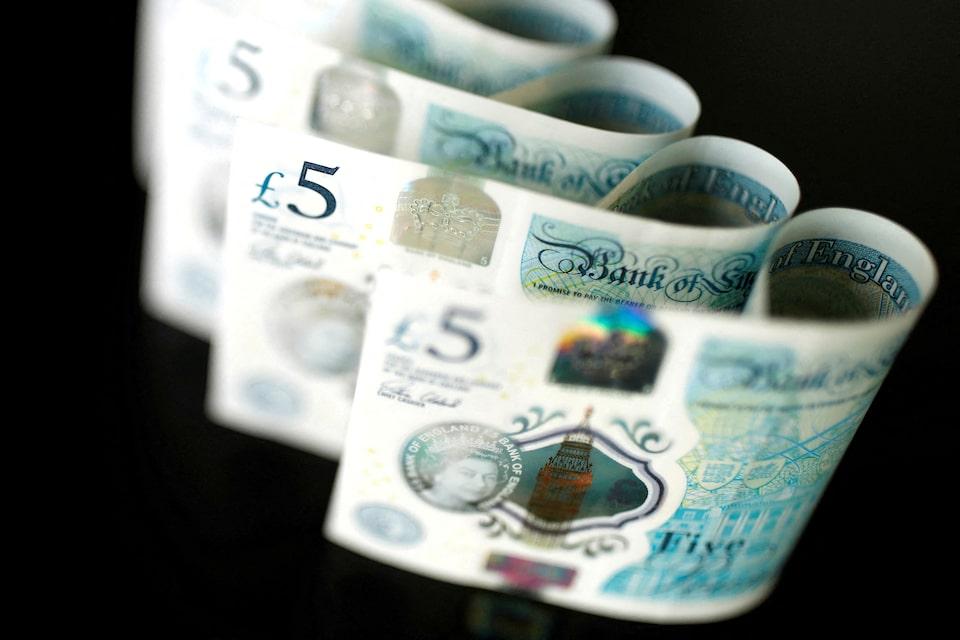
July 11 (Reuters) - Sterling slipped on Friday and was trading close to a more than two-week low after data showed the UK economy contracted for the second month, boosting expectations that the Bank of England could lower borrowing costs next month. Gross domestic product shrank by 0.1% after a 0.3% drop in April, the Office for National Statistics said, primarily dragged by weakness in industrial and construction output. Sign up here. "Though it would be wrong to conclude from the GDP data alone that the economy is coming under greater pressure, there are genuine questions emanating from the jobs market and whether it is beginning to fall apart more quickly," said James Smith, an economist at ING. "For the (BoE), it would likely force a rethink on the pace of rate cuts. Until now, officials have appeared highly reluctant to move beyond their recent, gradual once-per-quarter cutting pace." The pound weakened 0.26% to $1.354, while against the euro it slipped 0.2% to 86.35 pence. Yields on short-term gilts , , often a reflection of interest rate expectations, were steady after easing about two basis points earlier in the day. Traders are now pricing in a 78.3% chance the BoE could deliver a 25-basis-point interest rate cut in August, versus the 64% probability they were pricing in two weeks ago, data compiled by LSEG showed. Friday's data adds to worries for finance minister Rachel Reeves, with economists saying it looks likely she will need to raise taxes again in the upcoming Autumn budget as the government strives to balance its public accounts. UK markets took a beating last week after the Labour government was forced to pass a highly contested welfare bill that did little to make good on the spending cuts initially hoped for and heightened the uncertainty regarding the sustainability of government finances. Globally, investors were rattled by U.S. President Donald Trump's latest tariff escalation as he said he would impose a 35% rate on Canadian imports next month, while other trading partners are likely to face blanket levies of 15% or 20%. The pound firmed 0.5% against the Canadian dollar and last fetched C$1.855. Analysts have said that Britain's deal with the U.S. has made it less exposed to uncertainty on the trade front, which was also reflected in the pound's 8% rise against the U.S. dollar so far this year. https://www.reuters.com/world/uk/sterling-slips-weak-growth-data-fuels-rate-cut-expectations-2025-07-11/
2025-07-11 10:10
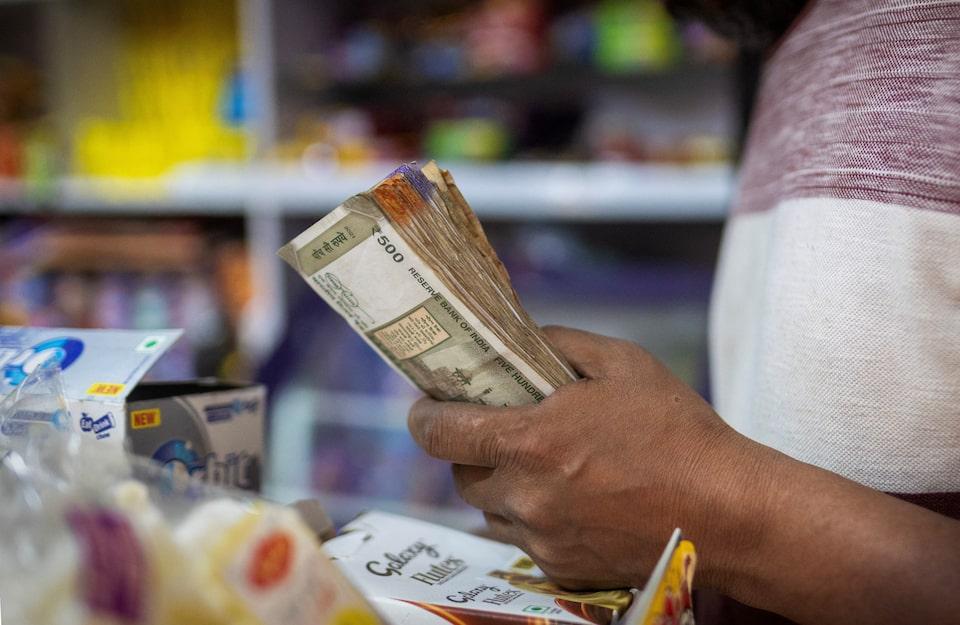
MUMBAI, July 11 (Reuters) - The Indian rupee stayed on the defensive for much of the week and nursed modest losses on Friday as likely foreign portfolio outflows added to pressure from rolling tariff threats from the White House. The rupee ended at 85.80 on Friday against its close at 85.6350 in the previous session, down nearly 0.5% on the week. Sign up here. U.S. President Donald Trump sent out letters to trading partners including Japan, South Korea, Canada, Brazil, and the Philippines, among many others this week, declaring levies that would go into effect starting August 1. While the tariff announcements kept traders on their toes, the market reaction was relatively subdued compared to April when Trump had unveiled a broad set of reciprocal levies and later delayed their implementation. India is among the few countries that are still negotiating a trade deal with Washington with a delegation expected to visit the United States soon for talks. An extended deadline to implement tariffs has stoked hopes about negotiations with trading partners but "there is little risk priced for this not panning out so well," MUFG said in a note. With the U.S. economy showing resilience and the risk of tariffs spurring inflation on the horizon, the dollar may again start to benefit from yield differentials, the note added. The dollar index rose 0.2% on the day and was on course for its first weekly advance in three while Asian currencies traded mixed. On the day, India's benchmark equity indices ended in the red, troubled by disappointing earnings from bellwether IT firm Tata Consultancy Services, while the benchmark 10-year bond reversed early losses to last quote a tad higher on the day. Dollar sales from a large state-run bank helped the rupee weather the pressure on Friday and hold above the 86 mark, similar to the previous session, a trader at a large private bank said. https://www.reuters.com/world/india/rupee-endures-weekly-decline-tariff-jitters-holds-ground-short-86usd-2025-07-11/
2025-07-11 10:02
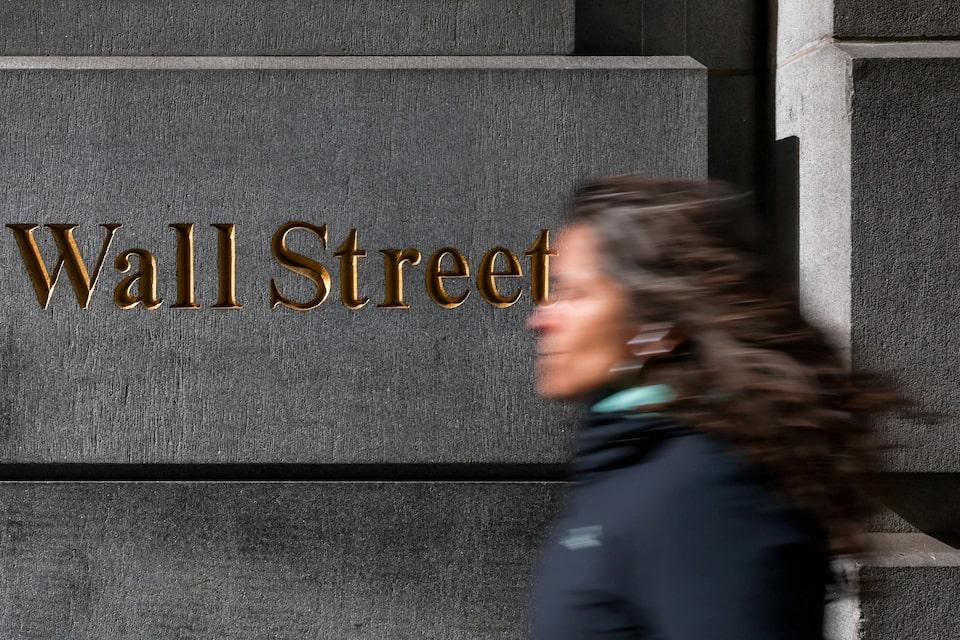
US stock investors shrug off Trump's latest tariff plans Analysts pared forecasts for profits in June quarter Earnings coming up from big US banks, Netflix, 3M, J&J US consumer price data due Tuesday, retail sales Thursday NEW YORK, July 11 (Reuters) - A rally that has taken U.S. stocks to record highs will be tested in the coming week by the kick-off of corporate earnings season and a key inflation report as investors hope to learn more about the economic fallout from tariffs. The S&P 500 (.SPX) , opens new tab is little changed so far this week, but the benchmark stock index has surged 26% since April to all-time high levels. Sign up here. Stocks this week largely shrugged off President Donald Trump's threats of more aggressive tariffs on over 20 countries set to take effect August 1. Trump also announced plans for higher levies on copper, pharmaceuticals and semiconductors. "Investors are looking toward the end of the year into next year where fundamentals are better, and they are willing to look through some short-term uncertainty as they get there," said Chris Fasciano, chief market strategist at Commonwealth Financial Network. After a strong first-quarter reporting season helped lift stocks, analyst estimates for second-quarter results have weakened. S&P 500 companies are expected to have increased profits by 5.8% from the year-earlier period, down from an expectation of a 10.2% gain on April 1, according to LSEG IBES. The percentage of S&P 500 companies beating consensus estimates rose to 78% in the first quarter after the rate had declined the prior three quarters, Ned Davis Research analysts said. "Another reading in the upper 70s would suggest that companies have a grasp not only on tariffs, but also on the broader macro environment," the Ned Davis analysts said in a note. Reports from banks will dominate the week, including results from JPMorgan Chase (JPM.N) , opens new tab, Bank of America (BAC.N) , opens new tab and Goldman Sachs (GS.N) , opens new tab. Among the other major companies reporting next week are Netflix (NFLX.O) , opens new tab, Johnson & Johnson (JNJ.N) , opens new tab and 3M (MMM.N) , opens new tab. In focus will be whether executives indicate if they are able to forecast and make decisions in areas such as capital investment and hiring despite the still-shifting trade backdrop, Fasciano said. "The uncertainty hasn't gone away, but I'm curious to see how much of the uncertainty they feel they have a better understanding of in terms of longer-term plans," Fasciano said. The impact of tariffs will also be at issue with the consumer price index for June, due on Tuesday, which will shed light on inflation trends. CPI is expected to increase 0.3% on a monthly basis, an acceleration from the prior month, according to economists polled by Reuters. A busy week of economic data will also be highlighted by monthly retail sales on Thursday. Investors are eager for the Federal Reserve to resume interest rate cuts, but central bank officials have cited worries that tariffs will drive inflation higher as reasons for holding off on changing monetary policy. The S&P 500 is up nearly 7% in 2025, just over halfway through the year. In the latest sign of positive stock momentum, Nvidia Corp (NVDA.O) , opens new tab this week became the first publicly traded company to hit $4 trillion in market value, fueled by a massive run for AI chipmaker's stock price. Stocks have rebounded after plunging in April following Trump's "Liberation Day" announcement of sweeping global tariffs. This past Wednesday was expected to be a key deadline, marking the end of Trump's pause on many of the harsh "reciprocal" tariffs he unveiled in April. This week, he launched an array of levies, many scheduled to take effect on August 1. Still, most investors appear to be banking on the U.S. avoiding higher tariff rates as Washington strikes deals in coming weeks with trading partners such as Japan and South Korea, said Anthony Saglimbene, chief market strategist at Ameriprise Financial. "That's what the market has built in," Saglimbene said. "If we don't get that, then I think there is probably some risk that we would see some higher near-term volatility if the White House actually implements some of these aggressive tariff measures." text_section_type="notes">Wall St Week Ahead runs every Friday. For the daily stock market report, please click https://www.reuters.com/business/wall-st-week-ahead-earnings-inflation-data-confront-resilient-us-stocks-rally-2025-07-11/
2025-07-11 09:19
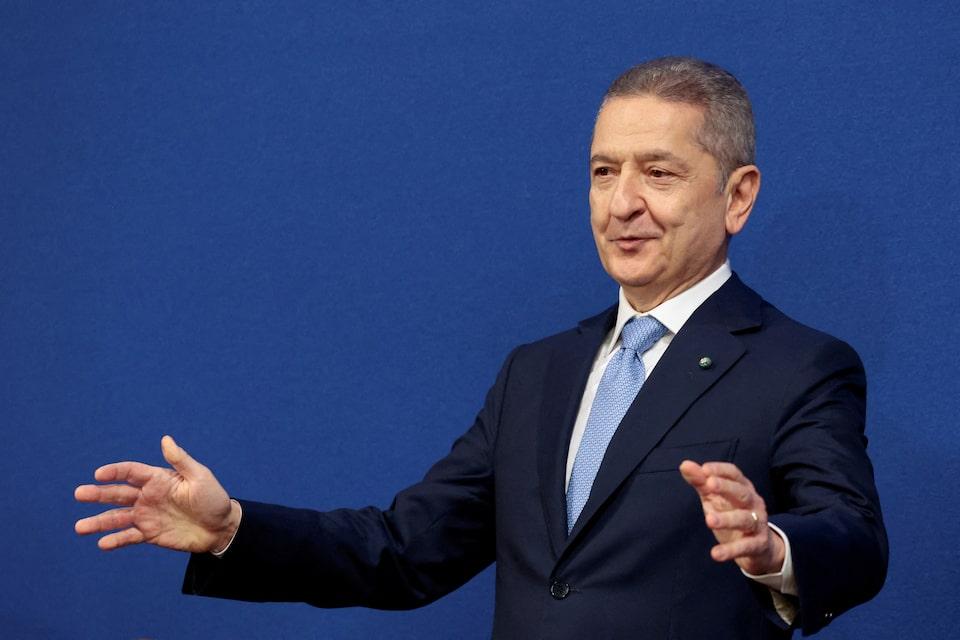
MILAN, July 11 (Reuters) - The European Central Bank should continue to loosen its monetary policy if threats to economic growth from international trade tensions and geopolitical instability strengthen the current disinflationary trends, a policymaker said on Friday. ECB governing council member Fabio Panetta told an annual meeting of Italy's banking association that the current outlook, which projects euro zone inflation at 1.4% in early 2026 with a return to 2% the following year, was highly uncertain. Sign up here. "The key issue now is whether the current level of interest rates is adequate to keep inflation close to target, avoiding persistent deviations in either direction," he said. As inflation has diminished, the ECB has cut interest rates eight times in its current easing cycle, bringing the key deposit rate to 2%. "If downward risks to growth were to strengthen disinflationary trends, it will be appropriate to continue with the policy easing," Panetta said. He added that the experience of the past decade, which has seen an extended phase of low inflation followed by violent inflationary shocks, has shown it is important to react decisively when the inflation rate deviates from the ECB's target either upwards or downwards. "In coming months, the monetary policy approach must remain flexible and pragmatic," Panetta said. "It will be vital to continue to assess (from one ECB meeting to the next) the outlook and risks for price stability," he added. https://www.reuters.com/markets/europe/ecb-should-ease-monetary-policy-if-disinflationary-trends-intensify-panetta-says-2025-07-11/