2025-07-09 22:12
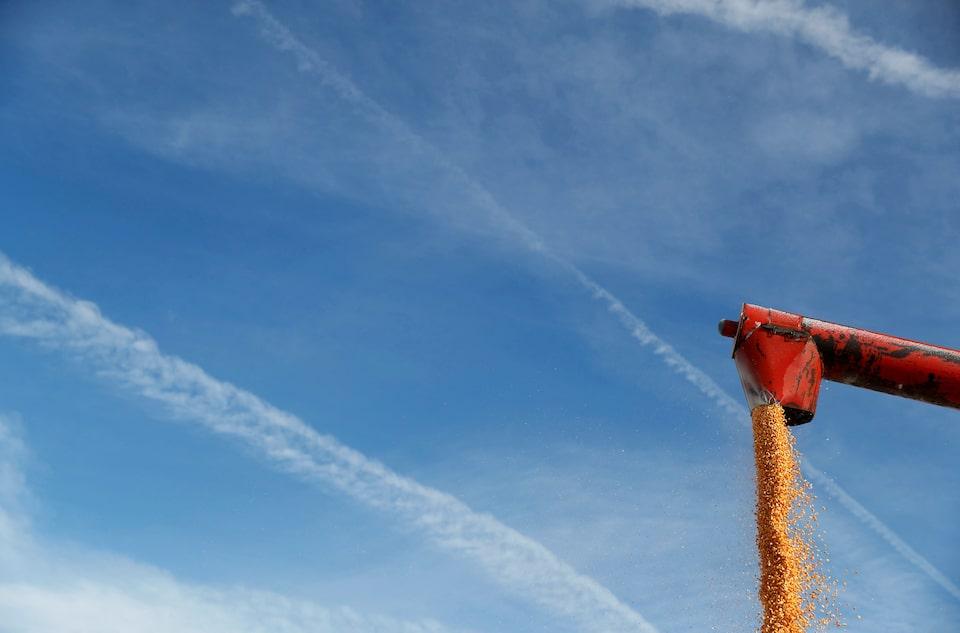
NAPERVILLE, Illinois, July 9 (Reuters) - The U.S. corn yield appears on pace to break its six-year streak of undershooting trendline expectations, and some analyst predictions have gotten quite lofty. But how reasonable are some of these assumptions? What's the true yield potential, and could anything derail the crop from here? Sign up here. Corn conditions in the top state of Iowa are at a 31-year high for July, and the rest of the Corn Belt is in decent shape. Additionally, near-term weather outlooks remain supportive. The market has certainly noticed. CBOT December corn futures hit contract lows again on Wednesday, and prices are now chasing five-year lows for the date. Corn farmers have their sights set on 181 bushels per acre, this year’s trendline yield set by the U.S. Department of Agriculture. Yield has not exceeded this trend since 2018, but at 74% good-to-excellent, current corn crop conditions are the week’s best since 2018. Iowa’s 86% good-to-excellent stands out, but conditions across other states are solid. Only three key states (Ohio, North Dakota, Michigan) carry below-average corn ratings this week, and those margins are at most a few percentage points. So what would it look like if the corn crop truly does fire on all cylinders? SCENARIOS A national corn yield of 181 bpa requires state-level yields to exceed recent averages. Multiplying USDA’s latest harvested acreage estimates by each state’s five-year-average yield would put the national number at 174.8 bpa. Above-average assumptions should probably be made at this point, though some analyst estimates have reached into the mid-180s. National yield would be 189.5 bpa this year if every state matched previous yield records. That specific outcome would never happen, but it sets an upper bound based on previously observed yields. If the two best yields of the last five years are averaged by state, national yield drops to 184.4. Taking the three best yields of the last five years would result in 181.6 bpa, so this scenario most closely represents USDA’s trendline. But things are going exceptionally well in Iowa, which accounts for 17% of the U.S. corn crop. Last year, Iowa scored a record 211 bpa, some 3.4% higher than its previous max. Repeating those gains in 2025 would yield 218 bpa, and this makes a huge difference nationally. Taking the previous scenario that resulted in 181.6 bpa and plugging in 218 for Iowa raises the national yield to 183.5. Yes, Iowa by itself could have a 2-bpa impact on overall yield. Last year’s national yield record of 179.3 bpa consisted of only six states notching new highs, but Iowa and Illinois were among them. This means that any shortfall in Ohio, North Dakota or elsewhere this year could be more than offset by a banner Iowa harvest. REPORT EXPECTATIONS Although not impossible, USDA is unlikely to change its U.S. corn yield estimate on Friday. The last time corn yield increased in July was 2003, though the agency has since altered its methodology. August, however, could be a doozy. Big August corn yields have been printed in years where crop conditions were similarly strong to today, including 2016 and 2018. The crop was also doing well in early July 2020, and USDA estimated a whopper yield that August. The August corn yield, which incorporates farm operator surveys, has a history of coming in heavy. The figure has landed above the average trade estimate in seven of the last 10 years, topping all trade estimates in four of those years. The August corn yield also has a history of being too high, and that has been the case in seven of the last 10 years. Interestingly, 2016, 2018 and 2020 were among them. Corn yields tend to disappoint versus late summer expectations if August temperatures, especially those overnight, are too warm. Dry August weather can also clip yields. The downside to corn yields is shrinking by the day given how well things have gone so far. At this point, it is the upside potential that should be monitored, because that can certainly be capped if the near-perfect weather streak encounters some speed bumps. Karen Braun is a market analyst for Reuters. Views expressed above are her own. Enjoying this column? Check out Reuters Open Interest (ROI) , opens new tab, your essential new source for global financial commentary. ROI delivers thought-provoking, data-driven analysis of everything from swap rates to soybeans. Markets are moving faster than ever. ROI , opens new tab can help you keep up. Follow ROI on LinkedIn , opens new tab and X. , opens new tab https://www.reuters.com/markets/commodities/can-us-corn-yield-meet-ballooning-expectations-braun-2025-07-09/
2025-07-09 22:06
July 10 (Reuters) - Solar power was the European Union's largest source of electricity for the first time in June, overtaking nuclear and wind while coal's contribution fell to an all-time low, data from energy think tank Ember showed on Thursday. Solar generated 22.1% of the EU's electricity last month, up from 18.9%% a year earlier, as record sunshine and continued solar installations pushed output to 45.4 terawatt hours (TWh). Nuclear followed closely at 21.8% and wind contributed 15.8% of the mix. Sign up here. At least 13 EU countries, including Germany, Spain and the Netherlands, recorded highest-ever monthly solar generation, Ember said. "This milestone shows how rapidly the EU's power system is changing," said Chris Rosslowe, senior energy analyst at Ember and lead author of the report. "Solar is stepping up when it's needed most – during summer heatwaves and peak demand." Coal's share of the EU electricity mix fell to a record low of 6.1% in June, compared to 8.8% last year, with 28% less electricity generated than a year earlier. Germany and Poland, which together generated nearly 80% of the 27-country bloc's coal-fired electricity in June, also saw record monthly lows. Coal accounted for 12.4% of Germany's electricity mix and 42.9% of Poland's. Spain, nearing a full phase-out of coal, generated just 0.6% of its electricity from coal in the same period. Wind power also set new records in May and June, rebounding after poor wind conditions resulted in a weak start to the year. But despite record solar and wind output in June, fossil fuel usage in the first half of 2025 grew 13% from last year, driven by a 19% increase in gas generation to offset weak hydro and wind output earlier in the year. Electricity demand in the EU rose 2.2% in the first half of the year, with five of the first six months showing year-on-year increases. The next challenge for Europe's power system is to expand battery storage and grid flexibility to reduce its reliance on fossil fuels during non-solar hours, Ember said in the report. https://www.reuters.com/business/energy/solar-tops-eu-power-mix-first-time-june-ember-says-2025-07-09/

2025-07-09 21:26
July 9 - TRADING DAY - Making sense of the forces driving global markets By Alden Bentley, Editor in Charge, Americas Finance and Markets Sign up here. Jamie is enjoying some well-deserved time off, but the Reuters markets team will still keep you up to date on what markets were focused on today and why investors shifted their focus from tariffs to a big milestone for AI chip-leader Nvidia. I'd love to hear from you so please feel free to reach out at [email protected] , opens new tab Today's Key Market Moves Today's key reads: Nvidia clinches historic $4 trillion market value on AI dominance Trump issues new tariff notices as EU pushes for US trade deal Investors set for first US earnings quarter under Trump tariff war Trump says U.S. interest rate is at least 3 points too high Fed minutes show narrow support for rate cut later this month Wall Street digests Fed minutes with tariffs in focus, Nvidia hits $4 trillion valuation Nvidia becomes first $4 trillion stock U.S. stock indexes were buoyed on Wednesday by AI confidence thanks to Nvidia (NVDA.O) , opens new tab, which became the first company to reach a market cap of $4 trillion. While most of the Magnificent Seven stocks were up (only Tesla (TSLA.O) , opens new tab was down in late trade), reaching the milestone for the most-mega of megacaps was the chief distraction from trade headlines. It overshadowed U.S. President Donald Trump delivering on Tuesday's promise to announce 50% tariffs on copper, while again threatening tariffs on imported chips and pharmaceuticals. Trump issued final tariff notices to seven minor trading partners - 20% on goods from the Philippines, 30% on goods from Sri Lanka, Algeria, Iraq, and Libya, and 25% on Brunei and Moldova - while his administration inched closer to a deal with its biggest trading partner, the European Union. If traders have become desensitized to Trump's daily pronouncements, they similarly hardly reacted to the minutes from the Fed's June meeting that showed a couple of officials felt interest rates could fall as soon as this month, while most others remained worried about the potential inflation fallout from the tariff war. The only other scheduled event was the Treasury's sale of $39 billion in 10-year notes, which went well and saw the yield on the benchmark US debt instrument fall afterward. The dollar backed off a two-week high against the Japanese yen . Japan, which depends on exports, stands out among major U.S. trading partners as being the farthest from reaching a trade deal with Washington. What could move markets tomorrow? Opinions expressed are those of the author. They do not reflect the views of Reuters News, which, under the Trust Principles , opens new tab, is committed to integrity, independence, and freedom from bias. Trading Day is also sent by email every weekday morning. Think your friend or colleague should know about us? Forward this newsletter to them. They can also sign up here. https://www.reuters.com/world/china/global-markets-trading-day-2025-07-09/

2025-07-09 21:02
July 9 (Reuters) - APA Corp (APA.O) , opens new tab said on Wednesday it curtailed about 10 million of cubic feet per day (MMcfpd) of U.S. natural gas production and 750 barrels per day of U.S. natural gas liquids output during the second quarter due to weak prices. The U.S. oil and gas producer also completed the sale of its New Mexico assets in June, a deal announced in May. Sign up here. APA said the transaction reduced its second-quarter U.S. production by about 1,800 barrels of oil equivalent per day, roughly 33% of which was oil. Net proceeds from the sale, after adjustments and costs, totaled approximately $575 million. APA expects second-quarter average realized natural gas prices in the U.S. to be $1 per thousand cubic feet (Mcf) and $4 per Mcf globally. https://www.reuters.com/business/energy/apa-curtails-us-natgas-ngl-production-second-quarter-weak-prices-2025-07-09/

2025-07-09 20:55
TSX ends up 0.3% at 26,972.32 Materials sector rises 0.8% as gold moves higher Eight of 10 major sectors notch gains Copper producers decline after tariff threat July 9 (Reuters) - Canada's main stock index rose on Wednesday, with the materials group leading a broad-based advance as gains for U.S. technology shares fed recent investor exuberence. The S&P/TSX composite index .GSPTSE , opens new tab ended up 68.75 points, or 0.3%, at 26,972.32, moving closer to Friday's record closing high. Sign up here. "It's still a momentum driven market," said Michael Dehal, a senior portfolio manager at Dehal Investment Partners at Raymond James. "Strength in the (U.S.) tech sector is spilling over to most other sectors, including the TSX." Wall Street climbed after artificial intelligence-linked chipmaker Nvidia (NVDA.O) , opens new tab briefly reached a $4 trillion valuation. The materials sector, which includes fertilizer companies and metal mining shares, rose 0.8% as the price of gold clawed back some of the previous day's decline. Gains for the sector were kept in check by declines for copper producers, including a 9.4% drop for the shares of Ero Copper Corp (ERO.TO) , opens new tab. On Tuesday, U.S. President Donald Trump said he would impose a 50% tariff Real estate (.GSPTTRE) , opens new tab added 0.5%, with H&R Real Estate Investment Trust (HR_u.TO) , opens new tab shares up 4.2% after the Globe and Mail reported that asset manager Blackstone and U.S. equity funds were in talks to buy the company's assets. Canadian lender EQB (EQB.TO) , opens new tab said former finance head Chadwick Westlake will return as its CEO, just months after he left to join software firm OpenText OTEX.TO , opens new tab. OpenText shares ended down 4.3%. Still, technology added 0.4% as did industrials. Just two of the 10 major sectors ended lower, including energy. Energy was down 0.1%, while the price of oil settled 0.1% higher at $68.38 a barrel. https://www.reuters.com/sustainability/sustainable-finance-reporting/tsx-futures-tick-higher-investors-await-tariff-updates-2025-07-09/

2025-07-09 20:12
NEW YORK, July 9 (Reuters) - A top U.S. securities regulator known for her supportive stance on the cryptocurrency industry said on Wednesday that new models for trading securities known as "tokenization" must still meet regulations for other securities. Hester Peirce, a Republican commissioner on the Securities and Exchange Commission who has been nicknamed "crypto mom," said in a statement: "As powerful as blockchain technology is, it does not have magical abilities to transform the nature of the underlying asset. Tokenized securities are still securities." Sign up here. Tokenizing equities is a process by which shares of a company are converted into a digital token, similar to how cryptocurrencies are traded. Instead of holding the securities directly, investors hold tokens that represent ownership of the securities. Such tokens could be created by the security issuer itself, or by an entirely unrelated third party. Anyone who buys a third-party token could face unique risks, she said. Crypto firms and others have been increasingly discussing the prospect of tokenizing securities as a new way to facilitate trading. Coinbase (COIN.O) , opens new tab recently told Reuters it was seeking a U.S. green light from the SEC to offer blockchain-based stocks. SEC Chairman Paul Atkins, also a Republican, said in a CNBC interview last week that the agency should encourage innovation when asked about the prospect of tokenizing securities. Critics say the new technology could become a way to evade SEC oversight and expose retail investors to new risks. https://www.reuters.com/sustainability/boards-policy-regulation/secs-crypto-mom-says-tokenized-securities-are-still-securities-2025-07-09/