2025-07-09 15:58
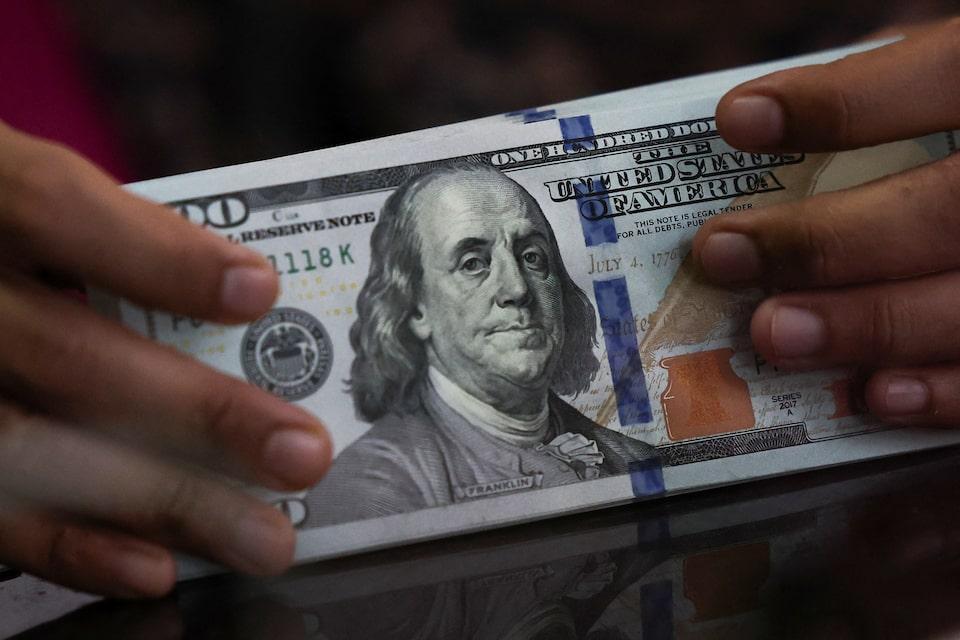
WASHINGTON, July 9 (Reuters) - U.S. President Donald Trump on Wednesday called on the Federal Reserve to lower the federal benchmark interest rate by at least 3 percentage points, renewing his call for the U.S. central bank to lower rates to help reduce the cost to service the nation's debt. "Our Fed Rate is AT LEAST 3 Points too high. “Too Late” is costing the U.S. 360 Billion Dollars a Point, PER YEAR, in refinancing costs. No Inflation, COMPANIES POURING INTO AMERICA. “The hottest Country in the World!” LOWER THE RATE!!!" Trump wrote on Truth Social. Sign up here. https://www.reuters.com/world/us/trump-says-us-interest-rate-is-least-3-points-too-high-2025-07-09/

2025-07-09 15:42
LONDON, July 9 (Reuters) - The U.S. dollar's share of global currency reserves reported to the International Monetary Fund nudged lower to 57.7% in the first quarter of 2025 while the share of euro-denominated reserves gained, International Monetary Fund data showed. Shares of global currency reserves held in the greenback stood at 57.8% at the end of 2024, while the share of euros gained from 19.8% to 20.1% - their highest since late 2022, according to the IMF's Currency Composition of Official Foreign Exchange Reserves (COFER) data released on Wednesday. Sign up here. But it was the Swiss franc which saw the most dramatic increase, quadrupling its share to 0.8% of reserves by end-March - the highest level since at least 1999 when the euro was introduced - while the share of pound sterling also rose. Foreign currency markets have seen some dramatic swings since the start of the year. The dollar lost nearly 4% in the first quarter of the year as some big policy swings from the administration under U.S. President Donald Trump, especially on trade, security and the economy, roiled market confidence in the world's foremost reserve currency. The decline accelerated dramatically in the second quarter, when the dollar dropped more than 7% in the wake of Trump's introduction of sweeping tariffs on "Liberation Day" in early April - though some of those measures have been put on hold. On the flip side, the Swiss franc - widely seen as a safe haven currency - has become one of the best performing currencies this year, strengthening 14% against the dollar. While currency swings do not equate to reserve managers' willingness to hold them, the latest events have fuelled a debate on whether the U.S. dollar could be in danger of losing its status as the world's reserve currency of choice and the center point of the global monetary system. While some point to nascent signs of de-dollarisation, there is broad agreement that any such shift would be very slow. Looking at levels in claims, U.S. dollar claims did rise 1.4% quarter-on-quarter to $6.72 trillion, though that gain was outpaced by the euro's 2.6% rise to claims of $2.3 trillion, IMF data showed. https://www.reuters.com/business/dollar-cedes-ground-euro-swiss-franc-shines-global-reserves-imf-data-shows-2025-07-09/
2025-07-09 15:15
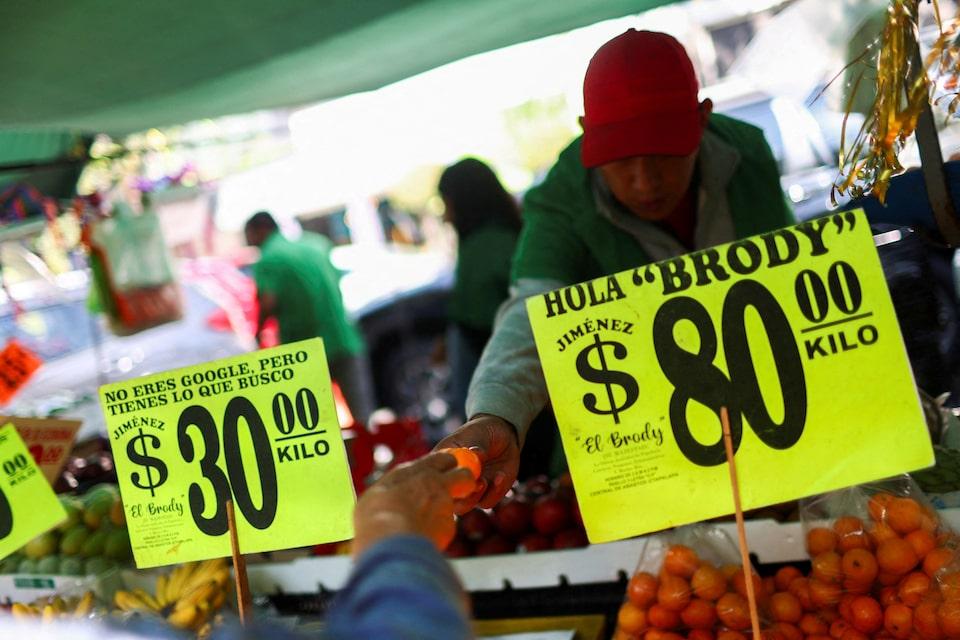
MEXICO CITY, July 9 (Reuters) - Mexico's annual inflation rate eased in June after rising for four straight months, though core prices kept climbing, fueling expectations the central bank could slow the pace of interest rate cuts, official data showed on Wednesday. Consumer prices in Mexico rose 4.32% in the year through June, according to national statistics agency INEGI, roughly in line with the 4.31% expected by economists in a Reuters poll and slowing from the 4.42% reported in the previous month. Sign up here. Mexico's central bank, also known as Banxico, has an inflation target of 3%, plus or minus one percentage point. In contrast, 12-month core inflation, often seen as a better gauge of price trends because it strips out highly volatile food and energy prices, accelerated to 4.24% from 4.06% in May, hitting its highest level since April of last year. The core inflationary pressures have stirred uncertainty regarding Banxico's future decisions on borrowing costs in Latin America's second-largest economy. "Core inflation remains sticky, with persistent upward pressure from housing, food services and a seasonal jump in airfares, likely keeping some Banxico board members uneasy," said Andres Abadia, chief Latin America economist at Pantheon Macroeconomics. The Bank of Mexico lowered its benchmark rate by 50 basis points last month, though the decision by the central bank's five-member governing board was not unanimous. In its decision, the bank's board of governors adjusted its forward guidance, dropping previous references to further 50 basis point cuts. Instead, it said it would continue to assess "additional cuts". Deputy Governor Jonathan Heath voted to hold the rate last month after previously calling for a more cautious approach until inflation shows a more sustained downward trajectory. July's inflation is expected to come in under 4%, meeting the upper end of the central bank's target range, Actinver analysts said in a note after Wednesday's inflation report. "We anticipate that the Mexican central bank could cut its benchmark rate on two more occasions this year. We project that these cuts will occur in August and September, both cuts of 25 basis points," they added. In June alone, headline consumer prices were up 0.28%, according to INEGI, while the closely watched core index stood at 0.39%, both in line with market forecasts. https://www.reuters.com/world/americas/mexicos-annual-inflation-eases-june-core-rate-climbs-2025-07-09/
2025-07-09 14:11
July 9 (Reuters) - Merck (MRK.N) , opens new tab will buy UK-based Verona Pharma for about $10 billion, the companies said on Wednesday, strengthening the U.S. firm's presence in respiratory treatments as it readies for the patent expiry of its blockbuster cancer drug. Sign up here. https://www.reuters.com/legal/transactional/merck-acquire-verona-pharma-10-billion-2025-07-09/

2025-07-09 12:43
ACCRA, July 9 (Reuters) - Italian energy group Eni (ENI.MI) , opens new tab will temporarily suspend operations at a gas plant in Ghana on Sunday to implement a supply increase, likely resulting in power cuts, the West African country said on Wednesday. Ghana, the world's second biggest cocoa producer, has been trying to ramp up oil and gas production to increase revenues and prevent fossil fuels from becoming stranded. Sign up here. It has reached a deal with Eni to increase natural gas supply by 30 million standard cubic feet per day to 270 million, the energy ministry said in a statement on X on Wednesday. To facilitate the upgrade, Eni will temporarily halt some operations, resulting in "an impact on the availability of gas for power generation," the statement said. Speaking at an event on Monday in the southern city of Kumasi, Energy Minister John Jinapor said Ghana was "likely to experience some interactions or interruption of power" while the plant was offline. "Once the work is done, we shall stabilise supply of gas, increase gas production and that will improve the delivery of power," he said. Eni's Offshore Cape Three Points project off Ghana's Atlantic Coast meets 65% of the country's energy demand, according to the Italian company's website. Last week, Tullow Oil (TLW.L) , opens new tab said in a statement it was planning to increase the supply of gas from its Jubilee and TEN projects to about 130 million standard cubic feet per day. https://www.reuters.com/business/energy/ghana-reaches-deal-with-eni-increase-gas-supply-energy-ministry-says-2025-07-09/
2025-07-09 12:00
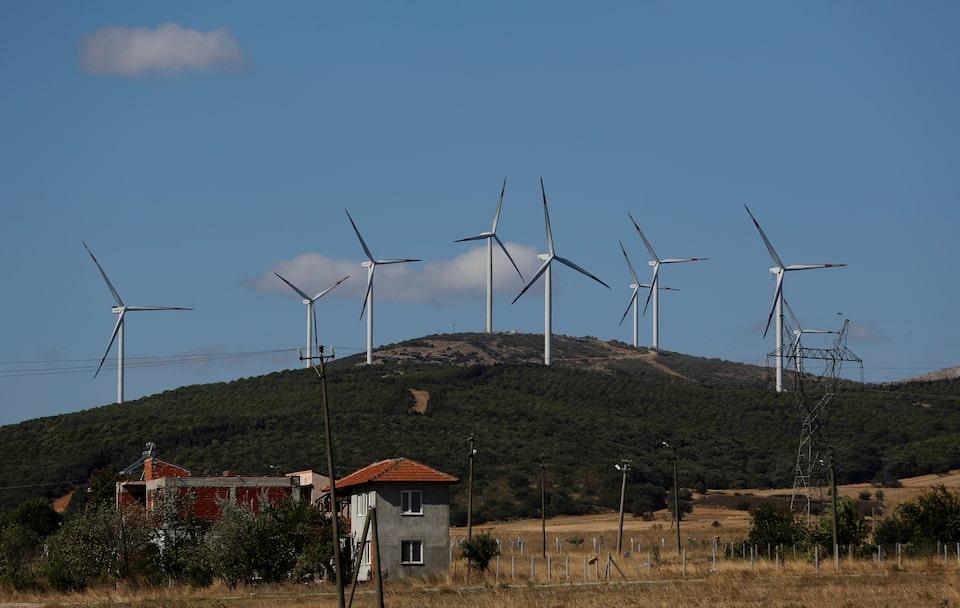
LITTLETON, Colorado, July 9 (Reuters) - Turkey is one of the world's fastest-growing power markets, and exporters of natural gas and LNG have eyed the country as a key potential growth market. But rapid expansions to Turkey's clean power supplies may leave them disappointed. Surging solar capacity lifted Turkey's solar-powered electricity supplies above gas-fired electricity output for the first time last month, while the country's first ever nuclear plant is due to start production within months. Sign up here. Turkey is also aggressively deploying utility-scale batteries to store surplus power from wind and solar farms that can be dispatched during demand peaks, and is targeting 80 gigawatt hours (GWh) of battery storage by 2030. This combination of rising clean power supplies alongside expanding storage capacity looks set to limit Turkey's use of gas and other fossil fuels in power production, and may leave gas market bulls needing to look elsewhere for growth potential. GROWTH PATH Turkey's economy has expanded by an average of 4.7% a year since 2019, which is over four times the growth rate of the Euro zone and nearly twice the growth rate of the global economy over the same time frame, data from the World Bank shows. The country's electricity demand jumped by 14% from 2019 to 2024, in stark contrast to the roughly 5% contraction in electricity demand across the European Union over that same period, data from Ember shows. Government spending on infrastructure and the expansion of heavy industry and manufacturing have been the main drivers of Turkey's electricity demand, which topped 340 terawatt hours (TWh) in 2024, according to Ember. The re-shoring of certain heavy industries from other parts of Europe - such as some steel and cement production from Germany - has also helped expand energy consumption in Turkey within the last few years. GAS CUTS Despite this steady expansion to power use, natural gas is being squeezed out of Turkey's generation system by other power sources, and gas-fired generation has declined for the past three years. Coal-fired power stations are the single largest electricity source in Turkey, and accounted for 36% of the country's utility electricity supplies last year, according to Ember. Key to coal's staying power has been cheap shipments from Russia, which has struggled to find willing buyers for its energy products since getting slapped with sanctions in 2022 following its invasion of Ukraine. To ensure steady purchases by Turkey's power suppliers, Russian coal exporters have discounted their prices compared to other coal vendors, and as a result have secured a dominant share of Turkey's coal purchases since 2022. Indeed, Russia has supplied roughly 88% of Turkey's coal imports so far in 2025, compared to an average share of 24% from 2018 to 2021, data from commodity intelligence firm Kpler shows. That steady supply of cheap coal, however, has resulted in reduced demand for pricier natural gas in Turkey, with gas-fired plants supplying only 19% of Turkey's electricity last year. Hydro dams supplied another 22%, while solar farms (7%) and wind farms (11%) were Turkey's next largest electricity sources. ON THE REBOUND? Over the first half of 2025, Turkey's gas-fired power generation jumped by 52% from the opening half of 2024, which has provided gas market bulls with reason for optimism. However, the recent peaks in gas-fired generation remain below previous gas-fired production spurts, and suggest that Turkey's power firms remain reticent about relying too heavily on gas for electricity production. In addition, clean power supplies continue climbing, with solar generation so far this year jumping by 47% from a year ago and combined output from solar and wind farms generating a record 30% share of electricity supplies last month. Further, the first of four planned reactors at Turkey's first nuclear power plant is just months away from beginning production. Once operational, the Akkuyu plant will provide utilities with a fresh supply of clean power which can be deployed on command instead of gas or coal power to help balance system needs. And there's more clean capacity in the works, with nearly 90% of the roughly 13,000 megawatts (MW) of new power capacity under construction or in pre-construction coming from clean energy sources, according to Global Energy Monitor (GEM). Nuclear plants represent the largest single source of new capacity in the near-term development pipeline, with around 4,800 MW being built. Wind farms represent the next largest share of new capacity (2,460 MW), followed by solar farms with 1,336 MW, GEM data shows. With only 890 MW of new gas capacity and 700 MW of new coal capacity being built, that means clean energy sources dominate the near-term development pipeline for Turkey's power firm, and will account for more than half of total capacity once complete. That in turn leaves little scope for sustained gains by natural gas within the Turkish energy mix, even if the country's power demand growth continues to outpace regional and global peers. The opinions expressed here are those of the author, a columnist for Reuters. Enjoying this column? Check out Reuters Open Interest (ROI), your essential new source for global financial commentary. ROI delivers thought-provoking, data-driven analysis of everything from swap rates to soybeans. Markets are moving faster than ever. ROI can help you keep up. Follow ROI on LinkedIn , opens new tab and X , opens new tab. https://www.reuters.com/markets/commodities/turkeys-clean-power-growth-is-bad-news-gas-market-bulls-2025-07-09/