2025-07-09 11:13
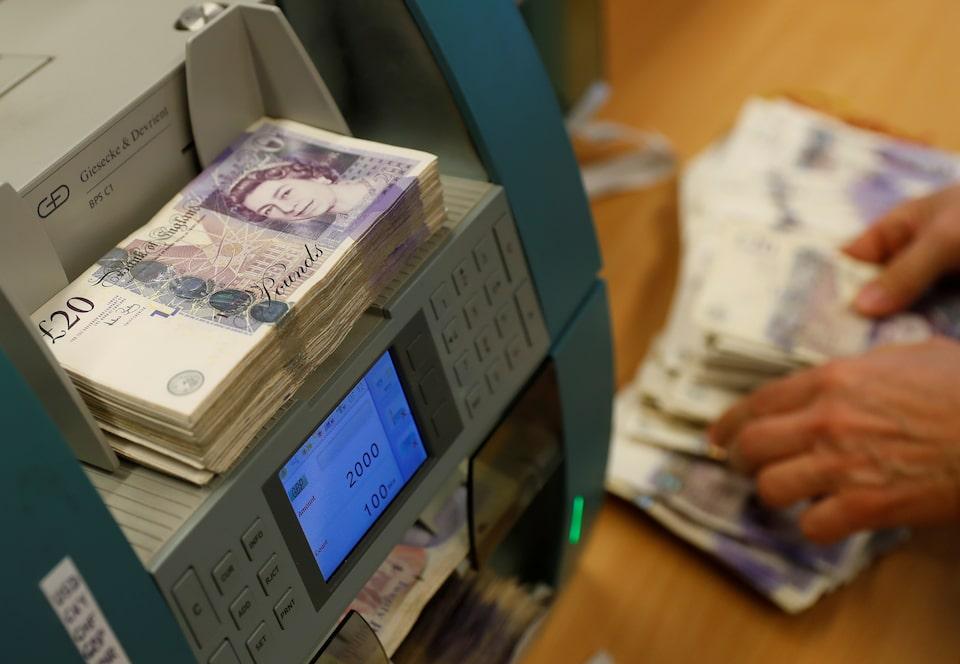
July 9 (Reuters) - Sterling was little changed on Wednesday, as investors digested the Bank of England's half-yearly report on financial stability and assessed the potential impact of trade disputes on global economic growth. The pound was little changed against the U.S. dollar and was last at $1.35, while against the euro it firmed 0.17% to 86.14 pence. Sign up here. Sentiment globally was one of caution after U.S. President Donald Trump widened his trade war by saying he would impose a 50% duty on imported copper and unveil levies on semiconductors and pharmaceuticals. Trump said there would be announcements on Wednesday regarding "a minimum of 7 countries having to do with trade," a day after he told 14 nations that they would face sharply higher tariffs from a new deadline of August 1. The pound has been among the top beneficiaries from a selloff in the U.S. dollar on expectations that a global trade war could also hurt the U.S. economy. The UK was also the first economy that signed a trade deal with the U.S., making it less likely to face fresh tariffs, according to analysts. However, market participants were taken aback after last week's UK welfare bill raised expectations that the government is faced with either increasing borrowing or imposing growth-denting taxes to balance public accounts at its Autumn budget. "Nearer term, the UK government has got itself into a fiscal mess," said Derek Halpenny, head of research, global markets EMEA & international securities at MUFG. "Without a credible big step measure, a credibility gap will persist and risk further dangerous market disruptions. Sharp Gilt sell-offs, like recently, will be pound negative and potentially very disruptive." The pound has gained nearly 9% against the dollar this year and is on track for its biggest annual rise since 2017. However, fiscal worries have limited gains recently and the currency is down more than 1.4% from a 2021 high it hit earlier in the month. Meanwhile, the Bank of England released its half-yearly assessment of threats to financial stability, where it flagged that risks to financial markets remain high against the backdrop of U.S. tariffs. Policymakers also loosened the cap on lending to riskier borrowers after a call by the government for regulators to look for ways to encourage economic growth, without risking the stability of the financial system. https://www.reuters.com/world/uk/sterling-steady-investors-weigh-boes-financial-stability-report-tariff-2025-07-09/
2025-07-09 11:06
BRUSSELS, July 9 (Reuters) - The European Central Bank will consider risks beyond trade tariffs, from security concerns to potential penalties on foreign investors, when it assesses the global landscape, the ECB's chief economist Philip Lane said on Wednesday. "This uncertainty extends beyond the calibration of new tariff regimes and includes the possibility of a broader set of non-tariff barriers, a deeper intertwining of economic policies and security policies and possible revisions to the treatment of foreign portfolio investors and foreign direct investors," Lane told an event in Brussels. Sign up here. https://www.reuters.com/business/finance/ecb-warns-risks-beyond-tariffs-security-capital-flows-2025-07-09/
2025-07-09 10:58
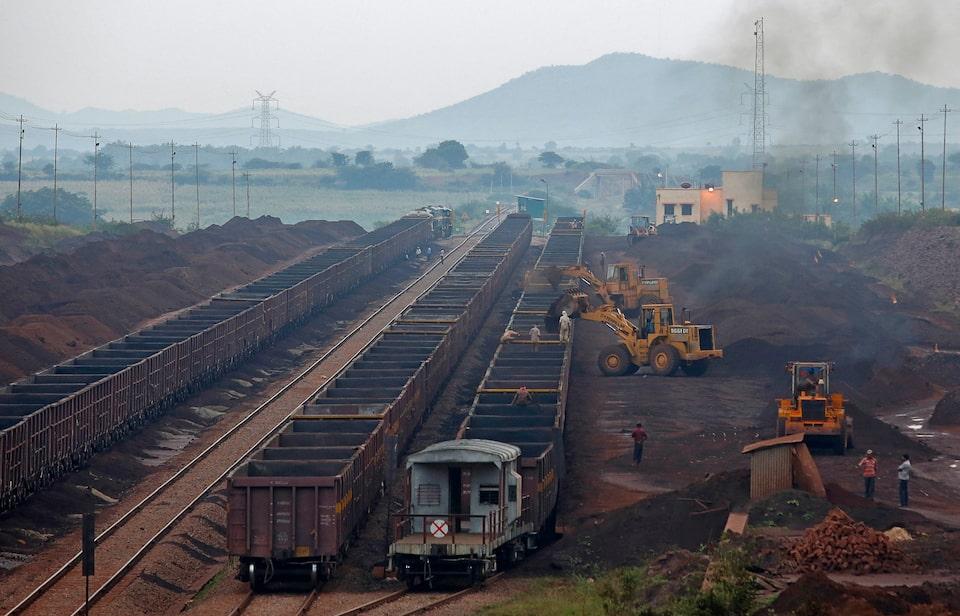
NEW DELHI, July 9 (Reuters) - India's iron ore pellet makers have urged the government to curb a surge in imports routed through Oman, which they say originate from Iran despite U.S. sanctions, warning that the cheaper supplies could hurt the local industry, sources and an analyst said. India, the world's third-largest iron ore producer, has imported 800,000 metric tons of pellets so far this year, whereas imports were negligible between 2021 and 2024, Lalit Ladkat, an analyst with London-based CRU Group, told Reuters. Sign up here. Most of these pellets are of Iranian origin and shipped via Oman to circumvent sanctions, Ladkat said. The surge in imports is driven by higher domestic prices of pellets and the availability of cheaper, high-quality Iranian pellets, Ladkat said. India's Ministry of Steel has received a petition from domestic pellet manufacturers and is examining the issue, said one of the sources involved in the matter, who declined to be identified as the deliberations were not public. The ministry did not respond to a Reuters email seeking comments. In its letter to the ministry, the Pellet Manufacturers Association of India (PMAI) said: Even though pellet imports were shown to originate from Oman, there were "doubts on the actual country of manufacture/origin as it is understood that this country does not produce pellets." Rising imports have caused domestic pellet producers to operate at just 69% of capacity, PMAI said. Oman as a country of origin is doubtful, Manish Kharbanda, president of PMAIm told Reuters. In 2019, President Donald Trump imposed new sanctions on Iran, targeting the Islamic Republic's export revenues from its industrial metals sector. Both iron ore and iron ore pellets are used in steelmaking. India's demand is being driven by robust steel production, underpinned by growth in infrastructure, construction, and the automotive sector. India's finished steel consumption reached 25.1 million metric tons between April and May, the first two months of the 2025/26 fiscal year, up 7.1% from a year earlier, while crude steel output rose 9.5% to 26.9 million metric tons. https://www.reuters.com/world/india/indias-iron-ore-pellet-makers-seek-curbs-iranian-imports-via-oman-2025-07-09/
2025-07-09 10:56
Tariff of 50% on US copper imports higher than expected Levy expected to be in place end-July, start of August Traders will try to cash in on US premium ahead of deadline July 9 (Reuters) - Copper shipments into the United States are expected to accelerate in the coming weeks in a final scramble to get metal across the border before U.S. President Donald Trump's higher-than-expected 50% tariff on imported copper goes into effect. Trump announced the tariff on copper on Tuesday, sending U.S. Comex copper futures up more than 12% to a record high. U.S. Commerce Secretary Howard Lutnick said the levy would likely be in place by the end of July or August 1. Sign up here. The deadline slaps an expiry date on a months-old playbook whereby traders have pulled metal out of warehouses around the world and shipped it to the U.S. to cash in on a premium that was hovering around $2,600 per metric ton early on Wednesday. With roughly three weeks left, analysts and traders said only cargoes already on the water or coming from Latin America were likely to make it in time. "Shipments already on route to the U.S. will likely try to get there still, meaning the ex-U.S. markets shouldn't face excess cargoes immediately. But it will be more challenging to ship any extra cargoes in a three-week window," analysts at Morgan Stanley said in a note. Chilean producers with Chinese contracts are likely to step up a practice of redirecting Comex-eligible stock to the U.S. and sending other brands to China instead, according to a Chinese copper trader, who spoke on condition of anonymity. The final rush could mean continued tightness outside the U.S. during a sprint to the tariff deadline, said analysts and traders, after which the gravitational pull of the U.S. will ease, freeing up supplies elsewhere. The U.S. has imported nearly a year's worth of copper in the past six months, according to analysts at J.P. Morgan, who say imports will fall for months after the tariffs go into effect as users work through stockpiles. Copper prices on the London Metal Exchange and the Shanghai Futures Exchange both dipped just over 1% in the hours after Trump's announcement. Citi forecasts copper prices outside the U.S. will pull back to $8,800 per ton over the next three months. Benchmark copper on the LME was trading at $9,603 a metric ton by 0941 GMT. However, any decline is likely to be constrained by tightness across the global copper market, where demand continues to outstrip supply. "Copper prices on the SHFE are currently under pressure, but they will likely rebound after U.S. copper tariffs are finalised as fundamentals remain tight in the short-term," according to Zhao Yongcheng, an analyst at benchmark mineral intelligence. https://www.reuters.com/business/goldman-sachs-raises-baseline-tariff-forecast-us-copper-imports-50-2025-07-09/
2025-07-09 10:26
July 9 (Reuters) - A look at the day ahead in U.S. and global markets by Alun John, EMEA Finance and Markets breaking news reporter. Markets are processing tariff news again today, after U.S. President Donald Trump on Tuesday broadened his trade war, saying he would impose a 50% tariff on imported copper and soon introduce long-threatened levies on semiconductors and pharmaceuticals. Sign up here. Trump also said he is only days away from sending one of his tariff letters to the European Union, something the EU had been hoping to avoid. So far, market reaction in stocks and U.S. Treasuries has been pretty muted, however. Mike Dolan is enjoying some well-deserved time off over the next two weeks, but the Reuters markets team is here to provide you with all the information you need to start your day. Today's Market Minute * U.S. President Donald Trump on Tuesday said he would impose a 50% tariff on imported copper and soon introduce long-threatened levies on semiconductors and pharmaceuticals, broadening his trade war that has rattled markets worldwide. * Vietnam will devise measures to improve product quality to cope with potential risks from U.S. tariffs, as it seeks to expand exports to other markets and reduce its reliance on the United States, the country's deputy trade minister said on Wednesday. * Treasury Secretary Scott Bessent on Tuesday said the U.S. has taken in about $100 billion in tariff income so far this year, and this could grow to $300 billion by the end of 2025 as collections accelerate from President Trump's trade campaign. * Trump met Israeli Prime Minister Benjamin Netanyahu on Tuesday for the second time in two days to discuss the situation in Gaza, with the president's Middle East envoy indicating that Israel and Hamas were nearing an agreement on a ceasefire deal after nearly two years of war. * Turkey is one of the world's fastest-growing power markets, and exporters of natural gas and LNG have eyed the country as a key potential growth market. But ROI columnist Gavin Maguire says Turkey’s rapid expansion of clean power supplies means gas producers could end of disappointed. INVESTORS' DILEMMA How important were the stock market sell-off and ructions in the U.S. Treasury market in Trump's decision to postpone tariffs in April? That has become an important question for investors now that the first pause is over and Trump is ramping up duties again and sending letters to trading partners telling them what their tariffs will be - even if they don't kick in until August 1. That's on top of the surprise copper announcement and pharmaceutical threats. And, if the market reaction was even partly a factor in the April pause decision, investors now face a conundrum, and one that is somewhat reminiscent of the game theory classic prisoner's dilemma. Lots of big fund managers think tariffs are bad for the U.S. economy, and, as such, are a reason to sell stocks. If tariffs also lead to higher inflation, which many believe they will, that is also a reason to sell Treasuries. However, as of now, the collective market wisdom seems to think the bulk of tariffs will be postponed, negotiated away, or fudged, therefore giving investors little reason to sell. That helps explain why the S&P 500 (.SPX) , opens new tab is down less than 1% from its record peak last week. World shares are steady too, and the Treasury market is quiet. But here's the dilemma. If there is no major market reaction to the newest tariff developments, maybe tariffs will not get postponed, negotiated, or fudged. Under such a scenario, the U.S. economy could take a hit, shares fall, and bond yields rise sharply, suggesting investors would have been better off selling in the first place. At this point, it is worth noting that copper futures in the U.S. are at record highs after Tuesday's announcement, but metal futures in Europe and Asia are down. But despite the threats, pharma and semiconductor stocks haven't moved much and, at the index level, the lack of concern at the moment seems remarkable. According to a UBS model, the market is effectively pricing in zero tariff risks, and Bhanu Baweja, chief strategist at the investment bank, thinks this is a complacent position. Baweja, in a client note, said the tariffs had both a "certain philosophical and ideological element", and a certain practical element as they were needed to fill the gap left by fiscal spending. Hence, the market should expect at least some of them to be implemented. Whether, and when, markets react is another question however. And what would that mean for policy? Chart of the day Tariffs might not be reflected in market action, but they are certainly there in some bits of data. China's producer deflation deepened to its worst level in almost two years in June, according to Wednesday numbers, as the economy grappled with uncertainty over a global trade war and subdued demand at home. That piles pressure on policymakers to roll out more support measures. Today's events to watch * Minutes of FOMC June meeting * U.S. 10-year note auction * Company earnings: Levi Strauss, Delta Air Lines * Tariff developments Opinions expressed are those of the author. They do not reflect the views of Reuters News, which, under the Trust Principles , opens new tab, is committed to integrity, independence, and freedom from bias. Want to receive the Morning Bid in your inbox every weekday morning? Sign up for the newsletter here. https://www.reuters.com/world/china/global-markets-view-usa-2025-07-09/
2025-07-09 10:07
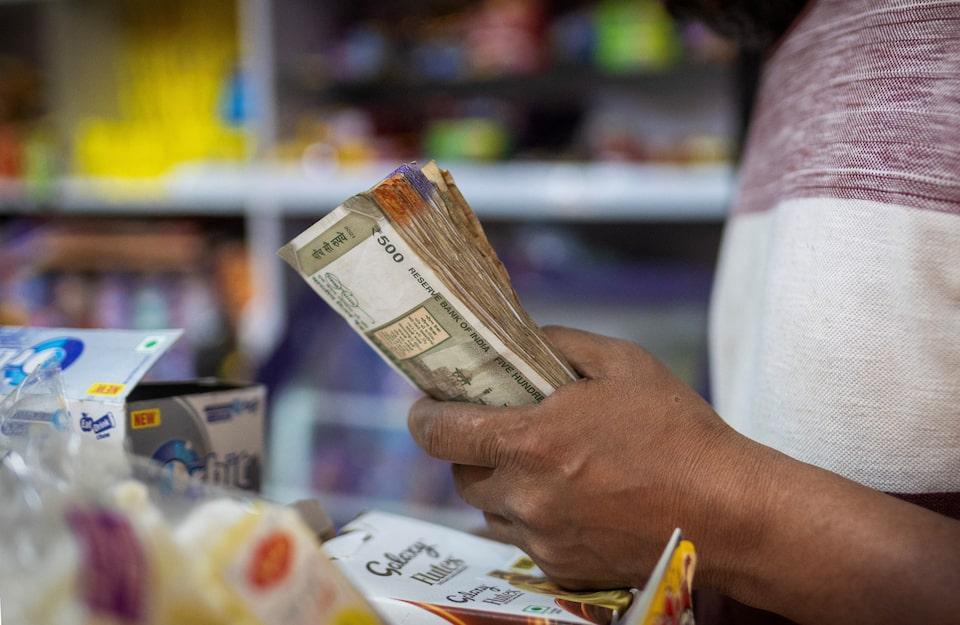
MUMBAI, July 09(Reuters) - The Indian rupee closed nearly unchanged on Wednesday, tracking a muted reaction in global markets to the latest trade salvos from the White House, with traders in the domestic market awaiting news on a U.S.-India trade deal. The rupee ended at 85.6725 against the U.S. dollar, nearly unchanged from its close at 85.6950 in the previous session. Sign up here. Asian currencies were little changed to a tad weaker, while the dollar index retreated slightly from a two-week high hit on Tuesday to last quote at 97.5. The rupee touched a low of 85.9225 earlier in the day but pared losses later in the session amid routine flows from merchants and mild dollar sales from a few foreign banks, according to traders. For now, 86 is holding as a support for the rupee while resistance is near 85.30-85.40 levels, a trader at a state-run bank said. Regional stock markets traded mixed as investors digested Trump's latest trade salvos, including a 50% charge on copper imports and threats of levies on semiconductors, pharmaceuticals and a 10% charge on imports from BRICS nations. India's benchmark equity indexes, Nifty 50 (.NSEI) , opens new tab and BSE Sensex (.BSESN) , opens new tab, dipped by about 0.2% each. "While tariff decisions have influenced – and will continue to influence – the Fed, markets are now more focused on incoming data, given the volatility and unpredictability of US trade policy," ING said in a note. Trade announcements related to a few countries are expected later in the day, per social media posts from Trump. The minutes of the Federal Reserve's June policy meeting are also due later in the day and will be closely watched for cues on the future path of U.S. policy rates. The cues are expected to influence dollar-rupee forward premiums, which were little changed on the day. https://www.reuters.com/world/india/rupee-forward-premiums-tread-water-with-fed-minutes-tariffs-focus-2025-07-09/