2025-07-09 10:07
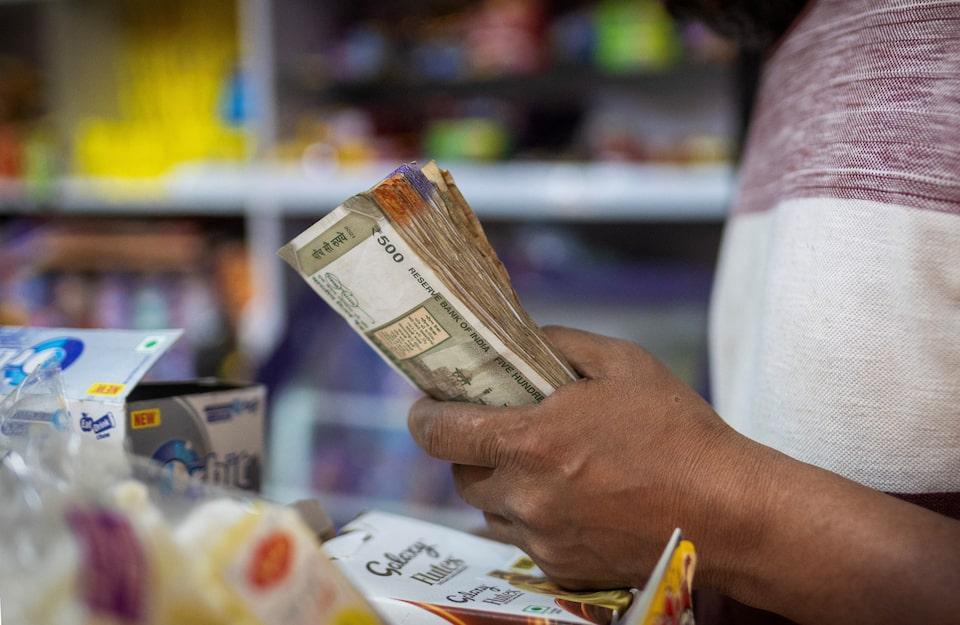
MUMBAI, July 09(Reuters) - The Indian rupee closed nearly unchanged on Wednesday, tracking a muted reaction in global markets to the latest trade salvos from the White House, with traders in the domestic market awaiting news on a U.S.-India trade deal. The rupee ended at 85.6725 against the U.S. dollar, nearly unchanged from its close at 85.6950 in the previous session. Sign up here. Asian currencies were little changed to a tad weaker, while the dollar index retreated slightly from a two-week high hit on Tuesday to last quote at 97.5. The rupee touched a low of 85.9225 earlier in the day but pared losses later in the session amid routine flows from merchants and mild dollar sales from a few foreign banks, according to traders. For now, 86 is holding as a support for the rupee while resistance is near 85.30-85.40 levels, a trader at a state-run bank said. Regional stock markets traded mixed as investors digested Trump's latest trade salvos, including a 50% charge on copper imports and threats of levies on semiconductors, pharmaceuticals and a 10% charge on imports from BRICS nations. India's benchmark equity indexes, Nifty 50 (.NSEI) , opens new tab and BSE Sensex (.BSESN) , opens new tab, dipped by about 0.2% each. "While tariff decisions have influenced – and will continue to influence – the Fed, markets are now more focused on incoming data, given the volatility and unpredictability of US trade policy," ING said in a note. Trade announcements related to a few countries are expected later in the day, per social media posts from Trump. The minutes of the Federal Reserve's June policy meeting are also due later in the day and will be closely watched for cues on the future path of U.S. policy rates. The cues are expected to influence dollar-rupee forward premiums, which were little changed on the day. https://www.reuters.com/world/india/rupee-forward-premiums-tread-water-with-fed-minutes-tariffs-focus-2025-07-09/
2025-07-09 09:35
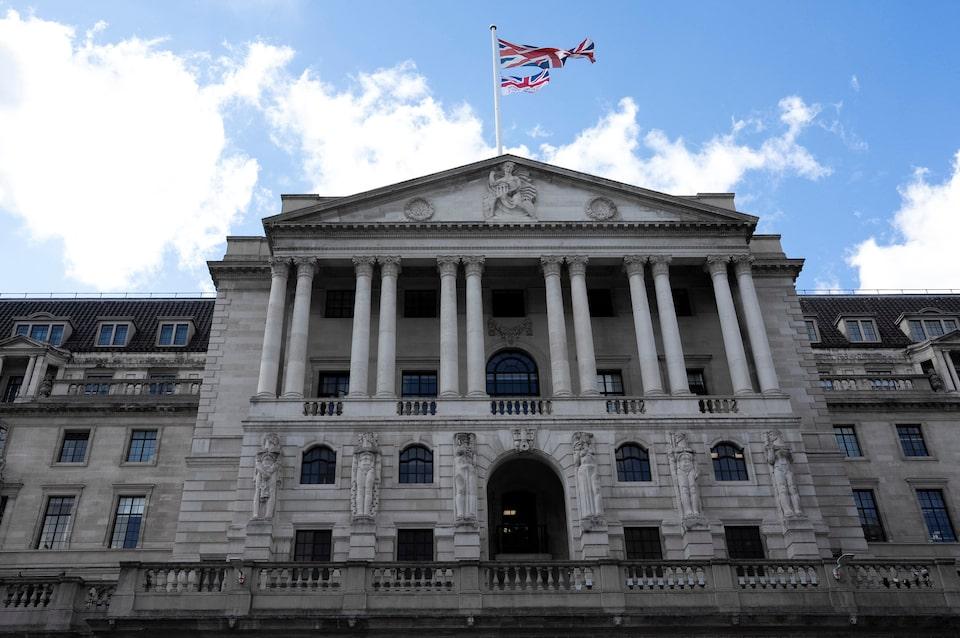
By David Milliken and Lawrence White LONDON, July 9 (Reuters) - Risks to financial markets remain high despite an easing of tensions after the United States paused implementing tariffs announced in April, the Bank of England said on Wednesday. Sign up here. The British central bank said it continued to see dangers from "geopolitical tensions, global fragmentation of trade and financial markets and pressures on sovereign debt" in a half-yearly assessment of threats to financial stability. "The risk of sharp falls in risky asset prices, abrupt shifts in asset allocation and a more prolonged breakdown in historical correlations remains high," the BoE's Financial Policy Committee said. Global share prices tumbled at the start of April and British 30-year government borrowing costs rose to their highest since the late 1990s after President Donald Trump announced wide-ranging tariffs on exports to the United States. While share prices have largely recovered, bond markets remain nervous about the scale of future borrowing possible in the United States, Britain and elsewhere. Last week British bond prices fell sharply after the government had to scale back plans to cut welfare payments in the face of parliamentary opposition and doubts briefly swirled about the future of finance minister Rachel Reeves. On Tuesday, Britain's Office for Budget Responsibility described the country's public finances as being in a "relatively vulnerable position" after the COVID-19 pandemic and that the government had failed to scale back spending since. The BoE said Britain's government bond market had functioned efficiently during market tension in April, but noted that the external stress was relatively short-lived. "Conditions might have become more strained had the episode of volatility lasted longer," the BoE said. The central bank said it was releasing more data on aggregate market positions so firms could better guard against risks. British households and businesses overall remained resilient and the domestic banking system was well placed to keep lending even if there was a sharp economic deterioration, it said. As a result, there were no domestic reasons to change the counter-cyclical capital buffer from 2%, the FPC said. The CCyB is varied over the credit cycle to ensure banks build up a cushion against future losses during good times and are able to keep lending during a downturn. (([email protected] , opens new tab; +44 20 7513 4034)) Keywords: BRITAIN BOE/ https://www.reuters.com/sustainability/boards-policy-regulation/bank-england-sees-ongoing-financial-stability-risks-global-tensions-2025-07-09/
2025-07-09 07:57
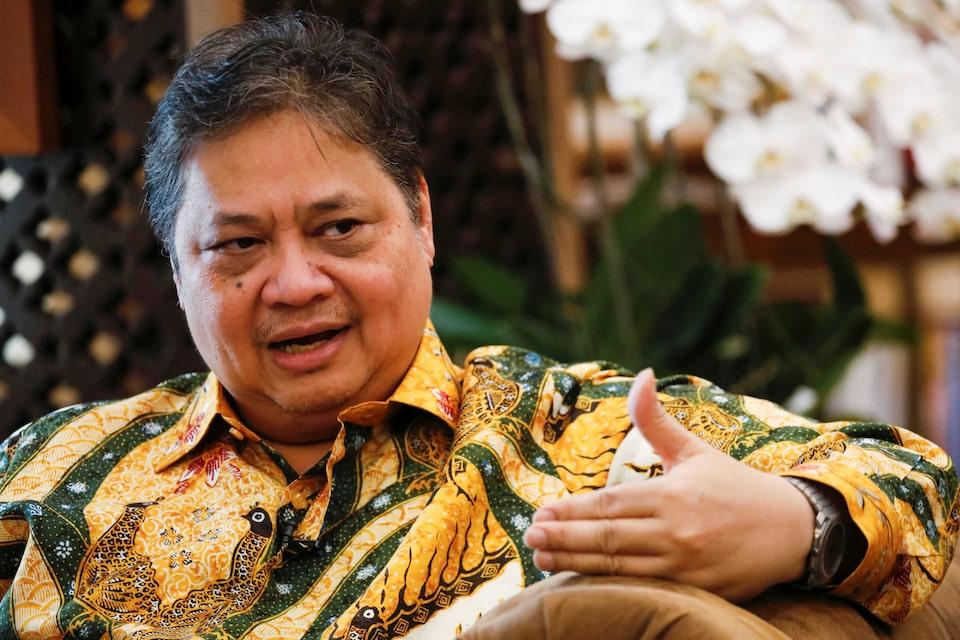
JAKARTA, July 9 (Reuters) - Indonesia will highlight its strategic importance in global trade, especially its natural resources, as it forges ahead with negotiations to try to reduce a 32% tariff imposed by the United States, a government official said on Wednesday. Indonesia's chief economic minister Airlangga Hartarto, who leads the negotiation team, is scheduled to meet with U.S. Commerce Secretary Howard Lutnick, Treasury Secretary Scott Bessent, and other officials, spokesperson for the economic ministry Haryo Limanseto said, without providing a timeframe. Sign up here. Indonesia's 32% tariff will be imposed by the United States from August 1 and is unchanged from that threatened by Washington in April. Southeast Asia's biggest economy has proposed slashing its duties on American products to near zero and offered to increase U.S. purchases and investment in the country, amounting to about $34 billion. "The coordinating minister will convey that Indonesia is a very strategic country with all its natural resources," Haryo said. "We hope that the U.S. will reconsider." G20 economy Indonesia is a major producer of minerals such as nickel, tin, copper and is the world's biggest exporter of palm oil. Several Indonesian companies have signed initial deals with U.S. counterparts to increase purchases of energy, wheat, corn and cotton, among others. Sovereign wealth fund Danantara Indonesia and textile company Indorama are also set to invest in the United States, Haryo added. The Indonesian proposal has been praised by U.S. representatives, Haryo said. Indonesia hopes it can secure lower or the same tariff level as other nations in Southeast Asia. Early in the talks, Indonesia had offered Washington a raft of concessions. The announcement by U.S. President Donald Trump ahead of the July 9 deadline came as a surprise, Haryo said. "We see the U.S. government considers the (negotiation) globally, no longer country-by-country. We've submitted all the documents and have also agreed on negotiation level, but the final decision rests with Trump." https://www.reuters.com/markets/asia/indonesia-tariff-negotiator-meet-lutnick-us-aims-tout-natural-resources-2025-07-09/
2025-07-09 07:46
Trump wants a 100% American workforce, Rollins says Farm sector has warned deportations would disrupt food supply USDA to curb purchases of farmland by foreign entities China says practice is 'discriminatory' WASHINGTON, July 9 (Reuters) - U.S. Agriculture Secretary Brooke Rollins said on Tuesday that there will be "no amnesty" for agricultural workers as President Donald Trump's administration moves to deport all immigrants in the country illegally. Rollins said the administration wants a 100% American workforce and suggested some people receiving government aid could replace immigrant workers. Sign up here. "Ultimately, the answer on this is automation, also some reform within the current governing structure. And then also, when you think about, there are 34 million able-bodied adults in our Medicaid program. There are plenty of workers in America," she said at a press conference outside the Department of Agriculture headquarters. Most adults on Medicaid work full- or part-time or are not working due to illness or disability, caregiving, or school attendance, according to a May brief by the health policy organization KFF. The farm sector has warned that mass deportation of farm workers would disrupt the U.S. food supply. In June, the Trump administration signaled it might pause raids on some farm work sites. It has since reversed course. Trump's tax-cut and spending bill, passed on July 3, introduces work requirements for Medicaid, which the Congressional Budget Office has said is expected to leave nearly 12 million people uninsured. Later on Tuesday, Secretary of Labor Lori Chavez-DeRemer said at a cabinet meeting at the White House that the Department of Labor had developed a new office to work with farmers and ranchers, but did not provide more details. The Labor Department oversees the H-2A program, which provides seasonal visas for agricultural workers. FARMLAND PURCHASE CURBS? Rollins also said at the press conference that the USDA will curb farmland purchases by "foreign adversaries," including China, and terminate agreements and contracts with people and entities from those countries. Asked about land already owned by Chinese-owned companies Syngenta and Smithfield Foods (SFD.O) , opens new tab, Rollins said the administration is still considering its options. "You'll likely see an executive order on this very soon from the White House and we'll be looking at multiple different authorities within the federal government to begin to claw that back," Rollins said. China's foreign ministry on Wednesday called the United States' move "discriminatory," generalizing national security and depriving organizations and citizens from certain countries of the right to purchase land and real estate. "We urge the U.S. side to immediately stop politicizing economic, trade and investment issues," ministry spokesperson Mao Ning said. In 2023, Arkansas ordered Syngenta to sell 160 acres (65 hectares) of farmland under a state law barring some foreign entities from acquiring or holding land. Twenty-six states limit or ban foreign businesses, governments or nationals from owning private farmland, according to the National Agricultural Law Center, and some of those laws have faced legal challenges. Only about 3.4% of U.S. farmland is owned by foreign entities, and Canada owns the largest share, about 30%, according to the USDA. Rollins said she will be a member of the Committee on Foreign Investment in the United States, or CFIUS, "as of this afternoon." The interagency body reviews foreign investments in the U.S. for national security threats. Bipartisan lawmakers have supported limits on ownership of farmland by foreign countries, citing national security concerns. https://www.reuters.com/legal/government/us-farm-secretary-says-no-amnesty-farmworkers-deportation-2025-07-08/
2025-07-09 07:44
COPENHAGEN/BRUSSELS, July 9 (Reuters) - Around 2,300 people died of heat-related causes across 12 European cities during the severe heatwave that ended last week, according to a rapid scientific analysis published on Wednesday. The study targeted the 10 days, ending July 2, during which large parts of Western Europe were hit by extreme heat, with temperatures breaching 40 degrees Celsius (104°F) in Spain and wildfires breaking out in France. Sign up here. Of the 2,300 people estimated to have died during this period, 1,500 deaths were linked to climate change, which made the heatwave more severe, according to the study conducted by scientists at Imperial College London and the London School of Hygiene and Tropical Medicine. "Climate change has made it significantly hotter than it would have been, which in turn makes it a lot more dangerous," said Dr Ben Clarke, a researcher at Imperial College London. The study covered 12 cities including Barcelona, Madrid, London and Milan, where the researchers said climate change had increased heatwave temperatures by up to 4 degrees Celsius. The researchers used established epidemiological models and historical mortality data to estimate the death toll, which reflects deaths where heat was the underlying reason for mortality, including if exposure exacerbated pre-existing health conditions. The scientists said they used peer-reviewed methods to quickly produce the estimated death toll, because most heat-related deaths are not officially reported and some governments do not release this data. Last month was the planet's third-hottest June on record, behind the same month in 2024 and 2023, the EU's Copernicus Climate Change Service said in a monthly bulletin on Wednesday. Western Europe experienced its warmest June on record, with much of the region experiencing "very strong heat stress" - defined by conditions that feel like a temperature of 38 degrees Celsius or more, Copernicus said. "In a warming world, heatwaves are likely to become more frequent, more intense and impact more people across Europe," said Samantha Burgess, Copernicus' strategic lead for climate. Researchers from European health institutes reported in 2023 that as many as 61,000 people may have died in Europe's sweltering heatwaves in 2022, according to new research, suggesting countries' heat preparedness efforts are falling fatally short. The build-up of greenhouse gas emissions in the atmosphere - which mostly come from the burning of fossil fuels - means the planet's average temperature has increased over time. This increase in baseline temperatures means that when a heatwave comes, temperatures can surge to higher peaks. https://www.reuters.com/sustainability/cop/european-heatwave-caused-2300-deaths-scientists-estimate-2025-07-09/

2025-07-09 07:36
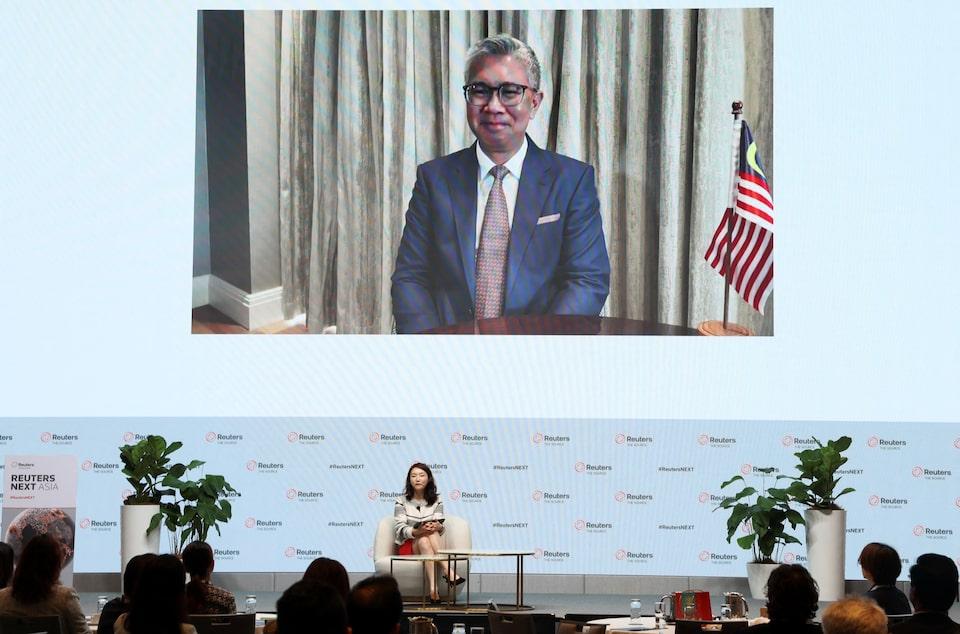
July 9 (Reuters) - Malaysia has no plans to retaliate against a 25% tariff levied on its exports to the United States by Washington, its trade minister Tengku Zafrul Aziz said on Wednesday, saying he was "still optimistic" about reaching a trade deal. Speaking in an interview at the Reuters NEXT Asia summit in Singapore, Tengku Zafrul said Malaysia still had a few more weeks to negotiate the final terms of an agreement. Sign up here. "I'm in touch with USTR (U.S. Trade Representative) as recently as yesterday, and we all agreed that we could continue our negotiations, so we still have time," he said. "We are appreciative that the timeline has been extended to first of August," he added. "It gives me a bit more time to refine some of the discussion." Malaysia, a key exporter of semiconductors and electronics, was slapped with a revised 25% tariff on its exports to the United States, higher than the 24% rate threatened in April before President Donald Trump called a 90-day pause. "We have no plans to retaliate for now," Tengku Zafrul said. Malaysian Prime Minister Anwar Ibrahim said on Wednesday he will raise some of the tariff-related issues during his meeting with U.S. Secretary of State Marco Rubio who is in Malaysia this week for ASEAN-related meetings. The State Department billed the trip as a first visit to Asia by America's top diplomat and a demonstration of Washington's commitment to the Indo-Pacific. "Any unilateral tariffs will, of course, impact negatively on the economy of this country and this region. But we are still in the midst of negotiations," Anwar told reporters. Malaysia's trade ministry said on Tuesday it was continuing discussions with U.S. counterparts to address pending issues, clarify the scope and impact of the tariffs and pursue avenues for a timely conclusion to the talks. "I am optimistic, especially in sectors that I feel there is a win-win," Tengku Zafrul said. Malaysia and other countries in Southeast Asia are among the hardest hit by Trump's sweeping tariffs, as they rely on exports and manufacturing to drive economies collectively worth more than $3.8 trillion, some helped by supply chain shifts from China. To view the live broadcast of the World Stage go to the Reuters LIVE page: https://www.reuters.com/world/reuters-next-asia-live-global-leaders-address-challenges-opportunities-2025-07-07/ https://www.reuters.com/world/asia-pacific/reuters-next-malaysia-trade-minister-says-still-optimistic-us-trade-2025-07-09/