2025-07-09 06:40
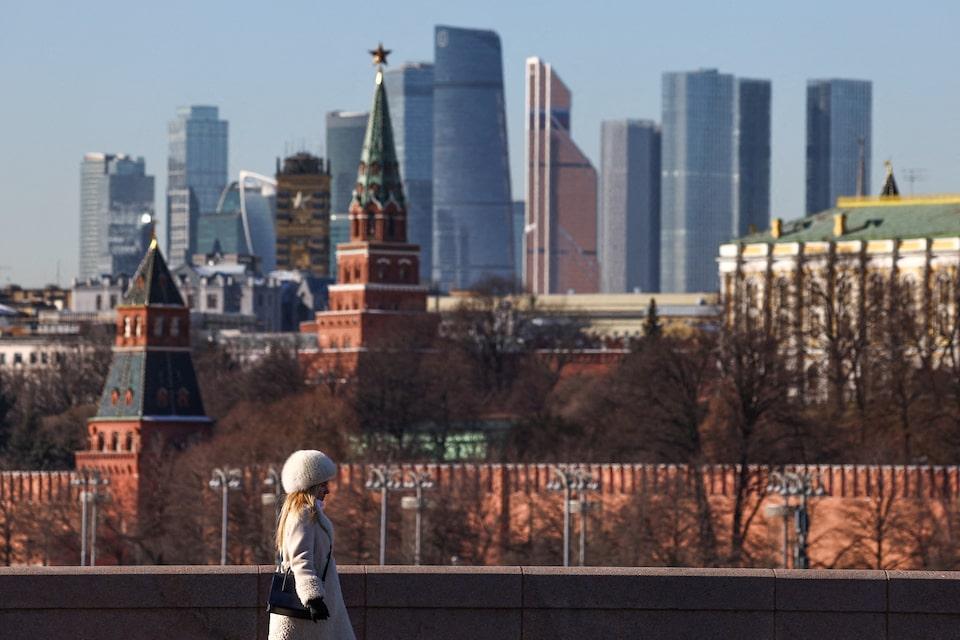
'Fortress Russia' uses host of mechanisms to take major assets Some foreign businesses snared by confrontation with West Some domestic businesses also face nationalisation, report says Russia says it has weathered Western attempt to sink its economy MOSCOW, July 9 (Reuters) - Russian authorities have confiscated assets worth some $50 billion over the past three years, underscoring the scale of the transformation into a "fortress Russia" economic model during the war in Ukraine, research showed on Wednesday. The conflict has been accompanied by a significant transfer of assets as many Western companies fled the Russian market, others' assets were expropriated and the assets of some major Russian businesses were seized by the state. Sign up here. In response to what Russia called illegal actions by the West, President Vladimir Putin signed decrees over the past three years allowing the seizure of Western assets, entangling firms ranging from Germany's Uniper to Danish brewer Carlsberg. Besides the Western assets, major domestic companies have changed hands on the basis of different legal mechanisms including the need for strategic resources, corruption claims, alleged privatisation violations, or poor management. Moscow law firm NSP (Nektorov, Saveliev & Partners) said that the scale of what it called the "nationalisation" , opens new tab amounted to 3.9 trillion roubles over three years, and it listed the companies involved. The research was first reported by Kommersant, one of Russia's leading newspapers, which said it illustrated a "fortress Russia" economic model. The 1991 break-up of the Soviet Union ushered in hopes that Russia could transform into a free-market economy integrated into the global economy, but vast corruption, economic turmoil and organised crime undermined confidence in democratic capitalism through the 1990s. Putin, in his first eight years in power, supported economic freedoms, targeted some so-called oligarchs and presided over a significant growth of the economy to $1.8 trillion in 2008 from $200 billion in 1999. In the 2008-2022 period, the economy grew to $2.3 trillion, though Western sanctions hit it hard after Russia annexed Crimea from Ukraine in 2014, according to figures from the International Monetary Fund. Though the Russian economy has performed better than expected during the war in Ukraine, its nominal dollar size in 2024 was just $2.2 trillion, according to IMF figures, much smaller than China, the European Union or United States. 'FORTRESS RUSSIA' Russian officials say that the Ukraine war - the biggest confrontation with the West since the depths of the Cold War - has demanded extraordinary measures to prevent what they say was a clear Western attempt to sink the Russian economy. Putin says the exit of Western firms has allowed domestic producers to take their place and that the Western sanctions have forced domestic business to develop. He has called for a "new development model" distinct from "outdated globalisation". But the wartime economy, geared towards producing weapons and supporting a long conflict with Ukraine, has put the state - and those officials who operate it - in a much more powerful position than private Russian businesses. Russian prosecutors are now seeking to seize billionaire Konstantin Strukov's majority stake in major gold producer Uzhuralzoloto (UGLD.MM) , opens new tab (UGC) for the state. More than a thousand companies - from McDonald's (MCD.N) , opens new tab to Mercedes-Benz (MBGn.DE) , opens new tab - have left Russia since the February 2022 start of Russia's war in Ukraine by selling, handing the keys to existing managers or simply abandoning their assets. Others had their assets seized and a sale forced through. ($1 = 78.2000 roubles) (This story has been corrected to amend the figure to 3.9 trillion roubles in paragraph 5, and to fix a typo in paragraph 7) https://www.reuters.com/world/europe/fortress-russia-has-confiscated-50-billion-assets-over-three-years-kommersant-2025-07-09/
2025-07-09 06:39
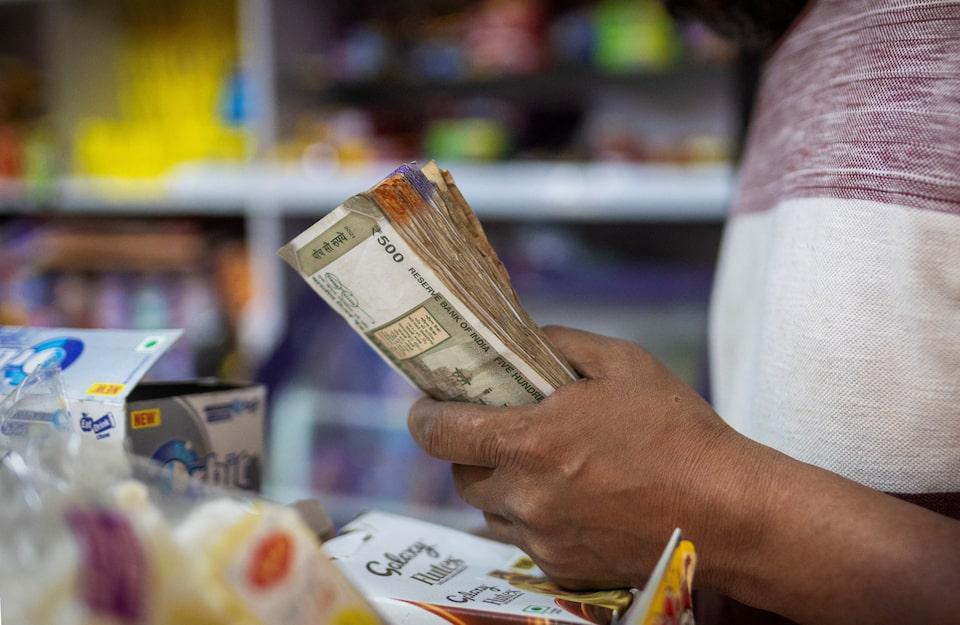
MUMBAI, July 9(Reuters) - The Indian rupee weakened slightly on Wednesday, along with its regional peers, as the dollar firmed on the back of fresh tariff threats from the United States, including a 50% levy on copper imports and 10% charge on BRICS nations. The rupee was at 85.8375 against the U.S. dollar as of noon IST, down about 0.2% on the day. Sign up here. Asian currencies were down between 0.1% and 0.3% with the offshore Chinese yuan hovering near a two-week low. The dollar index nudged higher in Asia trading and was last quoted at 97.6. U.S. President Donald Trump said overnight he would impose a 50% tariff on imported copper, introduce levies on semiconductors and pharmaceuticals, and a 10% tariff on BRICS imports would come "pretty soon". The threats come as countries step up efforts to strike deals with the White House ahead of an August 1 deadline when steep country-specific levies are slated to go into effect. Despite the lingering uncertainty, market reaction to the tariff statements has become more subdued compared to earlier in the year as traders buy into the idea of the threats being a negotiation tactic. "Markets have not only grown somewhat immune to the tariff noise, but participants are also happy to buy into the idea that Trump is bluffing," Michael Brown, senior research strategist at FX brokerage Pepperstone said in a note. Regional equity markets were trading mixed with India's benchmark indices, the BSE Sensex (.BSESN) , opens new tab and Nifty 50 (.NSEI) , opens new tab, were little changed on the day. The release of minutes of the Federal Reserve's June policy meeting will be in focus later in the day for cues on the future path of U.S. policy rates amid inflation uncertainty sparked by tariff policies. https://www.reuters.com/world/india/rupee-slips-trade-worries-keep-asia-fx-defensive-2025-07-09/
2025-07-09 05:52
Nvidia briefly rises to $4-trillion valuation Trump issues final tariff notices to 7 trading partners Bitcoin hits record high NEW YORK, July 9 (Reuters) - Major stock indexes rose on Wednesday as Nvidia briefly climbed to a $4-trillion valuation, while the euro edged lower, with the Trump administration getting closer to a deal with its biggest trading partner, the European Union. U.S. President Donald Trump issued final tariff notices to seven minor trading partners. Sign up here. Bitcoin rose to an all-time high near $112,000 late on Wednesday, helped by an increase in risk appetite and persistent institutional demand. U.S. stocks held higher after minutes from the Federal Reserve's June 17-18 meeting showed only "a couple" of officials at the meeting said they felt interest rates could fall as soon as this month. Most policymakers remained worried to some degree about the inflationary pressure they expect to come from Trump's use of import taxes to reshape global trade. Trump on Tuesday broadened his trade war, announcing he would impose a 50% tariff on imported copper. The move sent U.S. copper prices soaring and U.S. stock prices lower. He also said he would soon introduce levies of up to 200% for pharmaceuticals. U.S. copper futures on Wednesday widened their premium to the London benchmark. More developments are awaited in the trade war after Trump told 14 nations on Monday they will face sharply higher tariffs from a new deadline of August 1. "Certainly President Trump and the administration have shown a willingness to change course, and what's on the table today doesn't necessarily mean it will be on the table tomorrow," said Oliver Pursche, senior vice president at Wealthspire Advisors in Westport, Connecticut. "Investors I think are ignoring that noise, and the reason they're ignoring that noise is that the greatest fear of the tariffs was they were going to create a significant amount of inflationary pressure and economic disorder, and it hasn't happened on a broad basis," he said. Supporting stocks, Nvidia (NVDA.O) , opens new tab shares closed up 1.8% and the company briefly eclipsed a $4-trillion market cap during the session, becoming the first public company in the world to breach that threshold, before closing the session at $3.9 trillion. "Anytime you have something like this happening in the market, which is an historic event, it's usually good for the general market. It shows that investors are focusing on the future. And that's what the stock market is all about," said Peter Cardillo, chief market economist at Spartan Capital Securities in New York. The Dow Jones Industrial Average (.DJI) , opens new tab rose 217.54 points, or 0.49%, to 44,458.30, the S&P 500 (.SPX) , opens new tab gained 37.74 points, or 0.61%, to 6,263.26 and the Nasdaq Composite (.IXIC) , opens new tab rose 192.87 points, or 0.95%, to 20,611.34. MSCI's gauge of stocks across the globe (.MIWD00000PUS) , opens new tab rose 4.99 points, or 0.54%, to 924.30. The pan-European STOXX 600 (.STOXX) , opens new tab index ended up 0.78%. The euro slipped 0.09% to $1.171 as investors weighed the likelihood that the EU would not receive a tariff letter and could secure exemptions from the U.S. baseline rate of 10%, EU sources familiar with the matter told Reuters. Despite recent gains, the dollar index , which measures the greenback against six major peers, is still down more than 6% since Trump on April 2 announced his "Liberation Day" reciprocal tariffs. The New Zealand dollar was last up 0.03% at $0.59 after the country's central bank left the benchmark interest rate unchanged, as expected, noting near-term inflation risks. U.S. Treasury yields fell after the Treasury saw strong demand for a $39 billion sale of 10-year notes, suggesting that concerns about investors stepping away from the market appear so far to be unfounded. The yield on benchmark U.S. 10-year notes was last down 7.7 basis points on the day at 4.34%. Oil prices were little changed, with investors weighing strong U.S. gasoline demand data and attacks on shipping in the Red Sea. Brent crude futures rose 4 cents, or 0.06%, to settle at $70.19 a barrel. U.S. West Texas Intermediate crude gained 5 cents, or 0.07%, to settle at $68.38. https://www.reuters.com/world/china/global-markets-wrapup-1-2025-07-09/
2025-07-09 04:32
A look at the day ahead in European and global markets from Kevin Buckland President Donald Trump may have sent metals traders scampering overnight with his threat of a 50% duty on copper imports, but the overall market reaction to his ever-shifting tariff landscape has been calm and cautious, while certainly not chaotic like what greeted his steep "Liberation Day" reciprocal tariffs a little over three months ago. Sign up here. With the deadline for deals with many major trading partners now moved to August 1, giving an additional three-week buffer to the original three-month extension that ends today, there is a belief the new date might also be a flexible target. Trump said overnight there will be "no more extensions", but that's after he earlier called August 1 "firm, but not 100% firm." Either way, the U.S. dealmaker-in-chief continues to say he's open to offers. European stock futures are pointing slightly higher, in contrast to signs of continued - if slight - weakness on Wall Street for today. Equity markets around Asia are broadly mixed, and have a lot to do with local factors, like the weak yen limiting losses for Japan's Nikkei (.N225) , opens new tab and the policy hopes lifting South Korea's KOSPI (.KS11) , opens new tab, while Australian equities (.AXJO) , opens new tab sag following the central bank's shock decision not to cut rates on Tuesday. Copper is being pulled in two directions, with U.S. futures soaring to an all-time peak overnight, but London and Shanghai futures sinking with little time to ship the red metal stateside before the new tariff rate likely kicks in at the end of this month. Trump also threatened a 200% levy on drugs, but said he's giving a year or more for pharma companies to prepare. One of the few assets showing a clear direction right now is the dollar, which pushed to fresh multi-week highs against the yen today while making gains versus the bulk of its rivals. A bare calendar of top-tier macro or corporate events in Europe today keeps the focus on Washington's trade negotiations with Brussels, which, despite being close to some kind of framework understanding, are still tentative enough to have Trump saying he's drafting a tariff letter. Key developments that could influence markets on Wednesday: -ECB board member Luis de Guindos speaks in El Escorial, Spain -ECB board member Philip Lane speaks in Brussels -BoE publishes bi-annual Financial Stability Report -Fed releases minutes of June meeting Trying to keep up with the latest tariff news? Our new daily news digest offers a rundown of the top market-moving headlines impacting global trade. Sign up for Tariff Watch here. https://www.reuters.com/world/europe/global-markets-view-europe-2025-07-09/
2025-07-09 04:00
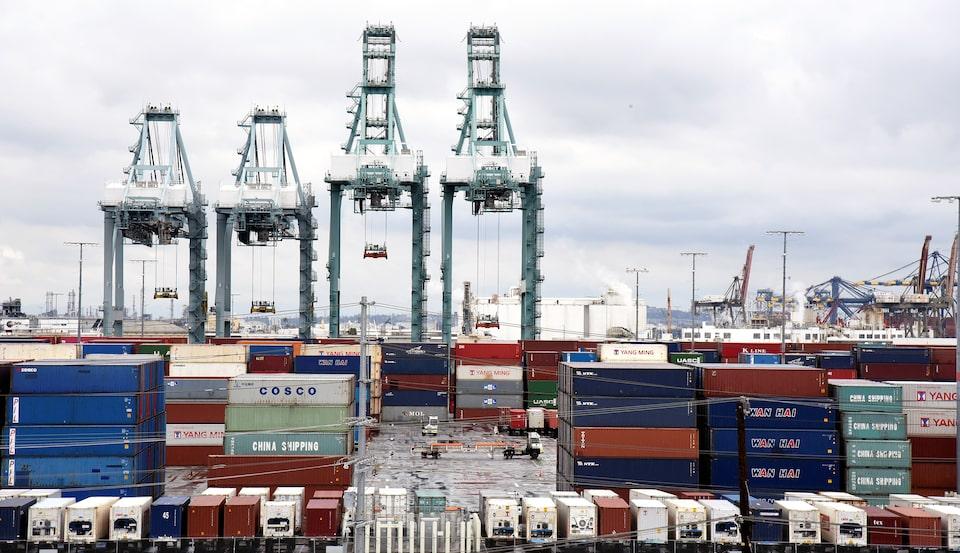
NEW YORK, July 9 (Reuters) - Bitcoin climbed to an all-time high near $112,000 late on Wednesday, bolstered by an increased risk appetite and persistent institutional demand as traditional financial market players embraced the world's largest cryptocurrency. It touched a record peak of $111,988.90 and was last up 0.4% at $111,259. Since the beginning of the year, bitcoin has advanced more than 18%. Sign up here. "Bitcoin is the only asset I am aware of where it becomes less risky as it grows in size," wrote Anthony Pompliano, founder and CEO of Professional Capital Management in a letter to investors on Wednesday. "There were few sophisticated capital allocators who could gain exposure when bitcoin was $100-200 billion market cap. Now that the asset is measured in trillions, almost every capital allocator on the planet can put the exposure on." The Trump administration's crypto-friendly policies have bolstered digital assets overall, opening pools of capital to the sector. For instance, Trump Media & Technology Group (DJT.O) , opens new tab, run by the U.S. president's family, is looking to launch an exchange-traded fund that will invest in multiple crypto tokens, including bitcoin, ether, solana and ripple, according to a filing with the U.S. markets regulator on Tuesday. Bitcoin's rally also spread to other cryptocurrencies. Ether, the second-largest digital currency in terms of market capitalization, also rallied, hitting a one-month high of $2,794.95. It last traded up 5.4% at $2,740.99 . Other crypto-related stocks also gained. Strategy (MSTR.O) , opens new tab, co-founded by the leading voice in the bitcoin treasury movement Michael Saylor, rose 4.7% to $415.41, while Coinbase Global (COIN.O) , opens new tab advanced 5.4% to $373.85. https://www.reuters.com/world/africa/dollar-gains-against-yen-trumps-trade-war-intensifies-2025-07-09/
2025-07-09 03:28
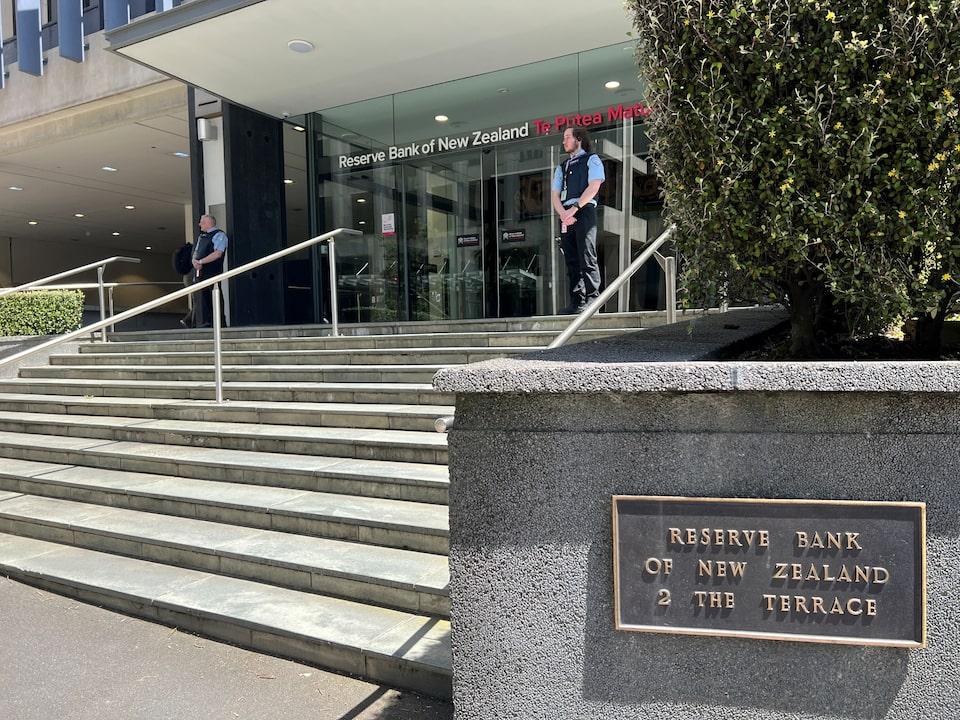
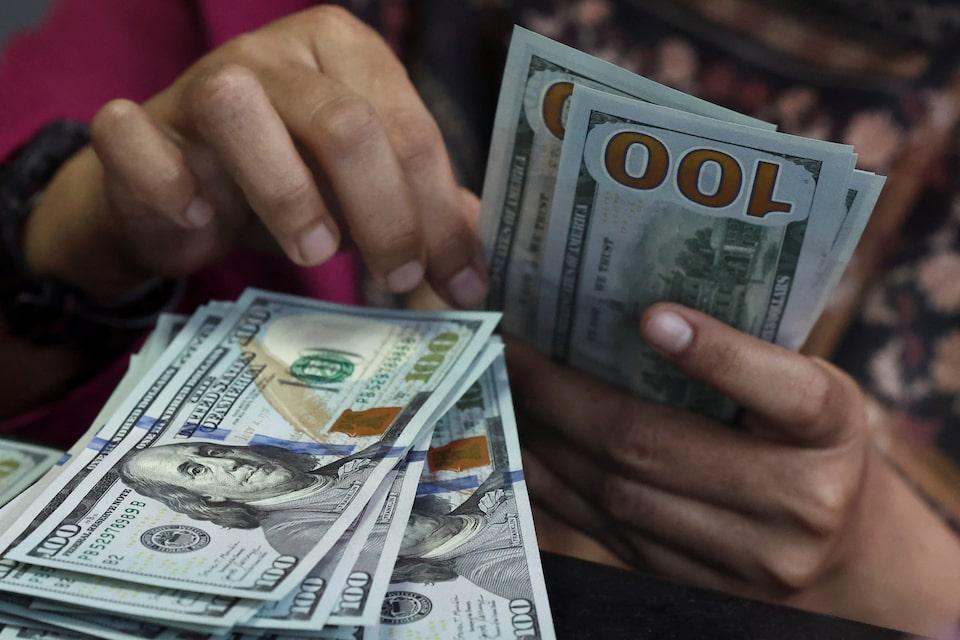
RBNZ leaves rates unchanged for first time since August 2024 It sees inflation reaching top of target band in 2Q and 3Q 2025 New Zealand dollar dips after decision WELLINGTON, July 9 (Reuters) - New Zealand's central bank held the benchmark interest rate at 3.25% on Wednesday, noting near-term inflation risks, but said it expected to loosen monetary policy if price pressures continued to ease as forecast. The decision was in line with a Reuters poll in which 19 of 27 economists surveyed projected the Reserve Bank of New Zealand would hold the cash rate (NZINTR=ECI) , opens new tab for the first time since it started a cutting cycle in August 2024. Sign up here. The central bank has cut rates by 225 basis points since August, but with inflation at 2.5% and concerns that trade tensions could add to price pressures, policymakers have adopted a more cautious approach. The minutes from the meeting said the RBNZ expected to lower the rate in line with projections released at its May meeting and highlighted the case for waiting until August to cut further in light of near-term inflation risks. The bank expects inflation will reach the top of the 1% to 3% target band in second and third quarters of 2025. "The economic outlook remains highly uncertain," a statement accompanying the decision said. "Further data on the speed of New Zealand’s economic recovery, the persistence of inflation, and the impacts of tariffs will influence the future path of the Official Cash Rate." Abhijit Surya, senior APAC economist at Capital Economics, said while current expectations implied a terminal rate of 2.75%, he expected it would go to a low of 2.5%. "We continue to believe that the Bank is understating the downside risks to activity and inflation," Surya said. The New Zealand dollar was down 0.3% at $0.5977 as markets saw at least one more cut following the central bank statement. Two-year-swap rates were flat at 3.16% as they pushed back expectations for a cut until the August meeting. A global front-runner in withdrawing pandemic-era monetary stimulus, the RBNZ aggressively lifted rates 525 basis points between October 2021 and September 2023 to curb inflation. The punishing borrowing costs took a heavy toll on demand and tipped the economy into recession last year. While the economy has emerged from the slump, parts of it remain weak and growth is further hampered by slower global conditions and tight fiscal policy. The statement said while elevated export prices and lower interest rates are supporting a recovery in New Zealand, heightened global policy uncertainty and tariffs are expected to reduce global economic growth. "This will likely slow the pace of New Zealand's economic recovery, reducing inflation pressures," it said. New Zealand is one of several countries to ease rates as inflation has moved lower. Its sharp reductions in borrowing costs contrast with a more cautious approach by the U.S. Federal Reserve and its counterpart in Australia as they assess Trump's broader U.S. economic agenda. The Reserve Bank of Australia stunned markets on Tuesday by leaving its cash rate unchanged at 3.85%, higher than New Zealand's rate and dashing expectations for a cut. https://www.reuters.com/business/finance/new-zealand-central-bank-holds-cash-rate-325-2025-07-09/