2025-07-08 17:54
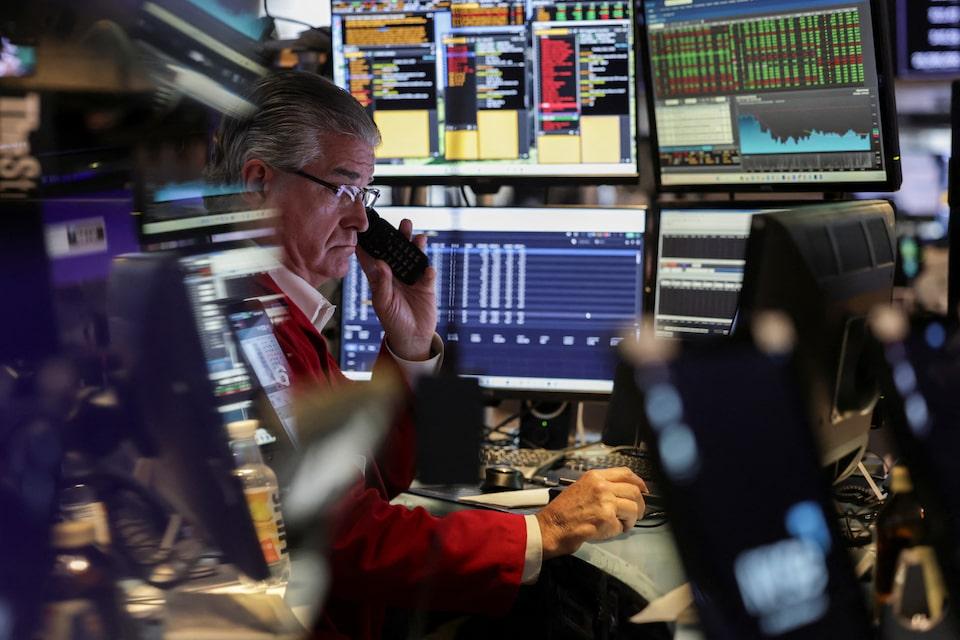
Flexibility in deadlines, portfolio resiliency among key takeaways Investors worry about market complacency, underestimating tariff impact on earnings August 1 now looms as deadline that could bring market choppiness NEW YORK, July 8 (Reuters) - Three months after President Donald Trump's sweeping global tariffs led markets to plunge and then rebound ferociously, investors are grappling with the fallout from the still-shifting trade backdrop and adjusting strategies to withstand sudden policy shifts. Among the lessons for investors from Trump's "Liberation Day" tariff announcement on April 2, and the developments since then: Brace for surprises from the Trump administration and be flexible. Pay attention to trade as you would monetary and fiscal policy. Don't over-react to headlines -- but also make your portfolios as resilient as possible to tariff news. Sign up here. "We're used to just thinking in terms of fiscal and monetary, but now trade policy is almost like this third leg of government policy and how it affects the economy," said Michael Reynolds, vice president of investment strategy at Glenmede. Investors had been laser-focused on Wednesday, which marked the end of a 90-day pause Trump has placed on many of the most severe "reciprocal" tariffs he had imposed in April on trading partners. The White House on Monday delayed the start of tariffs to August 1, while telling 14 nations that they would face levies ranging from 25% for countries including Japan and South Korea, to 40% for Laos and Myanmar. "Investors, and the market more broadly, are used to literal interpretations of announcements and what we're realizing with the Trump administration is that is dangerous because there is often flexibility ultimately in the end result," said Mark Hackett, chief market strategist at Nationwide. "We've learned over the last three months there is flexibility." Stocks tumbled in the days following the "Liberation Day" announcement, with the S&P 500 (.SPX) , opens new tab falling to the brink of a bear market. Stock and bond volatility spiked, with the daily equity index swings among the most severe since the onset of the coronavirus pandemic in early 2020. But stocks began climbing back following Trump's pause. A U.S. deal with the U.K. and a truce with China kept the market's momentum going. Volatility measures moderated significantly as well, with the Cboe Volatility index (.VIX) , opens new tab, Wall Street's "fear gauge", falling to its long-term median level. Helped by a better-than-feared first-quarter earnings season and economic data, the S&P 500 on June 27 hit a record high for the first time in over four months. The benchmark index is now up about 6% for the year. "Uncertainty at Liberation Day was very open-ended," Reynolds said. "But the outline of a couple of these initial trade deals have kind of narrowed the field of what's probable on tariffs... The fact that we don't have this open-ended risk where tariffs could go anywhere I think is pretty constructive." Even so, he said, the rebound has been "so swift and large in magnitude that it wouldn't surprise us to see a near-term pullback." Stocks are not fully factoring in the negative impact to earnings from tariffs that are already in place while investors may be overly optimistic that trade deals will be completed, said Kristina Hooper, chief market strategist at Man Group. "I'm not convinced that all the pieces are there for the stock market to be as positive as it is," Hooper said. One lesson from the past few months, Hooper said, is the potential for tariffs to "come out of left field." She pointed to Trump's threat this week that countries aligning themselves with the "Anti-American policies" of the BRICS bloc will be charged an additional 10% tariff. "What I've learned is to expect to be surprised," Hooper said. Some investors have referred to the acronym "TACO", or Trump Always Chickens Out, as a rationale for why markets should not fear the announcement of harsh tariffs because many believe they will likely be moderated. Heading into this week's initial tariff deadline, King Lip, chief strategist at Baker Avenue Wealth Management, said that market complacency was high and he expects more choppiness as trade uncertainty rises again. "The biggest risk for investors now is that there is no pause after the trade deadlines and large tariffs are imposed by the administration," Lip said. While stocks have rebounded, the U.S. dollar has continued to weaken since Liberation Day, sliding about 6% against a basket of major currencies. Investors have trimmed exposure to U.S. assets while also reassessing the greenback's status as the world's reserve currency because of the uncertain policy backdrop. Gold , which tends to benefit as a safe-haven asset during times of geopolitical uncertainty, has climbed 6% since April 2 and is up 26% on the year. Some investors have shifted strategies to manage through tariff uncertainty. Janus Henderson Investors has been paring back holdings in some portfolios that could be more vulnerable to tariffs, such as Japanese and European automakers and exporters with long supply chains, said Julian McManus, portfolio manager at the firm. Meanwhile, the firm has been favoring service companies that are removed from the crosshairs of the trade war, such as digital services or online music streaming companies. "We've been extending timelines and making portfolios more resilient," McManus said. "It’s just important to keep a cool head and not get caught up in the day-to-day headlines that can be unsettling." https://www.reuters.com/business/investors-put-liberation-day-lessons-work-scarred-by-tariff-tumult-2025-07-08/
2025-07-08 17:32
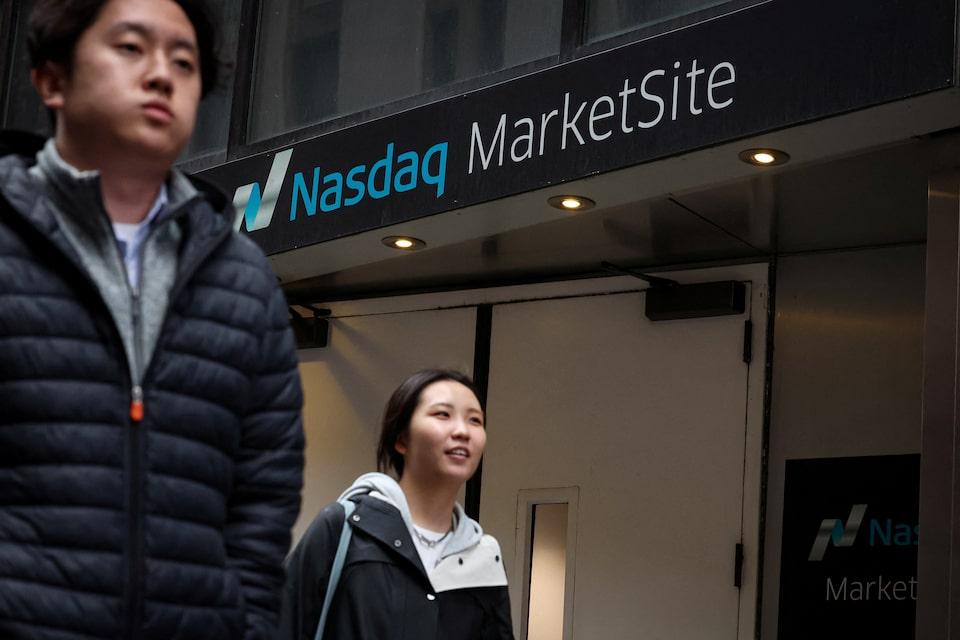
July 8 (Reuters) - ReserveOne, a new crypto venture with ties to industry veterans and a former U.S. commerce secretary, will list on the Nasdaq through a merger with blank-check firm M3-Brigade Acquisition V Corp (MBAV.O) , opens new tab and is expected to raise more than $1 billion. The company will manage a portfolio of cryptocurrencies including bitcoin, ethereum and Solana, while aligning its holdings with the U.S. strategic crypto reserve, it said on Tuesday. Sign up here. The deal, expected to close in the October-December quarter, is the latest in a series of efforts to wrap crypto assets into equity and make them more appealing for traditional investors. The exponential stock price growth of Michael Saylor's Strategy (MSTR.O) , opens new tab, which pivoted to a bitcoin-focused business model in 2020, has also popularized the playbook. While ReserveOne is joining a crowded space, its CEO Jaime Leverton said the company's investment strategy and leadership give it an edge. Leverton previously led crypto miner and computing provider Hut 8 (HUT.O) , opens new tab. "Our management team and anticipated board of directors bring a really unique pedigree and diversity of background between Wall Street and regulatory and crypto," Leverton told Reuters. Sebastian Bea, a former executive at asset managers BlackRock (BLK.N) , opens new tab and Coinbase Asset Management (COIN.O) , opens new tab , will serve as ReserveOne's president and head of investment. Its board will be chaired by stablecoin giant Tether's co-founder Reeve Collins and will include former Blackstone (BX.N) , opens new tab dealmaker Chinh Chu and Wilbur Ross, the Secretary of Commerce in the first Trump administration. "Wilbur was a skeptic. But over the last number of months, he's really opened up to this space," Leverton said. The company also plans to generate returns by offering some assets for lending and institutional staking — a practice where crypto is locked up in exchange for periodic payouts. Blockchain.com and Kraken are among the investors in the blank-check deal, contributing up to $750 million through a combination of equity and convertible debt offering. Blank-check firms such as M3-Brigade are shell entities that raise capital through an IPO with the sole purpose of merging with a private company, which then becomes publicly traded. https://www.reuters.com/business/reserveone-backed-by-crypto-heavyweights-set-raise-over-1-billion-nasdaq-listing-2025-07-08/
2025-07-08 16:28
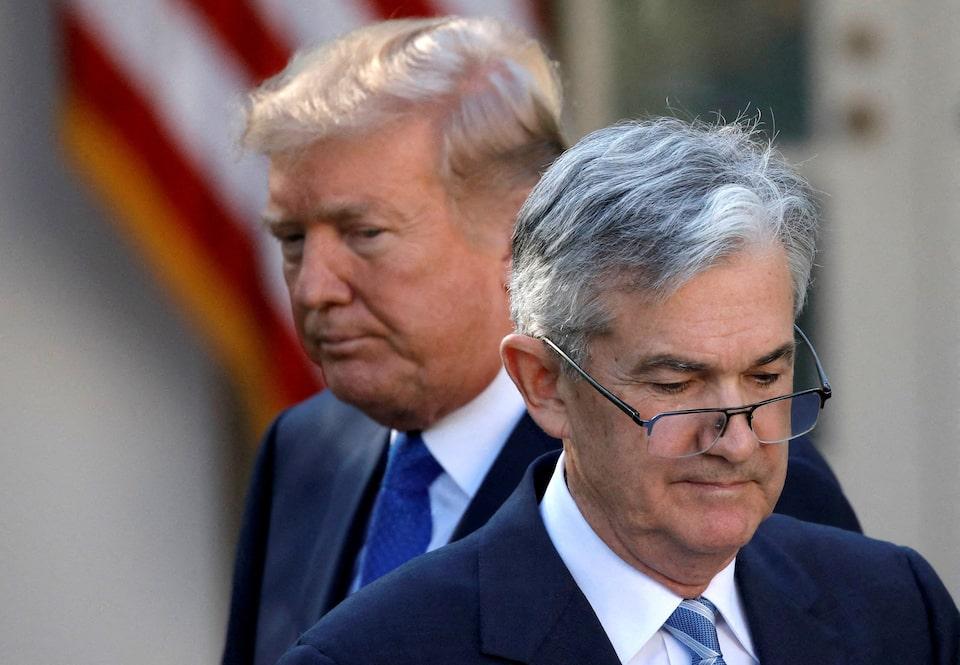
WASHINGTON, July 8 (Reuters) - U.S. President Donald Trump said on Tuesday that Federal Reserve Chair Jerome Powell should resign immediately. Sign up here. https://www.reuters.com/business/finance/trump-says-feds-powell-should-resign-immediately-2025-07-08/
2025-07-08 15:41
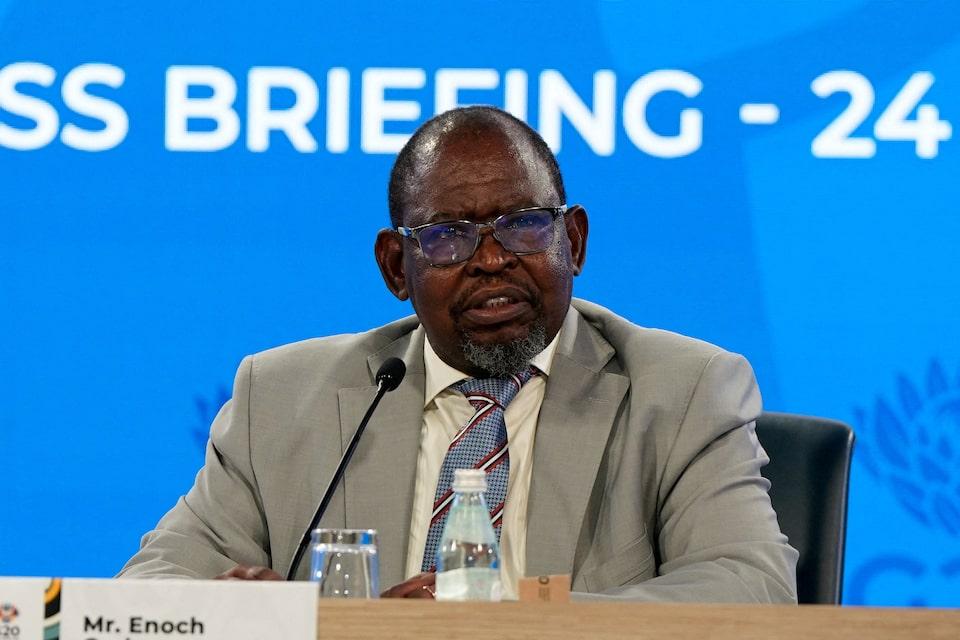
JOHANNESBURG, July 8 (Reuters) - South Africa's finance minister said work towards a lower inflation target was advancing but that it should not be rushed, after the central bank again stressed its preference for a lower target at its last interest rate announcement. Signs that the government could soon announce a lower inflation target, which the finance minister would have to sign off on, have boosted investor confidence and lifted the bond market in recent weeks. Sign up here. But while South African Reserve Bank (SARB) Governor Lesetja Kganyago has for years advocated for a lower target than the current 3%-6% range, Finance Minister Enoch Godongwana has been more reluctant. "Work is progressing well on the proposed lower inflation target. ... (But) it needs to be clarified that this policy responsibility resides with the Minister of Finance, who sets the target in consultation with the SARB," Godongwana said in comments in parliament on Tuesday. "Such decisions should not be taken in haste, without the necessary technical and political engagements that achieve a genuine consensus grounded in a thorough consideration of the social and economic realities." The central bank at its May monetary policy announcement (ZAREPO=ECI) , opens new tab released modelling of a lower inflation target of 3%, which it said its Monetary Policy Committee found more attractive than the midpoint of the 3%-6% range it aims for. Annual inflation was running at 2.8% in May (ZACPIY=ECI) , opens new tab, the latest month for which data is available. The central bank's next policy announcement is on July 31. https://www.reuters.com/world/africa/south-african-minister-says-work-lower-inflation-target-should-not-be-rushed-2025-07-08/
2025-07-08 14:23
July 8 (Reuters) - Linqto, the investment platform that let users access shares of privately held companies, filed for bankruptcy on Tuesday, citing challenges stemming from alleged securities law violations. The company's move comes after months of investigation by the Securities and Exchange Commission and the Financial Industry Regulatory Authority, Wall Street's self-regulator. Sign up here. Linqto had discovered "serious defects in the corporate formation, structure, and operation of the business that raise questions about what customers actually own," its CEO, Dan Siciliano, said, adding that the company faces "potentially insurmountable operating challenges." The case underscores the risks individual investors face when venturing into private markets. While buzzy startups like OpenAI and SpaceX have fueled interest in pre-IPO shares, the space remains lightly regulated, making it risky for those without the protections and transparency typically found in public markets. Linqto suspended its operations in March after becoming aware of the extent of its previous non-compliance with securities laws, the company said in its court filing. Seeking Chapter 11 bankruptcy protection will allow Linqto to preserve the value of its assets and assess strategic alternatives, it added. Linqto holds $500 million worth of shares in 111 companies on behalf of its customers, according to the filing. The company filed its motion in the U.S. Bankruptcy Court for the Southern District of Texas. It has secured commitment for an up to $60 million debtor-in-possession financing from Sandton Capital Partners. Debtor-in-possession financing allows bankrupt companies to continue operating during restructuring. https://www.reuters.com/legal/litigation/private-investment-platform-linqto-files-bankruptcy-amid-sec-scrutiny-2025-07-08/
2025-07-08 13:02
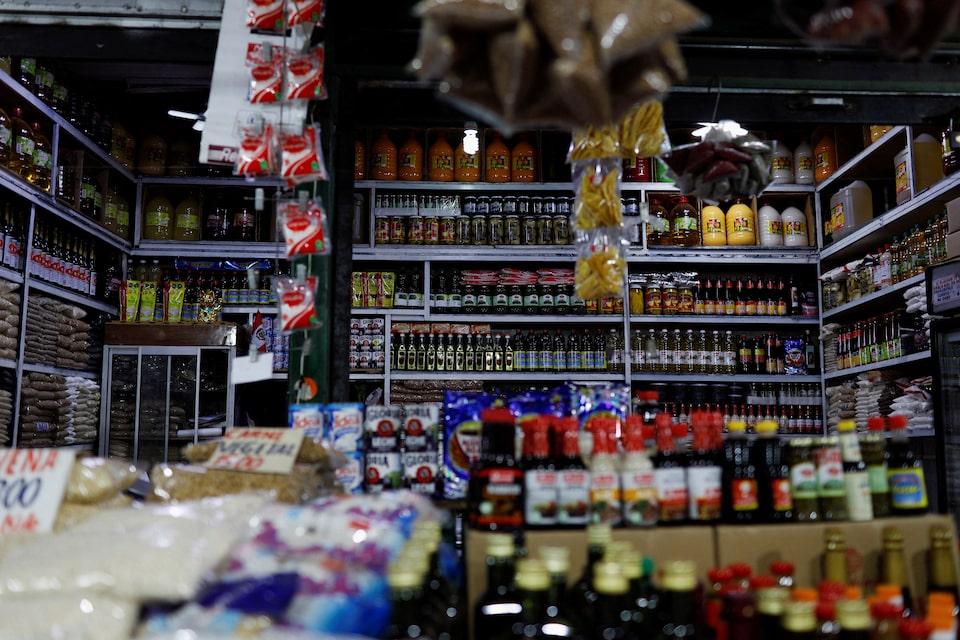
July 8 (Reuters) - Chile's consumer prices posted in June their first monthly drop this year and the steepest since late 2023, data from statistics agency INE showed on Tuesday, fueling expectations that the central bank may resume monetary easing later this month. Prices in the world's largest copper producer fell 0.4% in June from the previous month, a sharper drop than the 0.12% decline expected by economists in a Reuters poll. Sign up here. Six of the 13 sectors surveyed recorded price decreases in the month. "The price drops in the food and non-alcoholic beverages group, as well as in the apparel and footwear division, were notable," INE said in a statement. Annual inflation in the South American country hit 4.1%, INE added, slowing from the 4.4% registered in the previous month and closing in on the Chilean central bank's target range of 2% to 4%. The data "supports our view that policymakers will resume its easing cycle with a 25-basis-point cut, to 4.75%, later this month," Capital Economics' emerging markets economist Kimberley Sperrfechter said in a note to clients. Chile's central bank last month kept its benchmark interest rate unchanged at 5% for a fourth consecutive meeting given above-target inflation and global uncertainties, but later said that a 25-basis-point cut had been considered. https://www.reuters.com/world/americas/chile-posts-steepest-monthly-price-drop-since-2023-ahead-rate-decision-2025-07-08/