2025-07-08 06:30
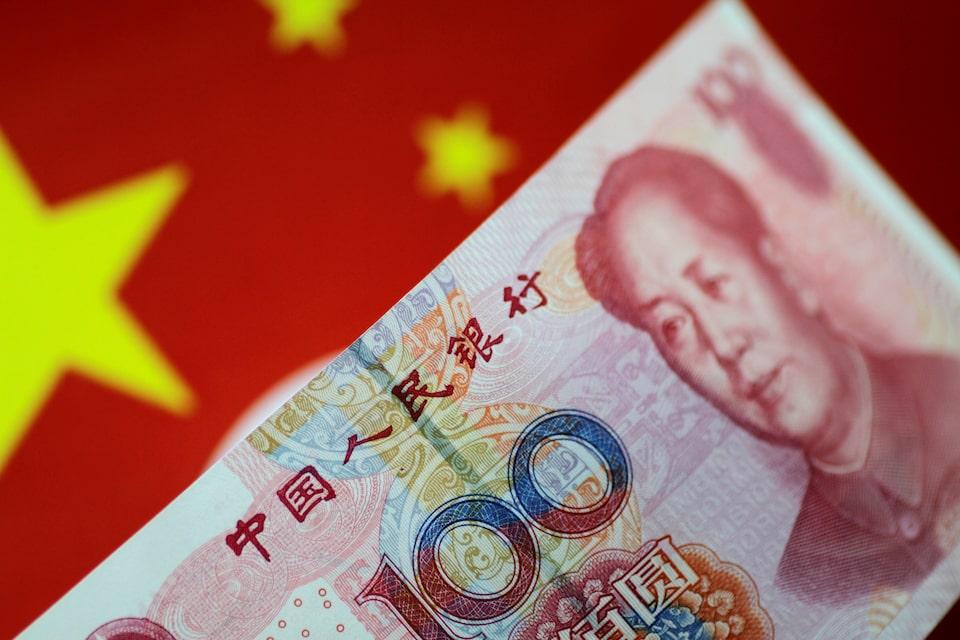
July 8 (Reuters) - Chinese businesses and investors are primed for the yuan to stay steady for now and eventually depreciate as U.S. trade tensions drag on, and a string of measures and hints from monetary authorities suggest they may be on the money. A growing pile of foreign exchange deposits at banks and a rise in currency swaps show Chinese corporates and households are wagering they can exchange their dollars for more yuan if they wait. Sign up here. That conviction, in the face of the U.S. dollar's broad-based slide against most other currencies, is driven for the most part by central bank's efforts to keep the currency steady and even encourage more investment offshore. It also shows the People's Bank of China (PBOC) is in a bind. A sudden yuan move in either direction could trigger a wave of selling of billions of dollars by businesses and households, either to catch better yuan levels or to stave off losses. China's yuan has strengthened 1.5% against the flagging dollar since April 2, when U.S. President Donald Trump announced punishing trade tariffs on scores of countries, leading to market ructions that have eroded confidence in U.S. economic policymaking and the dollar's haven appeal. In the same period, currencies such as the Thai baht , South Korea's won and Taiwan dollar have risen between 6% and 14%. The yuan has spent most of 2025 in a narrow range between 7.15 and 7.35 to the dollar, its weakest levels in 4-1/2-years in trade-weighted terms (.CFSCNYI) , opens new tab. The export sector, comprising a fifth of economic growth, is grappling with higher U.S. import tariffs of as much as 55% going by the latest trade framework agreed between the world's two biggest economies in early June. China was initially singled out with tariffs exceeding 100% and has until August 12 to reach an agreement with the White House to keep Trump from reinstating additional import curbs imposed during tit-for-tat tariff exchanges in April and May. "Considering the external risks from U.S. trade policies, China needs to maintain a very competitive currency with respect to other markets outside the U.S.," said Eugenia Victorino, head of Asia strategy at SEB. PBOC SIGNALS The PBOC did not respond to a Reuters request for comments. Since May, it has managed its daily yuan "guidance" settings to indicate it doesn't desire too much strength in the yuan. It has also signalled willingness for mainland investors to shift some of their money from low-yielding onshore markets to stocks and bonds in Hong Kong, which some analysts suspect is to generate some selling pressure on the yuan. Authorities approved a fresh $3.08 billion quota for domestic institutions (QDII) to invest in overseas assets in June. On Tuesday, the PBOC said the southbound leg of the Bond Connect scheme, which enables institutions on the mainland to access Hong Kong's bond market, will be expanded to brokerages, insurers, mutual funds and wealth managers. China's central bank also surveyed some financial institutions last week asking them about their views on recent U.S. dollar weakness, sources told Reuters on Monday. "The PBOC has been prioritising currency stability for quite some time, so while most of the focus the past couple of years has been on preventing rapid depreciation, this also applies to manage the pace of appreciation as we're now seeing," said Lynn Song, chief economist for Greater China at ING. "My forecast band for this year was set at 7 to 7.4, and I believe it is likely that this band will still hold through the year." Unsurprisingly, rampant dollar hoarding by Chinese businesses has continued, encouraged also by the high yields on U.S. dollar assets. Foreign exchange deposits grew $137.2 billion in the first five months of this year, or 19% year-on-year, to $990.1 billion at end-May, PBOC data showed. Reuters calculations showed the conversion ratio - a gauge that measures households' and corporates' willingness to sell dollars for yuan - has slipped. Wary of missing out on potential gains from yuan depreciation, exporters have turned to currency swaps to temporarily obtain yuan. Commercial banks facilitated $277.5 billion of currency swaps on behalf of their clients between January and May, a 10% increase over the same period last year, according to data from regulators. https://www.reuters.com/business/finance/china-inc-bets-beijing-will-keep-tight-grip-yuan-us-tariff-fears-persist-2025-07-08/
2025-07-08 06:29
KATHMANDU, July 8 (Reuters) - Over two dozen people are missing after heavy rainfall in the Tibet region of China triggered a deluge in the Bhote Koshi River, which flows through Nepal and China, washing away the 'Friendship Bridge' that connects them, officials said on Tuesday. At least 18 people are missing in Nepal while China's Xinhua news agency said 11 people were missing on the Chinese side of the border. Sign up here. In Nepal, the missing include the 6 Chinese workers and three policemen, the National Disaster Risk Reduction and Management Authority (NDRRMA) said on X, adding that eight electric cars were also washed away and a small hydroelectric plant damaged in the flood. The missing Chinese nationals were working at the Inland Container Depot, being constructed with Chinese assistance about 80 km (50 miles) north of the capital Kathmandu, said Arjun Paudel, a senior administrative official of Rasuwa district. "The river also swept away some containers with goods imported from China...There is a big loss (of property) and we are collecting details," he told Reuters. The Nepal Army has rescued 11 people, and search and rescue operations are still underway, spokesperson Raja Ram Basnet said. China has been increasing its investment in Nepal in recent years in domains including roads, power plants, and hospitals. The Asian giant has been battered by heavy rain and flash floods over the last few days, which have left a trail of destruction, and is bracing for a tropical storm this week. In Pakistan also, at least 79 people, including 38 children, have died in floods and rain-related incidents, including landslides and house collapses, since June 26, its National Disaster Management Authority (NDMA) said on Tuesday. The authority has issued fresh alerts for flash flooding and glacial lake outbursts in the northern and northwestern provinces of Gilgit-Baltistan and Khyber Pakhtunkhwa, citing "a significant rise in temperatures and ... an upcoming weather system." Gilgit-Baltistan's northern Chilas district recorded the highest temperature in Pakistan on Saturday at 48.5 degrees Celsius (119°F), breaking its earlier record of 47.7 degrees Celsius (118°F) reported in July 1997, said NDMA spokesperson Sophia Siddiqui. https://www.reuters.com/sustainability/climate-energy/dozens-missing-after-floods-nepal-china-border-2025-07-08/

2025-07-08 06:18
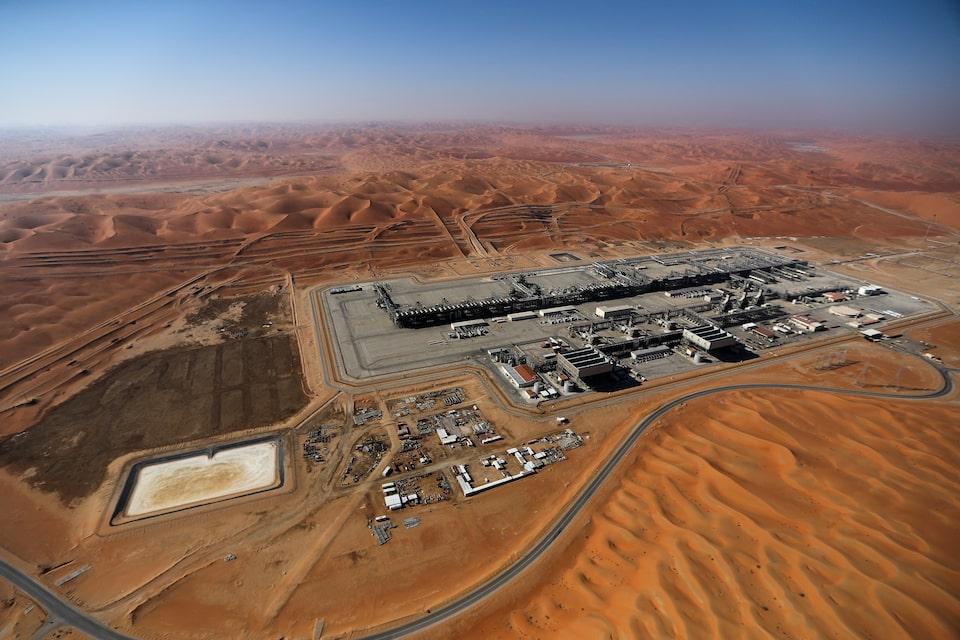
OPEC+ to increase output target by 2.5 million bpd between April and September Saudi has large spare production while others produce at capacity Riyadh's share of global oil production declined to 11% in 2024 from 13% LONDON, July 8 - Saudi Arabia's drive to rapidly increase OPEC+ oil output may put Riyadh in the pole position to regain market share today while also solidifying its dominance over the long term. A group of eight major oil producers - Saudi Arabia, Russia, the United Arab Emirates, Kuwait, Oman, Iraq, Kazakhstan and Algeria - decided on Saturday to increase joint production by 548,000 barrels per day in August, speeding up the unwinding of a tranche of cuts totalling 2.17 million bpd that started in April. Sign up here. The combination of this accelerated schedule and an agreed 300,000 bpd increase in the UAE's base production level mean that by the end of September OPEC+ will likely boost its output target by 2.5 million bpd this year. Yet the new quotas will not actually lead to a dramatic change in the group’s aggregate output, as most members are already producing at or above those levels. None more so than Kazakhstan, whose lack of compliance with OPEC+ production targets has irked Saudi Arabia for months. The Central Asian country produced 1.88 million bpd in June, matching March's all-time high, far in excess of its August production target of 1.53 million bpd. In total, the eight OPEC+ members produced an aggregate 32 million bpd in June compared with a quota of 31.38 million bpd, according to Reuters estimates. So it is clear that unwinding the production cuts is largely about catching up with the reality on the ground. But by making this move now, Saudi Arabia, the de-facto leader of OPEC+ and the world's top oil exporter, is well-positioned to both reestablish discipline in the group and increase its market share. SPARE CAPACITY Saudi’s share of global oil production has declined from an average of 13% over the past three decades to 11% in 2024, according to the Energy Institute’s Statistical Review of World Energy. Similarly, the country’s crude exports accounted for only 15% of global seaborne exports in 2024 from an average of 18% in the previous decade, according to analytics firm Kpler. Riyadh will want to reverse this trend and solidify its dominant global position since oil and gas revenues contributed 22.3% of the country’s gross domestic product in 2024, according to International Monetary Fund figures. To its advantage, Saudi Arabia has a lot of untapped oil production capacity. The country produced around 9.55 million bpd in June, according to Keshav Lohiya, founder of consultancy Oilytics, based on Petro-Logistics data. This leaves it with an extra 200,000 bpd of production increases available through August under the OPEC+ deal. It also has a production buffer of nearly 3 million bpd it can tap within 90 days, according to International Energy Agency estimates. In short, with the exception of the UAE, Saudi Arabia is the only OPEC+ producer with room to substantially increase production in the coming quarters. PRICE WAR Additional production boosts will obviously put further downward pressure on benchmark crude prices, which have fallen some 15% this year to under $70 a barrel, largely due to OPEC’s initial unwinding of supply cuts along with demand concerns related to U.S. President Donald Trump’s trade war. But falling prices could work in Saudi Arabia’s favour because both OPEC+ and non-OPEC+ producers are apt to reduce spending in the face of low prices, meaning Riyadh – with its ample spare capacity and low production costs – will be better positioned than its rivals to meet new demand in the coming years. The recent price decline has already had a noticeable impact on U.S. shale oil producers. The Energy Information Administration forecasts U.S. production to decline from an all-time high of 13.5 million bpd in the second quarter of this year to around 13.3 million bpd in the fourth quarter of 2026, the first drop since the surge in production at the end of the last decade. Given these dynamics, Riyadh could potentially seek to further accelerate OPEC+ cuts in the coming months to put even more pressure on its rivals while increasing its own output. LONG GAME But, ultimately, the Saudis are making a long-term bet. While nimble U.S. shale producers may have responded immediately to Riyadh’s gambit, the impact on the rest of the industry will take far more time to play out. Slowing investment in new capacity such as offshore fields will take years to translate into lower output. Indeed, global supplies are set to rise by 1.6 million bpd to an average of 104.6 million bpd in 2025 and an additional 970,000 bpd next year, outstripping the expected increase in demand over that period, according to IEA forecasts. And most of the supply growth is expected to be driven by non-OPEC+ producers such as the United States, Brazil, Argentina, Guyana and Canada, according to the IEA. But these forecasts are precisely why the Saudis needed to move to maintain their market dominance over the long term. And given the current market dynamics – with oil producers reluctant to spend heavily on new production due to weak prices and uncertainty over global demand in the energy transition – Riyadh could well find that its gamble has paid off. Enjoying this column? Check out Reuters Open Interest (ROI), , opens new tabyour essential new source for global financial commentary. ROI delivers thought-provoking, data-driven analysis. Markets are moving faster than ever. ROI , opens new tab can help you keep up. Follow ROI on LinkedIn , opens new tab and X. , opens new tab https://www.reuters.com/markets/commodities/saudi-plays-short-long-game-with-opec-production-gamble-2025-07-08/
2025-07-08 06:09
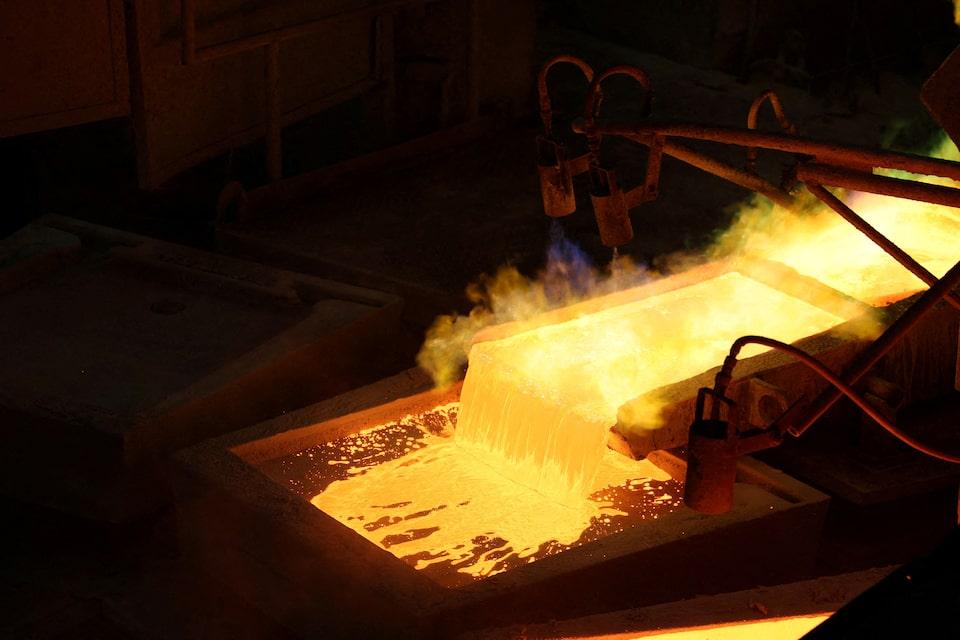
Climate change threatens 32% of chip industry's copper supply by 2035-PwC report Risk rises to between 42% and 58% by 2050 Main risk comes from drought affecting copper processing No chipmaking region spared from supply risks AMSTERDAM, July 8 (Reuters) - Some 32% of global semiconductor production could face climate change related copper supply disruptions by 2035, quadrupling from today's levels, advisory firm PricewaterhouseCoopers (PwC) said in a report for business leaders on Tuesday. Chile, the world's largest copper producer, already grapples with water shortages that are slowing down production. By 2035, most of the 17 countries supplying the chip industry will be at risk of drought, PwC said. Sign up here. The last global chip shortage, fueled by a pandemic-driven demand spike that coincided with factory shutdowns, crippled the automotive industry and halted production lines across other chip-dependent sectors. "It cost the U.S. economy a full percentage point in GDP growth and Germany 2.4%," PwC project lead Glenn Burm said in the report, citing the U.S. Department of Commerce. Copper miners from China, Australia, Peru, Brazil, the U.S., Democratic Republic of Congo, Mexico, Zambia and Mongolia will also be affected, sparing none of the world's chipmaking regions from risk, PwC said. Copper is used to make the billions of tiny wires inside every chip's circuit. Even if alternatives are being researched, there is currently no match for its price and performance. The risk will only increase over time if innovation on materials does not adapt to climate change, and a more secure water supply is not developed in the affected countries, PwC said. "Around half of every country's copper supply is at risk by 2050 – no matter how fast the world reduces carbon emissions," the report says. Chile and Peru have taken steps to secure their water supply by increasing mining efficiency and building desalination plants. This is exemplary, PwC says, but may not be a solution for countries with no access to large bodies of sea water. PwC estimates that 25% of Chile's copper production is at risk of disruptions today, rising to 75% within a decade and to between 90% and 100% by 2050. https://www.reuters.com/sustainability/climate-energy/third-chip-production-could-face-copper-supply-disruptions-by-2035-pwc-report-2025-07-08/
2025-07-08 05:31
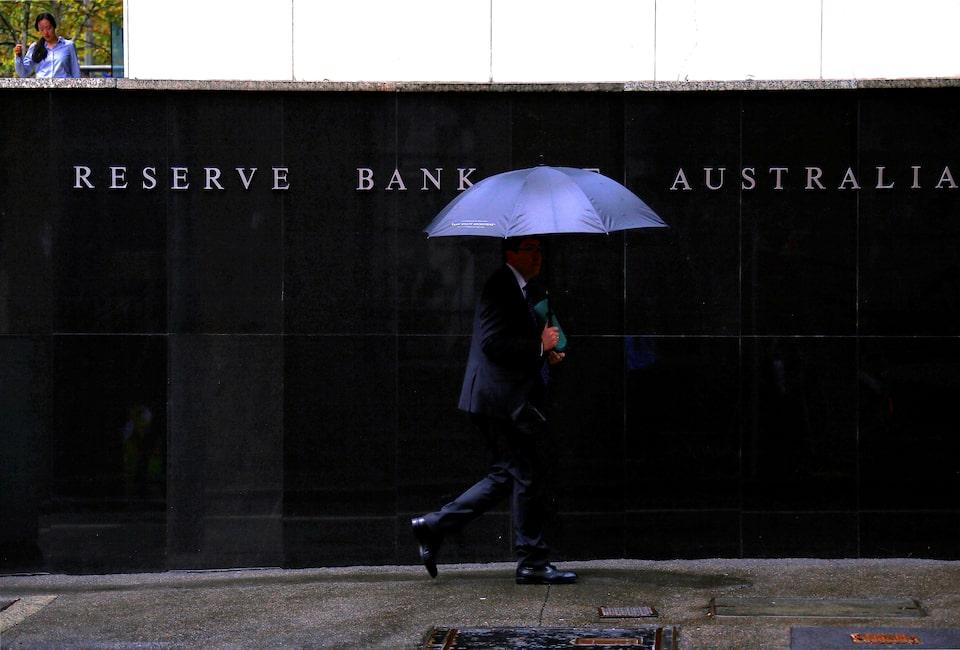
RBA holds rates at 3.85% despite market expectations for a cut Australian dollar rises, bond futures fall after RBA decision Markets now favour rates bottoming at 3.10%, rather than 2.85% Treasurer Chalmers notes disappointment, cites progress on inflation SYDNEY, July 8 (Reuters) - Australia's central bank on Tuesday left its cash rate steady at 3.85%, a shock for markets that had confidently wagered on a cut, saying the majority of the board wanted to wait for more information to confirm inflation was slowing. Traders were quick to send the Australian dollar racing up 0.8% to $0.6543, while three-year bond futures extended earlier losses and fell 10 ticks to 96.60. Sign up here. The swift moves in markets imply around an 88% chance the cash rate would be cut to 3.60% at its Aug. 12 meeting, and now favours rates bottoming at 3.10% rather than 2.85%. Wrapping up a two-day policy meeting, the Reserve Bank of Australia said it remained cautious about the inflation outlook, adding that six members had voted to hold rates steady while three voted against, a rare split decision for the board. Markets had been almost fully priced for an easing to 3.60% this week given core inflation had slowed to the mid-point of the RBA's 2% to 3% target range and consumer spending was proving weaker than expected. "The Board judged that it could wait for a little more information to confirm that inflation remains on track to reach 2.5 per cent on a sustainable basis," the board said in a statement. "It noted that monetary policy is well placed to respond decisively to international developments if they were to have material implications for activity and inflation in Australia." RBA Governor Michele Bullock said the disagreement within the board was more about timing and that the bank remains on an easing path as long as the second quarter CPI comes in roughly in line with forecasts, stressing that monthly reports are somewhat volatile. Speaking at a press conference following the policy decision, Bullock said if second quarter inflation "comes in as we think it will and continues to decline, then that validates our easing path. And that's what we were waiting for." The central bank chief added that the worst outcome in U.S. tariffs has been averted but noted the levies are still higher than before. On Monday, President Donald Trump ramped up his global trade war, telling trade partners like Japan and South Korea that higher U.S. tariffs would start on August 1, although there appeared to be opportunities for additional negotiations. Australia Treasurer Jim Chalmers said the RBA decision to hold rates was not the result millions of Australians were hoping for or what the market was expecting. "We suspect the downside risks that had focused the Board’s attention in May have receded significantly, which has subsequently been reflected in a different tone," said Adam Boyton, head of Australia economics at ANZ. "Looking ahead we expect the RBA Board will decide to cut the cash rate in August... We also see an additional easing beyond August as more likely than not." LESS DOVISH OUTLOOK? The central bank cut interest rates in February and May, but the reductions did little to spur consumers into spending even as they lifted housing prices to record highs. The stubbornly frugal consumer is a reason that the economy barely grew in the first quarter and a slew of soft retail sales reports suggest households are saving rather than spending past tax cuts. A monthly inflation report had the closely-watched trimmed mean measure hitting 2.4% in May, a 3-1/2 year low and coming under the midpoint of the target band of 2-3%. That had prompted many economists to bring forward their rate cut call to July from August. However, in its statement, the RBA said while the monthly CPI indicators "suggest that June quarter inflation is likely to be broadly in line with the forecast, they were, at the margin, slightly stronger than expected." The labour market remained resilient, which argues against the RBA rushing into stimulatory policy settings. The unemployment rate has been hovering at 4.1% for over a year now. "The upshot is that barring a major upside surprise in the Q2 inflation data, we still expect a cut at the Bank's next meeting in August," said Marcel Thieliant, head of Asia-Pacific economics at Capital Economics. "That said, the risks are now tilted towards less easing than the 100bps of cuts we're forecasting over the coming twelve months." https://www.reuters.com/sustainability/sustainable-finance-reporting/australias-central-bank-keeps-rates-steady-385-stuns-markets-2025-07-08/
2025-07-08 05:29
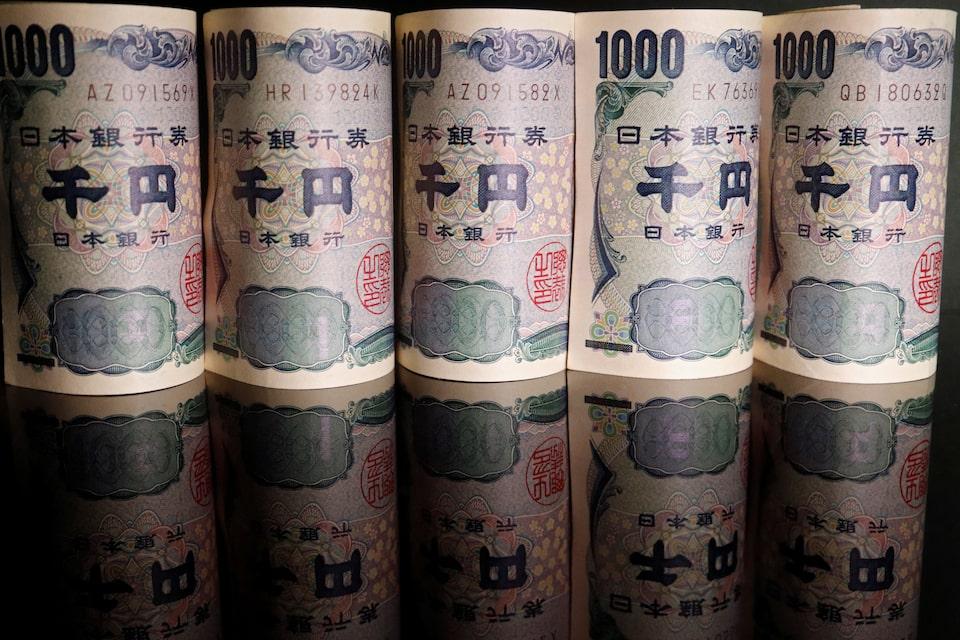
Trump unveils 25% tariffs on Japan, South Korea Japan's yen struggles to recover from losses RBA leaves rates unchanged, Aussie jumps NEW YORK, July 8 (Reuters) - The yen took a hit on Tuesday after U.S. President Donald Trump reiterated his plan to impose 25% tariffs on goods from Japan and South Korea in the latest twist of his unpredictable trade war. The Australian dollar charged higher after the country's central bank defied market expectations and left its cash rate steady at 3.85%. Sign up here. Trump on Monday began telling trade partners – from powerhouse suppliers such as Japan and South Korea to minor players – that sharply higher U.S. tariffs will start August 1, but he later said he was open to extensions if countries made proposals. The yen weakened on Tuesday, leaving the dollar up 0.38% at 146.625. Prime Minister Shigeru Ishiba said on Tuesday he would continue negotiations with the U.S. to seek a mutually beneficial trade deal. "Market participants overwhelmingly expect the administration to keep kicking the can down the road," said Karl Schamotta, chief market strategist at Corpay, in a research note. "Although heightened uncertainty levels will unquestionably take a meaningful toll on business investment in the near term, Trump is seen raising effective tariff rates incrementally... while stopping short of inflicting a devastating supply shock on the American economy." The European Union will not receive a tariff letter and could secure exemptions from the U.S. baseline rate of 10%, EU sources familiar with the matter told Reuters on Monday. Reflecting the contrasting fortunes of the two trading partners, the euro hit a one-year high against the yen and was last up 0.58% at 171.980. The euro also rose against the dollar, up 0.17% to $1.1729. "There is still a lot of uncertainty as to where tariff rates will eventually settle and which countries will get what rates, so uncertainty about the global economy is still high and that will keep investors on edge for the time being," said Carol Kong, a currency strategist at Commonwealth Bank of Australia. RBA STUNS MARKETS The standout performer among the major currencies on Tuesday was the Aussie dollar , which rose more than 1% in response to the RBA's surprise decision to leave rates unchanged. It was last up 0.6% at $0.653. Markets had positioned for a cut, yet the central bank said the board "judged that it could wait for a little more information" to confirm that inflation was slowing. Still, the board noted that the risks to inflation were more balanced and appeared to be waiting for a reading on second-quarter prices due at the end of July before deciding. "The uncertainty around Trump's tariffs means that it doesn't embolden a decisive decision, whereas the need for more assurance over inflation means they probably want to wait out this meeting and get into August," said Vishnu Varathan, head of macro research for Asia ex-Japan at Mizuho. The New Zealand dollar was last down 0.03% at $0.6, while sterling fell 0.04% to $1.3597. https://www.reuters.com/world/middle-east/yen-stumbles-trump-imposes-25-tariffs-japan-2025-07-08/