2025-07-08 05:27
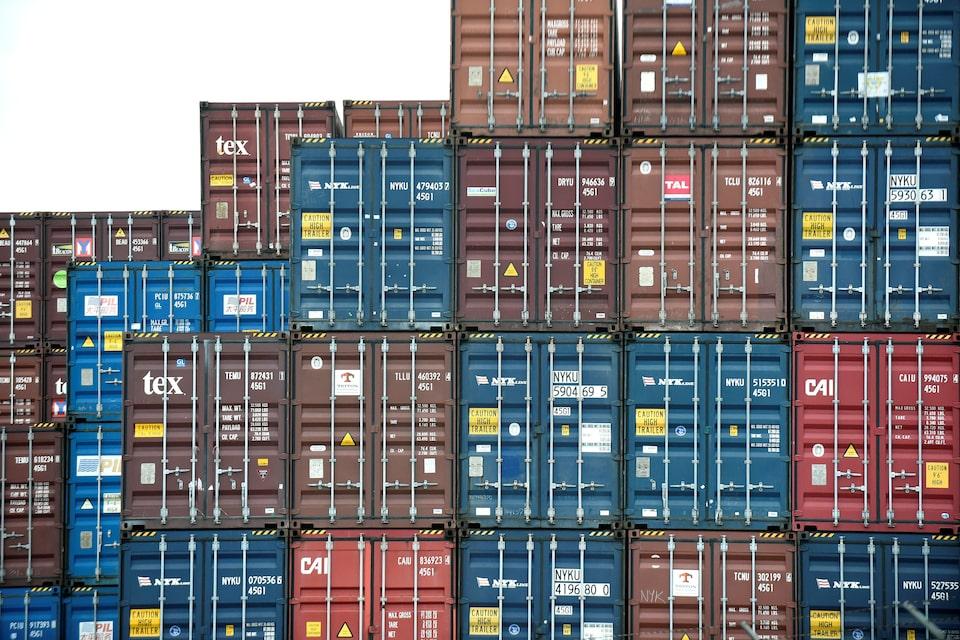
MUMBAI, July 8 (Reuters) - The Indian rupee gained slightly in early trading on Tuesday, in line with an uptick in most Asian peers while traders remained light-footed, awaiting clarity on the ongoing trade negotiations between India and the United States. The rupee rose to 85.71 per dollar as of 10:25 a.m. IST, up 0.16% on the day. Sign up here. Most regional peers gained after U.S. President Donald Trump pushed back the imposition of steep reciprocal levies to August 1, effectively giving countries time to secure trade deals. A total of 14 countries received letters from the White House with the levies their exports to the U.S. would face in a little over three weeks' time. On India, Trump said he was close to making a deal with the country. The market reaction to the latest U.S. trade salvo was relatively muted as market participants took comfort in the fact that there was still time for countries to negotiate with the world's largest economy. "This modest reaction is perhaps a function of the market pricing in the ability to negotiate down tariffs, or perhaps a continuation of the TACO (Trump Always Chickens Out) trade," MUFG said in a note. Nonetheless, uncertainty about the final outcome of trade negotiations is likely to keep aggressive wagers on the rupee at bay, given the risk of news flow-driven moves, traders said. The rupee's sharp fall in the previous session caught many traders on the wrong side, spurring a degree of caution going forward, a trader at a private bank said. The local currency weakened by as much as 0.7% on Monday on Trump's threat to levy a 10% tariff on BRICS countries. Separately, a source familiar with the matter told Reuters that the tariff would be levied only if countries take so-called "anti-American" policy actions. https://www.reuters.com/world/india/rupee-nudges-higher-us-tariff-driven-swings-keep-traders-cautious-2025-07-08/
2025-07-08 05:07
JAKARTA, July 8 (Reuters) - Indonesian palm oil exports to the United States may fall due to the 32% tariffs threatened on Indonesian goods, Hadi Sugeng, secretary general of the Indonesia Palm Oil Association (GAPKI), told Reuters on Tuesday. Palm oil products are among Indonesia's top exports to the United States. Sign up here. If implemented, the tariff could lead to a 15%-20% drop in Indonesian palm oil shipments to the United States, which stood at an average of 2.25 million metric tons per year over the past three years, Hadi said. Overall, Indonesia exported 29.5 million tons of palm oil products in 2024. "The competitiveness of palm oil will decline against other vegetable oils such as soybean oil and rapeseed oil, especially if countries exporting these vegetable oils receive lower tariffs," he added. Indonesian palm oil products, which account for 85% of U.S. palm imports, may also lose market share to Malaysian palm oil, which faces a lower tariff. Indonesia's top negotiator is headed to Washington on Tuesday to meet with trade representatives of the United States, an economic ministry official said. https://www.reuters.com/markets/asia/indonesia-palm-oil-group-says-palm-oil-exports-us-may-fall-due-tariffs-2025-07-08/

2025-07-08 05:05
Trump plans to impose 50% tariff on imported copper Aussie dollar rises as RBA keeps rates on hold US Treasury yields up with eyes on tariff news NEW YORK, July 8 (Reuters) - Major stock indexes mostly inched lower and U.S. copper prices jumped to a record high on Tuesday as U.S. President Donald Trump announced he would impose a 50% tariff on imported copper, broadening his global trade war. Trump also said levies on semiconductors and pharmaceuticals were coming soon. Sign up here. U.S. Comex copper futures jumped more than 12% to a record high after Trump announced the planned tariff. The metal is critical to electric vehicles, military hardware, the power grid and many consumer goods. Shares of copper producer Freeport-McMoRan (FCX.N) , opens new tab were up 2.5%. On Monday, Trump sent letters to 14 countries, including major Asian trading partners such as Japan and South Korea, saying they face sharply higher tariffs on imports into the United States starting from a new date of August 1. European stocks held firm. The U.S. president said trade talks have been going well with the European Union and China but added he was only days away from sending a tariff letter to the EU. Stocks sold off on Monday but market reactions have not been as severe as in the aftermath of Trump's sweeping tariff announcement in April. U.S. stock investors "are kind of on hold until we start seeing second-quarter earnings," said Peter Tuz, president of Chase Investment Counsel in Charlottesville, Virginia. "This is a calm before the storm." S&P 500 companies will soon begin reporting results on the quarter that ended June 30. BofA Global Research and Goldman Sachs raised their year-end targets for the S&P 500, partly because of resilient corporate earnings. The Dow Jones Industrial Average (.DJI) , opens new tab fell 165.60 points, or 0.37%, to 44,240.76, the S&P 500 (.SPX) , opens new tab fell 4.46 points, or 0.07%, to 6,225.52 and the Nasdaq Composite (.IXIC) , opens new tab rose 5.95 points, or 0.03%, to 20,418.46. MSCI's gauge of stocks across the globe (.MIWD00000PUS) , opens new tab fell 0.62 points, or 0.07%, to 919.31. The pan-European STOXX 600 (.STOXX) , opens new tab index ended up 0.41%. The lack of progress on trade has loomed over markets since Trump capped in April what he called reciprocal tariffs with trading partners at 10% for three months to allow for negotiations. Only two U.S. agreements, with Britain and Vietnam, have been reached, and in June, Washington and China agreed on a framework covering tariff rates. Minutes from the last Federal Reserve meeting will be released on Wednesday. The central bank has been taking a wait-and-see approach to monetary policy, while investors are anxious for clues on interest rate cuts. The yen extended its slide against the dollar. The export-dependent Japanese yen was last down 0.32% against the greenback at 146.54. The euro hit a one-year high against the yen and was last up 0.58% at 171.980. The Australian dollar rose after the country's central bank defied market expectations and left its cash rate steady at 3.85%. U.S. Treasury yields also gained, with the yield on benchmark U.S. 10-year notes up 2.2 basis points at 4.417%. It reached 4.435%, the highest level since June 20. The Treasury saw soft demand for a $58-billion auction of three-year notes on Tuesday. The debt sold at a high yield of 3.891%, around half a basis point above where it traded before the sale. Demand was below average at 2.51 times the amount of debt on offer. The Treasury will sell $39 billion in 10-year notes on Wednesday and $22 billion in 30-year bonds on Thursday. Oil prices edged up to a two-week high on forecasts for less U.S. oil production and worries about U.S. tariffs on copper. U.S. crude rose 40 cents to settle at $68.33 a barrel and Brent settled at $70.15 per barrel, up 57 cents. Spot gold fell 1.05% to $3,300.32 an ounce. https://www.reuters.com/world/middle-east/global-markets-global-markets-2025-07-08/
2025-07-08 04:59
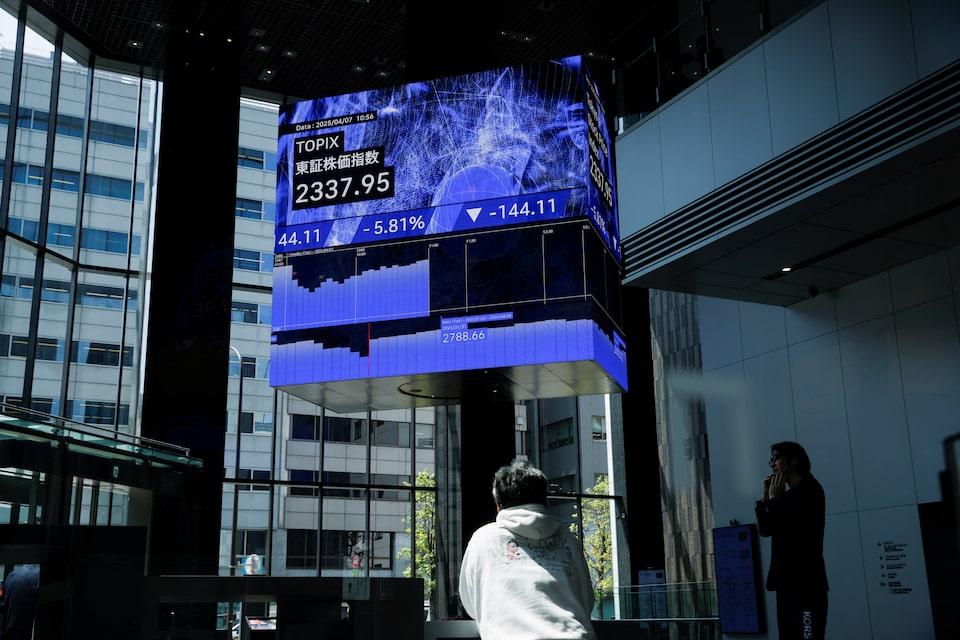
LAUNCESTON, Australia, July 8 (Reuters) - Iron ore prices have been a model of stability in recent months despite the increasing clouds over the outlook for the key steel raw material. The benchmark Singapore Exchange contract ended at $95.25 a metric ton on Monday, down from $95.89 at the previous close but up from the recent nine-month low of $93.35 on July 1. Sign up here. However, the range in the price between that low and the high so far in 2025 of $107.81 a ton on February 12 is a narrow $14. In 2024 the range between the high and the low was around $52 a ton, about $32 in 2023 and $82 in 2022. The lack of volatility in iron ore prices so far in 2025 comes despite the ongoing uncertainty over the tariff policies of U.S. President Donald Trump, and what impact these will have on global trade and economic growth. There is also uncertainty over the strength of China, the world's second-biggest economy and buyer of about 75% of global seaborne iron ore volumes. The key residential property sector remains weak and the export-orientated manufacturing sector also faces headwinds from the tariff barriers, with the United States currently imposing 55% tariffs on imports from China. Iron ore has not been immune to China's economic concerns, with commodity analysts Kpler tracking a fall in imports in the first half of 2025. Seaborne imports were 604.8 million tons in the January to June period, down 4% from the 630.1 million tons over the same period in 2024, Kpler data showed. The decline in imports fits with the 1.7% decline in crude steel output in the first five months of the year, with official data showing production of 431.63 million tons. The modest decline in China's iron ore imports is also mirrored in other buyers. Japan, the second-biggest iron ore importer, saw arrivals of 43.85 million tons in the first half of 2025, down from 45.13 million in the same period last year, according to Kpler. South Korea's imports were 34.69 million tons in the first six months, down from 36.35 million, while Europe saw arrivals of 40.17 million, down from 41.33 million in the first half of last year. Overall, global seaborne imports were down 3%, or 25.09 million tons, in the first half to 818.01 million. SUPPLY EASES The price impact of the decline was mitigated by lower supply from top exporter Australia, which shipped 460.02 million tons in the first half, down from 464.34 million for the same period in 2024, with weather-related disruptions behind the small drop. Number two exporter Brazil saw a slight increase to 179.15 million tons from 176.24 million, while shipments from the third-ranked South Africa were steady, as were those from number four Canada. However, India's exports of iron ore slid as the fifth-biggest shipper saw a decline of 40%, or 9.76 million tons, to 14.69 million in the first half. Lower prices compared with prior years hit India's exports, which tend to be of poorer quality iron ore. The overall picture that emerges for the seaborne iron ore market is that the stability of recent months is built around China's appetite for imports dropping only slightly. It's also worth noting that while much of the commentary focuses on the risks to the Chinese economy from property weakness and U.S. tariffs, some sectors such as automobile manufacturing and infrastructure remain solid. If iron ore prices do come under pressure from a weaker outlook for the second half, it's also likely that Chinese steel mills and traders will take advantage to restock inventories. China's port inventories, as monitored by consultants SteelHome , dropped to 133.4 million tons in the week to July 4 from 133.6 million the prior week. The current level is down from 149 million tons in the same week last year, indicating there is scope to add to them if prices do moderate. Enjoying this column? Check out Reuters Open Interest (ROI), your essential new source for global financial commentary. ROI delivers thought-provoking, data-driven analysis of everything from swap rates to soybeans. Markets are moving faster than ever. ROI can help you keep up. Follow ROI on LinkedIn , opens new tab and X , opens new tab. The views expressed here are those of the author, a columnist for Reuters. https://www.reuters.com/markets/commodities/iron-ore-stays-calm-amid-china-uncertainty-us-tariff-turmoil-2025-07-08/
2025-07-08 04:36
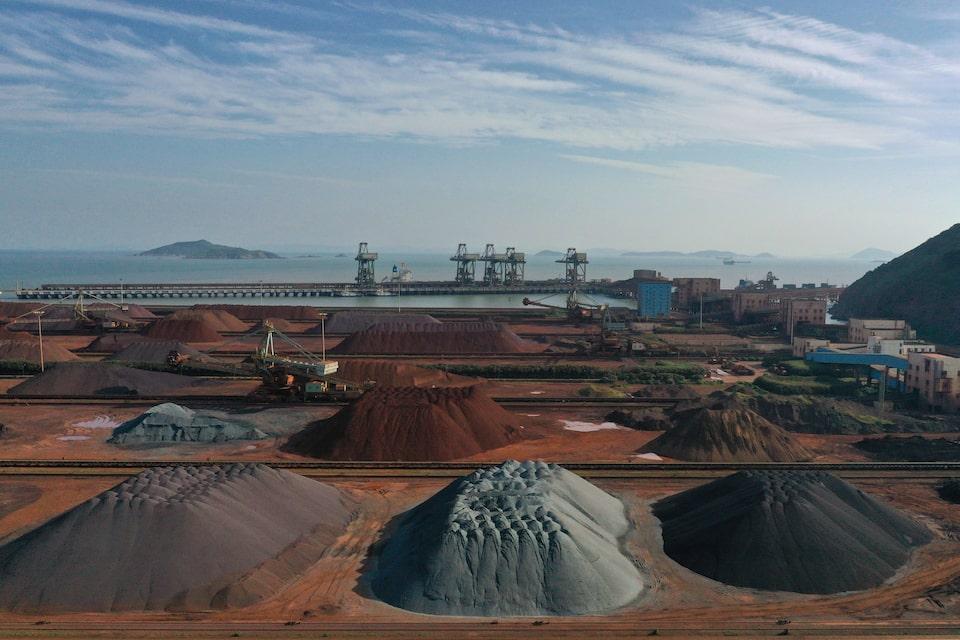
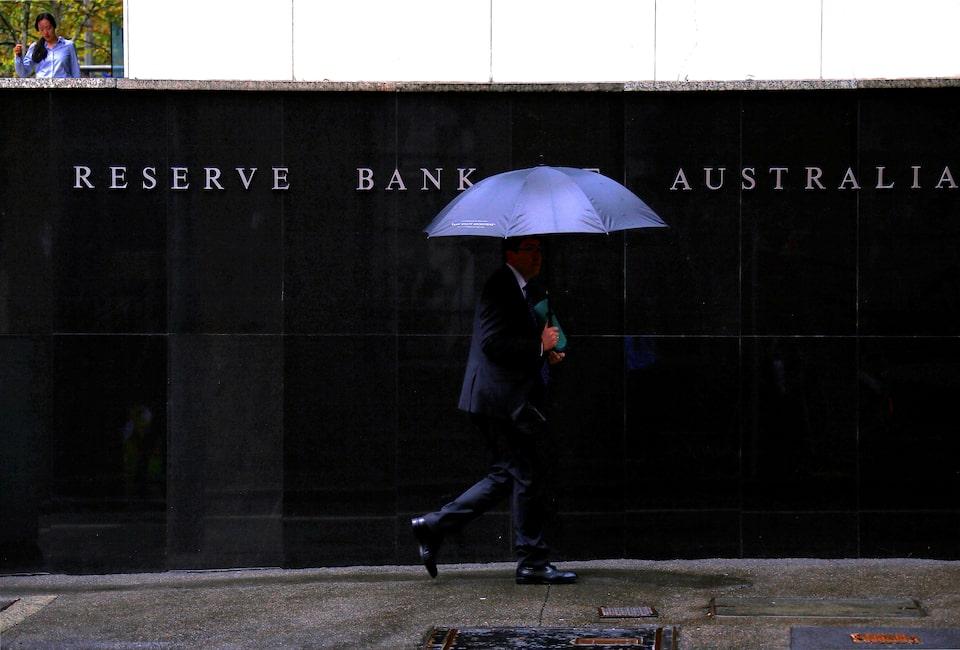
SYDNEY, July 8 (Reuters) - Australia's central bank on Tuesday left its cash rate steady at 3.85%, a shock for markets that had confidently wagered on a cut, saying the majority of the board wanted to wait for more information to confirm inflation was slowing. Wrapping up a two-day policy meeting, the Reserve Bank of Australia said six members had voted to hold rates steady while three voted against, a rare split decision for the board. Sign up here. Markets had been almost fully priced for an easing to 3.60% this week given core inflation had slowed to the mid-point of the RBA's 2% to 3% target range and consumer spending was proving weaker than expected. Uncertainty caused by U.S. tariffs also argued for a cut as insurance against a global slowdown. https://www.reuters.com/world/asia-pacific/australias-central-bank-keeps-rates-385-stuns-markets-2025-07-08/
2025-07-08 04:31
A look at the day ahead in European and global markets from Rocky Swift U.S. President Donald Trump's assertion that his latest tariff deadline was "firm, but not 100% firm" was all Asian share markets needed to stage a weak rally. Sign up here. A July 9 date to secure trade deals with the United States was reset to August 1, and even as 14 nations received letters about tariff hikes on their goods, Trump's words left plenty of time and wiggle room for negotiation. Since Trump's unveiling of his sweeping "Liberation Day" tariffs on April 2, each additional policy change has obeyed the economic maxim of "diminishing marginal returns" in terms of market reaction. Still, 25% duties on goods from Japan and South Korea, America's second- and third-largest trade partners in Asia, are still a hefty burden. More letters are expected to be doled out to other countries this week, keeping tariffs on the front pages. For the time being, a sense of deja vu is keeping market moves muted. The European Union is not among those expected to get a letter, EU sources familiar with the matter told Reuters on Monday. The EU still aims to reach a trade deal by Wednesday after European Commission President Ursula von der Leyen and Trump had a "good exchange," a commission spokesperson said. Since April, the Trump administration has put together just two, thinly sketched out trade agreements, with Britain and Vietnam, and a fragile trade truce with China. The U.S. dollar has been one of the biggest casualties from the tariff turmoil, but it bounced back strongly on Monday and held gains in Asia. Strength in the greenback against Japan's yen and the South Korean won added a tailwind to their major share indexes on Tuesday. Equity futures are indicating a down day broadly for Europe , whereas the U.S. market is poised for a flat open. But on the bright side, Goldman Sachs raised its return forecasts for the S&P 500, citing expectations for U.S. interest rate cuts and continued fundamental strength of major large-cap stocks. Key developments that could influence markets on Tuesday: - Germany trade data for May - Reopening of 5-year government debt auction in Germany – Reopening of 24-year government debt auction in the United Kingdom Trying to keep up with the latest tariff news? Our new daily news digest offers a rundown of the top market-moving headlines impacting global trade. Sign up for Tariff Watch here. https://www.reuters.com/world/europe/global-markets-view-europe-2025-07-08/