2025-11-27 23:08
BRUSSELS, Nov 27 (Reuters) - The European Commission should resist automakers' calls to allow cars to run on biofuels beyond 2035 because they are in short supply and not truly carbon-neutral, campaign group T&E said on Thursday. New vehicles in the European Union must have no carbon dioxide emissions from 2035 under rules designed to boost sales of electric cars and phase out fossil fuels and the internal combustion engine. Sign up here. However, automakers are pushing the EU executive to grant an exemption to allow carbon-neutral fuels to continue to power internal combustion engines, plug-in hybrids and range extenders. The Commission will unveil measures designed to support the auto sector on December 10. In a report published on Thursday, T&E pointed to EU law changes in 2018 that limited the use of crop-based fuels, such as from palm oil or soy, favouring used cooking oil, animals and other waste-based sources, which now account for about half of bio-based diesel in the EU. However, some 60% of biofuels and 80% of used cooking oil are imported, principally from Asia, T&E said, with rising cases of fraud, such as palm oil passed off as waste. T&E said biofuels made from food crops typically only save 60% of CO2 emissions compared with fossil fuels because of CO2 emitted in their cultivation and transportation. They also risk leading to deforestation. More advanced fuels made from municipal waste or sewage sludge are more sustainable, the report said, but are not available in sufficient quantities and are already earmarked for aviation and shipping. If road transport were included, EU demand could be from double to nine times the 2050 sustainable supply. The T&E report said that allowing biofuel in EU cars could increase CO2 emissions by up to 23% in 2050. The group advises that biofuels should not be part of the post-2035 solution and, if they are, limited to just 5% of sales of cars powered by truly carbon-neutral e-fuels. https://www.reuters.com/sustainability/climate-energy/eu-should-reject-automakers-biofuel-plea-says-campaign-group-2025-11-27/

2025-11-27 21:39
BRASILIA, Nov 27 (Reuters) - Brazil will publish rules to regulate its carbon market by December next year, a senior Finance Ministry official said on Thursday. Cristina Reis, appointed to head the ministry's new special carbon market secretariat, told a press conference the government will also decide by then how a permanent governing body will operate. She said it could become a regulatory agency, but the structure is under discussion. Sign up here. Reis said she expects the carbon market to be fully operational by 2030 or 2031. She added the government will soon launch a public consultation on a provision in the carbon market law, passed by Congress last year, requiring insurers to allocate 0.5% of technical reserves to buy carbon credits. The measure is before Brazil's Supreme Court. Reis said the ministry sees the rule as hard to implement given strong demand and limited supply of credits. "This will need to be phased in," she said. https://www.reuters.com/sustainability/climate-energy/brazil-issue-carbon-market-rules-by-end-2026-finance-official-says-2025-11-27/

2025-11-27 20:43
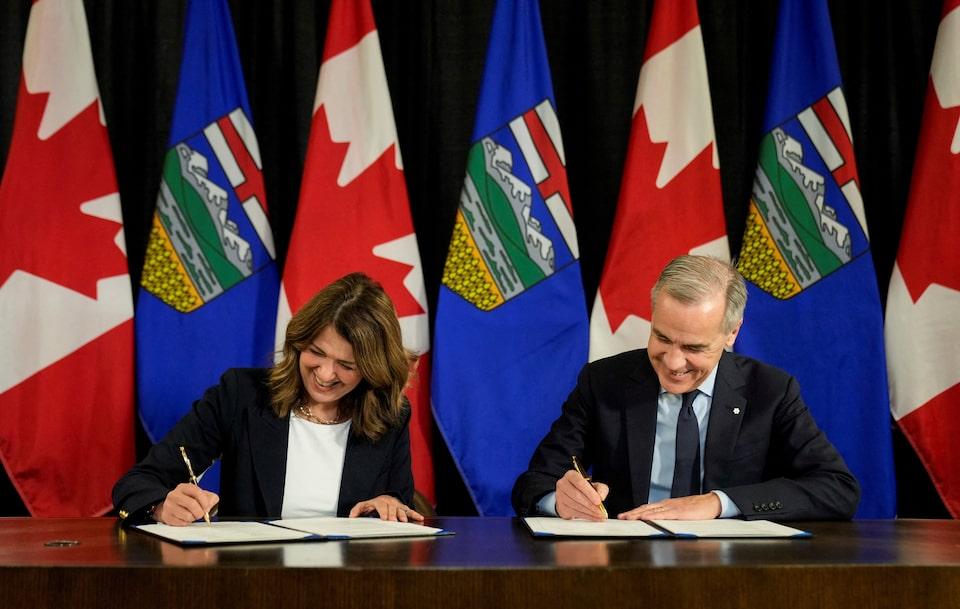
Agreement removes emissions cap, aims to boost carbon pricing and storage Canada seeks to diversify oil exports amid US trade uncertainty Agreement also drops regulations for clean electricity Parties will sign industrial carbon pricing deal by April CALGARY, Nov 27 (Reuters) - Canada's Prime Minister Mark Carney signed an agreement with Alberta's premier on Thursday that rolls back certain climate rules to spur investment in energy production, while encouraging construction of a new oil pipeline to the West Coast. Under the agreement, the federal government will scrap a planned emissions cap on the oil and gas sector and drop rules on clean electricity, in exchange for a commitment by Canada's top oil-producing province to strengthen industrial carbon pricing and support a carbon capture-and-storage project. Sign up here. The deal, which was hailed by the country's oil industry but panned by environmentalists, signaled a shift in Canada's energy policy in favor of fossil fuel development and is already creating tensions within Carney's minority government. Steven Guilbeault, who served as environment minister under Carney's predecessor Justin Trudeau, said he was quitting the cabinet over concerns that Canada's climate plan was being dismantled. Carney is counting on the energy sector to help the Canadian economy weather uncertainty from U.S. President Donald Trump's tariffs, and is seeking to diversify from the U.S. market which currently takes 90% of Canada's oil exports. In remarks at an industry event in Calgary, Carney said U.S. tariffs and the resulting uncertainty will wipe $50 billion from Canada's economy, the equivalent of $1,300 for every Canadian, stressing the need to build projects that can spur growth and reduce reliance on the U.S. He has relaxed some environmental restrictions implemented by Trudeau, while reaffirming his commitment to net-zero carbon emissions by 2050. Reuters first reported , opens new tab in September that Carney's government was in discussions with Alberta Premier Danielle Smith on a potential deal to eliminate the emissions cap. ALBERTA WANTS NEW PIPELINE TO REACH ASIAN MARKETS Alberta is also exploring the feasibility of a new crude oil pipeline to British Columbia's northwest coast in order to increase exports to Asia, but no private-sector company has committed to building a new pipeline. Pipeline companies and the Alberta government have repeatedly said significant federal legislative changes - including removing a federal cap on oil and gas sector emissions and ending a ban on oil tankers off British Columbia's northern coast - would be required before a private entity would consider proposing a new pipeline. The Canadian government will enable a clear and efficient approval process for a new pipeline to be constructed and financed by the private sector, Carney said. He added that the new pipeline would transport one million barrels of low-emission Alberta bitumen a day, with a route that increases access to new Asian markets as a priority. Thursday's agreement includes a commitment by the federal government to adjust the Oil Tanker Moratorium Act in order to facilitate oil exports to Asia. British Columbia Premier David Eby, who opposes a new pipeline through his province, said on Wednesday the legislation should stay in place. Other pipeline opponents are also speaking out. A coalition of Indigenous groups in British Columbia said this week it will not allow oil tankers on the northwest coast and that the pipeline project will "never happen." The Trans Mountain pipeline from Alberta to the British Columbia coast, owned by the Canadian government and currently the only option to ship Canadian oil directly to Asia, tripled its capacity last year with a C$34 billion ($24.2 billion) expansion. But it is expected to run out of capacity by the end of the decade while Alberta boosts its oil output. INDUSTRY BACKS DEAL, GREENS OBJECT Environmentalists raised concerns about the agreement's implications for climate change, while oil producers supported the deal. "With this agreement, the federal government risks doing significant damage to minimum national standards that will have broader impacts on Canada's climate change efforts," the Pembina Institute, a clean energy think-tank, said in a statement. Industry leaders said the partnership between the province and the federal government would boost the energy sector. "The elimination of the emissions cap, changes to the Competition Act, and the commitment to work together on new market access are all significant steps towards unlocking Canada's vast natural energy resources," the Canadian Association of Petroleum Producers said in a statement. The federal government and Alberta also said they would conclude an agreement on industrial carbon pricing by April 1 next year. In addition, the two agreed to cooperate on building the Pathways Plus project, expected to be the world's biggest carbon capture project and designed to capture emissions from Canada's oil sands. The federal government will assist Alberta in building and operating nuclear power plants, strengthening its electricity grid to power AI data centers, and building transmission lines to neighboring provinces. It will also release a new electricity strategy aiming to double the clean grid across Canada, Carney said. https://www.reuters.com/sustainability/climate-energy/canada-drops-emissions-cap-oil-gas-sector-agreement-with-alberta-2025-11-27/
2025-11-27 20:35
LIMA, Nov 27 (Reuters) - Peru's judiciary on Thursday sentenced former leftist President Pedro Castillo to 11.5 years in prison for rebellion and conspiracy against the state at the end of 2022, when he unsuccessfully attempted to dissolve Congress and assume broad powers. Castillo's sentencing comes a day after another former president, Martin Vizcarra, was handed 14 years in prison , opens new tab after he was found guilty of taking bribes years before he took office. Sign up here. Castillo, who had been in detention as the case played out, was removed from office in December 2022 after he attempted to dissolve Congress. The move triggered violent protests against the government that replaced him and left dozens of people dead, mainly in poorer regions where he enjoyed greater support. During his final defense statement at the trial last week, the former president rejected the rebellion charges against him and said that when he attempted to dissolve Congress — a move which was not backed by the country's security forces — he merely read out "a document without consequence". Prosecutors had requested a 34-year prison sentence for Castillo. The names of Castillo and Vizcarra join a growing list of former leaders jailed in the South American country, which has placed five former presidents behind bars. Peru has had six presidents since 2018 due to a series of impeachments and resignations, often driven by corruption scandals. Following Castillo's removal, his then-Vice President Dina Boluarte assumed power. She was ousted in early October after Congress declared her "morally unfit" to govern. Boluarte was replaced by Jose Jeri, who is due to complete the presidential term through July 2026. Peru's presidential elections are scheduled for April next year. https://www.reuters.com/world/americas/peruvian-court-sentences-former-president-castillo-115-years-prison-rebellion-2025-11-27/

2025-11-27 19:21
LA PAZ, Nov 27 (Reuters) - Shortages of Bolivia's state-subsidized marraqueta bread roll are creating an early test for newly elected President Rodrigo Paz, as dwindling wheat supplies and rising costs squeeze bakers and frustrate consumers. The frustration from bakers and buyers highlights the political risks for Paz, who aims to unwind the subsidy-heavy economic model of his socialist predecessors without angering a population accustomed to state support. Sign up here. Bakers said delays in government-imported flour and other shortages make it difficult to meet demand for the iconic roll, whose price has been fixed for 17 years under the previous socialist government. Bolivia imports about three-quarters of its wheat, mainly from Argentina. Customers also complained that the marraqueta, which sells for the equivalent of 7 U.S. cents, has shrunk to 60 grams (2 ounces), down from 100 grams two years ago. Some shoppers queue for hours. On Wednesday, Bolivia’s National Confederation of Artisan Bakers (Conapaabol) announced plans to raise bread prices to about 11 U.S. cents per unit, ending an agreement with the previous government. Baker Roberto Rengel added he had yet to receive promised ingredients from the state supplier for September. "The subsidy is killing us," he said. Some vendors have turned to pricier alternatives such as cheese-filled buns called sarnitas, which offer better margins. Others have stopped selling bread altogether. Years of state-led policies and nationalization under the previous leftist government deterred foreign investment and strained public finances in Bolivia, a major producer of natural gas and grains, and the country is now facing one of its worst economic crises in decades. State-run food agency EMAPA halted flour supplies in September because the government could not pay suppliers on time. Paz, who took office on November 8, has pledged to reform subsidies that cover energy, transport and basic goods but has so far avoided sweeping changes. Economy Minister Jose Gabriel Espinoza told Reuters this week the government was considering cutting some subsidies, such as for diesel, but he did not provide a timeframe or details for other key goods. Bolivian economist Gonzalo Chavez of the Universidad Catolica Boliviana said removing subsidies was technically complex and politically risky. "Subsidies create distortions and blind price signals, leading people to believe cheap bread and cheap fuel are entitlements," he said. Still, some vendors fretted over price hikes on other goods if bread subsidies were eased. "If bread goes up, everything goes up," said street seller Natividad Zabala. https://www.reuters.com/world/americas/bolivias-bread-shortage-highlights-subsidy-reform-challenge-2025-11-27/

2025-11-27 18:45
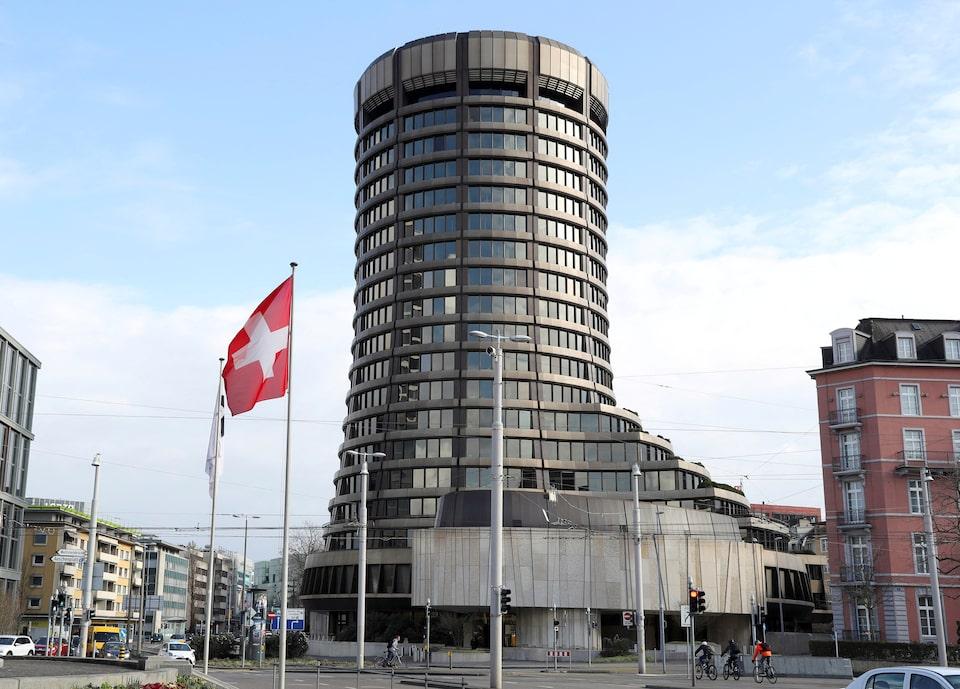
LONDON, Nov 27 (Reuters) - The new head of the Bank for International Settlements has said reining in hedge funds' ability to make highly leveraged bets in government bond markets should be a key priority for policymakers given rapidly increasing public debt levels. Pablo Hernández de Cos, who took over as General Manager of the umbrella body for central banks in July, said the combination of high debt and growing role of non-bank financial institutions (NBFIs) such as hedge funds in bond markets posed new financial stability risks. Sign up here. The worry is their use of leveraged "relative value" trades like cash-futures basis trades, which look to exploit small price differences between bonds and their futures contracts. These strategies have boomed in the U.S. and other major economies but have been in the sights of regulators after margin calls on U.S. Treasury future trades in 2021 fuelled a bout of turmoil in the world's biggest government bond market. "Around 70% of bilateral repos taken out by hedge funds in U.S. dollars and 50% in bilateral repos in euros are offered at zero haircut, meaning that creditors are not imposing any constraint on leverage using government bonds," de Cos said in a speech at the London School of Economics. With ageing populations and rising defence spending projected to push the debt-to-GDP ratio of advanced economies to 170% by 2050 absent fiscal consolidation, de Cos said reining in NBFI leverage was a "key policy priority". He called for a "carefully selected combination of tools" but highlighted two specific measures as likely to be particularly effective. One of those was the greater use of central clearing, so government bond market players are treated more equally. The other was for "minimum haircuts" - or discounts - to be applied to the value of the bonds hedge funds use as collateral, to limit their leveraged plays. "The growing intermediation of record-high public debt levels by NBFIs introduces significant new financial stability challenges," de Cos said, adding that haircuts should be applied in a targeted manner. In the context of these new risks, he said central bank swap lines remained "critical" to stabilise the global financial system at times of acute distress. Keeping inflation in check will remain the most effective way to support debt sustainability by reducing risk premia, while central bank independence remains vital too. "Against the backdrop of rapidly deteriorating sovereign creditworthiness, the need for credible monetary policy and central bank independence is stronger than ever," de Cos said. https://www.reuters.com/business/finance/central-bank-body-bis-warns-hedge-fund-leverage-government-bond-markets-2025-11-27/