2025-07-03 21:30
MEXICO CITY, July 3 (Reuters) - Ample rains across Mexico in recent weeks have helped replenish the country's parched reservoirs, but much of the drought-plagued country's water supply remains in a deficit, according to data from national water agency CONAGUA. June was a wetter-than-normal month in a country reeling from several years of drought. Over 148 millimeters (5.83 inches) of rain fell in Mexico between May 31 and June 29, which was 51.3% above the historical average for the period. Sign up here. Mexico City, where generations of mismanagement have made the city built on a lake prone to both flooding and water shortages, had its wettest June in 21 years, the city's water management secretariat said. Still, national water storage levels at the dams monitored by CONAGUA were 5% below the national historical average at the end of June. "However, in recent weeks, that volume deficit has decreased due to the rainfall," CONAGUA hydrology official Daniel Arriaga said in a presentation. The Cutzamala reservoir system, critical for Mexico City and the surrounding metropolitan region, was 52.1% full as of June 30, an improvement over a year earlier, when reservoirs were 26.7% full. Meanwhile, 97 of the 210 dams monitored by CONAGUA remain below 50% capacity. Those 97 dams serve reservoirs that account for 42% of the system's total volume. Looking ahead, CONAGUA's outlook suggests limited relief for Mexico's nagging water troubles, with July to September rains expected to be only average or below average in many parts of the country. However, CONAGUA forecasts above-average rain in July and August in parts of the northwest, most of which is currently experiencing moderate to extreme drought. https://www.reuters.com/sustainability/boards-policy-regulation/mexicos-water-deficit-persists-even-after-torrential-summer-rains-2025-07-03/

2025-07-03 20:39
S&P 500 up 0.83%; Nasdaq gains 1.02%; Dow up 0.77% US job growth beats expectations in June Tripadvisor gains on report Starboard Value built stake Synopsys, Cadence rise as US lifts China export curbs NEW YORK, July 3 (Reuters) - Wall Street rallied on Thursday to record closing highs, as chipmaker Nvidia rose closer to a $4 trillion valuation and a surprisingly strong U.S. jobs report cheered investors, who shrugged off dimming chances for an interest rate cut this month. The S&P 500 and Nasdaq closed at record highs, notching a third week of gains. The Dow closed up 0.77%, only 0.41% away from its own record. Sign up here. Chipmaker Nvidia (NVDA.O) , opens new tab rose 1.3%, putting its market capitalization at $3.89 trillion. The company is close to overtaking Apple's (AAPL.O) , opens new tab all-time record and becoming the world's most valuable company in history. Trading volume was light in a shorter session on the eve of Friday's U.S. Independence Day holiday. "We are seeing a real bout of irrational exuberance; the stock market is very biased towards optimism," said Kristina Hooper, Chief Market Strategist at Man Group in New York. "But there's some basis for it. I think there is some level of relief because the jobs report was not as weak as it could have been." The rally has been fueled by retail investors, who are largely ignoring the inflationary pressure on the horizon, uncertainty around tariffs and "are focused on the tangible, which is today's jobs report," she said. The S&P 500 (.SPX) , opens new tab gained 51.94 points, or 0.83%, to 6,279.36 and the Nasdaq Composite (.IXIC) , opens new tab gained 207.97 points, or 1.02%, to 20,601.10. The Dow Jones Industrial Average (.DJI) , opens new tab rose 344.11 points, or 0.77%, to 44,828.53. Data showed nonfarm payrolls increased by 147,000 jobs last month, 33% more than the 110,000 jobs forecasted by economists polled by Reuters. Unemployment fell to 4.1% last month, a better result than the 4.3% expected. Traders quickly priced out chances of an interest-rate cut in July, with the odds of a 25-basis-point reduction in September at 68%, according to CME Group's Fedwatch tool, down from 74% a week ago. After markets closed, Republicans in the U.S. House of Representatives approved President Donald Trump's massive tax-cut and spending bill, an expected outcome. The legislation will add $3.4 trillion to the nation's $36.2 trillion debt, according to the nonpartisan Congressional Budget Office, and will also push millions of Americans off health insurance. Large tax cuts and increased government spending can boost demand in the economy. This can add inflationary pressure, especially when the economy shows signs of strength, such as the latest jobs report. "Some data points, like the jobs report, are positive and charming. But if we just take a step back, the picture is not that great," said Alex Morris, CEO of F/m Investments, which manages $18 billion in Washington, D.C. For the week, the S&P 500 gained 1.72%, the Nasdaq rose 1.62%, and the Dow climbed 2.3%. The Russell 2000 Small Cap index rose 3.41%. "It's kind of perplexing," Morris said. "This feels like that last bull rush before all of the data really comes together." Tripadvisor (TRIP.O) , opens new tab climbed 16.7% after the Wall Street Journal reported activist investor Starboard Value had built a stake of more than 9% in the online travel company. Datadog (DDOG.O) , opens new tab jumped 14.9% after the cloud security firm was set to replace Juniper Networks on the S&P 500. Markets closed at 1 p.m. ET. Trading volume on U.S. exchanges was 10.85 billion shares, much lighter than the 17.82 billion average for the full session over the last 20 trading days. https://www.reuters.com/sustainability/sustainable-finance-reporting/us-stock-futures-steady-investors-await-payrolls-data-2025-07-03/
2025-07-03 20:19
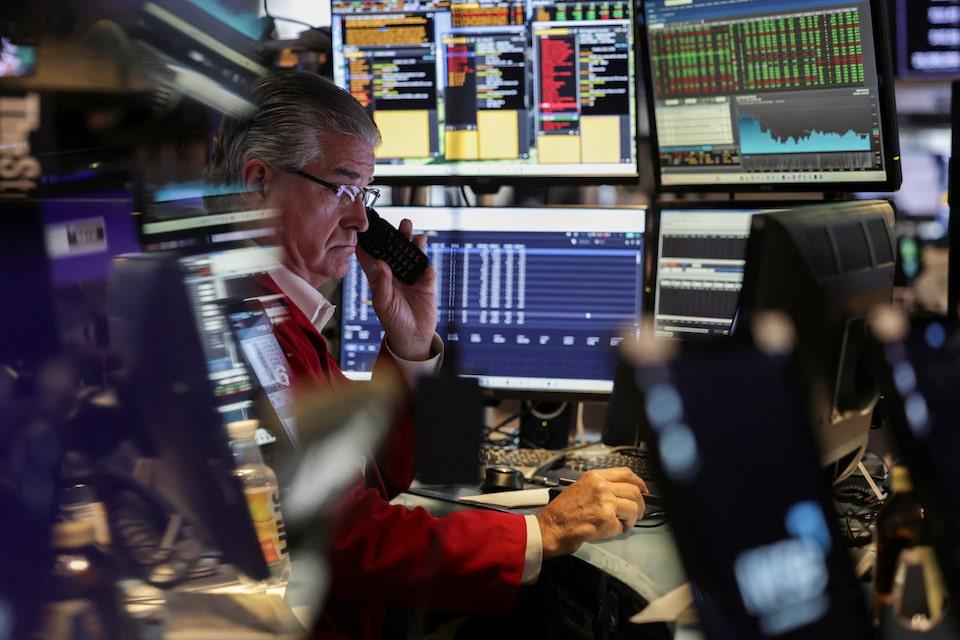
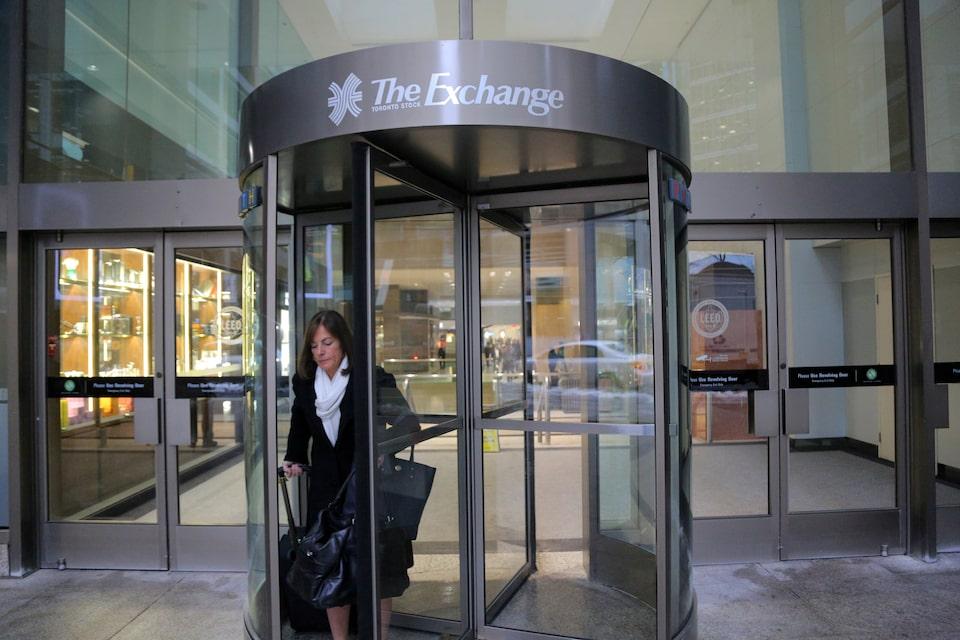
TSX ends up 0.6% at 27,034.26 Eclipses Wednesday's record closing high Tech rises 1.6%, financials end 0.8% higher Cargojet jumps 8.5% as company extends Amazon contract July 3 (Reuters) - Canada's main stock index rose to a record closing high on Thursday, led by gains for financial and technology shares, as stronger-than-forecast U.S. employment data added to the high spirits of investors. The S&P/TSX composite index (.GSPTSE) , opens new tab ended up 164.60 points, or 0.6%, at 27,034.26, eclipsing the record close on Wednesday. Year-to-date the index has gained 9.3%. Sign up here. "This is a market that is being driven by exuberance," said Michael Sprung, president at Sprung Investment Management. "It seems to be looking for any excuse for good news and I'm not so certain that the good news is likely to continue." U. was unexpectedly solid in June, but nearly half of the increase in nonfarm payrolls came from the government sector, with private industry gains the smallest in eight months as businesses battled rising economic headwinds. Those headwinds have included uncertain U.S. trade policy. About 100 countries are likely to see a reciprocal tariff rate of 10%, U.S. Treasury Secretary Scott Bessent said, adding that he expects "a flurry" of trade deals announced before a July 9 deadline that could see tariff rates increase sharply. Canada's trade deficit narrowed in May after reaching a record-breaking level in April, as exports rose and imports fell even as the impact of U.S. tariffs dented shipments south of the border. Technology rose 1.6%, with e-commerce company Shopify Inc (SHOP.TO) , opens new tab adding 2.1%. Heavily weighted financials were up 0.8% and consumer staples climbed 1.1%. Cargojet Inc (CJT.TO) , opens new tab was a standout. Its shares rose 8.5% after the company extended its air transportation services agreement with Amazon. Just two of the 10 major sectors ended lower, including energy. Energy fell 0.4% as the price of oil settled 0.7% lower at $67.00 a barrel. https://www.reuters.com/markets/europe/tsx-futures-flat-us-payrolls-trade-deals-focus-2025-07-03/
2025-07-03 20:11
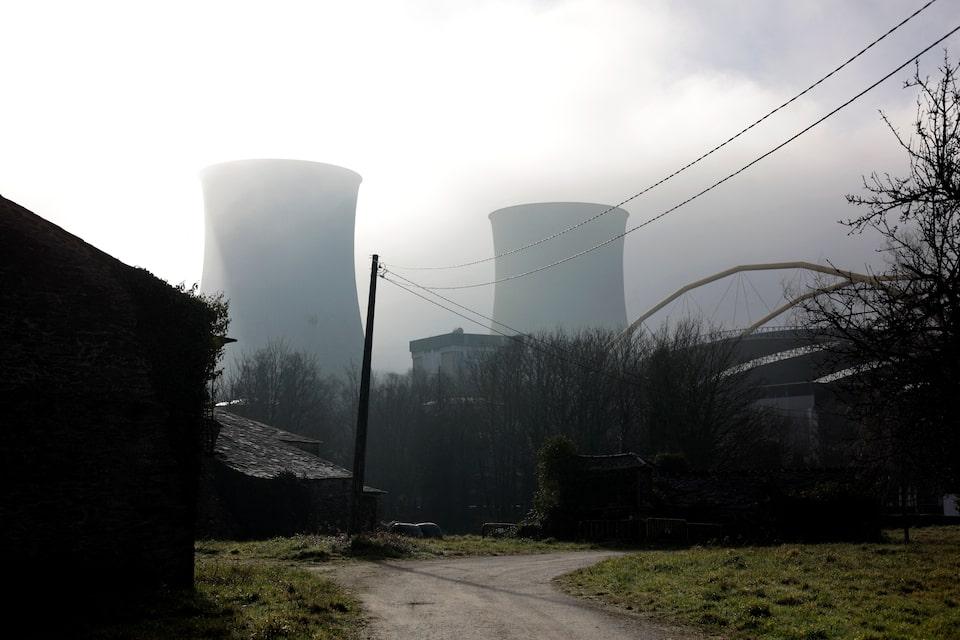
BRUSSELS, July 3 (Reuters) - The European Commission has proposed an EU climate target for 2040 that allows countries to count carbon credits bought from developing nations towards the EU goal for the first time. Here's what that means, and why the EU move on Wednesday faced criticism from campaigners and some scientists. Sign up here. WHAT ARE CARBON CREDITS? Carbon credits, or offsets, involve funding projects that reduce CO2 emissions abroad in place of cuts to your own greenhouse gas emissions. Examples include forest restoration in Brazil, or converting a city's petrol buses to electric. The buyer counts "credits" for those emission reductions towards its climate goal, and the seller gets finance for their green project. Proponents say the system generates much-needed funding for CO2-cutting efforts in developing nations and lets countries work together to cut emissions around the world. However, the reputation of CO2 credits has been dented by a string of scandals in which credit-generating projects failed to deliver the climate benefits they claimed. WHY IS THE EU BUYING THEM? The European Commission proposed allowing up to 3 percentage points of the EU's 2040 target - to cut net emissions by 90% from 1990 levels - to be covered by carbon credits bought from other countries. The EU's existing climate targets require countries to meet the goals entirely by cutting emissions at home. The bloc's executive Commission said last year it hoped the EU could agree a 90% emissions-cutting target for 2040, with no mention of carbon credits. Tumultuous geopolitics and the economic woes of European industries have since stoked political pushback, with governments from Germany to Poland demanding a softer target. In response, the Commission said it would add flexibilities, and landed on carbon credits as a way to retain a 90% emissions-cutting goal while reducing the domestic steps needed to reach it. EU countries and the European Parliament must negotiate and approve the goal. WHAT ARE THE RISKS? The EU plan was welcomed by countries including Germany, which had pushed to include carbon credits in the goal, and by carbon credit project developers as a boost for climate finance. But environmental campaigners said the EU was shirking domestic CO2-cutting efforts and warned against relying on cheap, low-value credits. The EU's climate science advisers had also opposed buying credits under the 2040 target, which they said would divert money from investments in local clean industries. The EU banned international credits from its own carbon market after a flood of cheap credits with weak environmental benefits contributed to a carbon price crash. To try to address the risks, the Commission said it would buy credits in line with a global market and rules for trading carbon credits which the U.N. is developing. These include quality standards aimed at avoiding the problems that unregulated credit trading has faced in recent years. Brussels will also propose rules next year on specific quality standards for the carbon credits the EU buys. HOW MUCH WILL IT COST? The EU doesn't yet know. Carbon credit prices today can be as low as a few dollars per tonne of CO2, up to more than $100, depending on the project. EU emissions records suggest the bloc would need to buy at least 140 million tonnes of CO2 emissions to cover 3% of the 2040 target, roughly equivalent to the Netherlands' total emissions last year. One senior Commission official said the bloc was determined not to hoover up cheap junk credits. "I don't think that would have any additional value. The credits we see currently on voluntary carbon markets are very, very cheap, and that probably reflects a lack of high environmental integrity," the senior official said. https://www.reuters.com/sustainability/cop/do-international-carbon-credits-fight-climate-change-2025-07-03/
2025-07-03 19:39
Sanctions come ahead of US/Iran talks expected next week Measures target network US says disguised Iranian oil as Iraqi oil Hezbollah-controlled financial institution targeted Reuters reported in December on fuel oil smuggling network VS Tankers denies Treasury's claims WASHINGTON, July 3 (Reuters) - The U.S. imposed sanctions on Thursday against a network that smuggles Iranian oil disguised as Iraqi oil and on a Hezbollah-controlled financial institution, the Treasury Department said. A network of companies run by Iraqi-British national Salim Ahmed Said has been buying and shipping billions of dollars worth of Iranian oil disguised as, or blended with, Iraqi oil since at least 2020, the department said. Sign up here. "Treasury will continue to target Tehran’s revenue sources and intensify economic pressure to disrupt the regime’s access to the financial resources that fuel its destabilizing activities,” Treasury Secretary Scott Bessent said. The U.S. has imposed waves of sanctions on Iran's oil exports over its nuclear program and funding of militant groups across the Middle East. Reuters reported late last year that a fuel-oil smuggling network that generates at least $1 billion a year for Iran and its proxies has flourished in Iraq since 2022. Thursday's sanctions came after the U.S. carried out strikes on June 22 on three Iranian nuclear sites including its most deeply buried enrichment plant, Fordow. The Pentagon said on Wednesday the strikes had degraded Iran's nuclear program by up to two years, despite a far more cautious initial assessment that had leaked to the public. The U.S. and Iran were expected to hold talks about its nuclear program next week in Oslo, Axios reported. Said’s companies and vessels blend Iranian oil with Iraqi oil, which is then sold to Western buyers via Iraq or the United Arab Emirates as purely Iraqi oil using forged documentation to avoid sanctions, Treasury said. Said controls UAE-based company VS Tankers though he avoids formal association with it, Treasury said. Formerly known as Al-Iraqia Shipping Services & Oil Trading (AISSOT), VS Tankers has smuggled oil for the benefit of the Iranian government and the Islamic Revolutionary Guard Corps, which is designated by Washington as a terrorist organization, it said. The sanctions block U.S. assets of those designated and prevent Americans from doing business with them. VS Tankers denied Treasury's assertions and said it will "pursue all legal remedies as necessary." Iran's mission in New York did not immediately respond to a request for comment. The U.S. also sanctioned several vessels that are accused of engaging in the covert delivery of Iranian oil, intensifying pressure on Iran’s “shadow fleet,” it said. The Treasury Department also issued sanctions against several senior officials and one entity associated with the Hezbollah-controlled financial institution Al-Qard Al-Hassan. The officials, the department said, conducted millions of dollars in transactions that ultimately benefited, but obscured, Hezbollah. https://www.reuters.com/world/middle-east/us-imposes-new-sanctions-targeting-iran-oil-trade-hezbollah-treasury-dept-says-2025-07-03/
2025-07-03 19:27
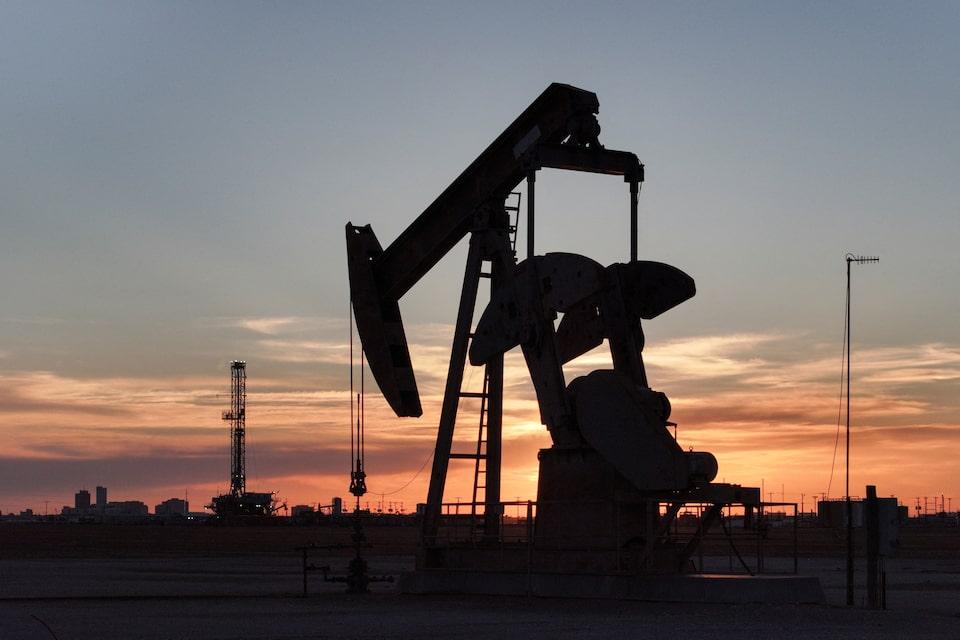
Pause on US tariffs set to end on July 9 OPEC+ expected to raise output by 411,000 bpd US crude inventories rise unexpectedly NEW YORK, July 3 (Reuters) - Oil prices fell slightly on Thursday as investors worried that U.S. tariffs could slow energy demand ahead of an expected supply boost by major crude producers. Brent crude futures settled 31 cents, or 0.45%, lower to $68.80 a barrel. U.S. West Texas Intermediate crude fell 45 cents, or 0.67%, to $67 in thin trade on the eve of the Independence Day holiday. Sign up here. President Donald Trump's 90-day pause on implementation of higher U.S. tariffs ends on July 9, and several large trading partners have yet to clinch trade deals, including the European Union and Japan. Oil traders are worried about the impact on the economy and fuel demand. A preliminary trade deal between the U.S. and Vietnam boosted prices on Wednesday, but overall tariff uncertainty looms large. Also weighing on prices, OPEC+ is expected to agree to raise output by 411,000 barrels per day at its policy meeting this weekend. Also, a private-sector survey showed service activity in China - the world's biggest oil importer - expanded in June at its slowest pace in nine months as demand weakened and new export orders declined. In the U.S., a surprise build in crude inventories also highlighted demand concerns in the world's biggest crude consumer. The U.S. Energy Information Administration said on Wednesday that domestic crude inventories rose by 3.8 million barrels to 419 million barrels last week. Analysts in a Reuters poll had expected a drawdown of 1.8 million barrels. U.S. energy firms this week cut the number of oil rigs by seven to 425, their lowest since September 2021, energy services firm Baker Hughes (BKR.O) , opens new tab said in its closely followed report on Thursday. Oil rig count is an indicator of future output. U.S. job growth was solid in June while unemployment rates fell unexpectedly, data showed on Thursday. However, nearly half of the increase in nonfarm payrolls came from the government sector, with private sector gains slowing considerably as industries like manufacturing and retail grappled with Trump's aggressive tariffs on imports. "Thursday's jobs report was stronger than expected, which shows that the resiliency we have been seeing in the economy over the past several months is still intact. We still expect the Federal Reserve to continue its wait-and-see approach on interest rates," said David Laut, chief investment officer of Abound Financial. Both contracts hit one-week highs on Wednesday as oil producer Iran suspended cooperation with the U.N. nuclear watchdog, raising concerns that the lingering dispute over its nuclear programme could again evolve into armed conflict. Washington imposed new Iran-related sanctions on Thursday as well as sanctions targeting the Hezbollah network, the U.S. Treasury Department website showed. "For now, the market's going to take it in stride, because none of these efforts have worked in the past," said John Kilduff, a partner at Again Capital. https://www.reuters.com/business/energy/oil-eases-us-tariff-uncertainty-opec-output-expectations-2025-07-03/