2025-07-03 12:43
KYIV, July 3 (Reuters) - A Russian airstrike on key Ukrainian export infrastructure in the southern Black Sea port city of Odesa killed two people and wounded six more, including two foreigners, Ukrainian officials said on Thursday. About 90% of all Ukrainian exports are shipped to foreign markets through the ports of the Odesa seaport hub, including millions of tonnes of grain and metals. Sign up here. "Today, an Iskander missile hit one of the berths of the Odesa seaport. At the time, people were working at the berth, unloading metal from a foreign vessel flying the flag of São Tomé and Príncipe," Ukrainian deputy Prime Minister Oleksiy Kuleba said on the Telegram messenger. He said berthing facilities for bulk carriers, port cranes, cars and warehouses were damaged. Kuleba said two people were killed - a docker-mechanic and a truck driver. Six more people were injured, including two Syrian citizens and members of the crew of a civilian ship. "This is not an isolated incident; rather, it is part of Russia's targeted campaign against Ukraine's economy and agriculture, as well as global food security and freedom of navigation," Ukrainian foreign minister Andrii Sybiha said on Telegram. Russia regularly attacks Ukrainian port infrastructure and stepped up strikes after Ukraine began exporting goods through its maritime corridor along the western coast of the Black Sea. Moscow says its attacks are aimed at impeding Ukraine's war efforts. Ukraine created a shipping corridor in the Black Sea following the collapse of a U.N.-backed Black Sea grain export initiative in 2023 that involved Russia and had ensured the safe passage of grain ships. Since the start of the Ukrainian sea corridor in August 2023, 101 million tonnes of food cargo, including 78.5 million tonnes of grain, have been exported by sea from Odesa ports. https://www.reuters.com/world/russian-missile-strike-odesa-port-infrastructure-kills-two-kyiv-says-2025-07-03/

2025-07-03 12:30
PARIS, July 3 (Reuters) - French gas grid Natran, a unit of utility Engie (ENGIE.PA) , opens new tab, said on Thursday it had created a new joint venture to develop the Barmar hydrogen pipeline with Spain's Enagas and storage operator Terega. The announcement came about a week after the European Union approved funds covering 50% of the project development costs. Sign up here. (This story has been refiled to correct the company name to Terega, not Teregea, in the headline) https://www.reuters.com/business/energy/natran-enagas-teregea-create-joint-venture-develop-barmar-hydrogen-pipeline-2025-07-03/

2025-07-03 12:04
LONDON, July 3 (Reuters) - Europe's largest asset manager has raised concerns that a boom in dollar-backed stablecoins in the wake of the United States' GENIUS Act could cause a major shift in money flows that destabilises the global payment system. The U.S. Senate passed the GENIUS Act a bill last month to create a regulatory framework for the U.S.-dollar-pegged cryptotokens. Sign up here. It is expected to be passed by the House of Representatives and approved by President Donald Trump, leaving other countries worried about a wave of so-called 'dollarization' of economies if their own populations buy them. "It could be genius, or it could be evil," Amundi Asset Management’s chief investment officer Vincent Mortier told Reuters, voicing his concerns about the U.S. act. JPMorgan expects the amount of stablecoins in circulation to roughly double to $500 billion in the next few years, although some estimates have put it as high as $2 trillion. As stablecoins need be pegged to the dollar under the U.S. act, it will trigger buying of U.S. Treasury bonds. That has its benefits for the U.S. as it grapples with a gaping budget deficit, but could also pose problems for the U.S. and other countries. "In doing so you create an alternative to the U.S. dollar and that could lead to more weakening of the dollar," Mortier said. "Because if a country is pushing a stablecoin, it could be perceived as pushing the message that the dollar is not that strong." Currently, 98% of all stablecoins are pegged to the dollar, but more than 80% of stablecoin transactions happen outside the United States. Italy’s finance minister, Giancarlo Giorgetti, warned in April that the U.S. stablecoin policies presented an "even more dangerous" threat to European financial stability than Trump's trade war. His argument was that access to dollars without needing a U.S. bank account would be attractive to millions of people and could undermine countries' monetary sovereignty. The Bank for International Settlements issued a similar warning on the risks posed by stablecoins, noting their potential to undermine monetary sovereignty, transparency issues and the risk of capital flight from emerging economies. Mortier, who oversees the 2 trillion euros ($2.36 trillion) of assets Amundi manages - none of which are in crypto - said he still had not fully made up his mind about stablecoins, but the worry was that a mass uptake could impact financial stability. As well as the dollarization issue, they would become "quasi-banks" he said, as people will deposit money in a coin assuming they can take it out again whenever they want. They will also be used as a direct means of payment. "It could potentially destabilise the global payment system," he said. "I'm not so sure it's a good idea". ($1 = 0.8483 euros) https://www.reuters.com/business/finance/amundi-warns-us-stablecoin-policy-could-destabilise-global-payments-system-2025-07-03/
2025-07-03 12:00
LONDON, July 3 (Reuters) - Donald Trump's "One Big Beautiful Bill" is heading towards a final yes-or-no vote this morning, after House Republicans advanced the U.S. president's landmark tax but and spending legislation. Markets are in something of a holding pattern ahead of monthly jobs data, while UK bondholders are recovering after a nasty reminder of what concern about the long-term fiscal picture can do to government borrowing costs. Mike Dolan is enjoying some well-deserved time off over the next two weeks, but the Reuters markets team is here to provide you with all the information you need to start your day. Sign up here. Today's Market Minute * Republicans in the House of Representatives advanced U.S. President Donald Trump's massive tax-cut and spending bill toward a final yes-or-no vote early Thursday morning, appearing to overcome internal party divisions over its cost. * Big investors are mobilising to trade through weeks packed with wild-card events that may shatter the calm in stock markets and drive big swings for assets they see as exposed to both positive or negative surprises, from gold to corporate credit. * The U.S. has lifted restrictions on exports to China for chip design software developers and ethane producers, a further sign of de-escalating U.S.-Sino trade tensions including concessions from Beijing over rare earths. * The tariff deal between the United States and Vietnam will impact the energy generation mix that powers the fast-growing Vietnamese economy, says ROI columnist Gavin Maguire. *Is gold the next metal to be added to the list of "critical minerals"? ROI columnist Clyde Russell argues that gold may not be a vital component of advanced manufacturing, but the precious metal appears to be undergoing a subtle shift in how it is viewed by governments and investors. The bond vigilantes are resting, for now As the OBBB heads towards approval, it might be time for investors to think about what the fiscal implications are. The bill, which guts a number of key social benefits for some of the poorest Americans to pay for tax cuts, cleared a final procedural hurdle needed to begin debate on its content, with a final vote expected today. Non-partisan analysts say the bill will add $3.4 trillion to the nation's $36.2 trillion debt pile over the next decade. When Trump started floating the basics of the bill on the campaign trail last year, bond yields began to grind higher, reaching a peak of 4.8% around the time he took office in January, as investors began to price in the impact of the legislation on the country's already-strained finances. Benchmark 10-year Treasuries are currently yielding 4.25%, but they're up from around 3.6% last September, as the presidential race heated up, despite a jumbo half-point cut from the Federal Reserve. The damage to 30-year notes has been even more severe. Thirty-year yields, the benchmark for mortgage rates, have risen to 4.8%, from below 4% in the same timeframe. Pressure from Trump on Fed Chair Jerome Powell to cut rates has not let up, including numerous insults like calling him "too late" and "an average mentally person". But his latest social media post, calling for Powell to "resign immediately", has barely caused a stir in the markets. There's no doubt that anticipation around today's non-farm payrolls data is white-hot. Right now, traders are placing a 25% chance on the Fed cutting rates at the July meeting. They see at least two rate cuts over the remaining four meetings this year, which suggests that an NFP print that falls short of the expected 110,000 is, to an extent, baked in. An index of U.S. economic surprises has fallen to its lowest in nine months in the last week, because data has generally missed expectations. An upside surprise in payrolls is generally not that common either. In the last year, the initial reading has only beaten expectations half the time. Beats and misses in other employment surveys are also not reliable indicators of what to expect from the more comprehensive government report. Investors around the world are becoming less indulgent of governments' increasingly strained long-term finances, as deficits balloon and economic growth wobbles. As a result, long-term bond yields tend to bear the brunt of any concern they have, as witnessed in Wednesday's rout in the UK gilt market. The British government's U-turn on its proposed welfare reform now means finance minister Rachel Reeves is at risk of busting her own self-imposed fiscal rules. The sight of a clearly upset Reeves in parliament, on TV, was enough to ignite one of the worst selloffs in 10-year gilts this year, which at one point, rivalled that of 2022. Bond market reaction to Trump's bill may be muted for now. A massive spike in yields is no laughing matter, so it's worth remembering the bond vigilantes aren't dead, they're just resting. Chart of the day The chance of the Fed delivering its first rate cut of 2025 this month have crept up to 25% from next to nothing just a few weeks ago. The data paints a picture of an economy that is slowing, but one where growth is not falling off a cliff, particularly as the labour market has continued to hold up. The June employment report could move the needle on those July odds. Today's events to watch Opinions expressed are those of the author. They do not reflect the views of Reuters News, which, under the Trust Principles , opens new tab, is committed to integrity, independence, and freedom from bias. Want to receive the Morning Bid in your inbox every weekday morning? Sign up for the newsletter here. (This story has been corrected to fix the date of payrolls release and the dateline) https://www.reuters.com/business/finance/global-markets-view-usa-2025-07-03/
2025-07-03 12:00
LAUNCESTON, Australia, July 3 (Reuters) - Is gold the next metal to be added to the list of "critical minerals"? Gold is not a vital component of advanced manufacturing like other critical minerals such as rare earths, lithium and copper. Sign up here. But the precious metal appears to be undergoing a subtle shift in how it is viewed by governments and investors. Since countries moved away from the gold standard by the early 1970s, gold has largely been viewed as a relatively niche part of investment portfolios and government reserves. Gold was something that was added to portfolios as an inflation hedge or during times of heightened geopolitical tensions. In some ways, the role of gold in both central bank and investment portfolios was overtaken by bonds, with U.S. Treasuries becoming the most important of these assets. But the return of Donald Trump to the U.S. presidency is leading to a global reassessment of the relative safety of U.S. assets, the independence of the Federal Reserve and the likely worsening of the U.S. fiscal position. Add in Trump's attacks on the rule of law in the United States and the likely hit to both the U.S. and global economies from his trade policies, and the stage is set for a reevaluation of the role of gold. The precious metal has gained 32.3% from a low of $2,536.71 an ounce hit on November 14 in the days after Trump's victory over his Democratic Party rival, former Vice President Kamala Harris. It reached a record high of $3,500.05 an ounce on April 22, and has since retreated slightly to close at $3,357.08 on Wednesday. While gold's day-to-day moves are still largely driven by the news cycle, the overall backdrop looks supportive. The World Gold Council released a report last month in which it surveyed 73 central banks, and 95% of them expected the official sector to increase holdings in the coming 12 months. "This is a record high since it was first tracked in the 2019 survey and represents a 17% increase from the 2024 findings," the council said. Central banks are also moving to repatriate more of their holdings back to their home countries and away from the United States, a further sign that there is a loss of confidence in U.S. assets and the policies of the Trump administration. Gold is also well-placed as one of the few viable alternatives if more governments, fund managers and private investors outside the United States form the view that the era of U.S. exceptionalism is over and that U.S. Treasuries are now a riskier asset as the country's fiscal position deteriorates. MINING COMPANIES Another factor that is showing the positive story for gold is the performance of gold mining equities. Major gold producers have seen their share prices rise at a far faster pace than the actual metal. There are several reasons why this could be the case, including the expectation that shareholders will receive higher dividend payouts in the future and that companies are being rewarded for showing capital discipline in prior years. But it also may be that investors are starting to re-rate gold mining companies in the expectation that gold becomes a more vital and larger part of portfolios, both public and private. For example, shares in Newmont (NEM.N) , opens new tab, the world's largest listed gold miner, have risen 63% from their most recent low on December 30 to close at $60.06 on Wednesday. Canada's Barrick Mining (ABX.TO) , opens new tab has seen its shares gain 40.6% in U.S. dollar terms from its recent low on December 19 to the close on Wednesday. Anglogold Ashanti (AU.N) , opens new tab shares in New York have surged 108% from the low on December 30 to the close of $46.66 on Wednesday, while Gold Fields (GFIJ.J) , opens new tab has seen a gain of 88% in U.S. dollar terms from its November 14 low to the close on Wednesday. If gold does become a more central part of investment strategies, the listed miners are likely to become more attractive, given the difficulty of finding and developing new projects and the long time between exploration and production. Enjoying this column? Check out Reuters Open Interest (ROI), your essential new source for global financial commentary. ROI delivers thought-provoking, data-driven analysis of everything from swap rates to soybeans. Markets are moving faster than ever. ROI can help you keep up. Follow ROI on LinkedIn , opens new tab and X , opens new tab. The views expressed here are those of the author, a columnist for Reuters. https://www.reuters.com/markets/commodities/gold-its-miners-may-enjoy-critical-mineral-upgrade-2025-07-03/
2025-07-03 11:53
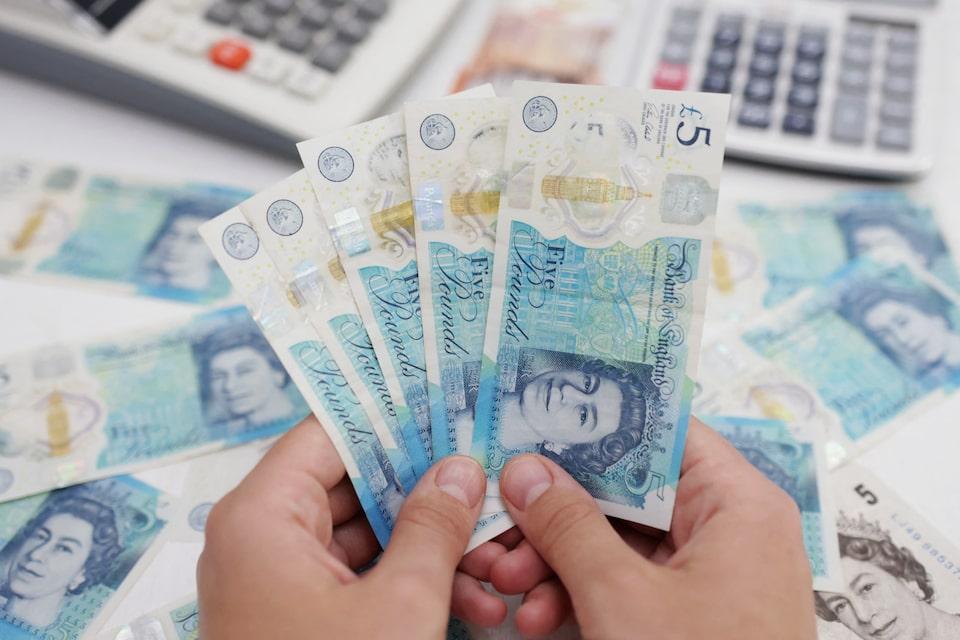
Outlook for pound, gilts weakens UK fiscal worries back in focus for markets Sterling could fall 10% vs euro over next 12 months - analyst July 3 (Reuters) - A string of policy U-turns has blown a hole in the UK government's budget plans, bringing sterling's stellar run against the dollar and a period of stability in UK bond markets to a halt and prompting analysts to predict more weakness ahead. UK gilts suffered their biggest one-day selloff since April's U.S. tariff turmoil on Wednesday and sterling tumbled as speculation , opens new tab about finance minister Rachel Reeves stepping down added to uncertainty over the fiscal policy outlook. Sign up here. It's a backdrop that suggests the best days for sterling, which had been sailing at 3-1/2-year highs against the dollar, may be in the past, even as markets stabilised on Thursday. For UK gilts, which at one point on Wednesday saw selling on a scale that drew parallels with 2022's budget crisis in the short-lived premiership of Liz Truss, the vulnerability of bonds to fiscal unease was laid bare. "Of all our updated forecasts this month, the one that receives the most radical surgery is our projection for sterling," said Nick Rees, head of macro research at Monex Europe. He expects sterling to weaken to $1.33 in six months from around $1.37 now. "Underpinning this shift is a fundamental change in view on the outlook for the UK public finances." Sterling is sitting on a roughly 9% gain against the dollar for the year so far as heightened policy uncertainty under U.S. President Donald Trump prompts global investors to diversify away from U.S. assets. But it's down around 4% against the euro and 5% against the Swiss franc , amid growing investor angst over weakening growth and fiscal uncertainty one year on from the ruling Labour party's landslide election win. "Ultimately, (Prime Minister Keir) Starmer may be pushed into announcing a commitment to raise taxes in the Budget this autumn," said RBC BlueBay Asset Management Chief Investment Officer Mark Dowding. Monex's Rees said he expected sterling to decline nearly 10% against the euro over the next 12 months. The euro was last trading at around 86.35 pence . The outlook for public finances has deteriorated after Starmer gave in to pressure from within his party - and from the poll-topping Reform UK party - to soften welfare spending cuts. A partial U-turn on tighter rules for long-term sickness and disability benefits will reduce savings by around 3 billion pounds ($4.1 billion) a year, while a decision to restore winter energy subsidies for some pensioners will cost around 1.5 billion pounds, according to think-tank estimates. Reeves said in March she had a buffer of just under 10 billion pounds to stick within her fiscal rules and economists say further tax increases may be necessary to stay on track. The latest selloff in gilts only adds to those pressures by increasing government borrowing costs. Britain's 30-year bond yield, trading at 5.34%, is off Wednesday's high but still relatively elevated , , . "The fear of a new chancellor ripping up Reeves' self imposed fiscal rules, has seen many of these (long gilt) positions exited," said Craig Inches, head of rates and cash at Royal London Asset Management, adding that he had seen Thursday's selloff as a gilts buying opportunity. Starmer on Wednesday ruled out Reeves resigning. BUILDING PRESSURE Sterling, which fell as much as 1% on Wednesday, has benefited from broad-based dollar weakness, but trading in FX options suggests sentiment has turned. Since April 2, the benchmark one-month sterling/dollar risk reversal has shown a premium for holding sterling call options - the right to buy at a set price and known time frame. But this position flipped sharply on Wednesday, pricing data shows. . Lloyds FX strategist Nick Kennedy said a rise in the euro towards 87.40-87.60 pence over the next couple of months seemed likely, while adding a move to 90 pence - implying a further sterling weakening - could create some breathing space for the economy from global and domestic events. A weak currency gives exporters a competitive edge. While the euro has benefited from a boost to long-term growth prospects as Germany in particular ramps up stimulus, the UK economic outlook has weakened, with unemployment rising to its highest in nearly four years. Kennedy said the key difference between Germany and Britain was that while both economies are borrowing more, Germany's is aimed at boosting growth, while Britain's is because it is struggling to grow. "And until there's a sensible debate in the UK about how to address those issues rather than pretending that they're not there, then the rationale for further euro outperformance versus sterling just holds up," Kennedy said. Rees at Monex, said he had not seen such levels of concern over UK public finances since the "Liz Truss moment", when her premiership was derailed by a bond market selloff. "In front of mind for traders, you are going to see that building downside pressure on the pound," he said. ($1 = 0.7297 pounds) https://www.reuters.com/world/uk/uk-markets-head-back-into-troubled-waters-fiscal-angst-rises-2025-07-03/