2025-07-03 06:20
China's north and west on alert for heavy rains Storms in China's southwest led to deadly flash floods Extreme rainfall increasingly poses a major challenge for China BEIJING, July 3 (Reuters) - China's north and west braced for more flash floods and landslides on Thursday as annual 'Plum Rains' left a trail of destruction and prompted the mobilisation of thousands of rescue workers to pull people from floodwaters. Red alerts were issued tracing the rains as they moved from the southwestern province of Sichuan through the northwestern province of Gansu, and up to the northeastern province of Liaoning. Sign up here. While some Beijing-bound trains were suspended and one of the city's airports experienced flight delays and cancellations late on Wednesday and into the early hours. Extreme rainfall and severe flooding, which meteorologists link to climate change, increasingly pose major challenges for policymakers as they threaten to overwhelm ageing flood defences, displace millions and wreak havoc on China's $2.8 trillion agricultural sector. Economic losses from natural disasters exceeded $10 billion last July, when the 'Plum Rains' - named for their timing coinciding with plums ripening along China's Yangtze River during the East Asia monsoon - typically reach their peak. State media said over 1,000 rescue workers were dispatched to the town of Taiping in central China's Henan province on Wednesday, after torrential rains caused a nearby river to burst its banks, killing five people in a flash flood and leaving three others missing. Two more people died in a landslide at a construction side in Gansu province caused by heavy rains over Wednesday and Thursday, a separate state media report said. During a two-day visit to the northern province of Hebei, which borders Henan, Vice Premier Zhang Guoqing urged local officials to step up efforts ahead of anticipated heavy rain to minimise casualties by preemptively evacuating people, state news agency Xinhua reported on Wednesday. While China has a nationwide severe weather monitoring and forecasting system, scientists say very localised predictions remain a challenge, testing the ability of particularly rural communities with fewer forecasting resources to evacuate local populations quickly ahead of any extreme weather. Further south, in China's Guangxi region, several buildings slid down hillsides over the last two days after their foundations gave way in waterlogged soil, local media reported. Footage verified by Reuters shows a five-storey building under construction in the town of Xinzhou collapsing into a nearby river within seconds, as the ground beneath it suddenly gave way. Between June 30 and July 1, the Lengshui River which flows through Xinzhou experienced its worst flooding in records going back to 2005, said a separate local media report, citing the Ministry of Water Resources. The report also instructed readers on how to recognise early signs of flash flooding. Meanwhile, in Pingliu Village, some 80 km (50 miles) west of Xinzhou, 21 people from seven households were evacuated on Tuesday after a landslide collapsed two houses and damaged four others, other local media reported. In contrast, the national meteorological centre forecast scorching heat along the country's eastern seaboard. https://www.reuters.com/sustainability/climate-energy/chinas-north-west-alert-after-sweeping-rains-trigger-deadly-floods-2025-07-03/

2025-07-03 06:15
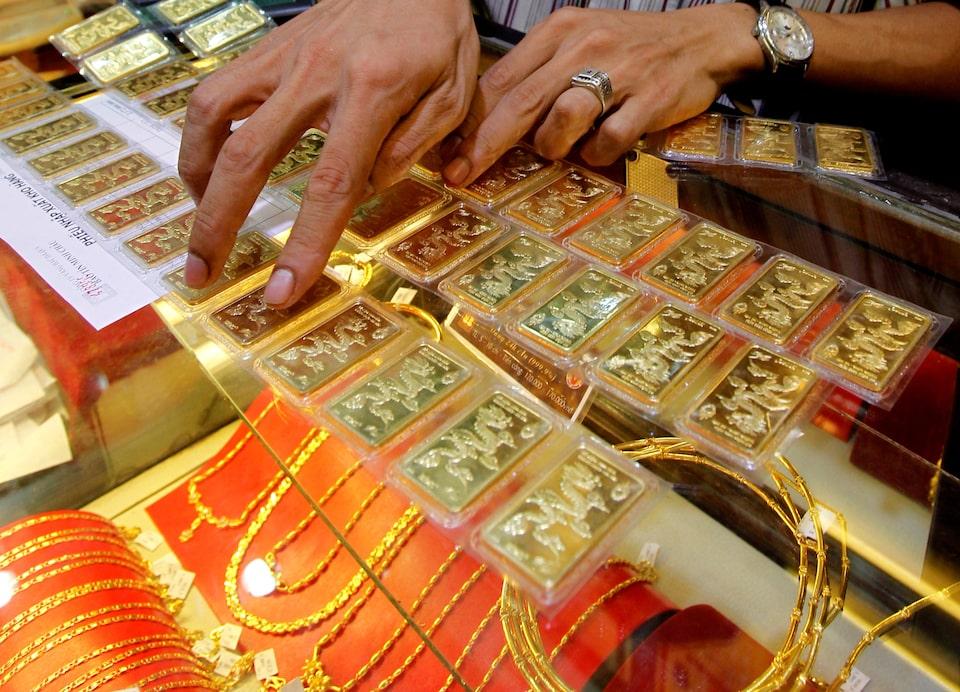
US job growth beats expectations in June Dollar rose after non-farm payrolls data US House Republicans head toward final vote on Trump's sweeping tax-cut bill July 3 (Reuters) - Gold fell 1% on Thursday as stronger-than-expected U.S. payroll data cemented expectations that the Federal Reserve is unlikely to cut interest rates as early as previously anticipated, denting the metal's appeal. Spot gold fell 0.9% to $3,328.63 per ounce as of 0200 p.m. EDT (1800 GMT), after falling over 1% earlier in the session. Sign up here. U.S. gold futures settled 0.4% higher at $3,342.9. The dollar (.DXY) , opens new tab and U.S. stock index futures rose after non-farm payrolls increased by 147,000 jobs last month, the Labor Department's Bureau of Labor Statistics showed. Economists polled by Reuters had forecast payrolls rising 110,000. A stronger dollar makes bullion more expensive for overseas buyers. "The better than expected jobs number means we see a lesser likelihood of a Fed rate cut earlier than currently anticipated. As a result, the dollar strengthened, which is adding pressure to the gold market," said David Meger, director of metals trading at High Ridge Futures. "The key is the fact that the idea or possibility of a July rate cut is off the table." Investors are now pricing in 51 basis points of Federal Reserve rate cuts by the end of the year, starting in October, down from around 66 basis points expected prior to the report. Non-yielding gold tends to perform well in a low-interest-rate environment. On the trade front, an agreement between the United States and Vietnam was announced on Wednesday ahead of a July 9 deadline when U.S. tariffs are set to take effect. Meanwhile, Republicans in the U.S. House of Representatives advanced Trump's massive tax-cut and spending bill, estimated to potentially add $3.4 trillion to the nation's debt, toward a final yes-or-no vote. "As the indebtedness of the U.S. continues to grow, investors might become more concerned about the U.S. dollar, which should benefit gold in the longer-term," said Carsten Menke, an analyst at Julius Baer. Spot silver was up 0.7% at $36.84 per ounce, while platinum lost 3.1% to $1,374.89 and palladium shed 1.5% to $1,137.69. https://www.reuters.com/world/india/gold-eases-investors-await-us-payroll-data-fed-policy-clues-2025-07-03/
2025-07-03 06:10
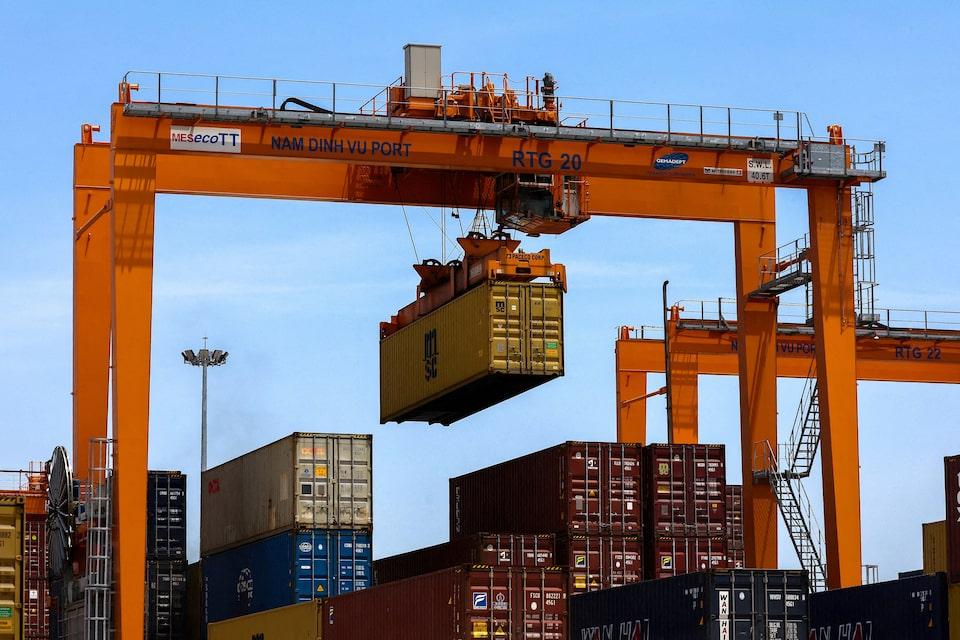
LITTLETON, Colorado, July 3 (Reuters) - The tariff deal between the United States and Vietnam sets the stage for a further climb in trade volumes between the countries and will also impact the energy generation mix that powers the fast-growing Vietnamese economy. U.S. President Donald Trump singled out U.S.-made SUVs as a potential beneficiary of the deal in a social media post, while U.S. energy firms will be hopeful that Vietnam will emerge as a key growth market for LNG. Sign up here. However, sellers of both bulky passenger trucks and pricey super-chilled gas may be disappointed over the near term as Vietnam's economy remains overwhelmingly reliant on cheap coal for domestic power and nimble motorcycles for transportation. Further, as Vietnam will remain saddled with 20% tariffs on goods sold to its top export market, corporate profits will remain compressed and may starve the economy of the funds needed to pay for the pricey goods the U.S. is hoping to sell. Below are key data points on vehicle ownership, power generation and manufacturing output to help monitor how trade and energy trends may evolve following the tariff agreements. 2 WHEELS BETTER THAN 4 While many in Vietnam may have ambitions to own one of the SUVs that President Trump hopes to sell more of, a vast majority of the vehicles in Vietnam are motorcycles, which make up more than 90% of all registered vehicles in the country. The motorcycle ownership rate is around 518 per 1,000 people, while car ownership stands at around 22 per 1,000, World Bank data shows. As Vietnam's economy continues to grow, car sales are expected to accelerate sharply, which bodes well for all global car exporters. However, the country's narrow streets and limited parking spaces in cities mean that finding space for even a small car can already be a challenge. What's more, automakers in China - the world's top car producer - along with Japan and South Korea already have a strong presence in Vietnam, and so will present stiff competition for U.S. SUV sellers hoping to grab market share. COAL CRUTCH U.S. sellers of LNG are also optimistic about Vietnam's growth potential, given the energy-intensive nature of its manufacturing-heavy economy. However, there are several reasons to expect Vietnam's LNG import appetite to only grow modestly from here. Firstly, coal currently generates around 50% to 55% of the country's electricity, and is far cheaper for cost-conscious utilities to burn compared to costly imported natural gas. The country relies on imports for over half of its coal needs, but is cheaply supplied by neighbour China and by top coal exporter Indonesia. Secondly, the country's domestic production of natural gas has steadily declined over the past decade due to depleting gas fields, and in 2024 was 40% less than was produced in 2015, according to the Energy Institute. The combination of an entrenched coal power system and declining gas reserves has served to squeeze natural gas out of the electricity mix, with gas's share now around 7% to 9% compared to around 12% to 15% in 2022, data from Ember shows. Reduced gas use has in turn stalled gas infrastructure development, with no gas power plants currently under construction in Vietnam, according to Global Energy Monitor (GEM). There is around 4 gigawatts (GW) of LNG import capacity under construction, and a further 17 GW in so-called pre-construction, GEM data shows, which is driving the optimism among LNG exporters. However, there is also an estimated 53 GW of wind power in pre-construction as well as 5 GW of utility-scale solar, which are being driven by clean energy policies set by the government and supported by civilians who want lower pollution. The country is also a major manufacturer of solar panels and components, which ensures that utilities have ready access to clean energy equipment that can be installed more quickly than any other power source. This may serve to curb future interest in building out more gas-handling capacity in Vietnam, regardless of U.S. hopes for higher LNG exports. MANUFACTURING DRIVE Vietnam's fast-growing manufacturing sector will play a big role in determining the country's energy needs and power mix. Rapid expansions to production lines over the past decade have resulted in total electricity demand more than doubling between 2014 and 2024, according to Ember. However, the need for manufacturers to remain cost competitive against peers in China and elsewhere has meant that power firms have been under pressure to keep energy prices as low as possible. That in turn has resulted in a strengthening of coal's grip on Vietnam's power sector, and the rapid uptake of cheap home-made solar systems. The country's heavy industry and producers of cars, chemicals and plastics will likely help sustain growth in gas demand over the coming years, and lift overall LNG imports. But with most manufacturers dependent on electricity rather than gas for power, most of the growth in future generation looks set to be a combination of coal and renewables, which are viewed as more economical than building new gas plants. The country has also sharply raised production of cables and other power sector components since 2022 as part of the global re-shoring of production outside of China. That in turn has only helped accelerate the drive towards electrification as cheaply as possible, and may also limit Vietnam's overall demand for LNG and other pricey U.S. exports. The opinions expressed here are those of the author, a columnist for Reuters. Enjoying this column? Check out Reuters Open Interest (ROI), your essential new source for global financial commentary. ROI delivers thought-provoking, data-driven analysis of everything from swap rates to soybeans. Markets are moving faster than ever. ROI can help you keep up. Follow ROI on LinkedIn , opens new tab and X , opens new tab. https://www.reuters.com/markets/commodities/us-tariff-deal-with-vietnam-set-expand-trade-faces-hurdles-2025-07-03/
2025-07-03 06:09
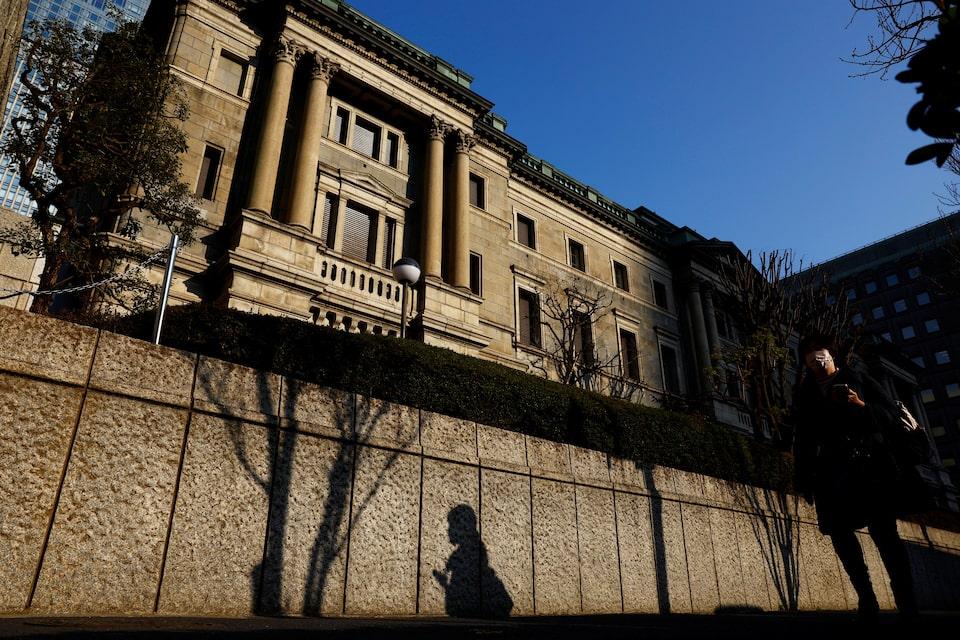
BOJ only 'pausing' its rate-hike cycle, Takata says BOJ should be ready to resume hikes if US policies change Japan close to achieving BOJ's price target, Takata says Expects Japan's economy to achieve 'true dawn' this time Takata offers few clues on next rate-hike timing TOKYO/TSU, Japan, July 3 (Reuters) - The Bank of Japan should resume interest rate hikes following a temporary pause to evaluate the impact of U.S. tariffs, board member Hajime Takata said, signalling optimism the country was on track to durably achieve the central bank's price goal. Takata said Japan was close to achieving the BOJ's 2% inflation target with robust corporate profits and labour shortages driving up wages and building price pressures. Sign up here. While the BOJ must take its time scrutinising the fallout from U.S. tariffs, it may need to "nimbly" shift back to rate hikes in response to any changes to U.S. policies, he said. "My view is that the BOJ is currently only pausing its policy interest rate hike cycle, and should continue to make a gear shift (from ultra-loose monetary policy) after a certain period of 'wait and see'", Takata said in a speech on Thursday. "Given uncertainties regarding various U.S. policies remain high, the BOJ must conduct monetary policy in a more flexible manner without being too pessimistic," he said. The remarks by Takata, who is viewed by markets as taking a neutral to slightly hawkish stance on monetary policy, highlight the BOJ's resolve to resume rate hikes once there is more clarity on whether the economy can weather the hit from U.S. tariffs. But Takata offered few clues on the timing of the BOJ's next rate hike, saying it was hard to predict when Japan could clear the threshold for another increase until there is more clarity over U.S. trade developments. While the BOJ and many international institutions have cut growth forecasts taking into account the expected hit from U.S. tariffs, the effect of Trump's deregulation and tax cut plans on the U.S. economy remains unclear, Takata said. "We can't say now with any pre-set idea," Takata said when asked about the chance of another rate hike his year. TRUE DAWN APPROACHING The BOJ ended a massive stimulus last year and in January raised short-term rates to 0.5%. While the central bank has signalled readiness to raise rates further, the expected impact of U.S. levies forced it to cut its growth forecasts in May. Takata said Japan was making further progress towards durably hitting the BOJ's price target. Medium- and long-term inflation expectations continue to heighten steadily due not just to rising raw material costs but wage hikes, he said, adding that Japan is finally seeing signs of home-made inflation - a prerequisite for rate hikes. But he warned of the huge stress Japan's economy was facing from external factors, adding that he wanted to assess whether higher U.S. duties could hurt exports, capital expenditure and corporate appetite to continue wage hikes. If the U.S. Federal Reserve were to cut interest rates to support the economy, the divergence between the BOJ's rate-hike bias and the Fed's easing could push up the yen and hit corporate profits, he added. In the long run, the hit to Japan's economy from U.S. tariffs will likely be limited compared with the bilateral trade friction in the 1990s as Trump's levies target a wide range of countries - not just Japan, Takata said in the speech. With firms now more keen to raise prices and wages, Japan is breaking free from a long-held view among society that inflation and wage growth will remain stagnant, Takata said. "Japan's economy ended up experiencing several 'false dawns,' or temporary economic recoveries, interrupted by global demand shocks. My expectation is that Japan will see a 'true dawn' this time," Takata said. "I believe the BOJ should gradually and cautiously shift gears in its monetary policy," based on the view the economy was ready for a full withdrawal of an unconventional easing programme. https://www.reuters.com/en/boj-should-resume-rate-hikes-after-pause-board-member-takata-says-2025-07-03/
2025-07-03 05:56
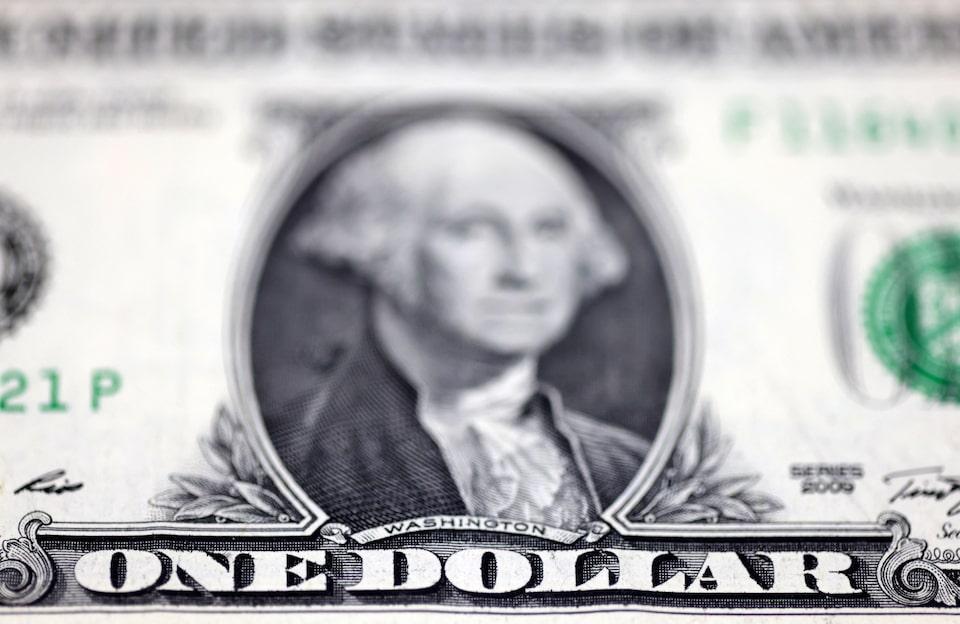
US economy adds 147,000 jobs in June Dollar strengthens against yen and franc Euro weakens against the dollar US Treasury yields rise, Benchmark S&P 500 hits record high British sterling strengthens NEW YORK, July 3 (Reuters) - The U.S. dollar rose against major currencies, including the yen, euro and Swiss franc on Thursday, after data showing the U.S. economy created more jobs than expected, signalling that the Federal Reserve might take longer to cut interest rates. The dollar strengthened 0.94% to 145.075 versus the Japanese yen and was up 0.39% to 0.7955 against the Swiss franc . The U.S. currency is on track to notch a second consecutive session of gains against both safe-haven currencies. Sign up here. The euro was 0.41% weaker at $1.175350. It is on track for the second straight day of losses. U.S. Labor Department data on Thursday showed that nonfarm payrolls increased by 147,000 jobs in June. Economists polled by Reuters had forecast a rise of 110,000. The report was published a day early because of the July 4 U.S. Independence Day holiday. "It will be very difficult for the Fed to cut rates in this environment, with the labor market so strong," said Axel Merk, president and chief investment officer at Merk Hard Currency Fund in California. "The argument that Jerome Powell has made for the Fed to stay on the sidelines continues to hold." The dollar index , which measures the greenback against a basket of currencies including the yen and the euro, rose 0.40% to 97.135, on track for two straight sessions of gains, although it is still near multi-year lows. The rise in the dollar following the data was accompanied by an increase in U.S. Treasury yields. The two-year note yield, which typically moves in step with interest rate expectations for the Federal Reserve, rose 9.7 basis points to 3.789%. The yield on benchmark U.S. 10-year notes rose 5.5 basis points to 4.348%. Wall Street stock indexes gained, with the benchmark S&P 500 index (.SPX) , opens new tab and the Nasdaq (.IXIC) , opens new tab hitting a fresh record high on the session. "The US economy right now is on the roll to outperform through the rest of the year, that's why we're seeing such a strong response over the past three weeks in the equities," said Joseph Trevisani, senior analyst at FX Street. "The dollar has weakened about 13% against the euro since February. A lot of that has been driven by speculation that the Fed will sooner or later cut rates." He said Thursday's economic report had put an end to those expectations. Market expectations that the Fed will leave rates unchanged at its July meeting rose to a 95.3% probability, up from 76.2% a day ago, according to the CME's Fedwatch tool. Republicans in the U.S. House of Representatives passed President Donald Trump's massive tax-cut and spending bill on Thursday, sending it to Trump to sign into law. Treasury Secretary Scott Bessent said in a Bloomberg interview he expects a flurry of trade deals before the July 9 deadline, when the temporary pause of the so-called "Liberation Day" tariffs expires. The U.S. has lifted restrictions on exports to China for chip design software developers and ethane producers, a sign of easing trade tensions between the countries. The dollar strengthened 0.14% to 7.17 versus the offshore Chinese yuan. The British pound rose after losing ground in the previous session following a selloff in gilts. British Prime Minister Keir Starmer's office backed finance minister Rachel Reeves, easing concerns over her future. The pound strengthened 0.07% to $1.3646. https://www.reuters.com/world/middle-east/dollar-drifts-traders-hunker-down-us-payrolls-2025-07-03/
2025-07-03 05:38
US jobs report tops expectations S&P 500, Nasdaq close at record levels Yields jump after payrolls report NEW YORK, July 3 (Reuters) - Global stocks climbed to a record for a second straight session on Thursday and the dollar rallied after a stronger than expected U.S. payrolls report indicated the labor market may not be deteriorating rapidly. The Labor Department said nonfarm payrolls increased by 147,000 jobs last month after an upwardly revised 144,000 advance in May, well above the 110,000 estimate of economists polled by Reuters. Sign up here. Markets dialed back expectations for rate cuts this year from the U.S. Federal Reserve in the wake of the data, with the nearly 25% chance for a cut all but evaporating, while expectations for a September cut are down to about 75% from nearly 98% before the jobs report was released, according to LSEG data. "July cut is definitely off the table. I was surprised like everybody to get such a strong number," said Sandy Villere, Portfolio Manager with Villere & Co in New Orleans. "I'm not going to say Goldilocks, but it's pretty amazing given all the crosscurrents, from tariffs to DOGE to whatever. I don't see how you could possibly cut with this strong of a labor market, so pretty amazing." On Wall Street, the S&P 500 and Nasdaq Composite once again closed at record levels, led by gains in technology (.SPLRCT) , opens new tab as Nvidia (NVDA.O) , opens new tab shares rose 1.3% as it approached a $4 trillion market capitalization. Other economic data from the Institute for Supply Management (ISM) showed U.S. services sector activity picked up in June as orders rebounded, but employment contracted for the third time this year. The Dow Jones Industrial Average (.DJI) , opens new tab rose 344.11 points, or 0.77%, to 44,828.53, the S&P 500 (.SPX) , opens new tab rose 51.93 points, or 0.83%, to 6,279.35 and the Nasdaq Composite (.IXIC) , opens new tab rose 207.97 points, or 1.02%, to 20,601.10. For the week, the S&P 500 gained 1.72%, the Nasdaq rose 1.62%, and the Dow climbed 2.3%. MSCI's gauge of stocks across the globe (.MIWD00000PUS) , opens new tab rose 5.99 points, or 0.65%, to 926.47 after hitting a record 926.79, and was up 0.3% on the week. The pan-European STOXX 600 (.STOXX) , opens new tab index closed up 0.47%, led by gains in bank stocks, to manage a slight gain for the week. The dollar strengthened in the wake of the payrolls data, with the dollar index , which measures the greenback against a basket of currencies, up 0.38% to 97.12, with the euro down 0.37% at $1.1754. The dollar was on track for a second straight gain after nine consecutive sessions of declines, and was down 0.1% on the week. Against the Japanese yen , the dollar strengthened 0.95% to 145.03. Bank of Japan board member Hajime Takata said the central bank should resume interest rate hikes following a temporary pause to evaluate the impact of U.S. tariffs, signaling optimism the country was on track to durably achieve the central bank's price goal. Sterling strengthened 0.07% to $1.3645 after a sharp selloff in the prior session across UK assets fueled by fiscal concerns and uncertainty about Rachel Reeves' future as Britain's finance minister. U.S. Treasury yields jumped following the jobs data, before easing somewhat. The yield on benchmark U.S. 10-year notes rose 5.3 basis points to 4.346% while the 2-year note yield, which typically moves in step with interest rate expectations for the Federal Reserve, shot up 9.7 basis points to 3.886%. For the week, the 10-year yield rose 6.3 basis points while the 2-year yield was up nearly 14.6 basis points. U.S. crude fell 0.65% to $67.01 a barrel and Brent fell to $68.79 per barrel, down 0.46% on the day. https://www.reuters.com/world/china/global-markets-wrapup-1-2025-07-03/