2025-07-03 05:14
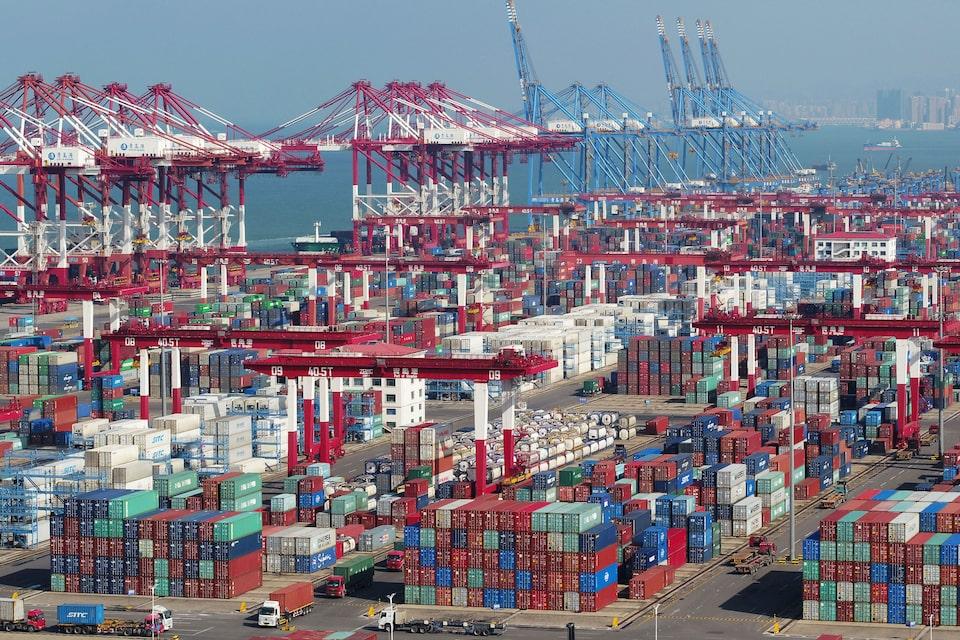
SINGAPORE, July 3 (Reuters) - The provincial government of Shandong, China's refining hub, has increased fuel oil import tax rebates for six independent refineries to improve their profitability as they struggle with low margins and fuel demand, industry sources said this week. The Shandong provincial tax bureau increased the consumption tax rebates that the independent refiners, also known as teapots, will receive for the sale of gasoline and diesel refined from imported fuel oil by 25 percentage points to between 75% and 95%, three sources with direct knowledge of the matter said this week. Sign up here. The change applies to Chambroad Petrochemicals, Hongrun Petrochemical, Lihuayi Group, Xinyue Group, Shandong Jincheng Petrochemical Group and Xintai Petrochemical, the sources said. The refiners were notified about two weeks ago, said one of the sources. The Shandong Provincial Tax Service, the national State Taxation Administration and the companies did not respond to Reuters' requests for comment. The teapots often choose to process straight-run fuel oil or tar-like heavy residue called bitumen blend into transportation fuels when crude prices become too expensive and they are under crude oil import quotas that can limit their purchases. China enacted higher import tariffs on fuel oil at the start of 2025 and at the end of last year reduced the tax rebates on fuel oil shipments. That led to fuel oil imports declining to their lowest ever for the January-May period, according to customs data. FGE's Associate Director of the East of Suez Oil Service Mia Geng said in a June 27 note the independent refiners had been suffering from low margins and shutdowns as a result of the rules and the provincial government likely also wanted the refineries to run more to boost industrial output and economic activity. Geng expects the tax changes should increase high-sulphur fuel oil demand and raise the refineries' run rates. However, the changes are unlikely to spur fuel oil demand in the short-term since crude oil is currently cheaper, a trading source and one of the sources with direct knowledge of the change said. The refiners in Shandong are China's main buyers of cheap sanctioned oil from Russia and Iran. https://www.reuters.com/business/energy/chinas-shandong-raises-fuel-oil-import-tax-rebates-some-refineries-sources-say-2025-07-03/
2025-07-03 05:02
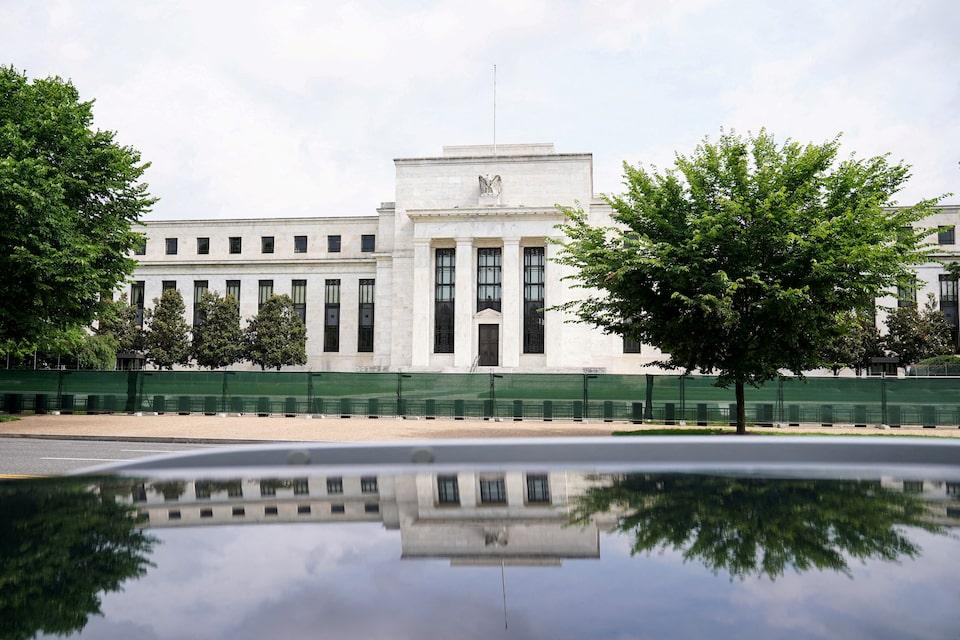
Central banks see Fed independence, US rule of law at risk Sanction risk pushing more EM central banks to move gold home Euro, yuan, gold seen as beneficiaries of global shifts LONDON, July 3 (Reuters) - Two in three reserve managers fear Federal Reserve independence is at risk and nearly half think the rule of law in the United States may deteriorate enough to influence their asset allocation significantly, UBS Asset Management said in a survey on Thursday. And 35% of close to 40 central banks that responded think that the U.S. might ask allies to convert longer-term debt into other instruments such as ultra-long, zero-coupon bonds. Sign up here. The results highlight growing concern around the safe haven status of the world's No. 1 reserve currency and biggest bond market given U.S. President Donald Trump's confrontations with longstanding allies over trade and security, and his attacks on the Fed. Trump's April 2 Liberation Day tariffs hit both the dollar and Treasuries. He has also pressured the Fed to cut rates and his advisers have floated unorthodox ideas to bring the ballooning U.S. debt pile under control. Max Castelli, head of global sovereign markets strategy and advice at UBS Asset Management, said the concerns showed it was "very clear" how Liberation Day had changed reserve managers' view on the dollar. Going forward, 29% were looking to cut exposure to U.S. assets in response to recent developments, the survey said. Over the next year however, 25% of central banks said they expected to cut their exposure to the dollar, after stripping out those who want to increase it, slightly less than the past year. "When you ask: do you see really a big change in the dominance of the dollar? The answer is no," Castelli said, adding it takes time for reserve managers to move. Nearly 80% of respondents expect the dollar, which currently accounts for 58% of FX reserves, to remain the global reserve currency. In the coming year, gold, which UBS ranked against other non-currency assets, was the top winner, with 52% of central banks looking to add it to their holdings. And 39% of respondents were planning to increase the share of gold reserves they hold domestically, the survey showed. Castelli said that reflected mainly emerging markets central banks worried about sanction risk, and mainly concerning gold stored in the United States. Trump's policies have also revived questions in Germany around its central bank's gold reserves, some of which are stored at the New York Fed. Over the next five years, reserve managers reckon the euro will benefit the most from global shifts, followed by the renminbi and crypto assets, the UBS survey showed. The dollar dropped from top spot last year to ninth place. But over the next year, only a net 6% of respondents plan to add the euro, while the renminbi took the top spot with 25%. The Canadian dollar, pound and yen were other currencies that a higher net percentage of respondents were looking to add. "There is a lot of optimism about Europe. But the expectations are very high, in the sense that if Europe does not deliver on reform, I think this European renaissance will be rather short-lived," Castelli said. https://www.reuters.com/business/finance/fed-independence-us-rule-law-risk-ubs-reserve-managers-survey-says-2025-07-03/
2025-07-03 04:53
A look at the day ahead in European and global markets from Stella Qiu It's been a pretty muted session in Asia and rightly so, given the high stakes in U.S. payrolls data due later in the day that could make or break the case for a July rate cut and spur big moves in Treasuries and foreign exchange markets. Sign up here. Investors in Asia did not seem to share the optimism on trade that pushed Wall Street to record high closes overnight, after President Donald Trump said the U.S. had reached a trade agreement with Vietnam. Details remain unclear. The market showed no significant reaction to the latest developments on Trump's "big, beautiful bill" on tax cuts. Republicans in the House of Representatives on Wednesday moved closer toward advancing the package, apparently overcoming objections by a handful of party hardliners who had raised concerns about cost. Trump said the U.S. will impose a 20% tariff on all imports from Vietnam which, while lower than the 46% tariff that had been threatened, is still much higher than previous rates. It was unclear how a 40% duty on all trans-shipments through Vietnam, aimed at products largely made in China and then labelled "Made in Vietnam", could be implemented. Vietnamese shares (.VNI) , opens new tab were up a modest 0.5%, although that was the highest since April 2022. Vietnam's dong currency dipped to a record low of 26,218 per dollar. Other countries in Asia are complaining that talks with the U.S. are proving difficult, in part because it was not clear what the White House wanted. South Korean President Lee Jae Myung said on Thursday he could not say if tariff negotiations could conclude by next Tuesday, while Japan has invoked national interests as talks with the U.S. struggled. Wall Street futures are 0.1% firmer, while EUROSTOXX 50 futures were up 0.2%. Looking ahead, the main risk event for markets will be U.S. payrolls figures due later in the day. Stakes are high after a private sector payrolls report surprised with the first fall in more than two years. Analysts are forecasting a rise of 110,000 jobs in June with the jobless rate ticking up to 4.3%. Given market pricing of just a 25% probability for a July Fed rate cut, a weak report could shift the dial big-time, sending Treasuries rallying and the dollar lower. Sterling was flat at $1.3633. It slid 0.8% overnight on investor anxiety over Britain's finances after the government's reversal on welfare reforms, which also caused gilt yields to jump. Key developments that could influence markets on Thursday: -- U.S. nonfarm payrolls report for June -- U.S initial and continuing jobless claims, ISM services PMI -- U.K. S&P Global services, composite PMIs -- ECB releases its June minutes https://www.reuters.com/world/china/global-markets-view-europe-2025-07-03/

2025-07-03 04:36
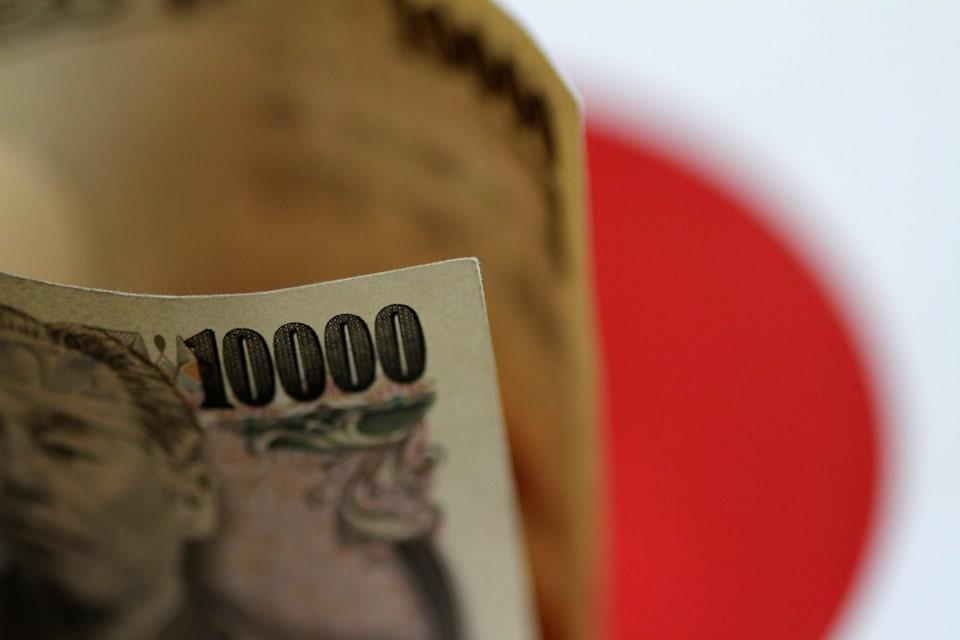
Investors cut long yen position by 25% since April-end BOJ's cautious stance on hike-path leaves yen in limbo for now Yen likely to strengthen but near term headwinds to persist SINGAPORE, July 03 (Reuters) - Global investors are unwinding their wagers on Japan's yen rising quickly as a cautious central bank, a trade war and the prohibitive cost of holding the currency sour one of the year's most popular trades. Most analysts and real money investors remain convinced the yen will eventually appreciate as Japan shifts away from ultra-low rates. But pitted against this conviction are short term headwinds, including the lack of progress on a trade deal with the United States and uncertainty surrounding Japanese national elections. Sign up here. Monetary policy has become the yen's biggest sticking point after the Bank of Japan (BOJ) has hinted it is loath to raise rates again this year, having done so in January, before it can gauge the full impact of U.S. President Donald Trump's sweeping tariffs. James Athey, London-based fixed income manager at Marlborough, has reduced his long yen positions versus the dollar because he sees short-term positioning in the currency and the BOJ's "intransigence" as headwinds. "Ultimately we do still see numerous long-term tailwinds for the yen, it's just about managing the journey amongst this uncertainty and volatility," he said. Investors still hold net long positions in the yen worth $11.41 billion, although that's drastically lower than the record $15.7 billion at the end of April, weekly data from the U.S. markets regulator showed. By virtue of low Japanese yields and huge offshore investments, the yen has historically been sensitive to overseas interest rates. The yawning gap between the U.S. and Japanese interest rates in the past few years had driven the yen to record lows, prompting costly interventions from Tokyo. That gap also makes owning the yen, whose bonds pay 0.5% on average, using U.S. dollars that cost upwards of 4%, an expensive proposition for investors. If the yen depreciates, it's a double-whammy. Bo Zhuang, global macro strategist for Loomis Sayles, an affiliate of Natixis Investment Managers, said investors expected at the beginning of the year the long yen trade would work well over three to six months. "But now it's about 'oh well, maybe it will last more than that' and the cost of holding such a position might be too high for them to recover." SHIFTING EXPECTATIONS At the start of 2025, market expectations were for Japan to raise rates quickly and for the U.S. Federal Reserve to start cutting rates later in the year. Yen buyers were rewarded when Trump's sweeping trade tariffs in April jolted markets, shook investors' faith in the U.S. dollar and caused a swift 9% rise in the yen from levels near 160 per dollar, its strongest first-half performance since 2016. But the yen has been meandering since then as the BOJ turned cautious. "The trade faces a negative carry because of the interest rate differential and needs to be actively managed," said Matthias Scheiber, senior portfolio manager at Allspring Global Investments, who reduced his long yen position. But Scheiber reckons any sell-off in yen is an opportunity to buy it. "We still like the trade, despite the fact that over the last couple of weeks, it was basically trading flat," said Scheiber, who is also the head of the multi-asset solutions team at Allspring. In the derivatives market too, options betting on a higher yen cost more, in a sign of bullishness on the currency. Interest in low-cost yen options that deliver outsized payoffs if the currency strengthens sharply has jumped. The yen's trajectory will heavily depend on where U.S. duties end up after Trump this week cast doubt over a possible deal with Japan. He also suggested a tariff of 30% or 35% on imports from Japan - well above the previous 24% tariff rate. A high tariff rate will stifle Japan's major auto exports and make the BOJ's path towards shifting away from decades of ultra-low rates even more perilous. "I think the yen is waiting for catalyst in terms of how the US-Japan trade negotiations go because I think that's a road block for policymakers," said Moh Siong Sim, currency strategist at Bank of Singapore. "Yen has always been alternating between super excitement and super disappointment." https://www.reuters.com/business/japans-yen-is-compelling-trade-comes-cost-2025-07-03/
2025-07-03 04:13
Risk events piling up for markets in weeks ahead EU-tariff deal a coin-toss but dollar exposed either way - investors U.S. payrolls data may spark biggest market flare-up Euro zone and UK debt anxiety rising before French budget vote LONDON, July 3 (Reuters) - Big investors are mobilising to trade through weeks packed with wild-card events that may shatter the calm in stock markets and drive big swings for assets they see as exposed to both positive or negative surprises, from gold to corporate credit. U.S. Treasuries, the dollar, yen and euro zone debt may also turn volatile, investors said, Thursday's U.S. jobs data is followed by next week's crunch U.S.-European Union tariff deadline and then an unpredictable French budget vote. After that, markets face an August 12 deadline for U.S.-China talks to achieve a trade deal. Sign up here. "I can't think of a time in my history in markets, which is pretty long, where you've had so much risk and so little risk premium," said Insight Investment head of investment specialists April La Russe, referring to the compensation for holding risky assets over cash. Here's a look at how investors are gaming out potential market flare-ups in the days and weeks ahead. TARIFF TREMORS Russell Investments global head of solutions strategy Van Luu said market participants were pricing a mildly positive outcome on July 9, with the U.S. and EU either settling for 10% universal tariffs or postponing a resolution, as the U.S. had with China. He had turned negative on corporate credit because yields were underpricing the economic risks of ongoing tariff uncertainty, he said. With Brussels now pushing for exemptions for key EU export sectors, the worst case scenario was a deadlock and markets starting to fear reciprocal tariffs, he said. Amundi global head of macro Mahmood Pradhan, a former IMF deputy director for Europe, said the July 9 outcome was a coin-toss but a benign result was already priced into risky assets. World stocks(.MIWD00000PUS) , opens new tab have rebounded and are up 24% since a low of April 8, soon after U.S. President Donald Trump delivered his "Liberation Day" April 2 bombshell of tariffs on imports from around the world. "Given the rally we've had, there might not be more upside," Pradhan said. DOLLAR, TREASURIES, GOLD Any outcome on July 9 could hit the dollar and spark cross-currency volatility, investors said. The greenback is already down some 10% against other major currencies so far this year . Treasuries would suffer if talks broke down in a threat to world trade, Artemis head of fixed income strategy Liam O'Donnell said. A long and steady accumulation of Treasuries by overseas investors and central banks has been partly driven by the dollar's dominant position in global trade flows. Gold, (.XAU) , opens new tab which has soared by more than 25% year-to-date to $3,344 as investors piled into the precious metal to hedge portfolios against inflation and recession risks sparked by high tariffs, is also vulnerable to a positive EU tariff outcome. "We could see profit taking (on gold) by real money investors and also hedge funds," Edmond de Rothschild multi-asset head Michael Nizard said. DATA JOLTS While latest U.S. payrolls data is released on Thursday, the next official payrolls report on Aug. 1 could be a bigger jolt to world markets than tariffs, coming at a time of holiday-thinned trade, investors added. "In terms of what would produce the biggest market surprise, I think it's actually U.S. data because that has been flying under the radar," Russell's Luu said. Artemis' O'Donnell said the upcoming U.S. job reports were the biggest event risk for markets. Luu said gauges of expected volatility in some world currencies seemed too low, particularly those expressing how Japan's yen, which can rip higher when U.S. rate cut bets build, might swing against the dollar and the euro in the months ahead. EUROPE DEBT STRESS There are also crunch dates for Europe that could revive anxiety about debt stress, overshadowed so far by investors tapping assets such as triple-A rated German Bunds as Treasuries' haven appeal has diminished. French Prime Minister Francois Bayrou survived his eighth no confidence motion on Tuesday but investors are wary about his chances of getting a plan to trim the euro zone's biggest budget deficit on July 14 through a parliament rocked by right-wing rebellions. Germany's stimulus bonanza is also now rolling, with an upper house vote on business tax breaks on July 11. Benchmark Bund yields are about 25 basis points (bps) higher so far this year to around 2.62% given expectations for increased bond sales to fund extra borrowing. The extra yield bond investors demand for lending to France over Germany, at 70 bps now , might be too low given the immediate French budget risk ahead. "We prefer an underweight position in French sovereign bonds in the near term," RBC Wealth Management investment strategy head Frédérique Carrier said. And Britain is also back on the watch-list as government U-turns on welfare reforms threaten a budget blowout, sparking fresh bond selling. https://www.reuters.com/legal/transactional/global-markets-risk-events-graphic-2025-07-03/
2025-07-03 03:01
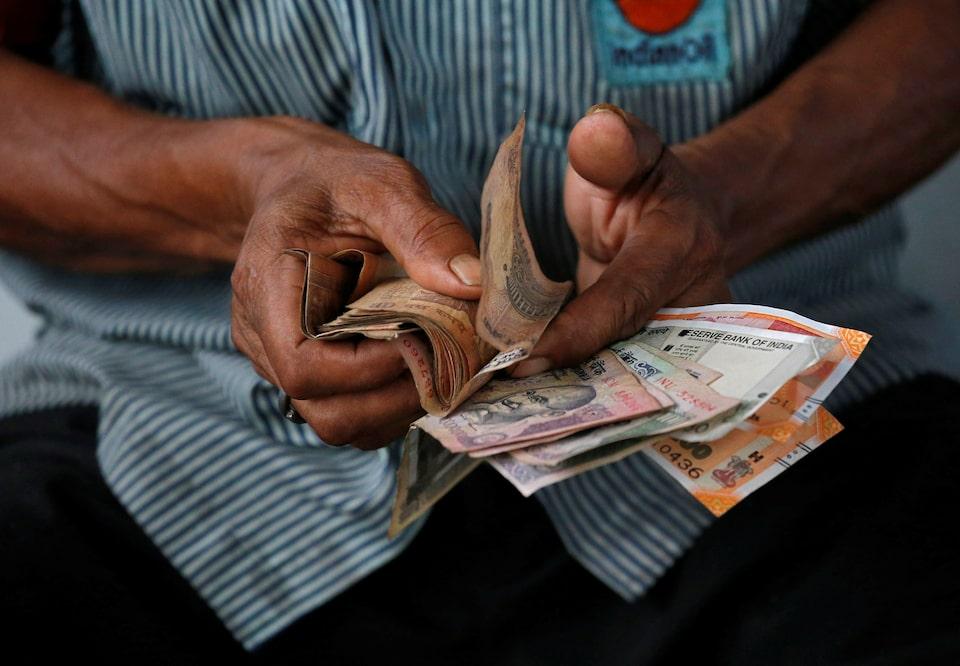
MUMBAI, July 3 (Reuters) - The Indian rupee is likely to open marginally higher on Thursday, supported by an uptick in most Asian currencies on optimism over signing trade deals with the United States before the tariff deadline. The 1-month non-deliverable forward indicated an open between 85.60 and 85.64 versus 85.7025 in the previous session. Sign up here. U.S. President Donald Trump announced an agreement with Vietnam that cuts U.S. tariffs on many Vietnamese goods to 20% from his previously announced 46%. The deal has sparked hopes that other countries, including India, will be able to negotiate trade deals with Washington before July 9 when Trump's 90-day pause on so-called reciprocal tariffs is set to expire. Most Asian currencies traded higher, while equities were mixed. The U.S. and India are pushing for a trade pact after Trump's deal with Vietnam. Trump threatened a 26% duty on Indian goods under his reciprocal tariff plan, with the rate temporarily lowered to 10% to allow time for negotiations. "If the India-U.S. deal is done, it will be more of a relief for the rupee and nothing beyond that," a currency trader at a bank said. "I don’t expect a major move if the deal materialises. The bigger reaction will come if it doesn’t." Meanwhile, in a boost for Asian currencies and risk assets, weaker-than-expected U.S. private payrolls data strengthened the case for a Federal Reserve rate cut in the coming months —possibly as early as this month. U.S. private payrolls unexpectedly fell in June, the ADP National Employment Report showed on Wednesday. "There is an increased near-term focus on the labour market.. the question is whether this weakness will be corroborated by tomorrow’s labour market report, or if the data will indicate resilience," ANZ Bank said in a note. The U.S. non-farm payrolls data for June is due Friday. KEY INDICATORS: ** One-month non-deliverable rupee forward at 85.72; onshore one-month forward premium at 10 paise ** Dollar index marginally up at 96.77 ** Brent crude futures down 0.9% at $68.5 per barrel ** Ten-year U.S. note yield at 4.26% ** As per NSDL data, foreign investors bought a net $129.1 million worth of Indian shares on July 1 ** NSDL data shows foreign investors sold a net $37.4 million worth of Indian bonds on July 1 https://www.reuters.com/world/india/rupee-supported-by-hopes-india-us-trade-deal-weak-us-jobs-data-2025-07-03/