2025-07-01 23:31
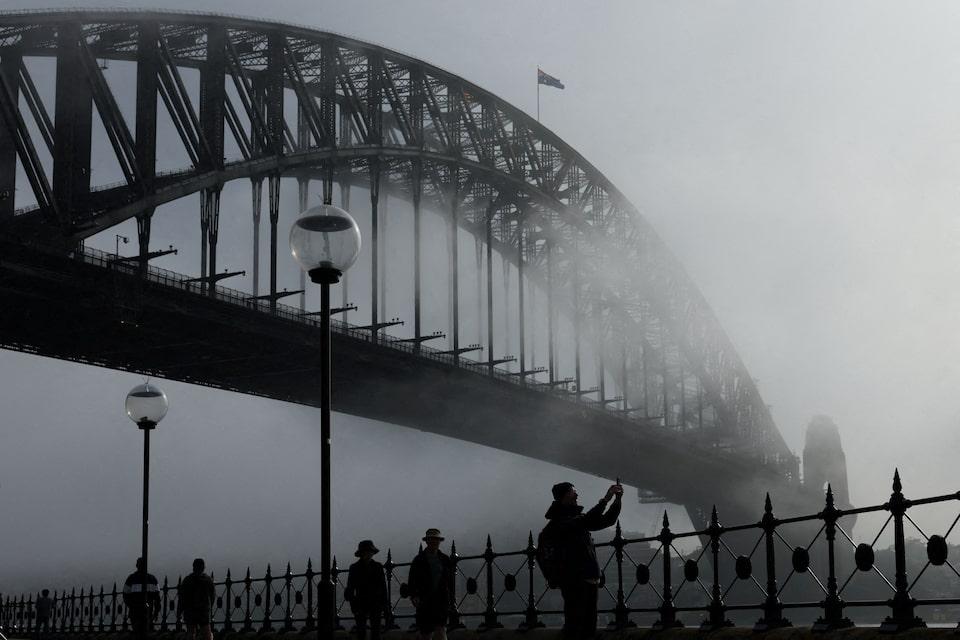
Officials urge people to avoid non-essential travel Many roads closed due to flooding and fallen trees Weather system expected to impact New Zealand's North Island SYDNEY, July 2 (Reuters) - A wild weather system pummelled Sydney for a second day on Wednesday, with the storm forcing the cancellation of dozens of flights, bringing down trees and taking out power to thousands of homes in Australia's southeast. Qantas Airways (QAN.AX) , opens new tab and Virgin Australia (VGN.AX) , opens new tab, Australia's biggest airlines, have together cancelled at least 55 domestic flights in and out of Sydney on Wednesday, the airport's website showed. Some international flights have been delayed. Sign up here. Sydney's train services have also been disrupted, with authorities urging people to avoid non-essential travel. "Be really careful. It's really wild out there, if you can delay travel, please do so," New South Wales state Emergency Services Chief Superintendent Dallas Burnes told ABC News. "As people wake today and see the damage from last night, we're expecting a very busy day." A coastal low-pressure system, described by meteorologists as a "bomb cyclone", smashed Australia's southeast coast overnight with wind gusts of more than 100 kph (62 mph), uprooting trees and damaging power lines. Roughly one month's worth of rain fell over six hours in some regions. The weather phenomenon forms quickly and causes air pressure to drop significantly within a short period of time. More than 35,000 properties are without power in New South Wales, Australia's most populous state, after the storm overnight, outage data showed. Several roads in the state's Illawara region south of Sydney have been closed due to flooding and fallen trees. Evacuation orders were issued due to coastal erosion in the Central Coast region, while dozens of warnings remain for wind damage and flash flooding. Conditions are expected to worsen through Wednesday before the system eases and move into the Tasman Sea, and then track toward New Zealand on Thursday. New Zealand's National Institute of Water and Atmospheric Research said the low-pressure system could bring heavy rain and strong winds to the country's North Island on Thursday and into the weekend. https://www.reuters.com/business/environment/wild-storm-sydney-disrupts-flights-thousands-without-power-2025-07-01/
2025-07-01 23:29
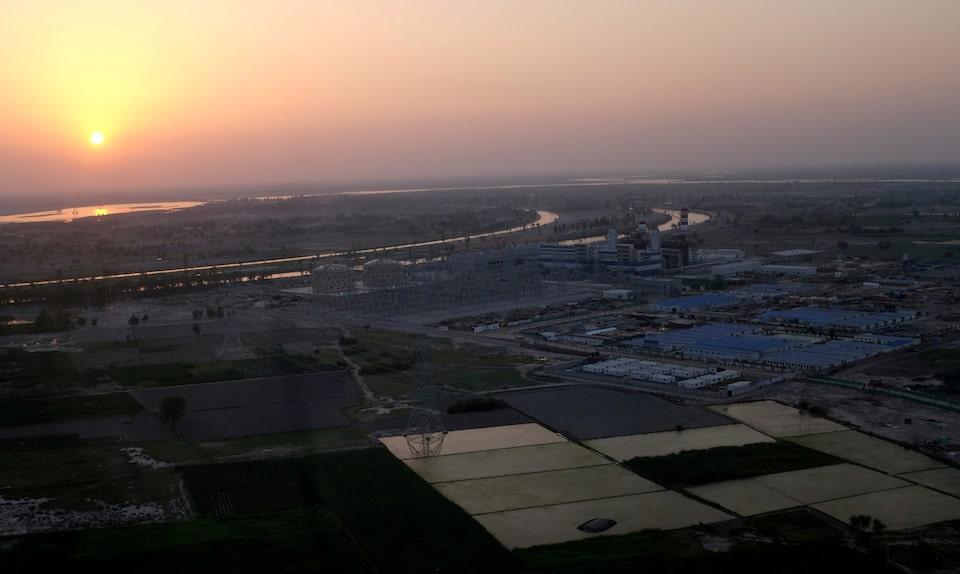
Pakistan faces $378 mln losses as LNG glut curbs local output Shift to solar cuts gas demand, forcing supply curtailments Pakistan seeks offshore storage, resale for excess LNG cargoes KARACHI/SINGAPORE, July 1 (Reuters) - Pakistan is exploring ways to sell excess liquefied natural gas (LNG) cargoes amid a gas supply glut that could cost domestic producers $378 million in annual losses, according to a presentation and a government official familiar with the matter. The country has at least three LNG cargoes in excess that it imported from top supplier Qatar and has no immediate use for, and is currently selling natural gas at steep discounts to local users, a second government official said. Sign up here. Power generation from gas-fired power plants, which has historically accounted for a lion's share of LNG use in the country, has declined for three straight years ended 2024, with cheaper solar power use dramatically gaining at the expense of gas-fired generation, data from energy think-tank Ember showed. That has forced domestic producers of the fuel to curb production. Pakistan is currently exploring the possibility of transferring LNG cargoes to rented tankers for "offshore storage and onward sale," state-owned oil and gas producer OGDCL said in a presentation to industry and government. "Excess LNG in the gas network has resulted in significant production operations impact for local exploration and production companies over last 18 months," OGDCL said, adding that it had forced curtailment of domestic supply. The domestic industry could suffer $378 million in losses over the next 12 months at the current rate of curtailment, according to the presentation dated May 29 reviewed by Reuters. It is not immediately clear if Pakistan's long-term LNG import contracts with QatarEnergy allows for a resale of cargoes. One of the government officials said the country was still exploring ways to do it. Qatar typically has a destination clause in long-term supply contracts with buyers that restrict where the cargoes can be sold. QatarEnergy did not immediately respond to a request seeking comment. Pakistan has already deferred five contracted LNG cargoes from Qatar without financial penalty, shifting delivery from 2025 to 2026, as the country grapples with surplus capacity. Pakistan's petroleum minister Ali Pervaiz Malik declined to comment on the presentation, but said renegotiating contracts with Qatar was a "complex" process that could take at least a year, and a final decision on initiating it had yet to be made. "While the existing contract with Qatar allows Pakistan to decline vessels, doing so incurs penalties and other complications," Malik told Reuters. The glut has stemmed from several gas-fired power plants, previously operating under must-run contracts, now being sidelined, Malik said. "It was expected that summer season will create extraordinary demand but the trend indicates the opposite," OGDCL said in the presentation. https://www.reuters.com/sustainability/boards-policy-regulation/pakistan-looking-sell-excess-lng-amid-supply-glut-curbing-local-gas-output-2025-07-01/
2025-07-01 22:37
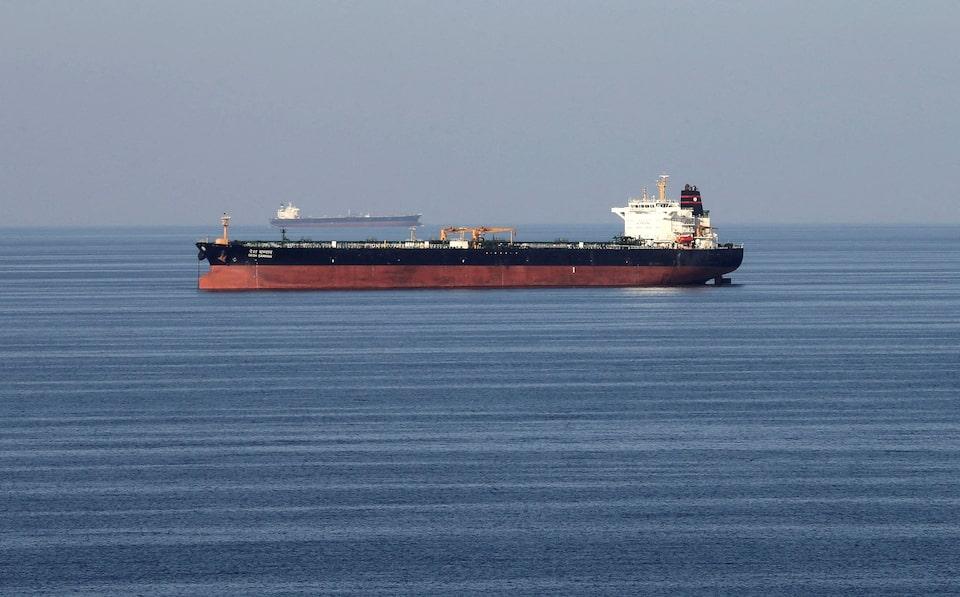
Mines loaded last month, raising fears of blockade Mining would have severely harmed global commerce U.S. has not ruled out possibility that loading the mines was a ruse WASHINGTON, July 1 (Reuters) - The Iranian military loaded naval mines onto vessels in the Persian Gulf last month, a move that intensified concerns in Washington that Tehran was gearing up to blockade the Strait of Hormuz following Israel's strikes on sites across Iran, according to two U.S. officials. The previously unreported preparations, which were detected by U.S. intelligence, occurred some time after Israel launched its initial missile attack against Iran on June 13, said the officials, who requested anonymity to discuss sensitive intelligence matters. Sign up here. The loading of the mines - which have not been deployed in the strait - suggests that Tehran may have been serious about closing one of the world's busiest shipping lanes, a move that would have escalated an already-spiraling conflict and severely hobbled global commerce. About one-fifth of global oil and gas shipments pass through the Strait of Hormuz and a blockage would likely have spiked world energy prices. Global benchmark oil prices have instead fallen more than 10% since the U.S. strikes on Iran's nuclear facilities, driven in part by relief that the conflict did not trigger significant disruptions in the oil trade. On June 22, shortly after the U.S. bombed three of Iran's key nuclear sites in a bid to cripple Tehran's nuclear program, Iran's parliament reportedly backed a measure to block the strait. That decision was not binding, and it was up to Iran's Supreme National Security Council to make a final decision on the closure, Iran's Press TV said at the time. Iran has over the years threatened to close the strait but has never followed through on that threat. Reuters was not able to determine precisely when during the Israel-Iran air war Tehran loaded the mines, which - if deployed - would have effectively stopped ships from moving through the key thoroughfare. It is also unclear if the mines have since been unloaded. The sources did not disclose how the United States determined that the mines had been put on the Iranian vessels, but such intelligence is typically gathered through satellite imagery, clandestine human sources or a combination of both methods. Asked for comment about Iran's preparations, a White House official said: "Thanks to the President’s brilliant execution of Operation Midnight Hammer, successful campaign against the Houthis, and maximum pressure campaign, the Strait of Hormuz remains open, freedom of navigation has been restored, and Iran has been significantly weakened." The Pentagon did not immediately respond to a request for comment. The Iranian mission at the United Nations also did not respond to requests for comment. KEY THOROUGHFARE The two officials said the U.S. government has not ruled out the possibility that loading the mines was a ruse. The Iranians could have prepared the mines to convince Washington that Tehran was serious about closing the strait, but without intending to do so, the officials said. Iran's military could have also simply been making necessary preparations in the event that Iran's leaders gave the order. The Strait of Hormuz lies between Oman and Iran and links the Persian Gulf with the Gulf of Oman to the south and the Arabian Sea beyond. It is 21 miles (34 km) wide at its narrowest point, with the shipping lane just 2 miles wide in either direction. OPEC members Saudi Arabia, the United Arab Emirates, Kuwait and Iraq export most of their crude via the strait, mainly to Asia. Qatar, among the world's biggest liquefied natural gas exporters, sends almost all of its LNG through the strait. Iran also exports most of its crude through the passage, which in theory limits Tehran's appetite to shut the strait. But Tehran has nonetheless dedicated significant resources to making sure it can do so if it deems necessary. As of 2019, Iran maintained more than 5,000 naval mines, which could be rapidly deployed with the help of small, high-speed boats, the U.S. Defense Intelligence Agency estimated at the time. The U.S. Fifth Fleet, which is based in Bahrain, is charged with protecting commerce in the region. The U.S. Navy has typically kept four mine countermeasure vessels, or MCM vessels, in Bahrain, though those ships are being replaced by another type of vessel called a littoral combat ship, or LCS, which also has anti-mine capabilities. All anti-mine ships had been temporarily removed from Bahrain in the days leading up to the U.S. strikes on Iran in anticipation of a potential retaliatory attack on Fifth Fleet headquarters. Ultimately, Iran's immediate retaliation was limited to a missile attack on a U.S. military base in nearby Qatar. U.S. officials, however, have not ruled out further retaliatory measures by Iran. https://www.reuters.com/world/middle-east/iran-made-preparations-mine-strait-hormuz-us-sources-say-2025-07-01/
2025-07-01 22:34
MIAMI, July 1 (Reuters) - Ten players asked to be substituted during Juventus's 1-0 defeat by Real Madrid in the last 16 of the Club World Cup on Tuesday in humid and hot conditions, coach Igor Tudor said. Temperatures reached 30 degrees Celsius with a humidity of 70% -- a punishing combination for the players at the Hard Rock Stadium. Sign up here. Real prevailed thanks to a Gonzalo Garcia goal to reach the quarter-finals while Kylian Mbappe made his start in the tournament as a second-half substitute. WHY IT IS IMPORTANT The extreme heat in several cities hosting the Club World Cup has been a focal point in the tournament, which is seen as a dry run for next year's men's World Cup. FIFA have implemented cooling breaks, one per half, and mitigating measures, but some players and coaches have been complaining about the conditions. KEY QUOTES: Juventus coach Igor Tudor On the conditions: "In the end, 10 players asked to be substituted — 10 players asked to come off. It wasn’t possible; the exhaustion was incredible. "There's the tension of this match, which burns you energy. Then there’s this heat, which really gets to you… and the third thing that completes the conditions today is playing in this humidity, right? These three things together combined." On Mbappe: "How does it change with Mbappe? How do you drive the car? Real Madrid already goes at 200 kilometres per hour, then you add Mbappe and it goes to 250 — and 200 is already a lot. With Mbappe, it’s like adding 50 more.” https://www.reuters.com/sports/soccer/ten-players-asked-be-substituted-sultry-condition-juve-coach-says-2025-07-01/

2025-07-01 21:57
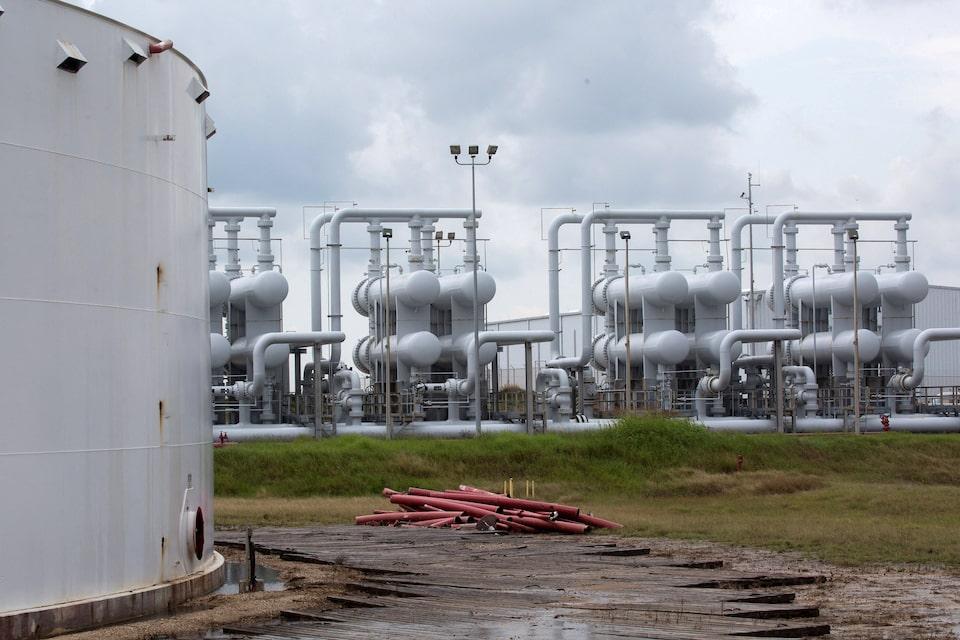
Senate cuts SPR funding from $1.3 billion to $171 million Trump vows to refill SPR despite funding cuts SPR deliveries delayed, Trump blames maintenance WASHINGTON, July 1 (Reuters) - The budget bill passed by the U.S. Senate on Tuesday slashes the amount of money available to replenish the Strategic Petroleum Reserve even though President Donald Trump vowed on his first day in his second term to fill it "right to the top". Former President Joe Biden conducted several sales from the SPR including 180 million barrels, the most ever, after Russia invaded Ukraine. The sales left the SPR at its lowest level in 40 years, when the U.S. was far more dependent on oil imports. Sign up here. The budget bill slashed the amount of money for crude oil purchases to replenish the SPR to $171 million from $1.3 billion. That's only enough to buy about 3 million barrels instead of 20 million barrels at today's prices. Rapidan Energy, a consultancy group, told clients in a note that the funding was hit by the Senate's struggle to find budget cuts elsewhere as it softened some of the cuts to green energy in a version of the House bill. The bill now heads to the U.S. House, but it was unclear when lawmakers there would vote. Trump said on Tuesday that he plans to fill up the SPR when the market conditions are right, but it was unclear when or how. Even deliveries of oil to the SPR that were scheduled after Biden bought back some crude last year are as much as seven months delayed. Biden scheduled 15.8 million barrels of deliveries to the SPR from January through May. So far, only 8.8 million of that has been delivered to the reserve, a situation the Trump administration blamed on maintenance. The Senate bill kept a measure to cancel 7 million barrels in congressionally-mandated sales. Lawmakers could cancel further mandated sales in legislation later in the year. The SPR has nearly 403 million barrels, far less than the 727 million barrels it held in 2009, the most ever. It is still the world's largest emergency reserve of oil. The U.S. hit record oil output under Biden, production Trump is looking to expand. https://www.reuters.com/business/energy/us-senate-budget-bill-slashes-money-fill-oil-reserve-2025-07-01/
2025-07-01 21:41
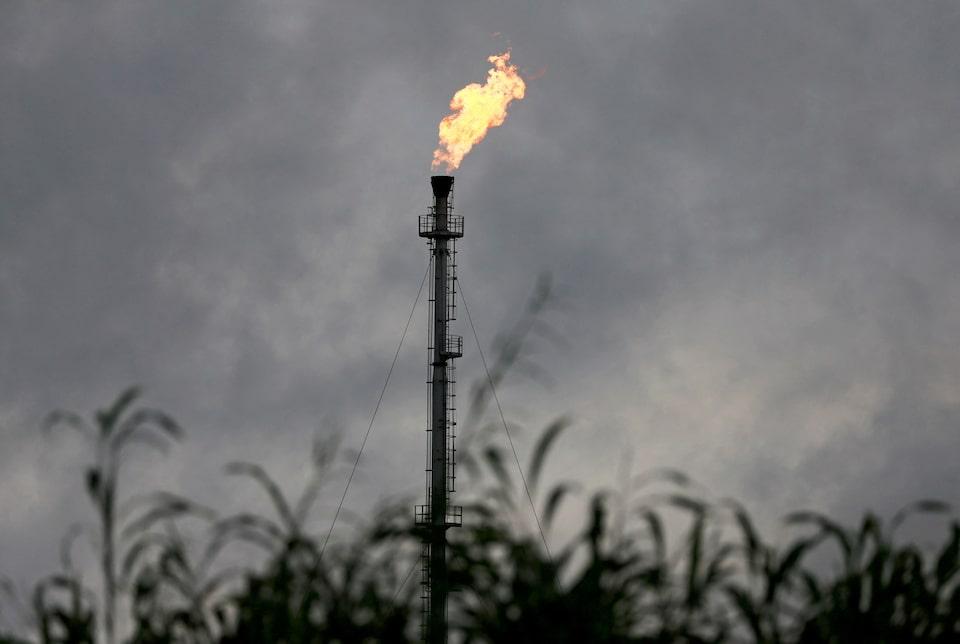
Methane more potent than carbon dioxide in short term Capping methane leaks is one of the quickest ways to tackle global warming EDF says will continue to track methane emissions WASHINGTON, July 1 (Reuters) - An $88 million satellite backed by billionaire Jeff Bezos that detected oil and gas industry emissions of the powerful greenhouse gas methane has been lost in space, the group that operates said on Tuesday. MethaneSAT had been collecting emissions data and images from drilling sites, pipelines, and processing facilities around the world since March, but went off course around 10 days ago, the Environmental Defense Fund, which led the initiative, said. Sign up here. Its last known location was over Svalbard in Norway and EDF said it did not expect it to be recovered as it had lost power. "We're seeing this as a setback, not a failure," Amy Middleton, senior vice president at EDF, told Reuters. "We've made so much progress and so much has been learned that if we hadn't taken this risk, we wouldn't have any of these learnings." The launch of MethaneSAT in March 2024 was a milestone in a years-long campaign by EDF to hold accountable the more than 120 countries that in 2021 pledged to curb their methane emissions. It also sought to help enforce a further promise from 50 oil and gas companies made at the Dubai COP28 climate summit in December 2023 to eliminate methane and routine gas flaring. Methane is a potent greenhouse gas, with 80 times the warming power of carbon dioxide over a 20-year period. Scientists say capping leaks from oil and gas wells and equipment is therefore one of the fastest ways to start tackling the problem of global warming. While MethaneSAT was not the only project to publish satellite data on methane emissions, its backers said it provided more detail on emissions sources and it partnered with Google to (GOOGL.O) , opens new tab to create a publicly-available global map of emissions. ENGINEERS INVESTIGATING EDF reported the lost satellite to federal agencies including the National Oceanic and Atmospheric Administration, Federal Communications Commission and the U.S. Space Force on Tuesday, it said. Building and launching the satellite cost $88 million, according to the EDF. The organization had received a $100 million grant from the Bezos Earth Fund in 2020 and got other major financial support from Arnold Ventures, the Robertson Foundation and the TED Audacious Project and EDF donors. The project was also partnered with the New Zealand Space Agency. EDF said it had insurance to cover the loss and its engineers were investigating what had happened. The organization said it would continue to use its resources, including aircraft with methane-detecting spectrometers, to look for methane leaks. It also said it was too early to say whether it would seek to launch another satellite but believed MethaneSAT proved that a highly sensitive instrument "could see total methane emissions, even at low levels, over wide areas." Despite the efforts to increase transparency on emissions, methane "super-emitters" have rarely taken action when alerted that they are leaking methane, the United Nations said in a report last year. The pressure on them to do has decreased as the United States under President Donald Trump's second administration has effectively ended a U.S. program to collect greenhouse gas data from major polluters and rescinded Biden-era rules aimed at curbing methane. https://www.reuters.com/business/energy/bezos-backed-methane-tracking-satellite-is-lost-space-2025-07-01/