2025-07-01 20:07
RIO DE JANEIRO/SAO PAULO, July 1 (Reuters) - The executive secretary of Brazil's Finance Ministry said on Tuesday that a slowdown in twelve-month inflation in May and June should open an opportunity for the central bank to revise the monetary policy stance. "We complain about inflation and we should always worry about it, but it starts to fall in May and June, enabling us to review monetary policy and achieve lower interest rates in the country," secretary Dario Durigan told an event in Rio de Janeiro. Sign up here. In a unanimous decision last month, Brazil's central bank raised its benchmark interest rate to 15%, the highest since July 2006, and announced a "very prolonged" pause. The bank targets inflation at 3%, with a tolerance band of 1.5 percentage points in either direction. Consumer prices in Latin America's largest economy rose 5.32% in the twelve months through the end of May, a decline from the April annual reading of 5.53%, according to data from statistics agency IBGE. While June inflation figure was still not released, the latest reading of the IPCA-15 index showed that consumer prices stood at 5.27% in the twelve-month period through mid-June, falling from 5.40%. "Brazil's conditions are good and we will soon be able to reverse the rise in interest rates," Durigan said. In a separate event earlier on Tuesday, he also acknowledged a concern over the country's debt trajectory, but said the government needs time to implement a gradual fiscal adjustment. Brazil saw its public debt rise by 354.42 billion reais ($65.21 billion) in the year through May, driven mainly by interest expenses, which increased amid the central bank's tightening cycle to curb inflation. The expansion comes as markets remain skeptical that the inflation target will be met in the years ahead, given the government's continued increase in spending. Durigan said the government remains committed to achieving fiscal balance and is poised to meet its fiscal goals this year and the next if lawmakers approve proposals it has submitted to Congress. ($1 = 5.4354 reais) https://www.reuters.com/world/americas/brazil-finance-official-flags-debt-concern-urges-time-gradual-fiscal-adjustment-2025-07-01/
2025-07-01 19:58
Dollar volatility has foreign investors raising hedges on US stocks portfolios Safe-haven status of dollar being questioned Dollar was a diversifier, rising when US stocks are falling Its recent decline alongside US equities worry managers Increased hedging will pressure the dollar lower NEW YORK, July 1 (Reuters) - Overseas asset managers and pensions are adding protection against a weakening dollar, concerned about the U.S. currency's diminishing ability to diversify their U.S. equity portfolios. Because such stock funds carry built-in dollar exposure, investors with other home currencies that had not neutralized the foreign exchange risk were cushioned when the dollar was strong if Wall Street performed badly. Sign up here. But the dollar's correlation with other U.S. assets, and the impact of its fall on portfolio performance, came into sharper focus when the Trump administration announced far-reaching global tariffs on April 2, sending U.S. stock indexes and the greenback sharply lower. The dollar (.DXY) , opens new tab hit a three-year low against a basket of currencies, raising risks for investors whose portfolios once benefited from the natural hedge. Now, managers are reducing dollar exposures and increasing the hedge ratios for U.S. stock portfolios where clients' investment policies allow them to do so. About 10% of Russell Investments pension fund clients in Europe and the UK have already increased hedge ratios on their international stock portfolios, said Van Luu, global head of solutions strategy for fixed income and foreign exchange for Russell in London. One client raised it to 75% from 50%, highlighting the desire to have a greater portion of U.S. stocks protected against the weakening dollar. "If what we're seeing persists... then you will have more clients taking action in that direction," said Luu. 'MORE HOSTILE' The dollar is down 10% for the year, and 6.5% since U.S. President Donald Trump's so-called Liberation Day in April. Meanwhile, the S&P 500, the benchmark U.S. stock index (.SPX) , opens new tab, has recovered 24% since an April slump and is up 5.3% this year, flirting with record highs. The MSCI gauge of global stocks, minus the U.S., (.dMIWU00000PUS) , opens new tab has risen 16% for the year. "It's not enough to look at the stock market and say it is more or less back to where it was, so nothing happened," said Peter Vassallo, FX portfolio manager at BNP Paribas Asset Management, who manages currency exposures across its asset classes. BNP has been reducing dollar exposures for its clients that include pension funds, sovereign wealth funds and central banks. It has sold U.S. dollars across stock and fixed income portfolios, and built up what Vassallo described as a sizable position in options for funds that allow these strategies. He said the euro, yen and the Australian dollar are among the primary currencies it bought against the dollar, a big contrast to how the asset manager ended the previous year with a small "overweight" in the U.S. dollar. "This switch towards a more uncertain policy regime created an environment where we as market participants see the U.S. as more hostile to international capital flows, international trading," Vassallo said. After a June review, Justin Onuekwusi, chief investment officer at St. James's Place, said it is maintaining a strategic hedge that allows it to reduce overseas currency exposure in favor of the pound by up to 20%. The strategy "has been beneficial for our clients' returns year to date," he said. Onuekwusi said he now sees the dollar as closer to its longer-term fair value and has marginally reduced dollar hedging across managed portfolios. Foreign investors hold more than $30 trillion in U.S. securities, about $17 trillion of which is in equities and more than $12 trillion in long-term debt, according to data published in April , opens new tab by the U.S. Treasury Department. Marcus Fernandes, global head of currency management at Northern Trust, said the divergence in the correlation of risk is more than in the past. "That's why people are thinking faster than before, 'I need to increase my hedge ratio'," he said. "Once those conversations start, they usually end with increased hedge ratios," he said. COST INCENTIVE Data from Russell showed that a euro-hedged version of the MSCI USA index was flat for the year through May, while the euro-unhedged version was down 8.3%, showing the benefit of hedging for euro-based investors. The dollar is down 13% against the euro on concerns about flip-flopping U.S. trade policies and growth. "FX is back on the boardroom agenda," said Joe McKenna, head of fund solutions at MillTech, a London-based FX and cash management company. "What was once handled quietly in the back office is now drawing the attention of CIOs and CFOs, driven by renewed dollar volatility." Managers hedge currency exposure by selling the dollar against their respective base currency like the euro or the pound in the FX forwards market, and also use derivatives like options. When the dollar weakens, the hedge position gains in value while the dollar exposure on the underlying stock portfolio loses. Forward selling of the dollar is the largest in four years, according to John Velis, Americas macro strategist at BNY Markets, suggesting investors are unwilling to carry long dollar exposures, even with the potential for it to rally if U.S. tariff policy changes or the Israel-Iran conflict resumes. Investors reallocating to U.S. assets to meet benchmark weights after April's selloff are now hedging those exposures, he told Reuters. "It communicates that dollar volatility is a concern," said Velis. "It can be policy volatility as well as macroeconomic volatility that's causing people to... not keep that dollar exposure because of the fears of the dollar decline." https://www.reuters.com/business/foreign-investors-increase-dollar-hedges-us-stock-portfolios-2025-07-01/
2025-07-01 19:47
BUENOS AIRES, July 1 (Reuters) - Argentina's Pampa Energia has applied to build an oil and gas treatment plant at the Vaca Muerta shale formation, the company said on Tuesday, in a project worth $426 million. The facility, planned for the company's Rincon de Aranda field in the Neuquen province, is expected to start operating next year, with crude oil exports valued at about $1.2 billion set to start in 2027. Sign up here. The project includes a Central Processing Facility (CPF), pipelines, storage terminals, and other infrastructure, and will connect to the Vaca Muerta Sur oil pipeline and Perito Moreno gas pipeline, the company added. Pampa said the plant is part of a broader $1.5 billion development plan aimed at scaling up production tenfold at Rincon de Aranda. https://www.reuters.com/business/energy/pampa-energia-plans-426-million-oil-gas-plant-argentina-2025-07-01/

2025-07-01 19:33
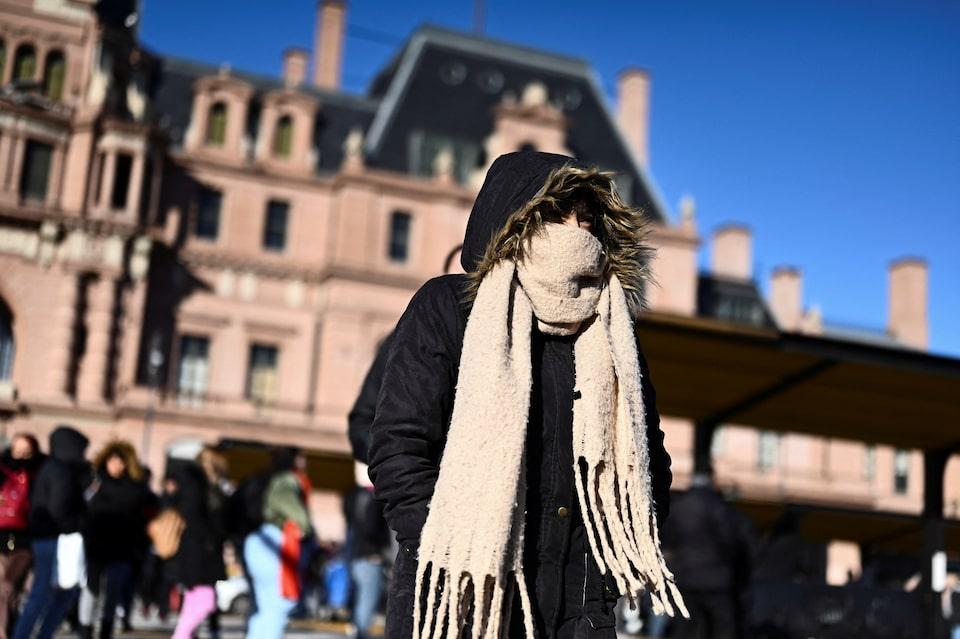
BUENOS AIRES, July 1 (Reuters) - As Europe and North America swelter through heat waves, people in South America are contending with equally extreme weather at the other end of the spectrum: a sudden cold snap. In Buenos Aires on Tuesday, locals wrapped up in scarves, puffer jackets and wooly hats, and they sipped hot drinks as frost coated cars in the early morning. Sign up here. Temperatures in the city dropped below zero, a rarity even in the Southern Hemisphere's winter which is currently under way and runs opposite to the Northern Hemisphere's seasons. "I literally almost froze," said Juan Manuel Amnini, a 42-year-old engineer in Buenos Aires who wore a gray wool hat and a face covering against the cold. "You cover up with whatever you have. Under this, I'm wearing layers and layers of clothes like I'm an onion." In Europe meanwhile, Italy banned outdoor work in some areas, while France shut schools and part of the Eiffel Tower. Spain confirmed its hottest June on record as a severe heat wave gripped Europe, triggering widespread health alerts. In Barcelona, authorities were looking into whether the death of a street sweeper over the weekend was heat-related. High temperatures in the northern and middle swath of the United States have been consistent since late June. Heat warnings have been issued across large areas, part of a pattern linked to climate change with high temperatures arriving earlier and lasting longer. Asphalt and concrete in cities intensify the impact by absorbing and radiating heat. In Argentina - as well as neighboring Chile and Uruguay - the cold snap led to unexpected snowfall in some areas, with chill winds from the Antarctic to the south. Many homes and offices were not built for these conditions, residents said. "Right now I have a thermal underneath my clothes, a pair of trousers, and another pair of trousers on top of those," said Gael Larrosa, a student in Buenos Aires. "I have a really hard time with the cold. Here the cold kills you, it really kills you." https://www.reuters.com/sustainability/climate-energy/europe-sizzles-south-america-shivers-under-cold-snap-2025-07-01/
2025-07-01 19:20
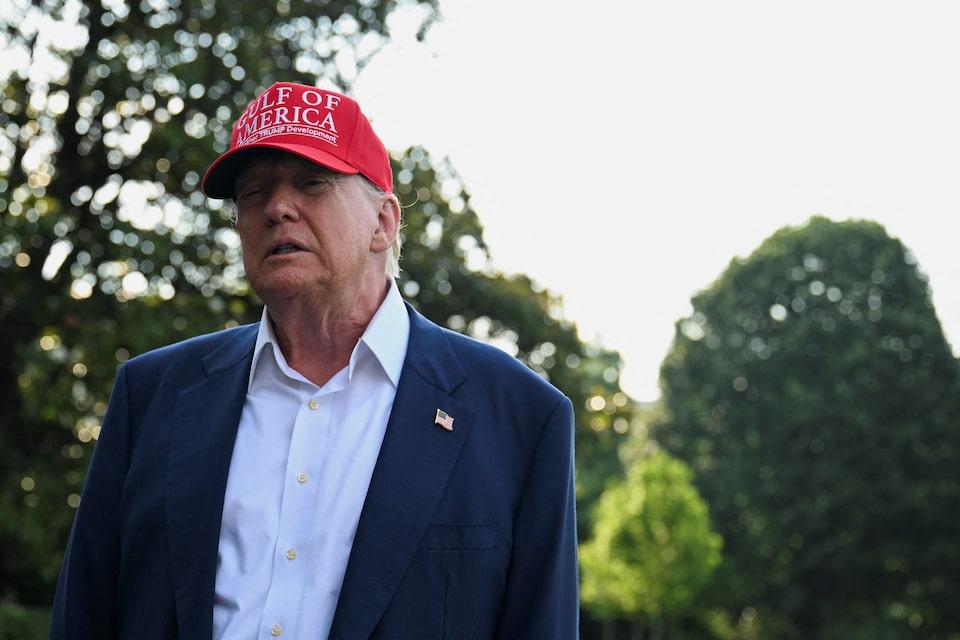
WASHINGTON, July 1 (Reuters) - President Donald Trump said on Tuesday he was not thinking of extending the July 9 deadline for countries to negotiate trade deals with the U.S., and continued to express doubt that an agreement could be reached with Japan. "We've dealt with Japan. I'm not sure we're going to make a deal. I doubt it," Trump told reporters aboard Air Force One as he returned to Washington from a trip to Florida. Sign up here. Trump suggested he could impose a tariff of "30% or 35% or whatever the number is that we determine" on imports from Japan - well above the 24% tariff rate he announced on April 2 and then later paused. https://www.reuters.com/business/trump-says-he-wont-extend-july-9-trade-deadline-expresses-doubt-japan-deal-2025-07-01/
2025-07-01 19:00
SANTIAGO, July 1 (Reuters) - Chile's congress approved long-awaited legislation to speed up the permitting process for investment projects in the country on Tuesday. The law was a key demand from the country's mining industry as well as renewable energy companies and others who said the lengthy permitting process was holding back investment. Chile is the world's largest copper producer and one of the largest lithium producers. Sign up here. The legislation passed with 93 votes in favor, 27 against and 17 abstentions, and now awaits the president's signature to be enacted. "This will allow us to substantially reduce permitting times, reducing processing times between 30% and 70%, and we'll do it without reducing regulatory standards," economy minister Nicolas Grau told reporters after the law was passed. A reform to the environmental assessment system, the main requirement for investment projects, is also pending but the process has faced setbacks and delays. https://www.reuters.com/world/americas/chiles-congress-approves-law-speed-up-permitting-process-investment-projects-2025-07-01/