2025-07-01 10:54
BARCELONA, July 1 (Reuters) - Spanish authorities are investigating whether a street sweeper's death over the weekend in Barcelona was caused by an intense heatwave gripping the country and region, the city council said late on Monday. The woman, who had been cleaning the old town in Barcelona on Saturday afternoon, died later that day at home, her sister told the Antena 3 TV station. Sign up here. Her sister said the 51-year-old woman, identified just as Montserrat, had told a colleague she thought she "was dying." Temperatures reached 30.4 degrees Celsius (86.7 degrees Fahrenheit) in Barcelona on Saturday, weather agency AEMET said. Extreme heat can kill by causing heat stroke, or aggravating cardiovascular and respiratory diseases, with older people being among the most vulnerable. The City council said on Monday it would investigate the woman's death. Last year, there were 2,032 deaths attributable to heat in Spain, according to the Health Ministry. That number was still lower than heat-linked fatalities in 2023 and 2022. The first heatwave of the summer hit Spain during the weekend and is set to last until Tuesday. https://www.reuters.com/business/environment/barcelona-investigates-street-sweepers-death-spain-swelters-heatwave-2025-07-01/

2025-07-01 10:26
July 1 (Reuters) - The opinions expressed here are those of Dhara Ranasinghe, Editor, Financial Markets, EMEA. All eyes remain focused on Washington, with Senate Republicans still locked in a marathon session, known as "vote-a-rama", as they try to pass a contentious tax cut and spending bill that could add trillions of dollars to the country’s already high debt load. Sign up here. This hasn’t helped the dollar, which is languishing at its lowest levels against the euro in almost four years, as the fiscal bill keeps debt worries front and center for global investors. Mike Dolan is enjoying some well-deserved time off over the next two weeks, but the Reuters markets team is here to provide you with all the information you need to start your day. Today's Market Minute * U.S. Senate Republicans were still trying to pass President Donald Trump's sweeping tax-cut and spending bill early on Tuesday morning, despite divisions within the party about its expected $3.3 trillion hit to the nation's debt pile. * President Trump suggested on Tuesday that the government efficiency department should take a look at the subsidies that Tesla (TSLA.O), opens new tab CEO Elon Musk's companies have received in order to save money. * President Trump expressed frustration with U.S.-Japan trade negotiations on Monday as Treasury Secretary Scott Bessent warned that countries could be notified of sharply higher tariffs as a July 9 deadline approaches despite good-faith negotiations. * There has been much discussion of the so-called "Trump put" for equities, but perhaps more attention should be paid to the administration's effective "Treasury Put", claims Stephen Jen, CEO and co-CIO of Eurizon SLJ asset management. * U.S. power sector emissions are already at their highest levels in three years, writes ROI columnist Gavin Maguire, but they are likely to climb even higher in the coming months. Vote-a-rama is still going on Senators are voting in a marathon session featuring a series of amendments by Republicans and the minority Democrats, part of the arcane process Republicans are using to bypass Senate rules that normally require 60 of the chamber's 100 members to agree on legislation. It is unclear how long the voting, which started on Monday, will last. What's interesting is how financial markets are reacting to developments on the Hill. As mentioned above, the latest signs of U.S. policy uncertainty and concern about ever-rising deficits are weighing on the dollar . Now look at bond markets, which have been notably quiet in the face of fiscal worries. The nonpartisan Congressional Budget Office released its assessment on Sunday of the bill's hit to the $36.2 trillion U.S. debt pile. The Senate version is estimated to cost $3.3 trillion, $800 billion more than the version passed last month in the House of Representatives. So, where have the so-called bond vigilantes gone? One explanation is that attention, for now, has returned to inflation and growing expectations that Federal Reserve interest rate cuts will come sooner rather than later. And on that point, U.S. President Donald Trump on Monday continued to pressure Fed chief Jerome Powell to cut rates. Goldman Sachs reckons the Fed will deliver three rate cuts this year. With markets pricing in roughly two quarter-point rate cuts by year-end, bond investors, it appears, are happy with U.S. 10-year yields at around 4.2% - the lowest in around two months. The other point for bond markets, with regards to the bill, is that even if it is passed by Trump's July 4 deadline, a debt ceiling increase in the bill does not become an issue until later in the summer. Generally upbeat sentiment in stock markets meanwhile - note the S&P 500 and Nasdaq hit record closing highs on Monday - could be put to the test by signs that efforts to secure trade deals may be stalling. Trump expressed frustration with U.S.-Japan trade negotiations on Monday, as Treasury Secretary Scott Bessent warned that countries could be notified of sharply higher tariffs as a July 9 deadline approaches despite good-faith negotiations. Chart of the Day The U.S. dollar index, which measures its value against a basket of other major currencies, is down almost 11% so far this year. In fact, the dollar has suffered its biggest first-half dive since the early 1970s. While the currency is expected to remain the world's No.1. reserve currency for some time to come given the size of the U.S. economy and the unrivalled depth of its capital markets, sentiment towards the dollar has taken a hit this year against a backdrop of concern about erratic U.S. policy making, trade tensions and worries about Fed independence. Today's events to watch * ISM June data * JOLTS May job openings * Federal Reserve Chair Jerome Powell speaks at ECB forum * Constellation Brands earnings results https://www.reuters.com/world/china/global-markets-view-usa-2025-07-01/

2025-07-01 10:24
Kazaks says 10% tariffs, euro rise 'large enough' De Guindos sees $1.20 as threshold Simkus says any rate cut may wait until year-end SINTRA, Portugal, July 1 (Reuters) - Two European Central Bank policymakers warned on Tuesday about the hit from a further appreciation of the euro on a weak euro zone economy that is bracing for painful U.S. tariffs. The euro has risen some 9% against the dollar since April as investors, spooked by U.S. President Donald Trump's unpredictable economic policy, warmed up to the European Union's newfound military and industrial ambitions. Sign up here. But a strong currency is a mixed blessing for the central bank because it makes exports more expensive and imports cheaper, pushing down both growth and inflation. "If there is a 10% tariff plus a 10%-plus appreciation of the exchange rate, this is large enough to affect export dynamics," Latvian central bank governor Martins Kazaks told Reuters at the ECB's annual Forum on Central Banking in Sintra, Portugal. EU officials have resigned themselves to a 10% tariff on goods exported to the United States as their baseline as they continue difficult negotiations with Trump's administration ahead of a July 9 deadline. The euro was trading at $1.18 on Tuesday, up 14% since the start of the year but still roughly in the middle of the range in which it has been for the past decade or so. ECB vice-president Luis de Guindos said the central bank could ignore the euro's rise against the dollar up to $1.20 but not higher. "Beyond that, it will be much more complicated," de Guindos told Bloomberg TV. Euro zone manufacturing is only starting to recover from its 2022-24 - partly energy-related - slump, with new orders arresting a three-year slide last month. Both Kazaks and de Guindos said the economy was weak but seemed to play down the prospect of more support from the ECB via interest rate cuts. "The majority of the rate adjustment has been done," Kazaks said. "If there are further cuts, they will be small and have signalling value, provided that we remain in the baseline." De Guindos said an additional cut was "not going to help the economy", which instead needed certainty on trade and other policies. The ECB has cut rates eight times in the space of a year as inflation eased to its 2% target, where it expects it to stay for the foreseeable future except for a short-lived dip in 2026. It has signalled it will pause its rate-cutting streak in July and Lithuanian governor Gediminas Simkus said the central bank may keep rates on hold for longer. "I don't know if we'll have all the information we need by September, but I remain open to every possibility," Simkus said in an interview in Sintra on Monday. "I believe a move, if any, is more likely towards the end of the year." Euro zone inflation came in at 2% in June, a flash reading showed on Tuesday, and consumers - who were stung by a cost of living crisis in 2022-23 - are also paring back their expectations for future price growth, according to an ECB survey. https://www.reuters.com/business/finance/ecbs-kazaks-sets-10-pain-threshold-tariffs-euro-2025-07-01/

2025-07-01 10:11
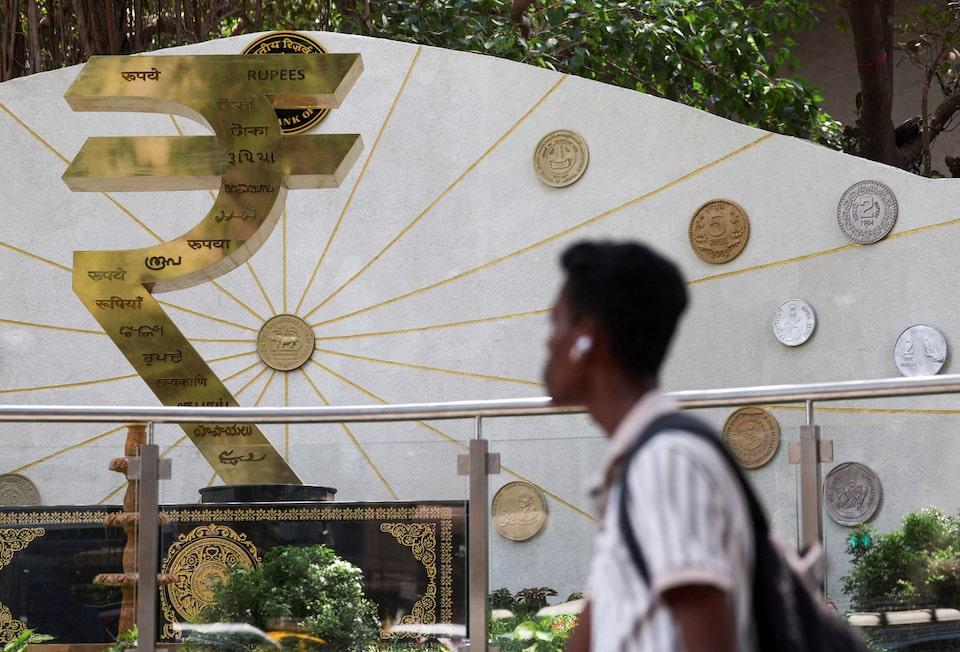
MUMBAI, July 1 (Reuters) - The Indian rupee strengthened on Tuesday, alongside most Asian peers, as worries over U.S. President Donald Trump's fiscal policies and uncertainty around trade deals kept the dollar pinned at a more than three-year low against major peers. The rupee closed at 85.52 per U.S. dollar, up about 0.3% on the day. Sign up here. While the rupee strengthened on the day, it was unable to hold onto gains above the 85.50 mark, with traders pointing to bids from a large state-run bank and a few local private banks. The currency is likely to stay rangebound in the near term unless it convincingly breaches either 85.45-85.50 on the upside or 86 on the downside, a trader at a private bank said. Asian currencies were mostly up between 0.1% and 0.4%, while the dollar index declined 0.3% to 96.37, its lowest level since February 2022. Worries about U.S. fiscal policies, uncertainty over trade deals ahead of a looming deadline and concerns over the future independence of the Federal Reserve have all hurt the dollar this year. The dollar index is nursing losses of 11% on the year so far. "The dented safe-haven status of the U.S. amid demanding asset price valuations portends a redistribution of global portfolio flows across various regions. Asia can both drive and benefit from this redistribution," ANZ said in a Tuesday note. While countries with sizeable external investment surpluses, such as Taiwan and South Korea, will lead the diversification from U.S. assets, potential inflows will also extend more broadly to economies like India and Indonesia, the note added. With investors also ramping up wagers on faster rate cuts by the Fed this year, the focus will turn to U.S. economic data due later in the day. Remarks from Fed Chair Jerome Powell will also be in the spotlight for cues on the future path of policy rates. https://www.reuters.com/world/india/rupee-gains-alongside-asian-peers-us-policy-worries-trouble-dollar-2025-07-01/
2025-07-01 09:52
BERN, July 1(Reuters) - The Swiss National Bank still has the tools to steer inflation towards its price stability goal even with interest rates at zero, extended governing board member Atillio Zanetti said on Tuesday. "It's not an obvious step to go into negative rates, but I wouldn't say that we don't want to do that if that's necessary," Zanetti told reporters. Sign up here. "So negative rates are an option but we are aware that the transmission of monetary policy with negative rates is different than in positive territory," he added. https://www.reuters.com/markets/europe/snb-says-negative-interest-rates-remain-an-option-2025-07-01/

2025-07-01 08:03
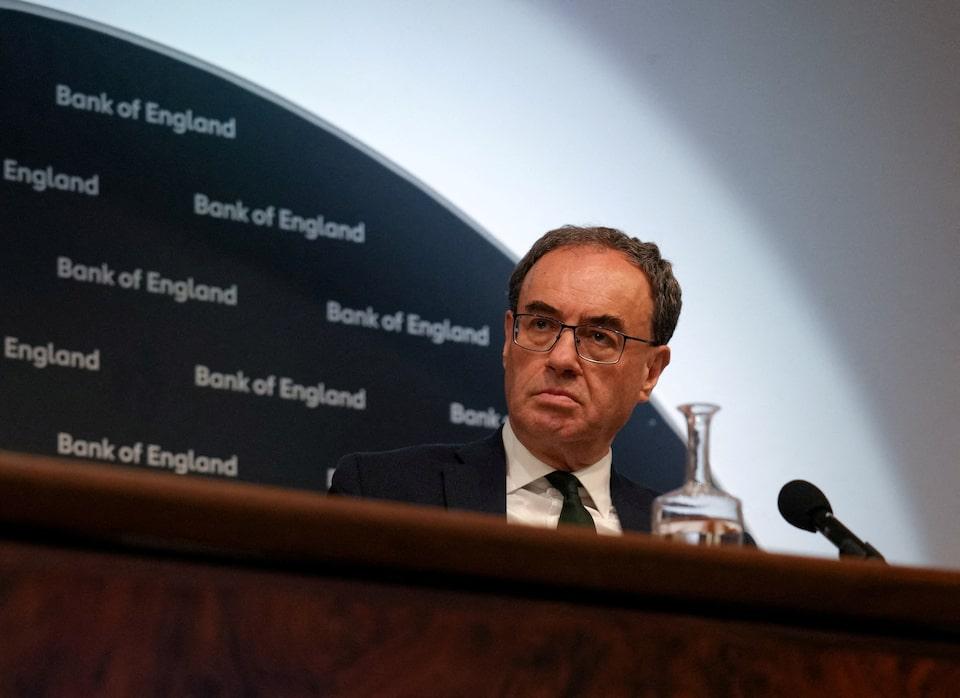
LONDON, July 1 (Reuters) - Bank of England Governor Andrew Bailey on Tuesday highlighted Britain's softening labour market and said rising uncertainty in the global economy had "definitely" hurt economic growth and investment intentions. In an interview with CNBC, Bailey said a key question for the BoE was how much the weakening of the labour market and the economy would help to reduce inflation pressure. Sign up here. Bailey mostly emphasised the downward risks to Britain's economy rather than the threat of inflation - although he said the BoE was watching "very carefully" for signs that recent price increases might turn out more persistent. Short-dated British government bond yields touched an almost two-month low after Bailey spoke. "That increase in uncertainty and predictability is definitely coming through in terms of activity and growth," Bailey said in an interview with CNBC from a central bank summit in Sintra, Portugal. "When I go around the country talking to businesses, which I do a lot, what they tell me is that they are putting off investment decisions." He repeated his view that interest rates are likely to fall gradually. On the outcome of the BoE's next meeting in August, Bailey said: "We'll see." "I do see some underlying weakening, particularly in the labour market - and the labour market is softening," Bailey added. Asked about the steepening of Britain's government bond yield curve, Bailey said it likely reflected uncertainty in the global economy. There was no question over the viability of the stock of debt, Bailey said. He described the next annual decision over the size of the BoE's quantitative tightening process as "live". In June the BoE held interest rates steady in a two-way split vote. It said it is focusing on inflation risks from a weaker jobs market and from higher energy prices due to the conflict in the Middle East. Investors are betting on the BoE cutting rates in two further quarter-point moves to 3.75% by the end of the year. https://www.reuters.com/world/uk/boes-bailey-sees-weakening-labour-market-cnbc-interview-2025-07-01/