2025-07-01 06:33
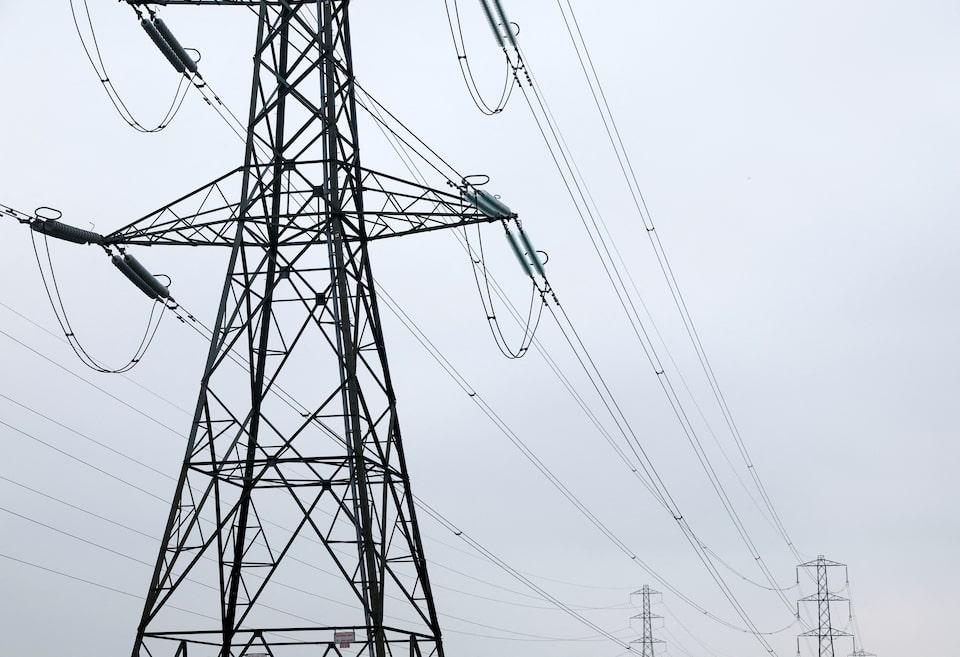
July 1 (Reuters) - British energy regulator Ofgem on Tuesday said it has given a provisional approval for an initial 24 billion pounds ($32.98 billion) investment programme to boost energy security and operate and maintain critical gas networks and electricity grid in Britain. "This record investment will deliver a homegrown energy system that is better for Britain and better for customers. It will ensure the system has greater resilience against shocks from volatile gas prices we don’t control," Ofgem CEO Jonathan Brearley said in a statement. Sign up here. ($1 = 0.7277 pounds) https://www.reuters.com/sustainability/boards-policy-regulation/ofgem-approves-33-billion-pound-plan-upgrading-uks-energy-networks-2025-07-01/
2025-07-01 06:22
July 1 (Reuters) - Nextwind, a European renewable energy provider, said on Tuesday that it had secured 1.4 billion euros ($1.6 billion) in debt financing for the expansion of a wind energy project in Germany. The deal includes the possibility of raising a further 1.3 billion euros in the next five years if the Berlin-based firm hits capacity targets. The company said that the financing was the largest by an independent wind energy firm in Germany. Sign up here. Deutsche Bank (DBKGn.DE) , opens new tab, ING Bank (INGA.AS) , opens new tab and LBBW, served as underwriters for the deal as well as participating in the financing, according to a person familiar with the transaction. Nextwind said it aims to increase its total onshore wind generation capacity to 3 gigawatts (GW) by 2028. The financing comes at a time when European wind energy companies have been impacted by U.S. President Donald Trump halting new federal offshore wind leasing this year. In January, European wind power stocks fell after Trump said he would try to ensure that "no windmills" were built on his watch two weeks before starting his presidential term. Closer to home, threats from Germany's far-right AfD party also linger over an otherwise strong wind energy sector. Nextwind CEO Lars Meyer said in a statement that the new financing would help Nextwind upgrade its wind farms more quickly. It plans to "repower" more than half of its 37 wind farms, improving them with new technology. Its current capacity stands at 450 megawatts. Nextwind said that, in addition to repowering, it also plans to acquire additional wind turbines. Once repowering is complete, the company hopes to promote individual wind farms as green investment opportunities to investors, its statement said. Its last major investment round was announced in 2023, when American companies including Sandbrook Capital committed up to $750 million. ($1 = 0.8527 euros) https://www.reuters.com/sustainability/climate-energy/nextwind-raises-16-billion-german-wind-energy-expansion-2025-07-01/

2025-07-01 06:17
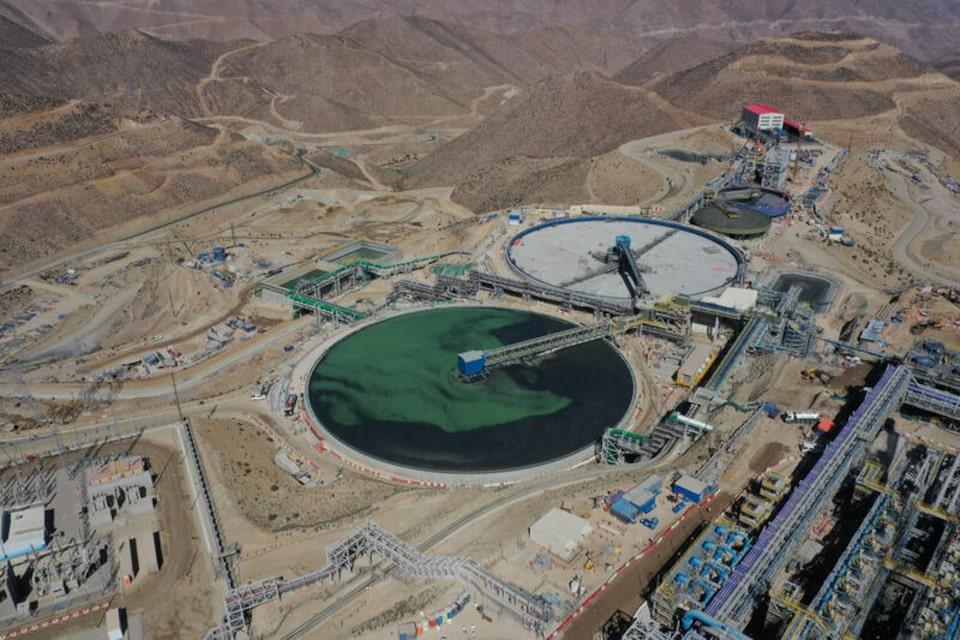
LONDON, July 1 (Reuters) - Doctor Copper hasn't been quite the same since U.S. President Donald Trump announced an investigation into U.S. imports back in February. The resulting tariff trade has pulled the global supply chain out of shape, creating feast in the U.S. and famine everywhere else. Sign up here. London Metal Exchange (LME) copper is set to close out the first half of the year with a gain of 12%, beaten only by the wild tin market. The rest of the LME complex, however, is still recovering from the shock of Trump's broader "Liberation Day" tariffs. Trade and geopolitical turbulence have lit a fire under the precious metals, but industrial metals are largely treading water at the mid-year mark as concern grows about the tariff-related drag on global manufacturing activity. Here's the LME score-card at the end of the first half of 2025. COPPER - FEAST AND FAMINE The CME's U.S. copper contract is currently trading at a spot premium of $1,200 per metric ton over the LME's international price. The tariff trade has been extraordinarily volatile over the last few months, but the open arbitrage window continues to suck in metal from the rest of the world. CME stocks are booming and LME stocks are falling as physical copper is redirected to the U.S. LME time-spreads have become turbulent as available inventory shrinks. The cash-to-three-month period is in steep backwardation. The market is expecting Chinese smelters to lift exports to help fill the supply-chain gaps, but until they do the London copper market is a dangerous place for bears. Everything will change again when the U.S. administration decides whether to impose import tariffs. That presages more turbulence ahead of the November deadline for the Section 232 investigation into U.S. imports to be completed. WILD TIN The London tin market has been a roller-coaster ride so far this year. Three-month tin hit a three-year high of $38,395 per ton in early April before slumping to $28,925 after the "Liberation Day" metals meltdown. Tin is currently back above $33,500 per ton thanks to persistent supply pressures. Although one disruption has been resolved with the swift reopening of the Bisie mine in Democratic Republic of Congo, the longer-term disruption at the Man Maw mine in Myanmar rumbles on. The Wa State authorities in control of the Man Maw mine have been negotiating new licenses to allow it to reopen after an absence of almost two years. But the cross-border flow of tin concentrates to China's smelters remains no more than a trickle. China's tin concentrate imports fell by 36.5% in the January-May period and the country's smelters are feeling the squeeze. Refined production was down 15% on a year-over-year basis in June, according to local data provider Shanghai Metal Market. Shanghai Futures Exchange stocks of tin have been creeping lower since the middle of April, while LME inventory has halved over the first half of the year. Tin is the only LME metal other than copper to be trading in sizeable backwardation, attesting to the underlying supply stress in this market. ALUMINIUM SPLIT The aluminium market has been fractured by Trump's 50% import tariffs but the impact is being seen in the U.S. Midwest premium rather than arbitrage between the look-alike CME and LME futures contracts. U.S. consumers are now paying around $1,250 per ton over the LME price to get their metal. Premiums everywhere else are sinking, partly due to displaced metal flows and partly due to weak demand in Europe and parts of Asia. Most of the recent action on the London market has been a mega tug-of-war for available metal against a backdrop of falling exchange stocks. As ever with aluminium, it's hard to discern the signal from the noise. Although the LME three-month price has recovered from its April trough of $2,335 per ton to $2,600, the year-to-date gain stands at a modest 3%, failing to match analysts' high expectations at the start of 2025. NICKEL WEIGHED DOWN BY SURPLUS LME nickel also closes out the first half of 2025 little changed from its January starting point. LME nickel stocks fell in May for the first time since March 2024, in a sign that the relentless build in inventory may be abating. For how long, though, remains to be seen. Nickel's electric dreams have faded as Chinese electric vehicle manufacturers switch to non-nickel battery chemistry. Indonesia, meanwhile, continues to ramp up production, generating more surplus metal. LME three-month nickel is trading just above the $15,000-per-ton level, which is close to the cost of making refined metal from Indonesian nickel pig iron, according to analysts at Macquarie Bank. However, while the downside may be limited at current price levels, any significant recovery is going to be dependent on whether Indonesia can restrain its booming nickel production sector. No-one's holding their breath. LEAD GEARS UP, ZINC WINDS DOWN The lead market's close relationship with the automotive battery sector has cushioned the heavy metal from this year's tariff turbulence. The replacement battery sector follows its own cycle and lead is now entering one of its peak seasonal demand periods, when high northern hemisphere temperatures cause a spike in battery failures. LME lead is up 6% since the start of the year, closing the gap with sister metal zinc, which remains the persistent under-performer among the LME metals. World zinc mine production rose by a robust 5.1% on a year-over-year basis in January-April, according to the International Lead and Zinc Study Group. That supply surge is feeding through to higher refined production, particularly in China, and the Group assesses the global refined metal market registered a hefty 151,000-ton supply surplus in the period. Look no further to understand why the galvanising metal is so out of favour, down 6% since the start of 2025. The opinions expressed here are those of the author, a columnist for Reuters. https://www.reuters.com/markets/commodities/coppers-tariff-high-fails-lift-other-lme-metals-2025-07-01/
2025-07-01 06:16
COPENHAGEN, July 1 (Reuters) - Norway's Equinor (EQNR.OL) , opens new tab and its partners have approved a 13 billion Norwegian crown ($1.29 billion) investment for the expansion of Johan Sverdrup, western Europe's largest producing oilfield, the company said on Tuesday. The project is expected to increase recoverable volumes from the field by between 40 million and 50 million barrels of oil equivalent, Equinor and its partner Aker BP said in separate statements. Sign up here. Production from new subsea wells linked to the existing infrastructure is expected to begin in the fourth quarter of 2027, they added. "Every third barrel of oil from the Norwegian continental shelf now comes from the field. Phase 3 is an important contribution to maintaining high production from Johan Sverdrup in the years to come," Equinor said in a statement. Last year, the field produced a record 260 million barrels of oil, or more than 700,000 barrels per day, the highest annual oil production from any Norwegian field. Norway accounts for about 2% of global oil output. Equinor, the field's operator, has a 42.63% stake in Johan Sverdrup, while Aker BP holds 31.57%, Norwegian state-owned oil firm Petoro 17.36% and France's TotalEnergies (TTEF.PA) , opens new tab the remaining 8.44%. Equinor, which is majority-owned by the Norwegian state, said it had submitted the plan to the government for approval. ($1 = 10.0755 Norwegian crowns) https://www.reuters.com/business/energy/equinor-partners-approve-13-billion-johan-sverdrup-oilfield-expansion-2025-07-01/

2025-07-01 06:15
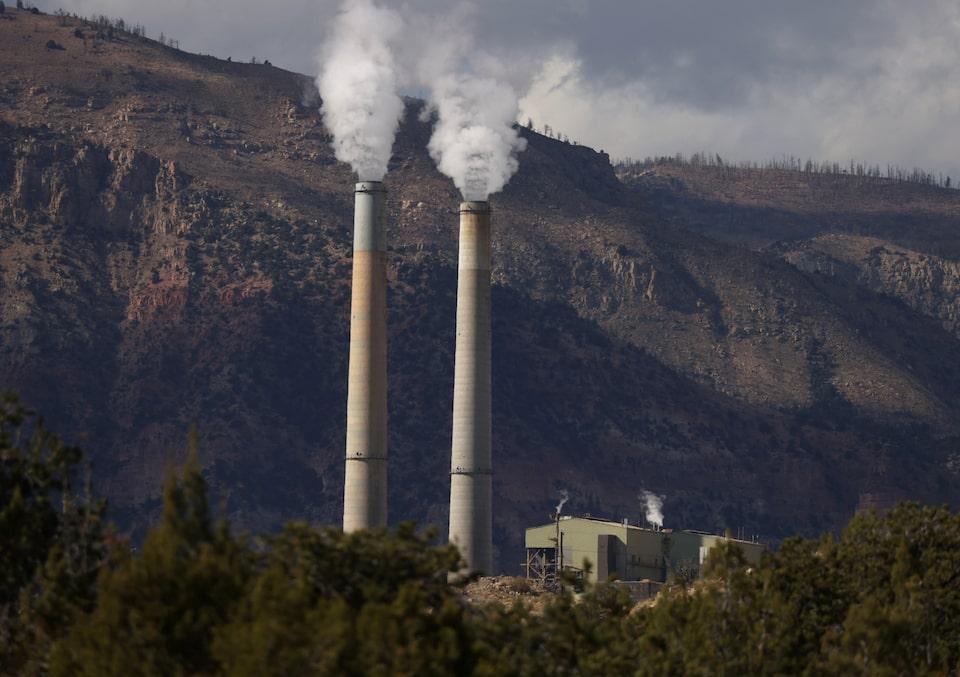
LITTLETON, Colorado, July 1 (Reuters) - U.S. power sector emissions are already at their highest levels in three years, but will likely climb further during the peak summer months as greater use of air conditioning systems drives higher generation from coal and natural gas plants. Over the first five months of 2025, U.S. power sector emissions from the burning of fossil fuels were up 5% to around 640 million metric tons, according to data from Ember. Sign up here. The roughly 32 million ton rise in emissions from the same months a year ago stems mainly from higher use of coal within the U.S. generation mix, as power firms have so far cut back on natural gas use from a year ago after gas prices rallied. However, power firms are starting to dial up generation from both coal and gas in order to meet higher electricity demand from homes and businesses tied to the greater use of power-hungry air conditioners. Those higher generation trends will in turn further lift power sector pollution totals, even as electricity production from clean power sources such as solar farms hit record highs. COAL-HEAVY Over the first half of 2024, U.S. coal-fired power generation climbed by 14% from the same period in 2024 to 14.9 million megawatt hours (MWh), according to data from LSEG. The chief driver behind the rise in coal use was a steep rise in the price of natural gas during the opening quarter of the year, which applied fresh cost pressure on utilities and spurred higher use of cheaper coal within generation mixes. Henry Hub natural gas futures - the main benchmark price for U.S. natural gas - have averaged around $3.53 per million British thermal units (BTU) so far this year, LSEG data shows. That compares to an average of $2.15 per BTU during the first half of 2024. As a result of that over 60% jump in gas costs, gas-fired power production during January to June was down 4.2% to 31.8 million MWh, according to LSEG. The higher proportion of coal power within the U.S. generation mix has had a big impact on overall emissions. Coal-fired power stations emit roughly 950,000 metric tons of carbon dioxide per terawatt hour of electricity production, according to Ember. That compares to around 540,000 tons of CO2 per TWh from gas-fired plants, and explains why overall fossil fuel emissions have climbed much more steeply than fossil fuel power output so far this year. PEAK PERIOD The U.S. has two well-defined peak periods of power use every year - for heating during winter and for cooling during summer. And for more than a decade, power use during the summer has exceeded the power needs over the winter, as air conditioning units require greater volumes of electricity than heating systems. This year that trend looks set to be extended after several parts of the U.S. were gripped by record-setting heat waves during the latter half of June, and are forecast to get further hot spells during July, August and into September. To meet the resulting rise in electricity use, utilities will need greater power output from all production sources, but especially from fossil fuels which are needed to meet the lion's share of system use at night when solar generation stops. And as gas prices remain well above year-ago levels, most power generation systems will continue to prioritize lifting output from relatively cheaper coal rather than costlier gas. That sets the stage for a fresh climb in power emissions, which are already at their highest since 2022 and are primed to hit their annual peak over the coming months as power firms deploy all the power they can muster to keep up with demand. The opinions expressed here are those of the author, a columnist for Reuters. Enjoying this column? Check out Reuters Open Interest (ROI), your essential new source for global financial commentary. ROI delivers thought-provoking, data-driven analysis of everything from swap rates to soybeans. Markets are moving faster than ever. ROI can help you keep up. Follow ROI on LinkedIn , opens new tab and X , opens new tab. https://www.reuters.com/markets/commodities/us-power-pollution-climbs-higher-coal-use-2025-07-01/
2025-07-01 05:34
Tesla shares fall as Musk-Trump feud reignites Fed's Powell does not rule out July cut Mixed signals in US manufacturing contracts, job market NEW YORK, July 1 (Reuters) - Global shares edged lower and U.S. Treasury yields rose on Tuesday as investors weighed a host of U.S. economic data and comments from Federal Reserve Chair Jerome Powell to gauge the timing of any interest rate cuts. Powell, speaking at a central banking conference in Sintra, Portugal, said he could not say if July was too early for a rate cut, but it "is going to depend on the data, and we are going meeting by meeting." Sign up here. Market expectations for a July cut inched up to 21.2% from 18.6% in the prior session, according to CME's FedWatch Tool , opens new tab. On Wall Street, the Dow climbed nearly 1% but the S&P 500 and Nasdaq were held in check after closing at record levels on Monday, in part due to a 4% fall in Tesla (TSLA.O) , opens new tab after U.S. President Donald Trump threatened to cut off the billions of dollars in subsidies that Elon Musk's companies receive from the federal government. The Dow Jones Industrial Average (.DJI) , opens new tab rose 400.17 points, or 0.91%, to 44,494.94, the S&P 500 (.SPX) , opens new tab fell 6.94 points, or 0.11%, to 6,198.01 and the Nasdaq Composite (.IXIC) , opens new tab fell 166.84 points, or 0.82%, to 20,202.89. MSCI's gauge of stocks across the globe (.MIWD00000PUS) , opens new tab shed 0.47 point, or 0.05%, to 917.42 while the pan-European STOXX 600 (.STOXX) , opens new tab index closed down 0.21% as concerns over the impact of tariffs on global growth were rekindled as a July 9 deadline by Trump draws closer. On the economic front, U.S. data showed manufacturing remained in contraction territory in June, according to the Institute for Supply Management (ISM). In the first reading of the week on the labor market, the Job Openings and Labor Turnover Survey, or JOLTS report, showed openings were up 374,000 to 7.769 million by the last day of May, but a decline in hiring indicated the market may have slowed. "Despite a large jump in job openings in May, the economy continues to be stuck in Powell's 'no hire, no fire' equilibrium," said Brian Jacobsen, chief economist at Annex Wealth Management in Menomonee Falls, Wisconsin. "It's not a stable equilibrium, and considering the ISM Manufacturing data, things may tilt towards a weaker job market over the summer." Investors will closely watch Thursday's key government payrolls report, expected a day earlier than usual due to the Independence Day holiday on July 4, to help shape expectations for rate cuts from the Fed. U.S. Treasury yields reversed course and turned higher after the data, with the yield on benchmark U.S. 10-year notes up 2.3 basis points to 4.25%. The 2-year note yield, which typically moves in step with interest rate expectations for the Federal Reserve, climbed 5.8 basis points to 3.779%. Trump's tax-cut and spending legislation continued its advance, as the U.S. Senate passed it by the thinnest of margins, and now heads back to the House of Representatives for final approval. Both chambers of Congress are controlled by Trump's fellow Republicans. "The market assumed it was ultimately going to happen," said Robert Phipps, Director at Per Stirling Capital Management in Austin, Texas. "I'm hoping that more reasonable heads will prevail and that they come up with something that's not so onerous to the outlook for the deficit and the U.S. debt load," Phipps said. " ... This is a very potentially damaging bill because of what it does to the deficit and the debt." The dollar index , which measures the greenback against a basket of currencies and is coming off its biggest first half drop since 1973, was last down 0.02% to 96.74, putting it on pace for a ninth straight session of declines. The euro was up 0.06% at $1.1793 while Sterling strengthened 0.04% to $1.3739. Against the Japanese yen , the dollar weakened 0.27% to 143.62. Earlier readings from the Bank of Japan's Tankan index of business sentiment indicated the biggest economies in the region were likely holding up in the face of tariffs, while a separate private sector survey showed the country's manufacturing sector expanded in June for the first time in 13 months. U.S. crude settled up 0.52% to $65.45 a barrel and Brent settled at $67.11 per barrel, up 0.55% on the day. https://www.reuters.com/world/china/global-markets-wrapup-1-2025-07-01/