2025-07-01 06:16
COPENHAGEN, July 1 (Reuters) - Norway's Equinor (EQNR.OL) , opens new tab and its partners have approved a 13 billion Norwegian crown ($1.29 billion) investment for the expansion of Johan Sverdrup, western Europe's largest producing oilfield, the company said on Tuesday. The project is expected to increase recoverable volumes from the field by between 40 million and 50 million barrels of oil equivalent, Equinor and its partner Aker BP said in separate statements. Sign up here. Production from new subsea wells linked to the existing infrastructure is expected to begin in the fourth quarter of 2027, they added. "Every third barrel of oil from the Norwegian continental shelf now comes from the field. Phase 3 is an important contribution to maintaining high production from Johan Sverdrup in the years to come," Equinor said in a statement. Last year, the field produced a record 260 million barrels of oil, or more than 700,000 barrels per day, the highest annual oil production from any Norwegian field. Norway accounts for about 2% of global oil output. Equinor, the field's operator, has a 42.63% stake in Johan Sverdrup, while Aker BP holds 31.57%, Norwegian state-owned oil firm Petoro 17.36% and France's TotalEnergies (TTEF.PA) , opens new tab the remaining 8.44%. Equinor, which is majority-owned by the Norwegian state, said it had submitted the plan to the government for approval. ($1 = 10.0755 Norwegian crowns) https://www.reuters.com/business/energy/equinor-partners-approve-13-billion-johan-sverdrup-oilfield-expansion-2025-07-01/

2025-07-01 06:15
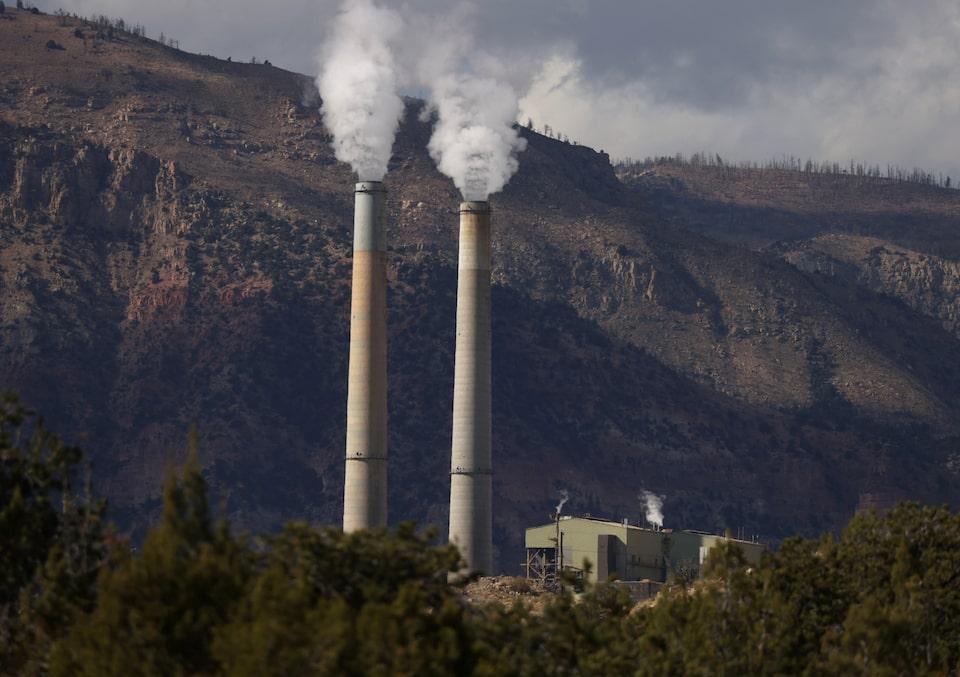
LITTLETON, Colorado, July 1 (Reuters) - U.S. power sector emissions are already at their highest levels in three years, but will likely climb further during the peak summer months as greater use of air conditioning systems drives higher generation from coal and natural gas plants. Over the first five months of 2025, U.S. power sector emissions from the burning of fossil fuels were up 5% to around 640 million metric tons, according to data from Ember. Sign up here. The roughly 32 million ton rise in emissions from the same months a year ago stems mainly from higher use of coal within the U.S. generation mix, as power firms have so far cut back on natural gas use from a year ago after gas prices rallied. However, power firms are starting to dial up generation from both coal and gas in order to meet higher electricity demand from homes and businesses tied to the greater use of power-hungry air conditioners. Those higher generation trends will in turn further lift power sector pollution totals, even as electricity production from clean power sources such as solar farms hit record highs. COAL-HEAVY Over the first half of 2024, U.S. coal-fired power generation climbed by 14% from the same period in 2024 to 14.9 million megawatt hours (MWh), according to data from LSEG. The chief driver behind the rise in coal use was a steep rise in the price of natural gas during the opening quarter of the year, which applied fresh cost pressure on utilities and spurred higher use of cheaper coal within generation mixes. Henry Hub natural gas futures - the main benchmark price for U.S. natural gas - have averaged around $3.53 per million British thermal units (BTU) so far this year, LSEG data shows. That compares to an average of $2.15 per BTU during the first half of 2024. As a result of that over 60% jump in gas costs, gas-fired power production during January to June was down 4.2% to 31.8 million MWh, according to LSEG. The higher proportion of coal power within the U.S. generation mix has had a big impact on overall emissions. Coal-fired power stations emit roughly 950,000 metric tons of carbon dioxide per terawatt hour of electricity production, according to Ember. That compares to around 540,000 tons of CO2 per TWh from gas-fired plants, and explains why overall fossil fuel emissions have climbed much more steeply than fossil fuel power output so far this year. PEAK PERIOD The U.S. has two well-defined peak periods of power use every year - for heating during winter and for cooling during summer. And for more than a decade, power use during the summer has exceeded the power needs over the winter, as air conditioning units require greater volumes of electricity than heating systems. This year that trend looks set to be extended after several parts of the U.S. were gripped by record-setting heat waves during the latter half of June, and are forecast to get further hot spells during July, August and into September. To meet the resulting rise in electricity use, utilities will need greater power output from all production sources, but especially from fossil fuels which are needed to meet the lion's share of system use at night when solar generation stops. And as gas prices remain well above year-ago levels, most power generation systems will continue to prioritize lifting output from relatively cheaper coal rather than costlier gas. That sets the stage for a fresh climb in power emissions, which are already at their highest since 2022 and are primed to hit their annual peak over the coming months as power firms deploy all the power they can muster to keep up with demand. The opinions expressed here are those of the author, a columnist for Reuters. Enjoying this column? Check out Reuters Open Interest (ROI), your essential new source for global financial commentary. ROI delivers thought-provoking, data-driven analysis of everything from swap rates to soybeans. Markets are moving faster than ever. ROI can help you keep up. Follow ROI on LinkedIn , opens new tab and X , opens new tab. https://www.reuters.com/markets/commodities/us-power-pollution-climbs-higher-coal-use-2025-07-01/
2025-07-01 05:34
Tesla shares fall as Musk-Trump feud reignites Fed's Powell does not rule out July cut Mixed signals in US manufacturing contracts, job market NEW YORK, July 1 (Reuters) - Global shares edged lower and U.S. Treasury yields rose on Tuesday as investors weighed a host of U.S. economic data and comments from Federal Reserve Chair Jerome Powell to gauge the timing of any interest rate cuts. Powell, speaking at a central banking conference in Sintra, Portugal, said he could not say if July was too early for a rate cut, but it "is going to depend on the data, and we are going meeting by meeting." Sign up here. Market expectations for a July cut inched up to 21.2% from 18.6% in the prior session, according to CME's FedWatch Tool , opens new tab. On Wall Street, the Dow climbed nearly 1% but the S&P 500 and Nasdaq were held in check after closing at record levels on Monday, in part due to a 4% fall in Tesla (TSLA.O) , opens new tab after U.S. President Donald Trump threatened to cut off the billions of dollars in subsidies that Elon Musk's companies receive from the federal government. The Dow Jones Industrial Average (.DJI) , opens new tab rose 400.17 points, or 0.91%, to 44,494.94, the S&P 500 (.SPX) , opens new tab fell 6.94 points, or 0.11%, to 6,198.01 and the Nasdaq Composite (.IXIC) , opens new tab fell 166.84 points, or 0.82%, to 20,202.89. MSCI's gauge of stocks across the globe (.MIWD00000PUS) , opens new tab shed 0.47 point, or 0.05%, to 917.42 while the pan-European STOXX 600 (.STOXX) , opens new tab index closed down 0.21% as concerns over the impact of tariffs on global growth were rekindled as a July 9 deadline by Trump draws closer. On the economic front, U.S. data showed manufacturing remained in contraction territory in June, according to the Institute for Supply Management (ISM). In the first reading of the week on the labor market, the Job Openings and Labor Turnover Survey, or JOLTS report, showed openings were up 374,000 to 7.769 million by the last day of May, but a decline in hiring indicated the market may have slowed. "Despite a large jump in job openings in May, the economy continues to be stuck in Powell's 'no hire, no fire' equilibrium," said Brian Jacobsen, chief economist at Annex Wealth Management in Menomonee Falls, Wisconsin. "It's not a stable equilibrium, and considering the ISM Manufacturing data, things may tilt towards a weaker job market over the summer." Investors will closely watch Thursday's key government payrolls report, expected a day earlier than usual due to the Independence Day holiday on July 4, to help shape expectations for rate cuts from the Fed. U.S. Treasury yields reversed course and turned higher after the data, with the yield on benchmark U.S. 10-year notes up 2.3 basis points to 4.25%. The 2-year note yield, which typically moves in step with interest rate expectations for the Federal Reserve, climbed 5.8 basis points to 3.779%. Trump's tax-cut and spending legislation continued its advance, as the U.S. Senate passed it by the thinnest of margins, and now heads back to the House of Representatives for final approval. Both chambers of Congress are controlled by Trump's fellow Republicans. "The market assumed it was ultimately going to happen," said Robert Phipps, Director at Per Stirling Capital Management in Austin, Texas. "I'm hoping that more reasonable heads will prevail and that they come up with something that's not so onerous to the outlook for the deficit and the U.S. debt load," Phipps said. " ... This is a very potentially damaging bill because of what it does to the deficit and the debt." The dollar index , which measures the greenback against a basket of currencies and is coming off its biggest first half drop since 1973, was last down 0.02% to 96.74, putting it on pace for a ninth straight session of declines. The euro was up 0.06% at $1.1793 while Sterling strengthened 0.04% to $1.3739. Against the Japanese yen , the dollar weakened 0.27% to 143.62. Earlier readings from the Bank of Japan's Tankan index of business sentiment indicated the biggest economies in the region were likely holding up in the face of tariffs, while a separate private sector survey showed the country's manufacturing sector expanded in June for the first time in 13 months. U.S. crude settled up 0.52% to $65.45 a barrel and Brent settled at $67.11 per barrel, up 0.55% on the day. https://www.reuters.com/world/china/global-markets-wrapup-1-2025-07-01/

2025-07-01 05:25
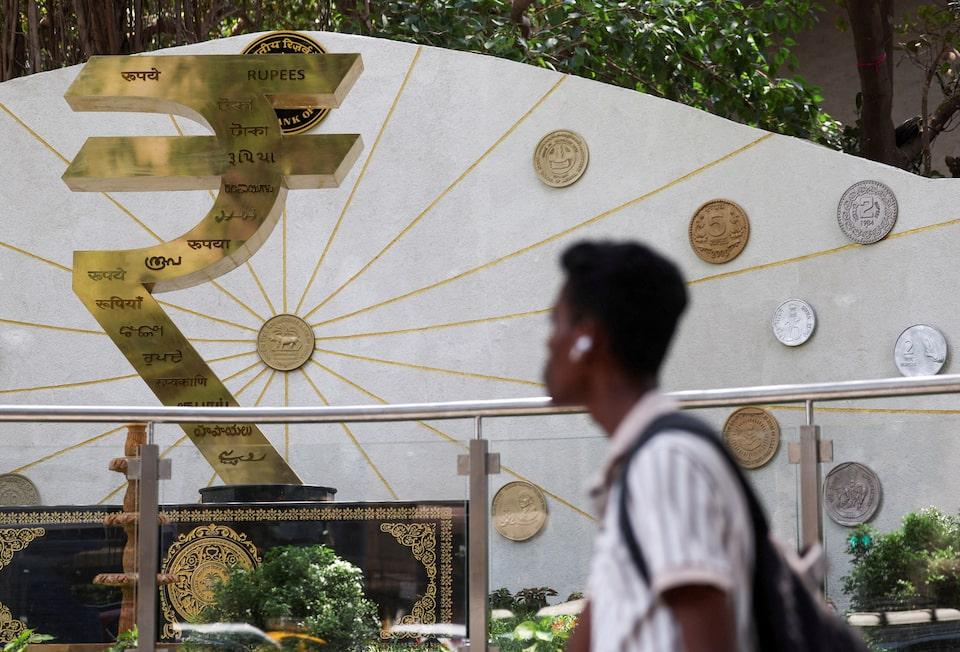
MUMBAI, July 1 (Reuters) - The Indian rupee inched up on Tuesday, tracking regional peers and the dollar index's decline to a three-year low amid persistent worries over U.S. fiscal and trade policies. Data released after market-hours on Monday showed that the size of Reserve Bank of India's FX forward book shrank to $65.2 billion at the end of May, down from $72.6 billion in the previous month. The data is released with a one-month lag. Sign up here. The Reserve Bank of India's aggregate short dollar position in FX forwards and futures had climbed to a record in February amid dollar-selling interventions by the central bank to support the rupee. The rupee has recovered about 2.5% since hitting an all-time low of 87.95 in February, aided by a dollar's struggles. Maturity of near-tenor swaps - worth about $7.4 billion in the up to 1-month bucket in April - likely contributed to shrinking the central bank's aggregate short dollar positions. "While the RBI had increased the short dollar positions in its forward book during periods of INR volatility, it has opportunistically termed out some of those positions while also letting some positions mature," said B. Prasanna, treasury head at ICICI Bank. On the day, the rupee and its regional peers were boosted by the dollar index drop to a multi-year low on worries over the U.S. fiscal deficit and uncertainty surrounding trade deals with major countries. The rupee was up 0.2% at 85.59 per U.S. dollar as of 10:20 a.m. IST. U.S. Treasury Secretary Scott Bessent warned on Monday that countries could be notified of sharply higher tariffs as a July 9 deadline approaches. The White House, meanwhile, said that an update on a trade deal with India was expected "very soon." https://www.reuters.com/world/india/rupee-inches-up-near-tenor-swap-maturities-trim-central-banks-forward-book-2025-07-01/
2025-07-01 05:13
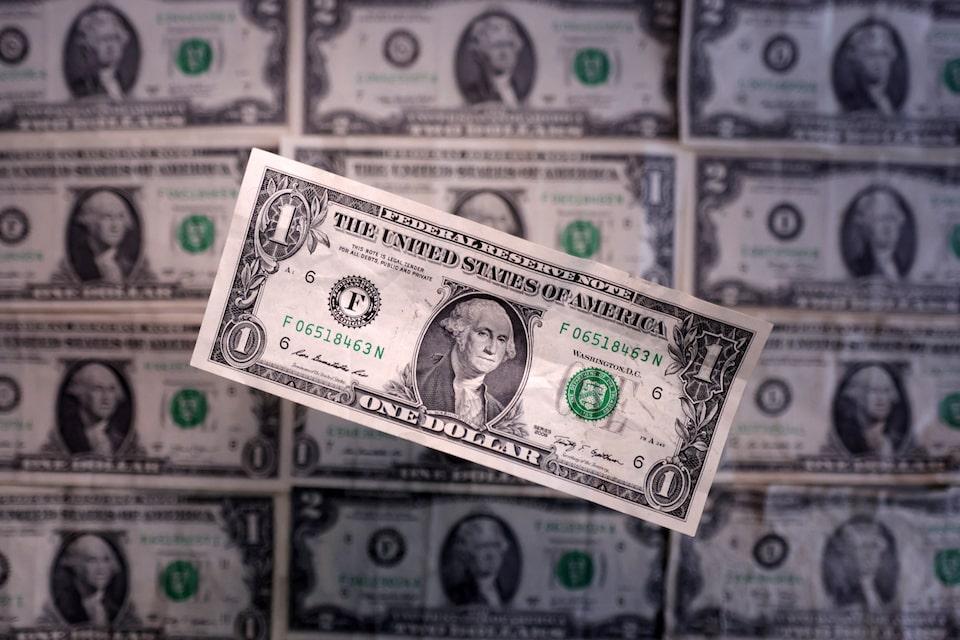
US job openings show unexpected increase US Senate approves spending and tax cut bill Euro gains versus dollar Pound rises after UK parliament vote on welfare spending NEW YORK, July 1 (Reuters) - The U.S. dollar gained ground against major currencies including the yen and the Swiss franc on Tuesday after data showed a better-than-expected increase in labor market demand, indicating the Federal Reserve will likely take its time to cut interest rates. The Republican-controlled U.S. Senate passed President Donald Trump's tax and spending bill, approving a massive package that would enshrine many of his top priorities into law and add $3.3 trillion to the national debt. The bill will move to the House for final approval. Sign up here. Federal Reserve Chair Jerome Powell had reiterated that the central bank plans to wait for more data before it starts monetary policy easing, but he did not rule out a July cut. Powell spoke at a central banking conference in Portugal. The dollar pared losses against the Japanese yen and against the Swiss franc after Labor Department data showed job openings rose 374,000 to 7.769 million in May. It pared losses further against the yen and extended gains against the franc after the U.S. Senate cleared the spending bill. The dollar weakened 0.29% to 143.58 against the yen and was down 0.16% to 0.79175 versus the Swiss franc, compared with a drop of 0.46% and 0.28% respectively before the data. "It was the worst first half of the year for the U.S. dollar index since 1973 with a lot of that weakness being driven by concerns about trade policy and concerns about a slowing economy," said Matthew Weller, global head of market research at StoneX. "But I think on a very short-term basis we might be seeing the market get a little bit stretched here and I think there might be a case for a U.S. dollar bounce as we move through July." The dollar index , which measures the greenback against a basket of currencies including the yen and the euro, reversed earlier gains and was down 0.08% at 96.682 after being down 0.05% to 96.71. U.S. Treasury yields advanced after the job openings data. The yield on benchmark U.S. 10-year notes rose 2.3 basis points to 4.25%. "Two or three iterations of concern around the Fed or potential policy from the Fed all weigh against the dollar," said Marvin Loh, senior global market strategist at State Street in Boston. "If the Fed cuts, that closes interest rate differentials ... We've seen July expectations for a cut get a little more aggressive at 20%; it was 0% just a couple of weeks ago. It's certainly firming they're going to cut in September and there's a bit of a change in thesis." British Prime Minister Keir Starmer cleared the first hurdle in his quest to reform the welfare system, defeating an attempt by lawmakers opposed to the proposed law to halt its progress. The proposed reforms are designed to reduce the cost of Britain's growing welfare bill of 65 billion pounds, which the government has described as economically indefensible and morally wrong. The euro was down 0.13% at $1.18020 after being up 0.05% earlier in the day. The pound sterling reversed earlier declines and rose following the vote. It was last up 0.07% to $1.374 against the dollar, on track for two straight sessions of gains. The dollar strengthened 0.08% to 7.162 versus the offshore Chinese yuan. https://www.reuters.com/world/middle-east/dollar-feeble-trumps-tax-bill-tariffs-weigh-2025-07-01/
2025-07-01 05:03
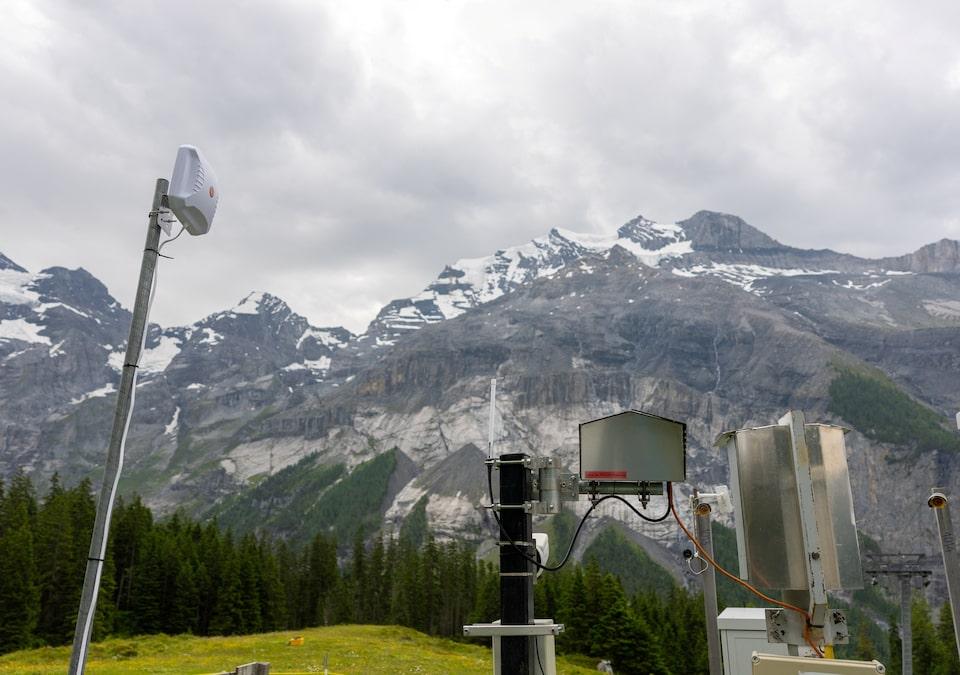
Kandersteg boosts preparedness as rockslide threats rise Several systems track climate impact on Alpine permafrost Blatten losses show need for effective disaster management KANDERSTEG, Switzerland, July 1 (Reuters) - In the Swiss Alpine resort of Kandersteg, officials have been closely monitoring a deteriorating mountain peak that towers above its picturesque homes and hotels, after a glacier collapse and massive rockslide buried a neighbouring village weeks ago. The destruction late in May of Blatten, a village of around 300 people in the Loetschental valley, threw into sharp relief concern about the impact of melting permafrost as temperatures trend higher on Alpine mountain ranges. Sign up here. Blatten was evacuated before a chunk of a glacier broke off, triggering a dangerous cascade of ice, earth and rock towards the village, in a manner similar to what Kandersteg has been preparing for. "Of course, Blatten really upset us," said Kandersteg's mayor Rene Maeder. "It really gets under your skin. You're speechless when you see those images of the violence of nature." Still, Maeder was confident Kandersteg's dams and daily monitoring prepared it well to avert disaster, with researchers checking the mountain via GPS, radar and drone. There has been a heightened threat of rockslides in Kandersteg since 2018, when paragliders noted that Spitzer Stein, a distinctive rocky peak crowning a lush Alpine landscape, was losing height and that bits had broken off it. That discovery made the village a testing ground for technology that monitors what some experts believe is the likely impact of climate change on the Alps, where thawing permafrost has weakened rock structures that were long frozen solid. Seismic activity and geological instability are also risks for the region's mountains. THAWING PERMAFROST Kandersteg was a prime example of an area with historical structural instability that could be aggravated by many factors, including permafrost, said Robert Kenner at the Institute for Snow and Avalanche Research in Davos. "What calmed down for about 3,000 years is now reactivated," he said. Sensors monitoring GPS locations on the Spitzer Stein showed the mountain shifting by up to 70 centimetres (2.3 feet) a day, Maeder said. In the event of major rock movement, residents should receive warnings at least 48 hours in advance. Blatten was evacuated 10 days before the deluge, which caused insurance losses of 320 million Swiss francs ($400 million), an initial estimate by the Swiss insurance association showed. There are about 48 Swiss Alpine peaks of at least 4,000 meters (13,123 feet) in height, and several hundred at least 3,000 meters high. In 2017, a landslide killed eight hikers in the southern village of Bondo, despite prior evacuations. Monitoring there has since been ramped up. 'TIP OF THE ICEBERG' Kandersteg, with a population of about 1,400, has spent over 11 million Swiss francs ($13.81 million) on disaster preparedness, including dams to slow flooding, Mayor Maeder said. Residents, who get regular updates on the mountain's movements via email and WhatsApp, have faith in the technology. "We still sleep well," said Patrick Jost, head of Kandersteg's tourism office, whose home is one of the most exposed to a potential Spitzer Stein collapse. He lives with his two children in the red zone, the village's most high-risk area, where no new construction is allowed. Despite the shock of Blatten, life is largely unchanged, including vital tourism, locals say. Kandersteg will perform its first ever full evacuation drill next year, Maeder said, observing: "Blatten and Kandersteg, that's just the tip of the iceberg." Residents like 77-year-old Rudi Schorer know they will have to move fast in an emergency, and have set aside identification details, spare clothes and a few belongings. "These are ready in a suitcase at home," Schorer said. "That's what we were advised to do, and that's what we did." ($1 = 0.7996 Swiss francs) (This story has been refiled to change the rockslide reference to 'weeks ago' from 'last month' in paragraph 1) https://www.reuters.com/sustainability/cop/swiss-villages-loss-rockslide-puts-focus-alpine-disaster-readiness-kandersteg-2025-07-01/