2025-07-01 05:13
US job openings show unexpected increase US Senate approves spending and tax cut bill Euro gains versus dollar Pound rises after UK parliament vote on welfare spending NEW YORK, July 1 (Reuters) - The U.S. dollar gained ground against major currencies including the yen and the Swiss franc on Tuesday after data showed a better-than-expected increase in labor market demand, indicating the Federal Reserve will likely take its time to cut interest rates. The Republican-controlled U.S. Senate passed President Donald Trump's tax and spending bill, approving a massive package that would enshrine many of his top priorities into law and add $3.3 trillion to the national debt. The bill will move to the House for final approval. Sign up here. Federal Reserve Chair Jerome Powell had reiterated that the central bank plans to wait for more data before it starts monetary policy easing, but he did not rule out a July cut. Powell spoke at a central banking conference in Portugal. The dollar pared losses against the Japanese yen and against the Swiss franc after Labor Department data showed job openings rose 374,000 to 7.769 million in May. It pared losses further against the yen and extended gains against the franc after the U.S. Senate cleared the spending bill. The dollar weakened 0.29% to 143.58 against the yen and was down 0.16% to 0.79175 versus the Swiss franc, compared with a drop of 0.46% and 0.28% respectively before the data. "It was the worst first half of the year for the U.S. dollar index since 1973 with a lot of that weakness being driven by concerns about trade policy and concerns about a slowing economy," said Matthew Weller, global head of market research at StoneX. "But I think on a very short-term basis we might be seeing the market get a little bit stretched here and I think there might be a case for a U.S. dollar bounce as we move through July." The dollar index , which measures the greenback against a basket of currencies including the yen and the euro, reversed earlier gains and was down 0.08% at 96.682 after being down 0.05% to 96.71. U.S. Treasury yields advanced after the job openings data. The yield on benchmark U.S. 10-year notes rose 2.3 basis points to 4.25%. "Two or three iterations of concern around the Fed or potential policy from the Fed all weigh against the dollar," said Marvin Loh, senior global market strategist at State Street in Boston. "If the Fed cuts, that closes interest rate differentials ... We've seen July expectations for a cut get a little more aggressive at 20%; it was 0% just a couple of weeks ago. It's certainly firming they're going to cut in September and there's a bit of a change in thesis." British Prime Minister Keir Starmer cleared the first hurdle in his quest to reform the welfare system, defeating an attempt by lawmakers opposed to the proposed law to halt its progress. The proposed reforms are designed to reduce the cost of Britain's growing welfare bill of 65 billion pounds, which the government has described as economically indefensible and morally wrong. The euro was down 0.13% at $1.18020 after being up 0.05% earlier in the day. The pound sterling reversed earlier declines and rose following the vote. It was last up 0.07% to $1.374 against the dollar, on track for two straight sessions of gains. The dollar strengthened 0.08% to 7.162 versus the offshore Chinese yuan. https://www.reuters.com/world/middle-east/dollar-feeble-trumps-tax-bill-tariffs-weigh-2025-07-01/
2025-07-01 05:03
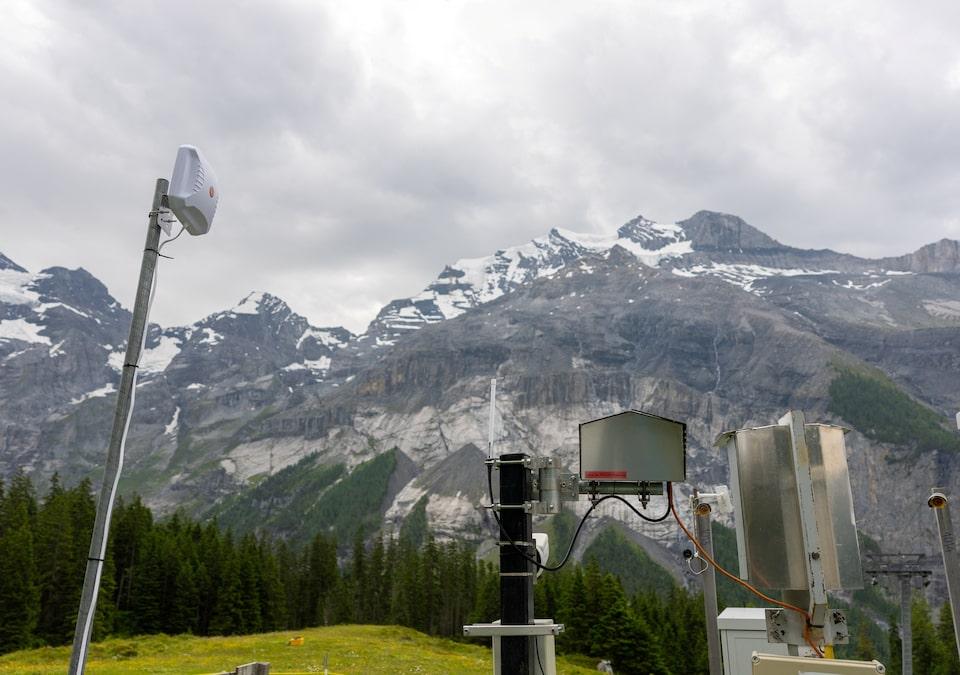
Kandersteg boosts preparedness as rockslide threats rise Several systems track climate impact on Alpine permafrost Blatten losses show need for effective disaster management KANDERSTEG, Switzerland, July 1 (Reuters) - In the Swiss Alpine resort of Kandersteg, officials have been closely monitoring a deteriorating mountain peak that towers above its picturesque homes and hotels, after a glacier collapse and massive rockslide buried a neighbouring village weeks ago. The destruction late in May of Blatten, a village of around 300 people in the Loetschental valley, threw into sharp relief concern about the impact of melting permafrost as temperatures trend higher on Alpine mountain ranges. Sign up here. Blatten was evacuated before a chunk of a glacier broke off, triggering a dangerous cascade of ice, earth and rock towards the village, in a manner similar to what Kandersteg has been preparing for. "Of course, Blatten really upset us," said Kandersteg's mayor Rene Maeder. "It really gets under your skin. You're speechless when you see those images of the violence of nature." Still, Maeder was confident Kandersteg's dams and daily monitoring prepared it well to avert disaster, with researchers checking the mountain via GPS, radar and drone. There has been a heightened threat of rockslides in Kandersteg since 2018, when paragliders noted that Spitzer Stein, a distinctive rocky peak crowning a lush Alpine landscape, was losing height and that bits had broken off it. That discovery made the village a testing ground for technology that monitors what some experts believe is the likely impact of climate change on the Alps, where thawing permafrost has weakened rock structures that were long frozen solid. Seismic activity and geological instability are also risks for the region's mountains. THAWING PERMAFROST Kandersteg was a prime example of an area with historical structural instability that could be aggravated by many factors, including permafrost, said Robert Kenner at the Institute for Snow and Avalanche Research in Davos. "What calmed down for about 3,000 years is now reactivated," he said. Sensors monitoring GPS locations on the Spitzer Stein showed the mountain shifting by up to 70 centimetres (2.3 feet) a day, Maeder said. In the event of major rock movement, residents should receive warnings at least 48 hours in advance. Blatten was evacuated 10 days before the deluge, which caused insurance losses of 320 million Swiss francs ($400 million), an initial estimate by the Swiss insurance association showed. There are about 48 Swiss Alpine peaks of at least 4,000 meters (13,123 feet) in height, and several hundred at least 3,000 meters high. In 2017, a landslide killed eight hikers in the southern village of Bondo, despite prior evacuations. Monitoring there has since been ramped up. 'TIP OF THE ICEBERG' Kandersteg, with a population of about 1,400, has spent over 11 million Swiss francs ($13.81 million) on disaster preparedness, including dams to slow flooding, Mayor Maeder said. Residents, who get regular updates on the mountain's movements via email and WhatsApp, have faith in the technology. "We still sleep well," said Patrick Jost, head of Kandersteg's tourism office, whose home is one of the most exposed to a potential Spitzer Stein collapse. He lives with his two children in the red zone, the village's most high-risk area, where no new construction is allowed. Despite the shock of Blatten, life is largely unchanged, including vital tourism, locals say. Kandersteg will perform its first ever full evacuation drill next year, Maeder said, observing: "Blatten and Kandersteg, that's just the tip of the iceberg." Residents like 77-year-old Rudi Schorer know they will have to move fast in an emergency, and have set aside identification details, spare clothes and a few belongings. "These are ready in a suitcase at home," Schorer said. "That's what we were advised to do, and that's what we did." ($1 = 0.7996 Swiss francs) (This story has been refiled to change the rockslide reference to 'weeks ago' from 'last month' in paragraph 1) https://www.reuters.com/sustainability/cop/swiss-villages-loss-rockslide-puts-focus-alpine-disaster-readiness-kandersteg-2025-07-01/
2025-07-01 04:46
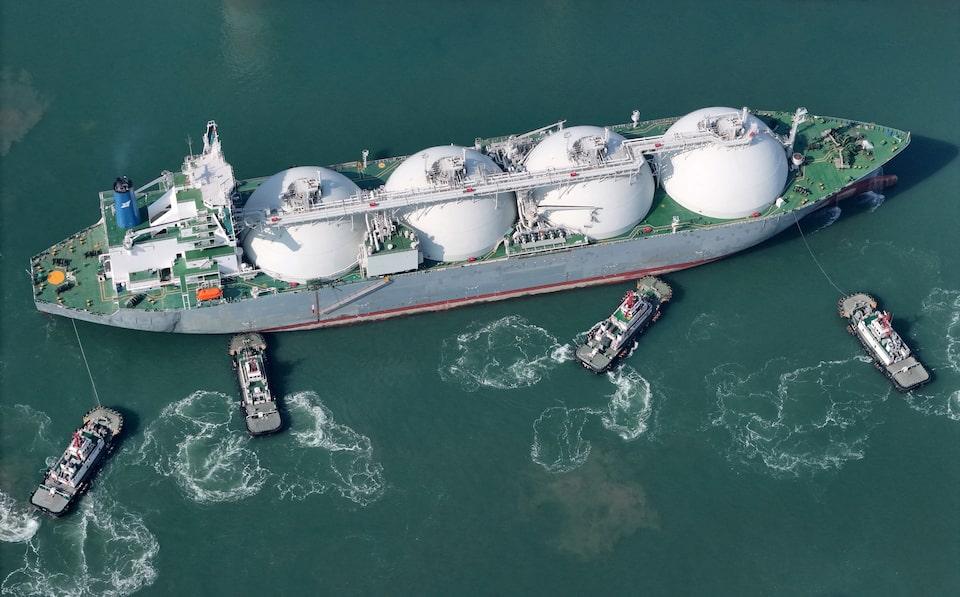
LAUNCESTON, Australia, July 1 (Reuters) - Global imports of liquefied natural gas (LNG) ticked higher in the first half of 2025 as stronger European demand pulled cargoes away from Asia. Total imports of the super-chilled fuel were 208.62 million metric tons in the first six months of this year, up 1.7% from the 205.11 million for the same period in 2024, according to data compiled by commodity analysts Kpler. Sign up here. Asia, the top LNG buyer, saw imports drop 9.09 million tons, or 6.4%, to 133.41 million, while Europe's arrivals jumped 21.6%, or 11.8 million to 66.43 million. The numbers confirm that Europe is turning increasingly to LNG as it attempts to replace pipeline natural gas from Russia, which has been severely curtailed since the Russian invasion of Ukraine in February 2022. The trend to higher LNG arrivals in Europe is also likely to continue given the continent is behind in filling natural gas inventories ahead of the peak winter demand season at the end of the year. According to data from S&P Global Commodity Insights, Europe's storages were 56.8% full at the end of June, which is well below the 75.5% they were at the same time last year. This means that Europe is likely to continue buying LNG at relatively high levels and the usual tapering of imports in the shoulder season between the summer and winter peaks may not be as pronounced this year. Europe's LNG imports have eased since hitting the second-highest on record of 12.78 million tons in March, dropping to 9.79 million in June, according to Kpler. But it's worth noting that every month this year has seen higher imports than the corresponding month in 2024, with June's arrivals of 9.79 million tons being 36% higher than the 7.19 million from the same month last year. PRICE GAINS The robust demand from Europe has kept Asian spot LNG prices higher than they were in 2024, and also smoothed out the usual seasonal declines in the shoulder season between winter and summer peaks. Spot LNG for delivery to North Asia was assessed at $13.10 per million British thermal units (mmBtu) in the week to June 27, dropping from a four-month high of $14 the prior week as tensions eased in the Middle East with a ceasefire between Israel and Iran. The low so far in 2025 has been $11 per mmBtu in the week to May 2, but this price was well above the low from 2024 of $8.30 in March of that year. The highest price so far in 2025 of $16.10 per mmBtu in February is also higher than any price recorded in 2024 and was the most since December 2023. The elevated spot prices in Asia have seen buyers in price-sensitive markets like China and India trim purchases. China, the world's biggest LNG importer, has seen lower arrivals in every month so far in 2025 when compared with the same month in 2024. China imported 5.12 million tons in June, which was up from May's 4.90 million, but was still below the 5.87 million from June last year. For the first half of 2025, China imported 30.27 million tons, down 22% from the 38.79 million from a year earlier, according to Kpler data. The decline in India's LNG imports in the first half was less pronounced than China's, with arrivals of 12.4 million tons being 8.7% lower than the 13.58 million a year earlier. But the weakness in both China and India shows the impact of Europe's rising demand, which is pushing Asian prices higher. A spot price above $12 per mmBtu is believed to make LNG largely uncompetitive in China's domestic market. This means that if Europe's demand keeps Asian prices around the current levels, it is likely that buyers will hold off on spot cargoes and they may even be tempted to resell contracted volumes to the higher-priced market. Enjoying this column? Check out Reuters Open Interest (ROI), your essential new source for global financial commentary. ROI delivers thought-provoking, data-driven analysis of everything from swap rates to soybeans. Markets are moving faster than ever. ROI can help you keep up. Follow ROI on LinkedIn , opens new tab and X , opens new tab. The views expressed here are those of the author, a columnist for Reuters. https://www.reuters.com/markets/commodities/europe-drives-lng-import-growth-asia-stumbles-higher-price-2025-07-01/
2025-07-01 04:31
A look at the day ahead in European and global markets from Rocky Swift A central bank Who's Who is due to speak in Sintra, Portugal today as policymakers grapple with an uncertain landscape for trade, growth and inflation. Sign up here. Uncertainty was the key theme in opening remarks from European Central Bank President Christine Lagarde on Monday at the ECB's annual forum for central bankers. Lagarde is scheduled to join a panel with central bank heads from the United States, Japan, Britain and South Korea at 1330 GMT. And uncertainty remains over U.S. President Donald Trump's "One, Big, Beautiful Bill," which remains logjammed at the Senate. Trump is desperate to get it passed before America's "Independence Day" on July 4, while deadlines over his "Liberation Day" tariffs loom over trade negotiations. Trump called Japan "spoiled" as a trade deal between the two nations remained elusive, and U.S. Treasury Secretary Scott Bessent warned that countries could be notified of sharply higher tariffs. Except for Japan's Nikkei (.N225) , opens new tab, equity markets were broadly higher in Asia, with benchmark indexes in South Korea (.KS11) , opens new tab and Taiwan (.TWII) , opens new tab climbing more than 1.4%. Fresh readings from the Bank of Japan's tankan index and China's Caixin PMI indicated Asia's biggest economies were weathering the tariff storm, at least for now. Euro Stoxx 50 futures pointed to a flat opening, while German DAX futures were up about 0.1%. U.S. stock futures, the S&P 500 e-minis , were down 0.1%. The euro continued its winning days, poised for a record 10th consecutive day of gains against the U.S. dollar, reaching $1.1808, the highest since September 2021. Key developments that could influence markets on Tuesday: - ECB's Sintra conference policy panel - U.S. ISM manufacturing data for June - Manufacturing Purchasing Managers Indexes (PMI) data for France, Germany, and Euro Zone for June - UK house prices for June Trying to keep up with the latest tariff news? Our new daily news digest offers a rundown of the top market-moving headlines impacting global trade. Sign up for Tariff Watch here. https://www.reuters.com/world/europe/global-markets-view-europe-2025-07-01/
2025-07-01 02:56
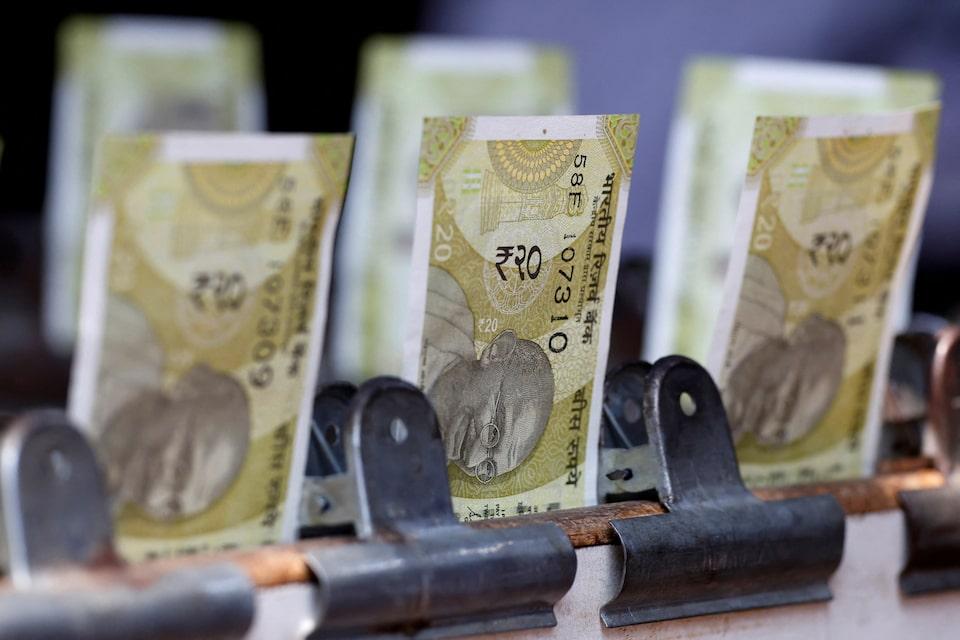
MUMBAI, July 1 (Reuters) - The Indian rupee is likely to inch up at open on Tuesday, helped by the dollar falling to a fresh multi-year low on worries over U.S. fiscal and trade policy. However, traders said the upside for the local unit may be limited, citing recent price action that points to persistent dollar buying by importers. Sign up here. The 1-month non-deliverable forward indicated an open in the 85.64 to 85.68 range, versus 85.7550 in the previous session. On Monday, the Indian currency rallied to 85.30, before dollar buying by state-run and foreign banks triggered a reversal. The reversal from 85.30 shows how challenging it is for the rupee to hold on at levels above 85.50, a currency trader at a private bank said. Importer demand is "always lurking and yesterday, I reckon there were outflows via foreign banks." The rupee’s performance on the final day of June was reflective of its struggle through the month, during which it consistently lagged behind its Asian peers. While most regional currencies rallied between 4% and 12% in June, the Indian unit declined slightly, underscoring its relative underperformance. NO RESPITE FOR DOLLAR The dollar index slumped to a more than three-year low on Monday and held those losses during Asia hours, weighed down by concerns over the U.S. fiscal deficit and uncertainty around key trade agreements. Investors are staying away from the dollar amid U.S. Senate’s efforts to pass President Donald Trump’s tax and spending bill, which faces internal Republican resistance due to its projected $3.3 trillion impact on the national debt. On trade, the July 9 deadline for Trump's tariffs is fast approaching. Investors are keeping an eye on trade deals between the U.S. and its partners. In good news for the rupee, the White House said that the U.S. and India are very near to finalising a trade deal. KEY INDICATORS: ** One-month non-deliverable rupee forward at 85.76; onshore one-month forward premium at 11 paise ** Dollar index at 96.77 ** Brent crude futures down 0.5% at $66.4 per barrel ** Ten-year U.S. note yield at 4.22% ** As per NSDL data, foreign investors bought a net $663.3 million worth of Indian shares on June 27 ** NSDL data shows foreign investors sold a net $25.2 million worth of Indian bonds on June 27 https://www.reuters.com/world/india/rupee-poised-rise-after-dollar-slumps-importer-flows-remain-focus-2025-07-01/
2025-07-01 00:57
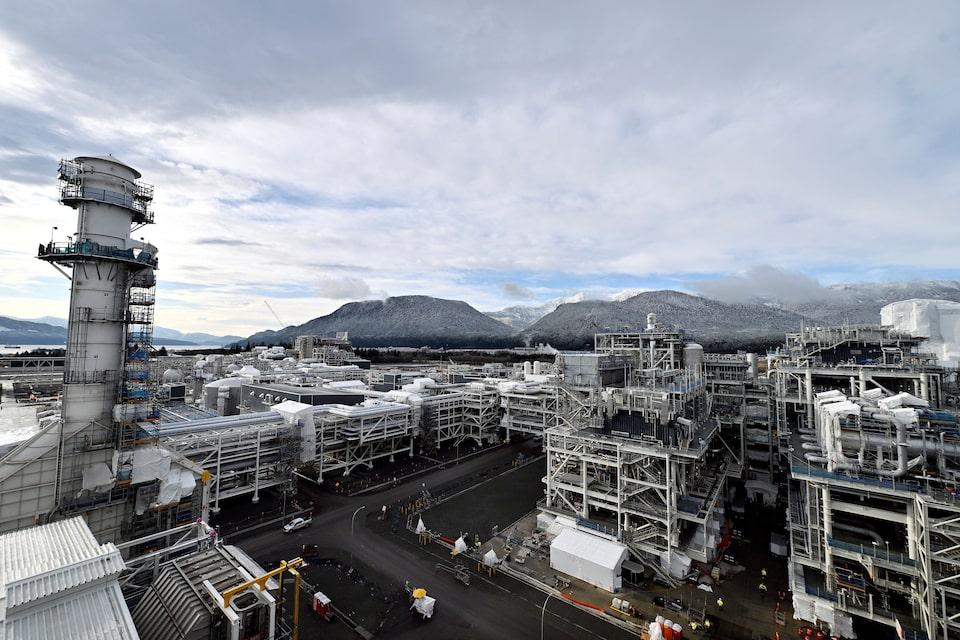
LNG Canada offers access to Asian markets, bypassing Panama Canal Project cost CDN$40 billion, largest private investment in Canadian history Canadian LNG has inherent advantages but comes with high construction costs, policy risk CALGARY, June 30(Reuters) - Canada's first-ever LNG export cargo has been shipped from the country's Pacific Coast en route to Asia, a spokesperson for the Shell-led LNG Canada said on Monday. The cargo was loaded onto the tanker Gaslog Glasgow from LNG Canada's site in Kitimat, British Columbia, just over a week after the facility confirmed first production and became the first large-scale commercial LNG operation in the country. Sign up here. LNG Canada is the first major LNG facility in North America with direct access to the Pacific Coast. It starts at a time when trade tensions with the United States have heightened Canada's desire to diversify its export markets. "This is something Canada really needs right now," LNG Canada CEO Chris Cooper said in an interview, pointing to those trade tensions. The LNG Canada project, which is a joint venture between Shell Plc , Petronas (PGAS.KL) , opens new tab, PetroChina (601857.SS) , opens new tab, Mitsubishi Corp (8058.T) , opens new tab and Kogas (KVGG.LJ) , opens new tab, cost approximately CDN$40 billion (US$29.4 billion) to construct and has been billed as the largest private-sector investment in Canadian history. When fully ramped up, it will have the capacity to export 14 million metric tonnes of LNG per year. Shell and its partners are working towards reaching a final investment decision next year for doubling the project's capacity, the chief of Shell's gas business Cedric Cremers told Reuters. Canada is the world's fifth-largest producer and fourth-largest exporter of natural gas, but until now virtually all of those exports have gone to the United States. LNG Canada offers the country's natural gas producers access to energy-hungry Asian markets for the first time. Its Pacific coast location offers a direct shipping route to Asia without needing to transit the Panama Canal, something project partners hope will give Canadian LNG an advantage against U.S. competitors whose facilities are located on the other side of the continent along the Gulf coast. LNG Canada also has a supply cost advantage. Prices for Canadian natural gas — which will be shipped to LNG Canada from the shale fields of northeast British Columbia via the Coastal Gaslink pipeline — currently trade at less than half the price of the U.S. Henry Hub benchmark. "West coast LNG in Canada competes exceptionally well against anything being developed in the United States," Petronas Canada CEO Mark Fitzgerald said at a conference in Calgary in June. The startup of LNG Canada — which was first proposed in 2012 — comes almost 10 years after the United States first began exporting LNG from the lower 48 states. The United States has since become the world's largest LNG exporter, leaving many in Canada's energy sector to say that their country has been too slow to develop its own industry. But Canada has additional LNG projects waiting in the wings. Two smaller Pacific coast LNG facilities — the Cedar LNG and Woodfibre LNG projects — are currently under construction, and LNG Canada itself is considering a second-phase expansion of the project, which would double the facility's capacity. While Canadian LNG does have certain beneficial cost elements, it also has negatives, said RJ Johnston, incoming director of energy and natural resource policy at the University of Calgary's School of Public Policy. Constructing new Canadian LNG facilities and pipelines along British Columbia's remote northern coast is more challenging and expensive than along the U.S. Gulf, where the infrastructure to serve the LNG sector is already developed, he said. Ed Kallio, executive advisor for data analytics and forecasting firm Incorrys, said the business case for expanding Canada's LNG production is weakened by greenhouse gas regulations that U.S. producers don't face. "The major risk for future LNG development in Canada is the price risk for (clean) electricity to power these processes," he said. 1 CAD = 0.73USD https://www.reuters.com/business/energy/canada-ships-first-lng-export-cargo-pacific-coast-2025-07-01/