2025-07-01 00:40
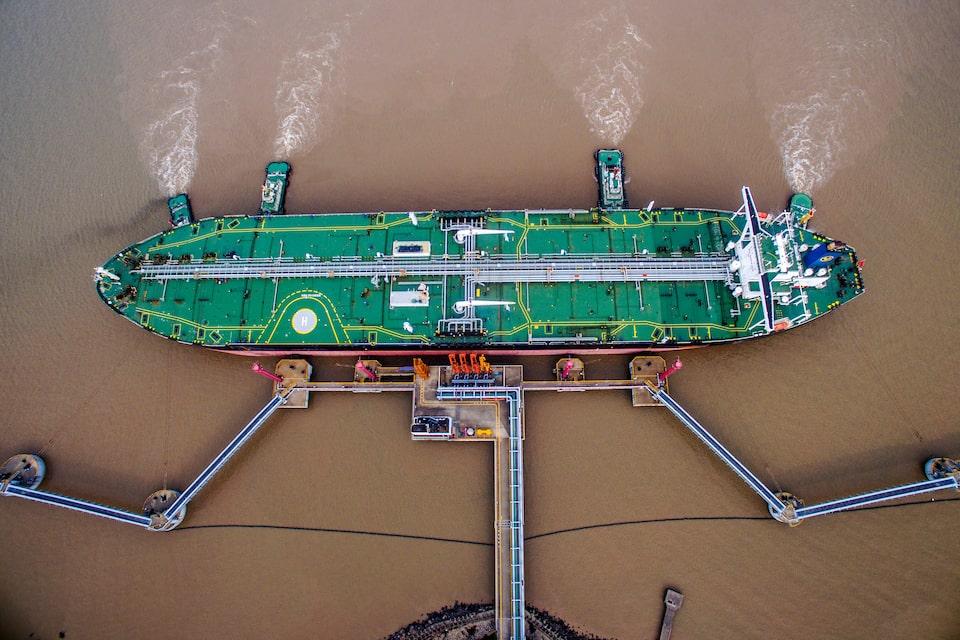
Oil rises on positive demand indicators from China, Saudi, Russia OPEC+ meets on July 6, expected to hike August output by 411,000 bpd Investors also watching for developments in US trade talks NEW YORK, July 1 (Reuters) - Oil prices edged higher on Tuesday as investors took stock of positive demand indicators, while also treading cautiously ahead of an OPEC+ meeting to decide the group's August output policy. Brent crude settled up 37 cents, or 0.6%, at $67.11 a barrel, while U.S. West Texas Intermediate crude settled 34 cents higher, or up around 0.5%, at $65.45 a barrel. Sign up here. The gains were likely due to supportive data from a private-sector survey in China, which showed factory activity returned to expansion in June, said Randall Rothenberg, a risk intelligence expert at U.S. oil brokerage Liquidity Energy. Expectations that Saudi Arabia will raise its August crude oil prices for buyers in Asia to a four-month high as well as firm premiums for Russian ESPO Blend crude oil were also supporting the notion of robust demand, Rothenberg said. Oil's gains were kept in check by expectations that the OPEC+ group will boost its August crude oil output by an amount similar to the outsized hikes agreed in May, June, and July. Four OPEC+ sources told Reuters last week the group plans to raise output by 411,000 barrels per day next month when it meets on July 6. "All eyes will be on OPEC+'s decision over the weekend, when the group is expected to add another 411,000 bpd of production in an effort to gain more market share, primarily over the U.S. shale producers," StoneX energy analyst Alex Hodes told clients. Besides gaining market share from U.S. shale producers, which pumped oil at a record pace in April, according to official data released on Monday, the group has also been trying to punish overproducing members. OPEC+ member Kazakhstan, one of the world's 10 largest oil producers, raised oil production last month to match an all-time high, a source familiar with the data told Reuters on Tuesday. Saudi Arabia, the de facto leader of the OPEC+ group, raised its June crude oil exports to the fastest rate in a year, data from Kpler showed. "These exports are flooding out even faster than the OPEC+ deal implies during the summer, when peak domestic demand typically keeps oil supplies closer to home," Hodes said. In the U.S., crude oil inventories rose by 680,000 barrels in the past week, according to sources citing figures from the American Petroleum Institute. Official data from the Energy Information Administration is due Wednesday at 10:30 a.m. ET. Investors are also watching trade negotiations ahead of U.S. President Donald Trump's tariff deadline of July 9. Trump on Tuesday said he is not thinking of extending the deadline. A trade deal with India was very close, Treasury Secretary Scott Bessent said on Tuesday. Trump also said the U.S. will possibly have a deal with India, but he added that he doubts there will be a deal with Japan. Bessent also warned countries could be notified of sharply higher tariffs , opens new tab despite good-faith negotiations as the July 9 deadline approaches, when tariff rates are scheduled to revert from a temporary 10% level to the ones Trump announced on April 2 and then suspended. The European Union wants immediate relief from tariffs in key sectors as part of any trade deal with the U.S., EU diplomats told Reuters. https://www.reuters.com/business/energy/oil-edges-down-expectations-more-opec-supply-tariff-fears-2025-07-01/
2025-07-01 00:15
G7 nations say they support Israel-Iran ceasefire Trump announced ceasefire a week ago G7 condemned threats against head of U.N. nuclear watchdog WASHINGTON/OTTAWA, June 30 (Reuters) - Foreign ministers from the Group of Seven nations said on Monday they supported the ceasefire between Israel and Iran and urged for negotiations to resume for a deal to address Iran's nuclear program, according to a joint statement. Since April, Iran and the U.S. have held talks aimed at finding a new diplomatic solution regarding Iran's nuclear program. Tehran says its program is peaceful and Israel and its allies say they want to ensure Iran cannot build a nuclear weapon. Sign up here. "We call for the resumption of negotiations, resulting in a comprehensive, verifiable and durable agreement that addresses Iran's nuclear program," the G7 foreign ministers said. Last week, Trump announced a ceasefire between U.S. ally Israel and its regional rival Iran to halt a war that began on June 13 when Israel attacked Iran. The Israel-Iran conflict had raised alarms in a region already on edge since the start of Israel's war in Gaza in October 2023. Before the ceasefire was announced, Washington struck Iran's nuclear sites and Iran targeted a U.S. base in Qatar in retaliation. The G7 foreign ministers said they urged "all parties to avoid actions that could further destabilize the region." U.S. Middle East Envoy Steve Witkoff has said talks between Washington and Tehran were "promising" and that Washington was hopeful for a long-term peace deal. The G7 top diplomats denounced threats against the head of the U.N. nuclear watchdog on Monday, after a hardline Iranian newspaper said IAEA boss Rafael Grossi should be tried and executed as an Israeli agent. On June 12, the U.N. nuclear watchdog's 35-nation Board of Governors declared Iran in breach of its non-proliferation obligations for the first time in almost 20 years. Israel is the only Middle Eastern country believed to have nuclear weapons and said its war against Iran aimed to prevent Tehran from developing its own nuclear weapons. Iran is a party to the Nuclear Non-Proliferation Treaty, while Israel is not. The U.N. nuclear watchdog, which carries out inspections in Iran, says it has "no credible indication" of an active, coordinated weapons program in Iran. https://www.reuters.com/world/middle-east/g7-urges-talks-resume-deal-iran-nuclear-program-2025-07-01/
2025-06-30 23:04
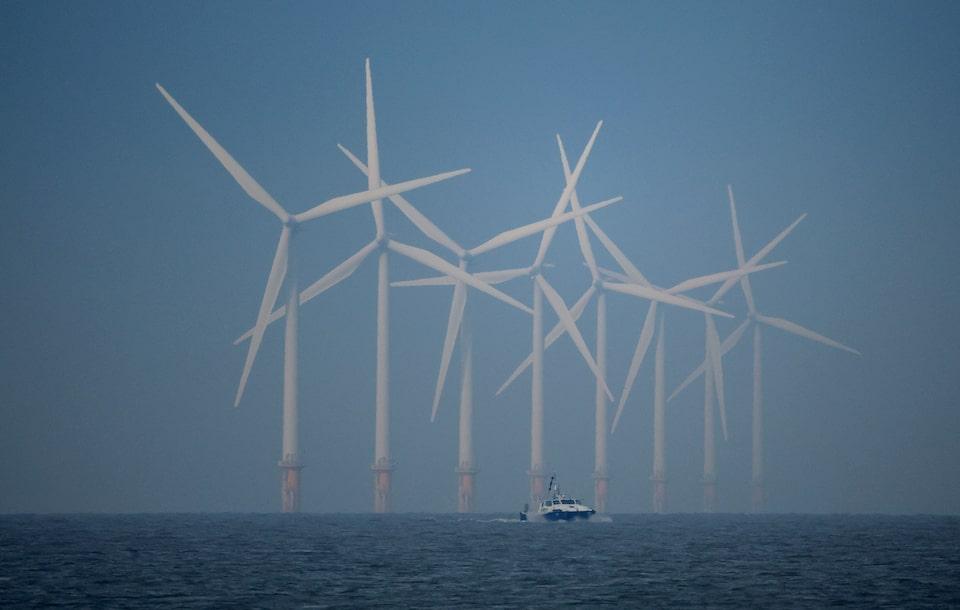
2024/2025 net profit little changed from previous year Crown Estate's profit mainly from offshore wind leases Revenue from Round 4 leases to decrease from January 2026 Profit considered Royal family's public funding benchmark LONDON, July 1 (Reuters) - The Crown Estate, which manages King Charles' public property, reported an annual net profit of 1.15 billion pounds ($1.57 billion) on Tuesday, similar to the previous year, with offshore wind leases its biggest source of revenue. The Crown Estate, which comprises tracts of land and most of Britain’s sea bed, is an independently run, commercial business, whose profit - seen as the benchmark for the level of public funding for the royal family - goes to the UK Treasury. Sign up here. Net revenue profit was 1.15 billion pounds for the year between April 1 2024 and March 31 2025, the company said in a statement. The bulk of revenue, around 1.07 billion pounds, came from the offshore wind farm leasing tender Round 4. The Crown Estate said revenue from the leasing round were expected to drop to 25 million pounds a year from January 2026 as more projects moved to the development stage. "We always knew the boost to our profits due to offshore wind leasing option fees from Round four was short term, and we expect this year to be the high point for these returns," Dan Labbad, CEO of the Crown Estate said in a briefing with journalists. Wind power, both on and offshore, was Britain's largest source of electricity last year providing around 30% of the country's power. But offshore wind costs have risen over the past few years due to inflation and supply chain bottlenecks, leading to the cancellation of some projects. In June, the Crown Estate said Equinor (EQNR.OL) , opens new tab and Gwynt Glas won seabed leases to build floating wind farms in the Celtic Sea in its latest lease auction round 5. Labbad said revenues from this round were expected to show materially from the early- to mid-2030s. Britain’s monarchy receives a sovereign grant to cover running costs of the royal households and travel expenses which is currently set at 12% of the profit from the Crown Estate. The grant amount for 2025-2026 will be 132 million pounds, government documents showed. ($1 = 0.7304 pounds) https://www.reuters.com/sustainability/climate-energy/britains-crown-estate-reports-profit-115-billion-pounds-led-by-offshore-wind-2025-06-30/
2025-06-30 21:54
Enbridge wants case heard in federal, not state, court Michigan aims to stop Straits of Mackinac pipeline's use June 30 (Reuters) - The U.S. Supreme Court agreed on Monday to hear Enbridge's (ENB.TO) , opens new tab bid to change the venue of Michigan's lawsuit seeking to force the Canadian pipeline operator to stop operating a pipeline underneath the Straits of Mackinac, waterways linking two of the Great Lakes, over environmental concerns. The justices took up Enbridge's appeal of a lower court's ruling rejecting the company's request to move the case from state court into federal court, a venue generally considered more friendly to defendants in such cases. Sign up here. The Supreme Court is due to hear the case in its next term, which starts in October. Calgary-based Enbridge has been locked in a long-running dispute with Michigan over the aging Line 5 pipeline, which ships 540,000 barrels per day of crude and refined products from Superior, Wisconsin, to Sarnia, Ontario. A four-mile (6.4-km) section of the aging pipeline runs underwater through the Straits of Mackinac, which connect Lake Michigan and Lake Huron, and environmentalists are concerned about the risk of an oil leak. The Cincinnati-based 6th U.S. Circuit Court of Appeals last year ruled that Enbridge waited too long to seek to have the lawsuit that was brought by Democratic Attorney General Dana Nessel in June 2019 removed to federal court when it tried to do so in November 2021. The lawsuit sought to enjoin Enbridge's continued operation of Line 5 based on alleged violations of state public nuisance and environmental laws. Nessel's office in court papers described the 6th Circuit's ruling as the correct result in a case in which Enbridge missed by more than two years the statutory deadline to try to transfer the litigation to federal court. Enbridge's lawyers in a petition to the Supreme Court said that the 6th Circuit's ruling added to a split within the regional U.S. appeals courts over whether the judiciary can create exceptions for a 30-day time limit to seek to remove cases filed in state court to federal court. That split has created untenable uncertainty in the law that resulted in defendants in some parts of the country being subject to the strict deadline while others were not, Enbridge told the Supreme Court. The U.S. Army Corps of Engineers last month said it expects to make a decision this fall on whether to grant a permit to Enbridge's proposal to build a tunnel to house the Line 5 pipeline. In April, Enbridge's Line 5 project received emergency designation after President Donald Trump declared a national energy emergency in a January executive order, giving the Army Corps the ability to fast-track its review of the project. Nessel filed the lawsuit in state court in Ingham County. While that case was being actively litigated before a state court judge, Michigan Governor Gretchen Whitmer, a Democrat, in November 2022 revoked an easement that allowed the pipeline to be operated and filed a lawsuit to enforce the revocation. Enbridge succeeded in getting that case transferred from state court to federal court, having argued that Whitmer's state-law claims raised federal questions related to foreign affairs and were potentially preempted by the federal Pipeline Safety Act and the Submerged Lands Act. A federal judge rejected Whitmer's bid to remand the case to state court in November 2021. Based partly on that order, Enbridge a month later moved to have Nessel's earlier lawsuit also transferred to federal court. Enbridge argued it could transfer the case 887 days after receiving Nessel's lawsuit based on a provision of the statute governing case removals that allows a case to be removed 30 days after an order from which it could be first determined a case could be heard in federal court. https://www.reuters.com/sustainability/climate-energy/us-supreme-court-hear-enbridges-venue-challenge-michigans-pipeline-case-2025-06-30/

2025-06-30 21:39
WASHINGTON, June 30 (Reuters) - Coal used to make steel got a break in the latest version of President Donald Trump's tax bill, a subsidy that could be worth hundreds of millions of dollars over 10 years for a fuel that is mostly exported to countries including China. In April, Trump signed executive orders that directed Chris Wright, the energy secretary and former fracking CEO, to determine whether metallurgical, or met, coal is a "critical mineral" which he did in May. Sign up here. In the latest version of Trump's so-called One Big Beautiful Bill that the Senate released over the weekend, met coal can claim an advanced manufacturing production tax credit, available for critical minerals, that would pay 2.5% of costs for the fuel. Sonia Aggarwal, CEO of Energy Innovation, a non-profit group, called allowing met coal to get the credit insane, as it could harm efforts to move to fuels that are less carbon-intensive. The subsidy would "send hundreds of millions of taxpayer dollars to China to subsidize dirty steel," Aggarwal said in a post on X. Robbie Orvis, a director of analysis at Energy Innovation, estimated that the credit could be worth $300 million to met coal producers sending coal to China over ten years and said the subsidy could help China compete with U.S.-made steel. Giving met coal the critical mineral classification, typically reserved for minerals needed for high-tech defense systems, could also set the table for Trump's use of emergency powers to raise production. Conor Bernstein, a spokesperson for the National Mining Association, said the bill supports U.S. jobs, manufacturing and the economy. "Providing incentives to spur steel-making coal production accomplishes each of those objectives." The Metallurgical Coal Producers Association of West Virginia did not immediately respond to requests for comment about how the tax credit would benefit producers. West Virginia, one of the top U.S. mining states, has suffered several met coal layoffs in recent months hitting hundreds of miners. In local media, Ben Beakes, the president of the West Virginia met coal association, has blamed the layoffs on inflation. https://www.reuters.com/sustainability/coal-used-make-steel-gets-break-trumps-tax-bill-2025-06-30/

2025-06-30 21:39
June 30 (Reuters) - Negotiators from more than a dozen major U.S. trading partners are rushing to reach agreements with U.S. President Donald Trump's administration by a July 9 deadline to avoid import tariffs jumping to higher levels, and Trump and his team kept up the pressure on Monday. With only a limited deal with Britain completed so far, Trump has repeatedly threatened just to send a series of letters to trading partners identifying what their new tariff rate will be after the deadline, and Treasury Secretary Scott Bessent said the risk of tariffs going up next week is real. Sign up here. "We have countries that are negotiating in good faith, but they should be aware that if we can't get across the line because they are being recalcitrant, then we could spring back to the April 2 levels," Bessent said on Bloomberg Television on Monday. "I hope that won't have to happen." Just over a week remains before tariffs ranging from 10% to 50% on goods from many other countries could be imposed if those countries fail to agree on bilateral trade deals in time. Trump on April 9 put a 90-day pause on the stiff levies he had announced the previous week that sent global financial markets into a tailspin. Stocks have rallied back to record highs since then on optimism that deals will be completed on time, or the deadline perhaps extended again. Here is where some of the key negotiations stand for several U.S. trading partners: EUROPEAN UNION The European Union Trade Commissioner Maros Sefcovic is flying to Washington on July 1 to meet with his U.S. counterparts, and has welcomed draft proposals from the U.S. Progress has been opaque, but the 27-member EU has said its regulations on social media and other technology companies, much stricter than those in the U.S., are not up for negotiation. The EU, meanwhile, is open to a U.S. deal that would apply a universal 10% tariff on many of its exports, but the bloc is seeking U.S. commitments to reduce tariffs in key sectors such as pharmaceuticals, alcohol, semiconductors, and commercial aircraft, Bloomberg reported. The EU is also pushing the U.S. to implement quotas and exemptions to effectively ease Washington's 25% tariff on automobiles and auto parts, as well as its 50% tariff on steel and aluminum, the report said, citing people familiar with the matter. JAPAN Japan says it is working to reach an agreement with the U.S. while defending its national interest. Trump, meanwhile, continues to accuse Japan of "unfair" automobile trade with the U.S., making it unclear how American importers of Japanese cars might avoid tariffs of 25%. Trump has also suggested Japan should import more U.S. oil, among other goods. On Monday, Trump said Japan could be among those he sends a letter to identifying its tariff rate after he complained about import restrictions it imposes on America-grown rice. "I have great respect for Japan, they won't take our RICE, and yet they have a massive rice shortage," he said in a Truth Social post. "We'll just be sending them a letter, and we love having them as a Trading Partner for many years to come." INDIA Early optimism has faded, with India-U.S. talks stalling on disagreements over U.S. tariffs on auto components, steel and agricultural goods. Indian trade officials in Washington have said they are willing to extend their stay, with the main sticking point being on whether India is willing to ease trade protections on dairy, almonds, pistachios, walnuts, soybeans and its other agricultural products and whether the U.S. will ease tariffs on imports of Indian steel and car parts. INDONESIA Accused by some other countries of excessive red tape, Indonesia eased import licensing requirements for some goods and waived import restrictions on plastics, chemical products and other industrial raw materials on June 30, seen as a gesture of goodwill towards Trump's July 9 deadline for trade talks. Indonesia has also invited the U.S. to jointly invest in a state-owned Indonesian minerals project as part of its tariff negotiations. SOUTH KOREA Despite frequent rounds of talks and some preliminary agreements, South Korea said it would seek an extension on Trump's July 9 deadline. South Korea already imposes virtually zero tariffs on U.S. imported goods under a free-trade agreement, and so the U.S. has focused on other issues, including foreign exchange rates and defense costs, with Trump often complaining about the cost-sharing arrangement for the 28,500 U.S. troops stationed in South Korea. THAILAND With the threat of Americans having to pay 36% tariffs to import Thai goods, Thailand has projected optimism about its talks with the U.S., its largest export market. Thailand's proposals have included reducing its own tariffs, purchasing more American goods and increasing investments. BRITAIN Britain has raced ahead of other countries: as of June 30, tariffs on U.S. imports of British cars are down to 10%, down from an earlier 27.5%, and removed entirely for aircraft engines and other aerospace goods. The two countries are still negotiating tariffs on British steel and aluminum, with Britain seeking to avoid the 50% tariffs the U.S. has imposed on importing these goods from many other countries. CHINA U.S.-China talks are on a different track, with a deadline for completing a wider agreement set for August. Talks between the two have faltered on the selling of rare earth minerals and magnets to the U.S., with China suspending those exports in response to Trump's tariffs announcement in April, upending global supply chains. In late June, the U.S. said it had reached an agreement with China to resume those exports while the two economic superpowers continue to negotiate a broader trade deal. https://www.reuters.com/business/autos-transportation/where-trade-talks-stand-with-major-us-partners-ahead-tariffs-hike-deadline-2025-06-30/


