2025-06-30 20:29
Charter would allow Circle to manage reserves, provide custody If approved, Circle would become second crypto firm with charter Move follows blockbuster IPO earlier this month June 30 (Reuters) - Stablecoin firm Circle (CRCL.N) , opens new tab is applying to create a national trust bank in the U.S., a major move after its blockbuster IPO valued the company at nearly $18 billion earlier this month. If the charter is granted by the U.S. Office of the Comptroller of the Currency, it would enable Circle to act as a custodian for its own reserves and hold crypto assets on behalf of institutional clients. Unlike traditional banks, the license would not allow Circle to take cash deposits or make loans. Sign up here. "Circle has long sought to seek the highest standards of trust, transparency, governance, compliance," CEO Jeremy Allaire told Reuters in an interview. "Becoming a publicly traded company is a significant part of that, becoming a national trust company is again a continuation of that." Circle's national trust bank entity would be called First National Digital Currency Bank, N.A. Crypto platform Anchorage Digital is currently the only digital asset company with a national trust bank charter. Circle issues the dollar-pegged stablecoin USDC. Stablecoins, a type of cryptocurrency designed to maintain a constant value, usually a 1:1 dollar peg, are commonly used by crypto traders to move funds between tokens. Their use has grown rapidly in recent years, and proponents say that they could be used to send payments instantly. Stablecoins are backed by assets such as U.S. dollars and short-term Treasury bills in order to maintain their peg to the dollar. Currently, Circle's reserves -- short-dated U.S. Treasury bills, overnight U.S. Treasury repurchase agreements and cash -- are held in custody at BNY (BK.N) , opens new tab and managed by BlackRock (BLK.N) , opens new tab. The new entity would manage Circle’s USDC reserves, although some reserves will continue to be held at major banks, Allaire said. The license would also allow Circle to provide custody services for digital assets on behalf of institutional customers. However, Allaire said it will focus on providing custody for assets like stocks and bonds that are represented via a token on a blockchain network, over traditional cryptocurrencies like bitcoin and ether. GOING MAINSTREAM The move from Circle comes as Congress gets closer to passing a bill to create a federal regulatory framework for stablecoins. If signed into law, the bill would require tokens to be backed by liquid assets and for issuers to publicly disclose the composition of their reserves on a monthly basis. The Senate passed the bill earlier this month, and the House of Representatives is poised to pass the legislation early this summer. U.S. President Donald Trump is expected to sign the bill into law. He has sought to overhaul cryptocurrency regulation after courting cash from the industry during his presidential campaign. Once signed into law, the bill could pave the way for more traditional financial institutions and retailers to incorporate stablecoins into their businesses, experts and analysts say. Circle is preparing for that eventuality, Allaire said. "We're going from the early-adopter phase of this technology into the mainstream," said Allaire. "As a public company, and now, hopefully if we are successful in getting approval from the OCC as a national trust, that will give us a foundation that the world's leading institutions are going to be comfortable building on." Wall Street brokerages began coverage of Circle on Monday with broadly bullish ratings, although some analysts voiced concerns about its elevated valuation given that the stock has more than doubled since its market debut. Barclays, Bernstein, Canaccord Genuity and Needham launched coverage with the equivalent of "buy" ratings and price targets above $200, while JPMorgan and Goldman Sachs had more bearish outlooks. https://www.reuters.com/sustainability/boards-policy-regulation/circle-applies-us-trust-bank-license-after-bumper-ipo-2025-06-30/
2025-06-30 20:25
TSX ends up 0.6% at 26,857.11, Rises 7.8% in second quarter Materials group adds 1.6% as gold climbs Nine of 10 major sector notch gains June 30 (Reuters) - Canada's main stock index rose on Monday to a record high, helped by gains for financial and gold mining shares, as the resumption of trade talks between Canada and the United States cheered investors. The S&P/TSX composite index (.GSPTSE) , opens new tab ended up 164.79 points, or 0.6%, at 26,857.11, eclipsing the record closing high it posted on Thursday. For the quarter, it was up 7.8%, its fourth straight quarterly advance, while it has gained 8.6% since the start of the year. Sign up here. The United States will resume trade negotiations with Canada immediately, White House economic adviser Kevin Hassett said. The move follows Ottawa scrapping its digital services tax targeting U.S. technology firms. Canada sends about 75% of its exports to the United States, including autos, steel and aluminum, which have been hit by hefty U.S. duties. "Trade talks are continuing. The government's not letting them go off the rails," said Colin Cieszynski, chief market strategist at SIA Wealth Management. "The market has climbed the wall of worry" in recent months as uncertainties related to trade policy and domestic politics started to clear, Cieszynski said. Canadian Prime Minister Mark Carney's Liberal Party retained power in April's general election, proposing sweeping changes to boost economic growth. The materials group, which includes fertilizer companies and metal mining shares, rose 1.6% on Monday as the price of gold climbed. Heavily weighted financials added 0.6% and technology ended 0.9% higher. Of 10 major sectors, only energy ended lower. It lost 0.5% as the price of oil settled 0.6% lower at $65.11 a barrel, weighed by easing Middle East risk and a possible OPEC+ output increase in August. https://www.reuters.com/world/americas/tsx-futures-inch-up-us-canada-trade-talks-revived-2025-06-30/
2025-06-30 20:17
Republican amendment would remove two contentious parts of Senate bill US Chamber of Commerce warns against new tax on solar, wind Building trades union warns of significant construction job losses Senators, groups say hobbling renewable energy will drive up energy prices WASHINGTON, June 30 (Reuters) - Republican Senator Joni Ernst has introduced an amendment to the U.S. Senate's tax and spending megabill that would change two of the most contentious parts of that bill and could give a small boost to wind and solar projects that had been targeted in the draft being debated on the Senate floor. The amendment introduced by Ernst, and supported by fellow Iowa Senator Chuck Grassley and Alaska Senator Lisa Murkowski, would remove the proposed new tax on wind and solar projects that start after 2027 and make the credits available based on projects' construction start date instead of when they enter service. Sign up here. The amendment will be introduced on the Senate floor during Monday's "vote-a-rama" - a marathon of votes on amendments to President Donald Trump's tax and spending bill that drew searing criticism from business and labor groups since they were unveiled over the weekend, with some arguing the moves could lead to power shortages, raise power prices and kill jobs. Ernst and Grassley represent Iowa, which receives more than 60% of its electricity from wind power. Other Republican senators may also back the amendment. The pushback to the Senate bill, which includes a swipe from Trump ally and Tesla (TSLA.O) , opens new tab CEO Elon Musk, comes as senators started voting on a potentially long list of amendments to the bill on Monday morning, giving renewable energy advocates on both sides of the political spectrum a last window to push for changes. "Taxing energy production is never good policy, whether oil & gas or, in this case, renewables," said Neil Bradley, policy director of the U.S. Chamber of Commerce, in a post on X over the weekend. "Electricity demand is set to see enormous growth & this tax will increase prices. It should be removed." "This would be incredibly destructive to America!" Musk posted on X, saying the cuts could endanger the development of energy-hungry artificial intelligence technology, among other things. Trump has said he intends to maximize U.S. energy production, with a focus on fossil fuels, in part to ensure the power industry can supply the AI industry's growth. But he has also promised to wipe out subsidies for renewables. The Senate bill would roll back incentives for wind, solar, batteries and other clean energy technologies created by President Joe Biden's 2022 Inflation Reduction Act, and add a new tax on these projects if they cannot prove their products are made without Chinese parts. Those provisions were harsher on the credits than the previous Senate version and even the House version. Energy analysis firm the Rhodium Group estimates that the excise tax on wind and solar would increase their cost by 10-20% on top of losing the tax credits. Those additional costs would be passed on to consumers, Rhodium said. South Korean solar energy company Qcells, which has invested $2.5 billion in U.S. solar manufacturing, said it supports a change in the bill to give access to credits based on construction start dates rather than "placed-in'serve" dates but wants to retain the creation of an excise tax to benefit U.S. manufacturing. “Manufacturers have invested billions of dollars to build the solar supply chain in America. The Senate must protect those investments and the tens of thousands of jobs we as an industry have created. If they don’t, we forfeit our industry back to China,” said Marta Stoepker, spokesperson for Qcells. Energy Secretary Chris Wright on Monday morning seemed to brush off warnings about the loss of generation capacity amid soaring demand. "The more we load our grid with intermittent generation, the worse the grid performs during times of maximum demand," he posted on the social media platform. "The One Big Beautiful Bill will help end wasteful subsidies and deliver more reliable energy for the American people!" In Texas, however, grid operator ERCOT said at its Board of Directors meeting last week that the state of the grid is strong , opens new tab and "ready for the challenges of extreme weather” this summer because of the new generation that has come online, and cited new large-scale solar energy and battery storage. JOB LOSSES, HIGHER BILLS Sean McGarvey, president of the North America’s Building Trades Unions, blasted the bill's impact on jobs. "If enacted, this stands to be the biggest job-killing bill in the history of this country. Simply put, it is the equivalent of terminating more than 1,000 Keystone XL pipeline projects," he said in a statement, referring to an oil pipeline project blocked by Biden’s administration. Republican Senator Thom Tillis of North Carolina, one of two Republicans who voted against advancing the bill, warned that it will cause power shortages by hamstringing renewable energy and battery storage. Tillis drew ire from Trump for voting against the motion and has since said he does not plan to run for re-election. "What you have done is create a blip in power service, because there isn't going to be a gas-fired generator anytime soon," he said on the floor. Tillis said the bill ignores the reality of the soaring demand for power by data centers. Brian Schatz, a Democratic Senator from Hawaii, said the bill would increase prices. "You don't have to love clean energy or be an environmentalist to understand that this is a basic question of supply and demand," he said. https://www.reuters.com/sustainability/climate-energy/us-senate-bills-clean-energy-cuts-draw-backlash-labor-business-2025-06-30/
2025-06-30 20:00
Hottest opening day ever at Wimbledon Temperature soars to 32.23 degrees Wimbledon's heat rule applied LONDON, June 30 (Reuters) - Wimbledon experienced its hottest-ever start on a scorching Monday as temperatures climbed to 32.3 degrees Celsius and transformed the All England Club into a sizzling spectacle of sun hats, shade-seekers and fans reaching for water bottles. Carlos Alcaraz battled to victory over Italian Fabio Fognini on a searing Centre Court in the evening but not before play was stopped for over 15 minutes in the fifth set after a woman in the stands needed medical attention and left on a wheelchair. Sign up here. The All England Club said the air temperature, confirmed by the French meteorological administration Meteo France, eclipsed the previous opening-day high of 29.3 degrees set at the start of the 2001 edition. Fans were left feeling like they were in the Australian Open furnace rather than London as Monday's temperature threatened to surpass the tournament record of 35.7 degrees, which was reached in 2015. Alcaraz was frequently reaching for an ice-packed towel during his clash with Fognini, as did a number of other players on the various courts, with spectators almost looking on in envy as they could only fan themselves to ease the oppressive heat. Wimbledon's heat rule was applied and players were allowed to take 10-minute breaks during their matches. Daniil Medvedev slumped to a four-sets defeat against the unheralded Benjamin Bonzi and the Russian ninth seed said the conditions had made it difficult for both players. "Physically it was not easy ... I mean, I'll never say he won because of the heat," Medvedev said. "But the heat is not easy to play. I do think if you ask him, probably he was not enjoying the heat either." 'CLOSE TO RIO' Brazilian teenager Joao Fonseca said he felt more at home under the unforgiving sun as he sent local hope Jacob Fearnley packing in three sets. "For me it was hot. Actually close to Rio sometimes. In the summer, Rio is very hot. I'm more used (to it) than the European people," the 18-year-old said. Fearnley's compatriot Cameron Norrie was taking no chances, with a proper plan formulated to deal with what he described as a "shock to the system" during his four-set win over Spaniard Roberto Bautista Agut. "Obviously just tried to drink as much as I could. It was really key to keep the bottles cold ... I had to bring like a little thermal thing to keep the bottles in," Norrie said. "A few times I was asked to fill up the water, and it was warm water. It was quite tough for me to really stay cool on the court. They did a really good job with the ice towels. That was amazing, but it was tough. "I'm a guy that sweats a lot. I was definitely feeling the heat today. It was a bit of a shock to the system with that, but I did everything I could with the resources I had to do my best with the hydration and everything." Organisers said apart from making sure there was plenty of ice on courts and having more than 100 water points around the grounds, there were also protocols in place for the ball kids, with all of them protecting their necks with cooling scarves. "We'll be rotating them more if we feel we need to," All England Club Chief Executive Sally Bolton told reporters in the morning as she outlined the club's preparedness. "For colleagues working around the grounds, we've got plenty of changes in shift patterns to make sure that they are getting regular breaks. "For the guests that will be joining us, we're offering the same advice as medical professionals - Come prepared, bring a hat, wear sunscreen, wear light clothing if you can, and take breaks out of the sun. "We've got a significantly sized medical team, so we've got people to help if needed. We're not used to these temperatures. But we are absolutely ready for it and actually delighted that it's sunny and not wet like it was last year." https://www.reuters.com/sports/tennis/fans-take-cover-scorching-first-day-wimbledon-2025-06-30/

2025-06-30 19:46
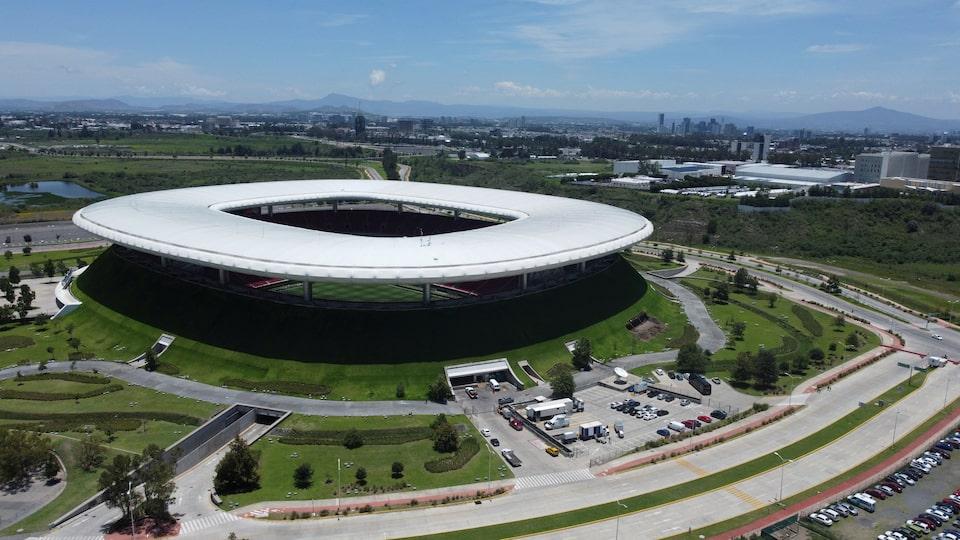
MIAMI, June 30 (Reuters) - Global players' union FIFPRO is exploring whether extending halftime to 20 minutes and introducing more frequent cooling breaks could better protect players from extreme heat. Nine of the 16 host cities for the 2026 World Cup face conditions considered “extreme risk” for heat-related illness. Sign up here. Atlanta, Boston, Dallas, Guadalajara, Houston, Kansas City, Miami, Monterrey and Philadelphia are expected to face dangerous levels of heat and humidity, posing player safety concerns and fueling calls for mandatory cooling aids or schedule changes. FIFPRO’s heat risk assessments are based on wet bulb globe temperature (WBGT), a measure combining temperature, humidity, solar radiation and wind speed to estimate how environmental conditions affect the body’s ability to cool itself. Under FIFPRO guidelines, a WBGT reading above 28 degrees Celsius indicates conditions in which matches should be postponed or rescheduled to protect players’ health. By comparison, world soccer governing body FIFA’s own guidelines set the extreme risk threshold higher, at 32 degrees Celsius WBGT – but even by that standard, six of the nine cities are still projected to exceed safe limits. Major League Soccer in the U.S. has a threshold of 29 degrees Celsius WBGT. “Cooling breaks at the 30th minute and 75th minutes are quite traditional, but from a physiological point of view it does not make sense,” said Vincent Gouttebarge, FIFPRO’s Medical Director. “Even if you ingest more than 200 millilitres of fluid, you already cannot take it all. So I would definitely like to see some project where we look at the efficacy of perhaps more frequent but shorter cooling breaks – every 15 minutes, rather than only one during each half.” LONGER HALFTIMES Gouttebarge also questioned whether the traditional 15-minute halftime interval is sufficient when matches are played in extreme heat. “You can imagine that halftime of 15 minutes might not be enough in order to decrease the core temperature,” he said. “It could be a halftime of 20 minutes which would be significant. That has been shown in the laboratory and FIFPRO, together with the national union in Portugal in August, we are going to test this kind of mitigation strategy.” The urgency of stronger heat protocols became clear at this month’s Club World Cup where two matches -- Benfica-Bayern Munich in Charlotte and Chelsea-Esperance in Philadelphia exceeded the WBGT threshold FIFPRO considers unsafe. “According to our position, those games should have been postponed later that day or rescheduled,” Gouttebarge said. FIFPRO officials acknowledged that FIFA has responded constructively during the tournament by lowering thresholds for mandatory cooling breaks and improving pitch-side hydration, but stressed that proactive planning is critical. “FIFA have been quite responsive once the tournament was under way,” said Alex Phillips, FIFPRO General Secretary. “They have actually modified how they’ve been dealing with heat during the matches based on FIFPRO’s input, which is credit to the work of the team. Obviously, it would have been better if that happened in advance, but it’s better that they have adapted.” FIFPRO warned that the risks highlighted at the Club World Cup are a preview of what players could face at the expanded 2026 World Cup. “This is not just affecting the Club World Cup, but also future tournaments either in the U.S. or elsewhere in the world,” said Alexander Bielefeld, FIFPRO Director of Policy & Strategic Relations. “We need a better balance between commercial interests and the health and safety of players,” he added referring to earlier kick-off times to accommodate European television audiences. https://www.reuters.com/sports/soccer/fifpro-mulls-20-minute-halftimes-more-cooling-breaks-amid-extreme-heat-2025-06-30/
2025-06-30 19:27
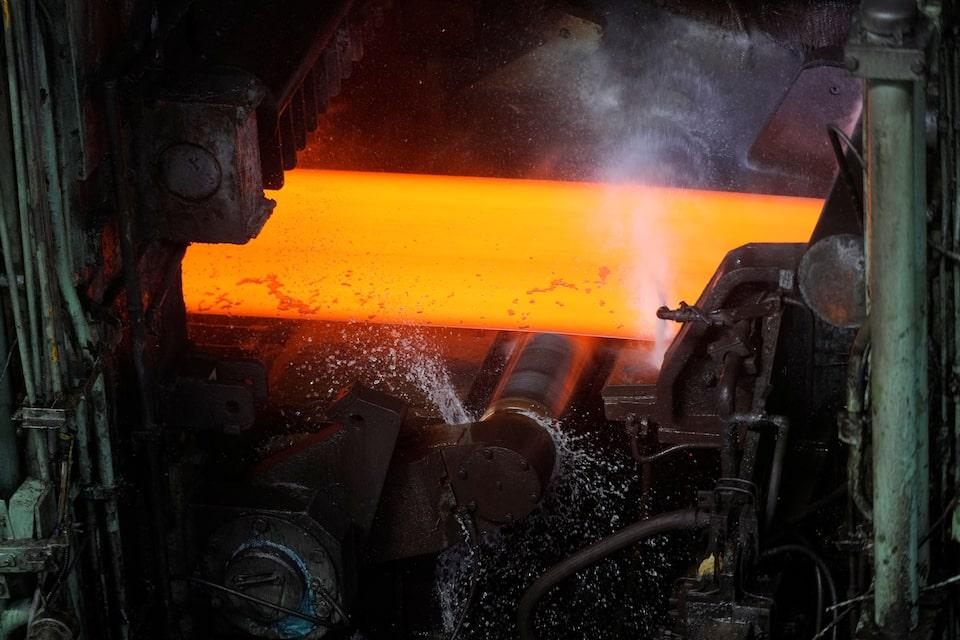
SAO PAULO, June 30 (Reuters) - Brazil's government will launch an investigation into suspected export "dumping" of some hot-rolled steel products from China, India and Indonesia, its official gazette said on Monday. Preliminary studies have found the sufficient evidence of dumping as well as resulting damage to its domestic steel industry, the document said. Sign up here. Steelmakers in Latin America's largest economy have long complained of an unfair playing field, saying that China floods the market with cheap material and calling on the government to do more to control those imports. https://www.reuters.com/world/china/brazil-investigate-hot-rolled-steel-export-dumping-china-india-2025-06-30/