2025-06-30 19:08
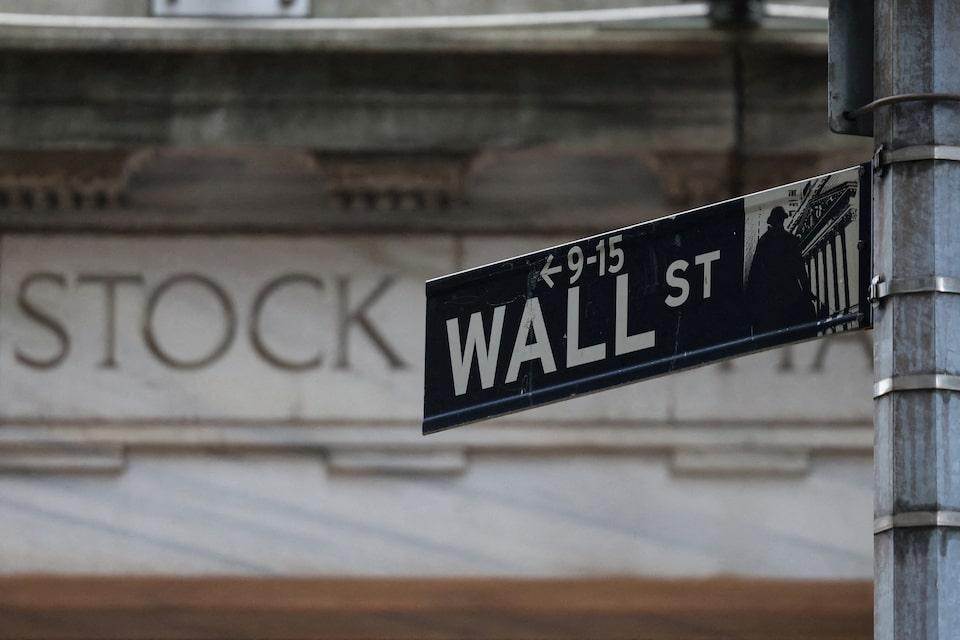
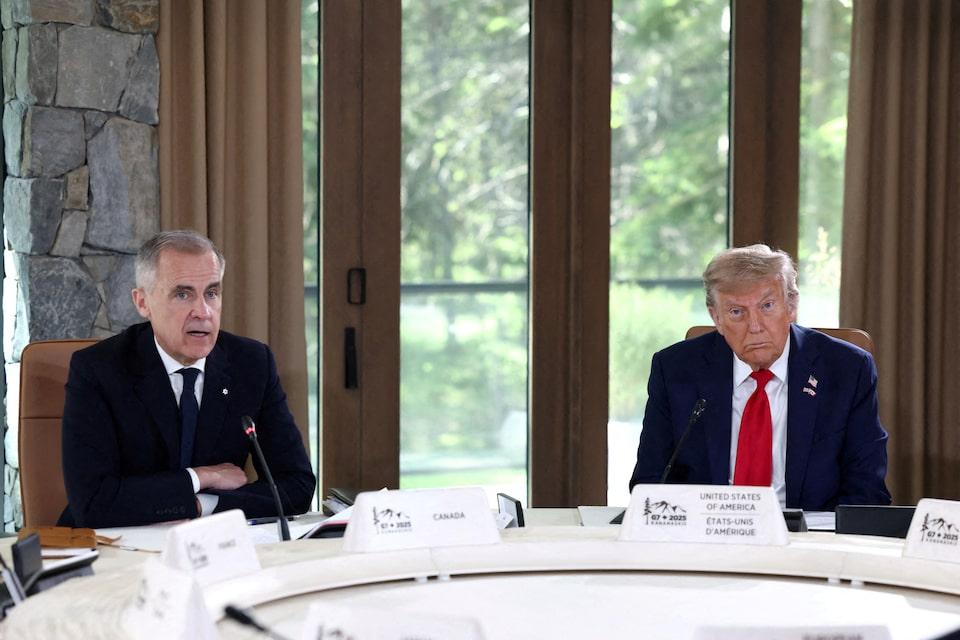
White House says Carney 'caved' to US demands Canada's government hopes for economic deal with US by July 21 White House adviser says US-Canada trade talks to resume Business groups laud tax truce between Ottawa, Washington Canada Conservative leader says Carney needs to defend Canadian sovereignty OTTAWA/WASHINGTON, June 30 (Reuters) - The United States will resume trade negotiations with Canada immediately after Ottawa scrapped its digital services tax targeting U.S. technology firms, White House economic adviser Kevin Hassett said on Monday. "Absolutely," Hassett said on Fox News Channel when asked about the talks restarting. Sign up here. White House press secretary Karoline Leavitt told reporters that Canadian Prime Minister Mark Carney called U.S. President Donald Trump on Sunday evening to tell him the tax was being dropped, calling it a big victory for U.S. tech companies. "Very simple. Prime Minister Carney in Canada caved to President Trump and the United States of America," she said, crediting Trump's hard-line negotiating style for the shift. "President Trump knows ... that every country on the planet needs to have good trade relationships with the United States, and it was a mistake for Canada to vow to implement that tax that would have hurt our tech companies here in the United States," she said. Trump had asked Canada to drop the tax at a G7 meeting in Canada earlier in June, Hassett said. "It's something that they've studied, now they've agreed to, and for sure, that means that we can get back to the negotiations." Canada halted its plans to begin collecting a new digital services tax targeting U.S. technology firms just hours before this was due to start on Monday in a bid to advance stalled trade negotiations with the U.S. Canada's finance ministry said late on Sunday that Carney and Trump would resume trade negotiations in order to agree on a deal by July 21. "Thank you Canada for removing your Digital Services Tax which was intended to stifle American innovation and would have been a deal breaker for any trade deal with America," U.S. Commerce Secretary Howard Lutnick responded in a post on X. Stocks hit record highs on Wall Street on Monday morning as sentiment in the markets rose amid optimism about U.S. trade negotiations with key partners, including Canada. U.S. Treasury Secretary Scott Bessent also struck an optimistic tone over the potential for "a flurry" of trade deals ahead of a July 9 deadline, after which 10% U.S. tariff rates on imports from many countries are set to snap back to Trump's April 2 announced rates of 11% to 50%. But Bessent, speaking on Bloomberg Television, warned that countries may not get extensions from that deadline, even if they are negotiating in good faith as he suggested previously. Any extensions would be up to Trump himself, Bessent said. Leavitt said Trump was meeting his trade team this week to set tariff rates for those countries that weren't negotiating. "He is going to set the rates for many of these countries if they don't come to the table to negotiate in good faith, and he is meeting with his trade team this week to do that," she said. Trump abruptly called off trade talks with Canada on Friday over Ottawa's digital services tax, saying it was a "blatant attack." He reiterated this on Sunday, pledging to set a new tariff rate on Canadian goods within the next week, which threatened to push U.S.-Canada relations back into chaos after a period of relative calm. "We have countries that are negotiating in good faith, but they should be aware that if we can't get across the line because they are being recalcitrant, then we could spring back to the April 2 levels," Bessent said. "I hope that won't have to happen." TRADE U-TURN Trump and Carney met at the G7 summit, with the Canadian prime minister saying they had agreed to wrap up a new economic agreement within 30 days. Canada's planned digital tax was 3% of the digital services revenue a firm takes in from Canadian users above $20 million in a calendar year, and payments were to be retroactive to 2022. It would have impacted giant U.S. technology firms, including Amazon.com (AMZN.O) , opens new tab, Meta (META.O) , opens new tab, Alphabet's Google (GOOGL.O) , opens new tab and Apple (AAPL.O) , opens new tab. The tax collection slated for Monday will be halted, a statement from Canada's finance ministry said. Finance Minister Francois-Philippe Champagne will bring forward legislation to rescind the Digital Services Tax Act. Canadian business groups applauded Carney's decision as well as the U.S. Congress' removal of a "revenge tax" provision from Republican tax legislation, known as 899. "The decision to eliminate the DST makes sense. This tax would have fallen on Canadian consumers, businesses, and investors in the form of higher costs and hurt our economy at a critical time," said David Pierce, vice president of Government Relations at the Canadian Chamber of Commerce in a statement. Some observers said Carney's decision ran counter to his campaign promises, however. Carney's Liberal party won an election in April pledging to stand up to Trump. "It feels like we're standing down really quickly," said Vass Bednar, managing director of the Canadian Shield Institute for Public Policy, a think tank. Opposition Conservative Party leader Pierre Poilievre said Carney needs to demand concessions from Trump. "Canadians need certainty that Liberals will put Canada First and defend Canadian sovereignty in these negotiations," Poilievre said on X. Canada is the second-largest U.S. trading partner after Mexico, and the largest buyer of U.S. exports. It bought $349.4 billion of U.S. goods last year and exported $412.7 billion to the U.S., according to U.S. Census Bureau data. Canada had escaped Trump's broad tariffs imposed in April but still faces other duties, including 50% on steel and aluminum exports to the United States. https://www.reuters.com/world/americas/canada-rescinds-digital-services-tax-bid-advance-trade-talks-with-us-2025-06-30/
2025-06-30 18:09
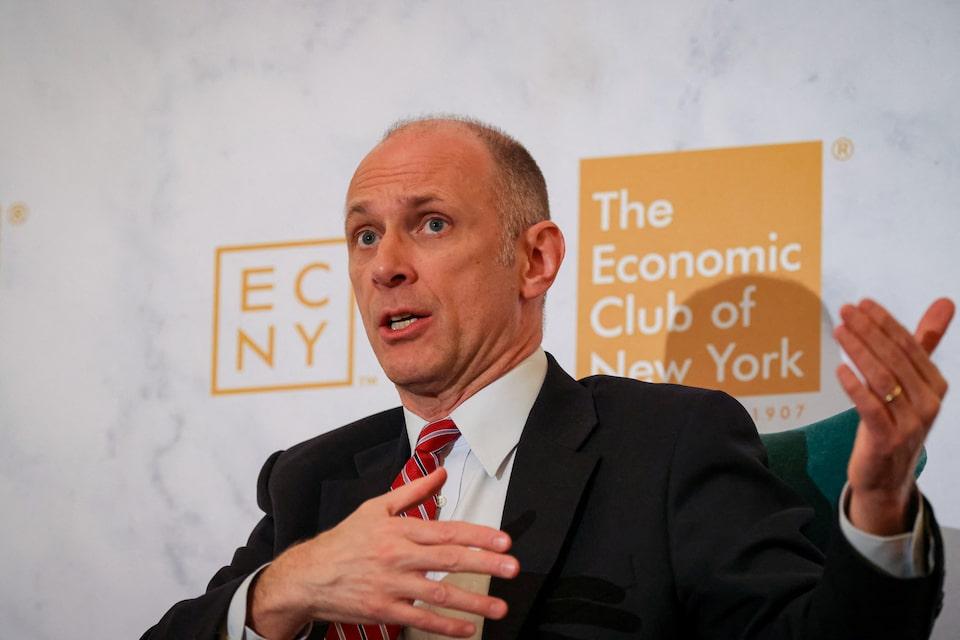
June 30 (Reuters) - Chicago Federal Reserve Bank President Austan Goolsbee on Monday said that with unemployment near 4% and inflation around 2.5% and falling, he sees no possibility that tariffs or another supply-side shock could in the near term cause actual 1970s-style stagflation, when the unemployment was double today's rate and inflation was above 13%. "But there's definitely the possibility of both things getting worse at the same time," Goolsbee said at the Aspen Ideas Festival in Aspen, Colorado, referring to unemployment and inflation. "And there you usually say, well, how long is each side's discrepancy going to last? Do you think it's temporary or do you think it's permanent? And how big is each side...that's the way I think about it." He did not give a forecast for those variables. Sign up here. https://www.reuters.com/business/feds-goolsbee-sees-no-stagflation-definitely-things-could-get-worse-2025-06-30/
2025-06-30 18:03
Robinhood shares hit record high Company also planning OpenAI, SpaceX tokens Rolls out perpetual futures, staking June 30 (Reuters) - Robinhood (HOOD.O) , opens new tab said on Monday it has launched tokens that will allow its customers in the European Union to trade more than 200 U.S. stocks and exchange-traded funds, including Nvidia (NVDA.O) , opens new tab, Apple (AAPL.O) , opens new tab and Microsoft (MSFT.O) , opens new tab. The commission-free tokens can be traded around-the-clock, five days a week. Robinhood also plans to offer tokens linked to stocks of privately-held companies, starting with Sam Altman's OpenAI and Elon Musk's SpaceX, the trading platform's top executives said at its keynote event in France. Sign up here. Robinhood's shares hit a record high and were last up nearly 10%. The tokens will be issued through a partnership with blockchain firm Arbitrum. With the move, the company stands to benefit from rising global interest , opens new tab in the U.S. stock market — home to some of the world's most influential tech giants and leading beneficiaries of the AI boom. Tokenized equities mix traditional finance with crypto-like trading, and have been gaining traction among international investors due to better access, flexible trading hours and lower costs. Experts believe such tokens could dramatically alter the securities investing landscape, though they currently lack regulatory clarity in the United States. Menlo Park, California-based Robinhood plans to eventually develop its own blockchain that will expand trading hours for tokens to 24/7 from 24/5 currently. The company will also expand the number of available stock tokens to "thousands" by the end of the year, Tenev said at the event. "Tokenization is going to open the door to a massive trading revolution," he said. Last month, crypto exchange Kraken also launched equities-linked tokens for non-U.S. investors. EXPANDING CRYPTO TOOLS Robinhood also announced several new product offerings, including crypto perpetual futures for its EU customers and staking for U.S. users. The perpetual futures will allow users to make leveraged bets on the prices of cryptocurrencies. Unlike traditional futures, they have no expiry date. Rival Coinbase (COIN.O) , opens new tab will also begin offering similar tools to U.S. customers from next month. Meanwhile, staking lets customers lock up their cryptocurrency to help validate transactions on the blockchain, earning rewards in return. The practice had been controversial in recent years, until the Securities and Exchange Commission's staff last month said some forms of staking are not securities offerings. https://www.reuters.com/business/robinhood-launches-tokens-allowing-eu-users-trade-us-stocks-2025-06-30/

2025-06-30 17:53
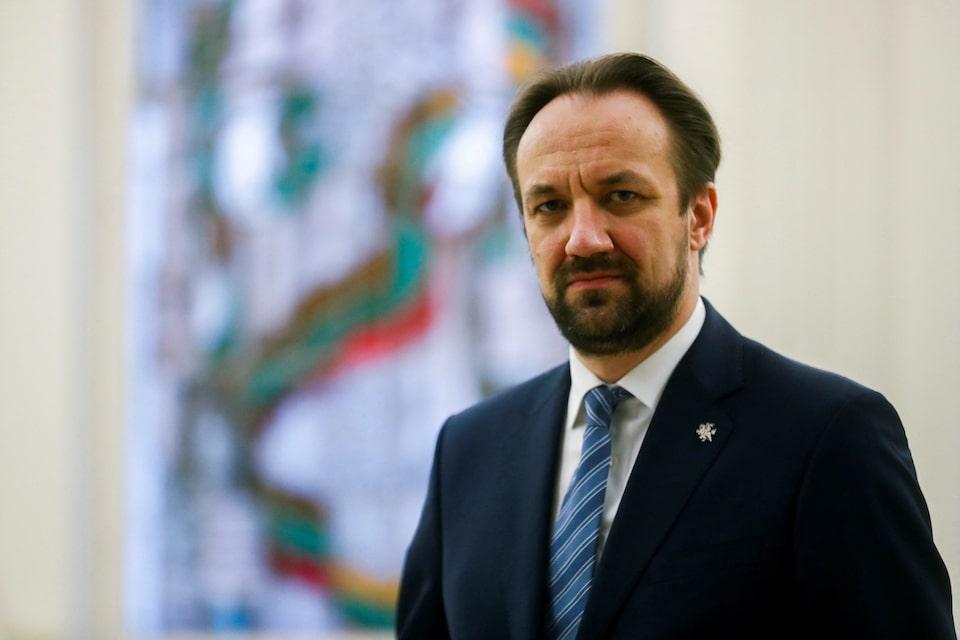
SINTRA, Portugal, June 30 (Reuters) - The European Central Bank may not have all the information it needs, including on the trade outlook, by September, making any interest rate cut more likely to come later in the year, ECB policymaker Gediminas Šimkus told Reuters. After cutting interest rates seven times in a row as inflation fell, the ECB has hinted at a pause at its next meeting so it can wait for the fog surrounding trade negotiations between the euro zone and the United States to clear. Sign up here. With these talks still unresolved, Simkus, the Lithuanian central bank governor, said a pause in July was "very likely" and signalled the ECB might be on hold for longer. "I don't know if we'll have all the information we need by September, but I remain open to every possibility," Simkus said in an interview on the sidelines of the ECB's Forum on Central Banking in Sintra, Portugal. "I believe a move, if any, is more likely towards the end of the year." Following the ECB line, Simkus said the central bank would decide "meeting by meeting" and avoid any precommitment given the "unpredictable environment". "Uncertainty hasn’t receded but grown,” he said. The ECB's June projection showed inflation at the ECB's 2.0% target this year, before dipping to 1.6% the next and returning to 2.0% in 2027. Simkus said that scenario still held. "Nothing has fundamentally changed since June," Simkus said. "The September projections may be fairly similar to June’s, maybe except the euro is even stronger.” https://www.reuters.com/business/finance/ecb-more-likely-wait-until-year-end-cut-rates-simkus-says-2025-06-30/
2025-06-30 16:34
NEW YORK, June 30 (Reuters) - Surging U.S. government debt may sap investor appetite for key U.S. assets like long-dated Treasuries and the dollar, bolstering the case for turning to opportunities beyond U.S. borders, BlackRock said on Monday. President Donald Trump's tariffs spurred market volatility this year and raised doubts over the dollar's status as the world's reserve currency. Fears of de-dollarization remain far-fetched but rising government debt could increase that risk, said fixed income executives at the world's largest asset manager. Sign up here. "We’ve been highlighting the precarious position of the U.S. government’s indebtedness for some time now, and, if left unchecked, we view debt as the single greatest risk to the 'special status' of the U.S. in financial markets," they said in a third-quarter fixed income outlook note. Congress is debating a tax and spending bill that is a key element of Trump's economic agenda and that non-partisan analysts say will add up to $5 trillion over the next decade to the U.S. federal government debt pile of more than $36 trillion. Higher government debt could reduce the correlation between the direction of long-dated Treasury yields and monetary policy in the United States, BlackRock said, with yields rising despite the Federal Reserve cutting interest rates. Increased supply of U.S. government debt is likely to be met with lower demand from the Fed as well as foreign central banks. That argues for diversification outside of the U.S. government bond market and for more exposure to short-dated U.S. Treasuries that could benefit from interest rate cuts, the asset manager said. "Despite proposed spending cuts, deficits are still climbing - and more of that spending is now going toward interest payments," said BlackRock's investment managers. "With foreign investors stepping back and the government issuing more than half a trillion dollars of debt weekly, the risk of private markets being unable to absorb this debt and consequently pushing government borrowing costs higher, is tangible," they added. https://www.reuters.com/world/us/rising-government-debt-poses-greatest-risk-us-market-standing-says-blackrock-2025-06-30/
2025-06-30 15:21
Market uncertainties from trade war and high interest rates impact M&A Dealmakers optimistic about the rest of the year Asia sees record number of M&A deals over $10 billion NEW YORK, June 29 (Reuters) - Mergers and acquisitions during the first half of this year were not what investment bankers had hoped for, but a burst of big deals in Asia and renewed optimism in U.S. markets could be paving the way for megadeals. Market uncertainties stemming from U.S. President Donald Trump's trade war, high interest rates and broader geopolitical tensions hampered — but did not completely derail — what bankers expected to be a blockbuster year for global M&A, dealmakers say. Sign up here. Trump's tariff policies, kicked off by his self-styled "Liberation Day" on April 2, cast a chill over the markets and pushed several deals and initial public offerings into subsequent quarters. "The expectation was we would see a lot of deal activity in the first half of 2025, and the reality is we didn't see it," said Tommy Rueger, global co-head of equity capital markets at UBS, which Dealogic ranked No. 9 in equity capital markets revenue, according to preliminary data from January 1 through June 27. Interviews with more than a dozen top bankers signal growing confidence that the worst of the market turbulence is over. Fresh record closing highs for the S&P 500 and Nasdaq indexes have helped renew optimism that M&A in the second half of the year will be even stronger, dealmakers say. "There were a lot of deals that were put on hold that will come back," said Ivan Farman, co-head of global M&A at Bank of America, which was ranked No. 3 in overall investment banking revenue and No. 5 for M&A in Dealogic's year-to-date rankings. "I'm optimistic about the second half." There is reason for optimism, dealmakers say, with the recovery in the markets and Trump's easier antitrust policies paving the way for bigger deals. "The probability of very large transactions, perhaps $50 billion-plus, has increased versus a year ago," said John Collins, global co-head of Mergers & Acquisitions at Morgan Stanley, which was ranked No. 4 in overall fee revenue among investment banks and No. 3 for M&A deals. Some $2.14 trillion in deals were signed from January 1 through June 27, up 26% from the same period last year. Part of that increase, however, came from Asia, where activity more than doubled to $583.9 billion. Deal activity in North America rose to $1.04 trillion from January 1 through June 27, up 17% from the first half last year, according to preliminary data from Dealogic. Market volatility, as measured by the VIX index (.VIX) , opens new tab, has dropped to levels that indicate investors feel safer to invest today. "It's been clear that momentum continues to build, paving the way for larger transactions. People are feeling more positive than they were a month ago and starting to implement their decisions," said Philip Ross, vice chairman of Jefferies bank. As the markets calm down, institutional investors are starting to jump back in to equities and more companies are moving forward with IPO plans that had been postponed earlier this quarter. “The combination of all of those together has created, over the last three to four weeks, an incredibly strong new issue backdrop and we’ve seen a significant uptick in activity," Rueger said. Saadi Soudavar, head of equity capital markets for Europe, Middle East and Africa at Deutsche Bank, added: "Equity markets have shown a remarkable ability to shrug off a lot of the tariff and geopolitical related volatility." MORALE BOOSTERS A few big deals helped boost market morale at the height of tariff turmoil, including Global Payments' $24.25 billion acquisition of a card processing and account services firm in April. Charter Communications (CHTR.O) , opens new tabin May agreed to buy privately held rival Cox Communications for $21.9 billion. And U.S.-based equipment manufacturer Chart Industries GTLS.N and Flowserve Corp (FLS.N) , opens new tab agreed to merge, valuing the combined company at about $19 billion. There were 17,528 deals signed during the first half of this year, compared with 20,583 deals in the same period last year, according to Dealogic. But this year's deals were bigger in size, pushing the total value of deals higher. There was a 62% increase in the number of $10 billion-plus deals versus the same period last year, the data shows. Dealmaking in Asia was a bright spot. Overall M&A activity rose to $583.9 billion in the first six months, up from $269.9 billion a year ago. Led by Japan and China, the region accounted for 27.3% of the global M&A activity, gaining more than 11 percentage points from the same period last year. Some of the region's biggest deals were kept within the Asia-Pacific region. Toyota Motor (7203.T) , opens new tab announced plans on June 3 to take one of its suppliers private for $33 billion. On June 16, a consortium led by Abu Dhabi's National Oil Company (ADNOC) launched an $18.7 billion all-cash takeover of Australia's second-largest oil producer Santos (STO.AX) , opens new tab. Asia also helped drive global equity issuance higher despite the market volatility, with overall volume rising nearly 8% to $350 billion from the same period last year. "You will see more Asia-to-Asia activity," said Raghav Maliah, global vice chairman of investment banking at Goldman Sachs, which was ranked No. 2 in overall investment banking fees and No. 1 in M&A revenue. "Japan has been a big driver in all the deal volumes (in Asia) and we do believe that trend will continue." https://www.reuters.com/business/finance/larger-deals-power-global-ma-h1-bankers-signal-appetite-megadeals-2025-06-30/