2025-06-30 06:47
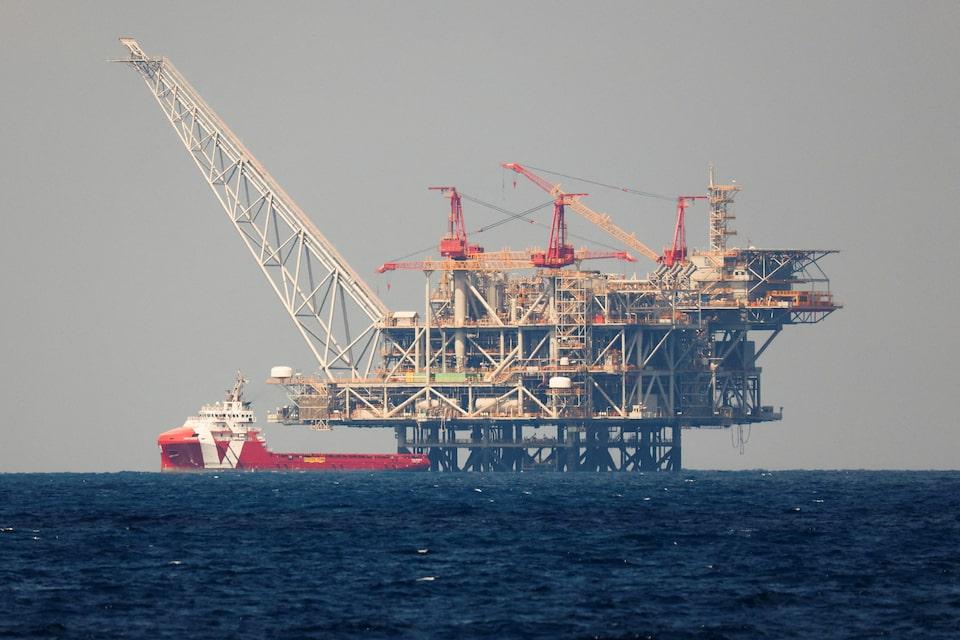
COPENHAGEN, June 30 (Reuters) - Equinor (EQNR.OL) , opens new tab has made an oil discovery on its Johan Castberg oilfield in the Arctic Barents Sea, the company and the Norwegian Offshore Directorate said on Monday. According to preliminary estimates, the size of the discovery is between 9 and 15 million barrels of oil, the Norwegian company said in a statement. Sign up here. "Only a short time after Johan Castberg came on stream and is producing at full capacity, we have made a new discovery that can provide additional reserves for the field," Equinor's head of Exploration and Production North, Grete Birgitte Haaland, said. The partners in the Johan Castberg licence are operator Equinor with a 46.3% stake, while Vaar Energi (VAR.OL) , opens new tab holds 30% and Petoro owns the remaining 23.7%. https://www.reuters.com/business/energy/equinor-makes-oil-discovery-arctic-barents-sea-2025-06-30/
2025-06-30 06:28
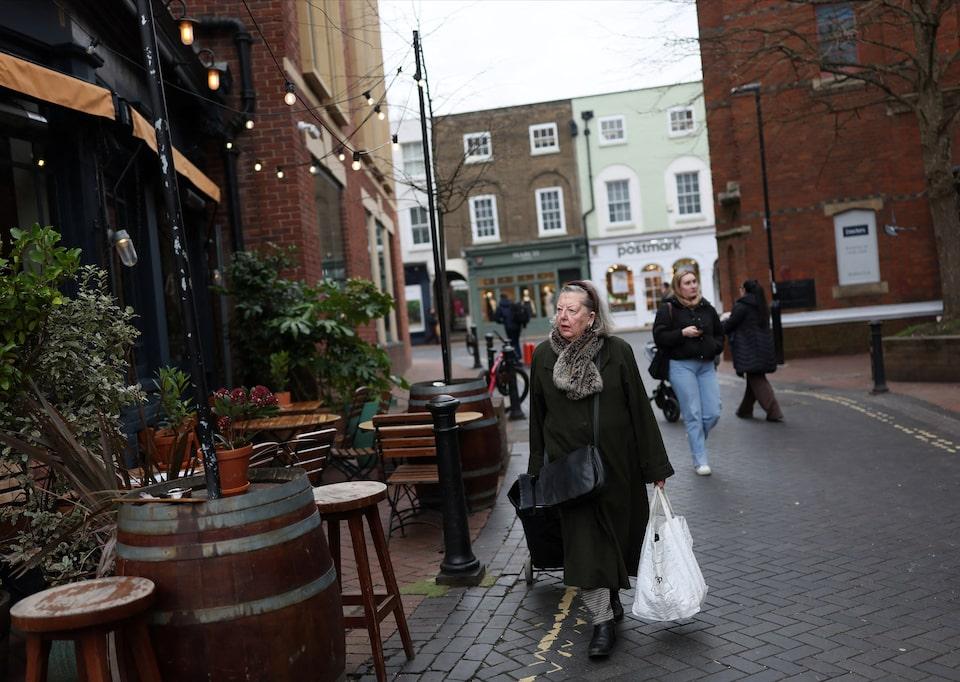
UK economic growth confirmed at +0.7% in Q1 Output showing signs of slowing in more recent data Spending by households revised up Current account deficit bigger than expected LONDON, June 30 (Reuters) - Britain's economy grew at its fastest pace in a year in the first three months of 2025 as homebuyers rushed to beat a deadline on property purchases and manufacturers sped up output ahead of U.S. President Donald Trump's higher import tariffs. In a bounce that is not expected to be maintained in the rest of 2025, output grew by 0.7%, confirming a preliminary estimate and the fastest quarterly pace since the first three months of 2024, the Office for National Statistics said. Sign up here. Growth in March alone was revised up to 0.4% from a previous reading of 0.2%, the ONS said. The jump in economic output in early 2025 contrasted with growth of just 0.1% in the fourth quarter of 2024 and data has already shown that gross domestic product fell by 0.3% in April from March although the drop was exacerbated by one-off factors. The Bank of England has said it expects economic growth of about 0.25% in the second quarter of this year. Finance minister Rachel Reeves is hoping for a pickup to reduce the pressure on her to raise taxes again later this year to remain on course to meet her budget targets. Thomas Pugh, chief economist at audit firm RSM UK, said weak consumer spending and hiring figures in recent weeks were likely to be a one-off reaction to a tax increase on employers and Trump's tariffs, many of which have been suspended. "Now that uncertainty has started to recede, consumer confidence is rebounding, and business surveys point to the worst of the labour market pain being behind us," Pugh said. A survey published earlier on Monday showed confidence levels among British employers hit a fresh nine-year high as they became more optimistic about the outlook for the economy. The BoE is expected to cut interest rates twice more over the remainder of 2025 which is likely to support household spending. However, a renewed rise in energy prices in the event of further conflict in the Middle East could add to the strains on the already slow-growing economy. Monday's data from the ONS showed household expenditure grew by 0.4% in the January-to-March period, revised up from an initial estimate of an increase of 0.2%, driven by housing and household goods and services as well as transport. Britain's property market saw a sharp increase in activity in the run-up to the March 31 expiry of a tax break for some homebuyers. Households dipped into their reserves to help fund their spending with the saving ratio falling for the first time in two years although at 10.9% it remained strong. Manufacturing grew by 1.1% in the first quarter - ahead of the increase in U.S. import tariffs in April - compared with the last three months of 2024. The ONS also said Britain's current account deficit grew to a bigger-than-expected 23.46 billion pounds in the January to March period from just over 21 billion pounds in the last three months of 2024. ($1 = 0.7285 pounds) https://www.reuters.com/world/uk/uk-economy-grew-by-07-first-quarter-statistics-office-says-2025-06-30/
2025-06-30 06:21
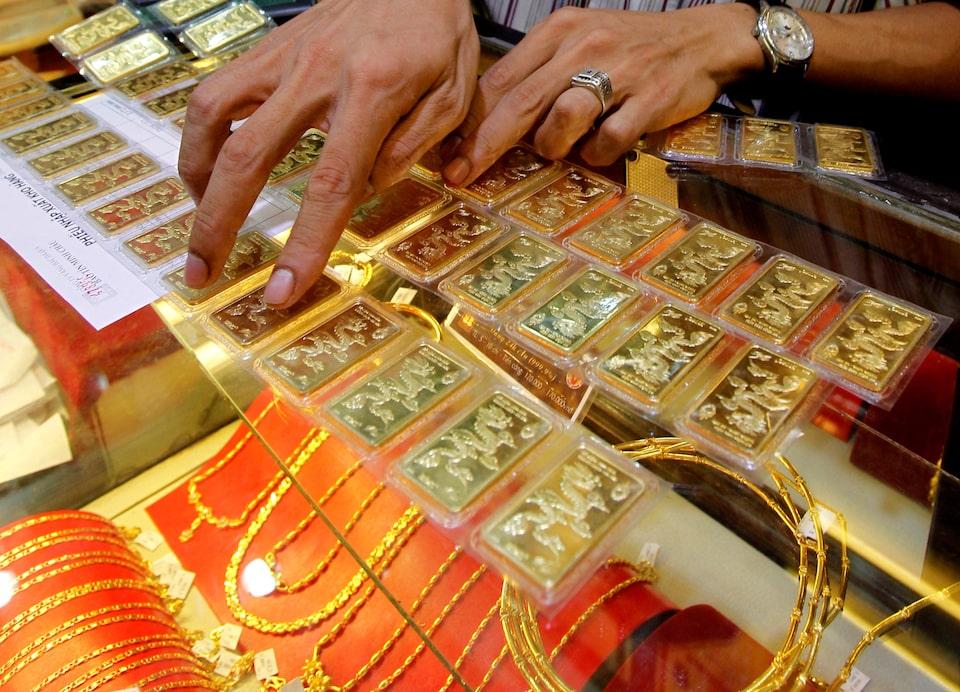
US Treasury chief cites progress in priority negotiations Canada rescinds digital services tax to advance stalled US trade talks Asian stocks strengthen with Wall Street futures pointing higher June 30 (Reuters) - Gold reversed course and edged higher on Monday, supported by a weaker dollar, after hitting a more than one-month low earlier as easing U.S.-China trade tensions dampened safe-haven demand and bolstered risk appetite. Spot gold rose 0.5% to $3,290 per ounce, as of 0613 GMT, after hitting its lowest since May 29 earlier in the session. Sign up here. U.S. gold futures were up 0.4% at $3,301. "There is less of a 'doom and gloom' outlook surrounding both tariff talks and events in the Middle East, which is relegating gold to play second fiddle to risk assets," KCM Trade Chief Market Analyst Tim Waterer said. Asian shares firmed, with Wall Street futures advancing, while the U.S. dollar index (.DXY) , opens new tab fell 0.3%. A weaker dollar makes greenback-priced bullion less expensive. The U.S. and China have resolved issues surrounding shipments of rare earth minerals and magnets to the U.S., Treasury Secretary Scott Bessent said on Friday, adding that the Trump administration's various trade deals with other countries could be done by the September 1 Labor Day holiday. Canada scrapped its digital services tax targeting U.S. technology firms late on Sunday, just hours before it was due to take effect, in a bid to advance stalled trade negotiations with the United States. The Iran-Israel ceasefire after a 12-day conflict also appeared to be holding, further reducing safe-haven demand. "The dollar remains pressured, which is limiting the extent of the slide for gold. However, the $3,250 level shapes as a key support level for gold. Any breach of this level could see losses accelerate towards the $3,200 level," Waterer said. Stable geopolitical and economic conditions often reduce demand for gold as a safe-haven asset, while the non-yielding asset's appeal further wanes in a high-interest-rate environment. Spot silver rose 0.5% to $36.16 per ounce, platinum firmed 2% to $1,366.63, while palladium was up 1.6% at $1,151.36. https://www.reuters.com/world/india/gold-rebounds-over-one-month-low-weaker-dollar-2025-06-30/
2025-06-30 06:17
Dollar index on track for biggest H1 drop since early 1970s Euro hits highest since 2021 against the greenback China trade progress precedes July 9 tariff deadline Canadian dollar strengthens after US digital tax is halted NEW YORK, June 30 (Reuters) - The dollar hit a near four-year low against the euro on Monday amid worries over the rising U.S. government deficit and uncertainty surrounding trade deals with major countries. Senate Republicans will try to pass President Donald Trump's sweeping tax-cut and spending bill, despite divisions within the party about its expected $3.3 trillion hit to the nation's debt pile. Sign up here. The dollar dropped 0.63% to 0.79355 against the Swiss franc , on track to end the month down 3.60%. The greenback has lost about 12.5% against the Swissie this year. The euro hit its highest against the dollar since September 2021 at $1.1780. It was last up 0.45% and set to gain about 3.8% for the month. The single currency has gained about 14% against the dollar this year. "There's a lot of focus around the big, huge bill and whether that gets approved," said Amo Sahota, executive director at FX consulting firm Klarity FX in San Francisco. "The dollar has been on a weakening trend. We are halfway through the year and the big winners have been the stocky (Swedish krona), the Swiss franc, and the euro. The euro's fortunes turned after the euro zone announced a huge spending bill." The EU is open to accepting a trade agreement with the US that would apply a universal 10% tariff on many of its exports, Bloomberg News reported on Monday. Treasury Secretary Scott Bessent said that countries could still face sharply higher tariffs on July 9 even if they are negotiating in good faith, adding that any potential extensions will be up to Trump. The U.S. and China had resolved issues around shipments of Chinese rare earth minerals and magnets to the United States, further modifying a May deal in Geneva, Bessent had said last week. "You have a weak dollar due to a potentially large increase in our budget deficit, and you have continued uncertainty around these tariff deals," said Eugene Epstein, head of structuring for North America at Moneycorp in New Jersey. "We had this positive news from the EU for a little bit and we had potential positive deals coming up, but then you had Trump doing a temporary about-face on Friday on Canada and so forth," Epstein said. Trump said Japan would be among countries to receive a trade letter outlining tariffs they would need to pay to the U.S. The dollar was down 0.36% to 144.45 against the Japanese yen , on track to finish the month flat versus the Asian currency. Canada halted its plans to begin collecting a new digital services tax targeting U.S. technology firms just hours before it was due to start on Monday in a bid to advance stalled trade negotiations with Washington. The Canadian dollar strengthened against the U.S. currency on the session. It was set to notch its fifth straight month of gains against the greenback. The loonie was up 0.41% versus the greenback to C$1.353 per dollar. The dollar index , which measures the greenback against a basket of currencies including the yen and the euro, fell 0.35% to 96.86, on track for its sixth straight month of losses. It is set to mark its worst half-year since the 1970s. "It's kind of rotating a game of musical chairs, whether it's the 'big beautiful bill', the trade deals, and then the Iran-Israel conflict. It's all like taking turns to be at center stage; once one thing passes and the other thing is focused on," Epstein said. The Swedish krona strengthened 0.48% versus the dollar to 9.462. Sterling strengthened 0.04% to $1.3719. It is up 2% in June. (This story has been refiled to add 'the' in paragraph 1, to correct the nickname for the Swedish krona in paragraph 5, and to correct verb tense in paragraph 6) https://www.reuters.com/world/middle-east/dollar-droops-optimism-over-us-trade-deals-boost-fed-easing-bets-2025-06-30/
2025-06-30 06:10
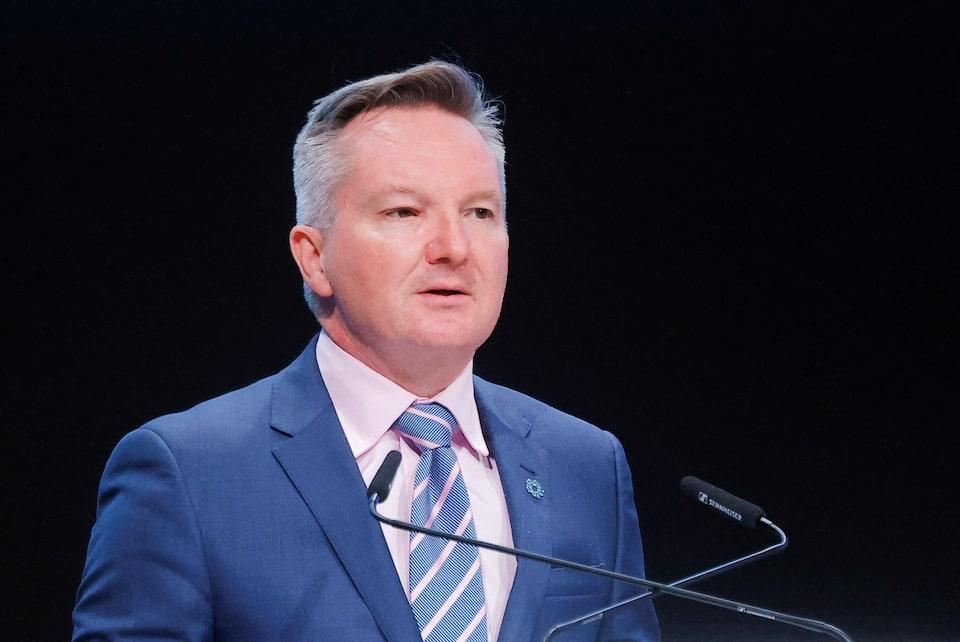
SYDNEY, June 30 (Reuters) - The Australian government said on Monday it will consider creating a gas reservation on the country's east coast as part of a sweeping review of market rules to prevent supply shortages. The competition regulator has warned of looming shortfalls for the country's populous east coast, with the latest forecast pointing to a gap by 2028 without new investment. Most reserves are located in the remote northwest. Sign up here. Australia, which exports more gas than it consumes, is also keen to maintain its reputation as a major reliable exporter of liquefied natural gas (LNG) and that will be a major aim of the review. Market regulations under review include export controls, a mandatory code governing sales of the fuel on the east coast and government agreements with major producers. "It's critical that we use this review to get the settings right in our gas market, ensuring we are securing affordable Australian gas for Australian use, while remaining a reliable energy exporter and delivering lasting energy security in our region," Climate Change and Energy Minister Chris Bowen said in a statement. Prime Minister Anthony Albanese's centre left government sees gas as playing a role beyond 2050 as the country moves rapidly away from its dependence on coal-fired power stations. The review will examine the "effectiveness and coherence" of the current rules, identify improvements and consider consolidating rules to create a more "stable regulatory environment" for investors. Areas of focus include supply security, pricing, transparency, market conduct, and the impact of regulations on the competitiveness of Australia's LNG export industry. Speaking about the potential for a gas reservation, Bowen told a news conference that any new requirements would be "prospective" without "ripping up existing contracts". Some of the government's policies have come under fire from industry players. In particular, it introduced caps on wholesale prices in 2022 to keep energy prices down in the wake of Russia's war on Ukraine. The price cap has since been incorporated into the mandatory industry code of conduct. Japanese LNG importers, some of Australia's biggest customers, have told Reuters that the Labor government's policies have increased supply uncertainty and hiked costs at gas facilities in which they have stakes. Major gas producers, including Shell (SHEL.L) , opens new tab, which exports gas from the Queensland Curtis LNG project, and ExxonMobil (XOM.N) , opens new tab, which produces gas in the Bass Strait, have also been critical. https://www.reuters.com/business/energy/australia-considers-gas-reservation-east-coast-sweeping-review-market-rules-2025-06-30/
2025-06-30 06:06
Israel halted gas exports to Egypt after start of war with Iran Exports were resumed on June 23, but highlight Egypt's gas supply challenges Egypt gas production declined sharply in recent years, unlikely to recover soon LONDON, June 30 - Egypt was one of the biggest economic losers of the Middle East's 12-day war after Israel shut down vital natural gas exports to its neighbour. The gas pipeline linking the two countries was turned back on after Israel and Iran agreed to U.S. President Donald Trump's ceasefire on June 23, but the episode highlights Egypt's vulnerability and fading hopes that the Eastern Mediterranean could become a major gas exporting region. Sign up here. The discovery and development of enormous offshore gas resources near Egypt, Israel and Cyprus in the 2000s has radically transformed the region's energy landscape, turning the region into a major production hub and attracting international energy companies. The surge in production was a huge boon for Egypt in particular. The discovery in 2015 of the Zohr field, the biggest gas deposit in the eastern Mediterranean, and its rapid development by 2017 offered Egypt critical energy for its domestic market as well as vital income from exports of liquefied natural gas (LNG), which reached 7 million tons in 2022, nearly 2% of global supply, according to data from analytics firm Kpler. But things started to go awry for Egypt early this decade when production began declining rapidly, particularly in the flagship Zohr field. The country's output dropped from a peak of over 6 billion cubic feet per day (bcf/d) in early 2021 to 3.5 bcf/d by April 2025, according to JODI data. Production is expected to average 4.4 to 4.6 bcf/d this year, according to Martin Sherriff, an analyst at consultancy Welligence Energy Analytics. It is, however, unlikely to increase significantly in the coming years given the country’s limited offshore gas exploration success in recent years, he added. Egypt's energy woes were compounded by the rapid growth in its population from 100 million in 2015 to 115 million by 2023. With domestic production insufficient to meet the population's needs, Egypt in 2020 started to import gas from Israel, which had also saw a surge in gas production last decade following the discovery of a number of big offshore resources. Israel's production rose by over 70% in the decade to 2024 to 2.5 bcf/d, with around half of the volume exported to neighbouring Egypt and Jordan, according to government data. The sharp production decline also led Egypt to resume LNG imports in 2024 for the first time since 2018. Egypt is expected to import up to 160 LNG cargoes this year and next at far higher prices than what it can produce domestically or import from Israel, where export pipelines are already at full capacity. WAR CASUALTY The recent war between Israel and Iran put a harsh spotlight on Egypt's energy vulnerability. Israel and Egypt, neighbouring countries who signed a peace agreement in 1979 after decades of intermittent conflict, saw their inter-dependency tighten significantly as the gas trade between them developed. These gas flows were largely uninterrupted following the outbreak of violence in the region on October 7, 2023. But that changed on June 13 when Israel halted operations at two of its three offshore gas fields, Leviathan and Karish, hours after it launched a surprise wave of airstrikes against Iran, leading to the suspension of natural gas exports. Egypt imported over 0.9 bcf/d from Israel in the first four months of 2025, around 17% of the former's gross observed consumption, according to Jodi data. So the drop in Israel gas deliveries just as demand for power was nearing its summer demand peak threatened to deal a harsh blow to Egypt's economy. Egyptian fertilizers producers were forced to shut down operations as part of a government emergency plan to deal with the drop in Israeli gas supplies. The country's power plants ramped up the use of fuel oil to the maximum level while others switched to diesel to protect the stability of the grid in a country that has experienced huge blackouts in recent years. A back of the envelope calculation suggested that for each week of disruption to Israeli gas imports, Egypt would have needed to buy an extra two LNG cargoes or find alternative fuel sources. RISING RELIANCE Thankfully for Cairo, Israel resumed gas exports to Egypt on June 25. But this hardly solves Egypt's underlying problems. It is true that energy majors including BP, Exxon Mobil, Shell and Chevron continue to explore for new gas resources in Egypt, which, if located, could help offset the natural decline in its current fields. Israeli gas exports to Egypt could increase when the Chevron-operated Leviathan field expands production to 14 bcm in 2026 from 12 bcm today, although delays in the expansion of pipeline capacity between the two countries could impede that expansion. But, for now, the country's natural gas production faces a grim outlook. Meanwhile, the nation is also struggling with sluggish growth and a significant loss of revenue from Suez Canal transit fees, as many ship operators have diverted vessels away from the Red Sea due to attacks by Iran-backed Houthi rebels in Yemen since 2023. And taking a broader regional perspective, the decline of Egypt's gas industry is dashing hopes that the Eastern Mediterranean will become a major LNG exporting hub in the coming years. Enjoying this column? Check out Reuters Open Interest (ROI), , opens new tabyour essential new source for global financial commentary. ROI delivers thought-provoking, data-driven analysis. Markets are moving faster than ever. ROI , opens new tab can help you keep up. Follow ROI on LinkedIn , opens new tab and X. , opens new tab https://www.reuters.com/markets/commodities/mideast-war-highlights-egypts-energy-weak-spot-2025-06-30/