2025-06-30 05:57
ISTANBUL, June 30 (Reuters) - Firefighters in Turkey are battling wildfires for a second day raging in the western province of Izmir fanned by strong winds, the forestry minister and local media said on Monday Wildfires in Kuyucak and Doganbey areas of Izmir were fanned overnight by winds reaching 40-50 kph (25-30 mph) and four villages and two neighbourhoods had been evacuated, Forestry Minister Ibrahim Yumakli said. Sign up here. Helicopters, fire extinguishing aircrafts and other vehicles, and more than a thousand people were trying to extinguish the fires, Yumakli told reporters in Izmir. Media footage showed teams using tractors with water trailers and helicopters carrying water, as smoke billowed over hills marked with charred trees. Turkey's coastal regions have in recent years been ravaged by wildfires, as summers have become hotter and drier, which scientists relate to climate change. https://www.reuters.com/business/environment/firefighters-turkey-battle-contain-wildfires-second-day-2025-06-30/

2025-06-30 05:17
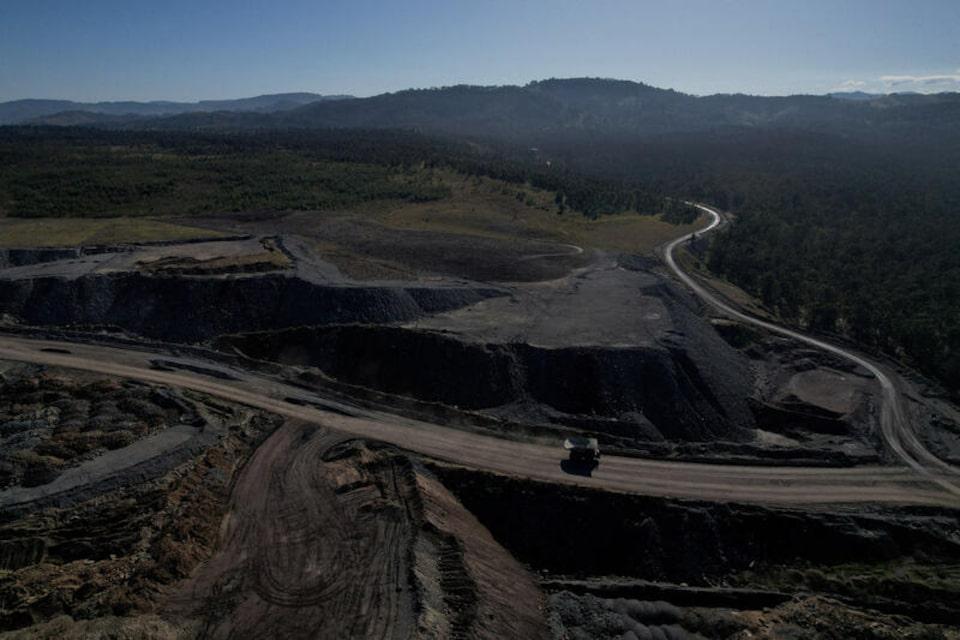
LAUNCESTON, Australia, June 30 (Reuters) - For decades, coal was the bedrock of Australia's commodity exports before it lost its top status to iron ore as shipments of the steel raw material to China soared. Now coal is at risk of being surpassed by gold. Sign up here. The latest quarterly report from the Australian government's commodity forecaster shows that earnings from exports of the precious metal are expected to rise to A$56 billion ($36.6 billion) in the fiscal year starting July 1. This is higher than the A$39 billion forecast for metallurgical coal and the A$28 billion for thermal coal, according to data released on Monday by the Department of Industry, Science and Resources. Of course, putting the two types of coal together brings a combined total of A$67 billion for expected export earnings in 2025-26, which is still higher than the forecast for gold. But here is where it gets interesting. By the 2026-27 fiscal year, it's quite possible that gold could overtake the combined total for metallurgical coal, used to make steel, and thermal coal, used mainly for power generation. The government expects gold exports to rise to 313 metric tons in 2026-27 from 289 tons in 2025-26 and 250 tons in 2024-25. This would cement Australia's status as the world's biggest net exporter of gold and the third-largest producer. However, the department has been cautious in its price forecast for gold, expecting it to retreat to $2,825 an ounce for 2026-27, down from $3,200 for 2025-26, which is in turn below the current spot price of around $3,273. The government forecaster is traditionally conservative in its price forecasts for commodities and an average of $2,825 for 2026-27 would be at the bottom end of the range expected by most analysts. It's possible that gold will continue its 29% rally since the November election of Donald Trump to a second term as U.S. president, which has seen a range of policies implemented and planned that are viewed as bullish for the precious metal. These include tax and spending policies that would dramatically increase the government fiscal deficit, putting pressure on U.S. Treasuries as a store of value. The sweeping tax cut and spending bill proposed is edging closer to being passed by the Republican-controlled Senate and House of Representatives, and if successfully signed into law it is estimated by the non-partisan Congressional Budget Office that it would add $3.3 trillion to U.S. debt over a decade. There is also considerable uncertainty over Trump's trade and tariff policies, with his early July deadline looming for the United States to reach deals with dozens of major trading partners. Even if deals are reached and they impose lower tariffs than Trump announced in April, it is still likely that imports into the United States will face far higher taxes than they did under former President Joe Biden and during Trump's first term. This adds a positive backdrop to gold as investors are likely to seek alternatives to U.S. Treasuries and other assets, with both investor and central bank buying expected to remain strong. PRICE ASSUMPTIONS If a more optimistic price is assumed for gold in 2026-27 of $4,000 an ounce, it would yield export revenue of A$61.6 billion, using the current Australian dollar exchange rate to the U.S. currency. That would still be below the government's forecast of a combined A$67 billion for both coal types, but unlike gold the price forecasts for coal may be too optimistic given the likely dynamics in the seaborne market. The government forecast expects metallurgical coal to average $201 a ton in 2026-27 and Newcastle Port benchmark thermal coal $110. Metallurgical coal contracts on the Singapore Exchange ended at $178.50 a ton on June 27, while globalCOAL assessed Newcastle thermal coal at $108.87 in the week to June 27, with both prices being close to recent four-year lows. This means that the government is expecting the prices of both types of coal to increase slightly in coming years, which would require seaborne demand in major Asian markets such as China, India, Japan and South Korea to at least hold steady, if not improve. China and India, the two largest coal producers and importers, are seeking to boost domestic output and lower imports, which may limit their seaborne imports. Japan and South Korea are seeking to use cleaner fuels such as liquefied natural gas, which may also end up being cost competitive with coal given the flood of new capacity expected to hit the market by 2027. If gold maintains its current uptrend and seaborne coal continues to come under pressure, then it is quite possible that gold overtakes coal as Australia's second-biggest commodity export by 2026-27. Enjoying this column? Check out Reuters Open Interest (ROI), your essential new source for global financial commentary. ROI delivers thought-provoking, data-driven analysis of everything from swap rates to soybeans. Markets are moving faster than ever. ROI can help you keep up. Follow ROI on LinkedIn , opens new tab and X , opens new tab. The views expressed here are those of the author, a columnist for Reuters. https://www.reuters.com/markets/commodities/coal-used-be-australias-commodity-export-king-gold-is-coming-russell-2025-06-30/
2025-06-30 04:32
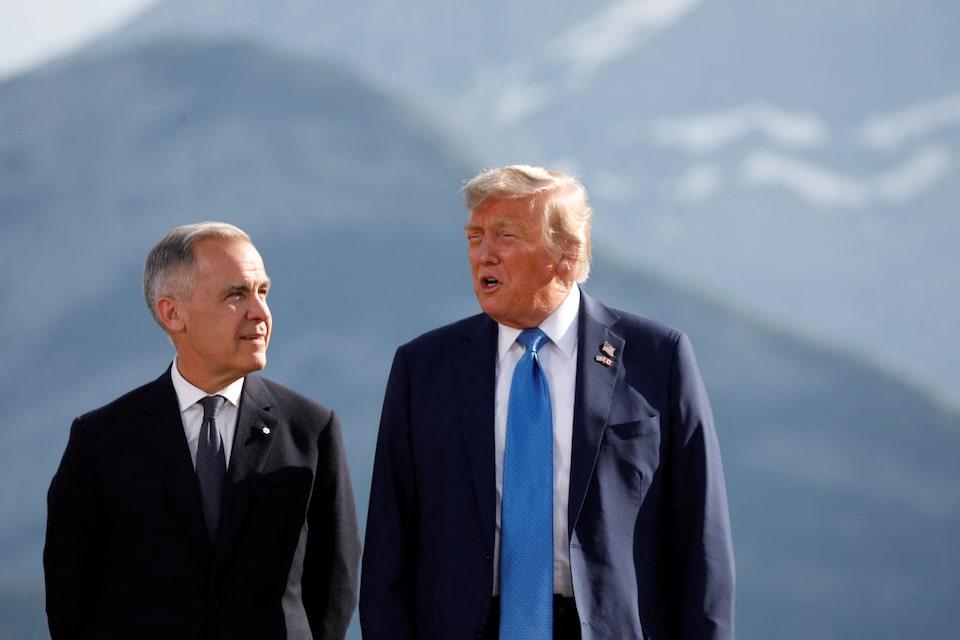
A look at the day ahead in European and global markets from Wayne Cole. It was already a risk-on start to the week in Asia when news broke trade talks between the United States and Canada were back on after Prime Minister Carney agreed to rescind a digital tax as demanded by President Trump. The new deadline for this effort is July 21, extending Trump's original July 9 date. Sign up here. The latter looks like being extended for other talks as well, with Treasury Secretary Bessent last week suggesting they might be done by the September 1 Labor Day holiday. Wall Street futures are up around 0.4% at record highs as investors pile into mega caps for the new quarter, while European and German stock futures firmed around 0.3%. Most Asian markets are also in the black, helped by a further decline in oil prices as the Mideast ceasefire holds. Investors are keeping a wary eye on the progress of a huge U.S. tax-cutting and spending bill slowly making its way through the Senate, with signs it may not make it by Trump's preferred July 4 deadline. Stalling for time, the Democrats are making clerks read out every line in the 940-page bill, likely making them the only ones who know what's in it. The Congressional Budget Office estimates the bill will add $3.3 trillion to the nation's debt over a decade, a further test of foreign appetite for U.S. Treasuries and another blow to the cause of U.S. exceptionalism. The impact has been most evident in the dollar, with the euro clocking gains of 1.7% last week. James Reilly, an analyst at Capital Economics, noted the dollar had fallen by more at this stage in the year than in any previous year since the U.S. moved to a free-floating exchange rate in 1973. That slide must be pressuring foreign investors to hedge their dollar exposure, which creates yet more selling in a bearish cycle for the currency. Neither has it been helped by investors ratcheting up expectations for Federal Reserve policy easing to 65 basis points for the rest of the year. A July move is still an outside chance, though that might change if the payrolls report on Thursday springs a downside surprise. In particular, a rise in the jobless rate above 4.3% would take it to levels not seen since late 2021 and would surely ring alarm bells at the Fed. Key developments that could influence markets on Monday: - European Central Bank forum in Sintra, Portugal, begins - German, Italian CPI data - Fed's Bostic and Goolsbee speak https://www.reuters.com/world/china/global-markets-view-europe-2025-06-30/
2025-06-30 04:02
JAKARTA, June 30 (Reuters) - Indonesia has offered the United States the chance to jointly invest in a critical minerals project as part of its tariff negotiations with Washington, its senior economic minister said on Monday Indonesia's sovereign fund Danantara Indonesia will be involved in the project being offered, minister Airlangga Hartarto added. Sign up here. https://www.reuters.com/world/asia-pacific/indonesia-offers-us-opportunity-critical-minerals-joint-investment-part-tariff-2025-06-30/

2025-06-30 01:31
MUMBAI, June 30 (Reuters) - The Indian rupee and government bonds are likely to react to shifts in market expectations of interest rate cuts by the U.S. Federal Reserve this week, with traders also keeping an eye on portfolio inflows into local equity and debt markets. The rupee closed at 85.4750 on Friday, rising 1.3% for the week, its best performance in more than two years, helped by a sharp pullback in crude oil prices and broad weakness in the dollar. Sign up here. Data released on Friday showed the U.S. consumer spending declined unexpectedly in May, while the Personal Consumption Expenditures (PCE) Price Index gained 0.1%, matching the rise in the previous month. The dollar index ended the week down by 1.5%. Following the data, traders added to bets on rate cuts by the Federal Reserve this year, most likely starting from September. In the near term, traders expect the rupee to hover between 85 and 85.80 with a slightly positive bias. Developments on U.S. trade negotiations will also be in focus this week. U.S. Treasury Secretary Scott Bessent on Friday said the Trump administration's various trade deals with other countries could be done by September 1 Labor Day holiday, citing 18 main U.S. trading partners. Meanwhile, a closely watched U.S. labor market report due on Thursday this week, will influence the market on the Fed's rate-cut expectations. "If the jobs data is weak... and we get numerous trade deals signed that help lift optimism over global growth, we would likely see the dollar selling extended further," MUFG said in a note. Meanwhile, India's 10-year benchmark 6.33% 2035 bond yield ended at 6.3134% on Friday. Traders expect it to move in a range of 6.28% to 6.35% this week. Foreign inflows trickled into government bonds over the last few days, but the major focus is on the sustenance of those flows, especially at a time when rate cut bets in the U.S. are rising. Apart from flows, bond market participants will focus on debt supply and liquidity management from the RBI, some of the key triggers for the week. Bond market investors are anticipating a tweak in supply pattern, with a reduction in ultra-long 30- to 50-year bonds, and an increase in up to seven-year papers. The RBI conducted its first reverse repo in seven months on Friday and banks parked 850 billion rupees ($9.95 billion) at the seven-day VRRR. Traders would wait to see follow-up action from the central bank, and whether the RBI shifts to overnight or shorter-duration reverse repos. "We see the use of VRRR as a trend shift, with likely use of the liquidity management tool to gradually align weighted average call rate towards the repo rate," said Kanika Pasricha, chief economic adviser, Union Bank of India. KEY EVENTS: India ** May fiscal deficit - June 30, Monday (3:30 p.m. IST) ** May industrial output - June 30, Monday (4:00 p.m. IST)(Reuters poll - 2.4%) ** June HSBC manufacturing PMI - July 1, Tuesday (10:30 a.m.) ** June HSBC services PMI - July 3, Thursday (10:30 a.m.) U.S. ** June S&P Global manufacturing PMI final - July 1, Tuesday (7:15 p.m. IST) ** June ISM manufacturing PMI - July 1, Tuesday (7:30 p.m. IST) ** June non-farm payrolls and unemployment rate - July 3, Thursday (6:00 p.m. IST) ** May international trade - July 3, Thursday (6:00 p.m. IST) ** Initial weekly jobless claims for week to June 23 - July 3, Thursday (6:00 p.m. IST) ** June S&P Global composite PMI final - July 3, Thursday (7:15 p.m. IST) ** June S&P Global services PMI final - July 3, Thursday (7:15 p.m. IST) ** May factory orders - July 3, Thursday (7:30 p.m. IST) ** June ISM non-manufacturing PMI - July 3, Thursday (7:30 p.m. IST) ($1 = 85.4400 Indian rupees) https://www.reuters.com/world/india/indian-rupee-bonds-gauge-fed-rate-cut-wagers-portfolio-flows-2025-06-30/

2025-06-30 00:55
June 30 (Reuters) - China's biggest gold and copper producer Zijin Mining (601899.SS) , opens new tab said on Monday it had agreed to buy one of the largest gold mines of Kazakhstan, the Raygorodok Gold Mine, for $1.2 billion. Zijin said its unit Zijin Gold International and Jinha Mining, a subsidiary of Zijin Gold, had inked a deal to acquire the rights of RG Gold LLP and RG Processing LLP, the Kazakhstan-based gold mining firms that currently own and operate the Raygorodok gold mine. Sign up here. The gold mine comprises the mine assets held by RGG and the processing plant assets held by RGP, Zijin said in a statement. The timing of the deal aligns with a surge in global gold prices amid ongoing uncertainty around U.S.-China trade tensions. Earlier in April, Zijin laid out its intention to spin off its unit, Zijin Gold International, and list it in Hong Kong as part of a reorganization of its overseas gold assets. https://www.reuters.com/markets/commodities/chinas-zijin-mining-forks-out-12-billion-gold-mine-kazakhstan-2025-06-30/