2025-06-29 14:30
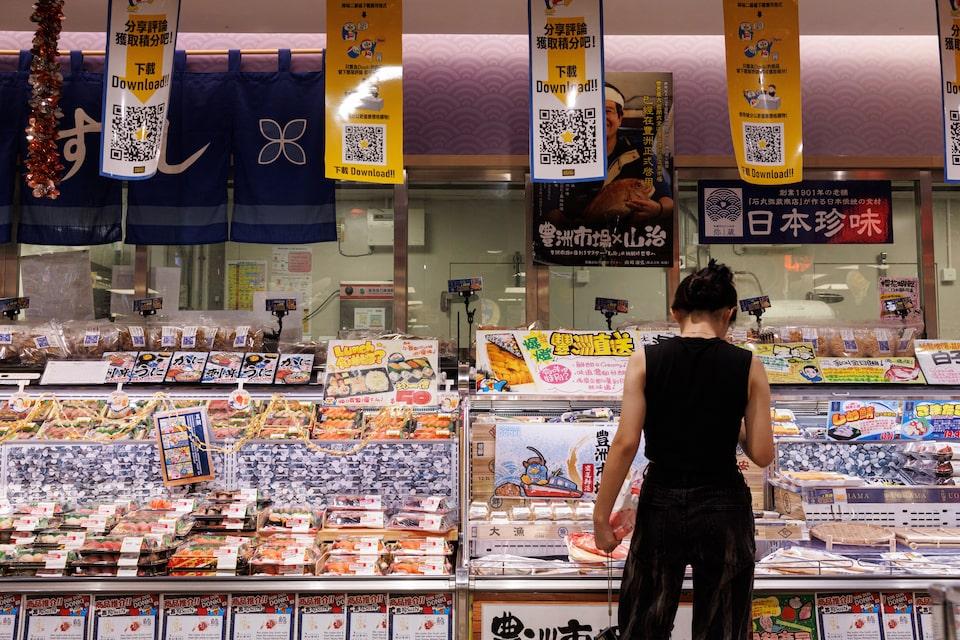
BEIJING, June 29 (Reuters) - China on Sunday announced it is immediately resuming seafood products imported from some Japanese regions, ending a nearly two-year overall ban imposed due to worries over Japan's release of treated wastewater from the Fukushima nuclear power plant. In a notice on Sunday, China Customs said seafood products from 10 prefectures - Fukushima, Gunma, Tochigi, Ibaraki, Miyagi, Niigata, Nagano, Saitama, Tokyo and Chiba - will still be banned from entering the country. Sign up here. Products from other regions will need health certificates, radioactive substance detection qualification certificates and production area certificates issued by the Japanese government for Chinese customs declarations, the notice said. Chinese customs authorities said Sunday's decision was made after no abnormality was detected following long-term international and independent Chinese sampling and monitoring of discharged wastewater. China banned all imports of Japanese seafood in August 2023, shortly after Tokyo began releasing the treated Fukushima wastewater, prompting a diplomatic and economic backlash. Sunday's notice said China will strictly supervise Japanese seafood imports and will take measures if it finds any violations of relevant Chinese laws, regulations and food safety standards. https://www.reuters.com/markets/asia/china-resumes-qualified-seafood-imports-some-japan-regions-2025-06-29/
2025-06-29 11:57
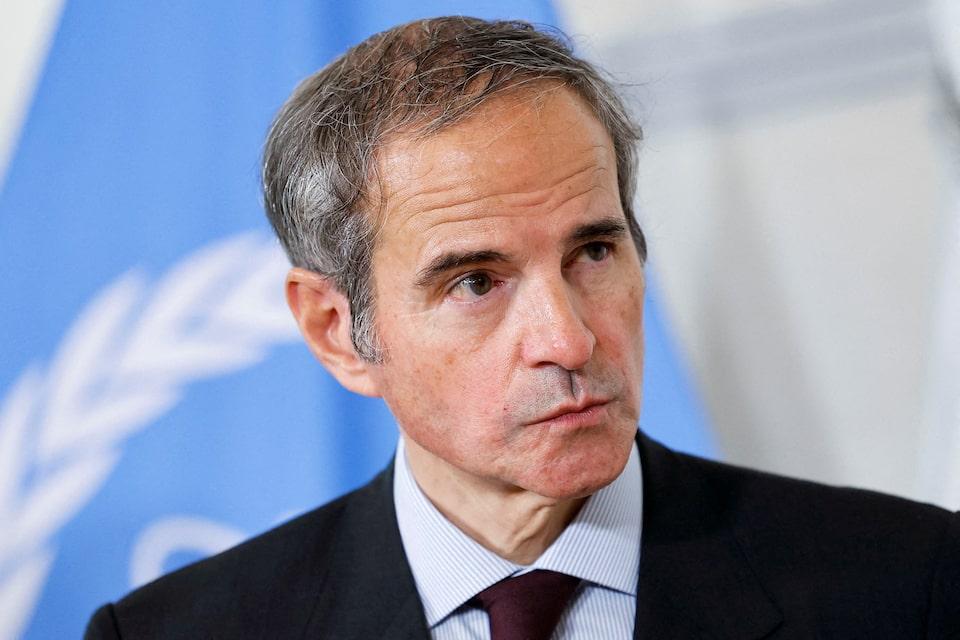
IAEA head Grossi says strikes were significant setback for Iran 'One cannot claim that everything has disappeared': Grossi Iran sophisticated in nuclear tech, 'cannot disinvent this': Grossi June 29 (Reuters) - Iran could be producing enriched uranium in a few months, the head of the U.N. nuclear watchdog Rafael Grossi was quoted as saying on Sunday, raising doubts about how effective U.S. strikes to destroy Tehran's nuclear programme have been. U.S. officials have stated that their strikes obliterated key nuclear sites in Iran, although U.S. President Donald Trump said on Friday he would consider bombing Iran again if Tehran is enriching uranium to worrisome levels. Sign up here. "The capacities they have are there. They can have, you know, in a matter of months, I would say, a few cascades of centrifuges spinning and producing enriched uranium, or less than that," Grossi told CBS News in an interview. "Frankly speaking, one cannot claim that everything has disappeared and there is nothing there," he added, according to the transcript of an interview on "Face the Nation" with Margaret Brennan due to air on Sunday. Saying it wanted to remove any chance of Tehran developing nuclear weapons, Israel launched attacks on Iran earlier this month, igniting a 12-day air war that the U.S. eventually joined. Iran says its nuclear programme is for peaceful purposes only. Grossi, who heads the Vienna-based International Atomic Energy Agency, said the strikes on sites in Fordow, Natanz and Isfahan had significantly set back Iran's ability to convert and enrich uranium. However, Western powers stress that Iran's nuclear advances provide it with an irreversible knowledge gain, suggesting that while losing experts or facilities may slow progress, the advances are permanent. "Iran is a very sophisticated country in terms of nuclear technology," Grossi said. "So you cannot disinvent this. You cannot undo the knowledge that you have or the capacities that you have." Grossi was also asked about reports of Iran moving its stock of highly enriched uranium in the run-up to the U.S. strikes and said it was not clear where that material was. "So some could have been destroyed as part of the attack, but some could have been moved," he said. https://www.reuters.com/world/middle-east/iaea-chief-says-iran-could-be-enriching-uranium-within-months-2025-06-29/
2025-06-29 11:38
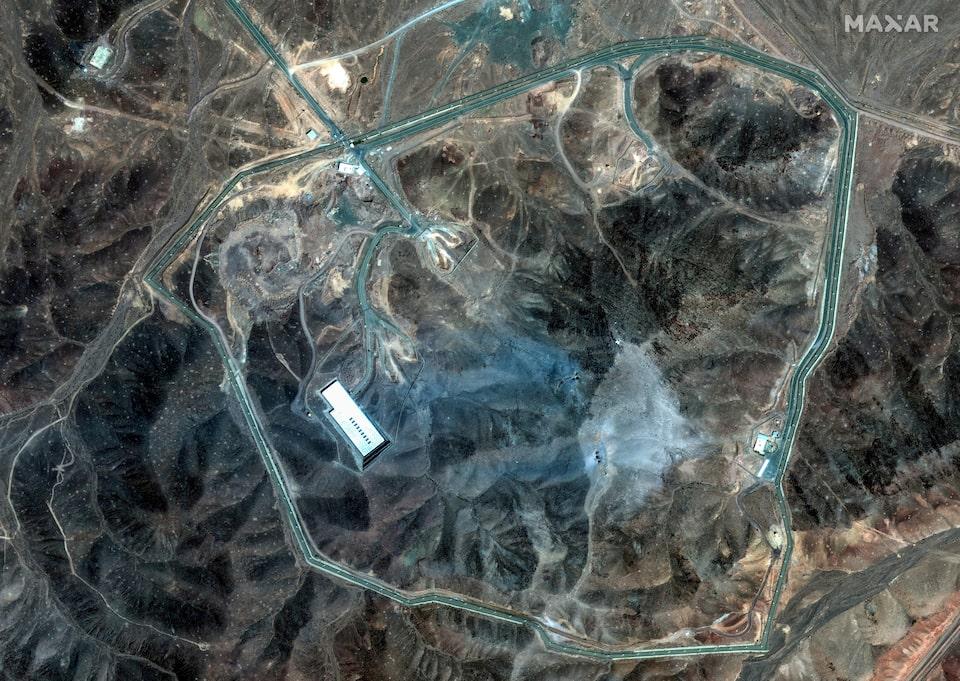
IAEA had regular access, watched enrichment sites closely Military strikes interrupted that; no inspections since Before there was detailed IAEA accounting, now many doubts Verifying where the stocks are will be long, arduous task Unclear whether fate of all batches can be determined VIENNA, June 29 (Reuters) - The U.S. and Israeli bombing of Iranian nuclear sites creates a conundrum for U.N. inspectors in Iran: how can you tell if enriched uranium stocks, some of them near weapons grade, were buried beneath the rubble or secretly hidden away? Following last weekend's attacks on three of Iran's top nuclear sites - at Fordow, Natanz and Isfahan - President Donald Trump said the facilities had been "obliterated" by U.S. munitions, including bunker-busting bombs. Sign up here. But the U.N. nuclear watchdog, the International Atomic Energy Agency, which monitors Tehran's nuclear program, has said it's unclear exactly what damage was sustained at Fordow, a plant buried deep inside a mountain that produced the bulk of Iran's most highly enriched uranium. IAEA chief Rafael Grossi said on Monday it was highly likely the sensitive centrifuges used to enrich uranium inside Fordow were badly damaged. It's far less clear whether Iran's 9 tonnes of enriched uranium - more than 400 kg of it enriched to close to weapons grade - were destroyed. Western governments are scrambling to determine what's become of it. Reuters spoke to more than a dozen current and former officials involved in efforts to contain Iran's nuclear program who said the bombing may have provided the perfect cover for Iran to make its uranium stockpiles disappear and any IAEA investigation would likely be lengthy and arduous. Olli Heinonen, previously the IAEA's top inspector from 2005 to 2010, said the search will probably involve complicated recovery of materials from damaged buildings as well as forensics and environmental sampling, which take a long time. "There could be materials which are inaccessible, distributed under the rubble or lost during the bombing," said Heinonen, who dealt extensively with Iran while at the IAEA and now works at the Stimson Center think-tank in Washington. Iran's more than 400 kg of uranium enriched to up to 60% purity - a short step from the roughly 90% of weapons grade - are enough, if enriched further, for nine nuclear weapons, according to an IAEA yardstick. Even a fraction of that left unaccounted for would be a grave concern for Western powers that believe Iran is at least keeping the option of nuclear weapons open. There are indications Iran may have moved some of its enriched uranium before it could be struck. IAEA chief Grossi said Iran informed him on June 13, the day of Israel's first attacks, that it was taking measures to protect its nuclear equipment and materials. While it did not elaborate, he said that suggests it was moved. A Western diplomat involved in the dossier, who asked not to be identified because of the sensitivity of the issue, said most of the enriched uranium at Fordow would appear to have been moved days in advance of the attacks, "almost as if they knew it was coming". Some experts have said a line of vehicles including trucks visible on satellite imagery outside Fordow before it was hit suggests enriched uranium there was moved elsewhere, though U.S. Defense Secretary Pete Hegseth on Thursday said he was unaware of any intelligence suggesting Iran had moved it. Trump has also dismissed such concerns. In an interview due to air on Sunday with Fox News Channel's "Sunday Morning Futures", he insisted the Iranians "didn't move anything." "It's very dangerous to do. It is very heavy - very, very heavy. It's a very hard thing to do," Trump said. "Plus we didn't give much notice because they didn't know we were coming until just, you know, then." The White House did not respond to a request for comment. The State Department referred Reuters to Trump's public remarks. A second Western diplomat said it would be a major challenge to verify the condition of the uranium stockpile, citing a long list of past disputes between the IAEA and Tehran, including Iran's failure to credibly explain uranium traces found at undeclared sites. "It'll be a game of cat and mouse." Iran says it has fulfilled all its obligations towards the watchdog. PICTURE BLURRED Before Israel launched its 12-day military campaign aimed at destroying Iran's nuclear and missile capabilities, the IAEA had regular access to Iran's enrichment sites and monitored what was inside them around the clock as part of the 191-nation Non-Proliferation Treaty aimed at preventing the spread of nuclear weapons, to which Iran is a party. Now, rubble and ash blur the picture. What's more, Iran has threatened to stop working with the IAEA. Furious at the non-proliferation regime's failure to protect it from strikes many countries see as unlawful, Iran's parliament voted on Wednesday to suspend cooperation. Tehran says a resolution this month passed by the IAEA's 35-nation Board of Governors declaring Iran in breach of its non-proliferation obligations paved the way for Israel's attacks, which began the next day, by providing an element of diplomatic cover. The IAEA denies that. Iran has repeatedly denied that it has an active program to develop a nuclear bomb. And U.S. intelligence - dismissed by Trump before the airstrikes - had said there was no evidence Tehran was taking steps toward developing one. However, experts say there is no reason for enriching uranium to 60% for a civilian nuclear program, which can run on less than 5% enrichment. As a party to the NPT, Iran must account for its stock of enriched uranium. The IAEA then has to verify Iran's account by means including inspections, but its powers are limited - it inspects Iran's declared nuclear facilities but cannot carry out snap inspections at undeclared locations. Iran has an unknown number of extra centrifuges stored at locations the U.N. nuclear watchdog is unaware of, the IAEA has said, with which it might be able to set up a new or secret enrichment site. That makes hunting down the material that can be enriched further, particularly that closest to bomb grade, all the more important. "Iran's stockpile of 60% enriched uranium may not have been part of the 'mission' but it is a significant part of the proliferation risk - particularly if centrifuges are unaccounted for," Kelsey Davenport of the Washington-based Arms Control Association said on X on Friday. The IAEA can and does receive intelligence from member states, which include the United States and Israel, but says it takes nothing at face value and independently verifies tip-offs. Having pummelled the sites housing the uranium, Israel and the U.S. are seen as the countries most likely to accuse Iran of hiding it or restarting enrichment, officials say. Israeli Prime Minister Benjamin Netanyahu's office did not respond to a request for comment for this story. CHASING SHADOWS U.N. inspectors' futile hunt for large caches of weapons of mass destruction in Iraq, which preceded the U.S.-led invasion in 2003, showed the enormous difficulty of verifying foreign powers' assertions about hidden stockpiles of material when there is little tangible information to go on. As in Iraq, inspectors could end up chasing shadows. "If the Iranians come clean with the 400 kg of HEU (highly enriched uranium) then the problem is manageable, but if they don't then nobody will ever be sure what happened to it," a third Western diplomat said. The IAEA, which answers to 180 member states, has said it cannot guarantee Iran's nuclear development is entirely peaceful, but has no credible indications of a coordinated weapons program. The U.S. this week backed the IAEA's verification and monitoring work and urged Tehran to ensure its inspectors in the country are safe. It is a long journey from there to accounting for every gram of enriched uranium, the IAEA's standard. The above-ground plant at Natanz, the smaller of the two facilities enriching uranium up to 60 percent, was flattened in the strikes, the IAEA said, suggesting a small portion of Iran's enriched uranium stockpile may have been destroyed. Fordow, Iran's most deeply buried enrichment plant, which was producing the bulk of 60%-enriched uranium, was first seriously hit last weekend when the United States dropped its biggest conventional bombs on it. The damage to its underground halls is unclear. An underground area in Isfahan where much of Iran's most highly enriched uranium was stored was also bombed, causing damage to the tunnel entrances leading to it. The agency has not been able to carry out inspections since Israel's bombing campaign began, leaving the outside world with more questions than answers. Grossi said on Wednesday the conditions at the bombed sites would make it difficult for IAEA inspectors to work there - suggesting it could take time. "There is rubble, there could be unexploded ordnance," he said. Heinonen, the former chief IAEA inspector, said it was vital the agency be transparent in real time about what its inspectors have been able to verify independently, including any uncertainties, and what remained unknown. "Member states can then make their own risk assessments," he said. https://www.reuters.com/world/europe/us-strikes-irans-nuclear-sites-set-up-cat-and-mouse-hunt-missing-uranium-2025-06-29/
2025-06-29 09:50
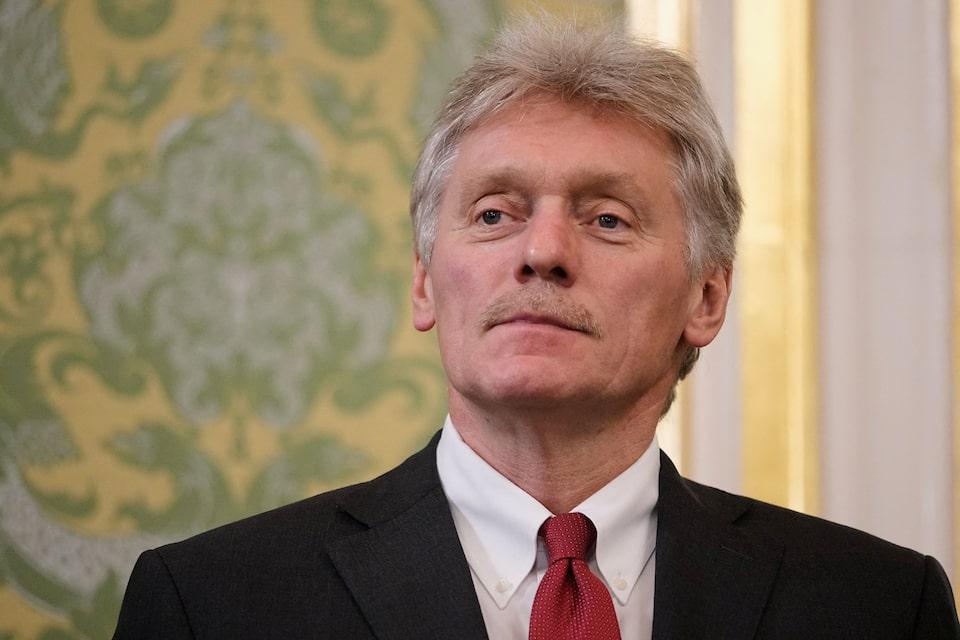
MOSCOW, June 29 (Reuters) - The Kremlin said in remarks published on Sunday that the tougher the sanctions imposed on Russia by Europe, the more painful the recoil would be for Europe's own economies as Russia had grown resistant to such "illegal" sanctions. Russia's invasion of Ukraine in 2022 triggered a wave of Western sanctions on Russia and it is by far the most sanctioned major economy in the world. Sign up here. The West said that it hoped its sanctions would force President Vladimir Putin to seek peace in Ukraine, and though the economy contracted in 2022, it grew in 2023 and 2024 at faster rates than the European Union. The European Commission on June 10 proposed a new round of sanctions against Russia, targeting Moscow's energy revenues, its banks and its military industry, though the United States has so far refused to toughen its own sanctions. Asked about remarks by Western European leaders including French President Emmanuel Macron that toughening sanctions would force Russia to negotiate an end to the war, the Kremlin said only logic and arguments could force Russia to negotiate. "The more serious the package of sanctions, which, I repeat, we consider illegal, the more serious will be the recoil from a gun to the shoulder. This is a double-edged sword," Kremlin spokesman Dmitry Peskov told state television. Peskov told state television's top Kremlin correspondent, Pavel Zarubin, that he did not doubt the EU would impose further sanctions but that Russia had built up "resistance" to such sanctions. President Vladimir Putin said on Friday that any additional EU sanctions on Russia would simply hurt Europe more - and pointed out that Russia's economy grew at 4.3% in 2024 compared to euro zone growth of 0.9%. https://www.reuters.com/world/europe/kremlin-says-europe-will-feel-recoil-its-illegal-sanctions-russia-2025-06-29/
2025-06-29 09:02
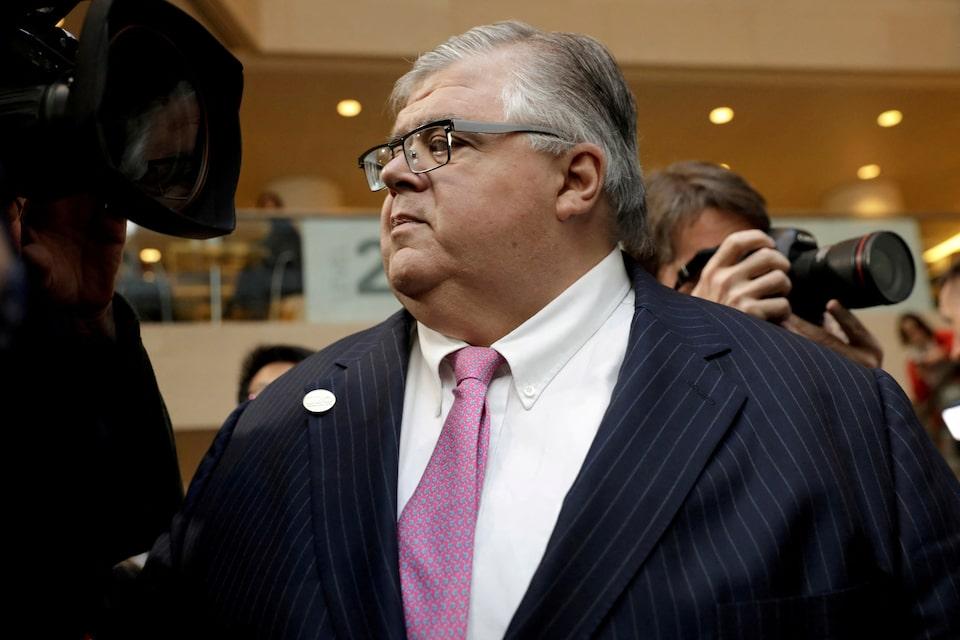
LONDON, June 29 (Reuters) - Trade tensions and fractious geopolitics risk exposing deep fault lines in the global financial system, central bank umbrella body the Bank for International Settlements, said in its latest assessment of the state of the world economy. Outgoing head of the BIS, often dubbed the central bankers' central bank, Agustín Carstens, said the U.S.-driven trade war and other policy shifts were fraying the long-established economic order. Sign up here. He said the global economy was at a "pivotal moment", entering a "new era of heightened uncertainty and unpredictability", which was testing public trust in institutions, including central banks. The bank's report is published just over a week before U.S. President Donald Trump's trade tariff deadline of July 9 and comes after six months of intense geopolitical upheaval. When asked about Trump's criticisms of U.S. Federal Reserve Jerome Powell, which have included Trump labelling the Fed chair as "stupid", he was not overly critical. "It is to be expected at certain points in time that there will be friction," former Mexican central bank governor Carstens told reporters, referring to the relationship between governments and central banks. "It is almost by design". DOLLAR DROP The BIS' annual report, published on Sunday, is viewed as an important gauge of central bankers' thinking given the Switzerland-based forum's regular meetings of top policymakers. Rising protectionism and trade fragmentation were "particular concerning" as they were exacerbating the already decades-long decline in economic and productivity growth, Carstens said. There is also evidence that the world economy is becoming less resilient to shocks, with population ageing, climate change, geopolitics and supply chain issues all contributing to a more volatile environment. The post-COVID spike in inflation seems to have had a lasting impact on the public's perception about price moves too, a study in the report showed. High and rising public debt levels are increasing the financial system’s vulnerability to interest rates and reducing governments' ability to spend their way out of crises. "This trend cannot continue," Carstens said referring to the rising debt levels and he said that higher military spending could push the debt up further. Hyun Song Shin, the BIS's main economic adviser, also flagged the sharp fall in the dollar. It is down 10% since the start of the year and on track to be its biggest H1 drop since the free-floating exchange rate era began in the early 1970s. He said there was no evidence that this was the start of a "great rotation" away from U.S. assets as some economists have suggested, but acknowledged that it was still too early to know given sovereign funds and central banks move slowly. Shorter-term analysis, though, showed "hedging" by non-U.S. investors holding Treasuries and other U.S. assets appears to have made an "important contribution" to the dollar's slide over the last few months. "We haven't seen anything (yet) that would give us any cause for alarm," Shin added. The BIS had already published one part of its report last week that gave a stark warning about the rapid rise of so-called stablecoins. In terms of the BIS' own finances, it said it made a net profit of 843.7 million IMF SDR ($1.2 billion), while its total comprehensive income reached a record high of SDR 3.4 billion ($5.3 billion) and currency deposits at the bank also reached a new high. "It is important that the BIS has the highest creditworthiness out there," Carstens said. https://www.reuters.com/world/europe/global-markets-bis-pix-2025-06-29/
2025-06-29 09:00
JAKARTA, June 29 (Reuters) - A lithium-ion battery plant by an Indonesian company and China's CATL is expected to be in operation by the end of 2026 with initial capacity of 6.9 gigawatt hours, an Indonesian official said on Sunday. The plant is expected to expand to produce electric vehicle batteries with storage capacity of up to 15 GWh, said energy ministry spokeswoman Dwi Anggia, adding the output will be sold to domestic and overseas markets. Sign up here. The venture by Indonesia Battery Corp and Chinese giant Contemporary Amperex Technology Co is part of a $6 billion power battery project signed in 2022 by Indonesian companies, including state-miner PT Aneka Tambang Tbk (ANTM.JK) , opens new tab, and a CATL consortium. The partnership spans nickel mining and processing, EV battery manufacturing and battery recycling. Indonesian Energy Minister Bahlil Lahadalia, speaking at the project's groundbreaking, said the plant might also produce a type of battery to store energy from solar panels. "With the battery for solar panels, the total production capacity of this plant could reach up to 40 GWh," he said, adding that discussion with the project owner was continuing. The battery plant will be built in West Java, while the remaining subprojects will be in eastern Indonesia's nickel-rich province of North Maluku. The government of Indonesia, home to the world's largest nickel reserves, has set an ambitious target of producing some 600,000 EVs by 2030. That would be around 13 times the number sold in Indonesia last year. https://www.reuters.com/world/china/indonesia-china-lithium-battery-plant-operational-by-end-2026-official-says-2025-06-29/