2025-06-27 13:34
June 27 (Reuters) - The goal of ending extreme poverty around the globe remains elusive partly due to compounding challenges faced by economies in fragile and conflict-affected situations (FCS) including food insecurity and weak government capacity, a report from the World Bank showed. The report released on Friday by the Washington-based lender calls on a scaling up of international support, debt relief and technical assistance at a time when the United States, the world's largest aid donor of the past decades, steps back. Sign up here. Extreme poverty is rising fast in economies hit by conflict and instability, according to the World Bank's first comprehensive report , opens new tab on FCS economies since the COVID-19 pandemic. Over 420 million people in conflict-ridden economies survive on less than $3 a day, more than the rest of the world combined, even as they are home to under 15% of the global population. The number is projected to rise to 435 million, or nearly 60% of the world’s extreme poor, by 2030. "FCS economies have become the epicenter of global poverty and food insecurity, a situation increasingly shaped by the frequency and intensity of conflict," the World Bank report said. Economic output in FCS nations could stall or weaken further as conflict and violence have surged and intensified over the past years. The most high-intensity conflicts can shrink per capita GDP by some 20% after five years, according to the report. Conflict and war economies are home to 1 billion people and their populations average only six years of schooling, with life expectancy seven years shorter than in other developing countries. Since 2020, the per capita GDP in these economies has shrunk by an average of 1.8% per year, while it has expanded by 2.9% in other developing economies, the report said. “Progress on poverty reduction has stalled since the mid-2010s, reflecting the compounded effects of intensifying conflict, economic fragility, and subdued growth,” it said. Targeted domestic reforms and coordinated, long-term global engagement are needed to lift those populations out of poverty, according to the World Bank. Measures need to focus on addressing root causes of conflict such as injustice and exclusion, as well as expanding access to education and healthcare, and improving infrastructure. Investment in tourism and agriculture could help create jobs for a growing working-age population. "With sound policies and sustained global engagement, FCS economies can chart a better path toward development," said the World Bank. https://www.reuters.com/world/world-bank-urges-aid-economies-conflict-us-pushes-cuts-2025-06-27/
2025-06-27 12:47
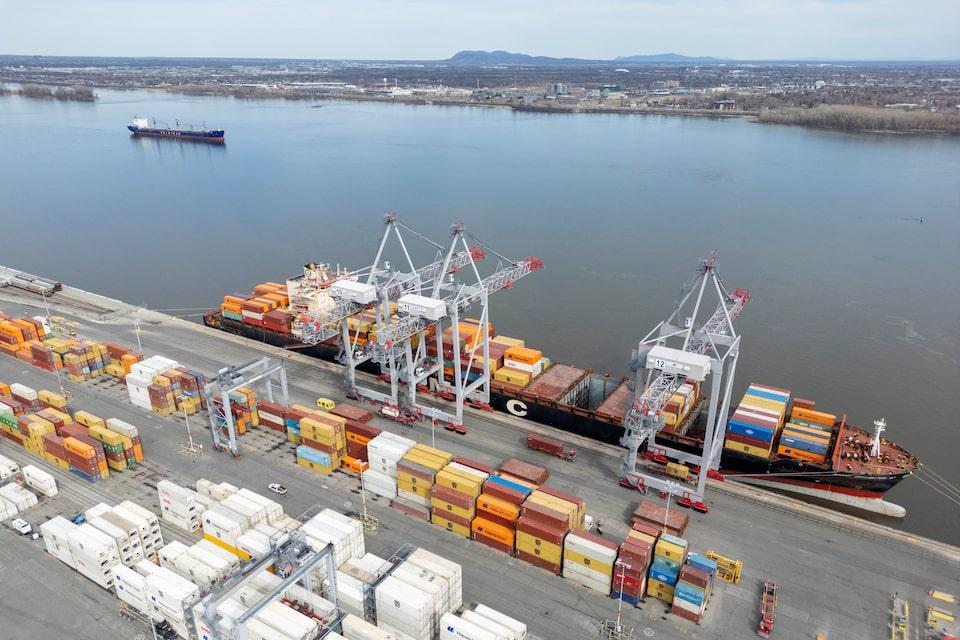
April GDP contracts by 0.1%, likely similar drop in May Decline led by 1.9% contraction in manufacturing Wholesale trade sector also contracted by 1.9% Finance & insurance, public administration sectors grow OTTAWA, June 27 (Reuters) - Canada's economy contracted in April on a monthly basis, data showed on Friday, as sectors exposed to tariffs and uncertainty negated a boost from services. Gross domestic product contracted by 0.1% month on month in April, Statistics Canada said, led by a 0.6% decline in goods-producing industries which contribute 25% to GDP. Sign up here. While there was growth in finance and public administration, this was offset by a drop in sales in manufacturing and wholesale trade among others, Statscan said. Analysts polled by Reuters had estimated GDP to be flat in April. The statistics agency revised the March growth figure to 0.2% from 0.1% reported previously. An advanced estimate from Statscan showed that GDP for May is likely to contract again by 0.1%. A back-to-back contraction in May, if confirmed, will not bode well for second-quarter GDP, which many economists have warned will reveal the full impact of tariffs on Canada imposed by U.S. President Donald Trump. The Bank of Canada has also warned that growth in the second quarter will be substantially weaker. Surveys have shown that business investment has already been sluggish, job hiring has been muted, layoffs are picking up and there are signs that consumption is declining. Manufacturing is heavily exposed to U.S. tariffs and contributes up to a tenth of GDP. The sector's output contracted by 1.9% in April, its biggest decline since four years ago, when the pandemic was ravaging output and exports. The transportation equipment manufacturing sub sector dropped by 3.7% and was the largest contributor to the decline, Statscan said. The wholesale trade sector contracted 1.9% in April, recording the largest monthly decline since June 2023, and was largely led by a hefty fall in motor vehicle and motor vehicle parts and accessories wholesaler-distributors. The real estate and construction sectors continued their muted growth, each expanding by 0.1%. Real estate and rental and leasing account for the biggest contribution to GDP at 13%. Economists had said that if growth in April was substantially weaker, and the next inflation data release is weak, it could boost the chances of an rate cut in July. "Our tracking for Q2 GDP now more clearly points to a slight contraction," Royce Mendes, managing director and head of macro strategy at Desjardins, wrote in a note. "We continue to believe the Bank of Canada will reduce rates next month, with the stickiness in core inflation measures due mostly to unusual volatility in the April reading," he said. The central bank will have the benefit of another set of jobs and inflation data next month before its rates decision. Money markets are betting that the odds of a rate cut at the central bank's July 30 meeting are at 37.25%. The Canadian dollar pared some of its losses after the data and was trading down 0.06% at 1.3648 to the U.S. dollar, or 73.27 U.S. cents. Yields on two-year government bonds were up 0.6 basis points to 2.638%. Among the sectors that added to growth was finance and insurance, which expanded by 0.7%, its largest monthly increase since August last year. https://www.reuters.com/world/americas/canadas-gdp-contracts-april-likely-another-decline-may-2025-06-27/
2025-06-27 12:46
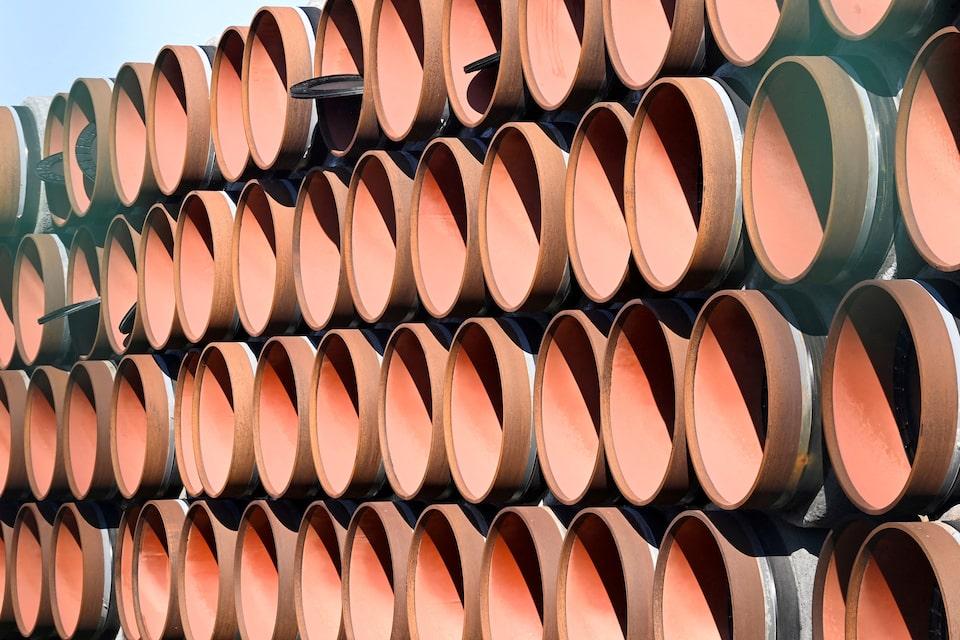
BERLIN, June 27 (Reuters) - Germany is considering changing its foreign trade law to prevent the company running the Nord Stream 2 pipelines from being taken over, a document showed on Friday, as part of Berlin's efforts to prevent any resumption of Russian gas imports. For decades Germany relied on cheap Russian gas, but since the outbreak of the conflict in Ukraine, it has sought alternatives. Sign up here. German Chancellor Friedrich Merz has said he will ensure Nord Stream 2, which the country once backed, would not go into operation, but for now the country has no legal means to prevent a sale of the assets, owned by Russian giant Gazprom (GAZP.MM) , opens new tab. The Nord Stream pipeline system comprises two double pipelines across the Baltic Sea to Germany and was the biggest route for Russian gas to enter Europe, capable of delivering 110 billion cubic metres of gas a year. The second link Nord Stream 2 was completed in 2021. It never became operational due to deteriorating relations between Russia and the West and was hit by unexplained explosions in 2022 that left one of its two lines intact. Swiss-based Nord Stream 2 has been going through insolvency procedures that could lead to asset sales. In November, The Wall Street Journal reported that U.S. investor Stephen P. Lynch was attempting to acquire Nord Stream 2, a report the Russian government denied. In a parliamentary response dated June 24, the German Economy Ministry said the government was discussing a possible amendment during this legislative period to the foreign trade law as it does not currently provide for any investment review in the event of a takeover. Der Spiegel magazine first reported the news. Former economy ministry state secretary and Green lawmaker Michael Kellner said the government must close this loophole. "Pipelines in Germany or Europe do not belong in the hands of Russian or American companies," he told Reuters. Gazprom did not reply to a request for comment. https://www.reuters.com/business/energy/germany-considers-law-reform-block-russian-owned-nord-stream-takeover-2025-06-27/
2025-06-27 12:38
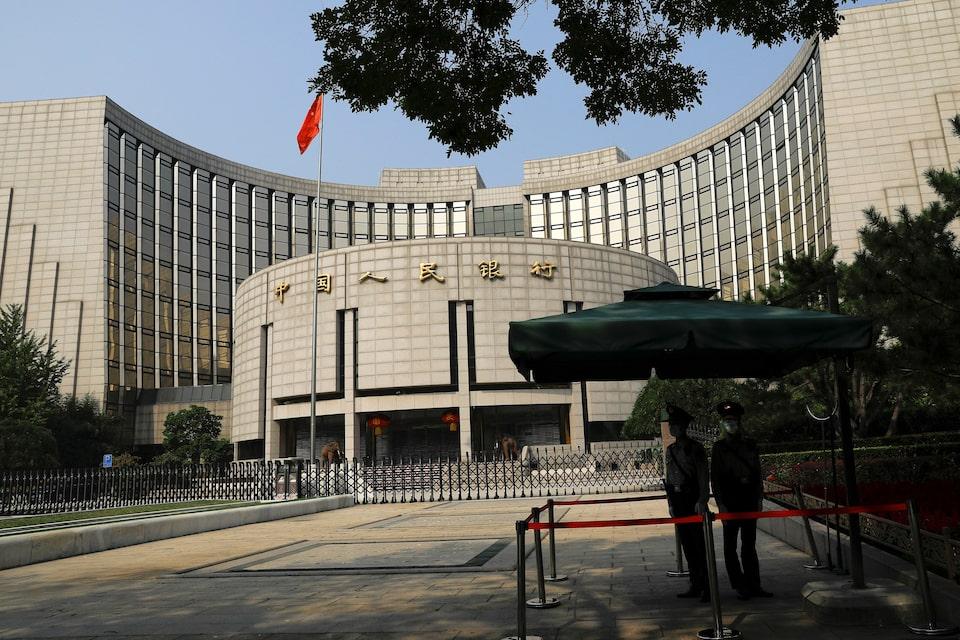
BEIJING, June 27 (Reuters) - China's central bank said on Friday that it would adjust the pace and intensity of policy implementation in response to domestic and global economic and financial conditions. The world's No.2 economy has faced pressure this year due to U.S. President Donald Trump's imposition of tariffs on Chinese products and persistent deflationary pressure at home. Sign up here. "The external environment has grown increasingly complex and challenging, with weakening momentum in global economic growth, rising trade barriers, and diverging economic performance among major economies," the People's Bank of China (PBOC) said in a summary of its quarterly monetary policy committee meeting. The economy "still faces difficulties and challenges such as insufficient domestic demand, persistently low price levels, and multiple hidden risks," the bank said. "It is suggested that the intensity of monetary policy adjustments be increased, and the forward-looking, targeted and effective nature of monetary policy adjustments be enhanced," it added. In May, the PBOC unveiled a raft of easing steps, including interest rate cuts and a major liquidity injection, as Beijing stepped up efforts to soften the economic damage caused by the trade war with the United States. Investors are watching for signs of fresh stimulus from an expected Politburo meeting in July as well as clues from an anticipated plenum later this year, where top party leaders are likely to discuss the country’s 2026–2030 five-year plan. "On the monetary policy front, we do not expect an aggressive move unless there is a wholesale change in the leadership's economic belief," analysts at ANZ said in a note. ANZ expects the central bank to cut its key interest rate by 10 basis points ahead of the expected Politburo meeting, followed by a further 30-basis-point reduction after the party plenum, likely in August, the analysts said. The PBOC said it would guide financial institutions to step up credit supply, and push for the lowering of overall social financing costs. It also pledged to enhance the resilience of the foreign exchange market, to guard against the risk of exchange rate overshooting, and to keep the yuan exchange rate "basically stable at a reasonable and balanced level". On the beleaguered property market, the bank said it would increase efforts to revitalise existing commercial housing and land inventory, and continue to consolidate the "stable momentum" in the sector. https://www.reuters.com/markets/asia/chinas-central-bank-pledges-speed-up-policy-response-economic-conditions-2025-06-27/
2025-06-27 12:37
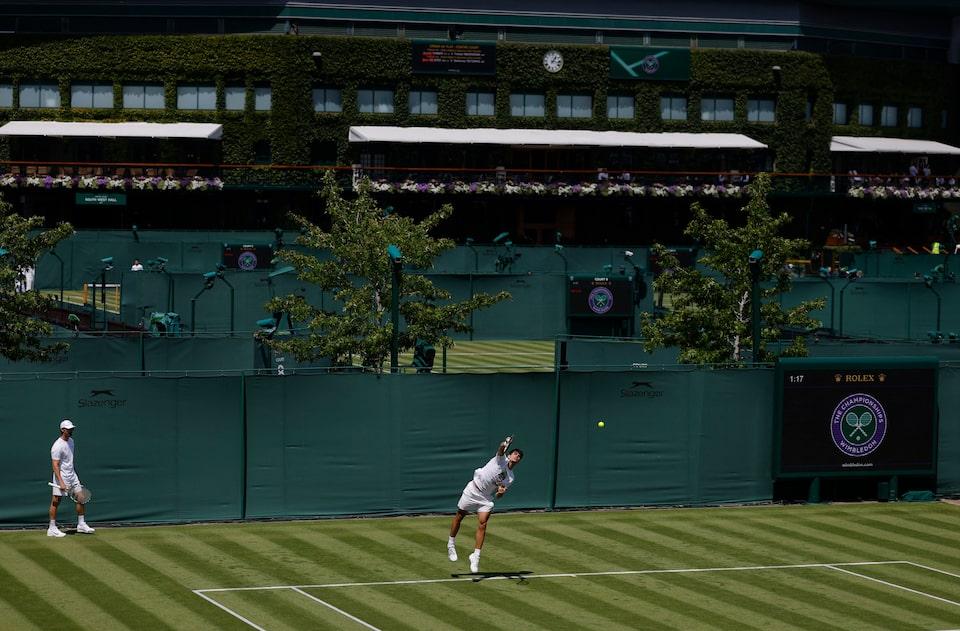
LONDON, June 27 (Reuters) - Wimbledon is braced for its hottest ever start with London set to endure a searing heatwave that is forecast to peak as play begins at the All England Club on Monday. With the mercury expected to rise into the mid-30s Celsius on Monday after a hot weekend, players, organisers, ticket holders and those queuing face a challenging day. Sign up here. The previous record temperature for the start of the grass court Grand Slam event was set in 2001 when 29.3C was reached. Monday's expected blast of heat could even surpass the tournament record of 35.7 degrees in 2015 when on-court temperatures were significantly higher than that. Wimbledon's heat rule will likely come into force, allowing a 10-minute break in play when the Wet Bulb Globe Temperature (WBGT) is at or above 30.1 degrees Celsius. The WBGT, which will be taken before the start of play and then at 1400 and 1700, takes various factors into account including ambient temperature, humidity, wind and sun angle. The rule will apply after the second set for all best of three set matches, and after the third for all best of five set matches with players allowed to leave the court during the break, but not to receive coaching or medical treatment. 'LESS INTERESTING' While welcoming the heat rule, Chris Taylor, an environmental physiology researcher at the University of Roehampton, said the heat could affect the quality of matches. "It's good that they have a rule that uses the Wet Bulb Globe Temperature but what it doesn't factor in is what the players are doing," he told Reuters. "Most of the heat risk for players relates to their actual body temperature increasing, 80% of their body temperature is related to what they're doing. "Many players will change the way they play if it's that warm, shorter points and perhaps less interesting for the fans. "Top players with the resources for warm weather training are used to heat and are conditioned and will probably be okay, but the real problem is for players who are not used to it and cannot adapt their play." He also said iced towels applied to the back of the neck during changeovers are not necessarily the best way for players to cool down. "It's like a football team giving a pain-killing injection to their star player before a cup final, it makes them feel better but the injury is still there," he said. "If it's core body temperature you want to bring down, the towels aren't really going to do much. "The feet and the forearms have a lot of blood vessels and (cooling them down) is quite a good method of heat exchange, also the groin where you have the femoral artery." 'COMPREHENSIVE PLANS' While elite players are likely to cope with the expected heat, Wimbledon organisers are taking precautions to protect the general public and staff, including ball boys and girls (BBGs). "Adverse weather is a key consideration in our planning for The Championships, and we are prepared for the predicted hot weather, with comprehensive plans in place for guests, players, staff and the BBGs," a club statement said. More free water refill stations will be provided around the grounds and real-time weather alerts will be announced on big screens and via the tournament website. Staff shifts will also be adjusted to mitigate the heat while 'shade-mapping' will help people get away from the sun. After extreme heat on Monday and Tuesday, temperatures are expected to drop to the low to mid 20s for the rest of the week with some rain showers likely. https://www.reuters.com/sports/tennis/wimbledon-set-scorching-start-heatwave-looms-2025-06-27/
2025-06-27 12:33
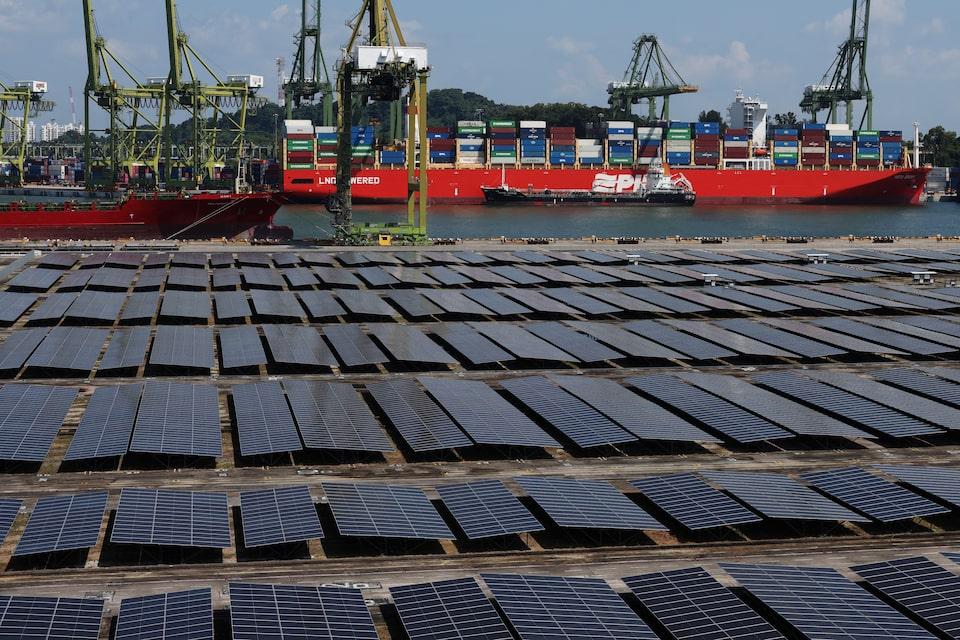
SINGAPORE, June 27 (Reuters) - Singapore boosted the share of renewables in its power generation mix to a record high in May, an analysis of the latest market data showed, as the country ramped up renewable imports and accelerated local solar power generation. Domestic solar generation in May rose at the fastest pace since March 2024 and renewable imports rose a third straight month to their highest in more than two years, lifting the share of renewables in the city-state's power mix to 2.58%, data from the National Electricity Market of Singapore showed. Sign up here. Cross-border power trade is seen as key to easing regional reliance on fossil fuels amid growing data centre-driven power demand. Singapore expects to meet 6 GW, or around one-third of its power demand from clean electricity imports by 2035, as Asia's second-smallest country has limited renewable energy potential. Gas-fired power plants in Singapore account for about 95% of its power capacity. In the five months through May, the data showed Singapore imported 122.7 million kilowatt-hours of clean power, or 0.52% of total generation, the data showed. It did not import any power during the same period last year, the data showed, and only started importing small quantities in the last quarter of 2024. The share of imports in Singapore's power mix rose for a third straight month in May, displacing some fossil fuel-fired generation. Singapore's total electricity generation grew 0.4% during the first five months, the data showed. Singapore has two active cross-border power trade deals: the 200 MW Lao PDR–Thailand–Malaysia–Singapore (LTMS) and the 50 MW Energy Exchange Malaysia (ENEGEM) pilot project with Malaysia's state utility Tenaga Nasional Berhad. The Singapore Energy Market Authority's chief executive said in October the terms of an extension to the LTMS had yet to be finalised, as Singapore was waiting for Thailand to finalise details on transmission charges for the multilateral deal. On Friday, the EMA told Reuters in a statement that discussions were "ongoing for future enhancements to the LTMS," without elaborating further. https://www.reuters.com/sustainability/boards-policy-regulation/singapores-renewables-usage-hits-record-high-imports-solar-output-rise-2025-06-27/