2025-06-27 07:19
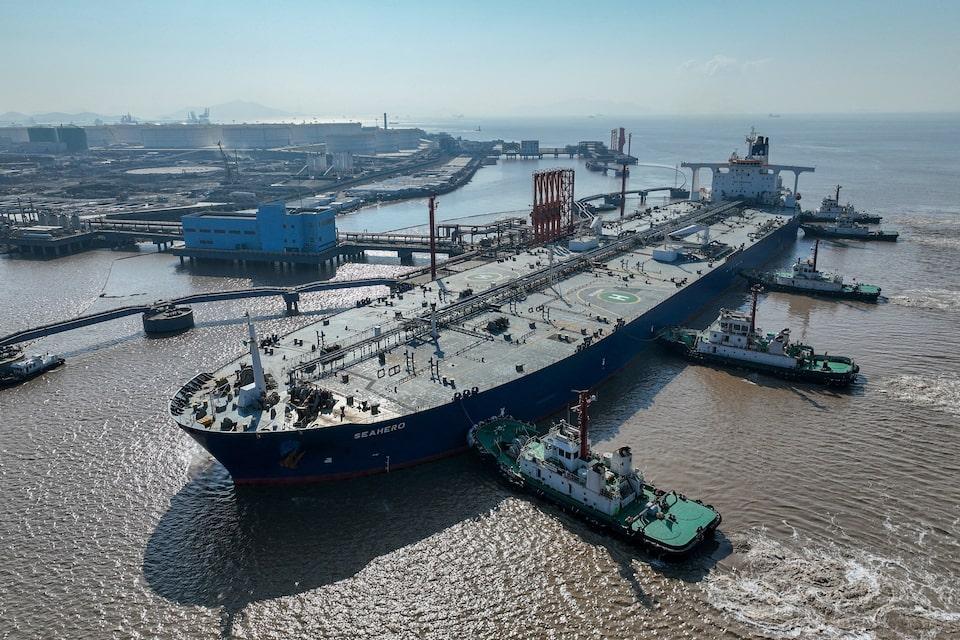
Iranian oil imports to China hit record high for June 1-20 - Vortexa China imported over 1.8 mln bpd from Iran for June 1-20 - Vortexa Discharge accelerates amid high stocks, robust demand SINGAPORE, June 27 (Reuters) - China's Iranian oil imports surged in June as shipments accelerated before the recent conflict in the region and demand from independent refineries improved, analysts said. The world's top oil importer and biggest buyer of Iranian crude brought in more than 1.8 million barrels per day (bpd) from June 1-20, according to ship-tracker Vortexa, a record high based on the firm's data. Sign up here. Kpler's data put the month-to-date average of China's Iranian oil and condensate imports at 1.46 million bpd as of June 27, up from one million bpd in May. The rising imports are fuelled in part by the accelerated discharge of high volumes of Iranian oil on the water after export loadings from Iran reached a multi-year high of 1.83 million bpd in May, Kpler data showed. It typically takes at least one month for Iranian oil to reach Chinese ports. Robust loadings in May and early June mean China's Iran imports are poised to remain elevated, Kpler and Vortexa analysts said. Independent Chinese "teapot" refineries, the main buyers of Iranian oil, also showed strong demand for the discount barrels as their stockpiles depleted, said Xu Muyu, Kpler's senior analyst. A possible relaxing of U.S. President Donald Trump's policy on Iranian oil sanctions could further bolster Chinese buying, she added. Trump said on Wednesday that Washington has not given up its maximum pressure campaign on Iran - including restrictions on Iranian oil sales - but signalled a potential easing in enforcement to help the country rebuild. For this week, Iranian Light crude oil was being traded at around $2 a barrel below ICE Brent for end-July to early-August deliveries, two traders familiar with the matter said, compared to discounts of $3.30-$3.50 a barrel previously for July deliveries. Narrower discounts were spurred by worries that oil flows could be disrupted through the Strait of Hormuz, a critical waterway between Iran and Oman, traders said. Market fears for a closure of the chokepoint had escalated after last weekend's U.S. attack on Iranian nuclear sites but eased after Iran and Israel on Tuesday signalled a ceasefire. Tighter discounts for Iranian oil come amid a retreat in futures prices. ICE Brent crude futures hovered at $68 per barrel on Friday, their level before the Israel-Iran conflict began and down 19% from Monday's five-month peak. https://www.reuters.com/business/energy/chinas-iran-oil-imports-surge-june-rising-shipments-teapot-demand-2025-06-27/
2025-06-27 07:12
LONDON, June 30 (Reuters) - A momentous first half of 2025 comes to an end with trade, Federal Reserve independence and geopolitics staying high on the market watch list for the second half. There is plenty to digest: U.S. jobs data, a European Central Bank conference and Chinese business activity numbers. Sign up here. Here's all you need to know about this week in global markets from Marc Jones, Yoruk Bahceli and Anousha Sakoui in London, Rae Wee in Singapore and Lewis Krauskopf in New York. 1/ H2 OH! The year crosses the halfway line and while U.S. President Donald Trump's return to power in January was always going to ruffle markets, even the most grizzled of traders have been shocked by the rodeo ride. Some describe it as a once-in-a-generation "great rotation". The main evidence is that King Dollar is having its worst start to a year since the era of free-floating currencies began in the early 1970s, as U.S. debt worries grow. The "Magnificent 7" stocks are flat for the year too, compared to a near 20% leap by Chinese "Big Tech", gold's 25% surge and a 60% boom in European defence stocks. There won't be much time for an H2 breather. Trump wants to ram his "Big Beautiful" fiscal bill though by the Independence Day holiday, his temporary ceasefire in the global trade war is due to run out five days later. 2/JOBS JOLT The latest U.S. jobs data will shed light on the health of the labour market at a time when investors are debating at what point the Fed will next cut rates. June numbers, due on July 3 in the holiday-shortened week, are expected to show employment grew by 129,000 jobs, according to a Reuters poll. That would be modestly slower growth than May's 139,000 increase. While a possibly weaker labour market is one consideration for rate cuts, the Fed is also monitoring inflation. Fed Chair Jerome Powell just told Congress that higher tariffs could begin raising inflation this summer. Investors are also watching the progress of Trump's tax-cut and spending bill in Congress, with his Republican party hoping to keep it on track for the president to sign into law before the July 4 holiday. 3/ ESCAPE TO THE MOUNTAINS Central bankers meet for the ECB's annual forum in the foothills of Portugal's Sintra Mountains, with focus on what rates-setters from ECB chief Christine Lagarde to the Fed's Powell say on never-ending geopolitical turbulence. Whether it's the economic impact of renewed Middle East tensions or the July 9 tariff deadline, there's little clarity ahead, blurring rate cut expectations. Investors will look for clues on ECB policy, and Powell is in the spotlight with Trump considering naming his successor early, fanning worries over Fed independence. The ECB could also announce the results of its strategy review. For all the post-pandemic turmoil, policymakers are seen side-stepping calls for self-criticism, standing by the last decade's aggressive stimulus. And Tuesday's data should show whether euro zone inflation returns to its 2% target in June after dipping below it in May. 4/ LIFT-OFF? It's already midway through the year, but China's long-awaited economic recovery has barely taken off. China's manufacturing activity shrank for a third straight month in June, though at a slower pace, Monday's official purchasing managers' index figures show. The Caixin/S&P Global manufacturing PMI reading follows the official release a day later, and the bar to surpass May's dismal numbers is relatively low. Chinese officials sound upbeat about the growth outlook, but uncertainties loom. Domestic deflationary pressures continue to deepen and a fragile Sino-U.S. trade truce is hardly the endgame. Tensions between the world's two largest economies remain, even if they are out of sight for now. 5/ DEAL, DONE Given tariffs and heightened market volatility, the first half has not gone too badly for dealmakers. China and Japan, for instance, saw huge jumps in M&A, Dealogic data in the year to June 23 suggests. Hong Kong awaits a possible Shein IPO - which would give Asia equity issuance a further boost. Global M&A remains off 2021 highs but is still up on the same period last year by nearly 25% at just over $2 trillion. The activity was driven by fewer but bigger deals like Charter Communications' (CHTR.O) , opens new tab $22 billion bid for rival Cox Communications. This trend is likely to persist, at least in the U.S., where M&A rose 8% to nearly $885 billion. While a KPMG survey of U.S.-based corporate and private equity dealmakers found that nearly all said tariffs had impacted dealmaking plans, nearly three quarters expected M&A to exceed last year's levels. For about two-thirds, potential tax policy changes would increase their appetite for M&A, and the new U.S. administration's approach to anti-trust would make deals easier. https://www.reuters.com/business/take-five/global-markets-themes-graphic-2025-06-27/
2025-06-27 07:03
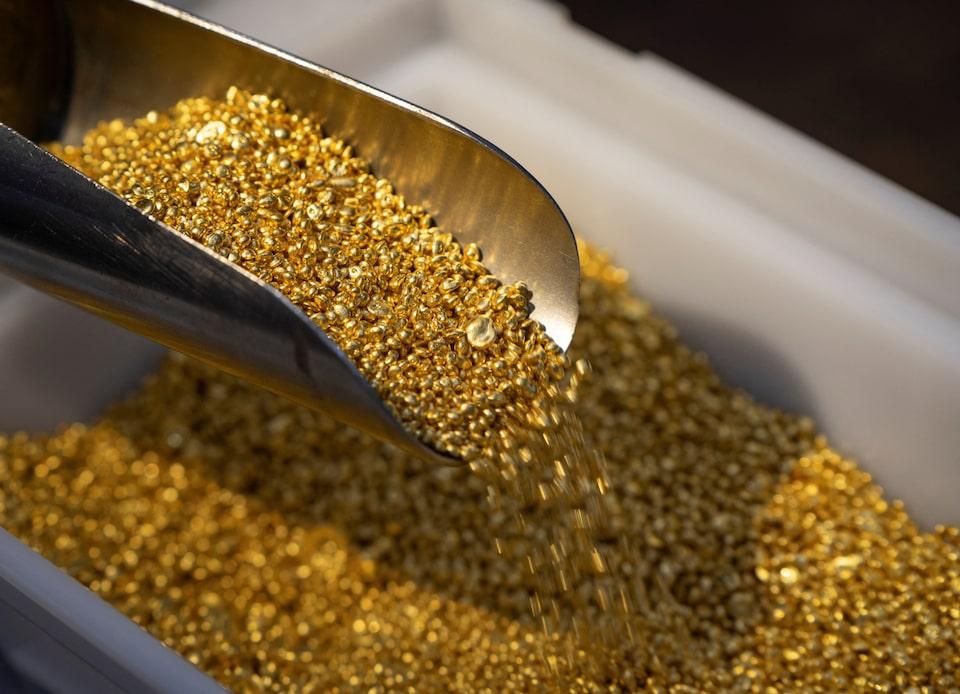
Spot gold down over 2% for the week US PCE data due at 1230 GMT Fed's Barkin says tariffs will start pushing up inflation Platinum falls nearly 6% after hitting highest level since 2014 June 27 (Reuters) - Gold fell more than 1% to its lowest level in nearly a month on Friday due to easing geopolitical and trade tensions and as investors awaited U.S. inflation data for clues on the future trajectory of interest rates. Spot gold lost 1.4% to $3,282.68 per ounce by 1055 GMT, its lowest since late May. Prices have fallen by over 2% this week and more than $200 from a record high scaled in April. Sign up here. U.S. gold futures fell 1.6% to $3,294.50. The Iran-Israel ceasefire, brokered earlier this week by U.S. President Donald Trump, is holding for now. A White House official said on Thursday that the U.S. has reached an agreement with China on how to expedite rare earths shipments to the U.S. July 9 is the deadline for Trump's "reciprocal" tariffs as nations rush to get an agreement. "The loss of haven demand has meant that despite the latest leg down in the dollar, gold has not benefited from this at all," said Fawad Razaqzada, market analyst at City Index and FOREX.com. "A bit of a pullback would not be too bad an outcome as that will allow long-term technical overbought conditions on higher time frames to work off, allowing the metal to shine again when macro conditions are more favourable once more." The immediate focus is the U.S. Personal Consumption Expenditure data, an inflation gauge, scheduled for release at 1230 GMT. Fed Bank of Richmond President Thomas Barkin said tariffs are very likely to push inflation up over the coming months. Despite its reputation as a hedge against inflation and uncertainty, zero-yield bullion loses appeal in a high interest rate environment. Spot silver fell 1.8% to $35.96. Platinum dropped 5.9% to $1,334.63, after hitting its highest since 2014. Palladium fell 1.2% to $1,117.96. The main reason for the price increase in platinum was likely to be the high discount to gold, which is apparently considered too expensive, said Commerzbank in a note. https://www.reuters.com/world/india/gold-heads-second-weekly-loss-investors-eye-us-inflation-data-2025-06-27/
2025-06-27 06:52
Sources say OPEC+ planning 411,000 bpd output boost in August Brent, WTI down 12% this week, most since March 2023 No major supply disruption from Middle East crisis, analysts say HOUSTON, June 27 (Reuters) - Oil prices edged up slightly on Friday, recovering from a midday drop into negative territory following a report that OPEC+ was planning to hike production in August, but tumbled about 12% in the week in their biggest drop since March 2023. Brent crude futures settled at $67.77 a barrel, up 4 cents, or 0.1%. U.S. West Texas Intermediate crude finished up 28 cents, or 0.4%, at $65.52 a barrel. Sign up here. Four delegates from OPEC+, which includes allies of the Organization of the Petroleum Exporting Countries, said the group was set to boost production by 411,000 barrels per day in August, following a similar-size output increase already planned for July. "The report about an OPEC increase came out and prices cratered," said Phil Flynn, senior market analyst with Price Futures Group, about the midday slide. Crude prices were already headed for a 12% decline for the week following the cease-fire between Israel and Iran. During the 12-day war that started after Israel targeted Iran's nuclear facilities on June 13, Brent prices rose briefly to above $80 a barrel before slumping to $67 a barrel after U.S. President Donald Trump announced an Iran-Israel ceasefire. "The market has almost entirely shrugged off the geopolitical risk premiums from almost a week ago as we return to a fundamentals-driven market," said Rystad analyst Janiv Shah. Flynn said expectations of higher demand in the coming months gave crude a boost earlier on Friday. "We're getting a demand premium on oil," Flynn said. Prices had also been supported earlier in Friday's session by multiple oil inventory reports that showed strong draws in middle distillates, said Tamas Varga, a PVM Oil Associates analyst. U.S. government data on Wednesday showed crude oil and fuel inventories fell last week, with refining activity and demand rising. Meanwhile, data on Thursday showed that independently held gasoil stocks at the Amsterdam-Rotterdam-Antwerp (ARA) refining and storage hub fell to their lowest in over a year, while Singapore's middle distillates inventories declined as net exports climbed week on week. Additionally, China's Iranian oil imports surged in June as shipments accelerated before the Israel-Iran conflict and demand from independent refineries improved, analysts said. China is the world's top oil importer and biggest buyer of Iranian crude. It bought more than 1.8 million barrels per day of Iranian crude from June 1-20, according to ship-tracker Vortexa, a record high based on the firm's data. The U.S. oil and natural gas rig count, an early indicator of future output, fell for a fourth straight month to its lowest since October 2021, Baker Hughes said. The number of oil rigs fell by six to 432 this week, also the lowest level since October 2021. https://www.reuters.com/business/energy/oil-set-weekly-loss-fading-mideast-supply-risks-2025-06-27/
2025-06-27 06:43
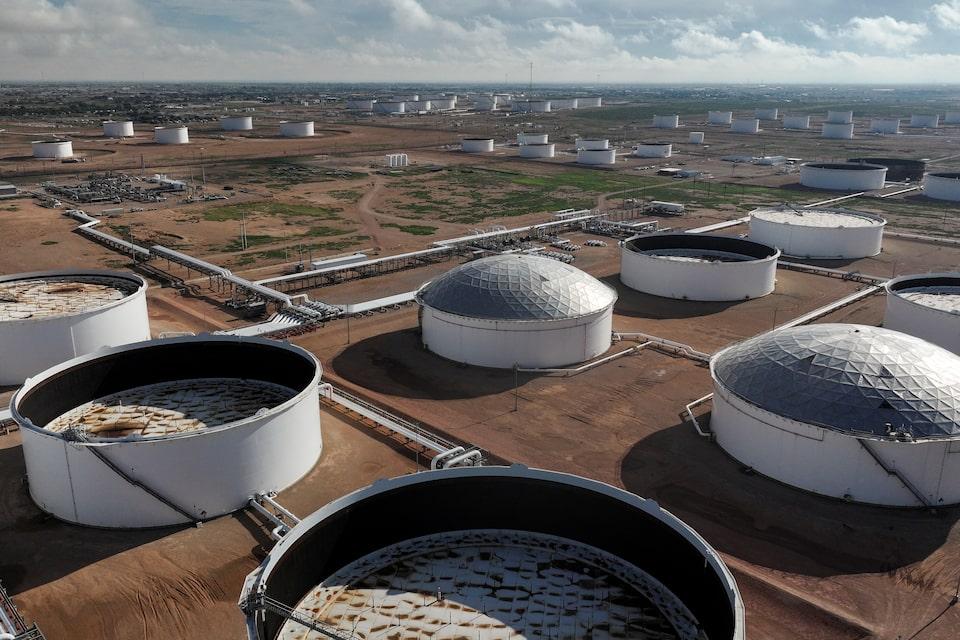
Smelter losses could lead to production cuts, market participants say Copper concentrate deficit at 1.1 mln t in 2025, 2.6 mln t in 2026, BMI forecasts China's 2025 refined copper output to grow by 12% y/y, Mysteel says BEIJING/SINGAPORE, June 27 (Reuters) - Some Chinese smelters have agreed to process copper from Chilean miner Antofagasta (ANTO.L) , opens new tab for no charge, a record low for the industry, but the outcome was better than expected for the smelters, already suffering losses. Antofagasta has agreed to set copper concentrate processing fees at $0 per metric ton and 0 cents per pound, four sources with the knowledge of the matter told Reuters on Friday. Sign up here. The agreement reflects a shortage of copper concentrate supply for the smelters that produce the metal increasingly in demand in the transition to clean energy, including for electric vehicles and power lines. The fees agreed with Antofagasta are regarded as a benchmark for the industry and compare with the 2025 annual charges at $21.25 a ton and 2.125 cents per pound agreed between the Chilean company and Chinese smelters. One smelter and two analysts speaking on condition of anonymity described it as "better than expected". Antofagasta did not immediately respond to a Reuters request for comment outside of their office hours. The zero processing fee is a win for smelters, given spot charges are hovering around the negative $43 mark - implying smelters would have to pay copper miners for processing their concentrate. Typically, miners must pay smelters to convert copper concentrate into metal. The concentrate supply shortage has intensified this year due to new smelter capacity coming online in China and slower-than-expected supply growth. Miner Ivanhoe Mines (IVN.TO) , opens new tab cut its output guidance after its copper mine in the Democratic Republic of Congo was affected by seismic activity. Consultancy Benchmark Mineral Intelligence pegged the global supply deficit for copper concentrate at 1.1 million tons in 2025 and 2.6 million tons in 2026, respectively. The contracts will deepen smelter losses in China, the world's largest refined copper producer and consumer, as the fees are a key source of revenue. In time the new low could force some smelters to cut production, analysts, smelters and traders said. That said, Chinese smelters, however, have not yet trimmed output much as revenue from byproducts such as gold, silver and sulfuric acid partially offsets the loss from copper. Refined copper output in China jumped by 8% year-on-year to a record high of 6.05 million tons from January to May, official data showed, and consultancy Mysteel forecast the total output in 2025 to climb by 12% from the prior year to 13.29 million tons. https://www.reuters.com/world/china/chinas-copper-smelters-win-better-than-expected-0-tcrc-deal-antofagasta-sources-2025-06-27/
2025-06-27 06:29
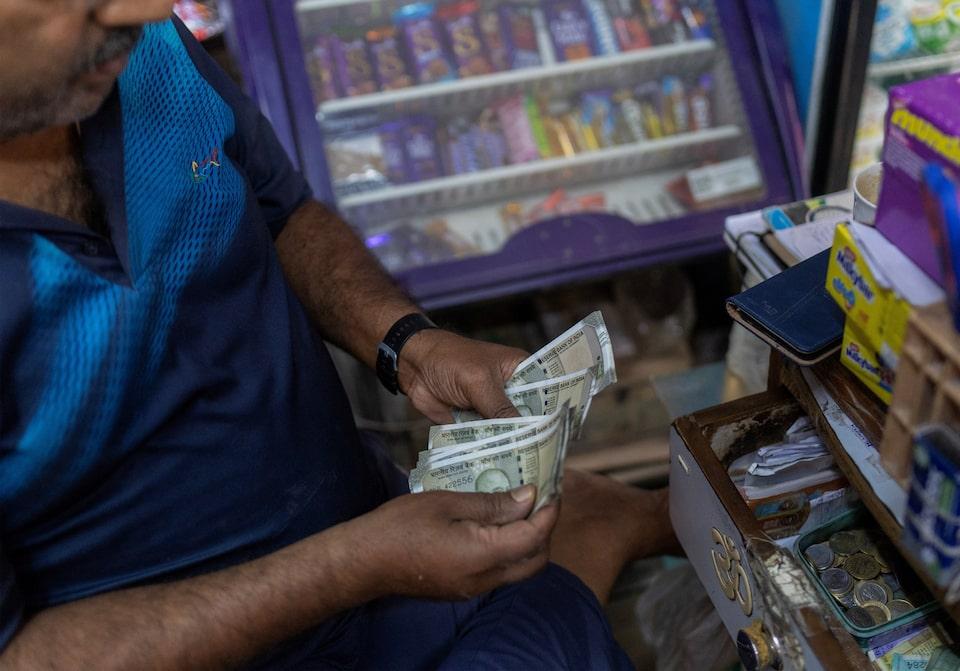
MUMBAI, June 27 (Reuters) - The Indian rupee edged higher on Friday as the dollar grappled with concerns over the future independence of the Federal Reserve and heightened expectations of cuts to U.S. benchmark interest rates. However, dollar bids from foreign and state-run banks put a lid on the rupee's gains after it managed to rise above the 85.50 mark in early trading. Sign up here. The currency was last quoted at 85.5375 against the dollar, up 0.2% on the day. The dollar index was at 97.4, hovering close to an over three-year low, while Asian currencies were trading mixed. India's benchmark equity indexes, the BSE Sensex (.BSESN) , opens new tab and Nifty 50 (.NSEI) , opens new tab, logged slight gains. Speculation that U.S. President Donald Trump may make an earlier-than-usual announcement of the next Federal Reserve chair, who is expected to be more dovish, has raised wagers on policy easing by the Fed. That, in turn, has weighed on the greenback, which is already under pressure over concerns about U.S. trade and fiscal policies this year. The dollar index is down over 10% year-to-date and is on track for its biggest first-half fall since the start of the era of free-floating currencies in the early 1970s. BofA Global Research holds a bearish view on the dollar over the medium to longer term due to U.S. economic uncertainty, the overhang of eventual Fed cuts, alongside a push from global real money investors, who are in the early stages of increasing FX hedging of U.S. assets. Meanwhile, the dollar-rupee overnight swap rate nudged higher on Friday, with traders pointing to sell/buy swaps from foreign banks, likely spurred by dollar inflows related to a large domestic IPO. Bidding for Indian lender HDB Financial's $1.5 billion IPO is set to close on Friday. The issue was subscribed by nearly two times as of 11:30 a.m. IST. (This story has been refiled to fix the dateline to June 27) https://www.reuters.com/world/india/rupees-upside-capped-by-dollar-bids-foreign-state-run-banks-2025-06-27/