2025-06-27 04:13
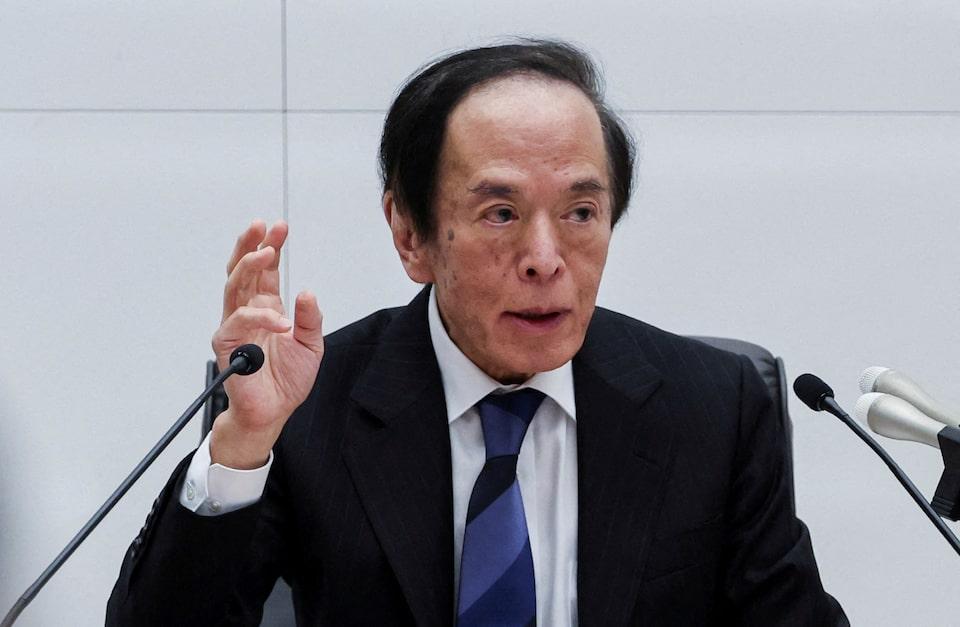
BOJ says 'underlying' inflation still below target Soft underlying inflation used by BOJ to justify slow rate hikes Gap between headline, underlying inflation complicates messaging Food, fuel price hikes may challenge BOJ's dovish communication TOKYO, June 27 (Reuters) - The Bank of Japan's increasing caution around raising interest rates further relies heavily on a relatively obscure inflation reading, which policy doves argue suggests weak consumer demand but critics say messes with the bank's messaging. Underlying inflation in Japan, which focuses on the strength of domestic demand and wages rather than volatile food and fuel, has been tracking below the Bank of Japan's 2% target. Sign up here. That contrasts starkly with headline inflation numbers that are above the target at multi-year highs, riling the public and until recently providing strong arguments for further interest rates. Analysts say the BOJ's fresh concerns about local consumption and the global economy have muddled its efforts to manage inflation expectations in a country that spent decades mired in deflation. "The unprecedented nature of what the BOJ is doing, and a lack of track record anchoring inflation expectations, are reasons why the BOJ is using the fuzzy concept of underlying inflation," said former BOJ official Nobuyasu Atago, who is currently chief economist at Rakuten Securities Economic Research Institute. "That's complicating its communication and making it difficult to understand what exactly they are trying to do." From a policy perspective, BOJ Governor Kazuo Ueda has already acknowledged the challenges of both resetting inflation expectations and trying to precisely measure underlying inflation. "We have managed to de-anchor expectations from zero, but have yet to re-anchor them at 2%," he said in a speech last month. "This is why we are still maintaining an accommodative policy stance." GUIDANCE MISMATCH On the face of it, Japan has an inflation problem, which is why its central bank is one of the few in the world that has raised rates in recent years as others cut. Headline consumer inflation hit 3.6% in April, well above 2.3% in the U.S. and the second highest among G7 advanced nations following 4.1% in the UK, according to OECD data. Other consumer price measurements, such as the core index stripping away volatile fresh food and the "core-core" - which also excludes fuel costs - have also stayed above the BOJ's 2% target for about three years. While there is no single indicator that gauges "underlying inflation", the BOJ looks at its own recalibrated measures such as the weighted median and the "mode", both of which are currently below the bank's 2% target. Other proxies the BOJ says it monitors include medium- and long-term inflation expectations, which it estimates as moving above 1.5% but slightly below 2.0%. A chart attached to recent BOJ speech texts also includes services price inflation as a key measurement of underlying inflation which, at 1.4% in May, also remains below 2%. Those trends coupled with worries about the economic hit from higher U.S. tariffs partly explain why the BOJ has signaled a pause in interest rate hikes after lifting them to 0.5% in January. However, there is still ambiguity around just what exactly vexes the BOJ. "For the average household, what matters is the price of food and grocery, not fuzzy concepts like underlying inflation," said a source familiar with the BOJ's thinking. "Even when looking at various indicators, underlying inflation is already pretty close to 2%," the source said, a view echoed by another source. To be sure, the BOJ expects the gap between headline and underlying inflation to narrow if the rise in food prices moderates and prospects of steady wage hikes underpin consumption. The central bank has also said it will keep raising rates if there is enough conviction that underlying inflation will hit 2% - a call the board makes looking not just at price moves but the economic outlook and its risks. A slight majority of economists in a Reuters poll expected the BOJ's next 25-basis-point increase to come in early 2026. A key challenge for now remains in how it communicates its cautious position, especially if domestic food inflation and the Middle East conflict persist and lead to an upgrade in its price forecasts at the board's next review on July 30-31. That question is also creating divisions within the BOJ board. Critics warn such dovish guidance could leave the bank behind the curve in addressing inflation risks. "I personally believe focus should be placed on inflation expectations of firms and households, who are the actual drivers of economic activity. I take these expectations to have already reached around 2%," Naoki Tamura, a BOJ board member known for his advocacy of further rate hikes, said this week. "If upward inflation risks heighten, the BOJ may need to act decisively as a guardian of price stability." https://www.reuters.com/business/dovish-tilt-boj-zooms-obscure-underlying-inflation-trends-2025-06-27/
2025-06-27 03:42
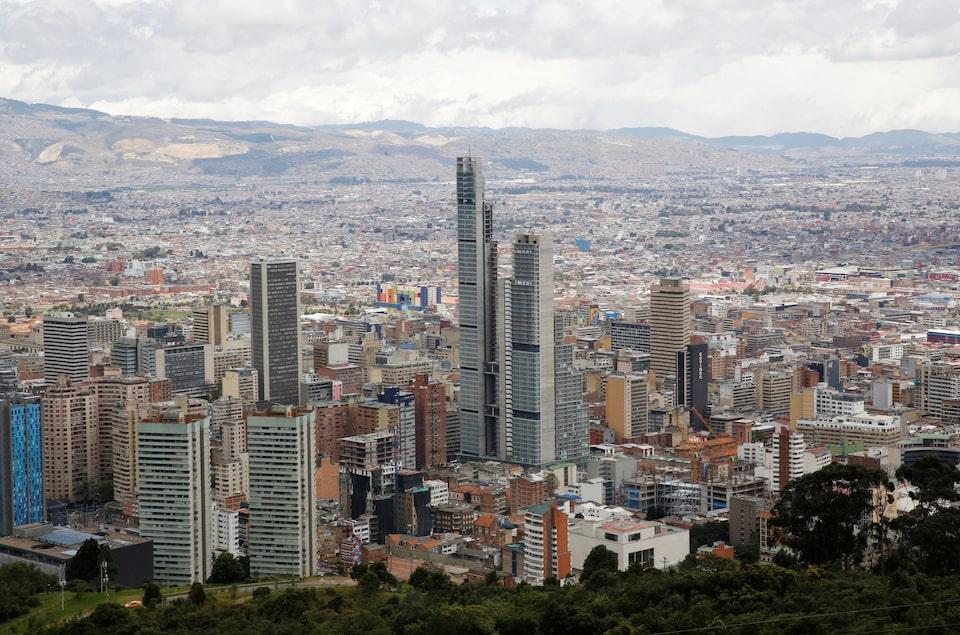
June 26 (Reuters) - Ratings agencies S&P and Moody's downgraded Colombia's debt rating by one notch on Thursday, with both citing weaker fiscal performance. S&P lowered the rating to "BB", two notches below investment grade, and Moody's to "Baa3", its lowest investment-grade rating, with a stable outlook. Sign up here. S&P, however, assigned a negative outlook on Colombia's rating, indicating the risk of a further downgrade over the next 18 months. Latin America's fourth-largest economy is facing deteriorating fiscal accounts amid lower tax revenues, high public debt and difficulties in reducing spending. The Colombian government last week suspended compliance with its so-called fiscal rule, to allow it to increase its deficit target for 2025 to 7.1% of gross domestic product from 5.1% of GDP. It said the goal was to boost the economy, especially agriculture and manufacturing. "Colombia's fiscal dynamics have worsened more than we expected," Moody's said in a release. "The overestimation of revenue for the 2024 and 2025 budgets has raised fiscal pressures that have not been compensated by spending measures." S&P said the combination of large fiscal deficits and weak economic performance had worsened Colombia's public finances and increased its vulnerability to external shocks. "Fiscal policy has also become less predictable, as highlighted by the government’s recent decision to suspend the country’s fiscal rule for three years," the agency said. S&P warned that steady fiscal deterioration could persist over several years, along with the country's heightened security challenges, further worsening its credit profile. Colombia is weighing boosting its external and domestic debt by several billion dollars this year to cover a deepening fiscal deficit, Reuters reported earlier this month, citing three market sources with knowledge of the matter. https://www.reuters.com/world/americas/sp-cuts-colombias-debt-rating-bb-over-declining-fiscal-results-2025-06-27/
2025-06-27 03:07
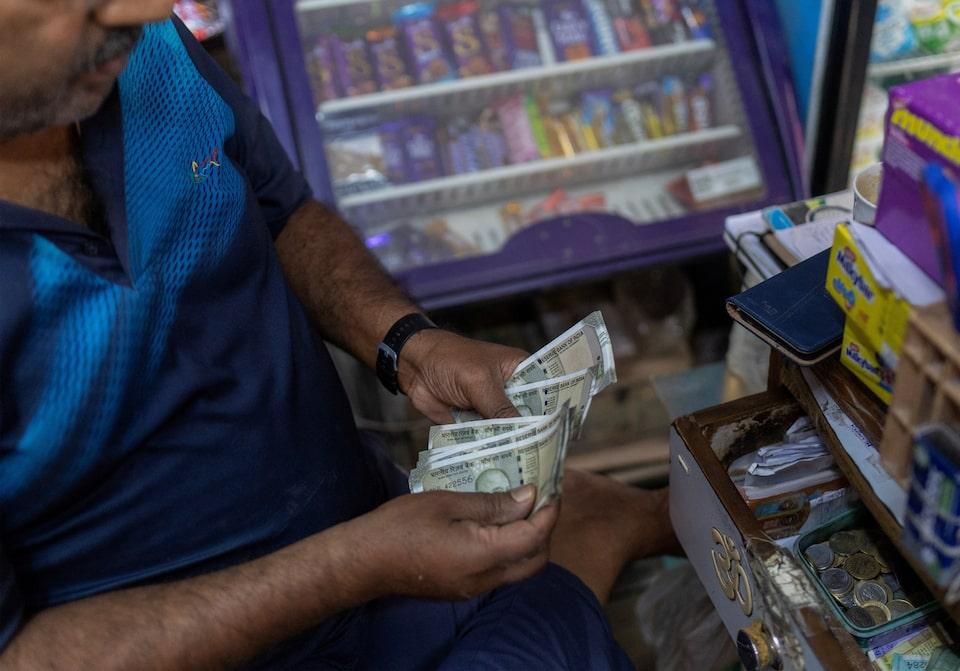
Mumbai, June 27 (Reuters) - The Indian rupee is set to climb further on Friday, supported by weak U.S. data that has strengthened expectations of a Federal Reserve rate cut in September, and possibly earlier. The one-month non-deliverable forward indicated an open in the 85.58-85.62 range, versus 85.7050 in the previous session. The rupee has already risen 1% through Thursday and is on track for its best weekly showing in several weeks, driven largely by a plunge in oil prices after the Israel-Iran ceasefire. Sign up here. The currency finally broke past the 86 handle on Thursday - a level it had been struggling to crack in prior sessions. The break probably "unlocks the next leg lower" for USD/INR pair, a currency trader at a Mumbai-based bank said. "Interbank positioning isn’t a hurdle. Price action over the next few sessions will tell us if this has turned into a sell-on-rallies market," the trader said. U.S. DATA SUPPORTS FED RATE CUTS U.S. first-quarter GDP contracted a bit faster than previously thought. The downward revision was led by consumption, which was trimmed by 0.7 percentage points to a 0.5% pace entirely because of softer services spending, Morgan Stanley said in a note. "Our economists note the tone of 1Q25 data changed and now suggests a household sector that was retrenching at the start of the year," it said Meanwhile, U.S. initial jobless claims declined in the week through June 21. However, the number of people receiving benefits after an initial week of aid, a proxy for hiring, increased to its highest level since November 2021. The 10-year U.S. yield fell to its lowest in nearly two months on Thursday, amid markets pricing in more Fed rate cuts than what the June dot plot had suggested. The dollar index remains pinned near multi-year lows, reflecting the rate expectations. KEY INDICATORS: ** One-month non-deliverable rupee forward at 85.70; onshore one-month forward premium at 12 paise ** Dollar index down at 97.3 ** Brent crude futures up 0.6% at $68.2 per barrel ** Ten-year U.S. note yield at 4.26% ** As per NSDL data, foreign investors sold a net $99.5mln worth of Indian shares on Jun. 25 ** NSDL data shows foreign investors sold a net $39.8mln worth of Indian bonds on Jun. 25 https://www.reuters.com/world/india/fed-rate-cut-bets-help-rupee-extend-weekly-rally-2025-06-27/
2025-06-27 02:16
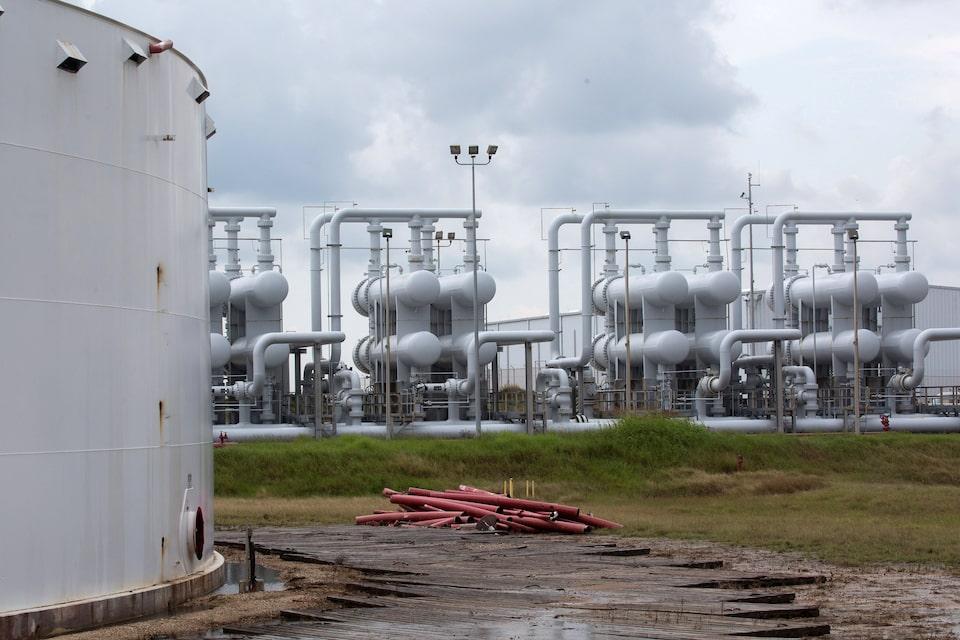
WASHINGTON, June 26 (Reuters) - The U.S. will not complete scheduled deliveries of crude oil into the Strategic Petroleum Reserve until the end of the year due to maintenance, as much as seven months behind schedule, the Department of Energy said on Thursday. Former President Joe Biden's administration scheduled 15.8 million barrels of deliveries to the SPR from January through May. So far this year only 8.8 million of that has been delivered to the reserve. Sign up here. "Due to site maintenance, the SPR rescheduled crude oil secured from previous solicitations, as well as exchanges, through December 2025," an Energy Department spokesperson told Reuters. Biden carried out several sales from the Strategic Petroleum Reserve including 180 million barrels in 2022, the largest ever, in an attempt to control spiking gasoline prices after Russia invaded Ukraine. President Donald Trump vowed on his first day in office in January to fill the SPR "right to the top", in an effort to support the domestic oil industry, but it is taking time. Energy Secretary Chris Wright has estimated it would take $20 billion and years to refill the reserve to the level it was before the sales. Trump's tax-and-spending bill allocates about $1.5 billion for purchases and SPR maintenance. Wright has also blasted Biden's large sale from the reserve, saying it caused hundreds of millions of dollars in damages. When asked for a breakdown of those damages, his department said the 180 million barrel sale resulted in $2 million in emergency repairs, $35 million in costs to move the oil and $243 million in costs from delays to congressionally-directed maintenance. The Biden administration said in November it had bought back 59 million barrels for the SPR after the 2022 sale at an average price of less than $76 a barrel, far lower than the $95 a barrel at which it sold oil in 2022. That resulted in a profit of about $3.5 billion, Biden's DOE said at the time. https://www.reuters.com/business/energy/us-will-not-complete-oil-deliveries-into-its-reserve-until-year-end-2025-06-27/
2025-06-27 00:22
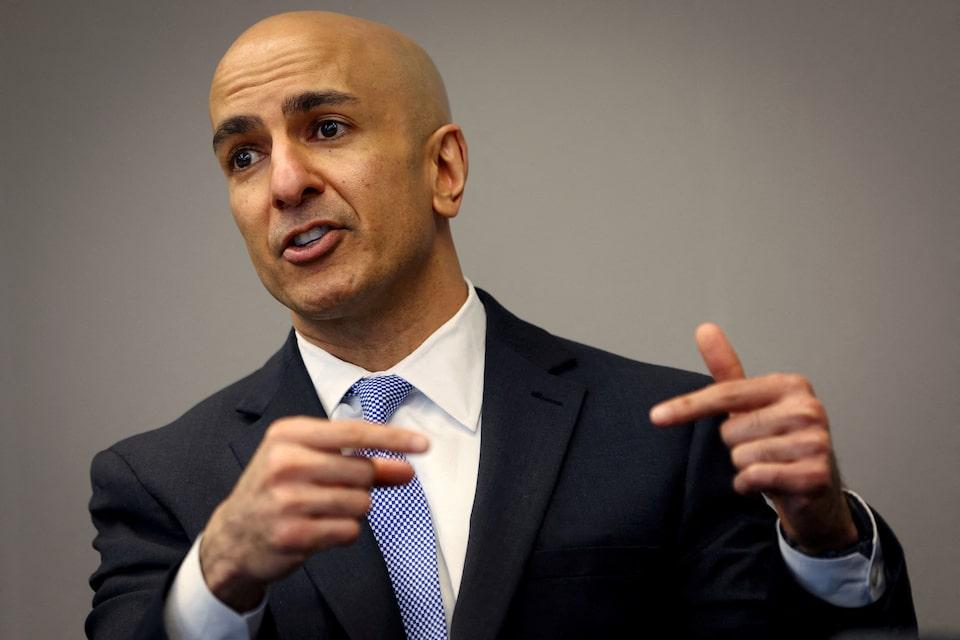
June 26 (Reuters) - Recent U.S. inflation data has been "quite positive" but some of the inflationary effect of tariffs may just be delayed, Minneapolis Federal Reserve Bank President Neel Kashkari said on Thursday. "We've been basically saying, Hey, we need to go slow until we have more clarity on what's happening with tariff-related inflation,'" Kashkari said, of how the Fed is looking at interest rate decisions. Sign up here. Businesses are going to pass on as much of the higher costs from tariffs as they can, he told the Montana Chamber of Commerce in Helena, Montana. "We've also heard a lot of businesses saying, Hey, we don't want to pass on cost increases yet because if the tariffs come back down to something more normal, why would we want to anger our customers if it's going to be a temporary thing?" Kashkari said. It's also remarkable, he said, how products often "find their way around and through barriers," a suggestion that he is watching to see if businesses find ways to avoid the biggest tariffs, which could limit the total impact on inflation. At the moment there's a lot of uncertainty and trade negotiations are under way, he said. "We still need to get a better assessment of what impact tariffs are going to have on the economy," he said. "We just don't know yet." https://www.reuters.com/business/feds-kashkari-says-more-clarity-needed-tariffs-impact-inflation-2025-06-27/
2025-06-27 00:18
June 26 (Reuters) - Options markets suggest the probability of a disruption of oil flows through the Strait of Hormuz is just 4% following the Iran-Israel ceasefire, Goldman Sachs analysts said in a note on Thursday. Fears that Iran could close the Strait of Hormuz after U.S. strikes on its nuclear facilities sent Brent crude futures to a high of $81.40 on Monday, but concerns eased in the wake of the truce declared the next day, sending crude back below $68. Sign up here. The sharp drop in the geopolitical risk premium likely reflected traders' recent experiences with major geopolitical shocks without significant oil disruptions, Iran's restrained response, strong U.S. and China incentives to avoid large disruptions, and the likely shift to large inventory builds from the fall, Goldman analysts said. Options markets see a 60% chance that Brent will stay in the $60s in three months and a 28% probability they would exceed $70, Goldman analysts said. Were oil flows to be disrupted through the Strait of Hormuz, Brent would climb to $90 a barrel, they said. https://www.reuters.com/world/middle-east/oil-market-reflects-slim-chance-supply-disruption-goldman-analysts-say-2025-06-27/