2025-06-26 21:10
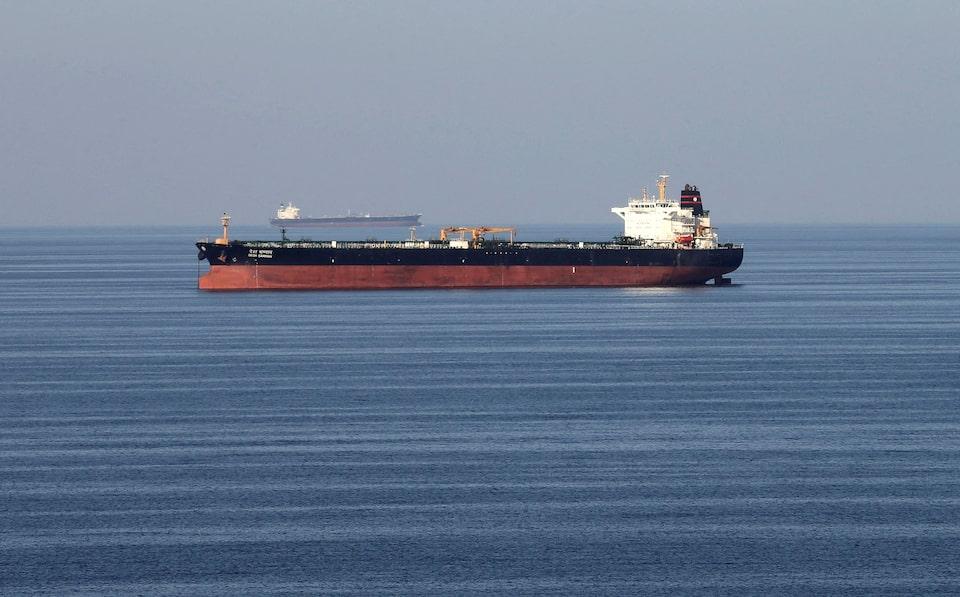
LONDON, June 26 (Reuters) - Shipping costs for the Gulf have fallen in the past two days after a ceasefire was reached between Israel and Iran, although rates could rebound if tensions increase, shipping and insurance industry sources said on Thursday. The conflict had raised concerns that Iran could close Hormuz, the strait between Iran and Oman through which around 20% of global oil and gas demand flows amid broader fears that oil could soar to $100 a barrel. Sign up here. Shipping rates for supertankers, which can carry 2 million barrels of oil, jumped over the past week before the ceasefire - more than doubling to over $60,000 a day. Rates were quoted around $50,000 a day on Thursday, freight data showed. "Tanker rates ... have been pulling back following the halt to hostilities between Israel and Iran," Jefferies analyst Omar Nokta said in a note. Israel and Iran agreed to a ceasefire on Tuesday after 12 days of war. Greece's shipping ministry on Thursday eased requirements for its merchant fleet, no longer advising them to report voyages through Hormuz, saying the situation "appears to have been improved". War risk insurance premiums for Gulf shipments softened to between 0.35-0.45%, from a peak of 0.5% on Monday, sources said. This compares with levels of around 0.3% in recent months. The cost of a seven-day voyage is based on the value of the ship and the drop will translate into tens of thousands of dollars less in additional costs each day. "Rates have definitely softened," said David Smith, head of marine with insurance broker McGill and Partners. "Whilst war premiums are still significant there is a large number of war risk insurers looking to underwrite risks and offer capacity, which in combination with the improved political situation is adding ever downward pressure on rates. That said, the situation remains very fluid." Iran would respond to any future U.S. attack by striking American military bases in the Middle East, Supreme Leader Ayatollah Ali Khamenei said on Thursday, in his first televised remarks since the ceasefire. https://www.reuters.com/business/energy/gulf-shipping-costs-drop-israel-iran-ceasefire-holds-2025-06-26/
2025-06-26 21:09
ORLANDO, Florida, June 26 (Reuters) - TRADING DAY Making sense of the forces driving global markets Sign up here. By Jamie McGeever, Markets Columnist The dollar slid and stocks surged on Thursday as investors ramped up bets that U.S. interest rates will soon be cut, after President Donald Trump, in his latest attack on Fed Chair Jerome Powell, reportedly said he may name his replacement early. In my column today I look at where the "pain trades" for investors may lie in the second half of the year. More on that below, but first, a roundup of the main market moves. If you have more time to read, here are a few articles I recommend to help you make sense of what happened in markets today. Today's Key Market Moves Markets 'run it hot' Juice the economy. That seems to be the Trump administration's broad plan, which will be achieved in time by tax cuts, deregulation, and loose fiscal policy. And loose monetary policy. Most definitely loose monetary policy. Pressure from the White House on the Fed to cut interest rates is nothing new. The president has unleashed several verbal tirades towards Chair Jerome Powell for not doing so, branding him "very stupid", "very dumb" and of "low IQ". Powell's term as chair expires in May next year, and he insists he can't be fired. So Trump is now considering naming his replacement early, who could operate as a "shadow" Fed chair, undermining Powell's influence. It remains to be seen how effective or even viable this would be. But the fact it's being floated is pouring fuel on market moves that were already beginning to catch fire - the dollar is tumbling, Fed rate cut bets are being ramped up, stocks are flying, and "Big Tech" is getting its mojo back. The dollar on Thursday slumped to its lowest in more than three years against a basket of major currencies - performing especially poorly against European currencies - and is on track for its worst first half of any year in over half a century. The Trump administration will likely be quite happy with the way markets are reacting - a more export-competitive dollar, lower short-term yields, and higher stocks. And if you look further out, higher nominal growth and above-target inflation to inflate away the debt. The danger is these moves snowball and the dollar goes into a more rapid freefall, triggering widespread market dislocation. But we're not there yet, and investors are running with it. Hawkish Fed could inflict markets' biggest 'pain trades' As the first half of the year closes, financial markets are in limbo, waiting to see how the kaleidoscope of global trade deals will – or won't – come together after July 9, when Washington's pause on its "reciprocal tariffs" expires. But if investors are wrong-footed, which trades will be the most vulnerable? The state of suspended animation in today's markets is remarkably bullish. U.S. growth forecasts are rising, S&P 500 earnings growth estimates for next year are running at a punchy 14%, corporate deal-making is picking up, and world stocks are at record highs. The uncertainty immediately following President Donald Trump's April 2 "Liberation Day" tariffs seems a distant memory. The relief rally has ripped for nearly three months, only taking a brief pause during the 12-day war between Israel and Iran. It's a pretty rosy outlook, some might say too rosy. If we do see a pullback, what will be the biggest "pain trades"? The major pressure points are, unsurprisingly, in asset classes and markets where positioning and sentiment are most overloaded in one direction. As always with crowded trades, a sudden price reversal can push too many investors to the exit door at once, meaning not all will get out in time. To identify the most overloaded positions, it's useful to look at the Bank of America's monthly global fund manager survey. In the June survey, the top three most-crowded trades right now are long gold (according to 41% of those polled), long "Magnificent Seven" tech stocks (23%), and short U.S. dollar (20%). This popularity, of course, means these three trades have been highly profitable. The "Mag 7" basket of Nvidia, Microsoft, Meta, Apple, Amazon, Alphabet and Tesla shares accounted for well over half of the S&P 500's 58% two-year return in 2023 and 2024. The Roundhill equal-weighted "Mag 7" ETF is up 40% this year, and the Nasdaq 100 index, in which these seven stocks make up more than half of the market cap, this week hit a record high. Meanwhile, the gold price has virtually doubled in the last two-and-a-half years, smashing its way to a record high $3,500 an ounce in April. And the dollar is down 10% this year, on track for its worst first half of any year since the era of free-floating exchange rates was established more than 50 years ago. SLASH AND ... BURN? In some ways, these three trades are an offshoot of one fundamental bet: the deep-rooted view that the Federal Reserve will cut U.S. interest rates quite substantially in the next 18 months, a scenario that would make all these positions money-spinners. Even though the Fed's revised economic projections last week were notable for their hawkish tilt, rates futures markets have been upping their bets on lower rates, largely due to dovish comments from several Fed officials and a sharp fall in oil prices. Traders are now predicting 125 basis points of rate cuts by the end of next year. Economists at Morgan Stanley are even more dovish, forecasting no change this year but 175 basis points of cuts next year. That would take the Fed funds range down to 2.5%-2.75%. Lower borrowing costs would be especially positive for shares in companies that can expect high future growth rates, like Big Tech. Low rates are also, in theory, good for gold, a non-interest-bearing asset. But, on the flip side, it's difficult to construct a scenario in which the economy is chugging along, supporting equity performance, while the Fed is also slashing rates by 175 bps. Easing on that scale and at that speed would almost certainly signal that the Fed was trying to put out a raging economic fire, most likely a severe slowdown or recession. While risk assets may not necessarily collapse in that environment, over-extended positions would be exposed. Granted, this isn't the first time investors have banked on Fed cuts in the past three years, and we have yet to see a major blow-up as a result. Markets have handled "higher-for-longer" rates much better than many observers warned, soaring to new highs in the process. Still, if "pain trades" do emerge in the second half of the year, it will likely be because of one sore spot: a hawkish Fed. What could move markets tomorrow? Want to receive Trading Day in your inbox every weekday morning? Sign up for my newsletter here. Opinions expressed are those of the author. They do not reflect the views of Reuters News, which, under the Trust Principles , opens new tab, is committed to integrity, independence, and freedom from bias. https://www.reuters.com/world/china/global-markets-trading-day-2025-06-26/
2025-06-26 20:54
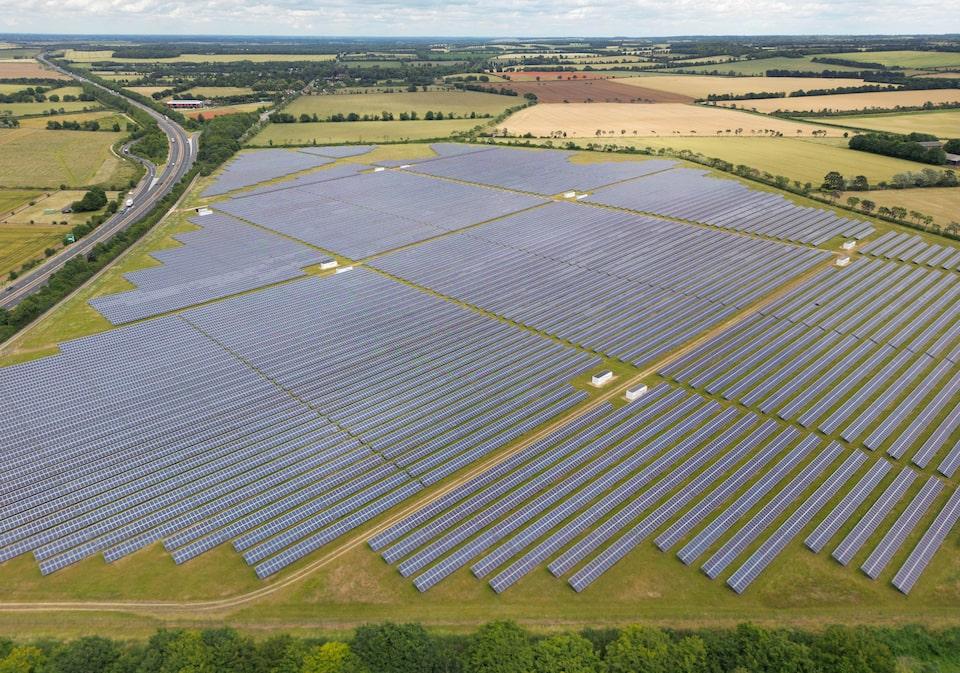
Shift comes as Trump administration rows back green policies Asian investors also look to increase allocations "Natural capital" is an increasing focus for clients LONDON, June 26 (Reuters) - U.S. and Asian investors are looking to Europe after a pullback in U.S. government support for domestic projects linked to the transition to a low-carbon economy, Tony Dalwood, CEO of investment manager Gresham House, said. Since taking office, U.S. President Donald Trump has moved to cut various environmental initiatives, regulations and standards championed by his predecessor, including ending tax credits for green energy projects years earlier than planned. Sign up here. Pressure to slow down the transition to net-zero emissions is also growing in other countries, but many governments remain committed to investing more and making it easier to invest in projects such as hydrogen and solar power. "What we're seeing is (U.S.) ... investors wanting to come to Europe and talk about it a bit more," across infrastructure, energy transition investments and natural capital, Dalwood said on Thursday at a Reuters NEXT Newsmaker event during London Climate Action Week. "And that's applying elsewhere across the globe; Asia thinking should they invest in Europe more than they did previously, when they would have gone to North America. That's definite, talking to (investors) globally in the last six months." Dalwood said the British government's action to commit to green energy in an Industrial Strategy released this week was an important signal. Under the plan, the government wants to increase investment in clean energy to more than 30 billion pounds ($41.23 billion) a year by 2035, although in a nod to political pressures over the costs of the transition, it said it aimed to cut green levies for business. For Gresham House, which has around $12 billion in assets under management and is Britain's biggest commercial forestry manager, the UK's support for green energy was particularly important for the growth of the market for so-called "natural capital", Dalwood said. This includes investments in sustainable forestry and agriculture, biodiversity gains, carbon sequestration and water management, which investors see as ways to meet sustainability goals. "Some of our clients have gone from zero to 4% allocations in their asset allocation over the last 12 months in natural capital, and forestry is a big part of that," Dalwood said, adding he expected it to grow "to a much larger number". ($1 = 0.7276 pounds) https://www.reuters.com/sustainability/climate-energy/gresham-house-ceo-sees-us-clients-looking-europe-green-investments-2025-06-26/
2025-06-26 20:53
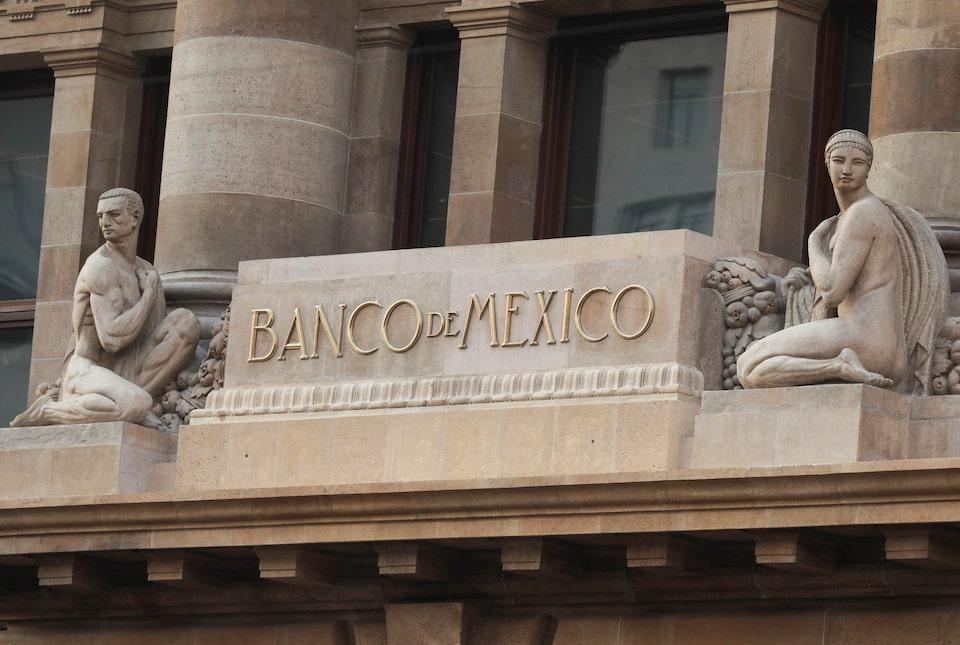
Decision brings rate to lowest in nearly three years One bank governor voted to hold at 8.5% Markets had expected 50 bp cut Central bank still sees inflation trending down Past language about adjusting rate in "similar magnitudes" is absent from statement June 26 (Reuters) - The Bank of Mexico lowered its benchmark rate by 50 basis points on Thursday as largely expected, although the decision by the central bank's five-member governing board was not unanimous. The move brings the rate to 8.0%, the lowest since August 2022. Sign up here. Deputy Governor Jonathan Heath was the sole dissenter, voting to hold the rate at its previous 8.5% level. In prior decisions, he agreed with rate cuts by the board. Markets had largely expected the 50 basis point cut, with 21 of 26 analysts polled by Reuters expecting the decision. The Mexican peso strengthened just over 0.2% against the dollar after the central bank's decision. Heath told Reuters earlier this month he supported a "more cautious, more prudent" approach until inflation resumed a clear downward trajectory. Annual headline inflation in Latin America's No. 2 economy has ticked up in recent months and jumped above the central bank's target range in May. It cooled slightly in the first half of June from the second half of May, hitting 4.51%, but still outside the central bank's target range of 3% plus or minus a percentage point. In its statement on Thursday, the central bank raised its forecast for year-end average headline inflation to 3.7% from its May forecast of 3.3%, although the bank held its estimate that inflation will converge to 3% in the third quarter of 2026. Banxico, as the Bank of Mexico is known, is balancing dual challenges: It is seeking to bring down inflation while also stimulating the economy amid weak economic growth and uncertainty tied to trade tensions and geopolitical developments. The board said in its statement that its decision was "made considering the behavior of the exchange rate, the weakness of economic activity, and the possible impact of changes in trade policies worldwide." "Looking ahead, the Board will assess further adjustments to the reference rate," the statement said. Notably, Thursday's decision did not include language from the most recent three monetary policy decisions about considering future cuts of "similar magnitudes." Private sector analysts polled by Reuters in May projected that Banxico will downsize its rate cuts for the rest of the year. Their median forecast was that the central bank will end 2025 with a benchmark rate of 7.5%. https://www.reuters.com/world/americas/bank-mexico-cuts-key-interest-rate-near-three-year-low-2025-06-26/
2025-06-26 20:44
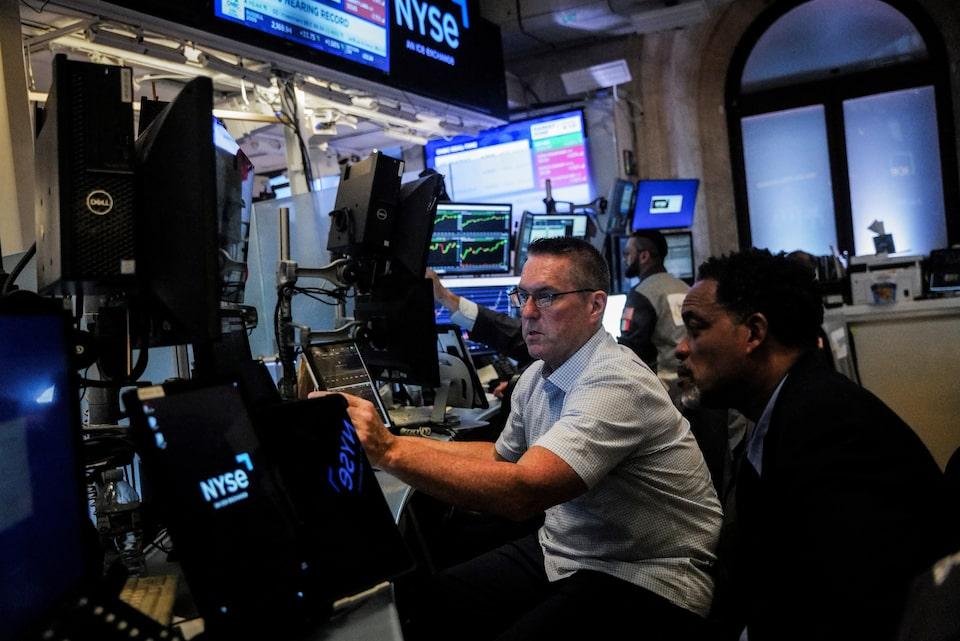
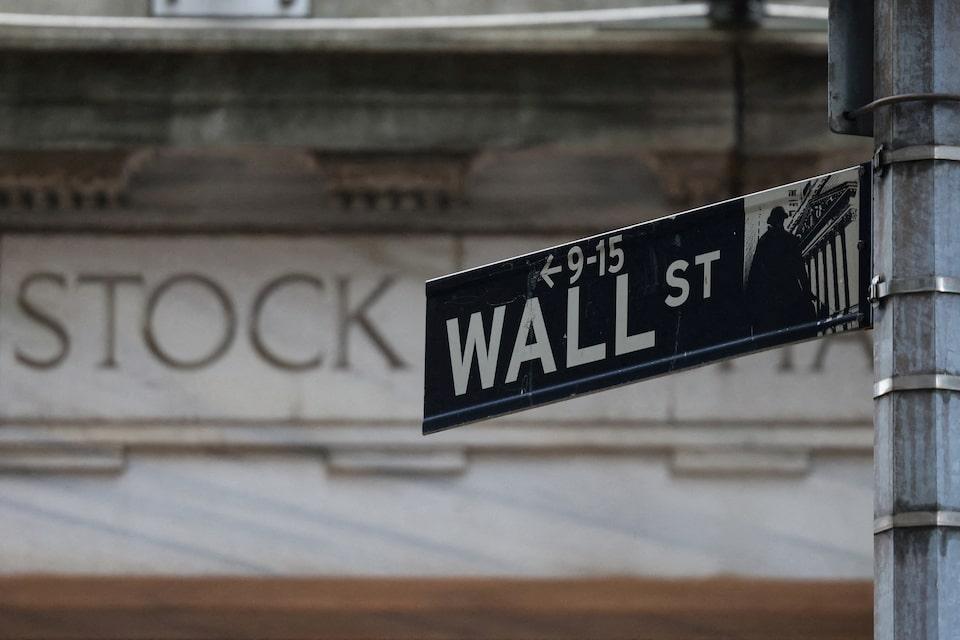
Indexes up: Dow 0.94%, S&P 500 0.80%, Nasdaq 0.97% Bank stocks rise as Fed proposes relaxed leverage rules Economic data shows mixed signals with durable goods orders up, GDP down Record copper prices send Freeport-McMoRan, Southern Copper higher NEW YORK, June 26 (Reuters) - Wall Street closed higher on Thursday, nudging the S&P 500 and the Nasdaq nearer to record closing highs as the Israel-Iran ceasefire continued to hold and a raft of economic indicators appeared to support the case for the U.S. Federal Reserve lowering borrowing costs this year. All three major U.S. stock indexes advanced in a broad rally which placed them on track for weekly gains. Sign up here. The S&P 500 and the Nasdaq are now within a hair's breadth of all-time closing highs, and as the seconds ticked down to the closing bell, it looked as if those records could be reached. "Clearly, the pull forward of rate cuts into 2025 is one of the more significant factors" of the market's price action, says Bill Northey, senior investment director at U.S. Bank Wealth Management, Billings, Montana. "Expectations now point to three rate cuts this year." Bank stocks outperformed after the Fed unveiled a proposal to relax its leverage rules, which would ease the capital that big banks are required to hold against relatively low-risk assets. The S&P 500 banks index (.SPXBK) , opens new tab advanced 1.6%. "This administration came in promising deregulation," said Ross Mayfield, investment strategy analyst at Baird in Louisville, Kentucky. "And this is not just an example of that, but kind of a signpost that there could be more to come." Richmond Fed President Thomas Barkin cautioned against taking options off the table amid ongoing economic uncertainty, but added that he did not expect tariffs to be "as inflationary as a lot of people worry about." A muted tariff effect could help make the case for a rate cut this fall, according to San Francisco Fed President Mary Daly. Boston Fed President Susan Collins said on Wednesday she's leaning toward a rate cut later this year amid an uncertain economic outlook. These remarks follow Fed Chair Jerome Powell's two-day congressional testimony, at which he reiterated the central bank's wait-and-see policy stance with respect to rate cuts and economic tariff effects. Financial markets are currently pricing in nearly a 21% likelihood of a 25 basis point reduction the Fed Funds target rate at the July Fed meeting, and more than a 75% probability that this year's first rate cut will come in September, according to CME's FedWatch tool. "As we look at economic data, including the labor market, economic activity and price levels, we see that some additional easing is appropriate through the end of this year," Northey added. "The question remains around both magnitude and importantly timing of the first cut." Last week, the Fed released its updated Summary of Economic Projections, which showed policymakers anticipate cutting the key policy rate by about half a percentage point by year-end. A spate of economic data showed first quarter GDP contracted more than previously reported due to weaker than expected consumer spending, while ongoing jobless claims reaching multi-year highs, suggesting potential cracks appearing in the labor market. On the other hand, new orders for durable goods and pending home sales provided robust surprises to the upside. The Dow Jones Industrial Average (.DJI) , opens new tab rose 404.41 points, or 0.94%, to 43,386.84, the S&P 500 (.SPX) , opens new tab gained 48.86 points, or 0.80%, to 6,141.02 and the Nasdaq Composite (.IXIC) , opens new tab gained 194.36 points, or 0.97%, to 20,167.91. Among the 11 major sectors of the S&P 500, communication services (.SPLRCL) , opens new tab enjoyed the largest percentage gains, while real estate (.SPLRCR) , opens new tab was the biggest laggard. Micron (MU.O) , opens new tab forecast better-than-expected fourth quarter revenue late Wednesday. Even so, the tech firm's shares dropped 1.0%. Copper prices jumped to a three-month high, boosting miners Freeport-McMoRan FCX.N , opens new tab and Southern Copper SCCO.N , opens new tab by 6.8% and 7.8%, respectively. Advancing issues outnumbered decliners by a 4.76-to-1 ratio on the NYSE. There were 338 new highs and 66 new lows on the NYSE. On the Nasdaq, 3,128 stocks rose and 1,359 fell as advancing issues outnumbered decliners by a 2.3-to-1 ratio. The S&P 500 posted 29 new 52-week highs and 6 new lows while the Nasdaq Composite recorded 79 new highs and 67 new lows. Volume on U.S. exchanges was 16.22 billion shares, compared with the 18.10 billion average for the full session over the last 20 trading days. https://www.reuters.com/business/us-stock-futures-rise-chips-gain-micron-results-gdp-data-ahead-2025-06-26/
2025-06-26 20:43
Indigenous groups worry they will not be adequately consulted Carney says legislation needed to spur economy, counter US tariffs Opponents promise legal challenges, protests TORONTO, June 26 (Reuters) - Canada's Senate passed a bill to fast-track approval for natural resource and infrastructure projects on Thursday despite opposition from Indigenous and environmental groups who have threatened protests and legal action. The bill's passage and implementation are a test for Carney, who was elected in April promising to transform Canada's economy in the face of what he repeatedly called a national crisis due to U.S. tariffs. Sign up here. The Liberal government's proposal speeds up approval of "national interest" projects, potentially including mines and oil pipelines, and eliminates some trade barriers between provinces. It passed the lower chamber last week with some Conservative support and cleared the Senate just before Parliament breaks for the summer. So-called Henry VIII clauses give Cabinet the power to decide how and whether some laws apply to such "national interest" projects. The bill had raised the ire of eight environmental and Indigenous leaders Reuters spoke to, and threatens to upend years of work toward reconciliation between Canada's government and its first peoples. Some groups have promised a legal fight over the legislation, while others have pledged demonstrations. "Prime Minister Carney is likely going to be followed by an Indigenous protest if he continues on this course," said lawyer and former Couchiching First Nation Chief Sara Mainville, whose clients are considering legal action. In Canada the duty to consult First Nations is a constitutional requirement recognized by courts. Indigenous groups argue fast-tracking project approval sidesteps that obligation and denies them a real say. "This bill represents a major threat to First Nations rights," Assembly of First Nations National Chief Cindy Woodhouse Nepinak said. "We won't give up the fight." Indigenous protesters have opposed projects in the past. In early 2020, protesters shut down , opens new tab key rail lines and roads across Canada for weeks to show solidarity with an Indigenous group in British Columbia that was trying to stop a gas pipeline from being built across its land. Carney has said the right to consultation is enshrined in the bill, which he has called the core domestic response to U.S. President Donald Trump's tariffs. Consultation alone is not enough, Mainville said. Accommodation is required - the assurance "that you are going to change something because you've heard concerns." The law will come into effect when it is signed by Governor General Mary Simon, the personal representative of King Charles, Canada's head of state. A similar measure, in Ontario, gives that province's Cabinet even broader powers; British Columbia passed an act to fast-track infrastructure projects last month. Canada is the world's No. 4 oil exporter and a mining powerhouse. The Ontario bill, which became law earlier this month, aims to push mining in the "Ring of Fire" in the province's north. Canada is trying to wean itself from economic dependence on the United States, where it sends some 75% of its exports. LEGAL CHALLENGES Meanwhile, some environmental advocates worry projects would be greenlit before their risk has been assessed and will be pursued regardless of risk, said Joshua Ginsberg, director of the Ecojustice Environmental Law Clinic at the University of Ottawa. Carney has plans to meet with Indigenous leaders this summer. But he sidestepped a question last week as to whether a nation could effectively veto one of these prioritized projects. His office did not respond to request for comment. Abram Benedict, Ontario regional chief with the Chiefs of Ontario, said there will "definitely" be legal challenges. "There will be challenges to the legislation itself, the constitutionality of the legislation. There will also be challenges once the bill is operationalized so that projects are started." https://www.reuters.com/markets/commodities/canadian-senate-approves-law-fast-track-major-resource-projects-2025-06-26/