2025-06-26 18:51
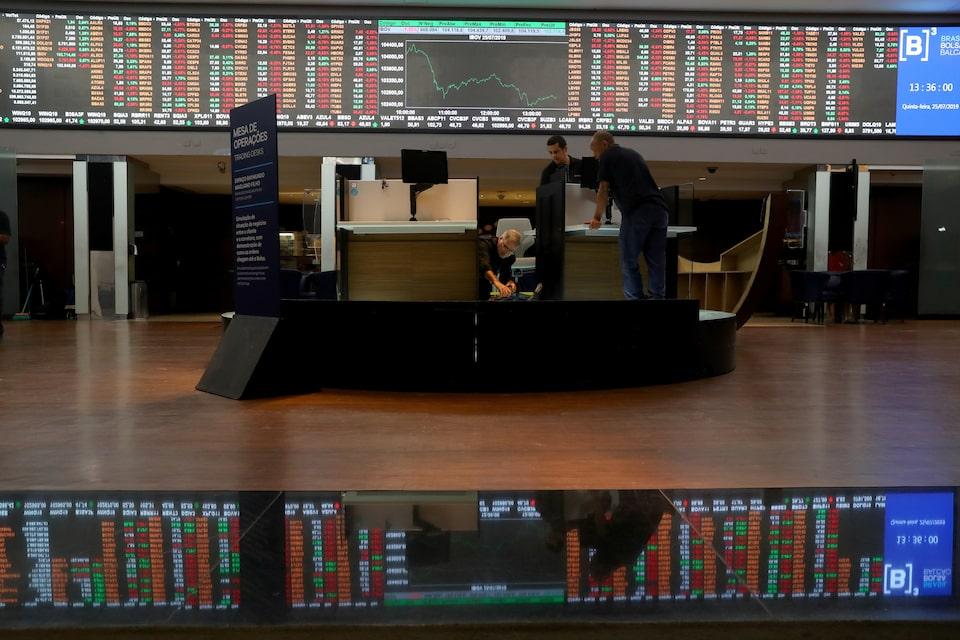
Goolsbee says there is only one Fed chief Chicago Fed president says a nominee for top Fed job is free to have opinions Trump has indicated a short list of nominees WASHINGTON, June 26 (Reuters) - U.S. President Donald Trump has not decided on a replacement for Federal Reserve Chair Jerome Powell and a decision isn't imminent, a person familiar with the White House's deliberations said on Thursday, as one central bank policymaker said any move to name a "shadow" chair would be ineffective. The dollar dropped overnight and investors, also reacting to weaker economic data, increased their bets on Fed rate cuts this year after a Wall Street Journal story said Trump was considering naming Powell's replacement early in hopes that person could have immediate influence convincing the central bank to lower interest rates as the president has demanded. Sign up here. Powell's term as chair ends in May, and the next scheduled vacancy on the Fed Board of Governors, which requires Senate confirmation of the president's nominee to fill, is not open until January. The White House declined to comment, referring to the statements Trump has made publicly on the topic. Those have included regular beratings of Powell as "stupid" for not cutting rates, a June 6 statement that he would name Powell's replacement "very soon," resignation that a Supreme Court decision meant he could not fire Powell outright, and a statement this week that he had narrowed the list of replacements to "three or four." Potential nominees include former Fed Governor Kevin Warsh, who has close ties to the Trump organization and was almost named central bank chief in the president's first term in the White House, as well as Kevin Hassett, who is the director of the White House's National Economic Council, current Treasury Secretary Scott Bessent, and current Fed Governor Christopher Waller, according to the person familiar with the deliberations. But the person, who was not authorized to speak publicly about the matter, downplayed how fast Trump might act. There are doubts as well about how much difference naming an early replacement for Powell might make in monetary policy decisions subject to debate among 19 central bank officials with 12 of them voting at any given meeting of the rate-setting Federal Open Market Committee. "That would have no effect," Chicago Fed President Austan Goolsbee told CNBC's "Squawk Box" program, referring to the possibility Trump may put forth an early nominee. "We have a chair of the (Federal Open Market Committee) ... That's Jay Powell. What somebody who is not the chair thinks about monetary policy - they can have whatever opinion they want. We have to go every six weeks and have votes." Trump has become increasingly pointed in calling for the Fed to cut rates, even as most central bank policymakers feel they are handcuffed until the administration makes final tariff decisions and they can study the impact of those rising import taxes on inflation. In congressional hearings this week, Powell reiterated that the Fed is prepared to cut rates if the tariffs have no sharp effect on inflation, but that economists broadly anticipate the steep levies imposed so far and still in the offing will raise prices over the course of the year. The effect on inflation "could be large or small. It is just something you want to approach carefully. If we make a mistake people will pay the cost for a long time," Powell said. Since the Fed held rates steady at its meeting last week, several central bank officials have said they agree it is best to wait on rate cuts; Fed Vice Chair for Supervision Michelle Bowman and Waller, both Trump appointees, have said rates could be cut as soon as the July 29-30 meeting, given recent moderate inflation readings and the risk of the economy weakening. Among the possible replacements for Powell, Waller would have the added benefit to Trump that he already has a vote on policy and working relationships among other officials built since joining the Fed's Board of Governors in January 2020. RENEWED SPECULATION The debate about Trump's central bank plans is playing out amid both ambiguous data and increased political focus on Powell. Recent inflation readings have been better than expected, a fact cited by Trump in favor of lower rates, but company executives routinely insist prices are about to rise as they work off pre-tariff inventory. The unemployment rate remains low. But data released on Thursday showed the overall economy shrank more than initially estimated in the first quarter after consumer spending was revised lower, weakening a key economic prop cited by policymakers who favor delaying rate cuts. Meanwhile, the dollar has dropped amid talk of the "shadow" Fed chief idea and the possible implications for U.S. central bank independence. "Trump's desire to 'shadow' the Fed using a designated replacement for Chair Jay Powell isn't a good way to promote the perceptions of integrity and autonomy in U.S. policymaking and, by extension, that of the reserve currency status of the USD (U.S. dollar)," said Thierry Wizman, global FX and rates strategist at Macquarie Group. "Some of this narrative is seeping into perceptions of the USD and contributing to its sell-off this week." Powell's term as Fed chief does not end until next May, and a recent Supreme Court decision appeared to insulate him from being fired over a policy dispute - a fact that could also limit Trump's ability to reshape the central bank before his second and final term ends in January 2029. https://www.reuters.com/world/us/shadow-fed-chief-would-not-influence-policy-debate-goolsbee-tells-cnbc-2025-06-26/
2025-06-26 18:48
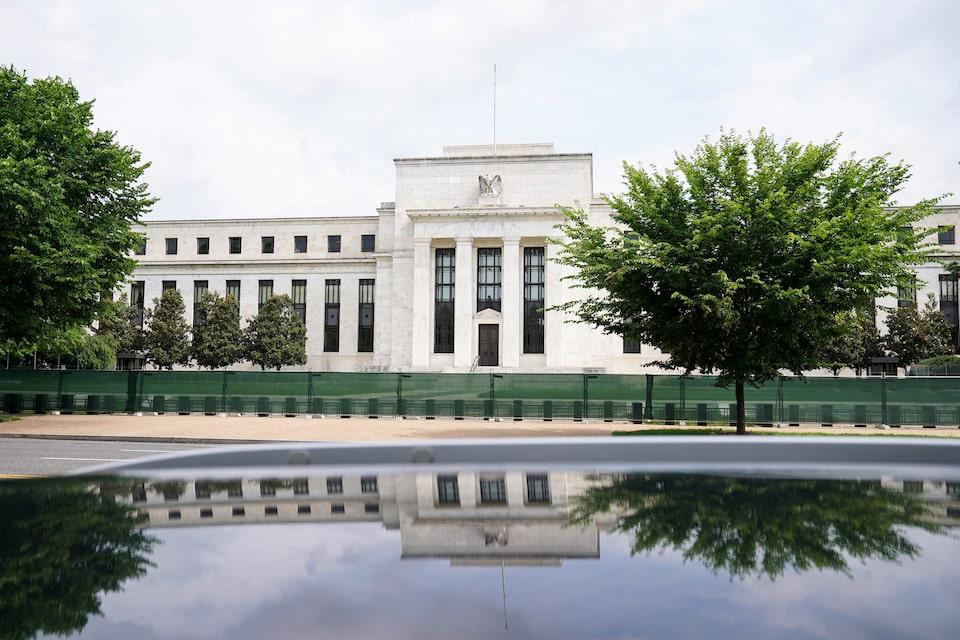
BRASILIA, June 26 (Reuters) - Brazil's central government posted a smaller-than-expected primary deficit in May, Treasury data showed on Thursday, supported by strong revenue and a decline in expenditures. The primary deficit totaled 40.6 billion reais ($7.4 billion) for the month, below the 41.1 billion reais shortfall forecast by economists polled by Reuters and well under the 60.4 billion reais deficit recorded in the same month last year. Sign up here. According to the Treasury, net revenue rose 2.8% in real terms, boosted by higher tax collections, stronger social security contributions, and the withdrawal of 5 billion reais from some federal funds. At the same time, total expenditures dropped 7.6% in real terms compared to May 2024, as the government maintained tighter control over spending. Over a 12-month period, the central government reported a primary surplus of 18.1 billion reais, equivalent to 0.15% of GDP, within the official fiscal target of a zero deficit, with a tolerance band of 0.25% of GDP in either direction. The shift to a surplus on a 12-month basis, however, was largely driven by a calendar effect, as the government postponed burdensome court-ordered debt payments to July, whereas in 2024 those payments were concentrated in the first half of the year. ($1 = 5.4966 reais) https://www.reuters.com/world/americas/brazil-posts-narrower-than-expected-may-primary-deficit-strong-revenue-lower-2025-06-26/
2025-06-26 17:37
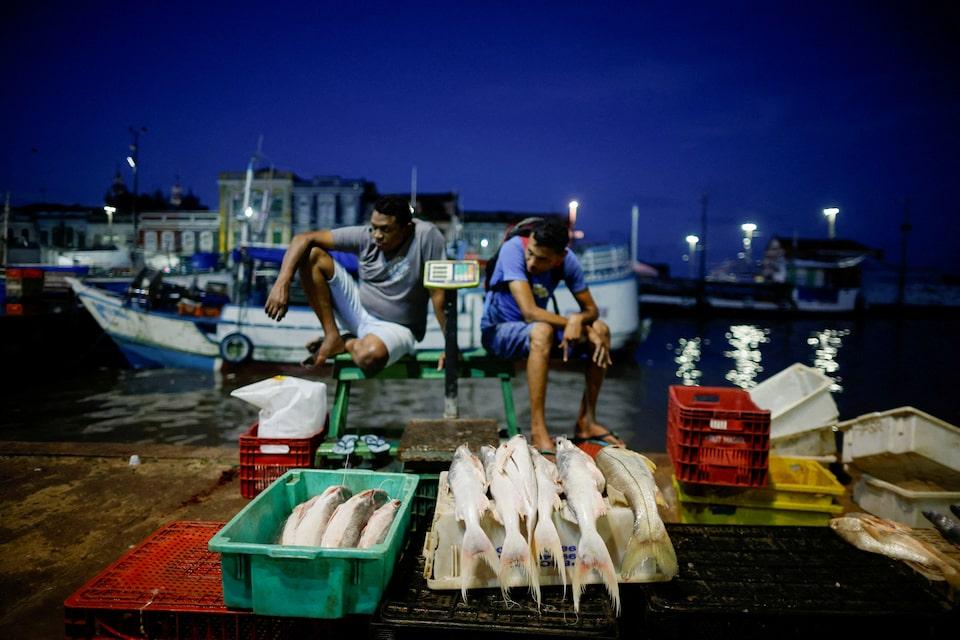
China books first Argentine soymeal cargo since 2019 Move signals China's push to diversify due to trade war with US Traders call it a 'test case', more deals may follow Argentina chamber meets China delegation, discusses soymeal China currently imports mostly soy beans, very little meal BEIJING/SINGAPORE/BUENOS AIRES, June 26 (Reuters) - Chinese firms have booked the first soymeal cargo from Argentina since Beijing approved Argentine imports in 2019, as China's animal feed industry looks to broaden its supply options to mitigate potential disruptions from the U.S.-China trade war. Several Chinese feed makers have jointly signed the deal to purchase 30,000 metric tons of Argentine soymeal for July shipment, four trade sources told Reuters on Thursday. Sign up here. "This is just a test case," said one Singapore-based trader at an international trading company, which sells soybeans to China. "If it goes through China's inspection and quarantine, we expect more deals." The cargo, purchased at $360 per ton on a CNF (cost and freight) basis, is expected to arrive in southern Guangdong province in September, the sources said. China is the world's biggest consumer of the protein-rich animal feed raw material but produces most of it by crushing soybeans mainly imported from Brazil and the United States. Argentina is the world's top exporter of soy oil and meal. Chinese buyers have been scooping up Brazilian soybeans and shunning U.S. exports due to high tariffs imposed during the ongoing trade war between Beijing and Washington. Argentina's oilseed crushing and export chamber told Reuters on Wednesday it had met with a travelling Chinese delegation, including the director of China's National Food and Strategic Reserves Administration Liu Huanxin to discuss soymeal exports. "We spoke at length about the feasibility of exporting soybean meal, and he seemed open to it if commercial conditions allow," said Gustavo Idigoras, head of the CIARA-CEC chamber. The Singapore-based trader told Reuters that the Chinese feed makers' purchase from Argentina was part of an effort to safeguard supplies in the event the trade war has a lasting impact on imports of U.S. soybeans. Lower prices for Argentine meal compared with the locally produced product were also encouraging the move, traders said. China opened its market to Argentine soymeal in 2019 after years of resistance that was motivated by a desire to protect its domestic crushing industry. Market participants at the time said the decision was prompted by the U.S.-China trade war during U.S. President Donald Trump's first administration. Despite the approval, no purchases of bulk cargoes of Argentine soymeal had been recorded until now, according to Chinese customs data. Argentina's Idigoras hinted that there may still be some steps to finalise any soymeal deal formally and that the China market remained a "complex" and tough to crack, given Beijing's preference to crush its own beans. "There are many inquiries from Chinese firms over Argentine meal, but for now we have no confirmed transactions," he said. "Argentina exported 30 million tons of soymeal last year, so has very significant supply capacity for China's needs." China imported just 30,000 tons of soymeal for the entire year in 2024, mainly from Denmark, customs data showed. https://www.reuters.com/business/autos-transportation/chinese-feed-makers-sign-first-bulk-deal-argentine-soymeal-since-2019-sources-2025-06-26/
2025-06-26 17:22
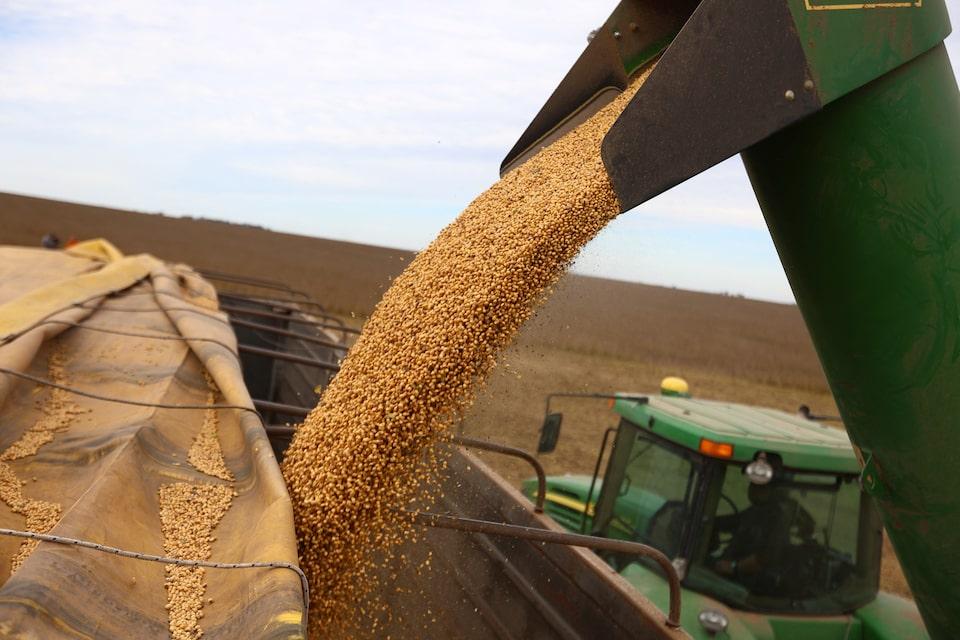
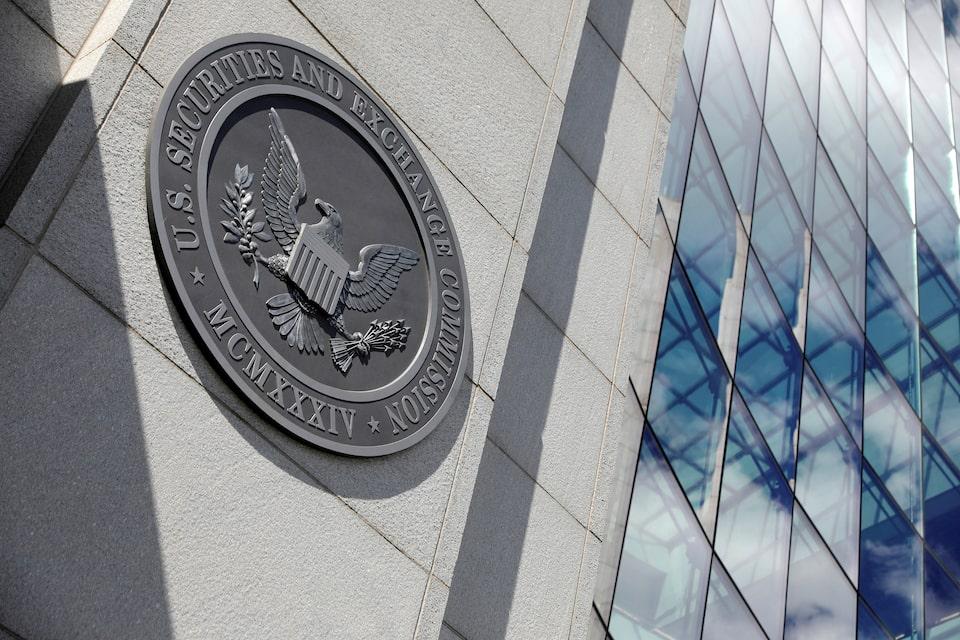
Judge says both sides cannot escape permanent injunction SEC proposed reducing fine over XRP token sales Ripple has not decided next legal move NEW YORK, June 26 (Reuters) - A federal judge on Thursday rejected an unusual joint motion by Ripple Labs and the U.S. Securities and Exchange Commission to endorse the cryptocurrency company's reduced $50 million fine to settle a civil lawsuit over the sale of unregistered securities. U.S. District Judge Analisa Torres in Manhattan chastised both sides for claiming that their settlement in March should excuse Ripple from honoring her permanent injunction against violating the law. Sign up here. Ripple's chief legal officer Stuart Alderoty posted on X that the company has not decided its next legal steps. An SEC spokesman had no immediate comment. The case concerned sales of the XRP token, and has been one of the SEC's highest-profile cryptocurrency cases. In July 2023, Torres ruled that while XRP sold by Ripple on public exchanges did not meet the legal definition of a security, $728 million of XRP sales to institutional investors should have complied with securities laws. Ripple and the SEC appealed, but agreed to settle if Torres set aside her injunction and approved lowering the $125 million fine she imposed last August. The SEC has been easing oversight of cryptocurrencies, and the judge agreed it can change course on enforcement cases. Torres said, however, that both sides had "not come close" to showing that exceptional circumstances outweighing the public interest and administration of justice justified the settlement. "The parties do not have the authority to agree not to be bound by a court's final judgment that a party violated an Act of Congress in such a manner that a permanent injunction and a civil penalty were necessary to prevent that party from violating the law again," she wrote. "Accordingly, if jurisdiction were restored to this court, the court would deny the parties' request to vacate the injunction and reduce the civil penalty," she added. Torres said the SEC and Ripple remain free to withdraw their appeals, or appeal her injunction. XRP is the fourth-largest cryptocurrency by market value, trailing bitcoin, Ethereum and Tether, the market service CoinMarketCap said on Thursday. Since Donald Trump began his second term as U.S. president, the SEC has ended civil lawsuits against crypto exchanges Binance, Coinbase (COIN.O) , opens new tab and Kraken. The case is SEC v Ripple Labs Inc, U.S. District Court, Southern District of New York, No. 20-10832. https://www.reuters.com/legal/government/sec-ripple-wants-settle-crypto-lawsuit-us-judge-rebuffs-them-2025-06-26/
2025-06-26 17:03
June 26 (Reuters) - Crypto exchange Kraken on Thursday launched a peer-to-peer payments app that enables users to send and receive funds - in both cryptocurrency and fiat currency - across more than a hundred countries. The move is a bid to expand Kraken's offerings beyond its digital asset trading business, and puts the firm in competition with PayPal, Venmo and Block's CashApp. Sign up here. WHY IT'S IMPORTANT Crypto exchanges such as Kraken are increasingly signaling an interest in expanding outside of the digital asset trading that initially became popular with retail investors. Kraken said last month that it is launching tokens of U.S. equities, called xStocks, in select markets outside the United States. CONTEXT Krak users will have a dedicated spend account and will be able to instantly send and request payments across 300 different assets, including crypto and local currencies, the company said in a press release. Crypto transfers will be made using blockchain technology, while Kraken will make cash transfers internally without using external banking infrastructure. KEY QUOTE "We're able to move money across borders right off the bat, because that's what we do from a trading perspective in our venues, and we've actually already spent over 10 years building out that system for money transmitter licenses... in all the jurisdictions," said Arjun Sethi, co-CEO of Kraken, in an interview with Reuters. "You have to do that as an exchange anyways, and so what we realized is that our customers just wanted to do more with their money." WHAT'S NEXT Kraken plans to launch a series of products through Krak in the future, including physical and virtual cards as well as pay-in-advance services like loans, the company said. https://www.reuters.com/business/crypto-exchange-kraken-debuts-peer-to-peer-payments-app-krak-2025-06-26/

2025-06-26 16:02
"Early innings" in shift toward U.S. outflows Investors willing to embrace dollar depreciation story PIMCO "very constructive" on emerging markets as asset class June 26 (Reuters) - Emerging markets are enjoying a "Goldilocks" moment, heavyweight bond fund PIMCO told Reuters, as U.S. President Donald Trump's erratic policy moves push the dollar down and send investors away from U.S. assets. "This is the most prominent capital rotation we have seen for the best part of two decades ... and we still think we are in the early innings of this," said Pramol Dhawan, PIMCO's head of EM portfolio management, outlining the $2 trillion asset manager's second-half view on emerging markets, where the firm holds some $70 billion in assets. Sign up here. "We are very constructive on the asset class, we think it is a Goldilocks-type backdrop for EM assets," he said, pointing partly to investor overexposure to the U.S. and a weakened dollar. PIMCO is the latest asset manager to warm to emerging market assets with EM local currency debt enjoying record inflows in recent weeks. The rotation is driven by import tariffs, rising concerns over U.S. debt levels and some loss of confidence in the government there, Dhawan said. Parts of Europe, Asia, and Latin America are the preferred destinations. The dollar index (.DXY) , opens new tab is down 10% year-to-date while emerging currencies (.MIEM00000CUS) , opens new tab have gained nearly 7%. "Flows have been very strong for the first time in a number of years," Dhawan said. Flows to local currency assets outstripping money headed for emerging market hard currency ones was "a sign of investors' willingness to embrace the dollar depreciation story and think more internationally around a search for yield." Emerging stocks (.MSCIEF) , opens new tab are outperforming the S&P 500 (.SPX) , opens new tab so far this year by 10 percentage points, while local currency bonds have returned more than 11% this year in dollar terms. (.JPMGBIEM) , opens new tab U.S.-based investors did not have sufficient exposure to and were trying to figure out if this rally has durability, Dhawan said. "EM is in a good position where the underlying fundamentals are pretty healthy and robust," he said, adding that he did not expect capital flows to stop. Net capital inflows from non-residents to emerging markets are estimated at $887 billion in 2025, up from $852 billion in 2024, and forecast to hit $935 billion next year, according to the Institute of International Finance. Investor interest was also more broad based, Dhawan said, adding that the institutional investor base had become more established in emerging markets. Dhawan dismissed the risk of a policy reversal under Trump that could trigger a spike in the dollar. "These capital flows are genies that can't be put back in the bottle because they are irrespective of what the U.S. does now, there's been some loss of confidence in the administration." https://www.reuters.com/markets/europe/bond-giant-pimco-sees-emerging-markets-goldilocks-moment-2025-06-26/