2025-06-26 06:16
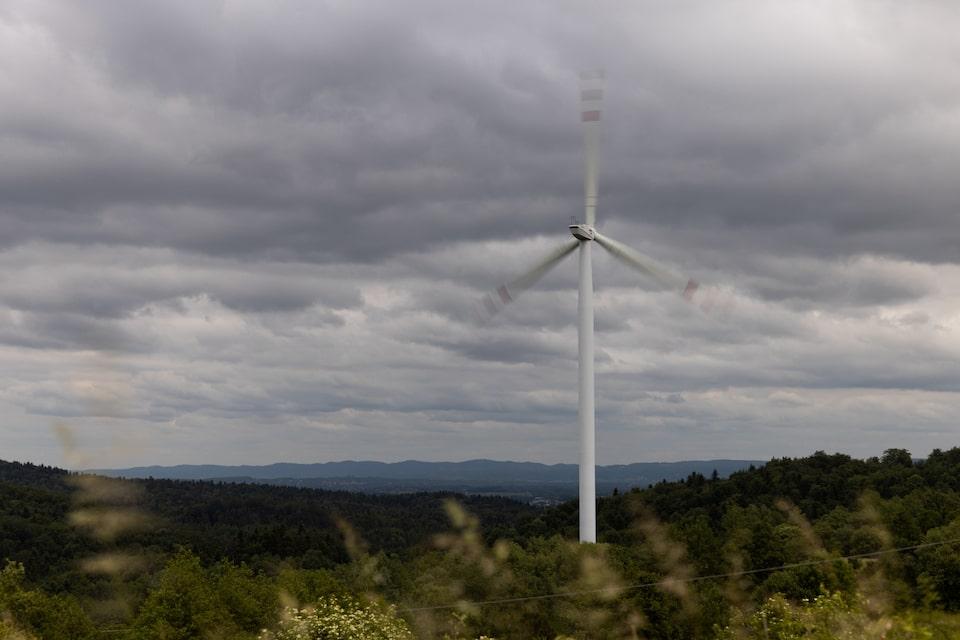
WARSAW, June 26 (Reuters) - The Polish parliament approved legislation easing rules to build onshore wind farms, which the government says is a key step to boost renewable energy output and lower electricity prices. The rules, passed in a vote late on Wednesday, cut the distance required between planned installations and residential locations, while keeping permitting more restrictive for projects close to protected natural areas. Sign up here. The bill will also include a clause that freezes energy prices for households until the end of the year, and incentives for municipalities and homeowners in areas closest to the new wind farms. "This is a step towards lower power prices for Poles and for the economy, an idea we all share. The more power we have from renewable sources, the lower electricity prices will be," Climate Minister Paulina Hennig-Kloska told Parliament sitting on Wednesday. Boosting renewable power production has been one of the key election pledges , opens new tab of the current government after the previous administration blocked development of onshore wind for most of its eight years in power. The law needs to be approved by the Senate, and signed by the president. Outgoing head of state Andrzej Duda and president-elect Karol Nawrocki have been skeptical about easing permitting requirements for wind farms. Duda said on Wednesday the government was trying to force him to sign the wind farm bill by including the last-minute amendment to freeze power prices. Renewable output has been growing at the expense of coal-fired power which still dominates the mix. In 2024, nearly 30% of Polish electricity was generated from renewable sources. The country now has 11 gigawatt of installed wind capacity. https://www.reuters.com/sustainability/boards-policy-regulation/polish-parliament-approves-liberalisation-wind-farm-rules-2025-06-26/
2025-06-26 06:00
Trump mulls choosing successor to Powell early S&P and Nasdaq finish near record highs Oil prices notch second straight session of gains Gold prices settle higher as U.S. dollar falls NEW YORK/LONDON, June 26 (Reuters) - Global shares hit their third record high in three days on Thursday while the U.S. dollar sank to its lowest level in more than three years amid growing market concerns about the Federal Reserve's independence. The U.S. dollar index (.DXY) , opens new tab was down nearly 0.43% on the session and more than 10% for the year. If the greenback's losses hold until the month ends, it will be the biggest fall in the first half of a year since the start of the era of free-floating currencies in the early 1970s. Sign up here. Wall Street's main indexes finished higher, with the benchmark S&P 500 and Nasdaq nearing record highs. The Dow Jones Industrial Average (.DJI) , opens new tab rose 0.94% to 43,386.84, the S&P 500 (.SPX) , opens new tab rose 0.80% to 6,141.02 and the Nasdaq Composite (.IXIC) , opens new tab rose 0.97% to 20,167.91. European shares (.STOXX) , opens new tab finished up 0.09%. MSCI's gauge of stocks across the globe (.MIWD00000PUS) , opens new tab rose 0.81% to 909.47, hitting a new record high for the third straight session. A Wall Street Journal report said President Donald Trump - who has been urging the Fed to cut rates faster - was toying with the idea of selecting Chair Jerome Powell's replacement in the next few months ahead of the end of his term next May. Powell had just wrapped up two days of testimony to U.S. Congress, where he said the central bank would be careful in considering further rate cuts as it expects Trump's tariffs would cause prices to rise this summer. Such an appointment by Trump of a shadow Fed chair will likely shake investor confidence in the central bank's independence, which is helping to contribute to the dollar's weakness, said Wasif Latif, chief investment officer at Sarmaya Partners in New Jersey. "The market recognizes that sooner rather than later, Powell will walk off the stage and the next appointment will likely be somebody that's a little bit softer or dovish or somewhat politically driven," Latif said. "And the market is saying the next chair will likely be more amenable to big cuts than Powell has been and so I think that's part of what's feeding into the dollar weakness and gold is also reflecting that." The euro is now at its strongest level against the dollar since September 2021 and trade tariff talks are looming with Washington next week, ahead of a Trump-imposed global deadline of July 9. The single currency was up 0.33% at $1.1697. /FRX The dollar weakened to a decade and half-year low against the Swiss franc at 0.80030. It was also down 0.57% to 144.415 against the Japanese yen . The dollar index (.DXY) , opens new tab, which measures the U.S. currency against six peers, now sits at its lowest level since March 2022 following its slide this year. "The striking thing on the dollar trend of the last six weeks is that in almost any market regime the dollar is struggling to appreciate," State Street's Michael Metcalfe said. "It seems to be in something of structural decline," he added, highlighting State Street data that investors were now the most negative they have been on the dollar - or "underweight" in banking speak - since the COVID pandemic. Traders are now pricing in a nearly 25% chance of the Fed cutting rates in its end-of-July meeting, compared with 12.5% last week, the CME FedWatch tool showed. The yield on benchmark U.S. 10-year notes fell 4.5 basis points to 4.248%, dropping to its lowest level in seven weeks. The two-year U.S. Treasury yield , which typically moves in step with interest rate expectations, was down 5.8 basis points to 3.721%, its lowest level since May 2. Germany's equivalent , which is a benchmark for Europe, fell 0.7 basis points to 2.558%. Oil prices were on track for their second straight day of gains after their sharp slump following the Trump-brokered ceasefire early this week between longtime Middle East foes Israel and Iran. Trump had also announced plans to hold talks with Iran next week to seek a commitment from Tehran on curtailing its nuclear ambitions. Brent crude futures settled up 0.07% to $67.73 a barrel. U.S. West Texas Intermediate crude gained 0.49% to $65.24 a barrel. Gold prices gained as the U.S. dollar fell. U.S. gold futures settled 0.2% higher at $3,348. Spot gold was little changed at $3,330.20 an ounce. https://www.reuters.com/world/china/global-markets-wrapup-1-2025-06-26/
2025-06-26 05:14
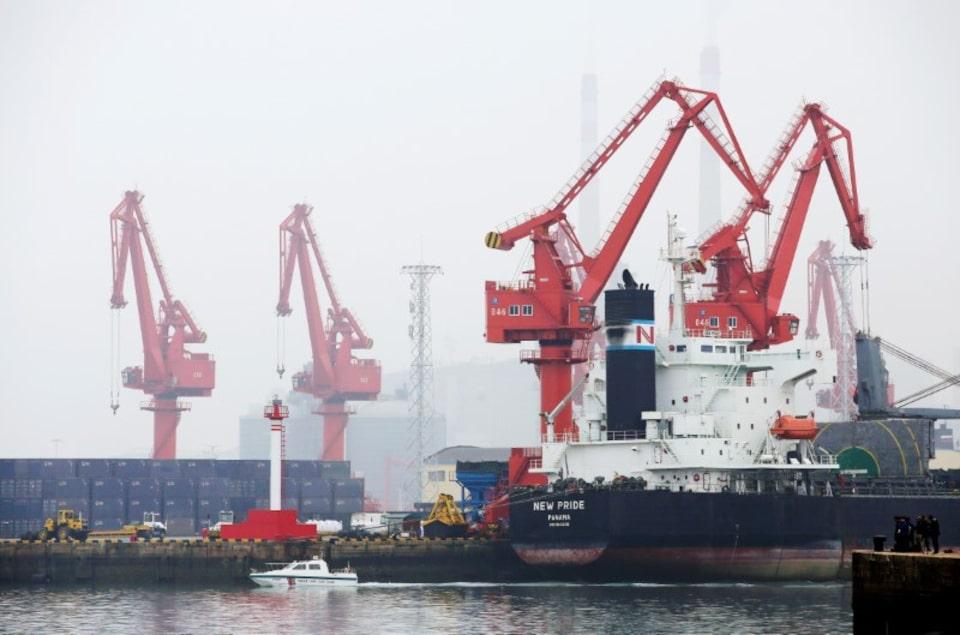
LAUNCESTON, Australia, June 26 (Reuters) - Asia's imports of crude oil rose in the first half of 2025 as a surge in June arrivals overcame a soft start in the early months of the year. The world's top-importing region saw arrivals of 27.36 million barrels per day (bpd) in the first half of this year, up 620,000 bpd from the 26.74 million bpd for the same period last year, according to data compiled by LSEG Oil Research. Sign up here. The stronger performance was mainly because June imports surged to 28.65 million bpd, the highest in LSEG data since January 2023 and up from 27.3 million bpd in May and 26.42 million bpd in June last year. The strength in June imports was led by China, the world's top importer, with LSEG estimating arrivals at 11.96 million bpd, the most since the 12.11 million bpd recorded in March. India, Asia's second-biggest buyer, is on track for June imports of 5.26 million bpd, which will be the highest since the 5.35 million bpd in March. The question for the market is whether the strength seen in Asia's June imports is the harbinger of stronger demand in the second half, or whether it was driven by temporary factors. The most obvious of the temporary factors is price, with both China and India known to be sensitive to price movements, increasing imports when they are low but cutting back when they rise. June-arriving cargoes would have been arranged six to eight weeks before delivery, meaning that they were secured at a time when oil prices were in a downtrend. Global benchmark Brent futures went from a high of $75.47 a barrel on April 2 to a four-year low of $58.40 on April 9, then traded sideways before another low of $58.50 on May 5. Since the low on May 5 Brent has been trending higher, reaching $70.40 a barrel on June 12, the day before Israel launched its bombing campaign against Iran. The Israeli attacks and the subsequent U.S. bombings saw crude spike to a five-month high of $81.40 a barrel on June 23, before the risk premium evaporated with a ceasefire deal announced by U.S. President Donald Trump. AUGUST IMPACT? The increasing prices will be felt by Asia's refiners mainly for cargoes arriving in late July and in August, so it will be key to monitor whether there is any pullback in imports in that time period. Certainly there is little to suggest that demand for crude and refined products is growing strongly in Asia. China's refinery processing rose only 0.3% in the first five months of the year to 14.47 million bpd, according to the latest available official data. The tiny gain in refinery throughput suggests that demand growth for refined products in China is sluggish and that the additional crude being imported is largely being added to inventories. India's fuel demand is also flat, with data from the Petroleum Planning and Analysis Cell of the oil ministry showing consumption of refined products at 4.51 million bpd for the first five months of 2025, from 4.52 million bpd for the same period in 2024, based on Reuters calculations from monthly tonnages. The increase in oil prices in recent weeks, and the shock of the spike during the Israeli and U.S. attacks on Iran, are likely to weaken Asia's demand for crude imports from August onwards. Enjoying this column? Check out Reuters Open Interest (ROI), your essential new source for global financial commentary. ROI delivers thought-provoking, data-driven analysis of everything from swap rates to soybeans. Markets are moving faster than ever. ROI can help you keep up. Follow ROI on LinkedIn , opens new tab and X , opens new tab. The views expressed here are those of the author, a columnist for Reuters. https://www.reuters.com/markets/commodities/asias-crude-oil-imports-jump-june-higher-prices-will-weigh-2025-06-26/
2025-06-26 05:01
HONG KONG/SHANGHAI, June 26 (Reuters) - Hong Kong's de facto central bank said on Thursday it bought US$1.2 billion worth of Hong Kong dollars after the local currency hit the weak end of its trading band. The city's currency is pegged in a narrow range of 7.75-7.85 to the greenback, and the Hong Kong Monetary Authority (HKMA) intervenes at both ends to underpin the peg. Sign up here. HKMA's intervention comes after the Hong Kong dollar hit the weak side of the band for the first time in two years last Friday. "Depending on the direction of capital flows and the supply-demand conditions for the Hong Kong dollar, the weak-side Convertibility Undertaking (CU) may be triggered again in the future," Eddie Yue, chief executive of the HKMA, said in a online statement. "As the aggregate balance declines, Hong Kong dollar interbank rates may increase ... The HKMA will continue to closely monitor market developments and the external environment to ensure the orderly operation of the Hong Kong dollar markets." The aggregate balance, the key gauge of cash in the banking system, will shrink by HK$9.42 billion on Friday, HKMA said in a separate statement. If the Hong Kong dollar remains weak and triggers additional intervention by HKMA, local currency liquidity is likely to shrink further. "This is encouraging carry trades to stay long USD/HKD, and it could take time for Hong Kong dollar liquidity conditions to normalise, with more Hong Kong dollar buying interventions needed to reduce the aggregate balance," said Chang Wei Liang, strategist at DBS. Hong Kong interbank rates rose across the board on Thursday following the HKMA move. The Hong Kong dollar experienced sharp swings over May and June, as foreign and Chinese capital flocked to blockbuster share offerings or to pick up undervalued stocks in the Asian financial hub. The resulting strength in the currency triggered by the inflows pressured the HKMA to sell Hong Kong dollars to protect the peg, flooding the banking system with cash and driving the local interest rates sharply lower. The plunging domestic interbank rates spurred speculative positions that used Hong Kong dollar borrowings to bet on other markets. Last week, HKMA said the outlook for the direction of the Hong Kong dollar and for interbank rates remains uncertain due to carry trades and other factors. https://www.reuters.com/markets/asia/hong-kongs-de-facto-central-bank-intervenes-hong-kong-dollar-hits-weak-end-2025-06-25/
2025-06-26 04:51
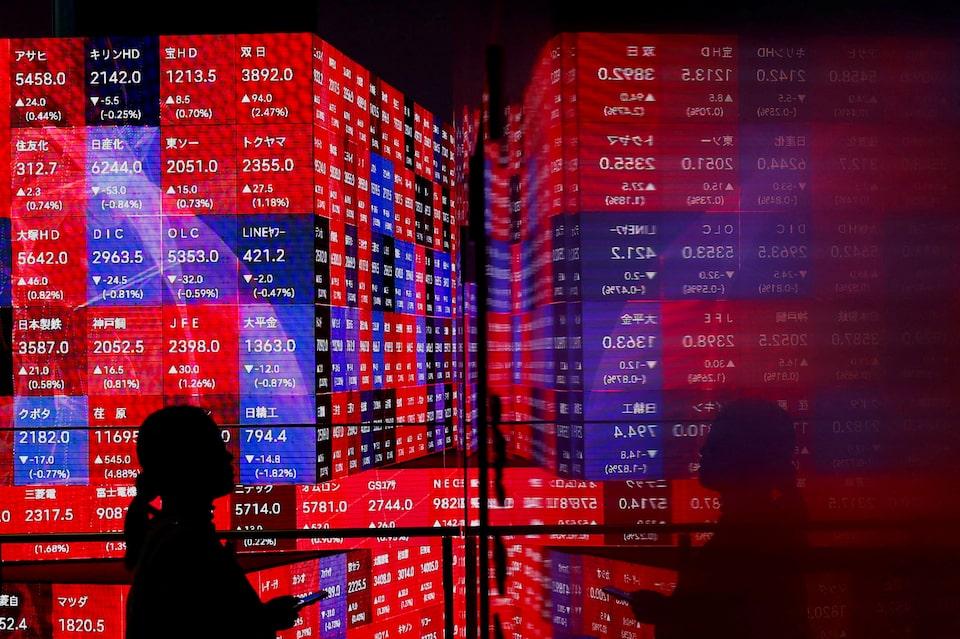
June 26 (Reuters) - Foreigners divested Japanese stock for the first time in 12 weeks in the week through June 21 on caution over the Israel-Iran conflict and its impact on Japanese oil imports and inflation. They sold a net 524.3-billion-yen ($3.62 billion) worth of Japanese stocks, logging their first weekly net sales since March 29, data from Japan's Ministry of Finance showed on Thursday. Sign up here. Japan's core inflation hit a more than two-year high in May, which left the Bank of Japan - already grappling with uncertainties over U.S. trade policies - under pressure to resume rate hikes. Despite the outflows, Japanese stocks received net foreign inflows of about 6.81 trillion yen so far in this quarter, the biggest amount in two years. Japanese long-term bonds also recorded a net 368.8-billion-yen worth of foreign outflows last week, following three straight weeks of buying. However, Foreigners bought a robust 1.5-trillion-yen worth of short-term bills, the most in nine weeks. Meanwhile, Japanese participants in overseas markets ditched 88.2-billion-yen worth of foreign stocks in a sixth successive week of net sales. They bought about 615.5-billion-yen worth of long-term foreign bonds, adding to the previous week's 1.57-trillion-yen worth of net bond buying. ($1 = 144.8500 yen) https://www.reuters.com/business/finance/foreigners-turn-net-sellers-japan-stocks-first-week-12-2025-06-26/
2025-06-26 04:37
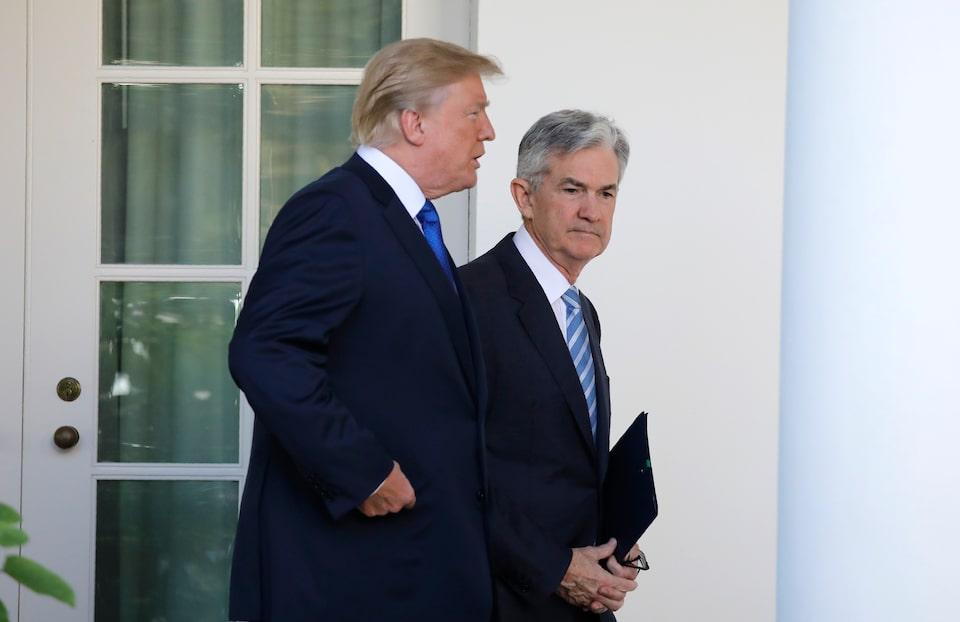
A look at the day ahead in European and global markets from Ankur Banerjee Just as investor sentiment was recovering from the latest geopolitical jolt, buoyed by the Israel-Iran ceasefire, President Donald Trump rattled markets again with an attack on the Fed chair that revived worries over the central bank's independence. Sign up here. The result has been another bout of dollar selling, which pushed the euro to its strongest level since November 2021 and the Swiss franc to its highest in a decade. A report from the Wall Street Journal said Trump has toyed with the idea of naming Fed Chair Jerome Powell's replacement as early as September, which could undermine Powell's authority for the remainder of his term to next May. Trump has repeatedly chastised Powell for not cutting interest rates and said he was "terrible" in the latest attack on Wednesday, eroding investor faith in the U.S. central bank's independence in setting policy. Earlier this month, Trump openly contemplated firing Powell and even mused about making himself the Fed chair, although he subsequently backed off. "I know within three or four people who I'm going to pick," Trump told reporters on Wednesday, when asked if he is interviewing candidates to replace Powell. All that uncertainty, along with Trump's chaotic trade policies and their potential threat to economic growth, have taken a toll on the U.S. dollar as investors look to move their money elsewhere. The dollar index , which measures the currency against six other units, is down 10% this year and on course for a sixth straight month in the red. The last time it had a run like this was in 2017. While the "sell America" theme has faded somewhat in the past few weeks, as evidenced by U.S. stocks hitting record highs, investors remain worried about the dollar and how Trump's tariff policies could affect it. Trump's tariffs are coming back onto the markets' radar as the clock ticks down to his July 9 deadline for trade deals. In Thursday's Asia trade, futures indicated a muted open for European stock markets. Investors will keep an eye on defence stocks after NATO leaders backed the big increase in defence spending that Trump had demanded. The big news in the corporate world was Shell (SHEL.L) , opens new tab denying it was in talks to buy British rival BP (BP.L) , opens new tab, after the Wall Street Journal reported on Wednesday that the oil majors were in early discussions about a takeover. Key developments that could influence markets on Thursday: Economic events: Germany Gfk consumer sentiment for July Trying to keep up with the latest tariff news? Our new daily news digest offers a rundown of the top market-moving headlines impacting global trade. Sign up for Tariff Watch here. https://www.reuters.com/world/europe/global-markets-view-europe-2025-06-26/