2025-06-26 04:10
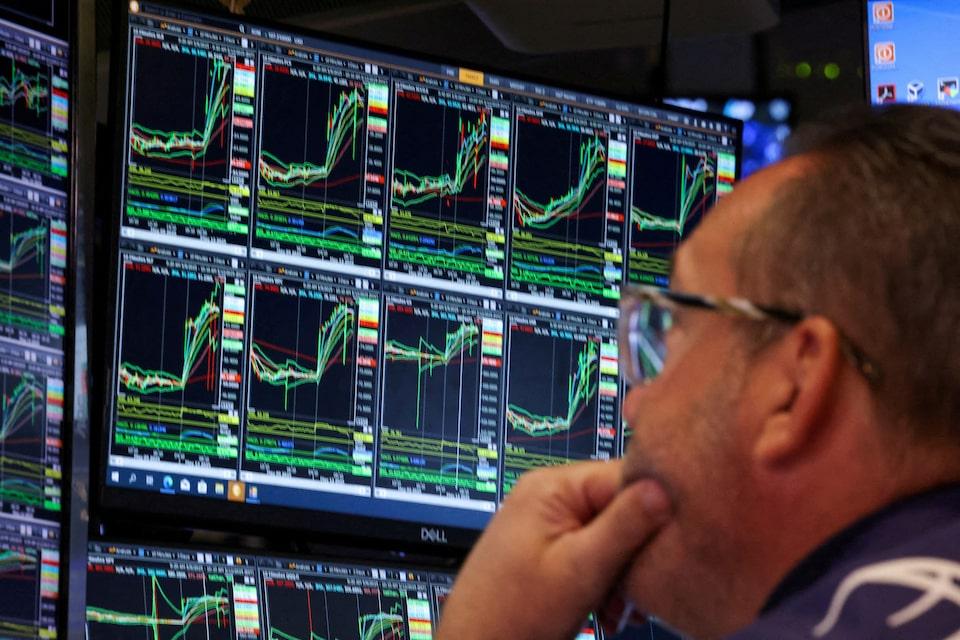
Options markets bet on more frequent volatility spikes, UBS says Thinly-traded summer months feature potential market catalysts Geopolitical risks high, despite Iran-Israel ceasefire Oil shock could overturn weak dollar consensus, Goldman says LONDON, June 26 (Reuters) - Big investors are preparing for the normally thinly-traded months ahead with even more caution than usual as risks of oil price volatility or fresh tariff shocks could shake up the complacent market mood and spark a repeat of last August's rout. Scarred by the sell-off a year ago, when global growth fears hit low volume markets to drive big swings in asset prices worldwide, investors see stocks, bonds and currencies vulnerable against the backdrop of a fragile Israel-Iran ceasefire, seesawing oil prices and trade-war uncertainty . Sign up here. Asset managers said they were raising portfolio protections given the geopolitical risks and uncertainty about China and Europe striking U.S. trade deals as a July 9 deadline looms. "Our positioning is that over the (next) three-month horizon markets will not get the positive confirmations they are pricing in," said HSBC Asset Management Global Chief Investment Officer Xavier Baraton. Baraton is buying equity put options as an insurance, which pay out if stocks fall. Goldman Sachs' asset management chiefs, recommended in a presentation last week, loading up on protection against sell-off scenarios with volatility, interest rate and market-trend strategies. CRUEL SUMMER As the July 9 deadline for a U.S.-EU tariff deal approaches, with scant progress so far towards mutually-agreed baseline levies, concern is growing over how long markets will stay numb to trade risks. "If we continue to get this kind of blasé approach to that risk, then it becomes more tempting to be looking for protection over that (July) event," Chris Jeffery, head of multi-asset strategy at Britain's biggest investor LGIM, told Reuters. World stocks, up 7% so far this year, this week touched fresh record highs (.MIWD00000PUS) , opens new tab. And Wall Street's fear gauge of expected volatility on the S&P 500 index (.VIX) , opens new tab, (.SPX) , opens new tab is muted at below 18, down from 52 in April. Still, one-month VIX futures , which cover July 9, are around a 1.5 point premium over the VIX, in a pattern that can signal investors expect market sentiment to sour. HSBC's Baraton said Trump's unpredictability remains a broad market risk. "Markets seem to have forgotten everything that the Trump administration has been threatening to do," he said. Republican leaders are pushing to get what Trump calls his One Big Beautiful Bill Act through Congress and to his desk before the July 4 Independence Day holiday. The bill would add trillions to the $36.2 trillion national debt. OK COMPUTER Markets can trade calmly for longer than appears rational in part because of a circular relationship between the VIX and risky asset prices linked to how automated trading funds are programmed to behave. Automated volatility control funds, which according to UBS run about $700 billion of assets, often buy stocks when the VIX drops and dump them when it surges. This has been cited as a reason behind last August's brief but sharp selloff. Royal London Asset Management multi-asset head Trevor Greetham said computer programs the group uses to limit clients' exposure to market swings were picking up trading cues driving them to buy equities. But fund managers overseeing RLAM's volatility control robots had decided not to follow them in recent weeks and sold some stocks to manage portfolio risk instead, he said. Goldman asset management partner Simon Dangoor warned, meanwhile, that oil shocks could boost the dollar and upend a consensus it is on a weakening trend. "If we did have a very big disruption in oil markets, that's exactly the kind of shock that could see the dollar higher into a risk-off environment," Dangoor said in last week's presentation. For sure, while Middle East tensions have eased in recent days, risks from the region and especially potential disruptions to the Strait of Hormuz shipping route remain in focus. Oil has swung between $81 and $63 a barrel in June, making it one of the most volatile months for crude in 15 years. An index of expected oil price shifts (.OVX) , opens new tab is around its highest since September 2022. UBS European equity strategy head Gerry Fowler said options pricing suggested derivatives traders were betting on a higher frequency of single-day stock market volatility surges, such as last August. This, he warned, may not be the ideal time for vacations. "Given that everybody knows this summer is full of catalysts, there's going to be far fewer people on holiday this year," he said. https://www.reuters.com/business/global-markets-mid-year-analysis-pix-2025-06-26/
2025-06-26 03:02
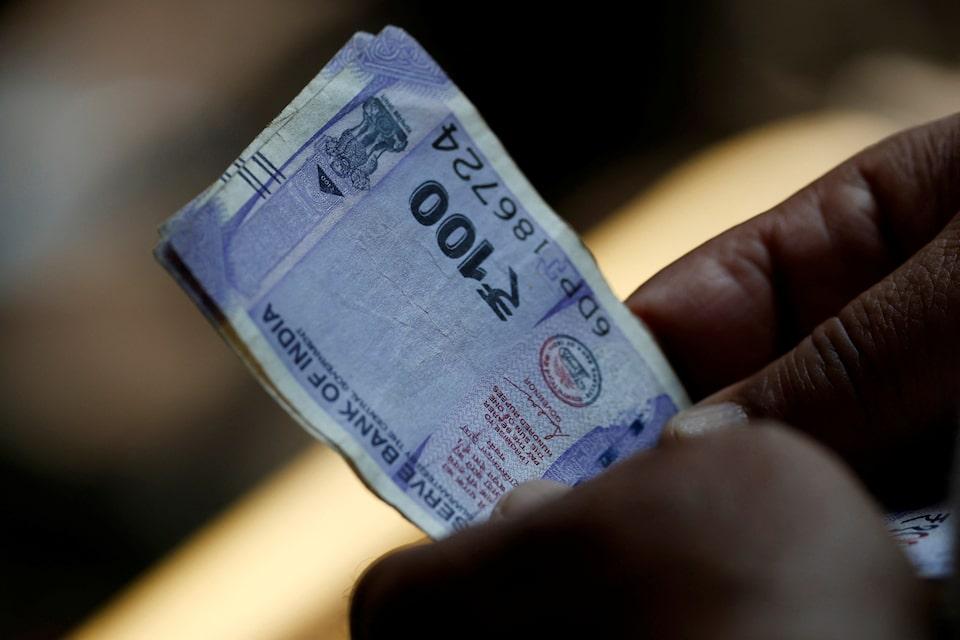
MUMBAI, June 26 (Reuters) - The Indian rupee is set to open higher on Thursday, boosted by the dollar's tumble to multi‑year lows after U.S. President Trump renewed his criticism of Federal Reserve Chair Jerome Powell and reportedly floated plans of his early replacement. The 1-month non-deliverable forward indicated a open in the 85.96 to 85.98 range, versus 86.0775 in the previous session. Sign up here. The rupee rose above the 86 level in the last two sessions, but failed to sustain those moves. It touched an intraday high of 85.80 on Wednesday. The dollar/rupee pair "looks well supported at the 85.80–86 zone, and import demand tends to show up there, so downside will be sticky", a currency trader at a bank said, while pointing out that the 21-day moving average is at 85.90. Unless the USD/INR pair decisively breaks below the 85.80–85.90 region on flows, it will likely stay rangebound with broad dollar cues "largely immaterial", he said. DOLLAR SLIDES, ASIA CLIMBS The dollar index dipped in Asia, heading for its sixth straight daily decline. The euro, which has the highest weightage in the dollar index, hit a multi-year high against the dollar, boosted by NATO developments. Concerns about the future independence of the U.S. Federal Reserve weighed on the dollar. According to a Wall Street Journal report, Trump had toyed with the idea of selecting and announcing Fed Chair Powell's replacement by September or October. Trump on Wednesday called Powell "terrible" for not lowering interest rates sharply, while the Fed chair was telling the Senate that policy had to be cautious with the President's tariff plans posing a risk to inflation. The Korean won and the Taiwanese dollar led Asian currencies higher. KEY INDICATORS: ** One-month non-deliverable rupee forward at 86.10; onshore one-month forward premium at 12.50 paise ** Dollar index down at 97.44 ** Brent crude futures up 0.5% at $68 per barrel ** Ten-year U.S. note yield at 4.27% ** As per NSDL data, foreign investors sold a net $503.6 mln worth of Indian shares on June 24 ** NSDL data shows foreign investors sold a net $22.9 mln worth of Indian bonds on June 24 https://www.reuters.com/world/india/trumps-fed-backlash-undermines-dollar-primes-rupee-higher-open-2025-06-26/
2025-06-26 00:44
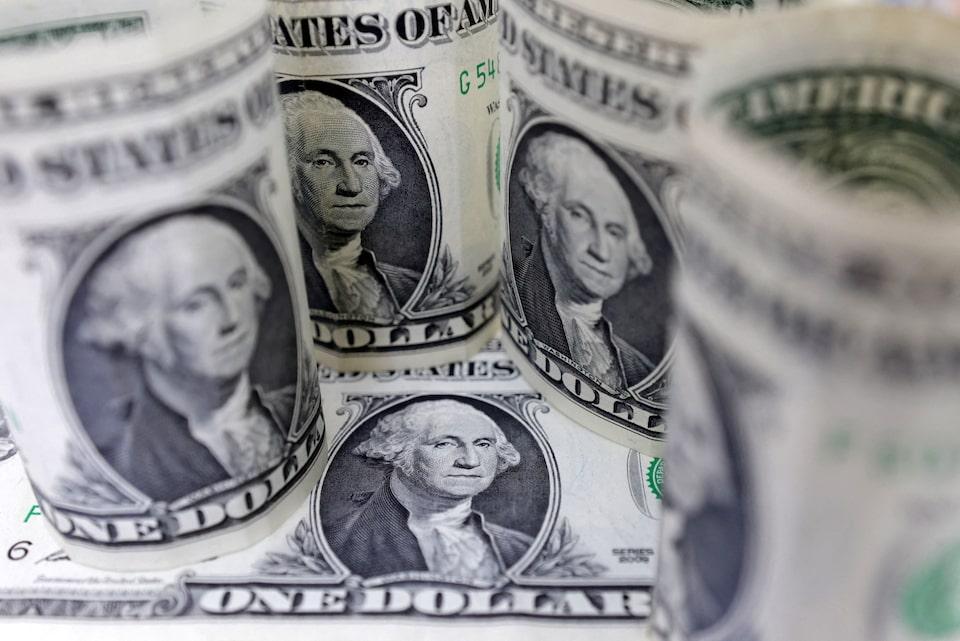
Traders raise bets on more rate cuts this year Trump may announce Powell replacement in coming months NEW YORK, June 26 (Reuters) - The dollar hit a three-and-a-half-year low against the euro and sterling on Thursday in a broad selloff as traders priced in the likelihood that the Federal Reserve will cut rates more than previously expected. “This week it's definitely been about the Fed, the prospect of easing sooner and potentially more rate cuts,” said Eric Theoret, FX strategist at Scotiabank in Toronto. Sign up here. Fed Chair Jerome Powell was interpreted as being more dovish this week in testimony to U.S. Congress. He repeated expectations that inflation should rise this summer, but said that if price pressure remains contained "we will get to a place where we cut rates sooner than later." "Powell kind of opened the door to potentially a July cut," said Noel Dixon, global macro strategist at State Street Global Markets. If the next consumer price inflation release is below market expectations, "I think markets will start to price in the probability of a cut to July." Fed funds futures traders are pricing in 23% odds of a July cut, up from 13% a week ago, while a cut by September has a 93% probability, according to the CME Group's FedWatch Tool. In total, traders see 66 basis points of cuts by year-end, indicating a potential third 25-basis point reduction, up from 46 basis points on Friday. U.S. President Donald Trump will nominate a new Fed Chair next year who is expected to be more dovish than Powell, whose term will end in May. Trump on Wednesday called Powell "terrible" and said he has three or four people in mind as contenders for the top Fed job. The Wall Street Journal reported on Wednesday that Trump has toyed with the idea of selecting and announcing Powell's replacement by September or October. Analysts say that person could operate as a shadow Fed chair, undermining Powell’s influence. Dixon said that a shadow Fed Chair could be a problem if inflation reaccelerates and seems to be persistent "because the message there would be that they would discount the inflation." Chicago Fed President Austan Goolsbee said on Thursday that any move to name a replacement for Powell would have no influence on monetary policy while the nominee awaited confirmation. The euro was last up 0.51% at $1.1719 and reached $1.1744, the highest since September 2021. Sterling rose 0.62% to $1.3748 and got as high as $1.3770, its highest since October 2021. The Swiss franc hit a 10-1/2-year high at 0.799 per dollar. The dollar fell 0.72% to 144.2 Japanese yen . Investors are also focused on the Trump administration's self-imposed July 9 deadline to negotiate deals that avoid reciprocal tariffs with trading partners. U.S. Congress is also working on a tax and spending bill which the Senate is aiming to pass by July 4. The dollar could get a boost if fiscal stimulus from the bill boosts growth and reduces the deficit as a percentage of gross domestic product, said Dixon. Until then, the budget and current account deficits are negative for the dollar, he said. Longer-term the dollar is also under pressure as international investors reallocate away from U.S. assets on concerns about the outlook for the economy and the U.S. currency. “The result of U.S. asset outperformance over the past decade is you've got a lot of asset managers that are long the U.S. dollar way more than I think they're comfortable,” said Theoret. In cryptocurrencies, bitcoin fell 0.43% to $107,382. https://www.reuters.com/world/middle-east/dollar-hits-fresh-lows-trump-attacks-threaten-fed-credibility-2025-06-26/
2025-06-26 00:23
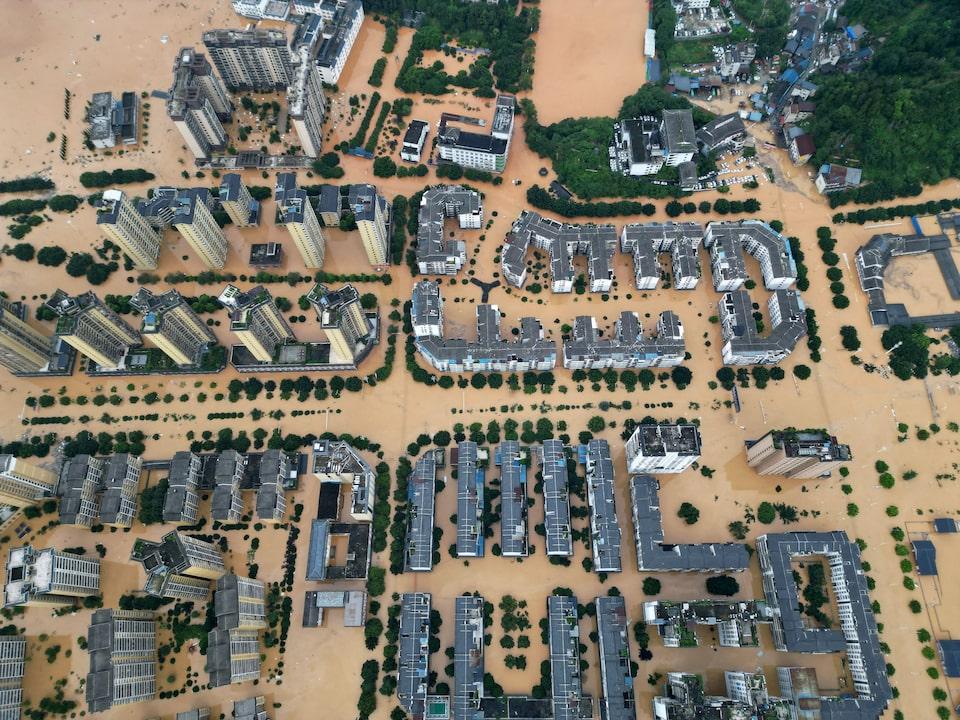
Floodwaters in China's Guizhou surge downstream Rural communities in Guangxi region hit Tropical depression expected to make landfall in Guangxi BEIJING/HONG KONG, June 26 (Reuters) - Towns and villages by a major river in China's Guangxi lay half-submerged as floodwaters from a province upstream roared into the mountainous region, with the expected landfall of a tropical cyclone later on Thursday compounding disaster risk. The flooding that overwhelmed the cities of Rongjiang and Congjiang in Guizhou province on Tuesday has spread downstream to other parts of southwest China, including rural settlements in Guangxi by the Liu river, which originates from Guizhou. Sign up here. The Guangxi township of Meilin was the worst-hit, state media reported on Thursday, with floodwaters at their peak more than 4 metres (13 feet) above what was considered safe. Even as dangerous surface run-off began to recede, southwestern China - from Guizhou and Guangxi to Chongqing, Yunnan and Sichuan - remained on alert for secondary disasters such as road collapses, landslides and hydro-dam overflows. "Rural areas face significant challenges due to limited infrastructure and resources," said Chen Xiaoguang, professor at Southwestern University of Finance and Economics in Chengdu. "Strengthening these systems in rural counties will be key to reducing the long-term impact of increasingly severe weather." Urban areas typically have stronger capacity to respond to floods, he said, but not all cities are equally equipped. Rongjiang for instance is a county-level area where resources are more limited. In more remote areas, challenges include insufficient coverage of monitoring stations, making localised precipitation forecasting difficult, said Meng Gao, professor at Hong Kong Baptist University. 'HEAVY BLOW' On Tuesday, the Guizhou city of Rongjiang, located at the confluence of three rivers, was hit by a flood on a scale that Chinese meteorologists said could only happen once in 50 years, and at a speed that shocked its 300,000 residents. The flow rate of one section of the Liu river in Rongjiang surged to 11,800 cubic metres per second, the equivalent of nearly five Olympic-sized swimming pools. That was more than 80 times the average rate of flow. At least six people were killed. "This flood is a heavy blow to us," said a Rongjiang resident whose cake shop was completely inundated and small electric scooter used for deliveries was damaged beyond repair. "My family is a poor household that has just escaped poverty. This cake shop is our family's only source of income." Many displaced residents were temporarily staying at local hotels, which were also hosting rescue personnel and reconstruction workers, according to phone calls to more than 10 hotels in downtown Rongjiang. In conversations with local water resource bureaus, Southwestern University's Chen said local staff emphasised how their work grew more intense during summer, actively monitoring weather patterns, reinforcing infrastructure, and rehearsing emergency responses in anticipation of extreme weather events. LOOMING STORM As deluge-hit areas began to remove silt left behind by the flooding and restore power, telecommunications and water networks, rains from a tropical depression expected to make landfall in Guangxi on Thursday night could affect restoration and cleanup work or even risk a new round of flooding. The tropical depression made landfall on China's island province of Hainan early on Thursday, and later again in Guangdong on the mainland, bringing more rain to a region still reeling from Typhoon Wutip two weeks ago. Extreme storms and severe flooding, which meteorologists link to climate change, increasingly pose major challenges for Chinese officials, as they threaten to overwhelm ageing flood defences, displace millions of people and cause billions of dollars in economic losses. "Climate change is making extreme weather more frequent and unpredictable," said Chen. "While progress has been made, continued adaptation and investment - especially in forecasting technologies and resilient infrastructure - remain essential." https://www.reuters.com/sustainability/climate-energy/tropical-depression-hits-southern-china-two-weeks-after-typhoon-wutip-2025-06-26/
2025-06-26 00:11
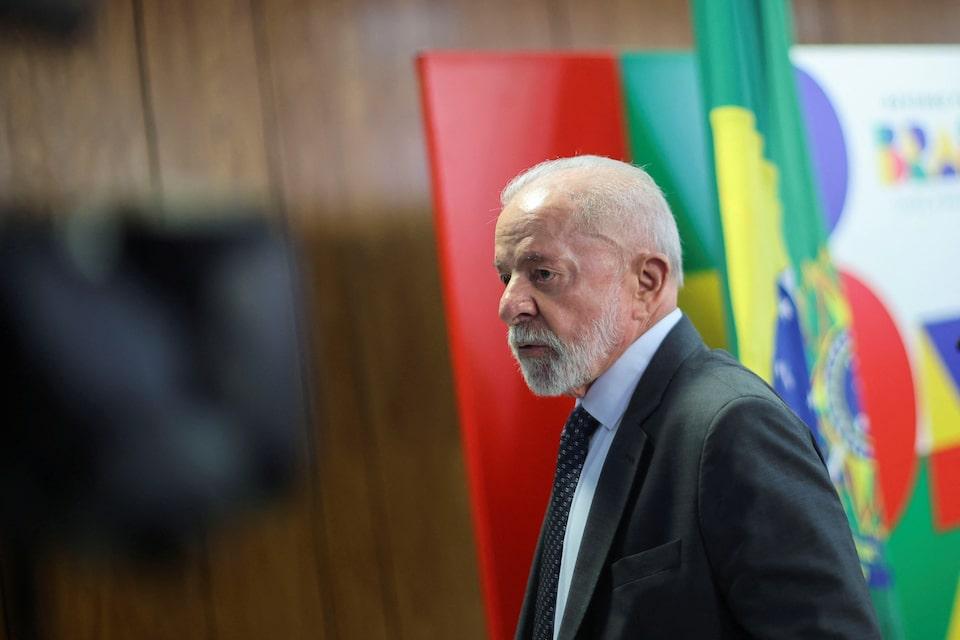
BRASILIA, June 25 (Reuters) - Both chambers of Brazil's Congress on Wednesday overturned a decree from President Luiz Inacio Lula da Silva raising the financial transactions tax (IOF) on certain credit, foreign-exchange and private pension plan operations. The move marks a setback for Lula's government, which had opted for the tax hike as a way to boost revenue and limit the size of spending freezes needed to comply with fiscal rules. Sign up here. It also underscores the government's failed strategy to negotiate with Congress, which quickly rejected the tax measure. Much of Lula's economic agenda has snagged in Congress this year - including proposed spending cuts - as his approval ratings , opens new tab slump ahead of next year's presidential election. The tax hike was first announced , opens new tab by decree in late May and was projected to raise 61.5 billion reais ($11.07 billion) through 2026 by raising taxes on a range of transactions, including corporate loans and foreign-currency card payments. The announcement triggered immediate backlash, prompting the government to walk back , opens new tab the tax increase on certain overseas investments within hours, amid criticism , opens new tab that it was effectively introducing capital controls. Earlier this month the government submitted a revised, watered-down decree , opens new tab with lower rates that still affected corporate borrowing, foreign exchange and pension funds. The administration's efforts to backtrack on its initial proposals were ultimately in vain, as Wednesday's vote re-established the previous tax precedent. Now Lula's government could take the issue to the Supreme Court to overturn Congress' decision or turn to alternatives to shore up public finances. The administration has boosted spending on social programs while seeking to shore up public finances by targeting what it views as unfair tax breaks largely benefiting the rich. But Congress, where Lula lacks a solid coalition, has insisted it will not approve new spending without cost-control measures. Lawmakers have also weakened or blocked the few proposals to cut spending that the government has submitted. ($1 = 5.5577 reais) https://www.reuters.com/world/americas/brazil-lower-house-nixes-lulas-financial-transactions-tax-hike-2025-06-25/
2025-06-25 23:35
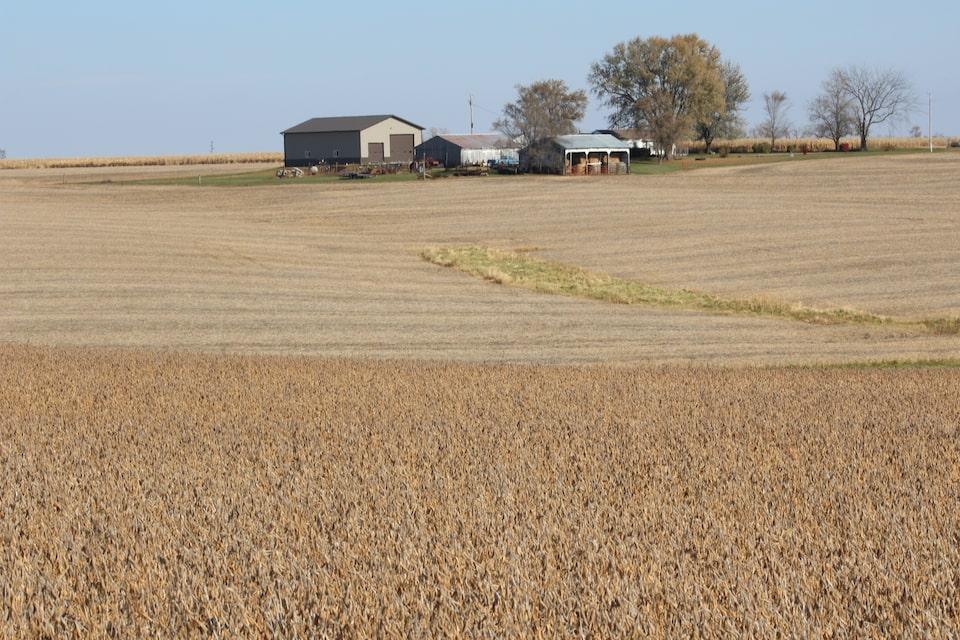
NAPERVILLE, Illinois, June 25 (Reuters) - The U.S. Department of Agriculture next Monday will publish one of its most important surveys of the year, which also happens to be among the more difficult to forecast. But amid all the noise the June acreage report can create, there has been one constant for ten years running: the trade overestimating soybean acres. Sign up here. New-crop Chicago soybean futures last Friday were less than 2 cents per bushel away from inking new yearly highs, though they have since tumbled 5%. Meanwhile, December corn futures notched contract lows on Wednesday, settling 12% off their February high. To boot, the next few weeks are a seasonally heavy period for U.S. corn futures and Corn Belt weather forecasts are looking decent for now. This means that a much larger-than-usual report shock may be needed on Monday for the corn or bean market to consider a change of course. That’s not the most likely outcome, but history suggests it’s not impossible. TRACK RECORD The upcoming numbers are not easy to predict. U.S. corn and soybean plantings have landed outside the pre-report range of estimates in four of the last six Junes, though not necessarily in the same years. Soybean acres have come in below the average trade estimate for the last 10 Junes, while corn acres landed above it in seven of the last 10 years, including the latest four. On average, analysts expect U.S. corn plantings at 95.35 million acres in Monday’s report, up very slightly from the March figure of 95.326 million. Ten of the 24 estimates pegged corn acres declining from the March survey, interesting given that whisper numbers back in the spring exceeded 96 million acres. The average trade guess reflects the typical lean as June corn acres have been higher than in March in 15 of the last 20 years. The latest two instances where June acres were lower happened in 2019 and 2020, featuring one of the wettest Midwestern springs and then the pandemic. The trend on whether soybean acres rise or fall from March to June is perfectly split over the last two decades. But recently, the bias is for June soybean acres to be smaller than the March ones, having occurred in five of the last six years (not 2020). That makes this year’s expectations interesting as analysts peg soybean acres at 83.655 million acres, up slightly from 83.495 million in March. Fourteen of the 24 analysts voted for a larger June bean acreage versus March. The sentiment shift away from corn and toward beans since March likely comes as super wet conditions in eastern areas delayed corn planting, potentially favoring soybeans. But nationally, corn planting was average to faster than average for the entire spring. However, it should be noted that while corn profitability had been significantly better than that of soybeans since last fall, corn prices by themselves were not exactly attractive. This could keep a lid on any corn acreage gains on Monday. The analyst estimate ranges on corn and soybean acres are wider than in the past couple years, reducing but not eliminating the chance of a complete miss. Karen Braun is a market analyst for Reuters. Views expressed above are her own. Enjoying this column? Check out Reuters Open Interest (ROI) , opens new tab, your essential new source for global financial commentary. ROI delivers thought-provoking, data-driven analysis of everything from swap rates to soybeans. Markets are moving faster than ever. ROI , opens new tab can help you keep up. Follow ROI on LinkedIn , opens new tab and X. , opens new tab https://www.reuters.com/markets/commodities/will-analysts-break-their-10-year-streak-us-soybean-acres-2025-06-25/