2025-06-25 21:03
ORLANDO, Florida, June 25 (Reuters) - TRADING DAY Making sense of the forces driving global markets Sign up here. By Jamie McGeever, Markets Columnist After two days of strong gains in world stocks amid the widespread relief over cooling Middle East tensions, relative stability was the hallmark of trading on Wednesday, with major asset classes moving in much narrower ranges. In my column today I look at U.S. foreign direct investment - was the sharp decline in the first quarter an anomaly, or a warning of what's to come in the brave new tariff world? More on that below, but first, a roundup of the main market moves. If you have more time to read, here are a few articles I recommend to help you make sense of what happened in markets today. Today's Key Market Moves Whirlwind fades, calm returns The MSCI All Country index and Nasdaq 100 touched new record highs for a second session, and Asian and emerging market stocks posted solid gains earlier in the day. But the Dow, U.S. small caps and benchmark European indexes all fell. The euro's march higher is taking its toll, and European stocks have underperformed since the brief Israel-Iran war broke out on June 13. The euro on Wednesday rose for a fifth straight day to $1.1665, its highest since October 2021. Sterling hit its highest since February 2022 at $1.3670, and Britain's FTSE 100 slipped to its lowest this month. Bank of England policymakers may be secretly cheering the pound's rally, however, if it helps tame inflation pressures. The latest Citi/YouGov survey of UK consumers' inflation expectations on Wednesday showed that long-term inflation expectations among the British public rose to the highest since September 2022. One sector faring better in Europe on Wednesday, though, was defense, after NATO leaders agreed big increases in defense spending, especially from Europe. U.S. defense stocks have moved in the other direction this week following the Iran-Israel ceasefire. On the policy and macro front, Fed Chair Jerome Powell's second day of congressional testimony passed off without fireworks, although there were sparks in his exchanges with some lawmakers. He reiterated his view that the central bank is right to wait and see what the impact is from tariffs before considering further rate cuts. U.S. foreign investment slump - anomaly or warning? Much of the 'de-dollarization' debate has focused on foreign exposure to U.S. securities like stocks and bonds. But investors shouldn't ignore foreign direct investment flows, the traditionally sticky capital that may also be sending out warning signals. Foreign direct investment typically involves an overseas entity acquiring the assets of a company in another country or increasing its holdings, often via the purchase of machinery, plants or a controlling stake. FDI is therefore considered a longer-term investment compared to portfolio flows, which can be more volatile. U.S. President Donald Trump says he has attracted record foreign investment into the country. Indeed, the White House has a page on its website with a "non-comprehensive running list of new U.S.-based investments" since Trump's second term began. The running total is in the trillions of dollars and includes pledges from several foreign countries. Included are more than $4 trillion in U.S.-bound investments pledged by the United Arab Emirates, Qatar, Japan and Saudi Arabia. During Trump's trip to the Middle East last month, he said the U.S. is on track to receive $12-$13 trillion of investments from countries around the globe, which includes "projects mostly announced ... and some to be announced very shortly." These flows may emerge in full, in time. But official figures on Tuesday showed that FDI in the first quarter actually fell to $52.8 billion, the lowest total since the fourth quarter of 2022. That's well below the quarterly averages of the past 10 and 20 years. The Commerce Department figures also showed that the U.S. current account deficit widened to a record $450.2 billion in the quarter, or 6% of U.S. GDP, meaning FDI inflows barely covered 10% of that shortfall. Should the Trump administration be worried? TARIFF DISTORTIONS The short answer is probably not, at least not yet. FDI flows are typically far smaller than portfolio flows into equity and fixed income securities, so from the perspective of funding the current account deficit, the drop in FDI is not as pressing a concern. On the other hand, if foreign investors are also buying fewer U.S. securities, capital from elsewhere will be needed to fund that deficit. Additionally, America's balance of payments data in the first quarter was hugely distorted by domestic consumers and businesses front-running Trump's tariffs, loading up on imports before the duties kick in later this year. Trump's bet is that the deficit will shrink this year and beyond as his 'America First' policies spur more "onshoring" from domestic firms as they bring production back home and the weakening dollar helps U.S. manufacturing by making exports more competitive. The subsequent boom will attract investment from companies and governments overseas. In theory. However, these dynamics work both ways. For example, the European Union is by far the largest provider of U.S. FDI, accounting for 45% of the total in 2023, according to Citi. The combination of the continent's German-led fiscal splurge, U.S. tariffs and 'de-dollarization' concerns could easily crimp that flow, perhaps significantly. Another potential risk to U.S.-bound FDI is 'Section 899' - the possible tax of up to 20% on foreigners' U.S. income that could be part of Trump's budget plans. A Tax Foundation report in May found that Section 899 would "hit inbound investment from countries that make up more than 80 percent of the U.S. inbound FDI stock." Industry pushback may water down Section 899, but it remains a cloud on the U.S. investment horizon. The U.S. is the world's biggest recipient of FDI, with a 25% share of global volumes in 2023, up from around 15% before the pandemic, according to Citi. Its economy is the largest in the world, a thriving hub of innovation, pioneering technology, artificial intelligence and money-making potential. That will always attract FDI. Whether it attracts as much in this new environment remains to be seen. What could move markets tomorrow? Want to receive Trading Day in your inbox every weekday morning? Sign up for my newsletter here. Opinions expressed are those of the author. They do not reflect the views of Reuters News, which, under the Trust Principles , opens new tab, is committed to integrity, independence, and freedom from bias. https://www.reuters.com/business/aerospace-defense/global-markets-trading-day-graphic-pix-2025-06-25/
2025-06-25 20:54
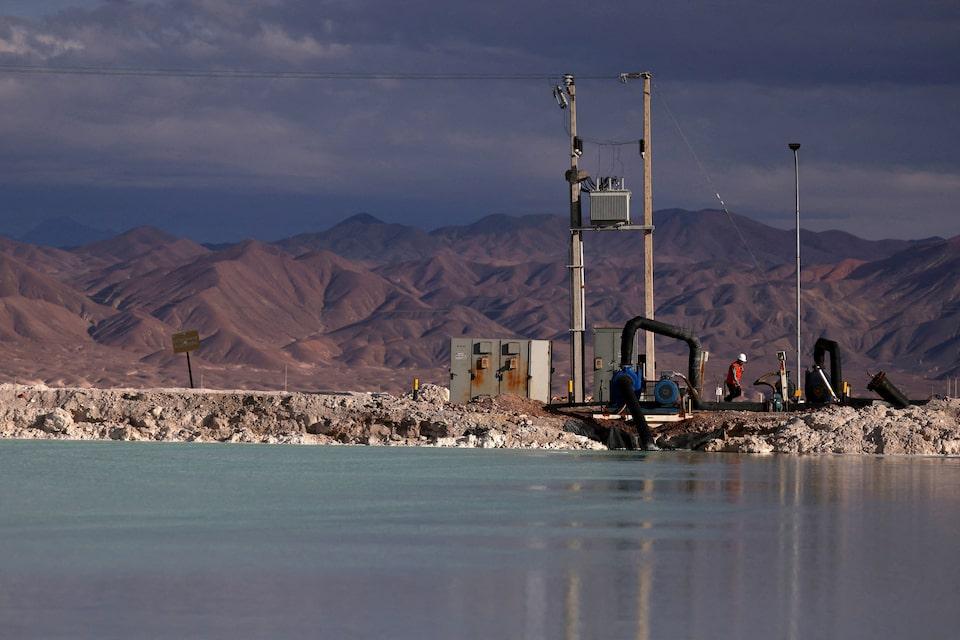
SANTIAGO, June 25 (Reuters) - The world's second-biggest lithium miner SQM (SQMA.SN) , opens new tab has begun laying off 5% of its Chilean workforce as it contends with a protracted slump in global prices for the battery metal, according to a company source and a union memo to workers seen by Reuters on Wednesday. Lithium prices have plunged nearly 90% since their peak in late 2022 due to overproduction in China and slower-than-expected demand for electric vehicles, forcing some miners to slash jobs and halt expansions. Sign up here. SQM, which missed first-quarter profit estimates, previously said it expects weak prices through the first half of the year. It declined to comment on the layoffs. A company source said the cuts - to both the lithium and fertilizer units - would not affect core operations and or production guidance. SQM had no immediate plans for further layoffs, the person added. Reuters could not determine the exact number of dismissals. SQM employed 8,344 people in Chile and elsewhere at the end of last year, according to its annual report, with three-quarters working at the northern Chile operations where it extracts and processes lithium. A memo from the Sindicato SQM Salar union, dated Tuesday, said company management had informed the group's president that 25% to 30% of the layoffs would correspond to "general roles," and the rest to supervisors. They would take place at SQM's offices in Santiago, as well as the Atacama salt flat and its lithium processing plant in northern Chile, the memo said. "As a union we regret the decision taken by the company, which affects our members, and we categorically question the reasons behind it," the memo said, without providing further details. It also offered support to workers who lost their jobs. U.S. firm Albemarle, the only other lithium miner in Chile, cut workers last year as part of cost-cutting measures that it said helped to offset low lithium prices. https://www.reuters.com/world/americas/chilean-lithium-miner-sqm-begins-laying-off-5-local-workforce-2025-06-25/
2025-06-25 20:38
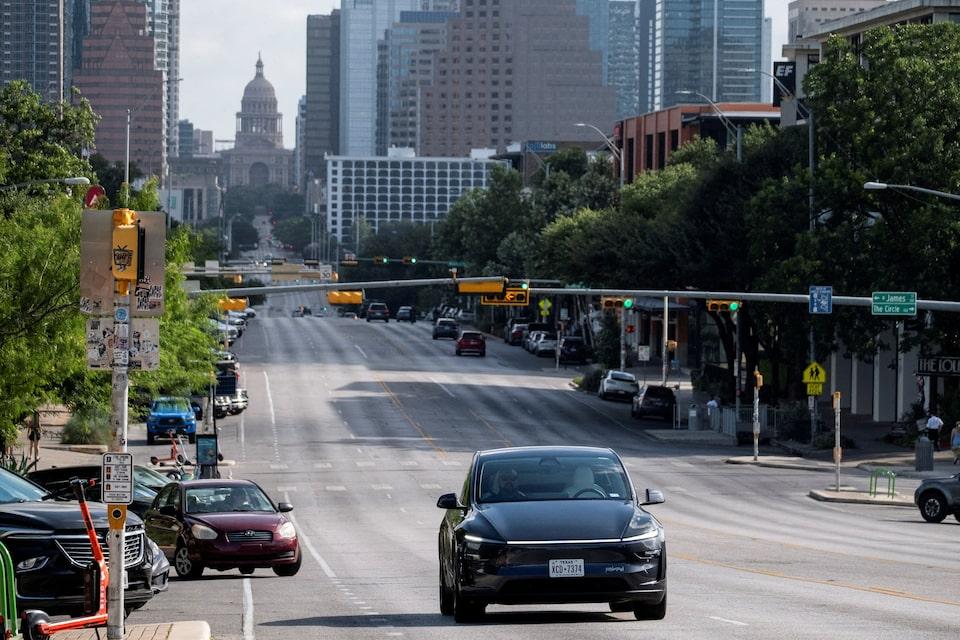
Traffic problems, driving mistakes feature in Tesla's robotaxi - passenger videos Robotaxis entered wrong lane, dropped passengers off in the middle of roads among other issues Problems show limitations of Tesla's self-driving software - safety expert Driverless vehicle rivals Waymo and Cruise also faced issues in their rollouts June 25 (Reuters) - A first public test of robotaxis by Tesla in Austin, Texas led to multiple traffic problems and driving issues, videos from company-selected riders showed over the first few days. Chief Executive Elon Musk has tied Tesla's financial future to self-driving technology, and with Tesla sales down, the stakes are high. He said Tesla would roll out the service to other U.S. cities later this year and predicted "millions of Teslas" operating "fully autonomously" by the second half of next year. Sign up here. The Tesla fans invited to the trial were strongly supportive and posted videos of hours of trouble-free driving, but issues drew questions from federal road safety regulators and auto safety experts. Issues included Tesla robotaxis entering the wrong lane, dropping passengers off in the middle of multiple-lane roads , opens new tab or at intersections, sudden braking, speeding , opens new tab and driving over a curb. In one instance, a robotaxi drove into a lane meant for oncoming traffic , opens new tab for about 6 seconds. It had pulled into an intersection in its left-turn lane with its turn blinker on. Then the steering wheel wobbled momentarily, and instead of turning it proceeded straight into the lane meant for oncoming traffic, prompting a honk from a car behind it. In another incident, the car suddenly braked , opens new tab with no obstruction apparent in the video. The passenger jerked forward and their belongings were thrown to the floor. In a third video, taken from another vehicle, a robotaxi abruptly stopped twice in the middle of the road while passing police vehicles with flashing lights. Tesla is conducting the test with human safety monitors in the front passenger seat. A fourth video showed the safety monitor hitting a button to stop the robotaxi when a delivery truck in front of it started backing up. "This is awfully early to have a bunch of videos of erratic and poor driving," said Philip Koopman, a Carnegie Mellon University computer-engineering professor and autonomous-technology expert. "I was not expecting as many videos of problematic driving on the very first day," he said. Tesla is testing about 10 to 20 robotaxis, which are standard Model Ys with advanced software, and has been giving rides since Sunday afternoon. Reuters was able to independently verify the locations of at least 11 videos showing issues. Tesla did not respond to a request for comment. A City of Austin spokesperson said officials are aware of the Tesla issues documented on social media and that "when a potential legal or safety concern is brought to our attention, we promptly share it with the company." The spokesperson added that the police department is "actively collaborating with Tesla" to ensure officers can safely interact with the robotaxis. 'CAUGHT ON CAMERA' The incidents caught on camera did not involve accidents, and one expert said some reflected a decision to focus on safety. "So far so good. It handled the situations very well and likely better than even good drivers," Alain Kornhauser, Princeton University professor of operations research and financial engineering, said by email. He added that it would be more dangerous to drive at less than the speed of prevailing traffic, for instance. Tesla's experiment is unusually public. Other companies faced similar issues: Alphabet's (GOOGL.O) , opens new tab Waymo and General Motors'(GM.N) , opens new tab Cruise had their own share of traffic mishaps after showing up on Austin streets. City officials logged dozens of instances over the past two years where residents and authorities reported that robotaxis blocked traffic by stopping in the middle of roads, failed to respond to police directions and could not deal with emergency vehicles and road closures. A serious accident involving a pedestrian in 2023 led Cruise to shut down last year. Waymo is the only robotaxi service in the U.S. to ferry paying customers without a human backup driver or in-car safety monitor. It started offering rides to the general public through Uber in Austin earlier this year. Musk for years has failed to deliver on promises that self-driving Teslas are just around the corner. Tesla rolled out the service for a flat fee of $4.20 to a limited number of handpicked riders. The service is not available to the broader public and the robotaxis operate in a limited area, and avoid difficult intersections and bad weather. Riders were rarely bothered much by driving issues. Farzad Mesbahi, a former Tesla program manager, and his co-passenger hit the "drop off early" option during a ride. The vehicle stopped in an intersection with a stoplight, his video showed. They exit quickly and walk to the sidewalk. "The car should have known to not stop there," Mesbahi is heard saying after the ride. "Opportunities for improvement," the co-passenger says. That is an example "most companies would not be comfortable with," said Kara Kockelman, a professor of transportation engineering at the University of Texas at Austin, adding that she was surprised by the traffic mistakes. "Dropping off people in the middle of a six-lane road or edge of a busy intersection when the traffic is going in the opposite direction is pretty dangerous. They definitely did not want to do this or be caught on camera," she said. https://www.reuters.com/business/autos-transportation/teslas-robotaxi-peppered-with-driving-mistakes-texas-tests-2025-06-25/
2025-06-25 20:29
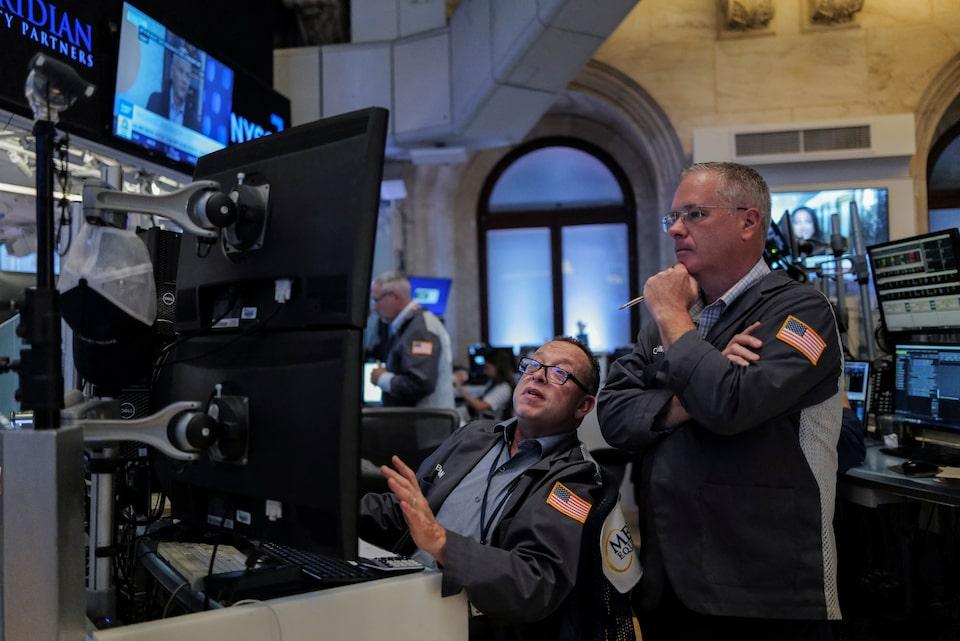
Tesla drops as European sales slump continues FedEx, General Mills shares slide after disappointing profit forecasts Micron Technology jumps in extended trading after posting quarterly results Indexes: Dow down 0.25%, S&P 500 unchanged, Nasdaq up 0.31% June 25 (Reuters) - U.S. stocks took a breather on Wednesday, pausing a two-day rally as the tenuous Israel-Iran cease fire continued to hold and investors pored over a second day of congressional testimony from Federal Reserve Chair Jerome Powell. Tech shares (.SPLRCT) , opens new tab lifted the Nasdaq, while the S&P 500 ended flat. The benchmark index remained within striking distance of its record closing high reached on February 19. Sign up here. The blue-chip Dow ended in negative territory. "It almost feels like back to your regularly scheduled bull market," said Ryan Detrick, chief market strategist at Carson Group in Omaha. "We've dealt with the tariffs, we've dealt with the Middle East drama, but stocks continue to defy the odds by moving higher with the realization that the U.S. economy remains quite resilient." "But today it's almost like watching paint dry as we're all waiting for the S&P 500 to make new highs," Detrick added. Nvidia shares (NVDA.O) , opens new tab touched a record high, lifting its market value to $3.75 trillion and making it the world's most valuable company. Among the 11 major sectors of the S&P 500, technology, communication services (.SPLRCL) , opens new tab, and healthcare (.SPXHC) , opens new tab advanced on the day. Defensives such as real estate (.SPLRCR) , opens new tab, consumer staples (.SPLRCS) , opens new tab and utilities (.SPLRCU) , opens new tab underperformed the broader market. "The lifeblood of a bull market is rotation," Detrick said. "And to see technology and communication services taking back the baton is really a good sign that this surprise summer rally likely has legs." The Dow Jones Industrial Average (.DJI) , opens new tab fell 106.59 points, or 0.25%, to 42,982.43, the S&P 500 (.SPX) , opens new tab lost 0.02 points, or 0.00%, to 6,092.16 and the Nasdaq Composite (.IXIC) , opens new tab gained 61.02 points, or 0.31%, to 19,973.55. The fragile truce between Israel and Iran continued to hold, with U.S. President Donald Trump declaring victory despite a lack of clarity regarding the extent of the damage U.S. strikes had on Iran's uranium enrichment assets. Fed Chair Jerome Powell, in his second straight day of congressional testimony, reiterated to the Senate Banking Committee that the central bank is well-positioned to wait to cut interest rates until the inflationary effects of Trump's wide-ranging tariffs are better known. Financial markets are pricing in almost a 25% likelihood of a rate cut at the July policy meeting, and a 67% probability that the first cut will arrive in September, according to CME's FedWatch tool. Housing data on Wednesday showed new home sales plunged 13.7% and applications for loans to buy homes dipped as mortgage rates edged higher. On Thursday, the Commerce Department is due to issue its final take on first-quarter GDP, and its Personal Consumption Expenditures (PCE) report on Friday will provide insights into consumer spending and inflation. Tesla (TSLA.O) , opens new tab shares fell 3.8% as its European sales slumped for the fifth month. Economic uncertainty continues to weigh on corporate guidance. FedEx shares (FDX.N) , opens new tab slid 3.3% after the package delivery company forecast quarterly profit below estimates as tariffs weighed on global demand. Rival UPS (UPS.N) , opens new tab dropped 1.2%. General Mills (GIS.N) , opens new tab also provided disappointing profit guidance, sending its shares 5.1% lower. U.S.-listed shares of cybersecurity firm BlackBerry jumped 12.5% on the heels of its revenue forecast hike, attributed to steady demand. Micron Technology (MU.O) , opens new tab surged more than 5% in extended trading after forecasting better-than-expected fourth-quarter revenue. Declining issues outnumbered advancers by a 1.94-to-1 ratio on the NYSE. There were 174 new highs and 69 new lows on the NYSE. On the Nasdaq, 1,566 stocks rose and 2,859 fell as declining issues outnumbered advancers by a 1.83-to-1 ratio. The S&P 500 posted 24 new 52-week highs and 7 new lows while the Nasdaq Composite recorded 86 new highs and 65 new lows. Volume on U.S. exchanges was 16.02 billion shares, compared with the 18.08 billion average for the full session over the last 20 trading days. https://www.reuters.com/business/us-stock-futures-subdued-middle-east-tensions-cool-powell-focus-2025-06-25/
2025-06-25 20:10
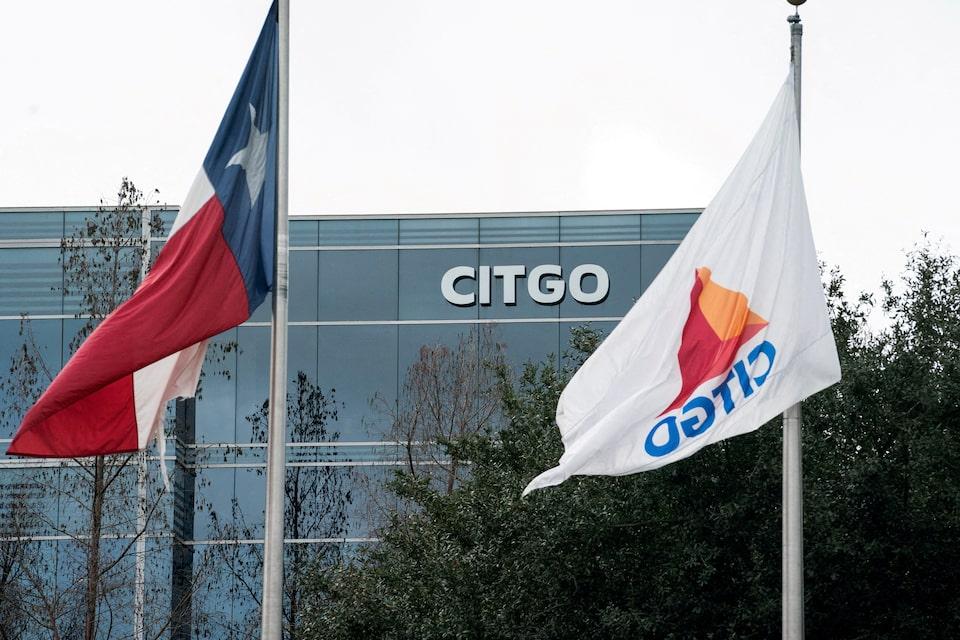
Court officer to recommend auction's winner by July 2 Judge Stark instructed advisors to prioritize price over certainty of closure Resolution of parallel cases might have encouraged new bidders HOUSTON, June 25 (Reuters) - Black Lion Citgo Group, a consortium led by private equity firm Black Lion Capital Advisors, submitted an $8 billion all-cash bid for the parent of Venezuela-owned U.S. refiner Citgo Petroleum as part of a court-organized auction of shares, the company said in a filing released on Wednesday. Following the selection of a $3.7 billion offer by Red Tree Investments as starting bid in April, a court in Delaware received rival offers until June 18 for Citgo's parent PDV Holding as part of a bidding round aimed to pay up to 15 creditors for debt defaults and expropriations in Venezuela. Sign up here. The auction's winner is expected to be recommended by a court officer overseeing the sales process by July 2, with a final hearing set for August 18, according to a schedule recently updated by the court. Black Lion's offer, submitted last week, is backed by investors Quazar Investment, Anex Management and Fortress Management and includes an $8 billion base purchase price plus court and government fees and insulation funds for up to $3 billion, according to the filing. The Black Lion group did not participate in the first phase of the bidding round earlier this year, when a starting bid was chosen, according to court filings and sources. Black Lion did not immediately reply to a request for comment. When the auction's schedule was extended this month, court officer Robert Pincus said the resolution of parallel legal cases in pursuit of the same assets was expected to encourage new offers in the last mile of the sales process. A consortium of miners Gold Reserve (GRZ.V) , opens new tab and Rusoro (RML.V) , opens new tab and conglomerate Koch also submitted an improved offer as part of the bidding round's topping period, Gold Reserve said earlier this month, without revealing details. The group, which only includes companies that also are creditors in the case, had offered $7.1 billion for the shares during the starting bid phase, but its offer was not chosen because of its lower "certainty of closure," Pincus told the court. Two rival groups led by affiliates of commodities house Vitol and hedge fund Elliott Investment Management were considering bids in this round, but their submissions have not been confirmed. A $7.3 billion offer by Elliott's affiliate Amber Energy won the first bidding round last year, but was ultimately rejected by most creditors. Black Lion's offer "exceeds the current stalking horse bid and all reported topping bids publicly known to date" and "is backed by committed institutional funding, with documented capacity greatly exceeding $12 billion," the company told the court. Judge Leonard Stark, who is in charge of the eight-year case, instructed Pincus to prioritize price over certainty of closure in this phase of the auction. As the sale process completion approaches, some creditors including Gold Reserve are asking the court to request clarification from the U.S. Treasury Department on its protection over Citgo, which has been in force in recent years freezing any change of ownership of the seventh largest U.S. refiner. https://www.reuters.com/business/energy/black-lion-submits-8-billion-cash-bid-citgos-parent-filing-says-2025-06-25/
2025-06-25 20:01
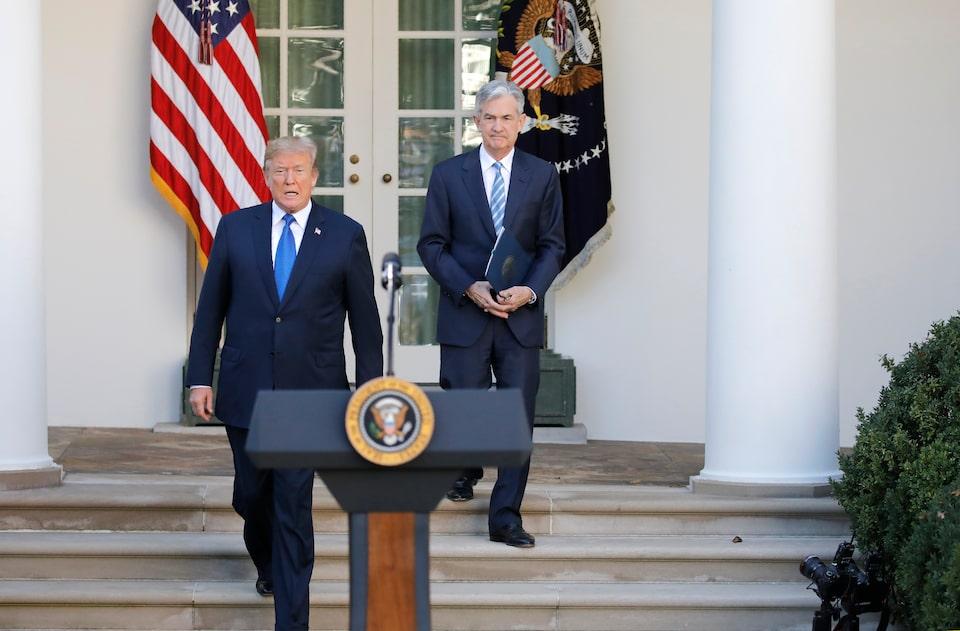
THE HAGUE, June 25 (Reuters) - President Donald Trump on Wednesday called Federal Reserve Chair Jerome Powell "terrible" in his latest attack on the central bank chief and said he has three or four people in mind as contenders for the top Fed job. "I know within three or four people who I'm going to pick," Trump told reporters when asked if he is interviewing candidates to replace Powell. Sign up here. The leading contenders reportedly include former Fed Governor Kevin Warsh, National Economic Council head Kevin Hassett, current Fed Governor Christopher Waller, and Treasury Secretary Scott Bessent. Trump has repeatedly criticized Powell for not cutting interest rates and has floated the idea of firing him or naming a successor soon, though he nearly as often has walked back those threats, saying on June 12 at the White House, "I'm not going to fire him." At the White House on Wednesday, Hassett declined to say whether he had spoken to Trump about Powell's replacement. "I think the President will choose the person that he likes, and it's not going to be Jay Powell," Hassett said. Some analysts see this as an effort to influence monetary policy through a "shadow" Fed chair even before Powell leaves office in May 2026. Fed chairs have long been seen as insulated from presidential dismissal for reasons other than malfeasance or misconduct, but Trump has threatened to test that legal premise with frequent threats to fire Powell. Powell told Congress this week that higher tariffs could push up inflation this summer, just as the Fed weighs potential rate cuts. He said he and many at the Fed expect inflation to rise soon and that the central bank isn't rushing to lower borrowing costs. https://www.reuters.com/world/us/trump-says-he-is-considering-three-or-four-candidates-next-fed-chair-2025-06-25/