2025-06-25 20:00
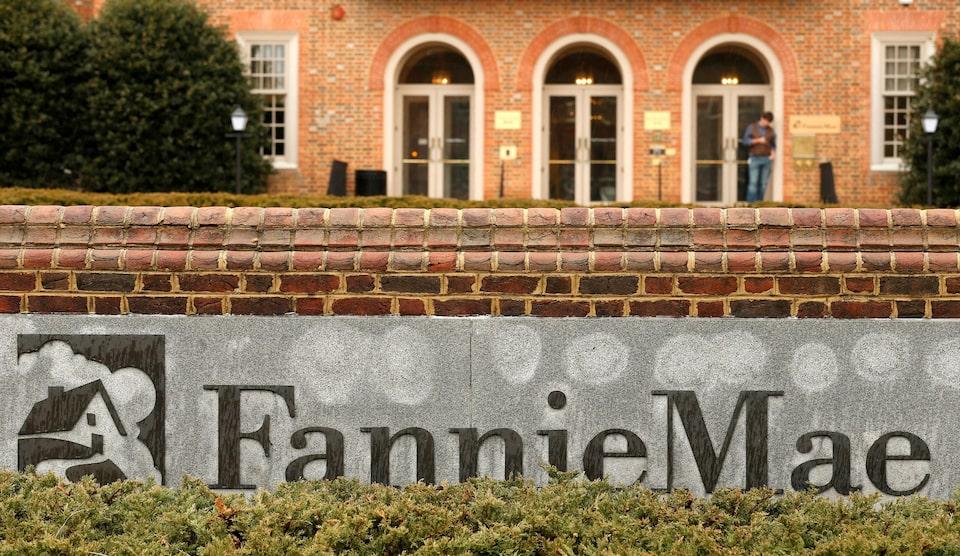
June 25 (Reuters) - The regulator overseeing Fannie Mae and Freddie Mac on Wednesday ordered the housing giants to consider cryptocurrency as an asset for single-family mortgage loan risk assessments, a move that could potentially open the door to borrowers using crypto investments to qualify for home loans. William Pulte, the director of the Federal Housing Finance Agency, said in a social media post that he had ordered Fannie and Freddie to "prepare their businesses to count cryptocurrency as an asset for mortgage," which he said would be in line with President Donald Trump's vision of making the U.S. "the crypto capital of the world." Sign up here. The FHFA oversees Fannie Mae and Freddie Mac, which have operated under U.S. government control since 2008 after suffering heavy losses during the subprime mortgage crisis. They guarantee over half of the nation's mortgages. Cryptocurrencies are known for being highly volatile and are often subject to wild price swings, sometimes for no clear reason. In February, bitcoin -- the largest cryptocurrency -- suffered its biggest weekly fall in two years, dropping 16%, although it has since recovered. Trump has sought to overhaul U.S. cryptocurrency policy after courting cash from the industry on the campaign trail. Trump has appointed industry-friendly regulators and has hosted industry leaders at the White House. Cryptocurrencies have reacted favorably, with bitcoin reaching all-time highs this year. In a directive signed Wednesday, Pulte said that considering additional borrower assets -- such as cryptocurrencies -- could enable Fannie and Freddie to assess the full financial picture of a borrower and could "facilitate sustainable homeownership to creditworthy borrowers." Pulte's order did not specify which cryptocurrencies Fannie and Freddie should consider. https://www.reuters.com/sustainability/boards-policy-regulation/regulator-orders-fannie-freddie-consider-crypto-holdings-loan-assessments-2025-06-25/
2025-06-25 19:56
June 25 (Reuters) - The U.S. sent letters to Enterprise Products (EPD.N) , opens new tab and Energy Transfer (ET.N) , opens new tab on Wednesday informing the companies they could load ethane on vessels destined for China but could not unload the ethane in China without authorization, according to a person familiar with the matter and copy of one letter. The letters from the U.S. Department of Commerce follow a licensing requirement imposed several weeks ago on the companies' exports of ethane to China, which halted shipments and led to vessels anchoring in or hovering around the U.S. Gulf Coast. Sign up here. The letters may signal the U.S. preparing to lift restrictions imposed on exports to China in late May and early June, as the U.S.-China trade war shifted from retaliatory tariffs, to curbs on each others supply chains. With China granting rare earth export licenses to some firms and saying it would speed up the approval process, the U.S. now appears close to permitting ethane exports to China. Still, the companies are highly unlikely to risk loading the ethane on vessels and sending them on their way, the person familiar with the matter said. If the vessels make their way to China, it may be difficult to stop them from offloading the ethane and the companies could face penalties of up to twice the value of the shipment if they do. A copy of the letter seen by Reuters and later released by Enterprise Products said, "This letter authorizes Enterprise Products to load vessels with ethane, transport and anchor in foreign ports, even if... to a party located in China," the letter said. "However, Enterprise Products may not complete such export... to a party that is located in China," without further authorization. The securities filing with the letter did not include additional comment. Enterprise Products and Energy Transfer, two of the top U.S. ethane producers and exporters, did not respond to requests for comment. About half of all U.S. ethane exports go to China, where it is used by the petrochemical industry. The U.S. Department of Commerce also did not immediately respond to requests for comment. The ability to load and begin transporting ethane could relieve congestion at ports along the U.S. Gulf coast, where vessels have been stalled. Since May 23, the U.S. imposed new restrictions on exports to China of everything from ethane and chip design software to jet engines and nuclear plant parts. https://www.reuters.com/business/energy/us-allows-ethane-be-loaded-shipped-china-not-unloaded-letter-2025-06-25/

2025-06-25 19:46
June 25 (Reuters) - The Trump administration is proposing to hold a sale of oil and gas drilling rights on 80 million acres (32.4 million hectares)in the Gulf of Mexico on December 10 with lower deepwater royalty rates, according to the U.S. Bureau of Ocean Energy Management. President Donald Trump issued an executive order in January 2025 calling on U.S. institutions to refer to the Gulf of Mexico as the Gulf of America. Sign up here. The sale would be the first of three outlined in a Biden-era five-year offshore drilling program that included the smallest ever number of oil and gas auctions. The Trump administration in April kicked off the process to develop a new five-year program to maximize energy development. Trump has ordered government agencies to identify ways to increase already record high U.S. oil and gas production, arguing that past administrations had unnecessarily curtailed drilling to combat climate change. The administration plans to offer about 15,000 unleased blocks located 3 to 231 miles (5-372 km) offshore, according to BOEM, a division of the Department of the Interior. It is proposing a royalty rate of 16.67%, the minimum required by law, for both shallow and deepwater leases. Recent oil and gas auctions have required drillers to pay 18.75% on the value of oil produced in deep water. The administration said the lower rate would boost industry participation and lower production costs. "Offshore oil and gas play a vital role in our nation's energy portfolio, with the Gulf of America supplying 14% of domestically produced oil," BOEM Principal Deputy Director Matt Giacona said in a statement. "This proposed lease sale demonstrates BOEM’s commitment to advancing American Energy Dominance and fostering the production of affordable, reliable energy resources for the nation.” The proposal is subject to 60 days of public comment. A final sale notice will be published at least 30 days before the auction, BOEM said. https://www.reuters.com/business/energy/us-proposes-gulf-mexico-oil-gas-lease-sale-december-2025-06-25/

2025-06-25 19:22
Stablecoin issuers key buyers of Treasuries amid huge supply Demand for stablecoins surges among major banks, Paxos says Tether, Circle lead stablecoin market, valued at $256 billion BOSTON, June 25 (Reuters) - The potential for stablecoins to fuel demand for short-term U.S. Treasury securities was a hot topic at a money market fund conference in Boston this week, with investors expecting these digital tokens to absorb a huge supply of government debt later this year. Stablecoins are pegged to highly liquid assets such as the U.S. dollar and the tokens can drive demand for U.S. Treasuries by requiring issuers to hold large, liquid, and safe reserves to support a 1:1 peg to the greenback. Sign up here. "Stablecoins are drawing significant...demand for the Treasury market," said Yie-Hsin Hung, CEO of State Street Global Advisors, in keynote remarks at the Money Fund Symposium on Monday. She said about 80% of the stablecoin market is invested in either Treasury bills, known as T-bills, or repos, which are repurchase agreements. That represents about $200 billion, roughly less than 2% of the overall Treasury market. "But stablecoins are growing fast, and most likely, will outpace the growth of Treasury supply," Hung said. As more financial institutions and corporations adopt stablecoin for payments, remittances, or decentralized finance applications, issuers need to hold more reserves to back the growing supply. For instance, if the market capitalization of USDC, a stablecoin issued by Circle (CRCL.N) , opens new tab, increases by $10 billion, the issuer might purchase $10 billion in Treasuries to maintain the peg. Circle, a payments technology company, and Tether, a blockchain-enabled platform, are the two largest stablecoin issuers. Given expectations of looming Treasury supply of as much as $1 trillion by the end of the year, the market is looking for an incremental buyer that would be a source of new demand for U.S. government debt. Stablecoin issuers fit the bill, market participants said. "If they do indeed squeeze this supply balloon on Treasuries and rely on the front end of the curve for debt issuance, we think that one of the justifications...is that all this demand that's coming from stablecoins...gives (U.S. Treasury Secretary Scott) Bessent cover in order to make that shift to the shorter end," said Mark Cabana, head of U.S. rates strategy at BofA Securities, during one of sessions at the symposium. Cabana noted that stablecoin issuers tend to buy T-bills and shorter-dated Treasury coupons. In an emailed statement on Thursday after the story's initial publication on Wednesday, Tether said it already holds over $120 billion in U.S. Treasuries and continues to act as a significant buyer of short-term government debt. It added that it is already the fifth largest purchaser of U.S. Treasuries. "While we don't speculate on future Treasury issuance or allocations, we remain committed to maintaining highly liquid, dollar-based reserves," Tether said. Circle echoed similar sentiments. The firm noted that the majority of USDC reserves are held in the Circle Reserve Fund, which contains cash, short-dated Treasuries, and overnight repos designed to make USDC redeemable 1:1 for U.S. dollars," a Circle spokesperson said. "This full-reserve composition makes Circle a natural buyer of short-dated U.S. Treasuries and lender in the U.S. Treasury repo market, however, market demand for USDC determines the overall size of our reserves." Adam Ackermann, head of portfolio management at Paxos, a financial services and technology company, said he has had multiple conversations with the largest banks in the world wanting a stablecoin. "They're calling us and saying: I need a stablecoin in eight weeks. How can we get one?" "What's somewhat concerning is we're just at this fever pitch right now," Ackermann said. "It's great for the industry, but we need to start to put some guardrails on things." Stablecoins' popularity further ramped up after the U.S. Senate passed last week a landmark bill to create a regulatory framework for the token called the GENIUS Act. The Republican-controlled House of Representatives still needs to pass its version of the bill before it heads to President Donald Trump's desk for approval, but the bill's passage bolstered hopes of wider adoption of a once-niche part of the crypto sector. The stablecoin market is worth about $256 billion, according to crypto data provider CoinMarketCap, and is estimated by Standard Chartered to reach $2 trillion by 2028 if the legislation is signed by Trump. "I expect that there will be a proliferation of stablecoins," Cabana said. "It will be an incremental demand source (for Treasuries), I would guess, over the next three to five, certainly 10 years." https://www.reuters.com/business/us-treasuries-face-stablecoin-driven-demand-surge-supply-looms-2025-06-25/

2025-06-25 19:07
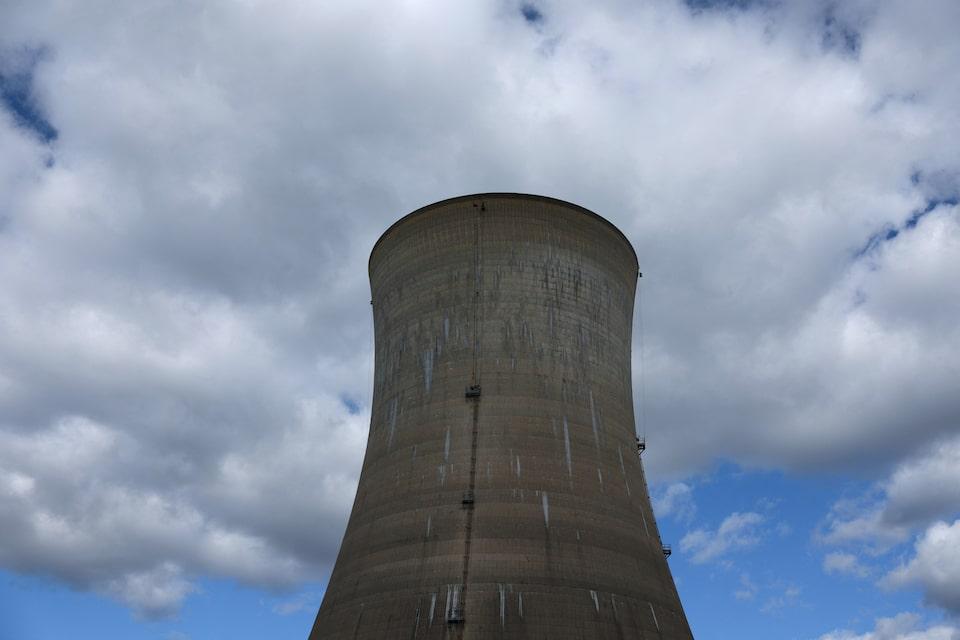
Constellation fast-tracks Three Mile Island restart for Microsoft data centers PJM expedites grid connection for select projects Nuclear power interest resurges amid U.S. electricity demand growth THREE MILE ISLAND, Pennsylvania, June 25 (Reuters) - The former Three Mile Island nuclear power plant in Pennsylvania may restart in 2027, about a year ahead of schedule after being put on a fast track to connect to the regional grid, executives with the plant's owner Constellation Energy (CEG.O) , opens new tab said on Wednesday. Constellation struck a deal last September to power Microsoft (MSFT.O) , opens new tab data centers, paving the way to reopen Three Mile Island, widely known as the site of a partial meltdown in 1979 that chilled the nuclear industry. Sign up here. Constellation's 20-year power purchase agreement with Microsoft is emblematic of the dramatic lengths Big Tech has been willing to go to fuel its artificial intelligence expansion, which began to intensify a year-and-a-half ago. The reactor re-entering service at Three Mile Island, which is being renamed the Crane Clean Energy Center, was not part of the 1979 accident, and shut in 2019 for economic reasons. “We made a mistake in shutting down this plant, but we’re not here to dwell on the past,” said Constellation CEO Joe Dominguez at an event on Three Mile Island, backed by giant cooling towers and the nuclear plant that will be brought back as Crane. The nuclear building is in similar shape to when it shut in 2019, and since the restart announcement, most of the work has been around planning and hiring, Constellation said. The company has ordered several key items for the restart, including its main transformer and fuel. It has also restored water systems needed to run the plant and completed various infrastructure inspections needed for permitting approvals. At the time of the restart announcement last year, Constellation said it expected the plant to re-open in 2028. Officials with the company had said they expected the process to be slowed by wait times associated with connecting power projects to the regional grid, which is operated by PJM Interconnection. “When PJM gets this connected, we’re going to be ready," Dominguez said on Wednesday. Despite the enthusiasm, nuclear power plant projects have historically been far over budget and behind schedule. No fully shut nuclear power plant has been restarted, but at least one other attempted restart - of the Palisades nuclear plant in Michigan - is under way. As the technology industry drives U.S. electricity demand to record highs, nuclear power has broadly seen a resurgence of interest after decades in decline. New York plans to build a new nuclear power plant, which would be one of the first to be constructed in a generation. FAST-TRACKED PROJECTS Hundreds of Constellation workers joined Wednesday's event, along with PJM CEO Manu Asthana and Pennsylvania Governor Josh Shapiro, who pushed for the restart to be fast-tracked for approval through PJM. Power projects can linger in PJM's queue, which is essentially the application and engineering study process to hook up a power plant to the broader grid. PJM's territory spans 13 states and the District of Columbia, covering about 67 million customers. As a way to alleviate some of that bottleneck, particularly as data centers rapidly proliferate on PJM's territory, the country's largest grid operator has fast-tracked its interconnection process for select projects. Crane was the largest of the projects expedited by PJM, Shapiro said. “I am focused like a laser beam on the future of Pennsylvania and the future runs through places right here like Crane,” he said. More than 400 people have been hired to work at the plant so far, and there are 30 operators who can work in control rooms in training for the reopened plant, according to Dominguez and other Constellation officials. The Nuclear Regulatory Commission is expected to visit Crane in July to observe the training process, they said. https://www.reuters.com/sustainability/climate-energy/shut-three-mile-island-nuclear-plant-may-restart-2027-owner-says-2025-06-25/
2025-06-25 18:51
Ethanol blend raised 3% to 30%, biodiesel up 1% to 15% from August Brazil to be gasoline self-sufficient for first time in 15 years - minister Industry lobbies cheer move SAO PAULO, June 25 (Reuters) - Brazil's National Energy Policy Council (CNPE) on Wednesday approved increasing the level of biofuels mixed into fossil fuels, a move towards gasoline self-sufficiency that was also celebrated by renewable energy lobbies after the government earlier hinted the blends would not be changed this year. From August 1, the proportion of ethanol to be mixed in gasoline will rise to 30% from 27%, and the amount of biodiesel in diesel increases to 15% from 14%, Pietro Mendes, oil and gas secretary at the energy ministry, said during an event to announce the changes. Sign up here. Mines and Energy Minister Alexandre Silveira also said at the event that the change in the biofuels mandate would make Brazil "gasoline self-sufficient for the first time in 15 years." Earlier this year, the CNPE had decided to hold the biodiesel blend at 14% amid fears the proposed increase could push up food prices and damage the government's approval ratings, something industry groups disputed. In March, Brazil's ministry of mines and energy said increasing the proportion of ethanol in gasoline to 30% was backed by tests showing "consistent performance" and "real environmental benefits." "We see Brazil increasingly becoming a global leader in the decarbonization process," Daniel Amaral, director of economics and regulatory affairs at soy industry group Abiove, told Reuters. Some 70% of Brazil's biodiesel is produced from soybeans, while its ethanol is made from sugarcane and more recently from corn. According to the International Energy Agency, biofuels like ethanol and biodiesel play an important role in decarbonizing the global transport sector and cutting emissions of greenhouse gases linked to burning non-renewable fuels. Aprobio, which represents biofuels producers, said in a statement the decision is fundamental to reducing dependence on petroleum derivatives. "The timeline is short, but I think the government is betting on the generation capacity of the corn ethanol industry," Amance Boutin, business development manager at consultancy Argus, said on the sidelines of Argus' biofuels and feedstocks Latin America conference in Sao Paulo. The 3% increase in ethanol would reduce gasoline demand by 1.33 million cubic meters, Boutin said, adding that Brazil's external gasoline deficit in 2024 was 872,000 cubic meters, meaning the South American country will achieve gasoline self-sufficiency with the move. "The advancement of biodiesel is strategic for national energy security, especially in the face of recent geopolitical instability, such as the conflicts in Ukraine and the Middle East," biofuel producer Grupo Potencial said in a statement. https://www.reuters.com/business/energy/brazil-raises-biofuel-levels-sees-gasoline-self-sufficiency-2025-06-25/