2025-06-25 19:07
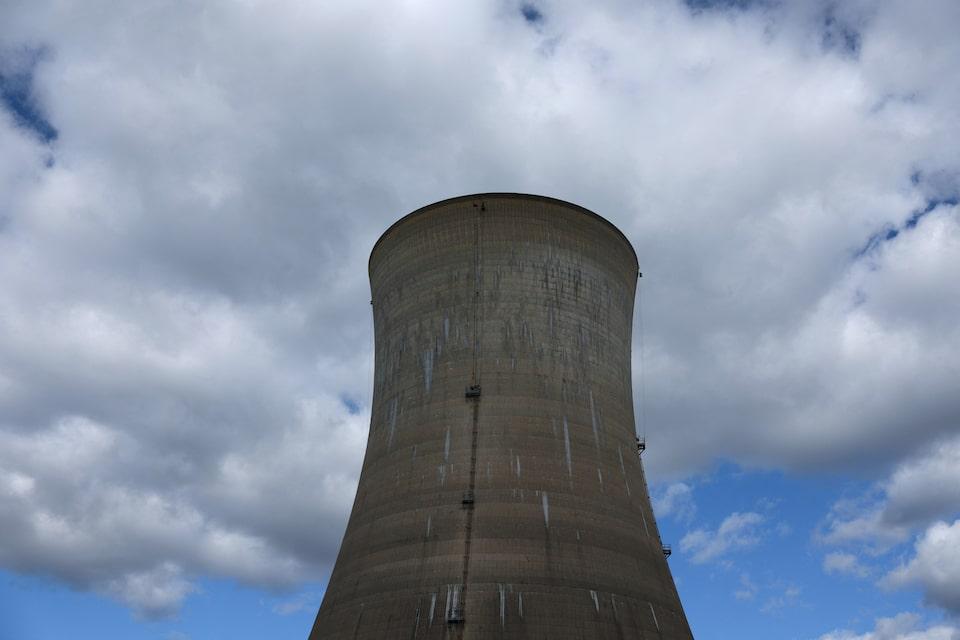
Constellation fast-tracks Three Mile Island restart for Microsoft data centers PJM expedites grid connection for select projects Nuclear power interest resurges amid U.S. electricity demand growth THREE MILE ISLAND, Pennsylvania, June 25 (Reuters) - The former Three Mile Island nuclear power plant in Pennsylvania may restart in 2027, about a year ahead of schedule after being put on a fast track to connect to the regional grid, executives with the plant's owner Constellation Energy (CEG.O) , opens new tab said on Wednesday. Constellation struck a deal last September to power Microsoft (MSFT.O) , opens new tab data centers, paving the way to reopen Three Mile Island, widely known as the site of a partial meltdown in 1979 that chilled the nuclear industry. Sign up here. Constellation's 20-year power purchase agreement with Microsoft is emblematic of the dramatic lengths Big Tech has been willing to go to fuel its artificial intelligence expansion, which began to intensify a year-and-a-half ago. The reactor re-entering service at Three Mile Island, which is being renamed the Crane Clean Energy Center, was not part of the 1979 accident, and shut in 2019 for economic reasons. “We made a mistake in shutting down this plant, but we’re not here to dwell on the past,” said Constellation CEO Joe Dominguez at an event on Three Mile Island, backed by giant cooling towers and the nuclear plant that will be brought back as Crane. The nuclear building is in similar shape to when it shut in 2019, and since the restart announcement, most of the work has been around planning and hiring, Constellation said. The company has ordered several key items for the restart, including its main transformer and fuel. It has also restored water systems needed to run the plant and completed various infrastructure inspections needed for permitting approvals. At the time of the restart announcement last year, Constellation said it expected the plant to re-open in 2028. Officials with the company had said they expected the process to be slowed by wait times associated with connecting power projects to the regional grid, which is operated by PJM Interconnection. “When PJM gets this connected, we’re going to be ready," Dominguez said on Wednesday. Despite the enthusiasm, nuclear power plant projects have historically been far over budget and behind schedule. No fully shut nuclear power plant has been restarted, but at least one other attempted restart - of the Palisades nuclear plant in Michigan - is under way. As the technology industry drives U.S. electricity demand to record highs, nuclear power has broadly seen a resurgence of interest after decades in decline. New York plans to build a new nuclear power plant, which would be one of the first to be constructed in a generation. FAST-TRACKED PROJECTS Hundreds of Constellation workers joined Wednesday's event, along with PJM CEO Manu Asthana and Pennsylvania Governor Josh Shapiro, who pushed for the restart to be fast-tracked for approval through PJM. Power projects can linger in PJM's queue, which is essentially the application and engineering study process to hook up a power plant to the broader grid. PJM's territory spans 13 states and the District of Columbia, covering about 67 million customers. As a way to alleviate some of that bottleneck, particularly as data centers rapidly proliferate on PJM's territory, the country's largest grid operator has fast-tracked its interconnection process for select projects. Crane was the largest of the projects expedited by PJM, Shapiro said. “I am focused like a laser beam on the future of Pennsylvania and the future runs through places right here like Crane,” he said. More than 400 people have been hired to work at the plant so far, and there are 30 operators who can work in control rooms in training for the reopened plant, according to Dominguez and other Constellation officials. The Nuclear Regulatory Commission is expected to visit Crane in July to observe the training process, they said. https://www.reuters.com/sustainability/climate-energy/shut-three-mile-island-nuclear-plant-may-restart-2027-owner-says-2025-06-25/
2025-06-25 18:51
Ethanol blend raised 3% to 30%, biodiesel up 1% to 15% from August Brazil to be gasoline self-sufficient for first time in 15 years - minister Industry lobbies cheer move SAO PAULO, June 25 (Reuters) - Brazil's National Energy Policy Council (CNPE) on Wednesday approved increasing the level of biofuels mixed into fossil fuels, a move towards gasoline self-sufficiency that was also celebrated by renewable energy lobbies after the government earlier hinted the blends would not be changed this year. From August 1, the proportion of ethanol to be mixed in gasoline will rise to 30% from 27%, and the amount of biodiesel in diesel increases to 15% from 14%, Pietro Mendes, oil and gas secretary at the energy ministry, said during an event to announce the changes. Sign up here. Mines and Energy Minister Alexandre Silveira also said at the event that the change in the biofuels mandate would make Brazil "gasoline self-sufficient for the first time in 15 years." Earlier this year, the CNPE had decided to hold the biodiesel blend at 14% amid fears the proposed increase could push up food prices and damage the government's approval ratings, something industry groups disputed. In March, Brazil's ministry of mines and energy said increasing the proportion of ethanol in gasoline to 30% was backed by tests showing "consistent performance" and "real environmental benefits." "We see Brazil increasingly becoming a global leader in the decarbonization process," Daniel Amaral, director of economics and regulatory affairs at soy industry group Abiove, told Reuters. Some 70% of Brazil's biodiesel is produced from soybeans, while its ethanol is made from sugarcane and more recently from corn. According to the International Energy Agency, biofuels like ethanol and biodiesel play an important role in decarbonizing the global transport sector and cutting emissions of greenhouse gases linked to burning non-renewable fuels. Aprobio, which represents biofuels producers, said in a statement the decision is fundamental to reducing dependence on petroleum derivatives. "The timeline is short, but I think the government is betting on the generation capacity of the corn ethanol industry," Amance Boutin, business development manager at consultancy Argus, said on the sidelines of Argus' biofuels and feedstocks Latin America conference in Sao Paulo. The 3% increase in ethanol would reduce gasoline demand by 1.33 million cubic meters, Boutin said, adding that Brazil's external gasoline deficit in 2024 was 872,000 cubic meters, meaning the South American country will achieve gasoline self-sufficiency with the move. "The advancement of biodiesel is strategic for national energy security, especially in the face of recent geopolitical instability, such as the conflicts in Ukraine and the Middle East," biofuel producer Grupo Potencial said in a statement. https://www.reuters.com/business/energy/brazil-raises-biofuel-levels-sees-gasoline-self-sufficiency-2025-06-25/

2025-06-25 17:56
NEW YORK, June 25 (Reuters) - Efforts to battle future economic downturns are likely to lean more on central banks slashing interest rates than on fiscal lifelines, as high global public debt in developed markets limits governments' ability to spend, said U.S. bond giant PIMCO. In the U.S., a tax bill currently being debated in Congress is expected to add trillions to an already surging national debt over the next decade, while European governments are planning to ramp up spending to boost growth and strengthen defence. Sign up here. California-based PIMCO, a debt-focused investment firm managing $2 trillion, does not expect debt levels in developed economies to surge dramatically in the near term, but elevated budget deficits and high interest rates will keep bond markets fragile and limit governments' ability to support their economies if recessions hit. "Before the pandemic, when interest rates were low, fiscal space was ample and monetary policy space limited; now, when interest rates are higher, fiscal space is limited and monetary policy space ample," Peder Beck-Friis, an economist at the firm, said in a note to clients on Wednesday. "That makes front-end rates more attractive." PIMCO expects bond investors in developed markets will require higher compensation to hold long-dated debt due to elevated bond issuance going forward, leading to steepening yield curves - which occurs when the yield premium of long-dated debt increases over the yields of shorter-dated bonds. Even so, the bond firm sees little risk of an impeding debt crisis. High borrowing levels could lead to episodes of market volatility, but governments are expected to eventually address deficits via spending cuts or higher taxes, PIMCO said. In the U.S., where interest payments now account for nearly 14% of all its government spending, similar increases in debt-servicing costs have historically preceded periods of fiscal tightening, said PIMCO, referring to fiscal consolidation after World War Two, during the Ronald Reagan administration in the late 1980s, and under President Bill Clinton in the 1990s. "Debt dynamics ... appear fragile in a few countries, perhaps more so than before," said Beck-Friis. "But these issues seem chronic, not acute – unlikely to trigger a sudden fiscal crisis." https://www.reuters.com/business/pimco-sees-rate-cuts-leading-next-market-rescue-amid-fiscal-constraints-2025-06-25/
2025-06-25 14:48
NEW YORK, June 25 (Reuters) - Federal Reserve Bank of Boston President Susan Collins said on Wednesday she's leaning toward the central bank cutting rates later this year amid an uncertain outlook. "While I continue to expect it will be appropriate to resume gradual policy normalization later this year, my outlook could change significantly as events unfold, and the economic impact of changes in various government policies comes into sharper focus," Collins said in a statement released by her bank. "Much will depend on whether the 'price shock' from tariffs dissipates quickly," she said. Sign up here. The statement released by the Boston Fed described comments made by the bank president during local visits in Massachusetts. Collins weighed in after last week's Federal Open Market Committee meeting which held the central bank's interest rate target range steady at between 4.25% and 4.5%, a decision Collins said she supported. At last week's meeting, the Fed penciled in two rate cuts later this year but it's unclear when those might be delivered, even as some Fed governors have signaled openness to act at the late July FOMC meeting. In her statement, Collins said "I see monetary policy as currently well positioned" in an economy that's in solid position. Collins noted there remains considerable uncertainty about the outlook while saying President Donald Trump's trade policies continue to be one of the biggest drivers of what will happen. These tariffs should lead "to a rise in inflation, slower output growth, and a higher unemployment rate relative to current conditions." Collins noted Trump's pullbacks on some of the most extreme tariffs have reduced inflation risks but she said the jury remains out on what will happen, which means the Fed needs to be very attentive to incoming data. Collins said the tariffs should drive the underlying personal consumption expenditures price index "somewhat above" 3% by year-end. She added, "over the coming months, I expect the effects of tariffs to show through more significantly, as inventory front-loading wanes and tariffed goods hit the shelves and enter firms’ production processes." https://www.reuters.com/sustainability/boards-policy-regulation/feds-collins-says-rate-cuts-later-this-year-are-possible-2025-06-25/

2025-06-25 14:06
US recession probability seen at 40% in second half of 2025 Bearish outlook on the dollar due to slower US growth But Tech and AI likely to keep supporting US stocks NEW YORK, June 25 (Reuters) - U.S. trade policies will likely slow down global economic growth and rekindle inflation in the United States, where there is a 40% probability of a recession in the second half of this year, JPMorgan analysts said on Wednesday. U.S. economic growth is expected at 1.3% this year, down from a 2% forecast at the beginning of 2025, with higher U.S. tariffs seen as adding negative shocks to the economy, the bank said in a mi-year outlook research note. Sign up here. "The stagflationary impulse from higher tariffs has been the impetus for our lowered GDP growth outlook for this year," it said. "We still view recession risks as elevated." Stagflation is a worrying mix of sluggish growth and relentless inflation that haunted the U.S. in the 1970s. The U.S. bank has a bearish outlook on the U.S. dollar due to slower U.S. growth when compared to growth-supportive policies outside of the United States that will bolster other currencies, including in emerging markets. It expects the share of demand for U.S. Treasuries from foreign investors, the Federal Reserve, and commercial banks, to decline given the growing size of the U.S. debt market. The compensation required by investors for the risk of holding U.S. Treasuries, known as term premium, could increase by 40-50 basis points over time, it said, though it does not expect sharp increases in Treasury yields such as the ones seen in the first half of this year. In April, Treasury yields spiked amid broader market volatility caused by U.S. President Donald Trump's announcement of sweeping tariffs. JPMorgan expects U.S. Treasury two-year yields will end the year at 3.5% and benchmark 10-year yields at 4.35%. They stood at 3.8% and 4.3%, respectively, on Wednesday. Due to sticky inflation caused by tariffs and a resilient economy, the bank expects the Fed will cut interest rates by 100 basis points between December and spring 2026, later than the consensus among rates futures traders, who were betting on two 25-basis point rate cuts this year as of Wednesday. A recession or a sharper economic slowdown than anticipated, would trigger a more aggressive cutting cycle, the JPMorgan analysts said. Still, the bank remained bullish on U.S stocks, given continued consumer and economic resilience despite policy uncertainty. "Absent major policy and/or geopolitical surprises ... we believe the path of least resistance to new highs will be supported by Tech/AI-led strong fundamentals, a steady bid from systematic strategies, and flows from active investors on dips," it said. https://www.reuters.com/business/jpmorgan-sees-tariff-induced-us-stagflationary-slowdown-2025-2025-06-25/
2025-06-25 12:55
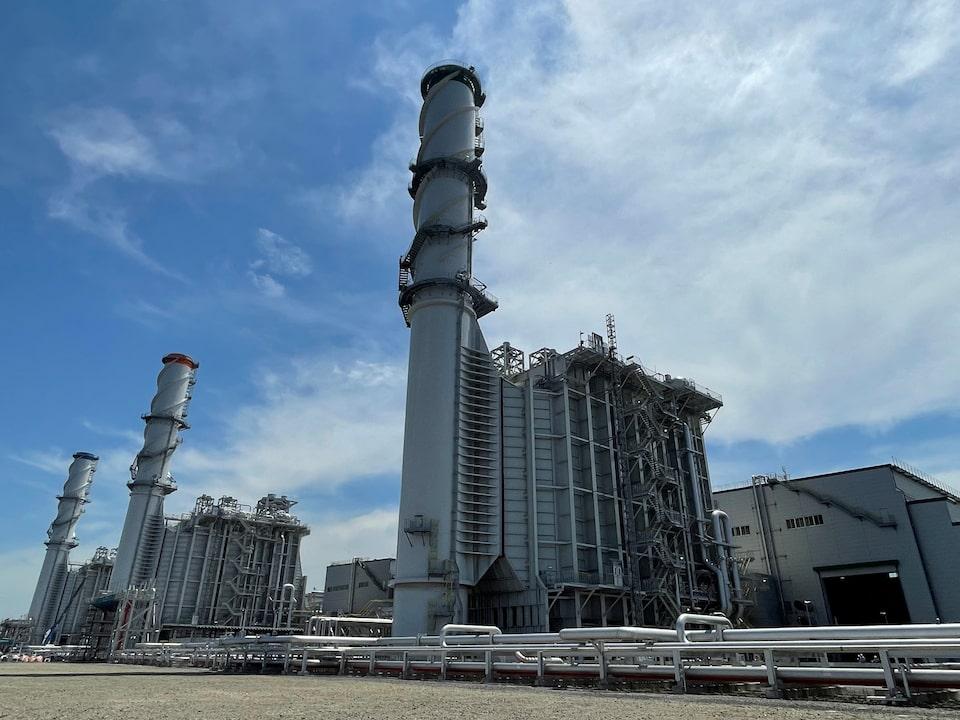
TOKYO, June 25 (Reuters) - Japan could face a big power shortfall in 2050 if demand surges and aging thermal power plants are not replaced and older nuclear plants are decommissioned, the country's power transmission operators said on Wednesday in a long-term forecast. For years Japan had predicted a drop in future electricity demand due to its shrinking population, but it has recently revised this outlook to reflect new demand from data centres and chip plants. Sign up here. Under the scenarios provided by the Organization for Cross-regional Coordination of Transmission Operators, Japan's electricity demand is projected to rise 2-25% by 2040 from 2019 before the COVID pandemic, and by 8-42% by 2050. One of the scenarios highlights an 89-gigawatt shortfall if demand reaches 1.25 terawatt-hours, the upper end of its demand forecast, in 2050. The group makes a 10-year forecast every year, but this is the first time it has produced a longer-term projection. Its general manager Shinpei Konishi told reporters the forecast was released "to enhance predictability for power operators and other stakeholders planning investments." The scenarios incorporate input from three expert organisations as well as feedback from energy industry groups and companies, and include kilowatt-hour gap analyses estimating how much thermal power would be needed to meet reserve margin requirements. The outlook reflects expected growth from expanding data centres, networks, semiconductor production, and vehicle electrification, Konishi said. In general, power industry experts are divided on how much the AI boom will increase electricity demand and the group's current forecasts also vary considerably. Among 16 scenarios for 2050, the largest projected shortfall - 89 GW - occurs under a high-demand case assuming no replacement of aging thermal power plants and decommissioning of nuclear plants more than 60 years old. Even with full replacement of thermal and nuclear capacity, a 23 GW shortfall remains under the same demand conditions. In contrast, a low-demand scenario with plant replacements shows a surplus of 12 GW. Each model assumes a summer nighttime scenario, when solar output drops and cooling demand peaks, representing the most severe conditions. The group forecasts renewable energy capacity to increase to between 170 GW and 260 GW in 2050. Japan's latest energy plan projects power generation to grow 12%-22% from 2023 levels to 1,100-1,200 TWh in 2040. The grid group's forecast sees demand reaching 900-1,100 TWh that year. It noted that its scenarios are not aligned with the government's energy plan, as they serve different purposes. https://www.reuters.com/sustainability/climate-energy/japan-could-face-potential-power-supply-crunch-2050-grid-monitor-says-2025-06-25/