2025-06-25 11:03
MUMBAI, June 25 (Reuters) - The Reserve Bank of India (RBI) sold a net of $1.66 billion in the spot foreign exchange market in April, data released on Wednesday as part of the central bank's monthly bulletin showed. The RBI said it purchased $10.11 billion and sold $11.77 billion during the month. In March, the central bank had bought a net of $14.36 billion in the spot market. Sign up here. The Indian rupee braved multiple headwinds in April including U.S. trade policy flip-flops and an India-Pakistan conflict to come out stronger on the back of inflows into equities and as exporters ramped up dollar sales. The currency gained 1.2% in April, its second consecutive monthly rise, helping extend a reversal in its fortunes after hitting an all-time low of 87.95 in February. The RBI's net outstanding forward sale stood at $72.6 billion as of end-April, compared with a net sale of $84.35 billion at the end of the previous month, the data showed. The central bank intervenes in the spot and forwards market to curb exchange rate volatility. The rupee closed at 86.0775 per U.S. dollar on Wednesday. https://www.reuters.com/world/india/india-cenbank-sold-net-166-billion-spot-forex-market-april-bulletin-shows-2025-06-25/
2025-06-25 10:52
BP shares have underperformed peers for years Shell CEO has dismissed rumours of possible bid for BP BP's debt structure complicates picture Still paying out on 2010 Macondo oil spill LONDON, June 25 (Reuters) - BP (BP.L) , opens new tab has been the subject of takeover talks for several years due to its shares' relative underperformance, but analysis of its disclosures shows the British energy firm may not be as cheap as its market valuation would indicate. BP says it has net debt of $27 billion - already more than some rivals - but its disclosures show that it has around $38 billion of additional liabilities. Sign up here. "We see BP's all-in debt profile as something of a poisoned chalice for an acquirer," RBC analysts said. The $80 billion company has underperformed its competitors for years, which investors and analysts say has made the company a potential takeover target. Companies seen as potential suitors have included British rival Shell, along with U.S. oil majors such as Exxon Mobil or Chevron. Abu Dhabi National Oil Company considered a takeover in 2024, but did not proceed, Reuters reported. BP declined to comment. SHARES UNDERPERFORM BP's stock has underperformed its peers since 2020 when its pivot to renewable energy left it lagging behind when global and gas prices surged. Despite new CEO Murray Auchincloss reversing course, the shares have continued to underperform in 2025. COMPLEX LIABILITIES Beyond its declared net debt of $27 billion, BP carries three major additional liabilities. The largest of these are some $17 billion in hybrid bonds which blend debt and equity traits. While they pay fixed income like bonds, issuers can skip payments, making them riskier and costlier. These often do not count as debt, helping preserve credit ratings. TotalEnergies holds about $12 billion in hybrids, while Shell has none. BP also has $12.5 billion in lease obligations for assets such as vessels and rigs. Unlike Shell, which includes $28.5 billion of such liabilities in its $41.5 billion net debt, BP excludes them. Finally, BP is still paying for the 2010 Macondo disaster, when a blowout at an offshore platform in the Gulf of Mexico caused one of the world's worst oil spills. BP still owes $8 billion from the spill, part of a $70 billion total cost, company disclosures show. This remaining liability is also excluded from its net debt. RATIOS Shell CEO Wael Sawan has long argued that buying back Shell’s own stock offers better value than investing in BP. Analysts point to BP’s higher all-in debt load as a key reason. While BP's share price may appear cheap, financial measures such as EV/DACF (enterprise value/debt-adjusted cash flow), which compares a firm's value to its cash generation, tell a different story. "BP's stock may look inexpensive from a share price point of view, but that masks the additional liabilities needing to be absorbed, with the current shares trading largely in line with Shell on EV/DACF," said UBS analyst Joshua Stone. BP’s valuation could improve if it completes its $20 billion asset disposal plan by 2026. But for now, it remains more leveraged than Shell, which limits its free cash flow. "Overall, we still believe it likely that no deal will be agreed. BP carries significantly more debt than Shell," said Henry Tarr, co-head of energy and environment research at Berenberg. "This leverage eats into its free cash flow generation." ($1 = 0.7357 pounds) https://www.reuters.com/business/energy/devils-details-why-bps-debt-may-deter-buyer-2025-06-25/
2025-06-25 10:50
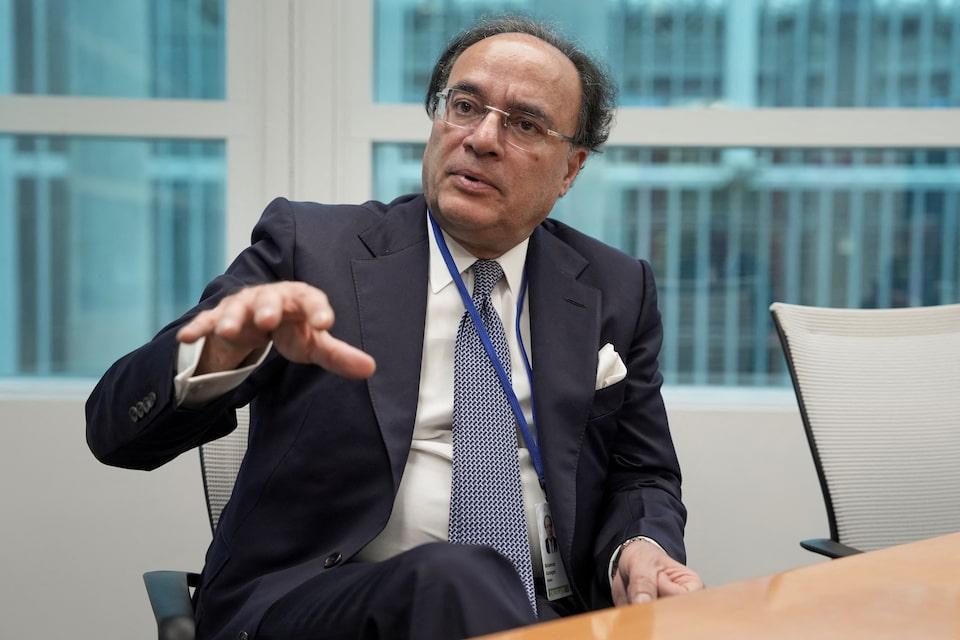
KARACHI, June 25 (Reuters) - Pakistan and the U.S. have resolved to conclude trade talks next week, the South Asian nation said on Wednesday after a meeting between its Finance Minister Muhammad Aurangzeb and U.S. Commerce Secretary Howard Lutnick. The negotiations, focused on reciprocal tariffs, are part of a broader push to reset economic ties at a time of shifting geopolitical alignments and Pakistan’s efforts to avoid steep U.S. duties on exports. Sign up here. “Both sides showed satisfaction on the ongoing negotiations and resolved to conclude the trade negotiations next week,” Pakistan's finance ministry said in a statement, adding that a longer-term strategic and investment partnership is also under discussion. Pakistan faces a 29% tariff on exports to the U.S. under President Donald Trump’s measures to target countries with large trade surpluses with the U.S. Pakistan’s surplus was around $3 billion in 2024. To offset the imbalance and ease tariff pressures, Islamabad has offered to import more U.S. goods, including crude oil, and to open up investment opportunities through concessions for U.S. firms in Pakistan's mining sector. Earlier this week, the two countries co-hosted a webinar promoting investment in Pakistan’s mineral sector, including the $7 billion Reko Diq copper-gold project. Senior officials from both governments and U.S. investors discussed public-private partnerships and regulatory reforms. The U.S. Export-Import Bank is reviewing financing proposals worth $500 million to $1 billion in Reko Diq. Trump, who hosted Pakistan's army chief Field Marshal Asim Munir at the White House last week, has earlier said trade helped avert a deeper conflict between Pakistan and India. https://www.reuters.com/world/asia-pacific/pakistan-says-trade-talks-with-us-conclude-next-week-2025-06-25/
2025-06-25 10:48
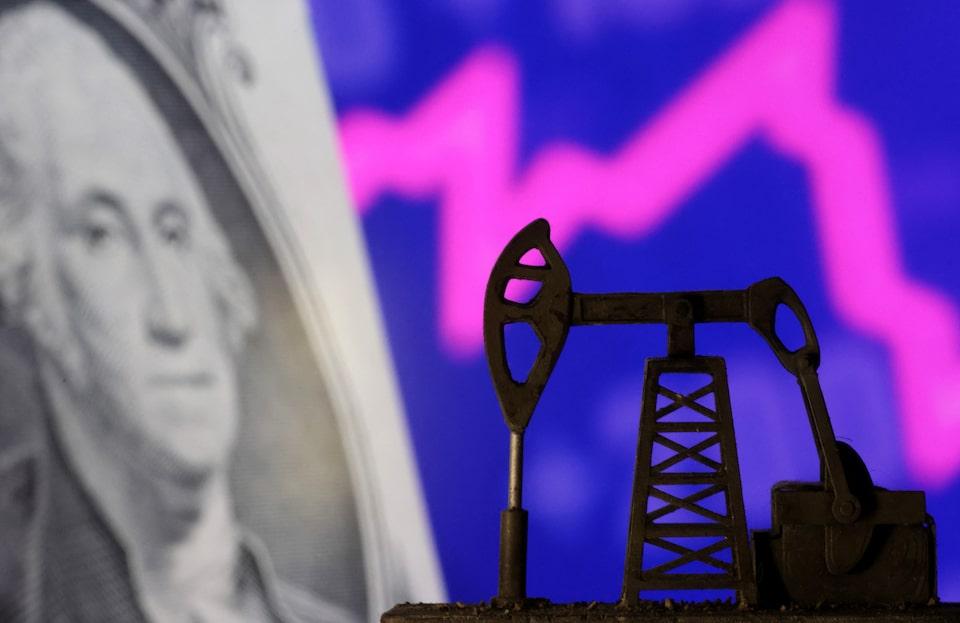
LONDON, June 25 (Reuters) - What matters in U.S. and global markets today By Mike Dolan , opens new tab, Editor-At-Large, Finance and Markets Sign up here. As the geopolitical center of gravity shifts from the Middle East to the NATO summit, Wall Street turns its attention back to the domestic economy and rising speculation about a U.S. interest rate cut as soon as September. I'll discuss all the market news below. Make sure to check out today's column, where I zero in on the U.S. economic metric that has just surged to its highest point since 2006. Today's Market Minute * NATO leaders were set to sign up on Wednesday to a big increase in defence spending at a short summit tailor-made for U.S. President Donald Trump, who struck a reassuring tone on his commitment to protecting fellow members of the alliance. * The ceasefire brokered by President Trump between Iran and Israel appeared to be holding on Wednesday, a day after both countries signalled their air war had ended, at least for now. * The contained move in oil prices during the Israel-Iran war highlights the increasing efficiency of energy markets and fundamental changes to global crude supply. ROI columnist Ron Bousso explains why Middle East politics may no longer be such a dominant force in oil markets. * The Reserve Bank of India's jumbo rate cuts in early June took economists by surprise, as many indicators point to an economy chugging along nicely. Manishi Raychaudhuri, CEO of Emmer Capital Partners, asks why the RBI needed to frontload monetary stimulus? * Financial markets have consistently overestimated the Federal Reserve's readiness to cut interest rates in recent years. But the latest Fed chatter, softening economic data and a dramatic reversal in oil prices suggest markets could be right this time. Read the latest from ROI columnist Jamie McGeever. Fed rate bets surge as oil calms Global stocks captured by MSCI's all-country index (.MIWD00000PUS) , opens new tab, up more than 7% for the year-to-date, surged to record highs early on Wednesday. The ceasefire between Iran and Israel appears to be holding into Wednesday, as debate swirls about just how much damage was done to Tehran's nuclear program. President Donald Trump joins other NATO leaders in The Hague for an annual gathering of the alliance that will underscore a big boost to defense spending. But perhaps the market's big takeaway from the last two weeks of Middle East tensions is that the region is no longer the game changer it once was in global energy markets. Over the course of the near two-week conflict, global crude oil prices never hit the sort of danger zone that would shift the dial on inflation rates. And U.S. crude prices, back down at $65 per barrel on Wednesday, are now more than 20% lower than they were this time last year. That matters for central banks and the Federal Reserve trying to balance the outlook between rising import tariffs, a slowing economy, an ebbing workforce and - now falling oil prices. Even though Fed boss Jerome Powell remained non-committal on the timing of the next Fed rate cut at the first of his two-day congressional testimony on Tuesday, markets have latched on to more dovish soundings from other Fed policymakers. Fed futures now fully price a quarter-point rate cut by the September policy meeting, with previously hawkish Fed board governor Michelle Bowman indicating this week she may vote for a cut as soon as July. Futures pricing now sees some 60 basis points of cuts by year-end and the so-called "terminal rate" in the Fed's easing cycle has fallen close to 3.0% for February 2027 - almost 40bp lower than it was just a month ago and more than 130bp below current rates. While the oil price relapse has helped, emerging splits among Fed policymakers have intensified speculation about what happens when Powell ends his term as Chair in May next year. Incoming economic news is also fueling the rate chatter, with consumer confidence readings for June unexpectedly plunging and housing markets starting to wobble too. The Federal Housing Finance Agency showed single-family house prices fell 0.4% in April, the first decline since August 2022. That lowered the annual increase to 3.0% in April, the smallest rise since May 2023. And with pressure mounting on the Senate to pass Trump's fiscal bill as soon as this week, U.S. Treasuries have lapped up both the oil retreat and Fed talk - even as they negotiate more than $200 billion of new debt sales this week. Adding to the mix, Treasury Secretary Scott Bessent said the date for the nation to reach its debt ceiling could change if courts interfere with Trump's tariff policies. Two and 10-year Treasury yields , fell to six-week lows on Wednesday regardless. And the dollar is bearing the brunt of the easier rate horizon. The euro hit new three-year highs on Tuesday and held above $1.16 today as Germany outlines details of the big spending, borrowing and defense push this week. Wall Street stocks (.SPX) , opens new tab caught the tailwinds of easier energy, rates and the dollar - rallying more than 1% on Tuesday and futures held those gains overnight. The gains in Asian and European stocks over the past two days have been just as impressive, leading the global index to new all-time highs. The twin impact of easier oil and the dollar is a major relief for crude importers. And with NATO aiming to lift defense spending targets to some 5% of GDP, European defence stocks (.SXPARO) , opens new tab that already up almost 50% this year added another 1% on Wednesday. In company news, FedEx FDX.N shares dropped nearly 6% in pre-market trading after the logistics giant sounded caution for the full year and forecast current-quarter earnings below expectations as it battles pressures from U.S. tariffs. Tesla's TSLA.O new car sales in Europe fell 27.9% in May from a year earlier even as fully-electric vehicle sales in the region jumped 27.2%. And Worldline (WLN.PA) , opens new tab fell over 20% after an investigation by 21 European media outlets alleged the French digital payments company covered up client fraud to protect revenue. Chart of the day: a href="https://newslink.reuters.com/click/685bcffd0e3e0307080d10cf/aHR0cHM6Ly93d3cucmV1dGVycy5jb20vYnVzaW5lc3MvYWVyb3NwYWNlLWRlZmVuc2UvbmF0by1sZWFkZXJzLXNldC1iYWNrLXRydW1wLWRlZmVuY2Utc3BlbmRpbmctZ29hbC1oYWd1ZS1zdW1taXQtMjAyNS0wNi0yNC8_dXRtX3NvdXJjZT1TYWlsdGhydSZ1dG1fbWVkaXVtPU5ld3NsZXR0ZXImdXRtX2NhbXBhaWduPU1vcm5pbmctQmlkLVVTJnV0bV90ZXJtPTA2MjUyNSZsY3RnPTY2OGJlZWU0NmNhYzIwMGZiMTAwNDk3ZA/668beee46cac200fb100497dD0554d950" target="_blank">NATO leaders were set to sign up to a big increase in defense spending at a short summit tailor-made for U.S. President Donald Trump, who struck a reassuring tone with his commitment to protect fellow members of the alliance. The summit is expected to endorse a higher defense spending goal of 5% of GDP, reflecting demands by Trump and Europeans' fears that Russia poses a growing threat to their security following the 2022 invasion of Ukraine. Defense spending across virtually all NATO members has risen over the past 10 years to an average of about 2.5% of collective GDP. Only the United States - the fourth biggest spender as a share of national output – has seen its defense bill fall as a percentage of GDP since 2014. Today's events to watch * U.S. May new home sales (10:00 AM EDT) * Fed Chair Jerome Powell reprises semi-annual monetary policy testimony before Senate Banking, Housing and Urban Affairs Committee (10:00 AM EDT) * Kansas City Fed President Jeff Schmid speaks; Bank of England chief economist Huw Pill and BoE policymaker Clare Lombardelli speak * U.S. Treasury sells $70 billion 5-year notes, and $28 billion of 2-year floating rate notes * U.S. corporate earnings: Micron Technology, General Mills, Paychex Opinions expressed are those of the author. They do not reflect the views of Reuters News, which, under the Trust Principles , opens new tab, is committed to integrity, independence, and freedom from bias. https://www.reuters.com/business/finance/global-markets-view-usa-2025-06-25/
2025-06-25 10:47
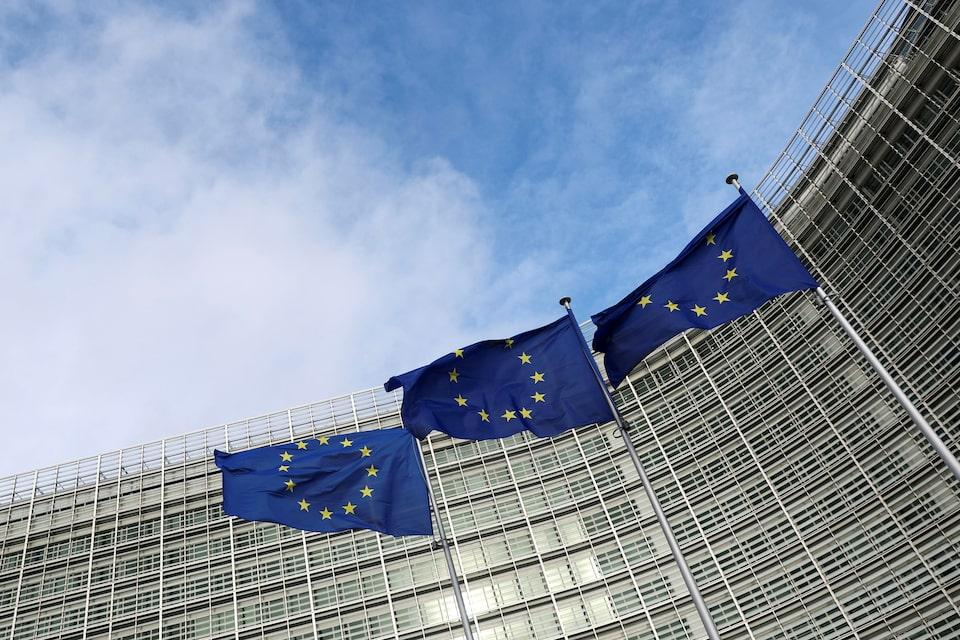
BONN, June 25 (Reuters) - Germany, the Czech Republic and 14 other countries have demanded the European Union introduce stricter price controls to the bloc's new carbon market, over fears the policy will raise consumers' bills, a document seen by Reuters showed. The paper, which has support from enough countries to form the "qualified majority" needed to pass EU laws, aims to pressure the European Commission to change the EU carbon market for transport and heating fuels, which is due to launch in 2027. Sign up here. "To address the legitimate concerns around price uncertainty and social impacts and to strengthen the public acceptance of the system, improvements should be considered already prior to the market's launch," the paper said. The new EU carbon market will impose a CO2 price on suppliers of polluting fuels used in cars and buildings. It is designed so that if the CO2 price hits 45 euros, extra CO2 permits will be released into the market to tame prices. The countries proposed strengthening this, to add more CO2 permits to the market if prices spike. The EU should also strengthen a special "reserve" that adds extra permits to the market if supply is tight, alongside other changes including launching carbon permit auctions early, to give an indication of prices, they said. The document was also signed by Austria, Belgium, Bulgaria, Croatia, Estonia, Italy, Latvia, Lithuania, the Netherlands, Poland, Romania, Slovakia, Slovenia and Spain. Countries including Poland and the Czech Republic have previously warned the policy could stoke a backlash against ambitious climate change measures if it raises fuel bills. The EU has agreed that billions of euros in proceeds from the new market will be set aside to help citizens pay bills, subsidise electric cars and energy-saving home renovations. The EU has scaled back green policies this year, as it attempts to contain a political pushback on its green agenda. The EU has not so far watered down its core emissions-cutting targets. But the Commission is considering weakening a planned climate target for 2040, to attempt to win support from sceptical countries, Reuters previously reported. The Commission is due to propose the 2040 climate target on July 2. https://www.reuters.com/sustainability/climate-energy/eu-countries-demand-stricter-controls-new-co2-price-2025-06-25/
2025-06-25 10:23
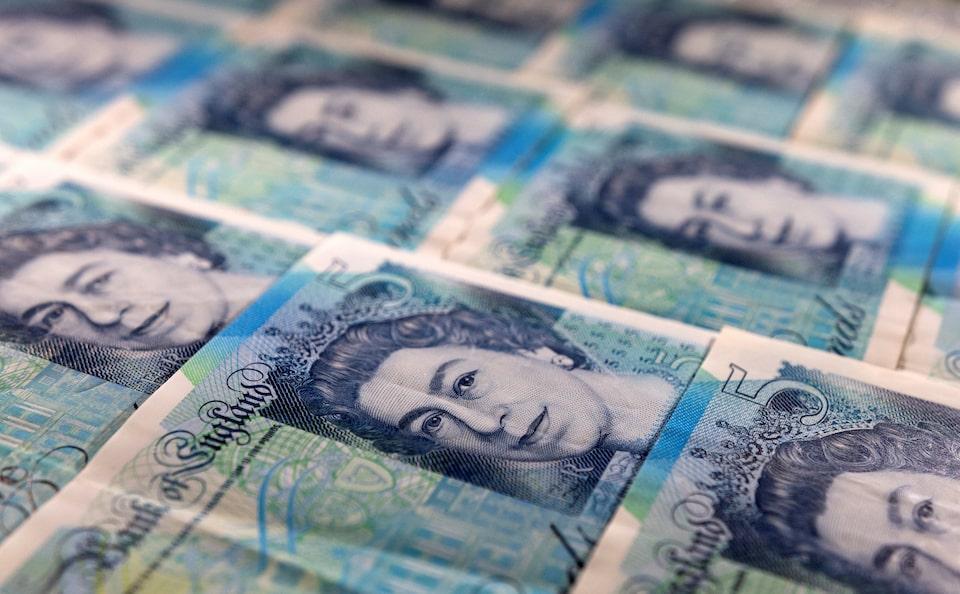
Pound steady versus dollar and euro Iran/Israel ceasefire fragile, but supporting confidence UK labour market shows signs of softening LONDON, June 25 (Reuters) - The pound held steady against the dollar on Wednesday, consolidating gains from the past two days, as investors felt confident enough in the fragile ceasefire between Israel and Iran to dip into more volatile assets. Sterling has risen by 1.3% against the dollar so far this week, marking its largest three-day gain since late April. It was last flat at $1.361, near its highest since early 2022. Sign up here. The pound held firm against the euro , which traded at 85.29 pence, not far off this week's two-month highs. The pound tends to be more volatile than the euro or the yen and, as such, can often fall more sharply when investor mood turns sour. In the last 12 days, sterling has gained just 0.3%, compared with a rise of 0.6% in the value of the safe-haven Swiss franc. On the geopolitical front on Wednesday, the ceasefire brokered by U.S. President Donald Trump between Iran and Israel appeared to be holding, a day after both countries signalled that their air war had ended. On the macroeconomic front, surveys showed Britain's labour market was showing further signs of slowdown, which pointed to below-inflation pay growth and a fall in job vacancies, especially for graduate-level jobs. Bank of England Governor Andrew Bailey on Tuesday said there were now signs that Britain's labour market was softening and he repeated his view that interest rates were likely to continue falling. Money markets show traders see an 80% chance of a rate cut from the BoE in August. BoE monetary policymaker Megan Greene, who voted to leave rates unchanged at the most recent meeting, said on Tuesday the recent increase in UK inflation could prove to be a longer-lasting plateau rather than a short-term hump, and the central bank should be wary of cutting borrowing costs. One factor that analysts at Monex say markets are overlooking is a brewing rebellion among lawmakers of Prime Minister Keir Starmer's Labour party over his proposed reforms to the welfare system. In what would be a major blow to Starmer a year after he won a large majority in parliament, Labour lawmakers have spearheaded an effort to kill the government's welfare plan at a vote due next week, saying it failed to provide support for disabled people and those with long-term health conditions. "The implication is that substantial tax rises or additional borrowing would be needed come the autumn, if the government cannot pass reforms to limit spending on entitlements," Monex analysts said in a note. "And that is not a sterling-positive dynamic if similar recent episodes are anything to go by," they said, warning of "growing downside risks" for sterling. BoE Deputy Governor Clare Lombardelli is due to speak later on Wednesday. https://www.reuters.com/world/uk/sterling-holds-firm-near-january-2022-highs-2025-06-25/