2025-06-25 06:28
LONDON, June 25 (Reuters) - British defence engineering company Babcock (BAB.L) , opens new tab upgraded its medium-term guidance on Wednesday, expecting to benefit from the UK's plan to spend more on defence and energy security to counter the rising geopolitical instability. British Prime Minister Keir Starmer on Tuesday pledged to boost overall defence and security spending to 5% of economic output by 2035, citing volatility, as war rages in the Middle East and Ukraine, and amid tensions with China. Sign up here. Babcock, which maintains Britain's naval fleet, builds new warships and provides weapons systems and nuclear engineering services, said it was now expecting an underlying operating margin of at least 9% in the medium term, up from at least 8% previously. "This is a new era for defence. There is increasing recognition of the need to invest in defence capability and energy security, both to safeguard populations and to drive economic growth," Babcock Chief Executive David Lockwood said in a statement. For the current financial year, Babcock said it expected an underlying operating margin of 8%, up from the 7.5% it recorded for the 12 months to the end of March 2025. The company also announced a 200 million pound ($272.46 million) share buyback. Babcock's shares have more than doubled in the year to date, boosted by Britain's initial commitment in February to spend more on defence, outperforming Britain's bluechip index which is up 8%. ($1 = 0.7341 pounds) https://www.reuters.com/business/aerospace-defense/uks-babcock-upgrades-medium-term-forecast-defence-needs-rise-2025-06-25/

2025-06-25 06:17
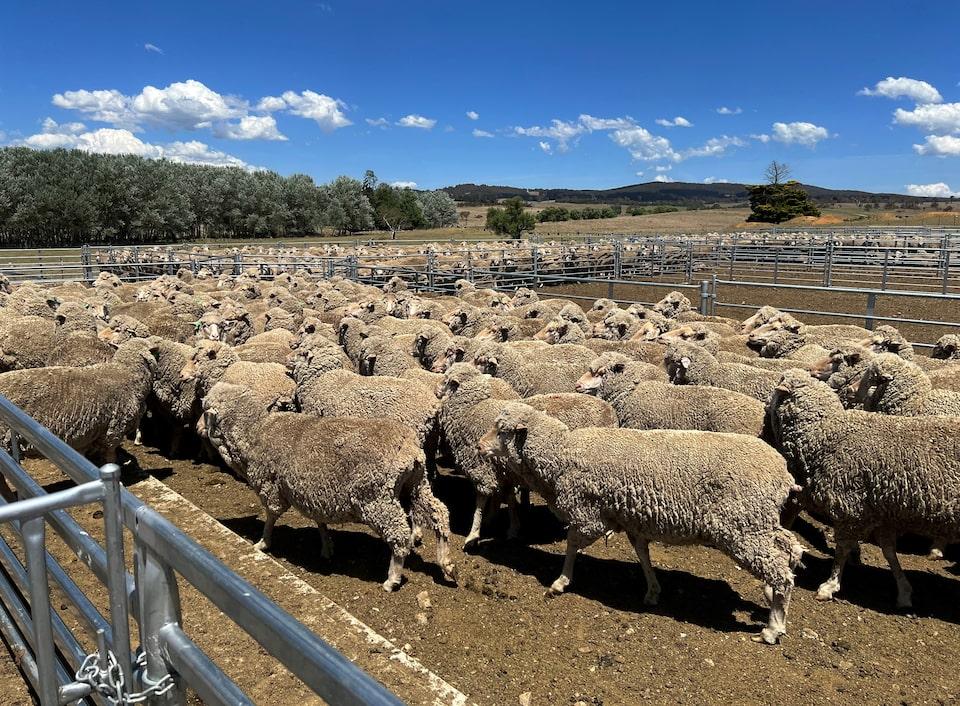
CANBERRA, June 25 (Reuters) - Australian sheep farmers are cashing in on record-high sheep prices, as rising global demand for lamb and mutton fuels a boom in exports from the world's top sheep meat supplier. Prices are likely to rise further in the coming years as production in New Zealand, Australia's biggest sheep meat export rival, stagnates, analysts said. Sign up here. "We've seen waves of higher and higher pricing as export demand and our market share has grown," said Matt Dalgleish, a livestock and meat analyst at consultants Episode 3. While there will be seasonal price volatility, he said, "until the underlying pressure of limited supply and strong growth in demand changes, there should be more good times ahead for Australian producers." Australia last year exported 702,000 metric tons of lamb, mutton and goat meat worth $3.6 billion, almost 200,000 tons more than in 2019, previously the biggest export year. Shipments in the first four months of this year were 10% higher than during the same period in 2024, Australian trade data show. Processors' need for animals pushed the price of heavy lambs to record highs of nearly A$11 ($7.14) a kilogram last week, up 50% from the same time last year, according to a national price indicator compiled by industry body Meat & Livestock Australia (MLA). China is the biggest importer of sheep meat. Other major buyers include the United States, Britain, the European Union and the Middle East. Rising incomes and populations are fuelling demand for sheep meat, and high beef prices, especially in the United States, are encouraging people to switch to lamb and mutton, Dalgleish said. Helping Australia take advantage of that growth is an ongoing decline in New Zealand's sheep industry. The two countries account for more than 80% of global sheep meat exports, according to MLA. The number of sheep in Australia grew in recent years, allowing farmers to better supply processors, but New Zealand's flock has shrunk every year since 2012, according to the country's statistics agency - something New Zealand farmers say is partly due to the conversion of grazing land to pine forests that earn carbon credits. "New Zealand is the other major global exporter," said Angus Gidley-Baird, an analyst at Rabobank. "Its production is stagnating or retracting. So any growth in global demand is Australia's opportunity for the taking." ($1 = 1.5399 Australian dollars) https://www.reuters.com/world/asia-pacific/australia-cashes-record-sheep-prices-meat-exports-surge-2025-06-25/
2025-06-25 06:09
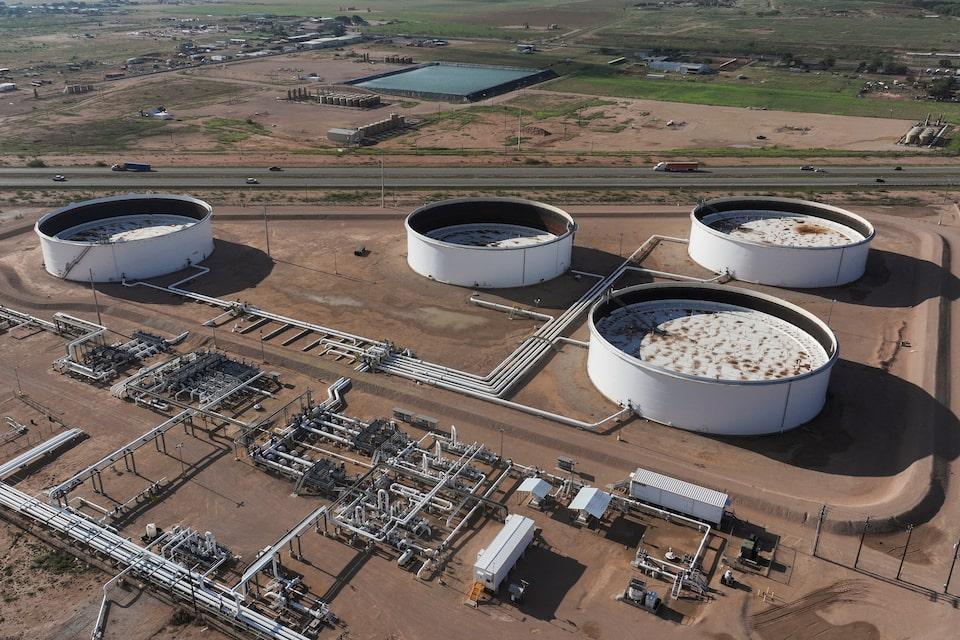
Brent oil prices rise by 15% before quickly returning to pre-conflict levels Price reaction points to the market's growing efficiency thanks to technology Share of OPEC has diminished in recent decades to around 33% LONDON, June 25 - The contained move in oil prices during the Israel-Iran war highlights the increasing efficiency of energy markets and fundamental changes to global crude supply, suggesting that Middle East politics will no longer be the dominant force in oil markets they once were. The jump in oil prices following Israel's surprise attack on Iran was meaningful but relatively modest considering the high stakes involved in the conflict between the Middle East rivals. Sign up here. Benchmark Brent crude prices, often considered a gauge for geopolitical risk, rose from below $70 a barrel on June 12, the day before Israel’s initial attack, to a peak of $81.40 on June 23 following the United States' strikes on Iranian nuclear facilities. Prices, however, dropped sharply that same day after it became clear Iran’s retaliation against Washington – a well-telegraphed attack on a U.S. military base in Qatar that caused limited damage – was essentially an act of de-escalation. Prices then fell to below pre-war levels at $67 on Tuesday after U.S. President Donald Trump announced that Israel and Iran had agreed to a ceasefire. The doomsday scenario for energy markets – Iran blocking the Strait of Hormuz, through which nearly 20% of the world’s oil and gas supplies pass – did not occur. In fact, there was almost no disruption to flows out of the Middle East throughout the duration of the conflict. So, for the time being, it looks like markets were right not to panic. SHRINKING RISK PREMIUM The moderate 15% low-to-high swing during this conflict suggests oil traders and investors have slashed the risk premium for geopolitical tensions in the Middle East. Consider the impact on prices of previous tensions in the region. The 1973 Arab oil embargo led to a near quadrupling of oil prices. Disruption to Iranian oil output , opens new tab following the 1979 revolution led to a doubling of spot prices. Iraq's invasion of neighbouring Kuwait in August 1990 caused the price of Brent crude to double to $40 a barrel by mid-October. And the start of the second Gulf war in 2003 led to a 46% surge in prices. While many of these supply disruptions – with the exception of the oil embargo – ended up being brief, markets reacted violently. One, of course, needs to be careful when comparing conflicts because each is unique, but the oil market's response to major disruptions in the Middle East has – in percentage terms, at least – progressively diminished in recent decades. SENSE AND SENSIBILITY There are multiple potential explanations for this change in the perceived value of the Middle East risk premium. First, markets may simply be more rational than in the past given access to better news, data and technology. Investors have become extremely savvy in keeping tabs on near-live energy market conditions. Using satellite ship tracking and aerial images of oilfields, ports and refineries, traders can monitor oil and gas production and transportation, enabling them to better understand supply and demand balances than was possible in previous decades. In this latest conflict, markets certainly responded rationally. The risk of a supply disruption increased, so prices did as well, but not excessively because there were significant doubts about Iran's actual ability or willingness to disrupt maritime activity over a long period of time. Another explanation for the limited price moves could be that producers in the region – again, rational actors – learned from previous conflicts and responded in kind by building alternative export routes and storage to limit the impact of any disruption in the Gulf. Saudi Arabia, the world's top oil exporter, producing around 9 million bpd, nearly a tenth of global demand, now has a crude pipeline running from the Gulf coast to the Red Sea port city of Yanbu in the west, which would have allowed it to bypass the Strait of Hormuz. The pipeline has capacity of 5 million bpd and could probably be expanded by another 2 million bpd. Additionally, the United Arab Emirates, another major OPEC and regional producer, with output of around 3.3 million bpd of crude, has a 1.5 million bpd pipeline linking its onshore oilfields to the Fujairah oil terminal that is east of the Strait of Hormuz. Both countries, as well as Kuwait and Iran, also have significant storage facilities in Asia and Europe that would allow them to continue supplying customers even through brief disruptions. SHIFTING FUNDAMENTALS Perhaps the most important reason for the world's diminishing concern over Mideast oil supply disruptions is the simple fact that a smaller percentage of the world’s energy supplies now comes from the Middle East. In recent decades, oil production has surged in new basins such as the United States, Brazil, Guyana, Canada and even China. OPEC’s share of global oil supply declined from over 50% in the 1970s to 37% in 2010 and further to 33% in 2023, according to the International Energy Agency, largely because of surge in shale oil production in the United States, the world’s largest energy consumer. To be sure, the global oil market was well supplied going into the latest conflict, further alleviating concerns. Ultimately, therefore, the Israel-Iran war is further evidence that the link between Middle East politics and energy prices has loosened, perhaps permanently. So geopolitical risk may keep rising, but don’t expect energy prices to follow suit. Enjoying this column? Check out Reuters Open Interest (ROI), , opens new tabyour essential new source for global financial commentary. ROI delivers thought-provoking, data-driven analysis. Markets are moving faster than ever. ROI , opens new tab can help you keep up. Follow ROI on LinkedIn , opens new tab and X. , opens new tab https://www.reuters.com/markets/commodities/israel-iran-war-highlights-mideasts-declining-influence-oil-prices-2025-06-25/
2025-06-25 06:04
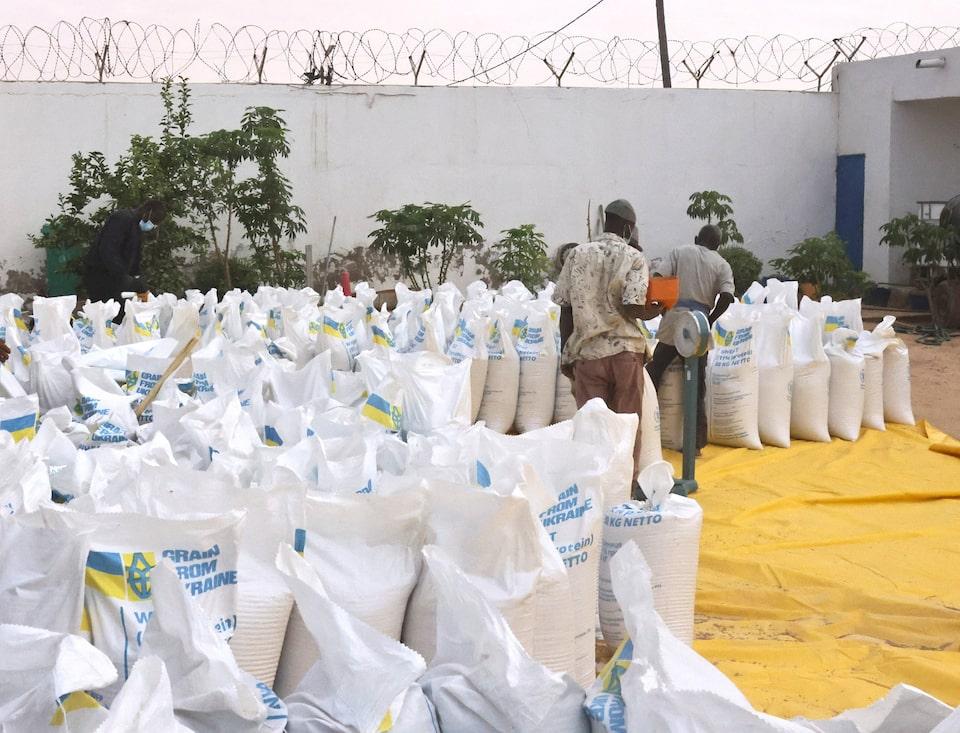
Ukraine offers military training to Mauritania amid regional tensions Food aid reaches Malian refugees in Mauritania's Mbera camp, part of Kyiv's bid to counter Russian influence in Africa Russia, with historic ties to the continent, is Africa biggest arms supplier and has growing diplomatic footprint NOUAKCHOTT, June 25 (Reuters) - On Africa's dry western tip, Mauritania has become an unlikely staging post for Ukraine's increasingly global struggle with its adversary Russia. Kyiv's new embassy in the country's capital Nouakchott - among eight it has opened in Africa since Russia's 2022 invasion of Ukraine - has overseen food aid deliveries to refugees from neighbouring Mali, embassy and aid officials say. Sign up here. Kyiv is also offering to train Mauritanian soldiers, Ukraine's top envoy to Africa told Reuters, amid tension between Mauritania and Mali, where Moscow backs government forces against Tuareg rebels. Moscow's soldiers and mercenaries guard presidents in several West and Central African countries, while Russian mining companies are entrenched in the Sahel region that includes Mali. Russia's military presence in the Sahel "undermined stability", the envoy, Maksym Subkh said in an interview in Kyiv. "Ukraine is ready to continue training officers and representatives of the Mauritanian armed forces, to share the technologies and achievements that Ukraine has made" on the battlefield against Russia, Subkh said, adding that Ukraine had previously provided such training prior to Russia's invasion. The Mauritanian government did not respond to a request for comment about Ukraine's offer of more training. Russia's embassy in Mauritania did not respond to a request for comment. Earlier in June, the Kremlin said Russia would increase cooperation with African countries including in sensitive areas such as defence. Russia is the largest weapons supplier to Africa, according to the Stockholm International Peace Research Institute. Reuters' interviews with four senior Ukrainian officials, two aid officials and Western diplomats and analysts for this story, along with access to new missions in Mauritania and Democratic Republic of Congo, reveal new details about Kyiv's Africa strategy including the deliveries of aid to Malian refugees, the proposal to train Mauritania's military, and the broader bid to counter Russia's much more entrenched presence. Early in the Ukraine war, many African countries declined to take Kyiv's side at the United Nations, even after Russia's bombing of Ukraine's ports drove up prices on the continent as exports of food and fertiliser were curtailed. Months later, Ukraine produced its first Africa strategy, a public document. The stated goals were to counter Russia's narrative and increase trade and investment on a continent that remembers Russian support in the Cold War and Moscow's stance against apartheid. Subkh was appointed to lead the effort, and Kyiv has since opened eight out of 10 new embassies announced in 2022, he said, bringing to 18 the number of missions Ukraine has in Africa. Host countries include Ivory Coast and Congo, which condemned Russia's invasion early on. Kyiv plans to open an embassy this year in Sudan, where Russia is accused by the U.S. of arming both sides in a brutal conflict. Russia denies a role there. However, Kyiv cannot match an opponent with deep commercial and security ties, including a long-standing presence of Moscow's intelligence agencies. In total, Russia has around 40 missions in Africa, and recently announced plans to open seven more. FIGHT FOR FREEDOM? Ukraine wants to persuade African nations that its fight against Russia, its Soviet-era master, has parallels with their own efforts to overcome the legacy of European colonialism, Subkh said. Despite the offer of military training, Ukraine's wartime effort to win African allies has largely focused on food. Kyiv says it has sent nearly 300,000 tonnes as aid, distributed through the World Food Programme (WFP) under an EU and U.S.-financed scheme called Grain from Ukraine that rivals a similar Russian food aid plan for Africa. The Ukrainian-branded aid has reached 8 million people in 12 countries, the European Policy Centre, a think-tank, said in April. Recipients have included Congo, Ethiopia, Somalia, Nigeria, Kenya and Sudan. In Mauritania it has mostly been destined for Mbera, West Africa's largest refugee camp, housing soaring numbers of Malians fleeing the Russia-backed forces across the border. And after the reopening of Black Sea ports bombarded and blockaded by Russia in the first two years of war, Ukraine exported nearly 10 million tonnes of grain to Africa in 2024, almost double the previous year, agriculture ministry data shows. By showing it is a major alternative to Russian food supplies, Ukraine hopes African nations that have maintained neutrality over the war will begin to pressure Moscow to end the war in Ukraine. "Maintaining its role as one of the guarantors of the world's food security, Ukraine can prevent Russia from using food supplies as political leverage," Roman Sereda, Ukraine's chargé d'affaires in Nouakchott, where Russia has had an embassy for six decades, said in an interview. Ukraine is gaining visibility. In April, Volodymyr Zelenskiy became the first Ukrainian president to visit South Africa, a close Russia ally. He called for recognition of Ukraine's struggle and playing up potential deals on energy, fertiliser production and security. South African foreign ministry spokesman Chrispin Phiri said both Ukraine and Russia were allies. He said South Africa advocated for peace and was mediating on humanitarian issues such as the return of Ukrainian children Kyiv says were taken to Russia. However, South African analyst Tim Murithi said Ukraine's Africa strategy lacked coherence, pointing out that Kyiv had not nominated an ambassador in Ethiopia, a key posting that countries including Russia use to engage with the influential African Union, based in Addis Ababa. Ukraine's commercial exports are heavily tilted towards North Africa, with sub-Saharan nations including Ethiopia, Kenya and Nigeria buying a fraction of what they imported before the war, Ukrainian data shows. Mauritania itself bought far less food from Ukraine last year than in 2021. There have been setbacks in Ukraine's Africa drive, such as the downgrading of a planned October 2024 Ukraine-Africa summit to a video conference. Moscow hosted a well-attended Africa summit in 2023. "At the beginning, they wanted to have it physically in Kyiv," said Jean-Yves Ollivier, chairman of the Brazzaville Foundation, a conflict prevention organisation that Ukraine consulted on the summit. The downgrade has not previously been reported. Subkh did not respond to a request for comment about the event. MALI REFUGEES At times, Ukraine's higher profile has been controversial. Mali broke off relations with Kyiv over a Tuareg rebel attack in July that wiped out 47 Malian soldiers and 84 Russian fighters supporting the government, after a Ukrainian intelligence official appeared to suggest Ukrainian involvement. Ukraine has since strongly denied it was involved. Ukraine had no role in covert operations in the region, Subkh said. Now, a small quantity of Ukraine's aid has reached the Malian refugees fleeing the violence, WFP's spokesperson in Mauritania confirmed in response to questions for this story. The camp's population has almost tripled in two years to about 250,000 people. Three deliveries amounting to a total of about 1,400 tonnes had arrived in Mauritania by December, one of Ukraine's diplomats in Nouakchott, Viktor Bort, said. The split peas, vegetable oil and wheat were still being distributed to Mbera in May, the WFP spokesperson said. Bort, 29, who staffed the mission alone when it opened in May 2024, told Reuters his focus was to build relationships in the government and oversee the deliveries of aid to WFP for the Malian refugees, who he said were fleeing Russians. Kyiv's senior Africa envoy, Subkh, said aid distribution was decided by WFP. Ukraine's contributions were strictly humanitarian and the country opposed politicising aid, he said. Mauritania's communications ministry said the government had accepted Ukrainian food aid deliveries. It said it did not know that Ukrainian aid had reached the camp. DIPLOMACY ON A SHOESTRING Ukraine's new missions are thinly staffed and it has sought support from volunteers and donors. Two diplomats from other countries said the embassy official in Mauritania, Bort, initially travelled without security, relying on friendly envoys from other countries for help, but quickly gained notice for his energy and networking. Sereda, the chargé d'affaires who joined Bort some months ago, said Ukraine's outreach and aid deliveries had improved Kyiv's reputation and Mauritanians' understanding of its position, with increased trade links hopefully to follow. The Mauritanian government declined to comment. Elsewhere, aid recipients have included war-ravaged Democratic Republic of Congo, where Ukraine's ambassador Vasyl Hamianin told Reuters the two countries were discussing long-term agriculture and food security agreements. "We accepted the Ukrainian embassy in a spirit of openness and cooperation. There is no need to link its presence to the conflict between Russia and Ukraine," Congo's presidential office said in a statement. https://www.reuters.com/world/europe/africa-shoestring-ukraine-seeks-allies-with-aid-embassies-2025-06-25/
2025-06-25 06:04
LONDON, June 25 (Reuters) - The London Metal Exchange's (LME) move to tighten the regulatory screws on long position holders comes at a time of turmoil in both aluminium and copper contracts. Traders have been scaling up bets even as LME warehouse inventory has been depleting, generating acute stress in the exchange's unique date structure. Sign up here. But it's no coincidence that it's these two contracts that have been most roiled. Both copper and aluminium physical markets have been massively distorted by tariffs and sanctions respectively. Having just emerged from its 2022 nickel debacle, the LME is understandably keen to avoid a new crisis and since it can't do much about either tariffs or sanctions, managing the consequences is its best bet. The danger as ever with this 148-year old market is that tweaking such a complex ecosystem causes unforeseen consequences. CORNERING THE FUTURE This week's upheaval in the copper market bears all the hallmarks of a mega clash of positions on the cash date. The "tom-next" spread, which is an overnight position roll, flared out to a backwardation of $69 per metric ton on Monday. That helped inflate the backwardation across the cash-to-three-months period to $397 per ton, the widest since 2021. One entity had bulked up on cash positions to the tune of 80-90% of available stocks coming into the week and whoever it is will be subject to the exchange's automatic lending rules. These are intended to prevent anyone cornering the market with positions so dominant they distort prices. The new rules introduced on Friday by the LME's special committee extend those lending caps beyond the cash date through the next monthly prompt. They are, for now at least, temporary. This follows the recent squeeze in the aluminium market, which was focused not on the LME's rolling cash date but on the June monthly prompt date. But it's clearly not the only mega long position that has given LME senior management cause for concern. There have been "a number of occasions" of significant positions in nearby prompt dates and the special committee has "at times" directed holders to reduce them "relative to prevailing stock levels," the LME said. And there's the rub. There's not much stock of either copper or aluminium. TARIFF DISTORTION LME copper stocks have shrunk by 65% to 94,675 tons since the start of 2025 with the amount of available tonnage at a two-year low of 54,525 tons. This is not due to diminished global availability but rather reflects a massive redistribution of global inventory. Ever since U.S. President Donald Trump launched a so-called Section 232 national security investigation into U.S. copper imports in February, physical metal has been flowing to the United States to capitalise on the premium commanded by the CME's U.S. customs-cleared copper contract over the LME's international product. U.S. imports of refined copper jumped to more than 200,000 tons in April, the highest monthly arrival rate this decade. LME warehouses have been stripped to feed this physical tariff trade. CME stocks, on the other hand, have more than doubled this year to 184,464 tons, the highest they've been since August 2018. SANCTIONS IMPACT While the prospect of U.S. tariffs has upended global copper flows, those of aluminium have been fractured by sanctions on Russian metal. When the United States and Britain announced sanctions on Russian producer Rusal in April 2024, the LME suspended all deliveries of Russian aluminium produced after that date. Russian metal already in the LME system could continue trading but clearly wasn't as desirable as other brands. There have been sporadic dog-fights over available non-Russian stocks ever since, each involving large positions and spread turbulence. But the net result is that LME aluminium stocks are now at their lowest point since October 2022. Most of the stock awaiting physical load-out has departed and most of what remains is Russian metal. There is no sign of any imminent replenishment. LME off-warrant stocks, which often rise when visible inventory falls as metal is re-directed to cheaper warehouse deals, are also down on the start of the year. There have been no significant fresh deliveries onto LME warrant since March. The Russian liquidity tap has been dry since last year and holders of other brands are likely reluctant to lose them in the LME clearing. In the case of both copper and aluminium, the efficiency of the LME's global delivery function relies on the existence of a globally fluid physical supply chain that simply isn't there right now. REDUCED INCENTIVE The LME's lending guidance has always faced criticism for favouring short position holders over longs. Extending the lending restrictions on dominant long positions across the front month of the curve naturally skews the regulatory focus further. It's worth remembering that it was a dominant short not a dominant long that caused the 2022 nickel blow-out. But given the growing mismatch between position size and available inventory, the LME is doubling down on precedence to try and avert another crisis. The problem is that smoothing out what the LME deems distortions in the exchange's price-setting function may reduce the financial incentive for metal to be delivered to what is supposed to be the market of last resort. Assuming, of course, it's neither Russian aluminium nor copper on its way to the United States. The opinions expressed here are those of the author, a columnist for Reuters https://www.reuters.com/markets/commodities/lmes-new-position-rules-reflect-changed-metals-landscape-2025-06-25/
2025-06-25 06:00
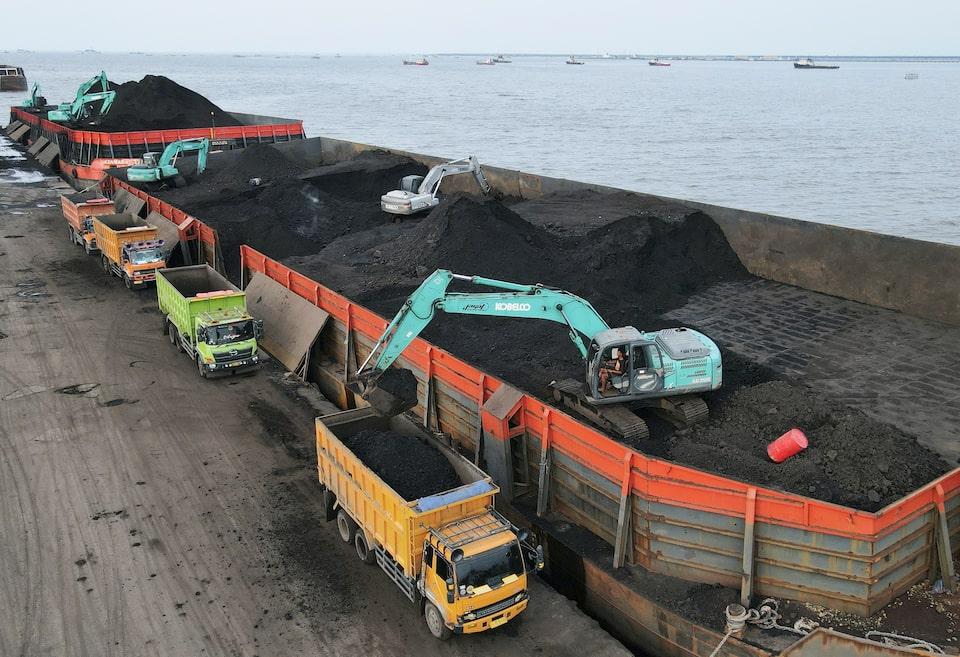
SINGAPORE/BEIJING, June 25 (Reuters) - Top thermal coal importers China and India are slashing Indonesian shipments of the power generating fuel in favour of energy-dense grades from elsewhere as a global fall in prices has made higher-quality coal more competitive. Coal purchases by China and India from Indonesia, the world's biggest exporter, are dropping faster than their overall thermal coal imports, as both nations shift toward higher-calorific value (CV) coal that yields more energy per ton, industry officials say. Sign up here. "Higher CV coal is more expensive, but produces more energy for every dollar spent at current prices. One million tons of higher CV coal can replace 1.2-1.3 million tons or even 1.5 million tons from Indonesia," said Vasudev Pamnani, director at India-based coal trader I-Energy Natural Resources. In China, Indonesian medium- and low-calorific thermal coal has been struggling to compete with discounted Russian supplies of similar grades, said Kpler analyst Zhiyuan Li. Ramli Ahmad, the president director of Indonesian miner Ombilin Energi, said Indonesian coal could make a comeback if prices of higher grades rise due to the Middle East conflict, but lower-CV coal will suffer as long as more energy-dense grades are competitive. Mongolian coal in China and South African coal in India have been the biggest gainers at Indonesia's expense, with their shares touching record highs in these markets in the first five months of 2025, Chinese customs and Indian trade data showed. Higher production and improved efficiency will continue to boost Mongolian coal exports despite falling thermal coal prices in China as Mongolian coal has remained price-competitive, said Xue Dingcui, analyst at Mysteel. China and India have also stepped up purchases from Tanzania, which was largely been absent from the global seaborne coal trade map until Russia's war on Ukraine in 2022. Indian traders have also increased higher-grade coal purchases from Kazhakhstan, Colombia and Mozambique this year, while Australian supplies have gained share in China. Indonesian and Australian coal indexes, reflecting grades preferred by Chinese buyers, have been trending lower since October 2023, with the Australian benchmark declining faster than the Indonesian one. LOOKING WITHIN Overall, Chinese coal imports fell nearly 10% to 137.4 million tons in the first five months of the year, while shipments to India dropped more than 5% to 74 million tons. Indonesian exports have been the worst hit, with supplies to China and India sliding 12.3% and 14.3%, respectively. The southeast Asian nation's total coal exports dropped 12% to 187 million tons in the January-May period, data from analytics firm Kpler showed. To counter export declines, Indonesian miners are pivoting to domestic demand, with local deliveries poised to rise 3% this year and exports set to decline about 10%, according to the Indonesian Mining Services Association. Domestic demand, driven by demand from nickel smelters, is on track to account for the highest share of Indonesian coal output in at least a decade and stands at 48.6% currently, according to government data reviewed by Reuters. Indonesia caps the price of coal sold to power utilities, making smelters a more attractive alternative to exports. "The smelter industry is the brightest spot for now, we get better prices than we get from the power industry or sales to China," Ombilin's Ahmad said. https://www.reuters.com/business/energy/china-india-shift-higher-grade-coal-cut-indonesian-imports-2025-06-25/