2025-06-25 05:55
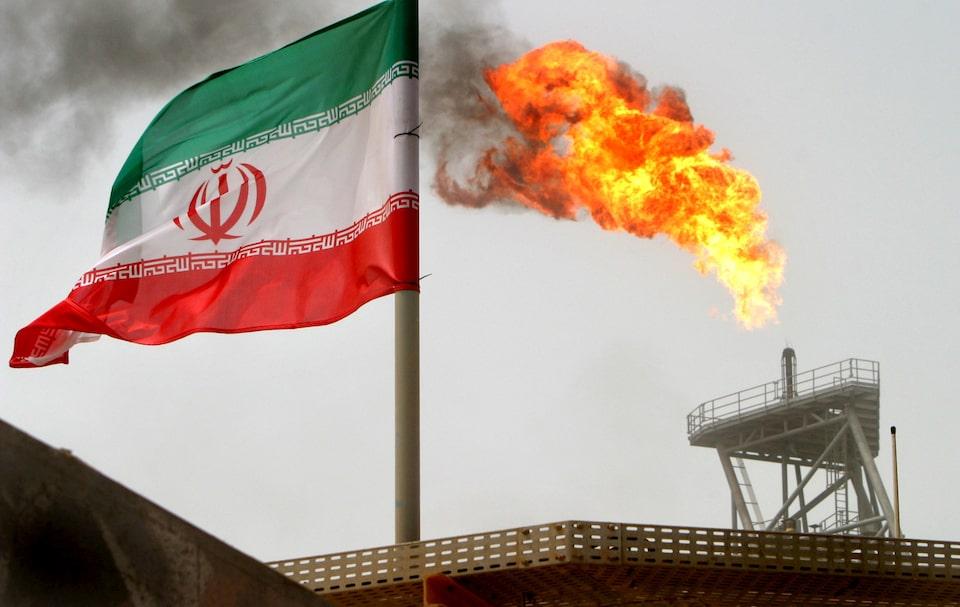
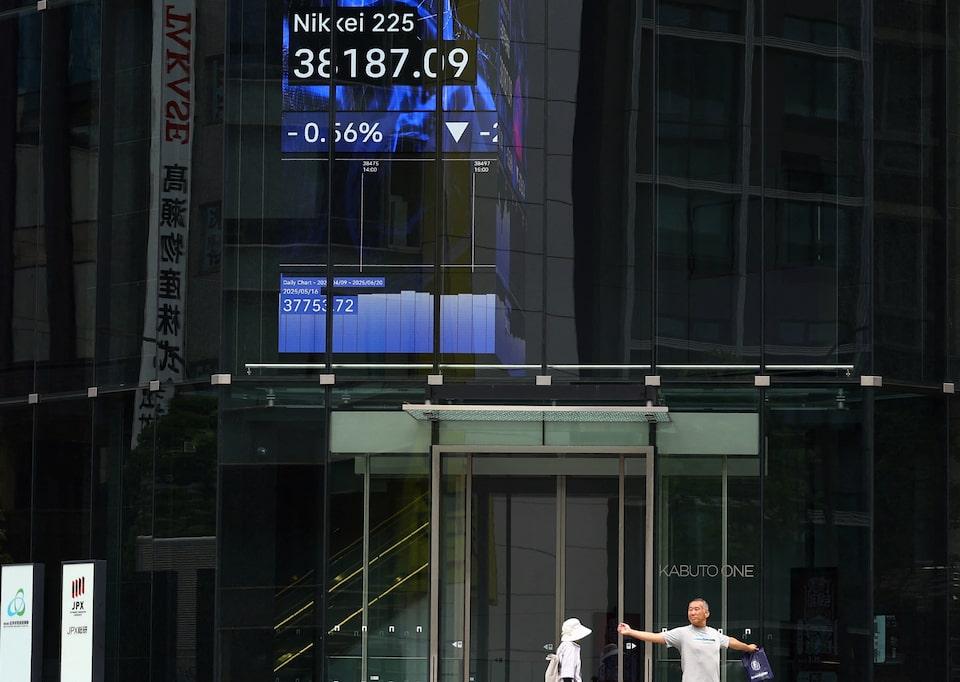
S&P 500 finishes near record high as Middle East tensions cool Oil rises, snapping three straight sessions of losses Gold mixed as geopolitical tensions ease, focus turns to US data Fed's Powell testifies before Senate panel for second day of testimony NEW YORK, June 25 (Reuters) - Global shares hovered near record highs on Wednesday as Middle East tensions eased, with markets focused on U.S. inflation and prospects of an interest rate cut. Crude prices rose after snapping three straight sessions of losses. The benchmark S&P 500 index finished unchanged and near a record high reached on February 19. Gains in technology and communication services shares were offset by losses in real estate, consumer staples and utilities stocks. The Dow lost ground but the Nasdaq gained. Sign up here. The Dow Jones Industrial Average (.DJI) , opens new tab fell 0.25% to 42,982.43, the S&P 500 (.SPX) , opens new tab was flat at 6,092.16 and the Nasdaq Composite (.IXIC) , opens new tab rose 0.31% to 19,973.55. European shares (.STOXX) , opens new tab dropped 0.74%. MSCI's broadest index of Asia-Pacific shares outside Japan (.MIAPJ0000PUS) , opens new tab finished up 0.96% overnight. MSCI's gauge of stocks across the globe (.MIWD00000PUS) , opens new tab eased 0.02% to 902.84, after hitting a record high earlier in the session. A ceasefire between Israel and Iran appeared to be holding, reducing the risks of disruptions to the global oil trade. At a NATO summit on Wednesday, President Donald Trump hailed the swift end to the 12-day conflict, saying that talks next week would seek a commitment from Iran to end its nuclear ambitions. Federal Reserve Chair Jerome Powell resumed two days of congressional testimony on Wednesday, appearing before the Senate Banking Committee following scrutiny before a House panel on Tuesday. "It looks like we've got a bit of a tug of war as to everything from Middle East tensions to how that's going to impact inflation, and then you've got oil prices firming up a little bit," said Sandy Villere, portfolio manager at Villere & Co in New Orleans. "It would be interesting if oil gets weaker and inflation stays at bay and then you wrap all that into what Powell has been saying. It feels like the market is being pretty resilient." CRUDE FUTURES UP Brent crude futures settled up 0.8% to $67.68 a barrel, while U.S. West Texas Intermediate crude (WTI) settled up 0.9% to $64.92, both contracts paring some of the 13% losses made earlier in the week. Prices had rallied to five-month highs after the U.S. attacked Iran's nuclear facilities over the weekend. Powell told the Senate panel that the Trump administration's tariff plans may well just cause a one-time jump in prices, but the risk of more persistent inflation is large enough for the central bank to be careful in considering further rate cuts. The yield on benchmark U.S. 10-year notes fell 1 basis point to 4.283%, reversing earlier gains. The U.S. dollar dropped to its lowest since 2021 against the euro but gained against the safe-haven Japanese yen. The dollar strengthened 0.19% to 145.19 against the Japanese yen and was down 0.05% to 0.80480 against the Swiss franc , erasing earlier gains. The euro rose 0.43% at $1.1658, after hitting its highest since October 2021. The dollar index , which measures the greenback against a basket of currencies including the yen and the euro, fell 0.27% to 97.69. Gold prices were mixed. Spot gold rose 0.31% to $3,334.10 an ounce. U.S. gold futures settled 0.3% lower at $3,343.1. https://www.reuters.com/world/china/global-markets-wrapup-1-2025-06-25/
2025-06-25 05:33
Dollar mixed, volatility declines after large dollar drop Optimism over fragile Israel-Iran truce keeps mood buoyant Fed Chair Powell repeats concern about tariffs causing inflation NEW YORK, June 25 (Reuters) - The dollar fell to multi-year lows against the euro and sterling on Wednesday but gained on the Japanese yen as traders evaluated expectations for Federal Reserve interest rate cuts and turned attention back to U.S. fiscal policies. Moves were relatively muted following a sharp drop in the greenback on Monday and Tuesday that came after a ceasefire deal between Israel and Iran. Sign up here. The dollar gained last week on concerns about rising Middle East tensions, before rapidly falling back this week. "The market's waiting for the next theme," said Steve Englander, Head of Global G10 FX Research and North America Macro Strategy at Standard Chartered Bank NY Branch. The greenback has also weakened on rising expectations for more interest rate cuts this year. In his second day of testimony to the U.S. Congress, Fed Chair Jerome Powell on Wednesday repeated that the U.S. central bank should keep interest rates on hold on expectations the Trump administration's tariffs will increase inflation. On Tuesday, Powell said if not for tariffs, the U.S. central bank would have likely continued to cut rates. "The market paid attention to that," as it appeared more dovish than Powell’s comments a week earlier at the conclusion of the Fed’s policy meeting, Englander said. "We've had the market bidding up cutting possibilities." The odds of more rate cuts also rose after Fed policymakers Michelle Bowman and Christopher Waller both recently said that the Fed should cut rates soon. Fed funds futures traders are pricing in 62 basis points of cuts by year-end, up from around 46 basis points last Friday before comments from the Fed’s Waller. The first cut is fully priced in for September. Investors "are choosing to interpret Fed Chair Jerome Powell’s Congressional testimony to mean that the central bank is laying the groundwork for an early-autumn rate cut," said Karl Schamotta, chief market strategist at Corpay in Toronto. TARIFFS BACK IN FOCUS Investors are also returning their focus to trade negotiations ahead of a self-imposed July 9 deadline by the Trump administration to negotiate deals that avoid reciprocal tariffs with trading partners. Most likely, this deadline will be extended in order to avoid market volatility as U.S. Congress also works to pass a tax and spending bill due around the same time, said Englander. An extension of the tariff pause would likely be risk positive, and modestly dollar negative. The euro gained 0.43% to $1.1658, the highest since October 2021. Sterling rose 0.33% to $1.3659, its highest since January 2022. The single currency has also been boosted by the expectation of more fiscal spending in the region. The Swiss franc held near a 10-1/2-year high reached on Tuesday and last traded at 0.804 per dollar. The dollar gained 0.18% to 145.17 Japanese yen . Bank of Japan policymakers called for keeping interest rates steady for the time being due to uncertainty over the impact of U.S. tariffs on Japan's economy, a summary of opinions at the bank's June policy meeting showed on Wednesday. The Bank of Japan may need to raise interest rates "decisively" to address inflation risks even if uncertainties over U.S. tariffs persist, a hawkish member of its board said, highlighting the bank's attention to growing price pressures. In cryptocurrencies, bitcoin gained 1.72% to $105,589. https://www.reuters.com/world/africa/dollar-stumbles-optimism-fragile-israel-iran-truce-lingers-2025-06-25/
2025-06-25 05:21
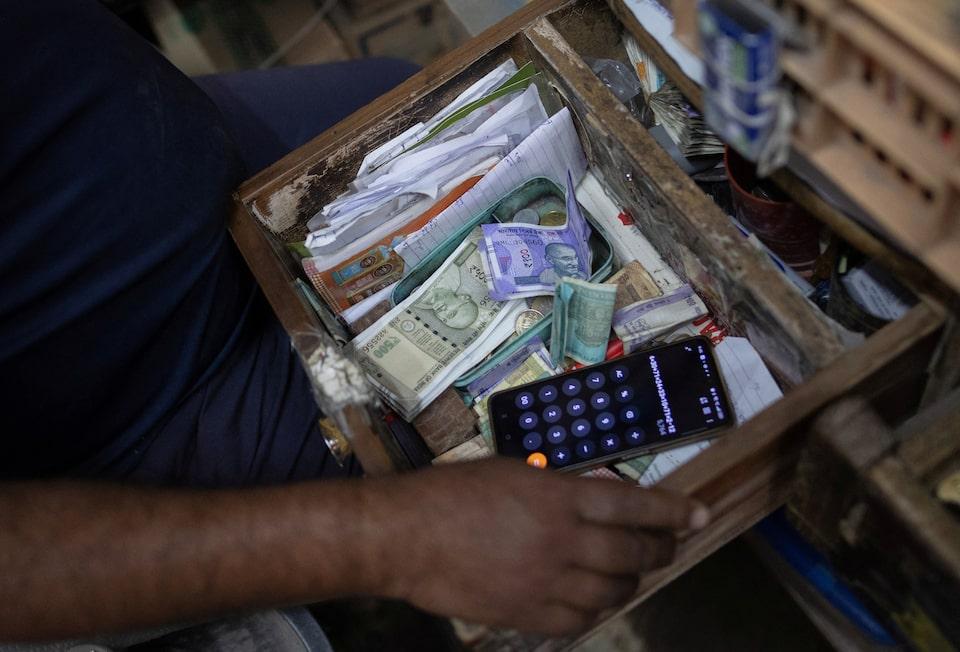
MUMBAI, June 25 (Reuters) - The Indian rupee edged higher on Wednesday, as global markets steadied after a ceasefire between Iran and Israel held, offering comfort to stocks and currencies in Asia. Dollar-rupee forward premiums rose as the Indian central bank's announcement of a measure to withdraw excess banking system liquidity lifted near forwards, while a dip in U.S. bond yields aided far tenors. Sign up here. The 1-year dollar-rupee implied yield rose 5 basis points to 1.94% while the 1-month forward premiums ticked up to around 12 paisa. After market hours on Tuesday, the Reserve Bank of India said it will conduct a seven-day variable reverse repo rate auction worth 1 trillion rupees ($11.64 billion) on Friday. The 1-year U.S. Treasury yield was hovering around 4% in Asia trading after falling on Tuesday. The rupee was rose 0.2% to 85.82, as of 10:45 a.m. IST. The currency had rallied 0.9% on Tuesday as oil prices slumped after a ceasefire between Iran and Israel was announced. "Tuesday’s rally offered a much-needed breather for the rupee, but the key question now is sustainability," said Amit Pabari, managing director at FX advisory firm CR Forex. "As long as crude oil remains subdued and global risk sentiment stays supportive, the rupee may find a cushion around the 85.80–86.00 zone," Pabari added. Asian currencies were trading mixed while the dollar index held below the 98 handle. Benchmark Indian equity indexes, the Nifty 50 (.NSEI) , opens new tab and the BSE Sensex (.BSESN) , opens new tab, rose about 0.7% each, tracking positive cues from gains in global peers. https://www.reuters.com/world/india/rupee-firms-dip-us-yields-rbi-cash-withdrawal-plan-lift-forward-premiums-2025-06-25/
2025-06-25 04:58
June 24 (Reuters) - At least 10 people were killed and 15 injured in a landslide in northwest Colombia, the governor of Antioquia province said on Tuesday. Search and rescue operations are ongoing, Governor Andres Julian said in a post on X. Sign up here. https://www.reuters.com/business/environment/least-10-dead-15-injured-colombia-landslide-says-regional-governor-2025-06-25/

2025-06-25 04:46
Trimmed mean measure at 2.4%, under midpoint of 2-3% target Headline inflation at 2.1%, vs forecast of 2.3% Services inflation runs at 3.3%, slowing from 4.1% in April SYDNEY, June 25 (Reuters) - Australian consumer price inflation slowed more than expected in May, while the closely watched core measure hit three-and-a-half-year lows as investors locked in bets for an imminent rate cut. Swaps now imply a 92% probability that the Reserve Bank of Australia would cut rates by a quarter-point when it delivers its policy decision on July 8, a day before the expiry of a 90-pause in U.S. reciprocal tariffs on other countries. That was up from 81% before the data. Sign up here. Commonwealth Bank of Australia, Deutsche Bank and TD Securities changed their next rate cut call to July from August, while UBS said its expectation for the RBA to hold steady next month is under review. "Today’s monthly CPI print capped off a flow of data that should provide comfort to the RBA that a swifter return of the cash rate to neutral is both manageable and needed," said Belinda Allen, a senior economist at CBA. "Maintaining the current restrictive settings for too long raises the risk of inflation undershooting the midpoint." Data from the Australian Bureau of Statistics on Wednesday showed the monthly consumer price index (CPI) rose 2.1% in May compared with a year earlier. That was down from 2.4% in April and under median forecasts of 2.3%. In the month, CPI fell 0.4% from April as petrol prices eased and housing costs cooled. Crucially, the trimmed mean measure of core inflation increased at a slower annual pace of 2.4% in May, coming under the mid-point of the 2-3% target band. That was down from 2.8% in April and also the lowest reading since late 2021. "We are convinced that the RBA needs to cut in July to safeguard growth as inflation is clearly out of their way now," said Krishna Bhimavarapu, APAC economist at State Street Global Advisors. "We are tracking faint consumption and growth in Q2, and hence, the bank may do well to frontload the cut to July." The RBA has cut interest rates twice since February to 3.85% as cooling inflation at home offered scope to counter rising global trade risks. However, the economy barely grew in the first quarter as consumers stayed stubbornly frugal on heightened worries about the economic impact of U.S. tariffs and geopolitical conflicts. All of that argued for more policy easing from the RBA in the months ahead, with investors expecting a total easing of 78 basis points by the end of the year. The labour market has so far stayed resilient. The unemployment rate remains low at 4.1% and job advertisements are stabilising above pre-COVID levels. Wages have been well-behaved, with growth in the private sector mostly subdued. Wednesday's report showed services inflation slowed to an annual rate of 3.3%, from 4.1% the previous month, while rents rose 4.5%, the lowest annual growth since December 2022. New dwelling prices were flat in the month, while holiday travel and accommodation prices fell 7% after a 6% rise in April, which was driven by holiday demand. https://www.reuters.com/world/asia-pacific/australias-core-inflation-hits-3-12-year-low-firming-july-rate-cut-case-2025-06-25/
2025-06-25 04:41
A look at the day ahead in European and global markets from Kevin Buckland Some 24 hours on from when U.S. President Donald Trump announced a truce in the Middle East - despite being disturbed by some Iranian rocket fire and an Israeli vow to respond - investors seem to be keeping faith that the worst is over. Sign up here. Although the global stock rally appears to have petered out for now, and crude oil looks to have found a floor, there's not been much retracement of those sizeable market moves, at least so far. A big part of that may be that even at the height of the hostilities, the security of Iran's oil infrastructure and the vital tanker thoroughfare, the Strait of Hormuz, was never seriously in doubt. A buoyant Trump even took to social media to say China can now, again, purchase Iranian oil, forcing the White House to swiftly clarify there was no change in stance with regard to U.S. sanctions. Trump has also found himself at odds with his own Defense Intelligence Agency, which said in an initial report that U.S. bomber strikes on Iran's nuclear facilities at the weekend had only set the country's capabilities back by a month or two. Trump said Iran's nuclear program had been "obliterated". That raises questions about whether the U.S.'s or Israel's goals in the air war were actually realised, and about what comes next. We're very likely to hear more from Trump on the Middle East as he flies into The Hague for a NATO summit today, where defence spending will be a primary focus. Developments in the Middle East are likely to remain the center of market attention throughout the European trading day, with very little on the corporate or macro calendars today. Later, U.S. data is limited to new home sales. Federal Reserve Chair Jerome Powell will be back on Capitol Hill to give testimony before the Senate, although having done the same to the House the previous day, there's not likely to be much that's new. In political developments north of DC, Zohran Mamdani, a 33-year-old state lawmaker and self-described democratic socialist, was poised to win New York City's Democratic mayoral primary in a surprising upset over former New York Governor Andrew Cuomo. Key developments that could influence markets on Wednesday: -NATO summit -US new home sales (May) -Fed Chair Powell testifies before Senate Banking Committee Trying to keep up with the latest tariff news? Our new daily news digest offers a rundown of the top market-moving headlines impacting global trade. Sign up for Tariff Watch here. https://www.reuters.com/world/europe/global-markets-view-europe-2025-06-25/