2025-06-25 03:08
MUMBAI, June 25 (Reuters) - The Indian rupee is expected to open higher on Wednesday, sustaining its rally past the 86 level, supported by a fall in demand for the safe-haven dollar and upbeat risk appetite following the Israel-Iran ceasefire. The 1-month non-deliverable forward indicated an open in the 85.92-85.96 range, versus 85.9750 in the previous session. The rupee rallied 0.9% on Tuesday, logging its best single-day performance in a month. Sign up here. Brent crude declined 13.2% over the last two days following the ceasefire, and the dollar index had declined by 0.9%. Investors pared long dollar positions, unwinding bets built up during the 12-day conflict between the two countries. "The market is unwinding risk-off trades now that it looks like the conflict won’t escalate further," said a currency trader at a Mumbai-based bank. "We’re seeing better offers (on USD/INR) and light exporter selling. Speculators have been taking to (USD/INR) shorts." With the Middle East risk premium deflating, attention has shifted back to the weakening U.S. exceptionalism narrative — a key driver behind the dollar index’s nearly 10% slide so far this year. Analysts say the dollar’s trajectory from here will hinge on how U.S. tariff negotiations unfold and whether Washington can strike trade deals with key partners. Another major driver will be how the U.S. economy holds up amid policy uncertainty and the timing and scale of U.S. Federal Reserve rate cuts. Fed Chair Jerome Powell stuck to his cautious approach and reiterated that the central bank was in no rush to cut rates at his semi-annual testimony to Congress on Tuesday. Markets continue to price a low probability of rate cut next month. "Overall, Chair Powell continued to stress the high level of uncertainty and need for additional data.. the testimony did little to change the overall policy trajectory," Morgan Stanley said in a note. KEY INDICATORS: ** One-month non-deliverable rupee forward at 86.04; onshore one-month forward premium at 10.25 paise ** Dollar index down at 97.88 ** Brent crude futures at $67.9 per barrel ** Ten-year U.S. note yield at 4.3% ** As per NSDL data, foreign investors sold a net $211.5mln worth of Indian shares on Jun. 23 ** NSDL data shows foreign investors sold a net $5.5mln worth of Indian bonds on June 23 https://www.reuters.com/world/india/rupee-hold-above-86-safe-haven-premium-dollar-erodes-2025-06-25/

2025-06-25 02:07
SEOUL, June 25 (Reuters) - A board member of South Korea's central bank on Wednesday expressed concern about financial stability risk stemming from rising household debt. "There is a need to be cautious about the possibility of housing market and household debt-related risks increasing again," said Kim Jong-hwa, a member of the Bank of Korea's seven-seat monetary policy board. Sign up here. Kim emphasised that the central bank should coordinate policy with the government to prevent any increase in financial instability amid its monetary easing cycle. Last month, the BOK lowered interest rates for a fourth time in the current easing cycle and said it was necessary to continue to ease monetary policy to support economic growth, but with caution over associated risks. The country's household borrowing from banks increased in May by the biggest amount since September 2024, as house prices in capital Seoul rose sharply, raising concerns about an overheated property market. The impact of interest rate cuts on house prices and household debt tends to be bigger as interest rates are lowered more, the BOK said in a semiannual financial stability report. On stablecoins, the BOK said there were potential risks to financial stability and the broader economy, so it will cooperate with the government to ensure that its new regulations are designed in a way that minimises the risks. https://www.reuters.com/world/asia-pacific/bank-korea-board-member-expresses-financial-stability-concerns-2025-06-25/

2025-06-25 00:33
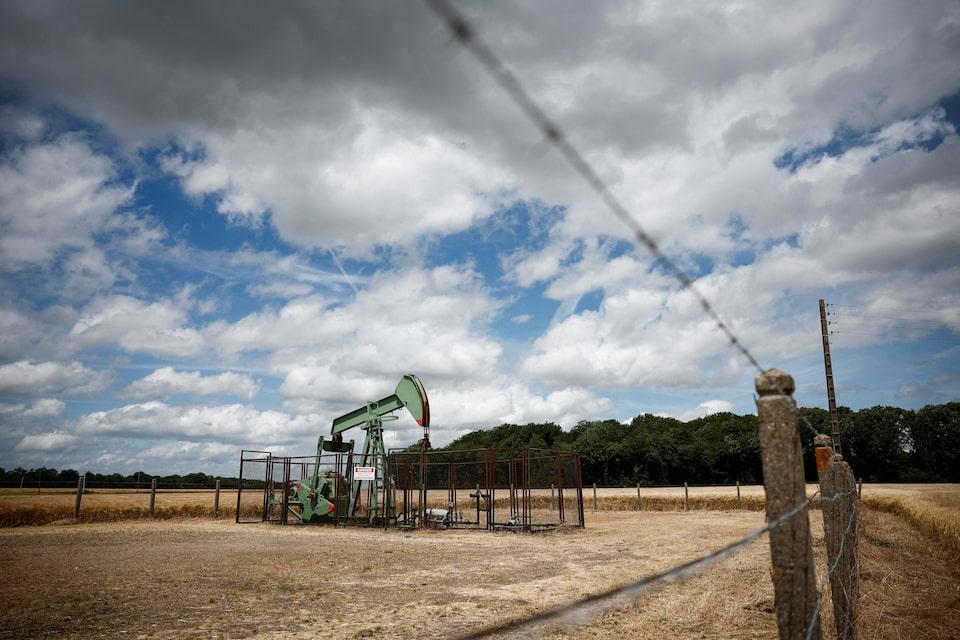
US crude and fuel inventories fall on higher demand, EIA says U.S. gasoline demand highest since December 2021 Iran-Israel ceasefire reduces geopolitical supply concerns Fed rate cut expectations support oil demand outlook NEW YORK, June 25 (Reuters) - Oil prices rose nearly 1% on Wednesday, recovering from a sharp slide early this week, as data showed relatively strong U.S. demand, and as investors assessed the stability of a ceasefire between Iran and Israel. Brent crude futures settled 54 cents higher, or 0.8%, at $67.68 a barrel, while U.S. West Texas Intermediate crude (WTI) ended up 55 cents, or 0.9%, at $64.92, both paring some of the 13% losses made earlier in the week. Sign up here. After U.S. President Donald Trump announced the ceasefire on Tuesday, Brent settled at its lowest since June 10 and WTI ended at its lowest since June 5 on the reduced Middle East supply risk. Oil prices had rallied after June 13, when Israel launched a surprise attack on key Iranian military and nuclear facilities. Prices hit five-month highs after the U.S. attacked Iran's nuclear facilities over the weekend. "While concerns regarding Middle Eastern supply have diminished for now, they have not entirely disappeared, and there remains a stronger demand for immediate supply," said ING analysts in a client note. Prices found support from Wednesday's government data that showed U.S. crude, gasoline and distillate inventories fell last week. Crude inventories dropped by 5.8 million barrels, data showed, compared with analysts' expectations in a Reuters poll for a 797,000-barrel draw. Gasoline stocks unexpectedly fell by 2.1 million barrels, compared with forecasts for a 381,000-barrel build as gasoline supplied, a proxy for demand, rose to its highest since December 2021. "We are looking at big draws across the board," said Phil Flynn, senior analyst with the Price Futures Group. "This type of report can refocus on U.S. supply and demand, and less on geopolitics." A slew of U.S. macroeconomic data released overnight, including data on consumer confidence, showed possibly weaker-than-expected economic growth in the world's largest oil consumer, bolstering expectations of a Federal Reserve rate cut this year. Oil prices will likely consolidate at around $65-70 per barrel levels as traders look to more U.S. macroeconomic data this week and the Fed rate decision, said independent market analyst Tina Teng. The market is betting that the Fed could cut U.S. interest rates as soon as September, which would typically spur economic growth and demand for oil. (This story has been refiled to correct the settlement price of WTI in paragraph 2) https://www.reuters.com/business/energy/oil-prices-edge-higher-investors-assess-iran-israel-ceasefire-2025-06-25/
2025-06-25 00:24
SAO PAULO, June 24 (Reuters) - Brazilian Finance Minister Fernando Haddad said any debate on increasing public spending is frozen until the government ensures fiscal sustainability, according to an interview with Record TV published on Tuesday. Haddad stated that no new spending increase would be welcome unless it is essential. Sign up here. The minister also voiced concern over the central bank's monetary policy, calling the country's benchmark interest rate "very, very restrictive" and well above projected inflation. The central bank last week raised the benchmark rate by 25 basis points to 15%, the highest since 2006, and signaled an extended pause ahead. The minister argued that the recent rate hikes took place amid an inflationary scenario - particularly regarding food prices - that is being solved. The full interview will be broadcast by Record News later in the evening. https://www.reuters.com/world/americas/brazils-haddad-says-debate-over-increasing-public-spending-is-frozen-2025-06-25/

2025-06-24 23:47
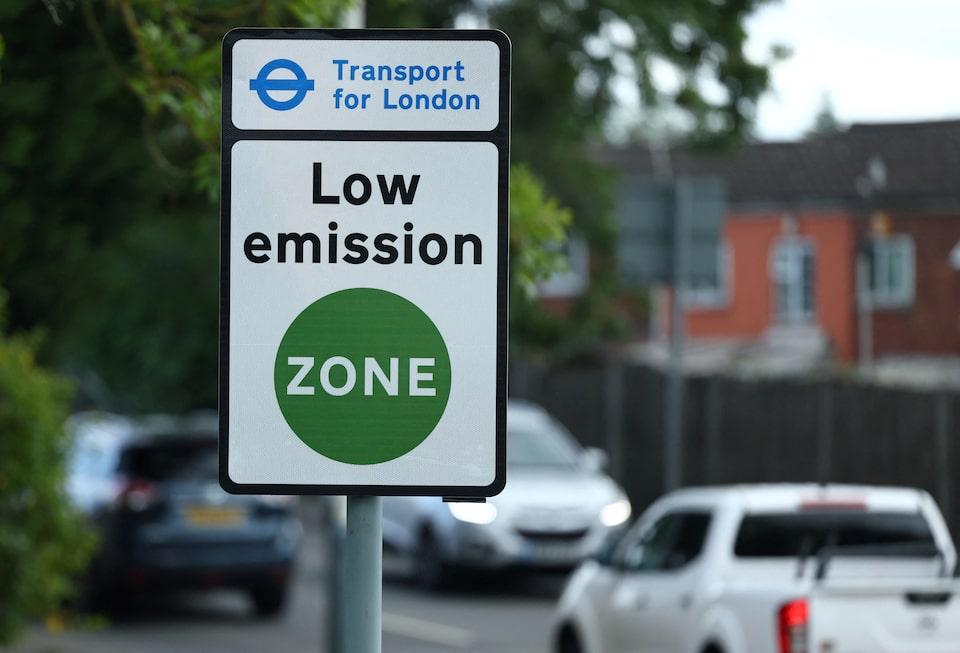
Climate advisers urge lower electricity costs for climate goals High power prices hinder electrification of heating, transport 43 recommendations include faster grid connections, low-carbon heating systems LONDON, June 25 (Reuters) - Britain must cut its electricity prices to speed up the adoption of emission curbing technology, such as electric vehicles and heat pumps, to meet its climate targets, the country's climate advisers said in a progress report on Wednesday. Britain aims to reach net zero emissions by 2050, which will require the electrification of sectors such as heat and transport, now mostly powered by fossil fuels, while it is also grappling with high electricity costs. Sign up here. "By far the most important recommendation we have for the government is to reduce the cost of electricity both for households and businesses," Piers Forster, interim chair of the Committee on Climate Change said, in a briefing on the annual report. "If we want the country to benefit from the transition to electrification, we have to see it reflected in the utility bills," he said. Britain's energy regulator Ofgem, which sets a cap on domestic energy prices, reduced the limit by 7% from July. However it remains around 50% above levels in the summer of 2021, before Russia’s invasion of Ukraine sent gas prices soaring and sparked an energy crisis in Europe. The Committee publishes annual reports about the government's progress towards its climate targets. With more action, Britain can achieve a 68% reduction in emissions between 1990 and 2030, it has pledged under the Paris climate agreement, the report said. It made 43 priority recommendations including lowering energy costs, speeding up grid connections for new clean power projects, introducing regulations mandating only low-carbon heating systems for new homes, and publishing a net zero skills action plan. Britain’s emissions have already fallen around 54% from 1990 thanks to increased renewable power capacity and the closure of its coal-fired power plants. https://www.reuters.com/sustainability/cop/britain-must-lower-power-prices-meet-climate-goals-advisors-say-2025-06-24/
2025-06-24 23:42
Extreme heat stresses PJM transmission lines, natural gas-fired plants PJM orders several utilities to curtail power to customers Duke Energy asks wholesale customers to curb power use New York City wholesale peak prices hit $2,400 per MWh BOSTON, June 24 (Reuters) - U.S. regional electric grid operators scrambled to avoid rotating blackouts on Tuesday, preserving razor-thin power generation margins as temperatures in the eastern half of the country soared past 100 degrees Fahrenheit (38 degrees Celsius). Jammed and overheated transmission lines caused congestion and lifted wholesale electricity prices in New York, the largest city in the United States, to nearly $2,400 per megawatt hour (MWh) during peak evening demand. Wholesale prices in Long Island topped $7,000 per MWh. Sign up here. New York ISO, the state's grid operator, warned it may initiate emergency actions after operating reserves declined. PJM Interconnection, which covers one in five Americans as the largest U.S. power grid operator, ordered several utilities in its territory to curtail electricity to customers in voluntary reduction programs. "Load reductions should continue until released by PJM," the grid operator said in a Tuesday afternoon directive. PJM issued several warnings throughout the day as it battled to keep electricity flowing across overheated high-voltage transmission lines. Generation output also ebbed as gas-powered turbines operated at reduced capacity in the extreme heat. ISO New England, whose six-state territory includes Boston, saw spot wholesale electricity prices soar past $1,500 per MWh on peak consumption around 5:30 p.m. EDT. Tuesday's prices were more than three times higher during Monday's peak demand at the start of the heat wave. New England joined other U.S. regions deploying exigent and emergency strategies to avoid widespread outages. The U.S. Department of Energy on Tuesday ordered Duke Energy Carolina (DUK.N) , opens new tab to use specific electric generating units to operate at their maximum generation output levels in the southeast. ISO New England issued a "Power Caution" after the unexpected loss of generation left the region short of the resources needed to meet both consumer demand and required operating reserves. The grid operator said it would tap reserve resources to keep supply and demand balanced. Duke Energy said it may not have sufficient generation available to meet unusually high demand and may have to curtail electric use to avoid outages, according to the DOE order. As a result, the utility has notified some wholesale customers to limit their use, which is expected to reduce electricity demand by up to 1,000 megawatts during peak hours. In addition to increasing imports from adjoining regions and asking power plant operators to defer maintenance, grid operators and utilities are calling on stand-by units to boost the supply of electricity. To prepare for Tuesday's scorching heat, ISO New England directed power plant operators not to do any testing or maintenance that would affect electric reliability. Temperatures in Boston topped 100 F (38 C) early Tuesday afternoon, according to the National Weather Service. ISO New England forecast that electricity demand approached 26,000 MW about 6:15 p.m. EDT on Tuesday, short of the record high of 28,130 MW set in August 2006. https://www.reuters.com/business/energy/new-england-electric-grid-operates-under-precautionary-alert-2025-06-24/