2025-06-24 12:30
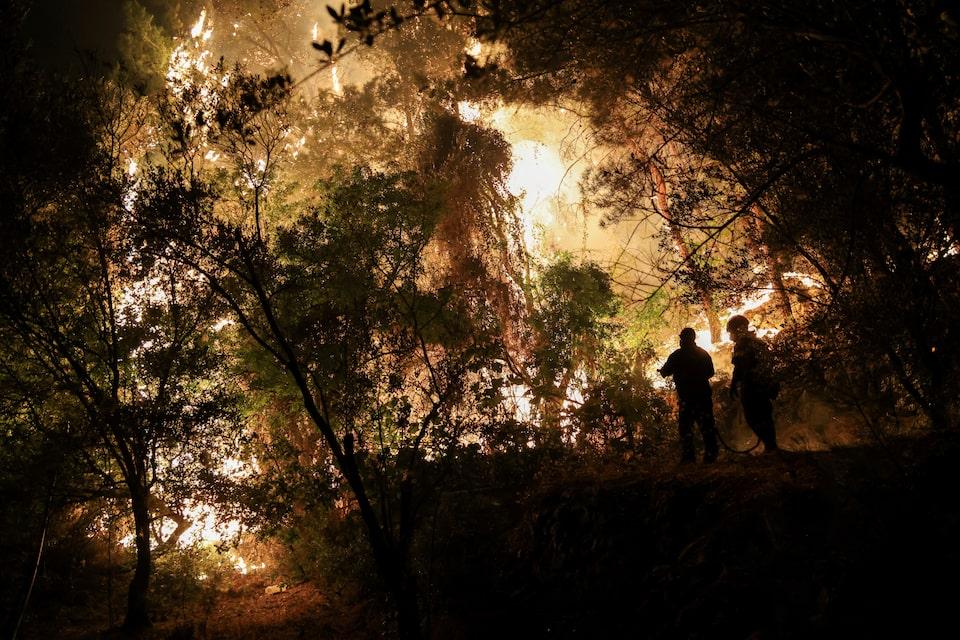
CHIOS, Greece, June 24 (Reuters) - Hundreds of firefighters battled for a third day to contain wildfires on the Greek island of Chios on Tuesday that have torn through swathes of forest and farmland and forced hundreds of villagers to evacuate, after it declared a state of emergency. More than 400 firefighters assisted by 14 helicopters and four aircraft have been deployed to several locations on the island, in the northeastern Aegean Sea. Sign up here. Chios is in the midst of the tourist season and authorities also want to prevent the fires reaching areas famous for producing mastiha, a natural resin harvested from mastic trees. Firefighters, residents and volunteers were struggling to prevent the fire from spreading into the village of Agios Giorgios Sikousis. "The fire came close to the houses," said villager Stamatis Zeonidis, but he added volunteers had managed to keep it away. Aircraft dropped water bombs on the bushes, as thick grey smoke engulfed the area, and firefighters doused olive trees besides the road. "The situation is very difficult, there are a lot of open fronts and a lot of villages," said volunteer Antonis Mikoudis. "We left our jobs (to come here). We believe we will manage to do something." "The images were terrifying," said Ioannis Psilos, another volunteer. "But thank god everything will be ok and the fire will not progress more towards the south of Chios." Authorities issued a new alert on Tuesday, advising residents of villages southwest of Chios town, the island's capital, to leave. "A lot of work is still needed to bring the wildfires under control," a Greek fire brigade official who requested anonymity told Reuters. Northerly winds were complicating firefighting efforts, they added. Greece, situated at Europe's southernmost tip, is often hit by wildfires during its hot and dry summers but authorities have blamed a fast-changing climate for fuelling more destructive blazes in recent years. Athens has paid out hundreds of millions of euros in support to households and farmers hit by extreme weather and to update firefighting equipment. It has a record 18,000 firefighters this year in anticipation of a challenging fire season. https://www.reuters.com/business/environment/hundreds-firefighters-battle-wildfires-greeces-chios-island-third-day-2025-06-24/
2025-06-24 12:07
US tax bill may lead to reconsideration of US portfolio -Kubicek US share of global reserves could fall to 47% in a decade -Kubicek China's yuan will play important role in reserves - Bank of Zambia's Muhanga LONDON, June 24 (Reuters) - U.S. President Donald Trump's sweeping tax-cut and spend legislation could have a big impact on the Czech central bank's investment in U.S. assets, an official said on Tuesday. Czech National Bank board member Jan Kubicek, speaking at an Official Monetary and Financial Institutions Forum event, said that for the moment the central bank's approach to U.S. assets had not changed. Sign up here. But the bill, dubbed the "One Big Beautiful Bill Act" would potentially have a "big influence" on the central bank's American portfolio, he said. "Up to now central banks rejoiced (in) zero taxation and this may radically change, so I think we will have to reconsider it." Part of the budget bill, called Section 899, seeks to tax foreign investors' U.S. income as pushback against countries that impose taxes the U.S. considers unfair. Kubicek also predicted a decline below 50% for the U.S. dollar's share in global currency reserves over the next decade, as other currencies gain traction. The dollar share currently stands at around 58%. The custodians of trillions of dollars of global central bank reserves are eyeing a move away from the greenback into gold, the euro and China's yuan as the splintering of world trade and geopolitical upheaval spark a rethink of financial flows, an OMFIF survey showed on Tuesday. "Other currencies will emerge, probably (the) Chinese currency or some other emerging countries. For this reason the weight of dollar will decline," Kubicek said, predicting a drop to 47%. The dollar, the most popular currency in last year's survey, fell to seventh place this year, the OMFIF survey showed. Slightly fewer than three-quarters of the 75 central banks surveyed said the U.S. political environment was discouraging them from investing in the dollar -- more than doubling from last year. The average expectation for the dollar's share of global FX reserves in 2035 was 52%, the OMFIF survey showed, remaining the No.1 reserve currency. Speaking at the same event Isaac Muhanga, a director of financial markets at the Bank of Zambia, predicted the dollar will continue to account for well over 50% of reserves over the next decade, but saw a greater role for China's yuan. "Given the issues that are surrounding the world today... and just to make reserves management more efficient, I think countries that we are exposed to in terms of trade will increasingly become more important," Muhanga said. "We're thinking that as China continues on this journey to internationalise its currency, small as it is, it will play an important role in many countries' reserve management and Zambia is included in those countries." https://www.reuters.com/markets/europe/us-tax-bill-could-have-big-influence-czech-central-banks-portfolio-official-says-2025-06-24/
2025-06-24 12:00
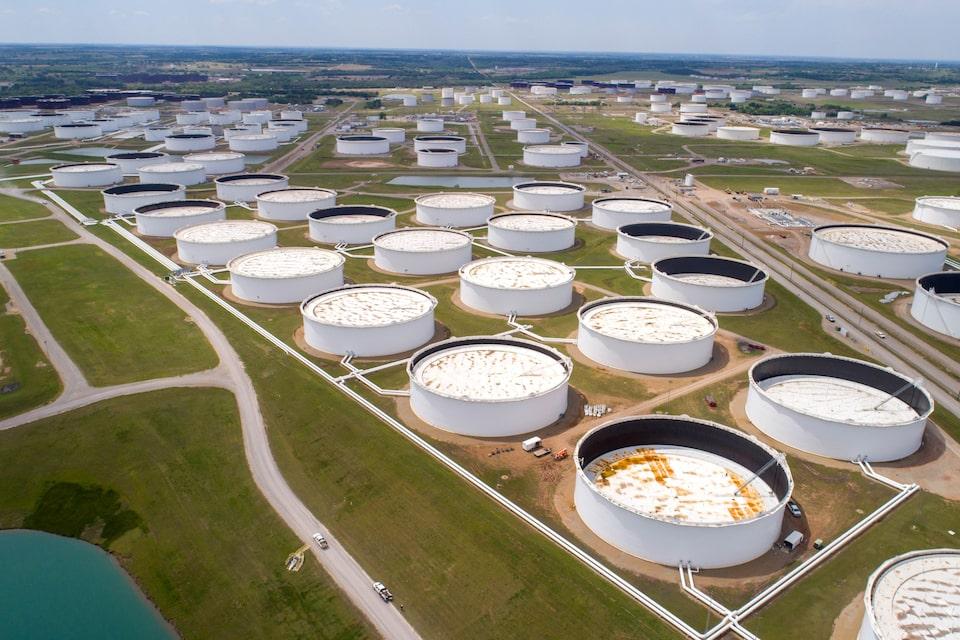
LAUNCESTON, Australia, June 24 (Reuters) - Crude oil's sharp reversal of the Israel-Iran war premium shows the power of a few words from a key player to move the market, but in doing so it also masks the greater influence of those who stay largely silent. Global benchmark Brent futures plunged after U.S. President Donald Trump said a "complete and total" ceasefire between Israel and Iran will go into effect. Sign up here. Brent ended at $71.48 a barrel on Monday, down 7.2% from its previous close and having given up its earlier rally that saw it climb as high as $81.40, the most since January 17. Crude prices had surged early on Monday amid worries Iran would respond to the U.S. joining Israel's attack by bombing three nuclear facilities. Once again media reports overflowed with concerns that Iran would try to block the Strait of Hormuz through which about 20% of global crude oil and liquefied natural gas (LNG) passes daily, or that Tehran would target U.S. military bases in the region. In the end Iran's response was restricted to an announced strike on a U.S. base in Qatar, which turned out to be merely symbolic as the missiles were mostly intercepted and only limited damage was reported. The price of crude continued to weaken in early Asian trade on Tuesday, dropping as low as $68.23 a barrel, down 4.4% and back to the level it was at on June 12, the day before Israel started its bombing campaign against Iran. There is little doubt Trump will claim credit for the ceasefire between Israel and Iran, and likely point to the U.S. bombing of Iran's nuclear facilities and Tehran's limited response as proof he made the right choice. Certainly the U.S. entry into the conflict would have altered the calculations of Iran's rulers. But if it is the case that Tehran has backed down, was it because Trump called for Iran's total surrender, or was it because of the influence of what could be termed the more discreet players. MUTED ALLIES It's worth noting that Iran's major allies, China, Russia and perhaps even India, did little more than offer pro-forma statements calling for an end to hostilities after the U.S. bombing. China is probably Iran's most important ally, as it is the only major buyer of its crude oil, which has been sanctioned by the United States. But the most strident China got in condemning the U.S. attack was the country's ambassador to the United Nations saying the involved parties, especially Israel, "should immediately cease fire to prevent the situation from escalating and avoid the spillover of war." While the ambassador to the United Nations is a senior diplomatic post, it's important that China didn't use a more important member of government to condemn the United States, and its support of Iran seemed muted at best. What Tehran probably discovered is that China's friendship is largely conditional on keeping oil flowing unhindered through the Strait of Hormuz, and also rapidly de-escalating so that prices can lose the risk premium. This was likely the same message delivered to Iranian President Masoud Pezeshkian by Indian Prime Minister Narendra Modi in a phone call on June 22. It's also likely that numerous other countries in the Middle East were quietly giving the message that it would be in nobody's interests for there to be any attacks on crude production and export infrastructure, or on shipping. What are the lessons from the 12-day Israeli campaign against Iran? The first is that crude oil prices still respond to geopolitical risks and moves tend to be volatile, short-lived and likely overstated. The second is that once again the shared self-interest of keeping oil flowing was in evidence, making it always likely that the risk premium in the oil price would be fleeting. The third is that Iran looks considerably weaker today than it did two weeks ago, but there is still much uncertainty as to what this means for the future of its rulers and their nuclear ambitions. The fourth is that despite Trump's bombast and hyperbole, there is little reason to believe that the Middle East is now any safer or more stable. Enjoying this column? Check out Reuters Open Interest (ROI), your essential new source for global financial commentary. ROI delivers thought-provoking, data-driven analysis of everything from swap rates to soybeans. Markets are moving faster than ever. ROI can help you keep up. Follow ROI on LinkedIn , opens new tab and X , opens new tab. The views expressed here are those of the author, a columnist for Reuters. https://www.reuters.com/markets/commodities/what-influences-crude-oil-more-us-bombs-or-irans-silent-allies-2025-06-24/
2025-06-24 11:49
BELGRADE, June 24 (Reuters) - Serbia's government has asked the United States for a fourth, 180-day sanctions waiver for the Russian-owned Serbian oil company NIS (NIIS.BEL) , opens new tab, the mining and energy minister Dubravka Djedovic Handanovic said in a statement. NIS, which is majority-owned by Russia's Gazprom Neft (SIBN.MM) , opens new tab and Gazprom (GAZP.MM) , opens new tab, operates Serbia's only oil refinery. Sign up here. The U.S. Treasury's Office of Foreign Assets Control (OFAC) initially placed sanctions on Russia's oil sector on January 10, and gave Gazprom Neft 45 days to exit ownership of NIS. NIS has so far secured three waivers, with the third one set to expire on June 27. The company asked OFAC for another extension on June 20. "Additional disruptions in supply chains, combined with possible sanctions against NIS, could jeopardize Serbia's energy security in the worst possible way and ... impact our citizens and ... the entire region," Djedovic Handanovic said. She said Serbia is facing uncertainties and price hikes on the global oil market due to the conflict in the Middle East. The facility has an annual capacity of 4.8 million tons and covers most of the Balkan country's needs and sanctions could jeopardize its supplies of crude. On March 14, NIS submitted a request to the U.S. Treasury Department for its removal from the sanctions list. On February 26, Gazprom Neft transferred a stake of around 5.15% in NIS to Gazprom in an attempt to ward off sanctions. Gazprom Neft owns 44.85% of NIS, while Gazprom has 11.3%. The Serbian government owns 29.87%, with small shareholders accounting for the rest. NIS imports about 80% of its oil needs through Croatia's pipeline operator Janaf. The remainder is covered by its own crude oil production in Serbia. https://www.reuters.com/business/energy/serbias-government-seeks-fourth-sanctions-waiver-us-nis-oil-firm-2025-06-24/

2025-06-24 11:35
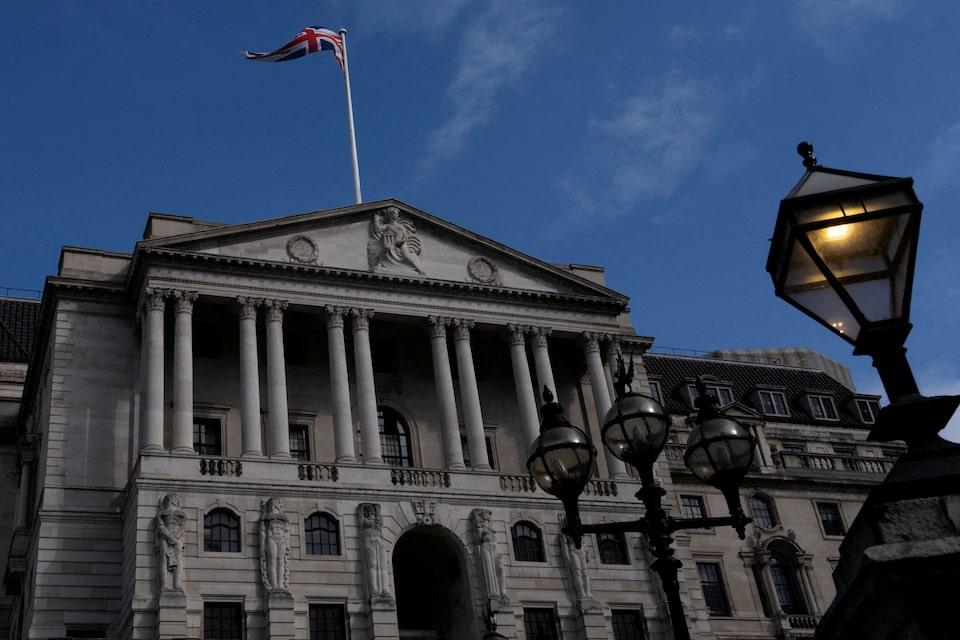
BoE's Greene sees risk of inflation 'plateau' rather than 'hump' BoE forecasts CPI to peak at 3.7% in Sept from 3.4% in May Greene says noisy data makes it hard to judge inflation trends Greene sees chance for banks to profit from expanded BoE repos LONDON, June 24 (Reuters) - Britain's recent increase in inflation could prove to be a longer-lasting plateau rather than a short-term hump, and the Bank of England should be careful about reducing interest rates, BoE monetary policymaker Megan Greene said on Tuesday. "I worry about the near-term profile for inflation this year, which in my view now resembles more of a 'plateau' than a 'hump'," Greene said in a speech at the National Institute of Economic and Social Research, a think tank. Sign up here. British consumer price inflation was 3.4% in May - well above its 2% target - and the BoE last week forecast it would rise to 3.7% by September and remain around 3.5% for the rest of the year. Greene, who voted to keep borrowing costs on hold at the most recent meeting of the BoE's Monetary Policy Committee, said conflicting signals from economic data meant she was in no hurry to resume voting for rate cuts. "Noisy data means that it will take longer for me to take comfort from recent disinflationary trends," she said. "Given the period of elevated inflation through which we have just come, I think price stability is the key priority." Greene said the BoE's message that it would take a "careful and gradual approach" to cutting rates was still warranted. Economists polled by Reuters before last week's meeting expected one quarter-point rate cut in August and another later in the year. In her speech, Greene focused on changes to British money markets as BoE bond sales and banks' repayment of COVID-era BoE finance drain excess reserves from the financial system. The BoE wants banks to make greater usage of its weekly repos for seven-day and six-month funds, and Greene highlighted the possibility for commercial banks to profit from differences between the BoE's and other central banks' reserve systems. "Financial arbitrage opportunities present incentives for banks to participate in our facilities, enhancing rather than undermining our ability to maintain rate control. This is a feature, not a bug," she said. The scale of these opportunities were "fairly limited", she added. Asked what this meant in cash terms - and whether it represented an extra cost for the BoE - Greene said she could not give details and that her focus as an MPC member was on the effective transmission of BoE rate changes to financial markets. https://www.reuters.com/world/uk/bank-englands-greene-says-she-is-worried-that-high-inflation-might-plateau-2025-06-24/
2025-06-24 11:20
June 24 (Reuters) - Cheniere Energy (LNG.N) , opens new tab said on Tuesday it approved the final investment decision for the expansion of the Corpus Christi liquefied natural gas project, lifting shares by 2.4% in afternoon trading. Bechtel Energy has been asked to proceed with construction of the projects, CCL Midscale Trains 8 & 9, the company added. Sign up here. Cheniere plans to double its current LNG production to 90 million metric tonnes per annum by building more export facilities at Sabine Pass and Corpus Christi. Additionally, the company said on Tuesday it has been developing further brownfield liquefaction capacity expansions at both the Corpus Christi and Sabine Pass terminals. It expects to execute the plan in a phased manner, starting with initial single-train expansions at each site, if completed, would grow its LNG platform to up to about 75 mtpa of capacity by the early 2030s. The United States is the world's largest exporter of liquefied natural gas and commercial activity in the sector gained momentum after President Donald Trump lifted a moratorium on new LNG export permits soon after taking office in January. In February, Cheniere had said it would aggressively pursue new regulatory permits to expand capacity. Cheniere said on Tuesday it expects to deploy more than $25 billion of available cash through 2030 toward growth, share repurchases, balance sheet management and dividends. It also raised its run-rate LNG production capacity forecast to be between nearly 60 mtpa and 63 mtpa from about 54 mtpa and 57 mtpa previously. "While the CCL expansion may have been anticipated, we see the confidence in future growth and superior long-term capital allocation flexibility as well ahead of expectations," said J.P. Morgan analyst Jeremy Tonet. https://www.reuters.com/business/energy/cheniere-energy-approves-corpus-christi-lng-expansion-project-2025-06-24/