2025-06-24 11:18
MUMBAI, June 24 (Reuters) - India's Tata Motors (TAMO.NS) , opens new tab, owner of luxury carmaker Jaguar Land Rover, said on Tuesday that rare-earth export curbs imposed by China have not caused it to press any "panic buttons" yet, and that its electric vehicle launches were on track. China's curbs on rare-earth exports have disrupted the global auto industry, with companies warning of a severe supply crunch. Rare-earth magnets are used in everything from windshield-wiper motors to anti-lock braking sensors in vehicles. Sign up here. "Currently, I think there's no panic because we believe the supplies are coming through. There's no production curtailment. Nothing is being planned at this point in time," CFO PB Balaji said at an event in Mumbai. Tata Motors' electric vehicle launch plans are on track, but may be reviewed if there is significant deterioration of rare earth supplies, CFO Balaji said. Alternate sources for magnets, including alternate technologies, are being looked into, he said. Maruti Suzuki (MRTI.NS) , opens new tab, India's top carmaker, cut near-term production targets for its electric vehicle e-Vitara by two-thirds because of rare-earths shortages, Reuters reported earlier this month. Shailesh Chandra, managing director of Tata Motors Passenger Vehicles and its EV subsidiary, said the company was looking at how to reduce the composition of rare earth magnets in its cars and how to completely eliminate them over the longer term. China controls more than 90% of the global processing capacity for the magnets, which are used for automobiles, clean energy and home appliances. It enacted restrictions in April that require companies to obtain import permits from Beijing, as part of its retaliation against hefty U.S. tariffs. Tata Motors CFO Balaji also said that Jaguar Land Rover will take price hikes "in a calibrated manner" to counter the impact of U.S. tariffs, but is not planning any manufacturing site in the U.S. The Range Rover maker had lowered the forecast for its fiscal 2026 earnings before interest and taxes margin to 5%-7% last week from 10% earlier, amid uncertainty in the global auto industry. https://www.reuters.com/world/india/indias-tata-motors-says-no-panic-button-pressed-yet-rare-earth-curbs-2025-06-24/

2025-06-24 11:17
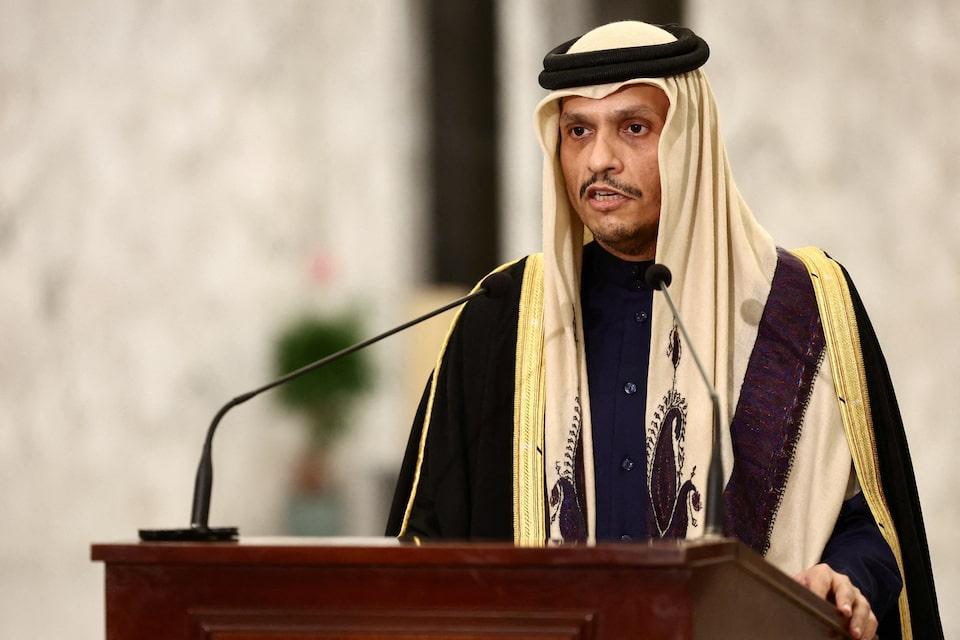
DOHA, June 24 (Reuters) - Qatar's prime minister said on Tuesday relations with Iran have been scarred by an Iranian missile volley at a U.S. airbase in the Gulf Arab state, but that he hoped ties would eventually "come back to normal". Iran responded to U.S. participation in Israel's air war against Iran by firing missiles on Monday at the Al Ubeid air base, but no one was hurt after Tehran gave advance warning, and a ceasefire was announced hours later by Washington. Sign up here. Qatar, situated just across the Gulf from Iran, has often acted as a mediator in regional conflicts, including between Iran and the United States and between Israel and Hamas in the continuing Gaza war. "What happened will definitely have its scar on the relationship (with Iran), but I hope by the time everyone learns the lesson that this kind of neighbourhood relationship should not be violated and should not be undermined," Qatar's prime minister, Sheikh Mohammed bin Abdulrahman Al Thani, told a press conference with his Lebanese counterpart in Doha. "The partnership between Qatar and the U.S. is just growing stronger... and I hope the good relationship with Iran comes back to normal as soon as possible," he said. Al Thani added that Qatar had liaised with Iran at Washington's request to help facilitate the ceasefire. "We hope the ceasefire will continue as agreed upon, and we urge both the U.S. and Iran to return to the negotiating table with the aim of reaching a comprehensive diplomatic solution, something that Qatar has consistently sought," he said. He added that Iranian President Masoud Pezeshkian expressed regret in a phone call with Qatar's ruling Emir Sheikh Tamim bin Hamad Al-Thani that Tehran's target in retaliating for U.S. airstrikes was a military base in Qatar. https://www.reuters.com/world/middle-east/qatar-iran-ties-scarred-should-recover-after-missile-salvo-us-base-qatari-pm-2025-06-24/
2025-06-24 11:14
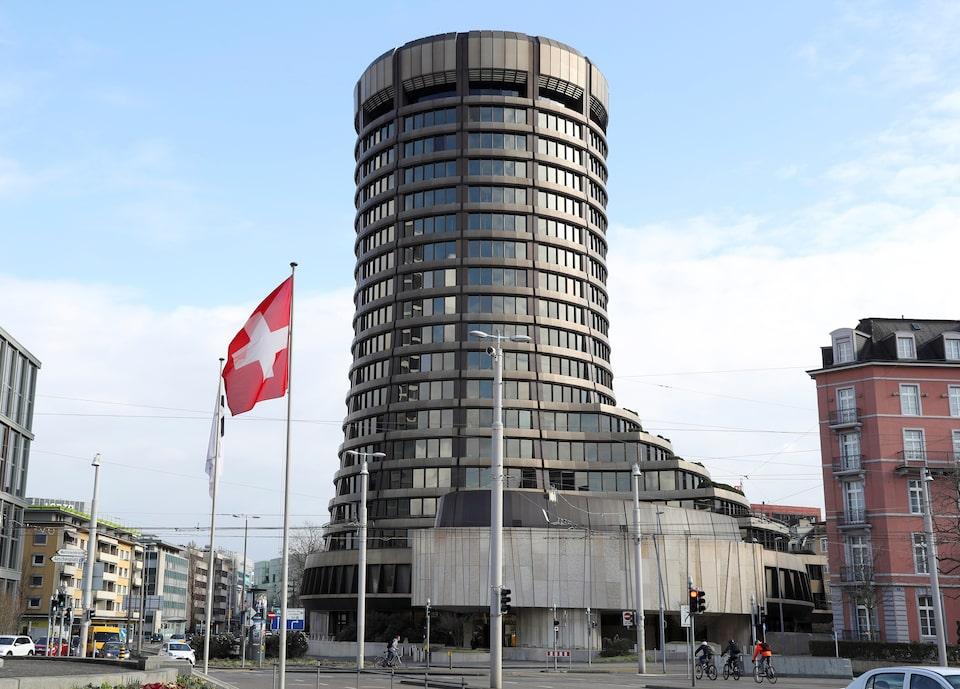
BIS warns stablecoin carry multitude of system-wide risks Risks include monetary sovereignty, EM capital flight Central banks need to boldly pursue tokenisation LONDON, June 24 (Reuters) - The Bank for International Settlements issued its starkest warning yet on the risks posed by stablecoins and urged countries to move rapidly towards the tokenisation of their currencies. The BIS, often dubbed the central bankers’ central bank, outlined its concerns, including stablecoins' potential to undermine monetary sovereignty, transparency issues and the risk of capital flight from emerging economies. Sign up here. It comes less than a week after the U.S. Senate passed a bill to create a regulatory framework for U.S.-dollar-pegged stablecoins, a move which, if rubberstamped by the House, is expected to fuel a further explosion in their popularity. Stablecoins are a type of cryptocurrency designed to maintain a constant value, usually a 1:1 dollar peg, backed by real-world assets such as U.S. Treasuries or gold. Dollar-pegged coins currently account for 99% of the market, which is estimated to have over $260 billion worth of coins in circulation. "Stablecoins as a form of sound money fall short, and without regulation pose a risk to financial stability and monetary sovereignty," BIS said in a early-released chapter of its annual report due to be published on Sunday. Hyun Song Shin, the BIS' Economic Adviser, explained that stablecoins lack the traditional settlement function provided by a central bank with fiat money. He likened them to private banknotes circulating in the 19th-century Free Banking era in the United States. It means they can often trade at varying exchange rates depending on the issuer, undermining the no-questions-asked principle of central bank-issued money. "Singleness is either you have it or you don't," Shin said, also warning of the risk of "fire sales" of the assets backing stablecoins if they collapse, as TerraUSD (UST) and the cryptocurrency LUNA did in 2022. There is also the concern around who controls stablecoins. Tether currently has more than half of the overall stablecoin market, but quit the EU following the introduction of new rules which require stablecoin operators to be licensed by the bloc. "The whole question of disclosure, this is where some of the stablecoins differ," BIS Deputy General Manager Andrea Maechler said. "You will always have the question about the quality of the asset backing. Is the money really there? Where is it?" BOLD ACTIONS The BIS wants central banks to go down the route of tokenised "unified ledger" incorporating central bank reserves, commercial bank deposits and government bonds. It would mean central bank money remains both the primary means of global payment and that currencies and bonds from around the world could effectively be integrated into the same "programmable platform". Tokenisation is aimed at creating a digitalised central bank system that settles payments and securities trades almost instantaneously and more cheaply by cutting the need for certain time consuming checks, as well opening up new functionality. It can also make the system more transparent, resilient and interoperable and may protect the system from some of the more unpredictable elements of cryptocurrencies. There would be a number of key issues to overcome, including who gets to set the rules governing the platform and that individual countries are likely to want to retain significant control of how and who uses their currencies. "Realising the full potential of the system requires bold action," the outgoing head of the BIS, Agustin Carstens, said. https://www.reuters.com/business/finance/central-bank-body-bis-delivers-stark-stablecoin-warning-2025-06-24/
2025-06-24 11:10
LUANDA, June 24 (Reuters) - Zambia hopes to start work on the Lobito Corridor railway connecting its copper belt to Angola's Atlantic coast by the third quarter of 2026, Transport Minister Frank Tayali said, as the project moves forward amid financing negotiations. The corridor, which will link Zambia's Chingola region to Angola's Benguela railway line at Luacano, is expected to span over 530 km and serve as a key export route for copper and agricultural goods. Sign up here. Speaking to Reuters on the sidelines of the U.S.-Africa summit being held in Luanda, Tayali expressed optimism about the multinational project, noting interest from the United States, the European Union, and regional stakeholders. "We have a developer in the Africa Finance Corporation working through the financial issues, and things are looking very good," Tayali told Reuters. "This is something monumental, and we have a lot of confidence in its potential to address global food insecurity and unlock Africa's arid land for agriculture." Angola's Minister of State for Economic Coordination José Massano said the government remains committed to facilitating investments like the Lobito Corridor through private sector negotiations but ruled out direct government funding for the project. Talks have focused on concession contract clauses, including potential guarantees sought by financiers. "We may have one or two clauses adjusted to facilitate the relationship between operators and financiers," Massano said. "These processes take time, but the firm commitment is there to make it happen." Massano also confirmed that Angola is advancing on a planned $500 million World Bank funding, with requirements expected to be fulfilled by the end of the year. On the fiscal front, Massano addressed Angola's budgetary outlook amid volatile oil prices. Speaking at the summit on Monday, he noted that oil prices above $70 per barrel — aligned with Angola's 2025 budget forecast — had offered temporary relief for implementing economic and social programmes. However, oil prices fell sharply on Tuesday casting uncertainty over Angola's fiscal projections. Oil prices extended losses to hit a two-week low on Tuesday after Israel agreed to U.S. President Donald Trump's proposal for a ceasefire with Iran, alleviating worries over supply disruptions in the Middle East. Brent crude futures were down $2.48, or 3.5%, at $69 a barrel by 0927 GMT. U.S. West Texas Intermediate crude fell $2.37, also 3.5%, to $66.14. Asked whether the country had ruled out an IMF programme, Massano said Angola remains open to dialogue with multilateral organizations, including the International Monetary Fund, to consolidate public finances if necessary. https://www.reuters.com/world/africa/angola-zambia-push-lobito-corridor-rail-project-financing-talks-advance-2025-06-24/

2025-06-24 10:45
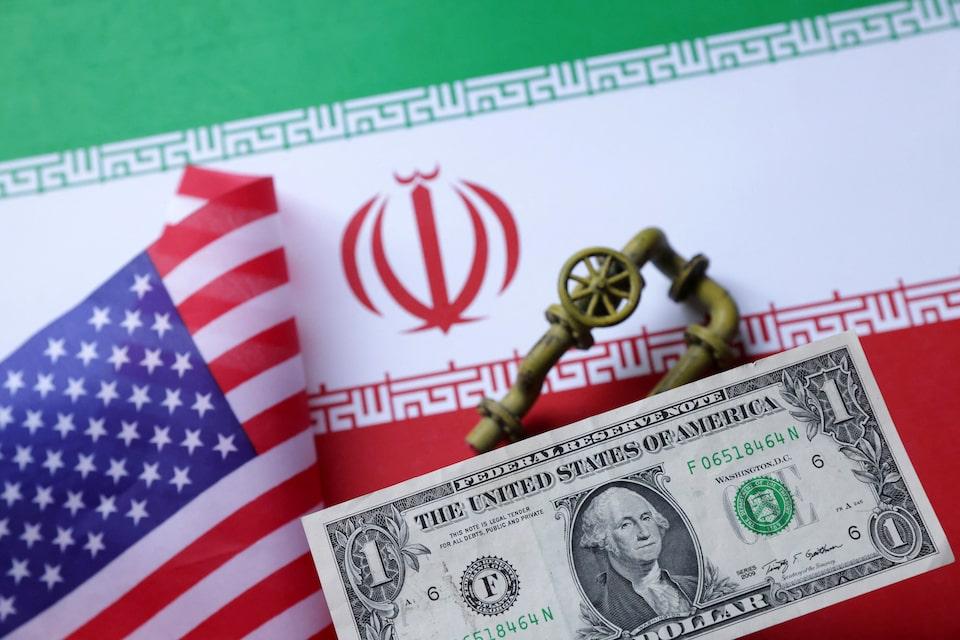
MUMBAI, June 24 (Reuters) - The Indian rupee had its best day in a month on Tuesday as oil prices slumped, the dollar weakened and Asian currencies rallied after a ceasefire between Israel and Iran went into effect, reviving risk sentiment. The rupee closed at 85.9750 against the U.S. dollar, up 0.9% on the day, its biggest single-day rise since May 23. Sign up here. Oil prices dropped after the ceasefire was announced by U.S. President Donald Trump overnight, bringing relief to currencies of oil-importing countries like India. Brent crude futures were at $69 per barrel, down more than 15% from a five-month high hit a day earlier. Broad-based interbank dollar sales and cutting of bearish bets on the rupee boosted the local currency, traders said. India's benchmark equity indexes, the BSE Sensex (.BSESN) , opens new tab and Nifty 50 (.NSEI) , opens new tab, ended higher, but pared gains after Israel said that Iran had violated the ceasefire. Iran denied reports of violations but the developments raised doubts over whether the ceasefire, which came after 12 days of war, would last. "Markets are materially scaling back geopolitical risk," ING said in a Tuesday note. The dollar is under pressure as oil prices fall and the downside risks are elevated ahead of remarks from Federal Reserve Chair Jerome Powell, it said. Powell is slated to speak in front of U.S. lawmakers on Tuesday and Wednesday. The dollar index was down 0.2% at 98. Fed vice-chair Michelle Bowman said on Monday that the first interest rate cut this year could come as soon as July, helping boost odds of a rate cut to 22.7% from 16.3% last week, as per CME's FedWatch tool. Asian currencies were up between 0.1% and 1.7% on the day and global stocks rallied with U.S. equity futures indicating that stocks would open in the green. https://www.reuters.com/world/india/rupee-jumps-most-month-iran-israel-ceasefire-sparks-relief-rally-2025-06-24/
2025-06-24 10:14
LONDON, June 24 (Reuters) - What matters in U.S. and global markets today By Mike Dolan , opens new tab, Editor-At-Large, Financial Industry and Financial Markets Sign up here. After a tentative ceasefire was announced in the Middle East, U.S. crude, gold, Treasury yields and the dollar gave up all gains registered since Israel's initial attack on Iran on June 13. Throughout this episode, energy market worries never amounted to a true 'shock' as movements of oil were largely unaffected. And given the large global supply overhang and slowing world demand, annual U.S. oil price gains never turned positive at any point over the past 12 days, failing even to set a new high for 2025. I'll discuss all of today's market news below and then move away from the headlines to explain how plunging immigration and the graying of America may be impacting the Federal Reserve's view of the U.S. labor market. Today's Market Minute * Oil tumbled 4%, global shares surged and the dollar dropped on Tuesday as U.S. President Donald Trump said a ceasefire between Israel and Iran was in place. * However, Israeli Defence Minister Israel Katz said on Tuesday he had ordered the military to strike Tehran after Iran fired missiles in violation of the ceasefire. * Crude oil's sharp reversal of the Israel-Iran war premium shows the power of a few words from a key player to move the market, but ROI columnist Clyde Russell suggests the bigger issue here may be who played silent: Iran's allies. * Investors globally appear to be gradually reducing their exposure to dollar-denominated assets, driving the greenback down to its lowest level in years. ROI markets columnist Jamie McGeever explores where most of this selling is coming from. * Rapid growth in the installation of batteries is upending power systems across the United States. ROI columnist Gavin Maguire outlines the key battery system trends to track. Oil, rates and the dollar tumble Iran's token response to U.S. bombing of its nuclear facilities over the weekend was a well-telegraphed missile launch on U.S. bases in Qatar. That was quickly followed by U.S. President Donald Trump's acknowledgement of Tehran's intent to de-escalate and a call for a ceasefire that Israel said it would abide by. Whether that ceasefire will hold remains uncertain, with some exchanges between Iran and Israel reported this morning and the situation still tense. But as it stands before Tuesday's U.S. open, crude is just $66 per barrel - $12 below Monday's peak - and just slightly up from a two-week low of $64.38 earlier in the session. In fact, Oil is now down almost 18% year-over-year. The S&P 500 rose 1% on Monday, and futures are up another 1% before Tuesday's bell. The VIX volatility gauge (.VIX) , opens new tab is back to where it was on June 12, just above 18, with the gold price falling as well. The dollar skidded (.DXY) , opens new tab lower too, with the euro back within a whisker of 3-1/2-year highs and the yen recovering all of Monday losses. European and Asia shares surged more than 1% too. Wall Street now switches attention back home to the Federal Reserve, with Fed Chair Jerome Powell starting his two-day, semi-annual congressional testimony today just as some of his colleagues have stated turning remarkably dovish on the interest rate outlook. Trump clearly thinks the Fed should move immediately to slash rates by "two to three points". The president has been lambasting Powell on an almost daily basis for not doing so. But Trump's appointees to the Fed board, Michelle Bowman and Christopher Waller, are now both advocates of easing sooner rather than later, opening up a big split between hawks and doves at the central bank. As many as seven policymakers last week indicated that they expected no rate cuts at all in 2025. But Bowman, who recently was one of the most hawkish members of the Fed's policy making council, electrified the rates market on Monday by saying it's time to consider easing as soon as next month. "Should inflation pressures remain contained, I would support lowering the policy rate as soon as our next meeting in order to bring it closer to its neutral setting and to sustain a healthy labor market," said Bowman, now Fed Vice Chair for Supervision. A parade of Fed speakers on Tuesday's slate could pour cold water on that view, but many market players think there is some jockeying for position going on at the central bank, with Trump expected to soon announce his pick to replace Powell when the Fed Chair's term expires next year. Even though Fed futures markets are still only pricing in a roughly 20% chance of a July cut, full year easing bets rose almost 10 basis points to near 60 bp after the Bowman comments and oil price retreat. Treasury yields responded quickly to the rate signals and energy relief, even with another heavy week of debt sales kicking off on Tuesday with $69 billion of 2-year notes up for grabs. Benchmark 10-year yields plunged below 4.3% for the first time in six weeks on Monday, though they've nudged back above that level again before today's bell. Elsewhere on Monday, Tesla shares (TSLA.O) , opens new tab jumped over 9%after the electric-vehicle maker started testing its long-awaited robotaxi service, which CEO Elon Musk has touted as a driver of Tesla's lofty valuation. US migrant halt may wipe potential job growth If you're wondering why so many U.S. Federal Reserve officials are remaining hawkish despite slowing growth, consider how the dramatic drop in immigration and the graying of America are impacting the unfolding labor market picture. Often overlooked by markets focused on the latest news about tariffs, geopolitics and energy markets, curtailing illegal immigration, a signature policy of President Donald Trump, is now starting to move the needle on the U.S. jobs outlook. The flow of migrant workers into the U.S. has effectively halted over the past year. The pace was already slowing sharply before the election but has ground to a near halt along with the rise in deportations this year. Couple that with the steadily aging population of existing workers, and it looks like a labor crunch could be on the horizon. Economists at Barclays tracking these trends reckon that 'potential' non-farm private payrolls growth - or the level of extra jobs that can be created without leading to worker shortages - could fall to less than 10,000 per month by the end of next year from more than 100,000 today. They estimate that potential job growth will fall to about 60,000 within the next six months, slowing potential economic growth to only 1.4-1.6% year-on-year through next year from just over 2% now. These numbers are pretty stark when considering that average monthly private payrolls growth has been around 172,000 over the past two years. Meanwhile, Barclays says it expects the effects of population ageing to "intensify very soon", putting even more downward pressure on jobs growth. The combined impact of the two forces is "about to create significant and persistent headwinds to potential growth in the labor force and economic activity," it said. The ingredients used to make the forecast are sobering. FLATLINING PAYROLL POTENTIAL U.S. immigration surged over the past three years, adding a net 3-4 million to the U.S. population. The roughly 2 million new workers are four times the annual rate of the immediate pre-pandemic years. These were mostly asylum-seeking or 'humanitarian' cases given temporary authorization to live and work in the U.S. In fact, over the past two years, Barclays estimated that about three quarters of average monthly private jobs gains of almost 180,000 were filled by migrant workers. But since last summer, net inflows of humanitarian migrants have fallen to nearly zero. And, on top of that, the Barclays tracker estimated current deportations to be running at about 10,000 a month. On the flipside, U.S. census projections expect the population to decline by about 50,000 in 2026 and 100,000 in 2027. The aging of the population should also cause the labor force to shrink by about 360,000 this year and next, accelerating thereafter. Tweaking the underlying assumptions leads to different outcomes, of course, but Barclays' central conclusion is that potential payroll growth should essentially flatline in the coming years, weighing on potential GDP growth. Morgan Stanley also revised down net immigration estimates to a near halt this year and next, although it expects higher payroll 'breakevens' of 70,000 in 2025 and 2026. FED HEADACHE For the Fed, an unfolding economic slowdown, compounded by a demand hit from trade war uncertainties, may be arguments for easing policy now. Trump clearly thinks it should move immediately to slash rates, and his appointees to the Fed board, Michelle Bowman and Christopher Waller, are both now advocates of easing sooner rather than later. But if worker shortages are the problem, then that creates a very different problem for the Fed. In that scenario, the Fed's full employment mandate would not be at risk, but wage pressures could aggravate still above-target price inflation. With tariff hikes already fogging up the inflation horizon, it's therefore not surprising that seven Fed policymakers anticipate keeping the central bank's main borrowing rate steady through the rest of this year at least. A hit to the labor force then could cause growth to slow, even as the employment rate stays low and inflation pressures simmer. Fed inertia may be warranted if that transpires. Chart of the day The oil market registered relatively few signs of alarm during a fortnight of intense aerial warfare between Israel and Iran that included this weekend's U.S. bombing of the latter's nuclear installations. In the context of the last 35 years of sharp oil price movements, this episode has been minor - so far at least. Today's events to watch * U.S. Q1 current account (8:30 EDT), April house prices (9:00 EDT), June consumer confidence (10:00 EDT), Richmond Federal Reserve June business surveys (10:00 EDT) * Fed Chair Jerome Powell delivers semi-annual monetary policy testimony before House Financial Services Committee (9:00 EDT) * New York Fed President John Williams, Cleveland Fed President Beth Hammack, Boston Fed President Susan Collins, Minneapolis Fed chief Neel Kashkari and Kansas City Fed boss Jeff Schmid all speak; European Central Bank President Christine Lagarde, ECB Vice President Luis de Guindos and ECB chief economist Philip Lane speak; Bank of England Governor Andrew Bailey, Deputy Governor Dave Ramsden and BoE policymaker Megan Greene speak * U.S. Treasury sells $69 billion 2-year notes * U.S. corporate earnings: FedEx, Carnival Opinions expressed are those of the author. They do not reflect the views of Reuters News, which, under the Trust Principles , opens new tab, is committed to integrity, independence, and freedom from bias. https://www.reuters.com/business/finance/global-markets-view-usa-pix-2025-06-24/