2025-06-24 06:17
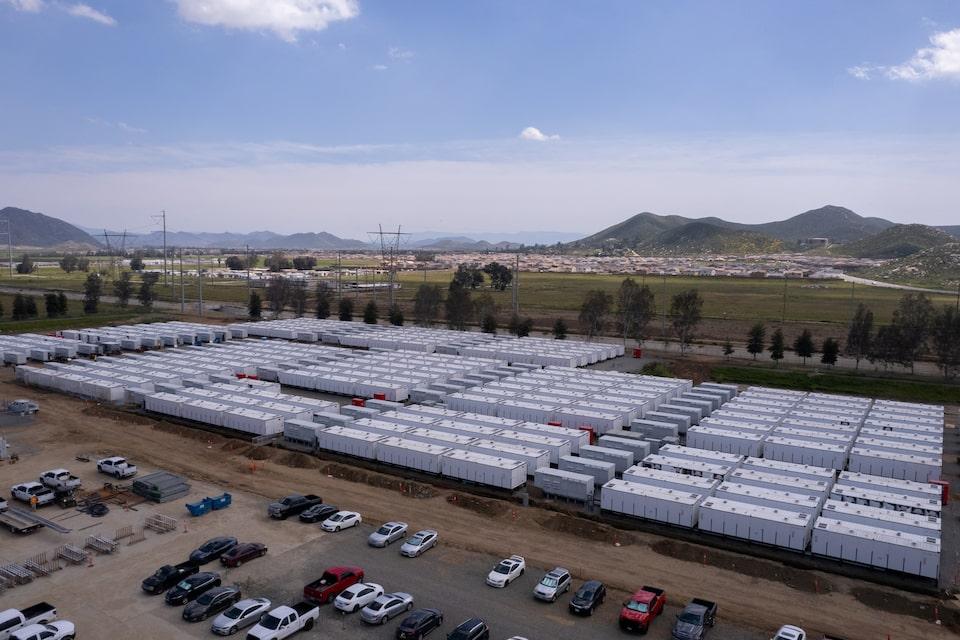
DENVER, June 24 (Reuters) - Rapid growth in the installation of batteries is upending power systems across the United States, with battery-deployed electricity volumes scaling new records nearly every month. Steady cost declines combined with rising energy density levels are driving utilities to ramp up battery installations, and battery storage output now often exceeds all other power sources for key periods in certain electricity markets. Sign up here. Batteries are also stabilizing electricity networks by helping to control frequency and voltage levels, and by preventing grid overloads by storing excess solar power output and then discharging that power during peak consumption periods. Below are key trends to help track the continuing growth of battery systems within U.S. utility networks. WIDENING REACH Until recently, battery systems played only a tiny role within U.S. electricity networks, as utilities focused more on building out capacity from natural gas plants, solar and wind farms and other generation sources. In 2020, there was 30 times more solar capacity and 74 times more wind farm capacity than battery capacity within the U.S. generation system, according to energy data portal Cleanview. However, dramatic drops in the cost of battery systems - by as much as 40% a year since 2022 according to industry consultants - have helped drive uptake across several U.S. markets with large solar farm installations. As of April 2025, there was only around 5 times more solar and wind capacity in the U.S. than battery capacity, and battery capacity keeps climbing. Utility networks mainly use batteries to store surplus power generated from solar farms during the middle of the day - when system demand and power prices are typically at their lowest - and then discharge them when demand and prices rise. This solar plus battery combination allows utilities to avoid the need to throttle back output from across their network during the peak solar window, and to capture higher overall power prices by preventing the mid-day price dip. As of April 2025, there was just under 30,000 megawatts (MW) of utility battery capacity across the U.S., according to Cleanview. That total was over 28,000 MW more than was in place in 2020, and compares to solar power's growth of 84,200 MW and wind power's growth of 37,000 MW over that same period. Since 2022, utilities have installed more battery capacity than wind capacity, and are set to continue prioritizing the build-out of battery systems. GROWING IMPACT As of April, there are 19 states with 100 MW or more of utility-scale battery storage. California is by far the top battery storage user, with around 13,000 MW in place, or about 42% of the national total. The California Independent System Operator (CAISO) is also the largest battery user among major U.S. electricity networks, and uses batteries to maximise the uptake and impact of its solar systems. The CAISO system has around 21,000 MW of solar capacity and about 12,400 MW of battery capacity, according to the California Energy Commission. That hefty battery capacity allows CAISO to use batteries as a key source of power during peak demand periods, particularly during the early evening when solar output drops off and household electricity demand picks up. Between 7 p.m. and 9 p.m. on June 19, batteries were CAISO's single largest source of electricity and accounted for roughly 26% of total electricity supplies during that period, according to electricity portal GridStatus.io. Natural gas was CAISO's next largest power source - accounting for around 23% of supplies, followed by wind and hydro. The Electric Reliability Council of Texas (ERCOT), the main electricity market for Texas, is a more recent adopter of battery systems, and in 2024 added more battery capacity than any other state. As of April, Texas had around 8,200 MW of installed battery capacity, which helped supply around 7% to 8% of ERCOT's total power during the evening of June 19, GridStatus.io data shows. Other states rapidly expanding battery footprints include Arizona, Nevada and New Mexico, which all also have growing volumes of utility-scale solar capacity which can be better harnessed when paired with battery systems. With battery prices widely expected to undergo further cost declines as vendors compete for business and new products are commercialized, more widespread uptake of battery systems is expected. A recent report by asset management firm Lazard pegged the so-called levelized cost of energy from utility-scale solar farms paired with batteries at between $50 and $131 per megawatt hour (MWh), depending on system scale. That compares to $47 to $170 per MWH for new natural gas peaking plants, around $24 to $39 per MWh for combined cycle gas plants, and up to $114 per MWh for new coal-fired plants. Given that the solar plus battery combination is often also far faster to deploy than constructing new power plants, the increasingly economical cost of batteries is expected to help them penetrate even less sunny areas going forward. That should ensure a steady widening in the deployment of battery systems across U.S. electricity networks in the years ahead. The opinions expressed here are those of the author, a columnist for Reuters. Enjoying this column? Check out Reuters Open Interest (ROI), your essential new source for global financial commentary. ROI delivers thought-provoking, data-driven analysis of everything from swap rates to soybeans. Markets are moving faster than ever. ROI can help you keep up. Follow ROI on LinkedIn , opens new tab and X , opens new tab. https://www.reuters.com/markets/commodities/us-power-sector-battery-storage-momentum-keeps-charging-2025-06-24/
2025-06-24 06:11
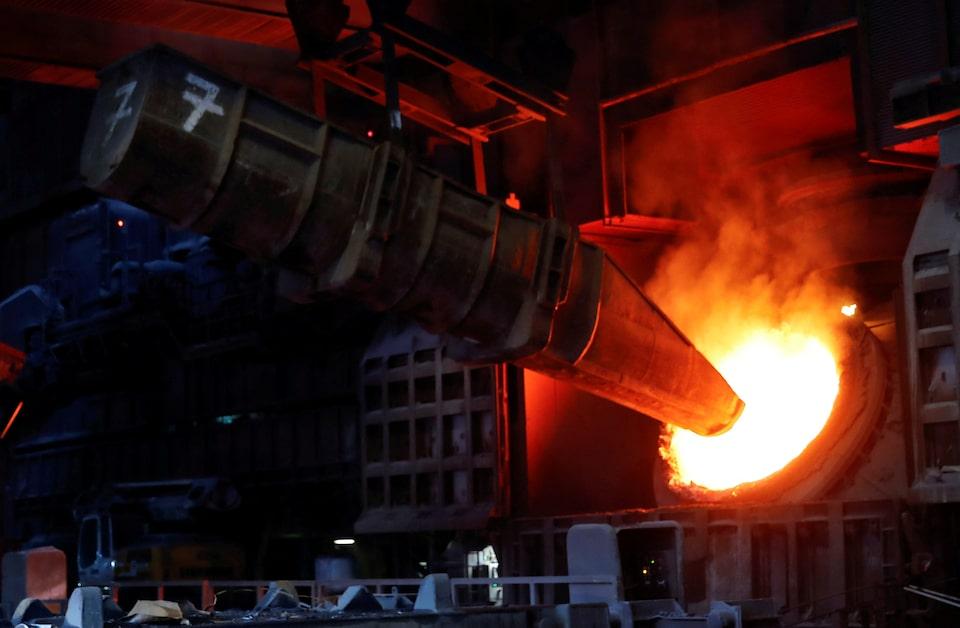
Scrap metal exempt from Trump's steel and aluminium tariffs Scrap a key to metal-makers' decarbonisation efforts EU aluminium scrap exports to U.S. tripled in Q1 EU recyclers oppose scrap export curbs BRUSSELS, June 24 (Reuters) - Metal producers in the European Union are lobbying the bloc to impose export duties or curbs on scrap metal shipments "in the next few weeks" to stem a sharp increase in flows to the United States caused by the Trump administration's trade policies. Europe's metal producers are warning of a shortage of scrap and an upending of carbon-emission strategies after U.S. Donald Trump's 50% levy on imported steel and aluminium heightened demand, and sharply inflated prices, for tariff-free scrap. Sign up here. The aluminium industry is asking the EU to stem outflows using export authorisation measures, hitherto only used during the COVID pandemic, when the European Commission demanded companies request permission to export protective gear and vaccine doses. Export tariffs would be another option. "Scrap is a big issue," said Eurofer director general Axel Eggert. "We are asking for an export duty on scrap," he said highlighting that most non-EU producer countries had restrictions in place. Scrap is integral to the EU's push to reduce carbon emissions in the metal industry. Recycling saves up to 95% of the energy required for aluminium production and 80% for steel, the European Commission has said. Scrap metal exports to the United States nearly tripled to 6,028 metric tonnes in the first three months of 2025 versus the same period a year earlier, albeit from a low base, turning a trickle into a flood, said industry lobby group European Aluminium, which includes Alcoa (AA.N) , opens new tab, Befesa (BFSA.DE) , opens new tab and AMAG Austria (AMAV.VI) , opens new tab. Total EU aluminium scrap exports were 345,000 metric tonnes in the first quarter this year, according to European Aluminium. With the United States now keeping its scrap, the EU will be left as the main exporting region, it said. Scrap exports were a growing problem for EU metal producers even before Trump imposed duties on imports of primary steel and aluminium in a bid to encourage U.S. domestic production, EU metal producers said. A record 19 million tonnes of ferrous scrap left the bloc in 2023, the majority to Turkey, but also to India, Egypt, Pakistan and the United States, said European steel association Eurofer, which includes Tata Steel (TISC.NS) , opens new tab, Thyssenkrupp (TKAG.DE) , opens new tab and ArcelorMittal (MT.LU) , opens new tab. Metal producers cannot wait for the bloc to strike a trade deal with Trump before taking action, European Aluminium's head Paul Voss said. European officials have said the EU may not be able to strike a full deal by Trump's July 9 deadline. Export authorisations had not been used this way before "but extraordinary times call for extraordinary action," Voss added, calling for measures "in the coming weeks". CARBON FOOTPRINT The EU sees itself as a champion of free trade and export curbs are rare. Beyond pandemic restrictions, EU export controls have been limited to shipments of arms, products that have military uses and for countries subject to sanctions. The European Commission said it was engaging regularly with metal producers and recyclers, assessing the market situation. It said it would determine in the third quarter whether a trade measure was necessary for steel, aluminium and copper. The tariffs have given U.S. metal producers incentive to maximise their domestic purchase of scrap metal and scour overseas markets. Industry players said a so-called "arbitrage window" - a short-lived price gap between two markets - had hit around $750 per tonne with the 50% tariff. "If that arbitrage window stays, we will see massive damage to companies that invested the most into the Green Deal," Rob van Gils, CEO of Austria's Hammerer Aluminium Industries, said, referring to the EU's green policy agenda to steer the bloc to carbon emission neutrality by 2050. Van Gils said companies which rely on buying scrap would struggle if local scrap costs neared or even exceeded the market price of final product, or end up buying primary metal from third countries like India with high carbon footprints. "The CO2 footprint of the aluminium industry will be down the toilet," van Gils continued. Europe's scrap sellers oppose export restrictions. Recycling industry group EuRIC said there was no shortage of scrap in Europe and that EU demand only absorbed some 80% of supply for steel. Eurofer's Eggert said export restrictions would help prevent rival producers overseas from buying EU scrap to then sell low-carbon recycled steel back to the bloc. "We are not asking for a ban, but we need to retain more scrap, or incentivise its use scrap in Europe for our decarbonisation," he said. (This story has been corrected to fix the industry group name to European Aluminium, not Europe Aluminium, in paragraphs 6, 7 and 10) https://www.reuters.com/sustainability/climate-energy/trump-tariffs-fan-calls-by-european-metal-producers-scrap-export-curbs-2025-06-24/
2025-06-24 06:04
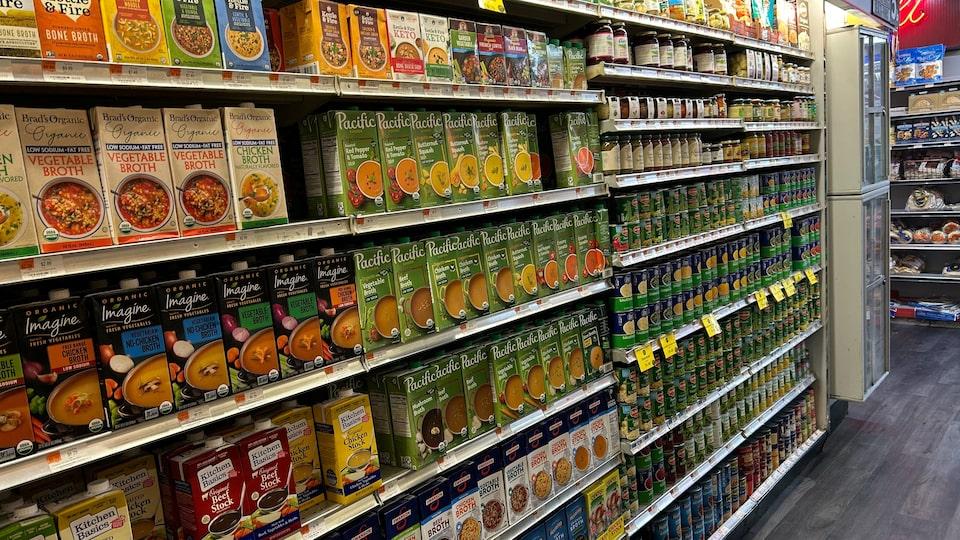
Tariffs increase costs for U.S. canned food producers Shift to alternative packaging faces cost and logistical hurdles Recycled aluminum cans mitigate tariff impact for beverage industry NEW YORK/LONDON, June 24 (Reuters) - Andy Russick, who sells canned fruit and tomatoes to top U.S. grocers like Kroger (KR.N) , opens new tab, hospitals and schools, shares the stated aim behind U.S. President Donald Trump's trade war - fighting cheap Chinese imports. Yet when U.S. tariffs on imported steel and aluminum doubled to 50% on June 4, his company, canned-food maker Pacific Coast Producers, became collateral damage in the crossfire of Trump's erratic trade policies. Sign up here. The problem is that since 2017, Chinese fruit cocktails, vegetables and similar canned-food imports from across Southeast Asia and Europe have been flooding the shelves of U.S. supermarkets, undercutting the price of comparable products from the United States. That trend is now set to accelerate as the cost of the specialty steel used to preserve food jumps by about 6% for Lodi, California-based Pacific Coast, due to the latest round of tariffs on the metal, Russick said. "We're getting caught up in that brush fire," said Russick, vice president of sales and marketing at Pacific Coast, a significant supplier of white label long-life products in the U.S. The new duties on steel and aluminum - metals used in the packaging of food, beverages and personal care products like shaving cream - are sparking a reckoning for companies, who are now facing higher costs, forcing them to look at alternatives like glass, plastic or fiber-based containers. The makers of alternative packaging, at the same time, see a new opportunity to gain more business. Russick expects in the next few years to shift some packaging to aseptic cartons, like those produced by Swedish-Swiss Tetra Pak and Swiss-listed SIG Group , or to sell more tomato sauce in cheaper foil pouches to restaurants to save on costs. Coca-Cola CEO James Quincey told investors in February, when tariffs on aluminum and steel were set to rise to 25%, that the soft-drinks maker could put more emphasis on plastic if cans became more expensive. "The trade war is fueling the conversation that we need to get rid of aluminum in beverage packages," said SIG Group CEO Samuel Sigrist, whose company offers aluminum-free aseptic cartons. Campbell Co (CPB.O) , opens new tab - whose soup cans became famous artworks - said in a statement that it was working to mitigate cost increases from tariffs and will continue to rely on steel cans for packaging. Glass bottle makers are also hoping to win market share from aluminum cans used for beers due to the tariffs, said Scott DeFife, head of the U.S. Glass Packaging Institute, which represents the manufacturers. "If these tariffs persist, tighter margins will eventually force a response," said Zak Stambor, an analyst with eMarketer. "In the longer term, companies may have to rethink their packaging strategies." Pacific Coast's Russick is currently looking to pass along $8 million to $10 million in new costs stemming from tariffs on the specialty steel used for cans to his customers, a figure the company projects to jump to $40 million next year. By next spring, the cost of cans delivered to Pacific Coast for the upcoming harvest may have a 24% tariff-induced cost increase, Russick said. HURDLES But those possible shifts from aluminum and steel to aseptic cartons or glass come with logistical and cost hurdles. Most glass bottles are still costlier than aluminum because they are heavier to ship. Aluminum cans also already have a stronghold in some U.S. beverages: about 64% of beer sold in 2023 was in aluminum cans, according to the Beer Institute. Such cans are also common in fast-growing beverage categories: energy drinks like Molson Coors'(TAP.N) , opens new tab Zoa, still-water brands including wildly popular Liquid Death; and pre-mixed cocktails. Much of the aluminum used to make those cans is recycled and not subject to tariffs, said Jack Buffington, director of supply chain and sustainability at First Key consulting, which advises the brewing and beverage industries. The average U.S. beverage can already contains about 71% recycled content, according to the Aluminum Association. The figure could climb higher if U.S. consumers practiced recycling more diligently. Anheuser-Busch InBev's (ABI.BR) , opens new tab chief financial officer, Fernando Tennenbaum, told Reuters in May, before aluminum tariffs doubled, that the financial impact of levies affecting cans was "not relevant" for the company. AB InBev, which sources the vast majority of its cans in the U.S., had no plans to make changes to its packaging, he said. The company declined to comment for this story. Companies like Coke that already use a variety of packaging may have an easier time responding to aluminum tariffs. By contrast, brewers that have been closing bottling lines to focus on cans would have to make hefty investments to retool their operations, Buffington said. Plastic already makes up nearly 50% of Coca-Cola's packaging globally, according to the company's 2023 environmental report, against 26% for aluminum and steel. Only 8% of rival PepsiCo's (PEP.O) , opens new tab products were packaged in aluminum, in 2023, the company said. Coca-Cola and PepsiCo did not respond to requests for comment. Top packaging technology company Krones (KRNG.DE) , opens new tab of Germany, whose products include glass bottling lines, said so far it has not seen any significant shift toward glass. A fast, widespread move to other forms of packaging is unlikely during heightened uncertainty, with companies hesitant to make significant financial or strategic decisions based on policies they think could change, the U.S. Glass Packaging Institute's DeFife said. "I think some people are really waiting to see what sticks, what doesn't stick," he said. "A 30-day thing is not a threat to your supply chain immediately." https://www.reuters.com/world/us/cans-cartons-how-trumps-metals-duties-affect-packages-shelves-2025-06-24/
2025-06-24 05:59
MUMBAI, June 24 (Reuters) - A sharp oil price retreat after the Iran-Israel ceasefire has eased a key threat to the consensus dollar-weakness view, brightening the Indian rupee’s outlook after two weeks of heightened geopolitical risk. Brent crude oil prices fell nearly 3% in Asia after U.S. President Donald Trump said Iran and Israel had agreed to a ceasefire, extending their 7% slump on Monday to trade at $69.3 per barrel at 11:20 a.m. IST. Sign up here. The retreat lifted Asian currencies and weighed on the dollar as markets reversed risk-off trades spurred by the 12-day war between the regional rivals. On the day, the rupee rose 0.6% to 86.22, boosted by broad-based interbank dollar sales, traders said. The dollar index, meanwhile, retreated 0.6% on Monday and was a tad lower in Asia trading at 98.1. The index is down over 9% on the year so far, battered by concerns about uncertain U.S. tariff policies and a rush to hedge against weakness that could potentially erode the value of overseas holdings of U.S. assets. WEAK DOLLAR VIEW Morgan Stanley said last week that USD weakness remains their base case, but a sustained rise in oil prices presents a key risk to the view. With oil prices now trading at nearly the same level they were at before the Iran-Israel conflict started, that risk appears to be fading. "We maintain a negative bias on the USD, albeit with a much slower pace of decline than seen earlier this year, with little changing in the way of U.S. policy uncertainty or data momentum to affect a shift in our view of a weaker USD over time," ANZ said in a Tuesday note. Asian currencies were up between 0.1% and 1.4% on the day while regional equities also leapt higher. India's benchmark equity index, the Nifty 50 (.NSEI) , opens new tab, rose 1% while the country's 10-year benchmark bond traded in the green. https://www.reuters.com/world/india/oil-pullback-reinforces-consensus-dollar-weakness-view-emboldens-rupee-bulls-2025-06-24/
2025-06-24 05:49
Israel says Iran violates ceasefire, orders new strikes Focus on Fed Chair Powell's testimony due later in the day ANZ expects gold to peak later in 2025 June 24 (Reuters) - Gold dropped more than 1% to touch a two-week low on Tuesday, after U.S. President Donald Trump's announcement of a ceasefire between Israel and Iran diminished bullion's safe-haven appeal. Spot gold was down 1.4% at $3,322.09 an ounce, as of 1142 GMT, after hitting its lowest level since June 11 earlier in the session. Sign up here. U.S. gold futures slipped 1.7% to $3,336.00. "Gold prices are trending lower today, driven by a shift towards greater risk appetite, as optimism grows over a potential end to hostilities in the Middle East," said Ricardo Evangelista, senior analyst at the brokerage firm ActivTrades. "I don't believe that gold prices will fall below the $3,000 mark in the short term. I see a meaningful support level at $3,300." Global stock markets surged and oil prices tumbled on Tuesday after the ceasefire announcement, in the hope it heralded a resolution of the war. However, Israeli Defence Minister Israel Katz said on Tuesday he had ordered the military to strike Tehran in response to an alleged violation of the ceasefire. Meanwhile, markets are awaiting Federal Reserve Chair Jerome Powell's testimony before the House Financial Services Committee later today. So far, Powell has remained cautious about signaling any near-term rate cuts. Non-yielding bullion's appeal tends to shine in a lower interest rate environment. Investors are currently anticipating 57 basis points worth of Fed rate cuts by the end of this year. "Gold price is likely to consolidate before staging another rally toward $3,600/oz by year-end," ANZ said in a note. "Longer term, we expect gold to peak later in 2025, followed by a gradual decline in 2026 as economic growth prospects improve and global trade uncertainty diminishes." Elsewhere, spot silver eased 0.1% to $36.10 per ounce, platinum rose 1% to $1,307.93, while palladium slipped 0.4% to $1,072.24. https://www.reuters.com/world/india/gold-near-2-week-low-after-trump-announces-israel-iran-ceasefire-2025-06-24/
2025-06-24 05:36
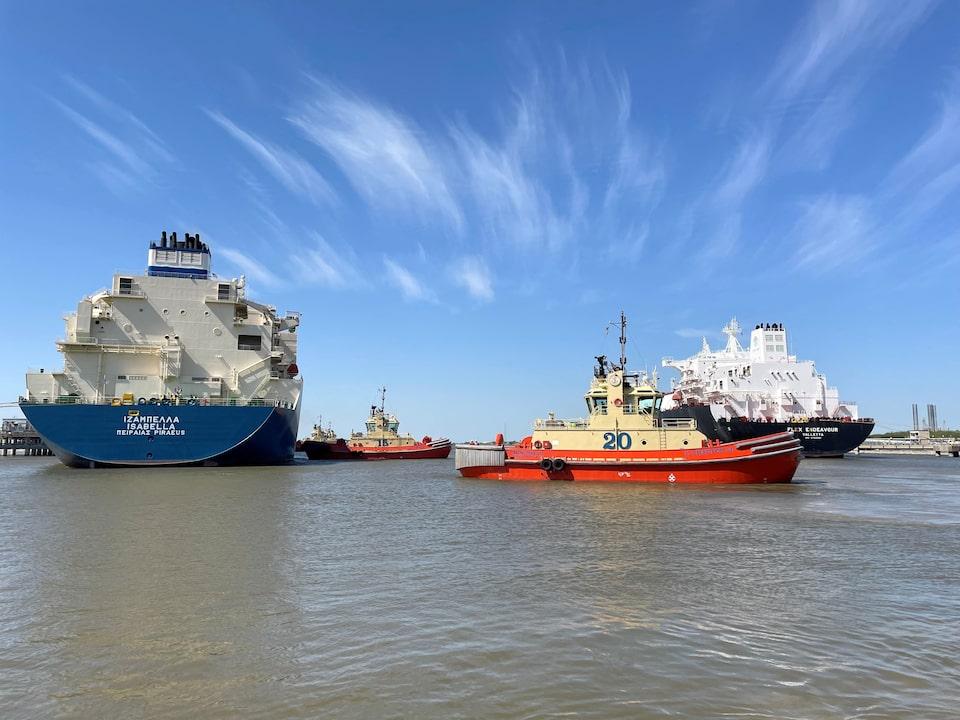
LNG Atlantic, Pacific freight rates hit highest since Oct 2024, Spark data shows Europe and Asia are now equally profitable for US cargo deliveries, analyst says Mideast tensions push shipping, insurance costs higher, trade sources say SINGAPORE/LONDON, June 24 (Reuters) - Shipping costs for liquefied natural gas cargoes have rallied to their highest in about eight months with vessel availability tightened by a shift in more ships heading to Asia at the same time as conflict has escalated in the Middle East. The Atlantic freight rate for vessels with two-stroke engines capable of carrying 174,000 cubic meters of LNG, the most common type in the market, was assessed at $51,750 per day on Monday, its highest level since October 3, according to pricing agency Spark Commodities. Sign up here. The Pacific freight rate for the same class of ship also surged, with Spark assessing it at $36,750/day on Monday, the highest level since October 25. "This rise in global LNG freight rates has been largely due to tight vessel availability, which in turn has been caused by a shift in pricing signals for U.S. cargoes," said Spark Commodities analyst Qasim Afghan. "This has been further exacerbated by market sentiment around the developing situation in the Middle East," he said. A recent tender by Egypt to buy up to 160 LNG cargoes through 2026 also drove up demand for vessels. In February, LNG shipping rates fell to five-year lows as the global fleet expanded and higher delivered prices in Europe incentivised U.S. cargoes to remain in the Atlantic versus travelling to Asia. The shorter average journey times increased tanker availability. In the past two weeks however, it has become equally profitable to deliver LNG to both Europe and Asia, so spot cargoes are now incentivised to travel to Asia via the Cape of Good Hope, increasing average voyage times and reducing vessels available for charter, Afghan said. MIDEAST TENSIONS The Israel-Iran conflict, in which both countries have been firing missiles at each other, has raised fears Tehran may close the Strait of Hormuz in further retaliation. As a result, shipowners are holding off chartering vessels, which is reducing tanker availability and pushing up prices, said a trade source, who declined to be identified as he was not authorised to speak to the media. Insurance costs for LNG tankers going through the Strait of Hormuz have also increased, said three trade sources, with one adding that the war risk premium has surged by up to five times since the start of the Israel-Iran conflict. Around 20% of global oil and gas demand flows through the Strait of Hormuz, situated between Iran and Oman. Qatar, one of the world's top LNG exporters, sends almost all of its supplies via the strait. https://www.reuters.com/business/energy/lng-freight-rates-hit-8-mth-top-tight-tanker-availability-mideast-conflict-2025-06-24/