2025-06-24 10:14
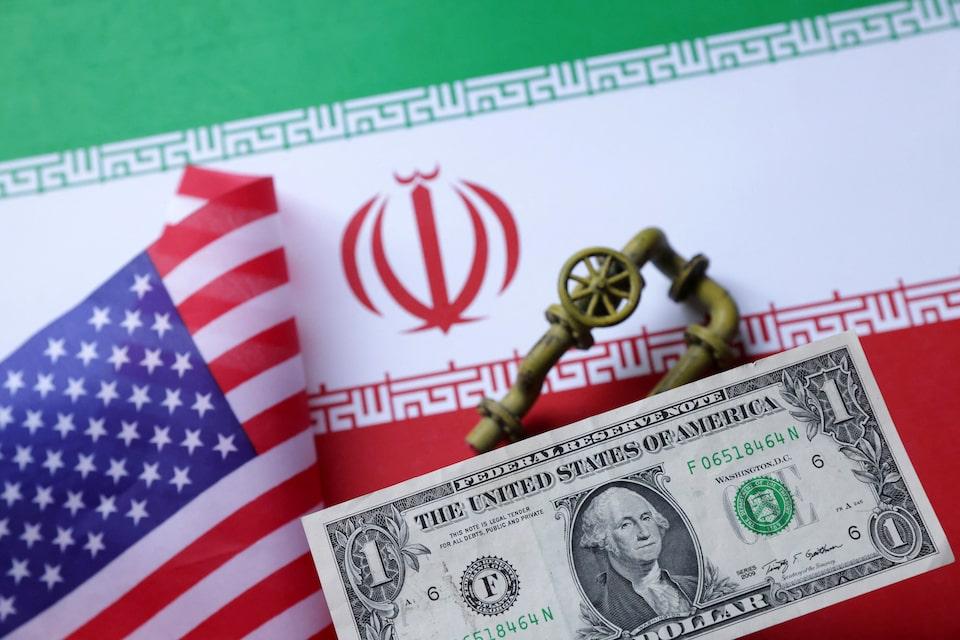
LONDON, June 24 (Reuters) - What matters in U.S. and global markets today By Mike Dolan , opens new tab, Editor-At-Large, Financial Industry and Financial Markets Sign up here. After a tentative ceasefire was announced in the Middle East, U.S. crude, gold, Treasury yields and the dollar gave up all gains registered since Israel's initial attack on Iran on June 13. Throughout this episode, energy market worries never amounted to a true 'shock' as movements of oil were largely unaffected. And given the large global supply overhang and slowing world demand, annual U.S. oil price gains never turned positive at any point over the past 12 days, failing even to set a new high for 2025. I'll discuss all of today's market news below and then move away from the headlines to explain how plunging immigration and the graying of America may be impacting the Federal Reserve's view of the U.S. labor market. Today's Market Minute * Oil tumbled 4%, global shares surged and the dollar dropped on Tuesday as U.S. President Donald Trump said a ceasefire between Israel and Iran was in place. * However, Israeli Defence Minister Israel Katz said on Tuesday he had ordered the military to strike Tehran after Iran fired missiles in violation of the ceasefire. * Crude oil's sharp reversal of the Israel-Iran war premium shows the power of a few words from a key player to move the market, but ROI columnist Clyde Russell suggests the bigger issue here may be who played silent: Iran's allies. * Investors globally appear to be gradually reducing their exposure to dollar-denominated assets, driving the greenback down to its lowest level in years. ROI markets columnist Jamie McGeever explores where most of this selling is coming from. * Rapid growth in the installation of batteries is upending power systems across the United States. ROI columnist Gavin Maguire outlines the key battery system trends to track. Oil, rates and the dollar tumble Iran's token response to U.S. bombing of its nuclear facilities over the weekend was a well-telegraphed missile launch on U.S. bases in Qatar. That was quickly followed by U.S. President Donald Trump's acknowledgement of Tehran's intent to de-escalate and a call for a ceasefire that Israel said it would abide by. Whether that ceasefire will hold remains uncertain, with some exchanges between Iran and Israel reported this morning and the situation still tense. But as it stands before Tuesday's U.S. open, crude is just $66 per barrel - $12 below Monday's peak - and just slightly up from a two-week low of $64.38 earlier in the session. In fact, Oil is now down almost 18% year-over-year. The S&P 500 rose 1% on Monday, and futures are up another 1% before Tuesday's bell. The VIX volatility gauge (.VIX) , opens new tab is back to where it was on June 12, just above 18, with the gold price falling as well. The dollar skidded (.DXY) , opens new tab lower too, with the euro back within a whisker of 3-1/2-year highs and the yen recovering all of Monday losses. European and Asia shares surged more than 1% too. Wall Street now switches attention back home to the Federal Reserve, with Fed Chair Jerome Powell starting his two-day, semi-annual congressional testimony today just as some of his colleagues have stated turning remarkably dovish on the interest rate outlook. Trump clearly thinks the Fed should move immediately to slash rates by "two to three points". The president has been lambasting Powell on an almost daily basis for not doing so. But Trump's appointees to the Fed board, Michelle Bowman and Christopher Waller, are now both advocates of easing sooner rather than later, opening up a big split between hawks and doves at the central bank. As many as seven policymakers last week indicated that they expected no rate cuts at all in 2025. But Bowman, who recently was one of the most hawkish members of the Fed's policy making council, electrified the rates market on Monday by saying it's time to consider easing as soon as next month. "Should inflation pressures remain contained, I would support lowering the policy rate as soon as our next meeting in order to bring it closer to its neutral setting and to sustain a healthy labor market," said Bowman, now Fed Vice Chair for Supervision. A parade of Fed speakers on Tuesday's slate could pour cold water on that view, but many market players think there is some jockeying for position going on at the central bank, with Trump expected to soon announce his pick to replace Powell when the Fed Chair's term expires next year. Even though Fed futures markets are still only pricing in a roughly 20% chance of a July cut, full year easing bets rose almost 10 basis points to near 60 bp after the Bowman comments and oil price retreat. Treasury yields responded quickly to the rate signals and energy relief, even with another heavy week of debt sales kicking off on Tuesday with $69 billion of 2-year notes up for grabs. Benchmark 10-year yields plunged below 4.3% for the first time in six weeks on Monday, though they've nudged back above that level again before today's bell. Elsewhere on Monday, Tesla shares (TSLA.O) , opens new tab jumped over 9%after the electric-vehicle maker started testing its long-awaited robotaxi service, which CEO Elon Musk has touted as a driver of Tesla's lofty valuation. US migrant halt may wipe potential job growth If you're wondering why so many U.S. Federal Reserve officials are remaining hawkish despite slowing growth, consider how the dramatic drop in immigration and the graying of America are impacting the unfolding labor market picture. Often overlooked by markets focused on the latest news about tariffs, geopolitics and energy markets, curtailing illegal immigration, a signature policy of President Donald Trump, is now starting to move the needle on the U.S. jobs outlook. The flow of migrant workers into the U.S. has effectively halted over the past year. The pace was already slowing sharply before the election but has ground to a near halt along with the rise in deportations this year. Couple that with the steadily aging population of existing workers, and it looks like a labor crunch could be on the horizon. Economists at Barclays tracking these trends reckon that 'potential' non-farm private payrolls growth - or the level of extra jobs that can be created without leading to worker shortages - could fall to less than 10,000 per month by the end of next year from more than 100,000 today. They estimate that potential job growth will fall to about 60,000 within the next six months, slowing potential economic growth to only 1.4-1.6% year-on-year through next year from just over 2% now. These numbers are pretty stark when considering that average monthly private payrolls growth has been around 172,000 over the past two years. Meanwhile, Barclays says it expects the effects of population ageing to "intensify very soon", putting even more downward pressure on jobs growth. The combined impact of the two forces is "about to create significant and persistent headwinds to potential growth in the labor force and economic activity," it said. The ingredients used to make the forecast are sobering. FLATLINING PAYROLL POTENTIAL U.S. immigration surged over the past three years, adding a net 3-4 million to the U.S. population. The roughly 2 million new workers are four times the annual rate of the immediate pre-pandemic years. These were mostly asylum-seeking or 'humanitarian' cases given temporary authorization to live and work in the U.S. In fact, over the past two years, Barclays estimated that about three quarters of average monthly private jobs gains of almost 180,000 were filled by migrant workers. But since last summer, net inflows of humanitarian migrants have fallen to nearly zero. And, on top of that, the Barclays tracker estimated current deportations to be running at about 10,000 a month. On the flipside, U.S. census projections expect the population to decline by about 50,000 in 2026 and 100,000 in 2027. The aging of the population should also cause the labor force to shrink by about 360,000 this year and next, accelerating thereafter. Tweaking the underlying assumptions leads to different outcomes, of course, but Barclays' central conclusion is that potential payroll growth should essentially flatline in the coming years, weighing on potential GDP growth. Morgan Stanley also revised down net immigration estimates to a near halt this year and next, although it expects higher payroll 'breakevens' of 70,000 in 2025 and 2026. FED HEADACHE For the Fed, an unfolding economic slowdown, compounded by a demand hit from trade war uncertainties, may be arguments for easing policy now. Trump clearly thinks it should move immediately to slash rates, and his appointees to the Fed board, Michelle Bowman and Christopher Waller, are both now advocates of easing sooner rather than later. But if worker shortages are the problem, then that creates a very different problem for the Fed. In that scenario, the Fed's full employment mandate would not be at risk, but wage pressures could aggravate still above-target price inflation. With tariff hikes already fogging up the inflation horizon, it's therefore not surprising that seven Fed policymakers anticipate keeping the central bank's main borrowing rate steady through the rest of this year at least. A hit to the labor force then could cause growth to slow, even as the employment rate stays low and inflation pressures simmer. Fed inertia may be warranted if that transpires. Chart of the day The oil market registered relatively few signs of alarm during a fortnight of intense aerial warfare between Israel and Iran that included this weekend's U.S. bombing of the latter's nuclear installations. In the context of the last 35 years of sharp oil price movements, this episode has been minor - so far at least. Today's events to watch * U.S. Q1 current account (8:30 EDT), April house prices (9:00 EDT), June consumer confidence (10:00 EDT), Richmond Federal Reserve June business surveys (10:00 EDT) * Fed Chair Jerome Powell delivers semi-annual monetary policy testimony before House Financial Services Committee (9:00 EDT) * New York Fed President John Williams, Cleveland Fed President Beth Hammack, Boston Fed President Susan Collins, Minneapolis Fed chief Neel Kashkari and Kansas City Fed boss Jeff Schmid all speak; European Central Bank President Christine Lagarde, ECB Vice President Luis de Guindos and ECB chief economist Philip Lane speak; Bank of England Governor Andrew Bailey, Deputy Governor Dave Ramsden and BoE policymaker Megan Greene speak * U.S. Treasury sells $69 billion 2-year notes * U.S. corporate earnings: FedEx, Carnival Opinions expressed are those of the author. They do not reflect the views of Reuters News, which, under the Trust Principles , opens new tab, is committed to integrity, independence, and freedom from bias. https://www.reuters.com/business/finance/global-markets-view-usa-pix-2025-06-24/
2025-06-24 09:51
Gazprom's gas exports to Europe have collapsed Data centres, coal production could use gas for power ST PETERSBURG, Russia, June 24 (Reuters) - Russia, which holds the world's largest natural gas reserves, is exploring ways to manage a surplus of gas, including using it for data centres, as exports to Europe continue to plummet, government officials and company managers have said. State-owned Gazprom (GAZP.MM) , opens new tab saw gas exports to Europe peak at between 175 billion cubic metres (bcm) and 180 bcm in 2018-2019, only to fall to just 32 bcm in 2024, according to Reuters calculations, due to the conflict in Ukraine. Sign up here. That level is set to halve again this year following the stoppage of Russian gas transit via Ukraine. Russia's northern regions are having to contend with a glut of natural gas, Alexei Chekunkov, minister for the development of the Far East and the Arctic, said at the St. Petersburg International Economic Forum. "Previously, half a billion cubic meters per day went through the gas pipelines to the West, but now it does not, and the question of what to do with this gas is very urgent," said Chekunkov. Chekunkov added that large investors were increasingly focusing on the gas chemical sector, and surplus gas could also be used to generate power for data centres deploying artificial intelligence technologies, as demand for energy to power such facilities has surged globally. Gazprom produced 416.19 bcm of gas last year after an all-time low of 355.23 bcm the previous year. At the same time, it could only sell both domestically and internationally 361.7 bcm in 2024. The company also uses gas for its own needs, including for power generation at its gas fields and pipelines. Russia's largest data centre operator, BitRiver, has said that up to 10 bcm of associated petroleum gas could be consumed annually for large-scale cryptocurrency mining, the Interfax news agency reported. Pavel Sorokin, Russia's deputy energy minister, told the forum that natural gas production is too expensive for the data centres usage. He believes that the gas could be used for coal production, which faces a number of challenges, including international sanctions over the Ukraine conflict. "We are in a pretty tough situation with coal now. Why should we use expensive gas to create additional data capacity when we can build power plants at a (coal) mine," he said. ($1 = 78.7500 roubles) https://www.reuters.com/sustainability/boards-policy-regulation/russia-faces-gas-surplus-european-exports-collapse-eyes-data-centres-2025-06-24/

2025-06-24 09:23
June 24 (Reuters) - Sterling climbed against the euro and the dollar on Tuesday, lifted by a rally in risk assets after U.S. President Donald Trump announced a ceasefire between Israel and Iran. Israeli Defence Minister Israel Katz said on Tuesday he had ordered the military to strike Tehran in response to what he said were missiles fired by Iran in a violation of the truce deal. Iran denied violating it, saying there had been no launch of missiles towards Israel in recent hours. Sign up here. During times of global uncertainty, investors often retreat from sterling - viewed as a risk-sensitive currency - in favour of traditional safe havens such as the Swiss franc, Japanese yen and, more recently, the euro. The single European currency fell 0.40% to 85.23 pence. It hit 85.74 pence on Monday, its highest level since April 23. The safe-haven status of the dollar has been under scrutiny on concerns over U.S. fiscal policy, and potential shifts in global reserve currency preferences. The pound was up 0.55% versus the greenback at $1.3601 . It hit $1.36325 last week, its highest level since February 2022. Recent soft economic data and a more dovish tone from the Bank of England have also pressured the British currency. Analysts said the BoE's vote last week to keep rates steady - with three dissenters in favour of cutting them immediately - suggests that the Monetary Policy Committee is becoming increasingly concerned with the growth outlook and the performance of Britain's labour market. British business activity expanded modestly but employers cut jobs more quickly, according to a survey released on Monday. "Rate setters view the current policy stance as restrictive and are ready to ease as inflation pressures fade, but we must be prepared for this to take time," said Dean Turner, chief euro zone and UK economist at UBS Global Wealth Management's Chief Investment Office. "We expect the BoE to stick with its quarterly cadence of cuts and deliver 25 bps reductions at its August and November meetings, taking the base rate to 3.75% by year-end." https://www.reuters.com/world/uk/sterling-rises-risk-assets-rally-israel-iran-ceasefire-2025-06-24/
2025-06-24 08:27
Gold seen as biggest winner from dollar diversification Euro seen top currency to benefit in short term - OMFIF survey Yuan favoured by central bankers over a longer time frame Reuters' sources see euro recovering some lost ground quickly Euro share of reserves likely to rise in next few years - Rogoff LONDON, June 24 (Reuters) - The custodians of trillions of dollars of global central bank reserves are eyeing a move away from the greenback into gold, the euro and China's yuan as the splintering of world trade and geopolitical upheaval spark a rethink of financial flows. According to a report , opens new tab by the Official Monetary and Financial Institutions Forum (OMFIF) due to be published later on Tuesday, one in three central banks managing a combined $5 trillion plan to increase exposure to gold over the next one-to-two years after stripping out those planning to decrease, the highest in at least five years. Sign up here. The survey of 75 central banks -- carried out between March and May -- gives a first snapshot of the repercussions of U.S. President Donald Trump's April 2 Liberation Day tariffs that sparked market turmoil and a slide in the safe-haven dollar and U.S. Treasuries. Gold, which central banks have already been adding at a record pace, was seen benefiting even further longer term, with a net 40% of central banks planning to increase gold holdings over the next decade. "After years of record-high central bank gold purchases, reserve managers are doubling down on the precious metal," OMFIF said. The dollar, the most popular currency in last year's survey, fell to seventh place this year, OMFIF said, with 70% of those surveyed saying the U.S. political environment was discouraging them from investing in the dollar -- more than twice the share a year ago. In currencies, the euro and yuan stand to benefit the most from a diversification away from the dollar. A net 16% of central banks surveyed by OMFIF said they plan to increase euro holdings over the next 12 to 24 months, making it the most in-demand currency, up from 7% a year ago, followed by the yuan. But over the next decade, the yuan is more favoured, with a net 30% of central banks expecting to increase holdings and its share of global reserves seen tripling to 6%. Separately, three sources who deal directly with reserve managers, told Reuters they saw the euro as now having the potential to recapture the share of currency reserves lost following the 2011 euro debt crisis by the end of this decade. They cited more positive sentiment among reserve managers towards the euro following Liberation Day. That would mean a recovery to a roughly 25% share of currency reserves, from around 20% currently, representing a key moment in the bloc's recovery from the debt crisis that threatened the euro's existence. Max Castelli, head of global sovereign markets strategy and advice at UBS Asset Management, told Reuters that reserve managers made many calls after Liberation Day to ask if the dollar's safe-haven status was at risk. "As far as I remember, this question has never been asked before, not even after the great financial crisis in 2008." The average expectation for the dollar's share of global FX reserves in 2035 was 52%, the OMFIF survey showed, remaining the No.1 reserve currency but seen down from the current 58%. EURO'S MOMENT? OMFIF survey respondents expected the euro to reach about a 22% share of global reserves in 10 years' time. "The euro's share of global reserves will almost surely rise over the next few years, not so much because Europe is viewed so much more favorably, but because the dollar’s status is diminished," said Kenneth Rogoff, Harvard professor and former IMF chief economist, told Reuters by e-mail ahead of OMFIF's publication. But Europe could attract a higher share of reserves sooner if the bloc is able to boost its pile of bonds that are currently dwarfed by the $29 trillion U.S. Treasury market, while integrating its capital markets, the sources that speak directly to reserve managers, told Reuters. ECB President Christine Lagarde has also urged action to bolster the euro as a viable dollar alternative. The euro is the "only real alternative currency for the moment to make a significant change in the level of reserves," said Bernard Altschuler, global head of central bank coverage at HSBC, adding he saw it as "realistic" for the euro to reach a 25% share of global reserves in 2-3 years if those issues are addressed. The European Union is the world’s largest trading bloc. Its economy is far bigger than the dollar's other rivals. Capital controls limit the appeal of the yuan. Momentum for change has gathered pace, with Europe signalling willingness to curb its dependence on the U.S. by boosting defence spending, including through more joint EU borrowing. Germany is ramping up spending, while the EU is trying to revive efforts to integrate its capital markets. Public pension and sovereign wealth funds, also surveyed by OMFIF, saw Germany as the most attractive developed market. UBS Asset Management's Castelli said he was receiving many more questions about the euro, estimating the euro could recover to a 25% share of reserves by the end of the 2020s. At the most bullish end, Francesco Papadia, who managed the ECB’s market operations during the debt crisis, estimated the euro could recover to 25% in as soon as two years. Reserve managers he holds discussions with were more willing to look at the euro than before, Papadia, senior fellow at think-tank Bruegel, said. Zhou Xiaochuan, China’s central bank chief from 2002 to 2018, agreed the euro’s role as a reserve currency could grow. However, there's "homework to do," he told Reuters on the sidelines of a recent conference. https://www.reuters.com/world/china/central-banks-eye-gold-euro-yuan-dollar-dominance-wanes-2025-06-24/
2025-06-24 07:24
BEIJING, June 24 (Reuters) - Vulnerable communities were told to seek refuge on higher ground as multiple rivers burst their banks after days of rain in China's flood-hit province of Guizhou, the southwestern end of a seasonal rain belt that stretches all the way to Japan. At least two riverside cities - Congjiang and Rongjiang - each with a population of over 300,000, on Tuesday told residents on the banks of fast-rising rivers and in low-lying areas to flee. Sign up here. The mountainous province of Guizhou and other parts of southern China have been battered by heavy rains since last week as the annual East Asia monsoon kicked into high gear, breaking rainfall records in parts of China. While China is no stranger to summer floods, some scientists warn that climate change is ushering in heavier and more frequent rain. Massive flooding could trigger unforeseen "black swan" events with extreme consequences such as dam collapses, government officials say. On a highway to Rongjiang on Tuesday, a viaduct collapsed after a landslide toppled concrete columns and sent one section of the road crashing down the hillside, local media reported. A cargo truck that had stopped in time as the section ahead of it fell away was perched perilously over the edge while its driver waited to be rescued, a video shared on social media showed. In other parts of Guizhou, many highway sections were blocked by landslides or were hit by cave-ins. In cities such as Rongjiang, flooded streets paralysed local traffic and low-lying areas including underground garages and shopping mall basements were under water. More rain is expected over the next few days, state meteorologists forecast, warning that provinces, including Guizhou, hit by overlapping storms should be especially on their guard. In contrast, provinces north of the seasonal rain belt such as Henan, Shandong and Hebei, as well as the capital Beijing, sweltered in temperatures just shy of 40 degrees Celsius (104 Fahrenheit) on Tuesday. In an annual report , opens new tab on Monday, the World Meteorological Organization under the United Nations cautioned that Asia was warming nearly twice as fast as the global average, fuelling more extreme weather and exacting a heavy toll on the region. https://www.reuters.com/sustainability/climate-energy/heavy-rain-leaves-southwest-china-under-water-more-storms-horizon-2025-06-24/

2025-06-24 07:18
Spanish wine exports to UK drop 7.5% due to UK alcohol tariffs Wines with over 12.5% alcohol impacted most by UK tariffs UK importers pay 20% more for Spanish wines MADRID, June 24 (Reuters) - Spanish wine makers are concerned that exports to Britain, their main market for still wine, have fallen in value this year due to higher tariffs linked to alcohol content, and at a faster pace than those of French and Italian rivals. A British regulation introduced in February requires that importers pay greater tariffs on wines with a higher alcohol content. That impacts Spanish wines, especially reds, which typically exceed 12.5% alcohol, which triggers a sharp hike in the levy. Sign up here. Spanish winemakers said Spanish wines tend to have a higher alcohol content than those produced in other European countries as warmer weather produces a grape with more sugar. During fermentation, this results in higher alcohol content in the resulting wine. Jose Luis Benitez, director of the Spanish Wine Federation, said Spanish red wines, popularly sold in the UK, were the "most penalised by the tax increase," adding that "the new tax system favours beers... and some sparkling wines." Prior to the UK tariff changes, wine duties depended on liquid volume, rather than alcohol content. Spain's wine exports to the UK in the first four months of 2025 dropped 7.5% in value to 111 million euros ($127.32 million), the Spanish Wine Interprofessional Organisation data shows, overshadowing concerns linked to U.S. tariffs. In contrast, Spanish exports to the United States, where importer demand has risen to offset any potential U.S. tariff increase, climbed 9% to 119.6 million euros. France and Italy saw exports to Britain fall by 6% and 6.7% respectively, and Spanish producers said the new tariffs were eroding competitiveness, already eroded by higher post-Brexit costs. "It's putting our prices much, much higher," said Nicola Thornton, founder of wine exporting company Spanish Palate from Toro, in northwestern Spain. "The tax is definitely a conversation that's in the foreground. Everyone is asking: what's the alcohol level?" Benitez said British importers were now paying around 20% more for the mainly red wines affected by the levy. "It is undoubtedly affecting us ... England is a big and historic market for Spanish wines," Richi Arambarri, CEO of Rioja-based Vintae winery, told Reuters. While importers were increasingly shifting toward lighter wines with alcohol levels between 11.5% and 12% to minimize costs, these wines face resistance from consumers. "In the end, people like wines that have a certain body, and for that, the alcohol content is essential," Arambarri said. ($1 = 0.8718 euros) https://www.reuters.com/markets/commodities/higher-british-alcohol-tariffs-sap-exports-spanish-red-wine-2025-06-24/