2025-06-24 00:11
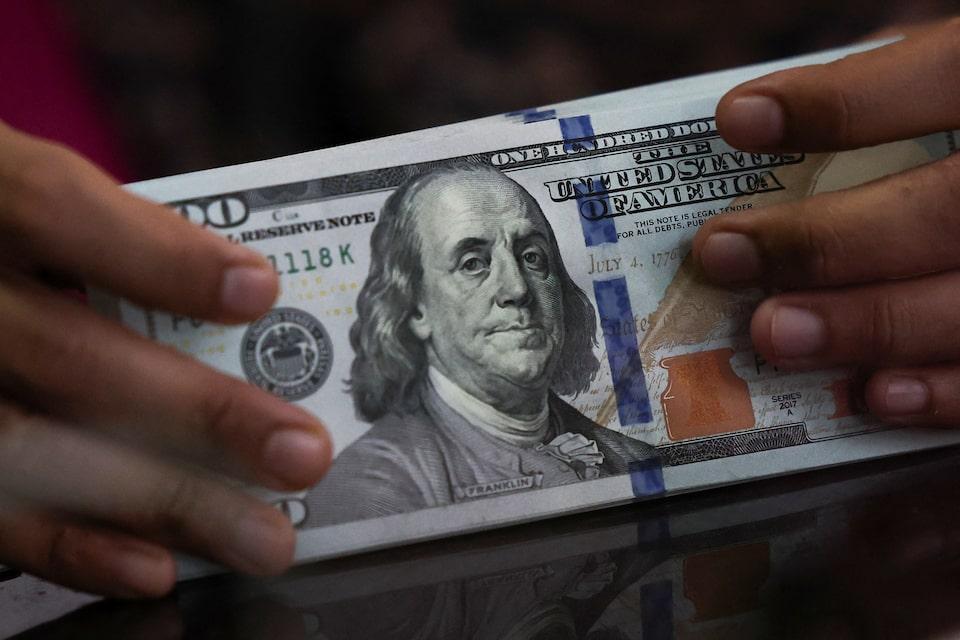
Trump announces Iran, Israel ceasefire Euro, yen gain as oil prices drop, risk currencies rally Fed's Powell expects inflation to rise this summer NEW YORK, June 24 (Reuters) - The dollar fell on Tuesday and the euro rose to its highest level since October 2021 after a ceasefire between Iran and Israel was announced, even as Federal Reserve Chair Jerome Powell repeated that he expects inflation to begin rising this summer. The ceasefire began to take hold on Tuesday under pressure from U.S. President Donald Trump, raising hopes for an end to the biggest ever military confrontation between the Middle East arch-foes. Sign up here. "The market right now is unwinding the Middle East trade," said Adam Button, chief currency analyst at ForexLive in Toronto. The euro and yen gained as oil prices tumbled. The European Union and Japan rely heavily on imports of oil and liquefied natural gas, while the U.S. is a net exporter. The single currency was last up 0.38% at $1.162 after earlier reaching $1.1641. The dollar weakened 1% to 144.68 Japanese yen . Risk sensitive assets including the Australian dollar also gained on improving risk sentiment. The Aussie was last up 0.68% versus the greenback at $0.6503. Sterling rose 0.77% to $1.3626 and reached $1.3648, the highest since January 2022. The U.S. currency fell even after Powell said in testimony before U.S. Congress that he and many at the Fed expect inflation to start rising soon, and that the central bank was in no rush to ease borrowing costs in the meantime. Traders were particularly attuned to his remarks after two other Fed policymakers indicated they support near-term rate cuts, citing concerns over the labor market and falling expectations about a resurgence in inflation. "The market was looking for a strong pushback regarding the possibility of a rate cut but Powell continues to sit on the fence," said Button. "The big debate at the Fed right now is in the jobs market. Waller and Bowman are saying they're seeing signs of softness, whereas Powell said we don't see weakness in the labor market," Button said. Fed Vice Chair for Supervision Michelle Bowman said Monday the time to cut interest rates appears imminent while Fed Governor Christopher Waller on Friday that the Fed should consider cutting interest rates at its next meeting. U.S. President Donald Trump said on Tuesday that interest rates in the country should be lowered by at least two to three percentage points. Fed funds futures traders are pricing in 60 basis points of cuts this year, up from around 46 basis points before Waller's comments on Friday. That indicates expectations that two 25-basis-points in cuts are certain, with a rising chance of a third reduction. A cut at the Fed's July 29-30 meeting continues to be seen as very unlikely, with the first cut expected in September. If the economy deteriorates and the Fed cuts interest rates faster than currently expected that could be very negative for the dollar, said Vassili Serebriakov, an FX strategist at UBS in New York. However, "if it doesn't, if the Fed doesn't cut until September and then delivers just two cuts this year, we're probably looking at some dollar weakness, but it's unlikely to be very significant, especially for pairs like dollar/yen, because the dollar still just benefits from carry quite a bit." Data on Tuesday showed that U.S. consumer confidence unexpectedly deteriorated in June as households worried about business conditions and employment prospects over the next six months. In cryptocurrencies, bitcoin gained 1.72% to $105,589. https://www.reuters.com/world/africa/dollar-falls-broad-risk-rally-after-trump-announces-israel-iran-ceasefire-2025-06-24/
2025-06-24 00:00
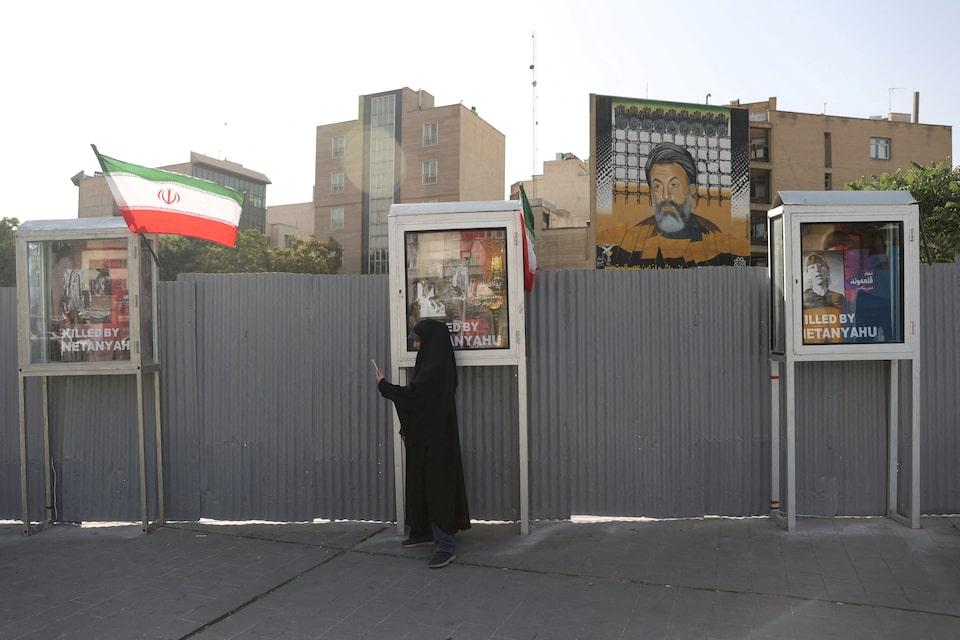
LATEST DEVELOPMENTS: Israeli prime minister, Iran president both claim victory US airstrikes only set back Iran's nuclear program by months, initial US intelligence assessment finds US tells UN Security Council that strikes 'degraded' nuclear program WASHINGTON/TEL AVIV/ISTANBUL, June 24 (Reuters) - U.S. airstrikes did not destroy Iran's nuclear capability and only set it back by a few months, according to a preliminary U.S. intelligence assessment, as a shaky ceasefire brokered by U.S. President Donald Trump took hold between Iran and Israel. Earlier on Tuesday, both Iran and Israel signaled that the air war between the two nations had ended, at least for now, after Trump publicly scolded them for violating a ceasefire he announced at 0500 GMT. Sign up here. As the two countries lifted civilian restrictions after 12 days of war - which the U.S. joined with an attack on Iran's uranium-enrichment facilities - each sought to claim victory. Trump said over the weekend that the U.S. deployment of 30,000-pound bombs had "obliterated" Iran's nuclear program. But that claim appeared to be contradicted by an initial assessment by one of his administration's intelligence agencies, according to three people familiar with the matter. One of the sources said Iran's enriched uranium stocks had not been eliminated, and the country's nuclear program, much of which is buried deep underground, may have been set back only a month or two. Iran says its nuclear research is for civilian energy production. The White House said the intelligence assessment was "flat out wrong." According to the report, which was produced by the Defense Intelligence Agency, the strikes sealed off the entrances to two of the facilities, but did not collapse underground buildings, said one of the people familiar with its findings. Some centrifuges still remained intact after the attacks, the Washington Post said, citing an unnamed person familiar with the report. Trump's administration told the United Nations Security Council on Tuesday that its weekend strikes on Iranian nuclear facilities had "degraded" Iran's nuclear program, short of Trump's earlier assertion that the facilities had been "obliterated." Israeli Prime Minister Benjamin Netanyahu said on Tuesday that the attack on Iran had removed the threat of nuclear annihilation and was determined to thwart any attempt by Tehran to revive its weapons program. "We have removed two immediate existential threats to us: the threat of nuclear annihilation and the threat of annihilation by 20,000 ballistic missiles," Netanyahu said. Iranian President Masoud Pezeshkian said his country had successfully ended the war in what he called a "great victory," according to Iranian media. Pezeshkian also told Saudi Crown Prince Mohammed bin Salman that Tehran was ready to resolve differences with the U.S., according to official news agency IRNA. Israel launched the surprise air war on June 13, attacking Iranian nuclear facilities and killing top military commanders in the worst blow to the Islamic Republic since the 1980s war with Iraq. Iran, which denies trying to build nuclear weapons, retaliated with barrages of missiles on Israeli military sites and cities. 'GREAT VICTORY' Israel's military lifted restrictions on activity across the country at 8 p.m. local time (1700 GMT), and officials said Ben Gurion Airport, the country's main airport near Tel Aviv, had reopened. Iran's airspace likewise will be reopened, state-affiliated Nournews reported. A White House official said Trump brokered the ceasefire deal with Netanyahu, and other administration officials were in touch with the Iranian government. The truce appeared fragile: Both Israel and Iran took hours to acknowledge they had accepted the ceasefire and accused each other of violating it. Trump scolded both sides but aimed especially stinging criticism at Israel, telling the close U.S. ally to "calm down now." He later said Israel called off further attacks at his command. Israel's defense minister, Israel Katz, said he told his U.S. counterpart, Pete Hegseth, that his country would respect the ceasefire unless Iran violated it. Pezeshkian likewise said Iran would honor the ceasefire as long as Israel did, according to Iranian media. Whether the Israel-Iran truce can hold is a major question given the deep mistrust between the two foes. But Trump's ability to broker a ceasefire showed Washington retains some leverage in the volatile region. Israeli armed forces chief of staff Eyal Zamir said a "significant chapter" of the conflict had concluded but the campaign against Iran was not over. He said the military would refocus on its war against Iran-backed Hamas militants in Gaza. Iran's military command also warned Israel and the U.S. to learn from the "crushing blows" it delivered during the conflict. Iranian authorities said 610 people were killed in their country by Israeli strikes and 4,746 injured. Iran's retaliatory bombardment killed 28 people in Israel, the first time its air defenses were penetrated by large numbers of Iranian missiles. Oil prices plunged and stock markets rallied worldwide in a sign of confidence inspired by the ceasefire, which allayed fears of disruption to critical oil supplies from the Gulf. CEASEFIRE VIOLATIONS? Earlier in the day, Trump admonished Israel with an obscenity in an extraordinary outburst at an ally whose air war he had joined two days before by dropping massive bunker-buster bombs on Iran's underground nuclear sites. Before departing the White House en route to a NATO summit in Europe, Trump told reporters he was unhappy with both sides for the ceasefire breach but particularly frustrated with Israel, which he said had "unloaded" shortly after agreeing to the deal. "I've got to get Israel to calm down now," Trump said. Iran and Israel had been fighting "so long and so hard that they don't know what the fuck they're doing." Netanyahu's office acknowledged Israel bombed a radar site near Tehran in what it said was retaliation for Iranian missiles fired three-and-a-half hours after the ceasefire was due to begin. It did not explicitly say whether the strike on the radar site took place before or after they spoke. The Islamic Republic denied launching any missiles and said Israel's attacks had continued for an hour-and-a-half beyond the time the truce was meant to start. "Who mediated or how it happened doesn't matter," said Reza Sharifi, 38, heading back to Tehran from Rasht on the Caspian Sea, where he had fled with his family. "The war is over. It never should have started in the first place." https://www.reuters.com/world/middle-east/trump-announces-israel-iran-ceasefire-2025-06-23/
2025-06-23 23:49
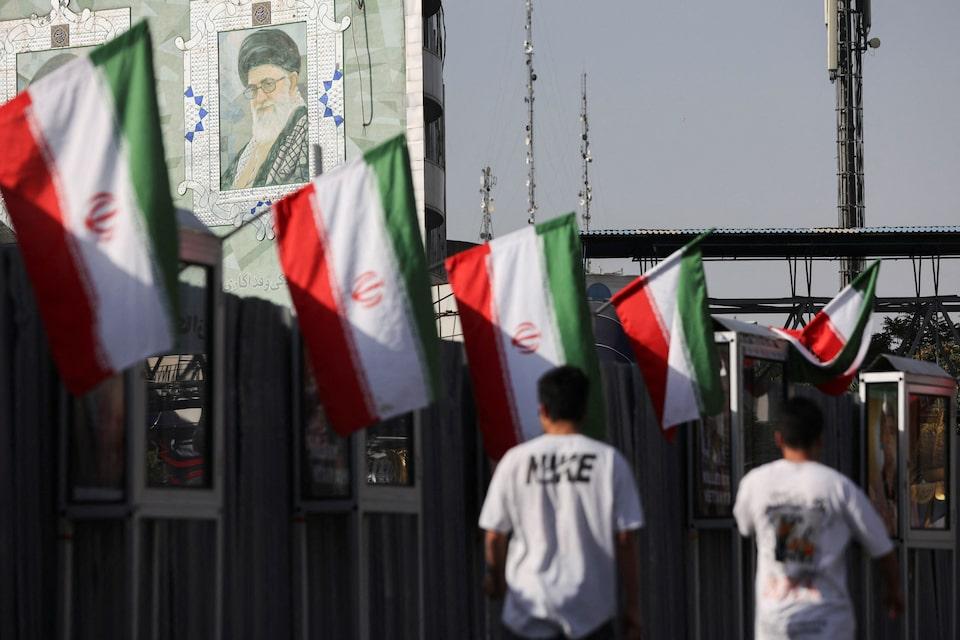
June 23 (Reuters) - U.S. President Donald Trump said on Monday that a "complete and total" ceasefire between Israel and Iran will go into force with a view to ending the conflict between the two nations. "On the assumption that everything works as it should, which it will, I would like to congratulate both Countries, Israel and Iran, on having the Stamina, Courage, and Intelligence to end, what should be called, 'THE 12 DAY WAR'," Trump wrote on his Truth Social site. Sign up here. U.S. crude futures tumbled after Trump's announcement, which came after the close of trading on Wall Street. S&P 500 e-mini futures rose when trading resumed, while the U.S. dollar fell. COMMENTS HIROFUMI SUZUKI, CHIEF FX STRATEGIST, SMBC, TOKYO: "Following President Trump's ceasefire announcement, financial markets, including the crude oil market, have returned to levels seen before the tensions between Israel and Iran began. This is also true for the USD/JPY exchange rate, as the dollar buying driven by the worsening Middle East situation seems to have dissipated. "Going forward, it will depend on how feasible both Iran and Israel find the ceasefire to be. If the ceasefire proceeds as announced, the USD/JPY may gradually move back towards yen appreciation." TONY SYCAMORE, MARKET ANALYST, IG, SYDNEY: "There's a high chance that we've seen the end of the conflict for now. We still have some questions around where 400 kilograms of uranium have moved to, that's a massive concern still. So while I say we've got a big de-escalation, I don't think we're completely out of the woods. "There is a lot of relief in markets, and things do look like they've de-escalated, but there's still some unanswered questions." RAY ATTRILL, HEAD OF FX STRATEGY AT NATIONAL AUSTRALIA BANK, SYDNEY: "There is a lot of the momentum to the reversal in the oil price strength that we are already seeing after the Iran’s strike on Qatar, which was clearly very well choreographed to be symbolic but for domestic consumption. "To the extent that we've got a reduction in the risk of a renewed oil price spike, I think that plays positively from a risk point of view. I think it sort of removes that downside global growth risks. And I'd expect that it will supports some further, modest sort of grind higher in those sort of procyclical currencies.” "So I think that would encourage people in the view that maybe the US dollar can sort of resume its downtrend here." ROBERT PAVLIK, SENIOR PORTFOLIO MANAGER, DAKOTA WEALTH, NEW YORK: "I think it's going to be huge. We could have an Iran with very limited nuclear capabilities. We can have a country that is still intact, but still the same regime, so we don't have to deal with regime change. We could have an attack on Israel certainly off the table, and we don't have any kind of threat of life to the United States troops. So the market should like that. I expect some more positive market reaction tomorrow as we go forward." ART HOGAN, CHIEF MARKET STRATEGIST, B. RILEY WEALTH, NEW YORK: "If, in fact, this holds, I would certainly say that's a market positive, and the futures are leaning in that direction." "Talk is cheap around these types of things. But certainly, I think the market and the rest of the world would like to see this come to some sort of peaceful resolve and not escalate further than what we've seen already. And I think that this afternoon's market action was leaning in that direction, and hopefully this is the next step in that direction, such that we don't have to worry about the next level of escalation, which is never going to be pretty." JACK ABLIN, CHIEF INVESTMENT OFFICER, CRESSET WEALTH ADVISORS, PALM BEACH, FLORIDA: "This lifts some of the geopolitical uncertainty surrounding the markets, although, for the most part, equity investors have been kind of shrugging the uncertainty off. I think it's certainly an incremental positive, but I don't think it's a catalyst for the next bull market." "It certainly sounds like a significant milestone, and I hope it it's true." JAKE DOLLARHIDE, CEO, LONGBOW ASSET MANAGEMENT, TULSA, OKLAHOMA: "Part of the problem holding equities back has been higher oil prices and geopolitical risk, and a cease fire or end to the conflict would go a long way towards solving both those issues." "This may be the match that sparks a continuation of the rally we saw today." https://www.reuters.com/world/africa/view-investors-react-after-trump-announced-ceasefire-between-iran-israel-2025-06-23/
2025-06-23 23:36
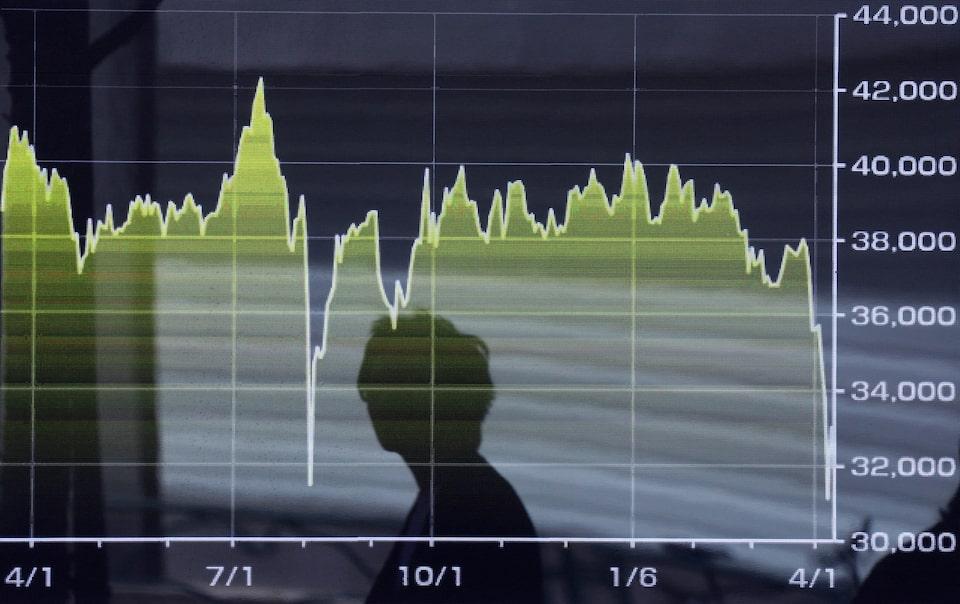
Wall Street shares rally more than 1% Iran and Israel ceasefire appears to hold Brent crude futures settle down 6% US yields fall, German draft budget sends Bund yields higher Dollar extends pullback, gold softens NEW YORK, June 24 (Reuters) - An index of global shares hit a record high on Tuesday with oil prices plummeting further as market sentiment was lifted by the easing of Middle East tensions, after a shaky ceasefire between Israel and Iran began to take hold. U.S. President Donald Trump had announced on Monday that Israel and Iran had reached a ceasefire to end their 12-day-old war. But both sides accused each other of violating the truce on Tuesday, sparking an extraordinary outburst from Trump. Sign up here. Wall Street's main indexes rallied more than 1%, with the benchmark S&P 500 finishing near a record high reached on February 19. The biggest gainers were in financials, technology, communication services, and healthcare stocks. Energy and consumer staples shares were the main drag. The Nasdaq 100 (.NDX) , opens new tab notched a record high close for the first time since February. The Dow Jones Industrial Average (.DJI) , opens new tab rose 1.19% to 43,089.02, the S&P 500 (.SPX) , opens new tab rose 1.11% to 6,092.18 and the Nasdaq Composite (.IXIC) , opens new tab rose 1.43% to 19,912.53. European shares (.STOXX) , opens new tab finished up 1.11%, hitting a one-week high during the session and notching its biggest single-day jump in over a month. MSCI's broadest index of Asia-Pacific shares outside Japan (.MIAPJ0000PUS) , opens new tab jumped 2.4% overnight, closing at its highest level since January 2022. MSCI's gauge of stocks across the globe (.MIWD00000PUS) , opens new tab rose 1.45% to 902.88, hitting its highest level on record. "Markets are cheering what is looking to be a ceasefire between Iran and Israel, which means no major impact to supply of oil to global markets," said Talley Leger, chief market strategist at the Wealth Consulting Group. "Risk assets, including equities in general and cyclical pro-economy sectors of the market more specifically, have been rallying. Defensives and safe-haven assets have also been ebbing, which is consistent with what we've been saying and what we know historically." Brent Crude futures settled down 6.1% to $67.14 a barrel. U.S. West Texas Intermediate (WTI) crude fell 6.0% to settle at $64.37. Both contracts had settled down more than 7% in the previous session, having rallied to five-month highs after the U.S. attacked Iran's nuclear facilities over the weekend. The U.S. dollar declined against major currencies including safe-haven Japanese yen and Swiss franc following the truce. The euro gained. The dollar weakened 0.88% to 144.80 against the Japanese yen and dropped 0.90% to 0.80515 against the Swiss franc . The euro was up 0.27% at $1.16125. The dollar index , which measures the greenback against a basket of currencies including the yen and the euro, fell 0.30% to 97.94. Federal Reserve Chair Jerome Powell said higher tariffs could begin raising inflation this summer, a period that will be key to Fed considering possible rate cuts. Powell spoke at a hearing before the House Financial Services Committee. Data showed that U.S. consumer confidence unexpectedly deteriorated in June, signalling softening labor market conditions. The yield on benchmark U.S. 10-year notes fell 3 basis points to 4.293%. The 2-year note yield, which typically moves in step with interest rate expectations for the Federal Reserve, fell 1.2 basis point to 3.817%. Germany's long-term government bond yields rose after the cabinet passed a draft budget for 2025. The yield on the benchmark German 10-year Bunds rose 0.9 basis points to 2.543%. Gold prices fell. Spot gold fell 1.34% to $3,323.49 an ounce. U.S. gold futures settled 1.5% lower at $3,298.40. https://www.reuters.com/world/china/global-markets-wrapup-1-2025-06-23/
2025-06-23 23:27
NAPERVILLE, Illinois, June 23 (Reuters) - Like a broken record, speculators continued selling Chicago corn last week. Their bearish corn stance is now almost identical to their year-ago one, which preceded the all-time net short set in early July. There are some notable differences between the two years, however. Sign up here. The latest Commitments of Traders data, published on Monday afternoon instead of the normal Friday slot due to last week’s holiday, showed that money managers increased their net short position in CBOT corn futures and options to 184,788 contracts through June 17, up from 164,020 a week earlier. That marked funds’ most bearish corn view since late August, and it was their 16th week as net sellers out of the last 19 weeks. A year ago, the managed money corn net short was only a few thousand contracts larger. In June 2024, the U.S. Department of Agriculture projected domestic 2024-25 corn ending stocks rising 4% from 2023-24. USDA currently pegs 2025-26 U.S. corn carryout rising 28% from 2024-25. The volume trend is reversed. USDA’s latest 2025-26 estimate of 1.75 billion bushels is well below the 2024-25 estimate from a year ago of 2.1 billion bushels. However, Brazil is harvesting a bumper corn crop much larger than a year ago, and U.S. crop conditions are above average with decent weather expected in the near term. Both old- and new-crop CBOT corn futures are trading slightly below the year-ago levels. July corn notched a lifetime low on Monday while December futures hit six-month lows. The weakness in nearby corn prices – and the implied roominess in U.S. stockpiles – will be tested next Monday when USDA publishes its June 1 stocks survey. Industry participants will also be watching to see if U.S. corn plantings expand further from the 12-year high pegged in March. OTHER NOTABLE MOVES CBOT soybean oil surged 14.6% in the week ended June 17 but was up as much as 16% after proposed U.S. biofuel blending targets exceeded expectations. That brought most-active futures to the highest levels since October 2023. Money managers extended their net long in CBOT soybean oil futures and options to 46,143 contracts through June 17, up more than 21,000 on the week. For comparison, funds’ net buying has exceeded 35,000 contracts in three different weeks so far this year. Ample global soybean meal supplies have lured funds deep into their bear cave. Through June 17, money managers added more than 20,000 contracts to their CBOT soybean meal net short, which rose to 107,081 futures and options contracts, within a couple hundred of last month’s record. Speculators’ soybean moves echoed their soybean oil ones. Through June 17, money managers boosted their net long in CBOT soybean futures and options to 59,165 contracts, their most bullish stance since November 2023. That compared with 25,639 a week earlier and was split between new longs and short covering. CBOT September wheat rose 3% in the week ended June 17, and money managers cut their net short position in CBOT wheat futures and options to a 13-week low of 81,353 contracts from 94,011 a week earlier. September wheat gained 0.7% over the last three sessions but was up as much as 5% during the period on global supply concerns. Soyoil lost nearly 3% over the last three sessions, meal was down fractionally, and both old- and new-crop corn and soybean contracts posted losses. In addition to monitoring U.S. weather and positioning ahead of USDA’s June 30 stocks and acres reports, traders will need to keep an eye on the Middle East conflict, which tanked crude oil prices on Monday. U.S. President Donald Trump said late on Monday that a ceasefire had been reached between Israel and Iran, so the situation is still very much unfolding. Karen Braun is a market analyst for Reuters. Views expressed above are her own. Enjoying this column? Check out Reuters Open Interest (ROI) , opens new tab, your essential new source for global financial commentary. ROI delivers thought-provoking, data-driven analysis of everything from swap rates to soybeans. Markets are moving faster than ever. ROI , opens new tab can help you keep up. Follow ROI on LinkedIn , opens new tab and X. , opens new tab https://www.reuters.com/markets/us/are-funds-corn-views-heading-ultra-bearish-year-ago-levels-2025-06-23/

2025-06-23 23:25
'Feels like' temperature on East Coast could reach 110F/43C Trains disrupted, electricity demand spikes Extreme heat becoming new normal, scientists warn June 23 (Reuters) - Tens of millions of people sweltered across the U.S. Northeast and Midwest on Monday as record-high heat disrupted electricity supplies and train travel. Heat warnings, which began over the weekend and are set to continue through the week, were in effect across much of the United States. East Coast officials warned that, as the heat combines with humidity, many places could see conditions that "feel like" 110 degrees Fahrenheit (43 degrees Celsius). Sign up here. The National Weather Service warned that nighttime temperatures may not offer much respite from the "oppressive heat," with nighttime forecasts of temperatures in the 70s and possibly even the 80s for East Coast cities. Some East Coast trains were halted en route for safety precautions on Monday, and Amtrak said in a statement that its cars would operate at lower speeds due to heat restrictions. Amtrak heat restrictions kick in when temperatures are higher than 95F (35C). The company also reduces its train speeds when the tracks themselves reach 128F (54C). Health experts urged employers to adjust working hours for outdoor laborers, to ensure they had adequate breaks and opportunities for hydration, and to monitor for signs of heat stroke or exhaustion. "There is a disconnect between the severity of heat waves as a public health risk and the public recognition of that risk," said Howard Frumkin, an expert in environmental and occupational health sciences at the University of Washington. Police departments said they were taking steps to protect officers who were stationed outdoors – urging them to stay hydrated, or to stay in the shade where possible, according to the departments in the North Carolina city of Raleigh and the national capital, Washington D.C. U.S. electrical grid operators directed power plants to be ready to run at maximum force, with electricity demand expected to spike as people run fans and air conditioners to stay cool. In New York City, temperatures for Tuesday were forecast to hit 97F (36C), which would break the city's previous heat record for the date - set more than a century ago, when the mercury hit 96F on June 23, 1888. Scientists have warned that such extremes are fast becoming the new normal – while also upending assumptions about which regions might be spared the worst of climate change. "A lot of people ask the question, 'where is it safe to be?' And the answer is probably – no place," Frumkin said. "We did not think the upper Midwest was going to be vulnerable to heat extremes." The heat was also being felt in Britain, while the Arctic state of Alaska registered its first ever heat advisory last week. Last month, China saw its temperatures soar. NEW NORMAL Of all the weather impacts linked to climate change, extreme heat poses the biggest threat to human life - more dangerous than even floods or hurricanes. Last year marked the world's warmest on record – and temperatures are set to continue climbing for the next few decades as climate-warming emissions also keep rising. "It's just getting hotter everywhere," said Este Geraghty, chief medical officer and health solutions director at Esri, where she uses data and mapping analysis to understand how and where climate risks are developing and help is needed most. Across England this week, the extreme heat could result in hundreds of deaths, according to a rapid analysis , opens new tab by a team of UK scientists. That forecast followed another report , opens new tab by the UK Met Office that found that extreme heat was now 10 times as likely to happen as it was decades ago. Extreme heat can take a heavy economic toll - threatening crop yields, livestock, electrical outages and wildfires, and leading to disruptions to utility services, healthcare, or transportation systems, according to a report , opens new tab this month on insurance risk by Swiss Re Institute. The global heat event this week "is sounding an alarm bell for society," said Nina Arquint, who works as CEO UK & Ireland at Swiss Re Corporate Solutions. "These events are more dangerous than natural catastrophes in terms of human lives lost, yet the true cost is only starting to come to light," Arquint said. https://www.reuters.com/sustainability/climate-energy/oppressive-heat-triggers-health-warnings-across-us-east-midwest-2025-06-23/