2025-06-23 23:13
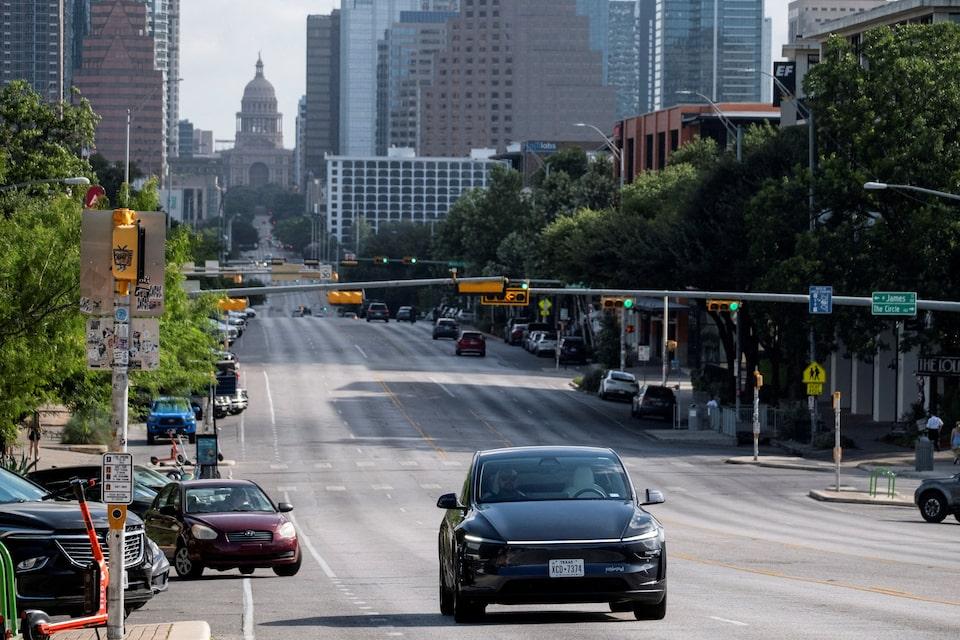
WASHINGTON, June 23 (Reuters) - The National Highway Traffic Safety Administration is seeking information from Tesla (TSLA.O) , opens new tab after reviewing online videos of a robotaxi allegedly using the wrong lane and of speeding by another driverless vehicle. The U.S. auto safety agency said it is "aware of the referenced incidents and is in contact with the manufacturer to gather additional information." Sign up here. NHTSA routinely asks automakers for additional information after reports of questionable driving behavior by advanced driver assistance systems or automated driving systems. Tesla started a limited, paid robotaxi test service and deployed a dozen or so self-driving cars in Austin, Texas on Sunday. The company plans to avoid bad weather, difficult intersections, and won't take anyone below the age of 18. NHTSA noted that under the law it "does not pre-approve new technologies or vehicle systems – rather, manufacturers certify that each vehicle meets NHTSA’s rigorous safety standards, and the agency investigates incidents involving potential safety defects." Bloomberg News reported NHTSA's query to Tesla earlier on Monday. The EV maker did not immediately respond to a Reuters request for comment. On Monday, Tesla told NHTSA its answers to questions on the safety of its robotaxi deployment in Texas are confidential business information and should not be made public. NHTSA is reviewing answers given in response to the agency's questions about the safety of its self-driving robotaxi in poor weather among numerous issues. The agency has been investigating since October collisions of Tesla vehicles using Full Self-Driving software under conditions of reduced visibility. The probe covers 2.4 million Tesla vehicles equipped with FSD technology after four reported collisions, including a 2023 fatal crash. https://www.reuters.com/business/autos-transportation/nhtsa-contacts-tesla-robotaxi-issues-seen-online-videos-bloomberg-news-reports-2025-06-23/
2025-06-23 22:44
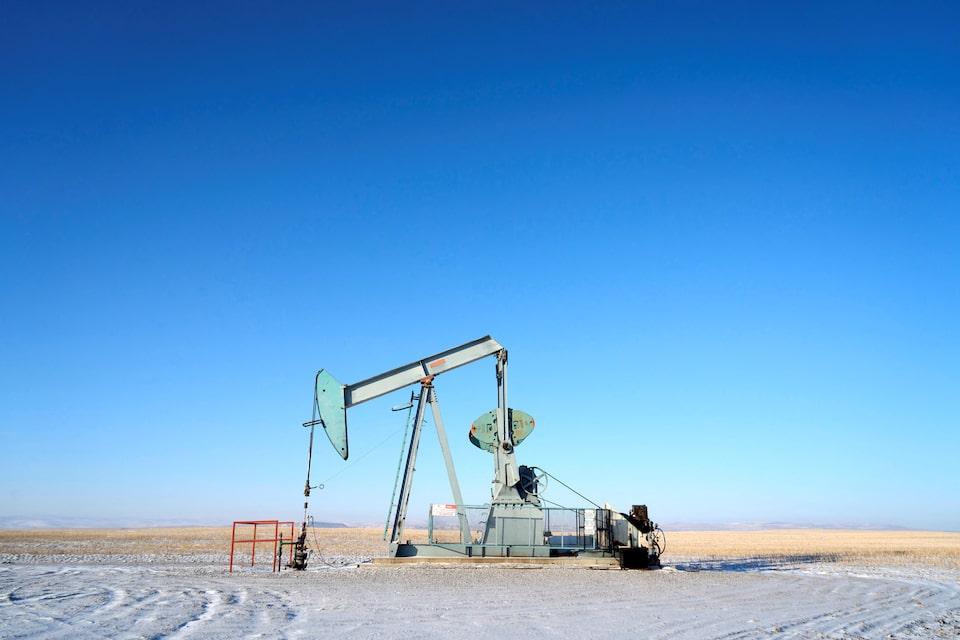
Alberta surpassed gas flaring limit in 2023 and 2024 Province says ceiling did not account for increased production World Bank report showed flaring increasing worldwide CALGARY, June 23 (Reuters) - Energy producers in Alberta, Canada's top oil-producing province, blew past the province's self-imposed limit on annual natural gas flaring in 2024 for a second year in a row, Reuters calculations show. Late last week, Alberta's energy regulator said it was ending the limit on flaring. Reuters is the first to report the change, which the regulator quietly published in a bulletin on its website. Sign up here. On Monday, the regulator confirmed the removal of the limit and said it was responding to direction from the provincial government. Oil production is booming in Canada, the world's No. 4 producer, which has been trying to diversify exports away from the U.S. since President Donald Trump took office and began imposing tariffs on many Canadian exports. Canadian energy companies hope Prime Minister Mark Carney will be more accommodative to the industry than his predecessor Justin Trudeau. A tally by Reuters of Alberta Energy Regulator data shows oil and gas producers in the province flared approximately 912.7 million cubic metres of natural gas in 2024, exceeding the annual provincial limit of 670 million cubic metres by 36%. The province had exceeded the limit in 2023, with regulatory data showing total annual flare volumes of 753 million cubic metres that year. Flaring is the practice of burning off the excess natural gas associated with oil production. If the volumes of gas byproduct are small, and there are no pipelines nearby to transport the gas, companies often choose for economic reasons to dispose of it through flaring instead of capturing it and storing it. Eliminating the practice would cut at least 381 million tonnes of carbon dioxide equivalent in environmentally harmful emissions released into the atmosphere, the World Bank has said. Ryan Fournier, spokesperson for Alberta's Environment Minister Rebecca Shulz, said in an email that the province launched a review of its flare gas policy after the oil and gas industry exceeded the limit for the first time in 2023. He said the province determined the 20-year-old flaring limit no longer served as an effective policy for reducing flaring and the ceiling did not account for increased oil production in the province or new emissions-reduction strategies. The federal energy and environment ministries did not immediately reply to requests for comment. Alberta's crude oil production set an all-time record in 2024 at 1.5 billion barrels, a 4.5% increase over 2023. A 2022 report by the Alberta Energy Regulator showed flaring volumes in the province have been increasing since 2016. A 2024 report by the World Bank — which has been advocating for a global end to the practice of routine flaring by 2030 — found that flaring by oil and gas companies worldwide rose in 2023 even as crude oil production rose only 1% over the same time. While flaring is better for the environment than some other methods of gas disposal such as venting, it still releases a variety of byproducts and greenhouse gases into the atmosphere as well as black soot which can be harmful to human health, said Amanda Bryant, senior oil and gas analyst for the clean energy think-tank the Pembina Institute. She said companies have alternatives available to them, such as investing in equipment that can be used to capture flare gases at site and redirect them back into production for use as fuel. "Getting rid of the rule doesn't get rid of the problem," Bryant said in an interview. "The role of a regulator really needs to be to prevent harmful impacts of industry and to ensure that our resources are developed responsibly." https://www.reuters.com/sustainability/climate-energy/alberta-blew-past-gas-flaring-ceiling-2024-province-eliminates-limit-2025-06-23/
2025-06-23 22:37
US President Trump accuses both sides of violating ceasefire Analysts see less risk to Middle East oil supplies Trump says China can continue to purchase oil from Iran NEW YORK, June 24 (Reuters) - Oil prices fell 6% on Tuesday to settle at a two-week low, on expectations the ceasefire between Israel and Iran will reduce the risk of oil supply disruptions in the Middle East. The ceasefire was on shaky ground with U.S. President Donald Trump accusing both Israel and Iran of violating it just hours after it was announced. Sign up here. Brent crude futures fell $4.34, or 6.1%, to settle at $67.14 a barrel. U.S. West Texas Intermediate (WTI) crude fell $4.14, or 6.0%, to settle at $64.37. Settlement was the lowest for Brent since June 10 and WTI since June 5, both before Israel launched a surprise attack on key Iranian military and nuclear facilities on June 13. "The geopolitical risk premium built up since the first Israeli strike on Iran almost two weeks ago has entirely vanished," said Tamas Varga, a senior analyst at TP ICAP's PVM Oil Associates brokerage and consulting firm. On Monday, both oil contracts settled down more than 7%. They had rallied to five-month highs after the U.S. attacked Iran's nuclear facilities over the weekend. Direct U.S. involvement in the war had investors worried about the Strait of Hormuz, a narrow waterway between Iran and Oman, through which between 18 million and 19 million barrels per day (bpd) of crude oil and fuels flow, nearly a fifth of global consumption. Prices also fell as Trump said China, the world's biggest oil importer, can continue to purchase oil from Iran. In other supply news, Kazakhstan's state energy company KazMunayGaz raised its forecast for oil output at the Chevron-led (CVX.N) , opens new tab Tengiz oilfield, the country's largest, to 35.7 million metric tons in 2025 from 34.8 million tons expected previously. Kazakhstan is a member of the OPEC+ group of countries that includes the Organization of the Petroleum Exporting Countries (OPEC) and allies. Several other OPEC+ members have also been increasing output. In Guyana, oil output rose to 667,000 bpd in May from 611,000 bpd in April, fueled by increases at two of three production facilities operated by U.S. major Exxon Mobil (XOM.N) , opens new tab. U.S. ECONOMY AND OIL INVENTORIES Another factor weighing on oil prices came from U.S. consumer confidence, which unexpectedly deteriorated in June as households increasingly worried about job availability and economic uncertainty from Trump's tariffs. Federal Reserve Bank of New York President John Williams said he expects slower growth and higher inflation this year due in large part to trade tariffs, in comments that suggested he was in no rush to cut interest rates, which could boost economic growth and oil demand. The American Petroleum Institute (API) trade group and the U.S. Energy Information Administration (EIA) were due to release U.S. oil inventory data, , Analysts forecast energy firms pulled about 0.8 million barrels of oil from U.S. stockpiles during the week ended June 20. If correct, that would be the first time energy firms pulled oil from storage for five weeks in a row since January. That compares with a build of 3.6 million barrels during the same week last year and an average decrease of 2.5 million barrels over the past five years (2020-2024). The API releases its numbers on Tuesday and the EIA on Wednesday. https://www.reuters.com/business/energy/us-crude-oil-futures-fall-over-3-trump-announces-israel-iran-ceasefire-2025-06-23/

2025-06-23 22:27
BUENOS AIRES, June 23 (Reuters) - Argentina's economy grew year-on-year for the second consecutive quarter and by the most since 2022 as the economy recovers from last year's recession while still facing some headwinds, official data showed on Monday. Gross domestic product expanded 5.8% in the first quarter compared to the same quarter in 2024, when the economy was rattled by President Javier Milei's December 2023 peso currency devaluation and subsequent austerity drive. Sign up here. Monday's data showed signs of recovery at the consumer level, with private consumption growing 11.6% from a year ago. Milei in a post on X called the data "a fantastic result," while criticizing reports focusing on a dip in public sector consumption. Analysts polled by Reuters had forecast GDP growing at a higher 6.1%, according to the poll's median estimate. But the rate is still the largest expansion since the third quarter of 2022, when the economy was rebounding from COVID-19 pandemic-related losses. Compared to the fourth quarter of 2024, GDP expanded 0.8% in seasonally adjusted terms, a slowdown from the two prior quarters. Exports in the agricultural powerhouse grew 7.2%, which Economy Minister Luis Caputo said in a post on X was a first-quarter record. Still, imports surged 42.8%, dulling the exports boost's impact. Argentina's economy emerged from a painful recession in the second half of last year, and economists have waited to see whether the recovery would consolidate in 2025. While Milei has won plaudits for stabilizing the state's finances, his tough austerity drive weighed on economic activity in the first months of 2024. Cuts to state spending continue to hit public workers hard, with salaries falling behind inflation. The central bank's latest market expectations survey of analysts forecasts GDP growing 5.2% this year. https://www.reuters.com/world/americas/argentinas-economy-expands-58-q1-year-on-year-2025-06-23/

2025-06-23 21:32
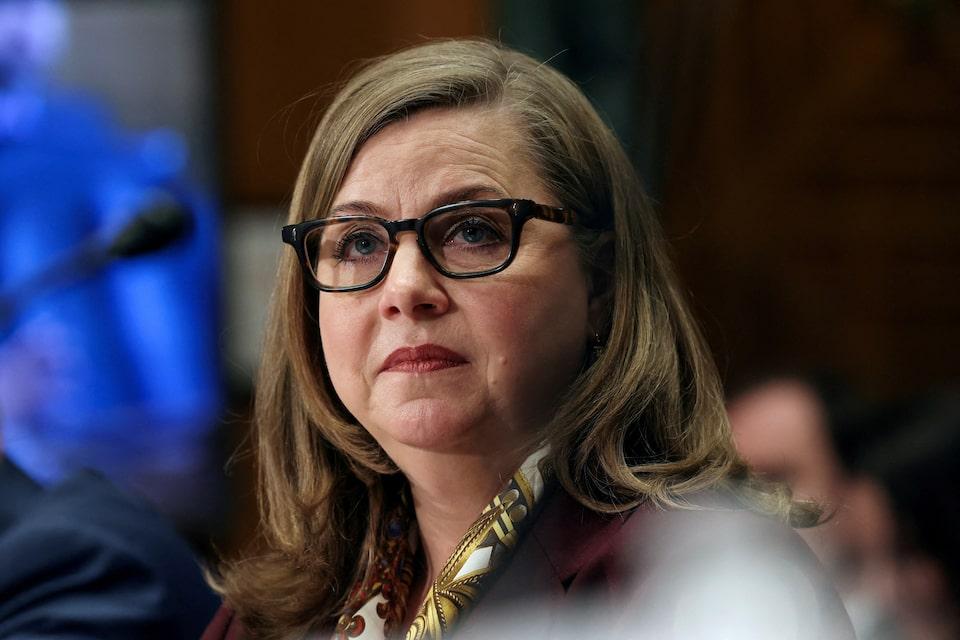
Bowman says open to July rate cut if inflation contained More dovish outlook represents a shift for Fed's top bank overseer Wall St ends higher, US Treasury yields fall on rate-cut hopes Goolsbee supports rate cut if no tariff inflation Bowman less worried tariffs will drive up inflation NEW YORK, June 23 (Reuters) - Federal Reserve Vice Chair for Supervision Michelle Bowman, recently tapped by President Trump as the U.S. central bank’s top bank overseer, said Monday the time to cut interest rates is getting nearer as risks to the job market may be on the rise. “It is time to consider adjusting the policy rate,” Bowman told a gathering held in Prague, Czech Republic. The official's shift was unexpected as she had in recent months appeared skeptical of the need to ease monetary policy. Sign up here. Bowman said inflation appears to be on a sustained path back to 2% and she said she expects “only minimal impact” on inflation from trade policy. “Should inflation pressures remain contained, I would support lowering the policy rate as soon as our next meeting in order to bring it closer to its neutral setting and to sustain a healthy labor market,” Bowman said. She noted the job market is still in a good place but that she is also increasingly worried about rising risks to the sector and said that such concerns might need to take more prominence in thinking about the outlook. “We should also recognize that downside risks to our employment mandate could soon become more salient, given recent softness in spending and signs of fragility in the labor market,” Bowman said. The central banker's comments on the interest rate outlook caught the attention of financial markets, where stock prices got a hop and futures markets bolstered what are still low odds the central bank will cut rates when the rate-setting Federal Open Market Committee meets at the end of July. Futures markets still believe rate cuts will start at the September policy meeting. Bowman's dovish take on monetary policy was followed later in the day by Chicago Fed President Austan Goolsbee. The policymaker said that while tariffs carry big risks to the economy in the form of higher inflation and lower growth, which are very tricky for monetary policy to address, thus far some of his stronger worries have not been realized. "Somewhat surprisingly, thus far, the impact of tariffs has not been what people feared" when huge tariffs were announced at the start of April, Goolsbee said in comments before the Milwaukee Business Journal Mid-Year Outlook. The policymaker said that if the economy can get through this period of turbulence and uncertainty, the path toward rate cuts may open up again. "If we do not see inflation resulting from these tariff increase, then, in my mind, we never left what I was calling the golden path," and that's a path that until recently heralded cuts in short-term borrowing costs, Goolsbee said. The official described tariffs as throwing "dirt" in the air and said of that uncertainty, "if the dirt is out of the air, then I think we should proceed" with rate cuts. STEADY STATE Last week, the FOMC left its overnight target-rate range fixed between 4.25% and 4.5%. Officials remained in a wait-and-see mode amid the considerable economic uncertainty created by President Donald Trump’s erratically implemented trade policy. Most Fed officials are worried surging import taxes could depress growth while restarting what had been cooling inflation pressures. That said, they continue to pencil in two rate cuts for this year. Even with Trump's retreat on the most extreme tariff levels, the overall level of his current import taxes, which are currently facing a court challenge, is higher than anything Americans have seen in many years. "Increases in tariffs this year are likely to push up prices and weigh on economic activity," Fed Chairman Jerome Powell said on Wednesday following the FOMC meeting. "It takes some time for tariffs to work their way through," Powell noted, while adding that when it comes to the tariffs "we're beginning to see some effects, and we do expect to see more of them over coming months." Bowman said in her speech that she supported the Fed’s decision to hold steady. But she also noted that she sees far fewer storm clouds ahead for the economy with more clarity arriving for the outlook. Bowman’s openness to cutting rates soon is joined by that of Fed Governor Christopher Waller, who said in a television interview on Friday he would also consider a rate cut at the July 29-30 meeting. Waller is widely considered to be in the running to succeed Powell, whose term ends next year. Trump has repeatedly pressured the Fed to pursue very large rate cuts akin to those taken in times of crisis amid regular insults to Powell. Observers believe any Fed chair would need to align with Trump’s desire for much lower short-term borrowing costs, although doing so could put the Fed's inflation fighting credibility at risk. Goldman Sachs economists said in a note that the next few months will be telling for the price pressure outlook, telling clients in a note on Monday that "we expect the largest tariff effects on monthly inflation to show up from June through August." Bowman was also quite sanguine on the inflation outlook, saying “it appears that any upward pressure from higher tariffs on goods prices is being offset by other factors and that the underlying trend in core (Personal Consumption Expenditures) inflation is moving much closer to our 2% target than is currently apparent in the data.” She also said Trump's policy mix is likely to have a positive impact on the outlook. "Less restrictive regulations, lower business taxes, and a more friendly business environment will likely boost supply and largely offset any negative effects on economic activity and prices," Bowman said. https://www.reuters.com/business/feds-bowman-open-cutting-rates-july-policy-meeting-2025-06-23/
2025-06-23 21:27
USDA to rescind Clinton-era ban on mining, logging and roads in pristine national forests Agency cites need to manage forests due to increase in wildfires Environmental group says roads increase fire risk June 23 (Reuters) - The U.S. Department of Agriculture will rescind a Clinton-era policy that banned logging, roads and mining in undeveloped forests so it can manage those lands for fire risks, the agency said on Monday, a move opposed by environmentalists. The change will allow nearly 59 million acres (23.9 million hectares) of federal forest lands to be better managed for fire risk, the USDA said. Sign up here. The move is aligned with President Donald Trump's goal to lift environmental regulations that he says are roadblocks to industry. Agriculture Secretary Brooke Rollins announced the rescission of the 2001 Roadless Rule during an appearance at the Western Governor's Association meeting in Santa Fe. "After the repeal of this rule, we are going to go back to common-sense forest management to ensure our forests are here for generations to come," Rollins said during a press briefing at the meeting. The U.S. Forest Service is a division of the Department of Agriculture. The Roadless Rule impacts about 30% of Forest Service lands, according to USDA. It is not the first time Trump has sought to roll back the policy. In 2020, his administration exempted Alaska's Tongass forest from the Roadless Rule, a move that was reversed by President Joe Biden in 2023. The Tongass is the largest U.S. national forest. USDA said the move will allow the lands to be managed at the local level. About 60% of forest lands in states including Utah and Montana are restricted from road development because of the Roadless Rule, USDA said. "This misguided rule prohibits the Forest Service from thinning and cutting trees to prevent wildfires," Rollins said in a speech at the meeting, adding that the average acreage of U.S. forest burned each year by wildfires has doubled since the rule was implemented 30 years ago. New Mexico Governor Michelle Lujan Grisham pushed back at Rollins' characterization of the Roadless Rule driving the increase in wildfire acreage over the past three decades. "Climate change is the biggest problem in fuel and these damaging fires," Lujan Grisham told the meeting of western governors, to applause from the audience. Environmental group Earthjustice criticized the rule, saying wildfires are more likely to start in landscapes that have roads. “The roadless rule has protected 58 million acres of our wildest national forest lands from clearcutting for more than a generation. The Trump administration now wants to throw these forest protections overboard so the timber industry can make huge money from unrestrained logging," Drew Caputo, Earthjustice's vice president of litigation for lands, wildlife and oceans. "These are lands that belong to all Americans, not the timber industry." https://www.reuters.com/legal/litigation/trump-administration-rescind-policy-protecting-undeveloped-forests-2025-06-23/