2025-06-23 21:26
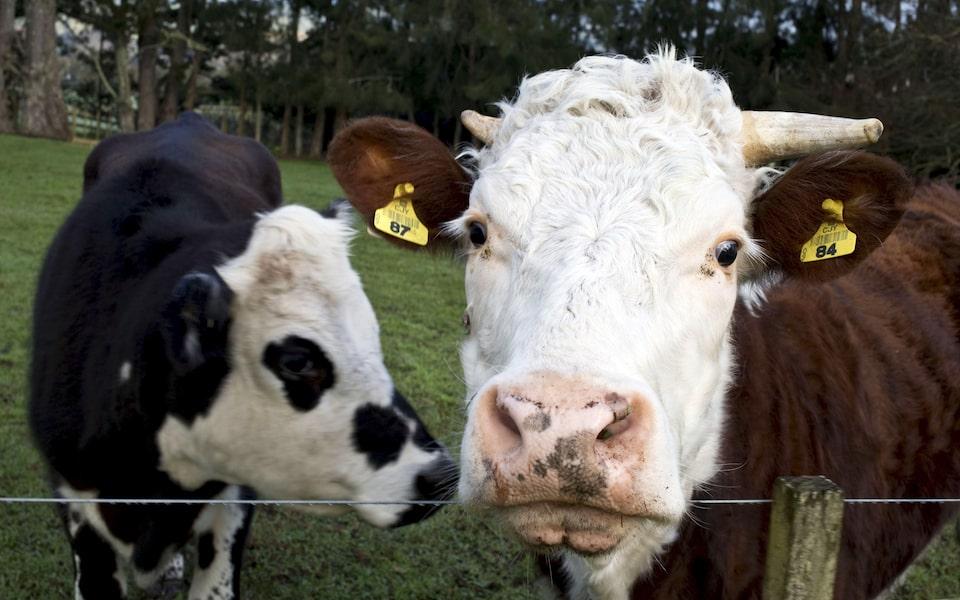
SAO PAULO, June 23 (Reuters) - Iraq removed a trade ban it had imposed on Brazilian chicken meat after a bird flu case on a commercial farm last month, while South Korea eased its restrictions, the Brazilian Agriculture Ministry said on Monday. South Korea ow restricts only chicken meat from the region affected by the bird flu, the ministry said, without providing more details. Both Iraq and South Korea had imposed nationwide trade bans to Brazilian chicken meat. Sign up here. Brazil hopes to reverse trade bans after declaring last week itself free of the bird flu virus in commercial flocks following a 28-day period without any new commercial farm outbreaks. https://www.reuters.com/business/healthcare-pharmaceuticals/iraq-removes-south-korea-eases-restrictions-import-brazil-chicken-meat-2025-06-23/
2025-06-23 21:13
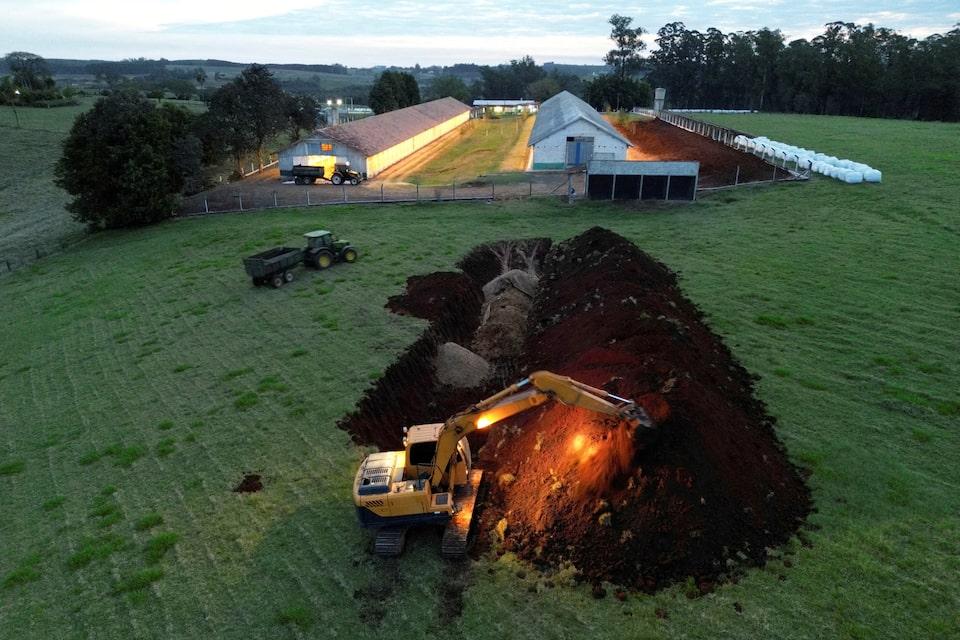
NEW YORK, June 23 (Reuters) - New York plans to build an advanced nuclear plant with the ability to produce at least 1 gigawatt of power, which would be one of the first new U.S. reactors in a generation, Governor Kathy Hochul said on Monday. U.S. nuclear power is experiencing a renaissance after decades of stagnation, spurred on by record electricity demand from the proliferation of energy-guzzling data centers and the electrification of industries like transportation and manufacturing. Sign up here. "We need electricity that is reliable all day long," Hochul said at a press conference. "Harnessing the power of the atom is the best way to generate steady zero-emissions electricity." New York plans to partially finance the nuclear plant and buy electricity from it. The projected cost of building the project has not been disclosed. The state is looking for partners in the project, which will be built in upstate New York, north of New York City, although the exact location and timeline for construction are still unclear. Hochul said she has directed the state's power authority to move forward with plans to site and eventually construct the nuclear build. The governor launched , opens new tab a Master Plan for Responsible Advanced Nuclear Development in January to gauge market interest in developing advanced nuclear energy technologies amid rising electricity demand. In late May, U.S. President Donald Trump signed executive orders directing the country's independent nuclear regulatory commission to cut down on regulations and fast-track new licenses for reactors and power plants. https://www.reuters.com/business/energy/new-york-plans-new-advanced-nuclear-power-plant-upstate-governor-says-2025-06-23/
2025-06-23 21:05
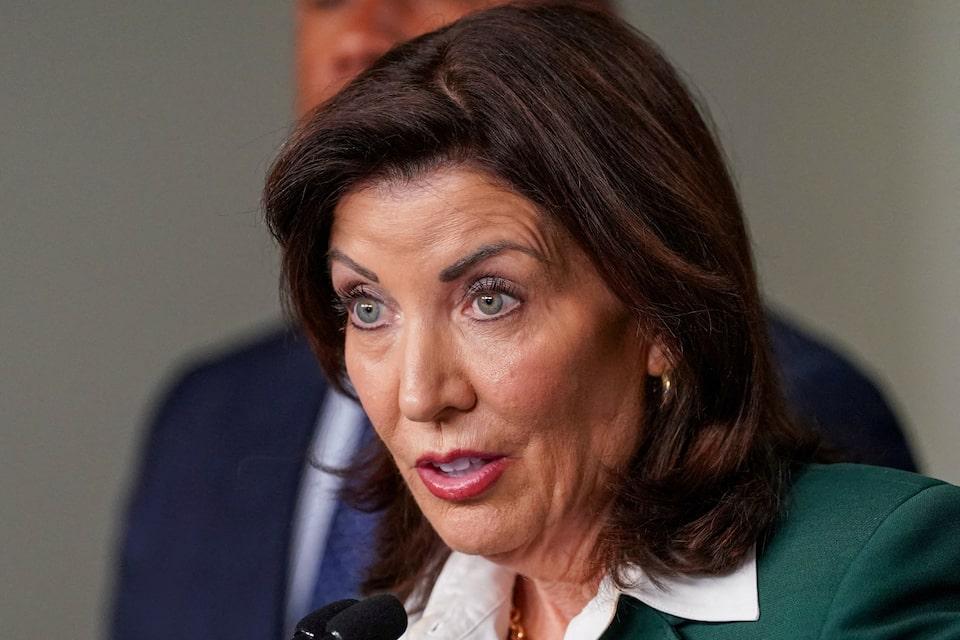
ORLANDO, Florida, June 23 (Reuters) - TRADING DAY Making sense of the forces driving global markets Sign up here. By Jamie McGeever, Markets Columnist Stocks flew, oil sank, and bond yields tumbled on Monday in a highly volatile start to the week, as traders digested Iran's response to the U.S. strikes on its nuclear sites and a string of dovish remarks from Federal Reserve officials. In my column today I ask a simple question, one which has several plausible answers: Who's selling the dollar? More on that below, but first, a roundup of the main market moves. If you have more time to read, here are a few articles I recommend to help you make sense of what happened in markets today. Today's Key Market Moves All aboard the 'risk on' rollercoaster Early on Monday, oil prices were up 6% at a five-month peak on fears that Iran could seriously disrupt global crude supplies by closing the Strait of Hormuz. Several Middle East countries closed their airspace, and the dollar was rallying strongly. The reversal by the close of U.S. trading was remarkable - oil fell 7% and broke below its 200-day moving average, stocks closed firmly in the green and the dollar ended lower. What was the catalyst? There were probably two. The first was Tehran's response to Washington's attacks on its nuclear facilities on Saturday. Iran attacked a U.S. military base in Qatar, but took no action to disrupt oil and gas tanker traffic through the Strait of Hormuz. Oil's stunning 13 percentage point swing on Monday was an indication of the premium that had been built into the price on fears that global supply could be disrupted. If supply is maintained, the collective sigh of relief will extend to businesses, households, and policymakers around the world. And this is where the second catalyst comes in - inflation expectations and monetary policy. Two Federal Reserve officials struck a dovish tone in their public remarks on Monday, Chicago Fed President Austan Goolsbee and Vice Chair for Supervision Michelle Bowman. They come on the heels of Governor Christopher Waller on Friday. Goolsbee and Waller are perhaps the two most dovish of all the Fed's 19 policymakers, while Bowman has for years been at the opposite end of the 'hawk-dove' spectrum. But on Monday she said she would consider voting for a rate cut as early as next month as long as inflation pressures remained contained. If the worst of the oil price spike has now been and gone - that's a big 'if', given how fragile and fluid the situation in the Middle East is - then disinflationary forces and soft growth and labor market dynamics could take on more significance for policymakers and investors alike. That's all very hypothetical at this stage, but Monday's sharp moves are an indication of where positioning and sentiment have been building in recent weeks. Next up is Fed Chair Jerome Powell, who delivers his semi-annual testimony to Congress on Tuesday and Wednesday. Will he nod to the Waller-Goolsbee-Bowman view, repeat the hawkish signals from last week's revised 'dot plot', or hold the narrowing middle line between the two? Who's selling? Breaking down the dollar's breakdown With the dollar poised for its worst first-half performance since 1986, the selling may seem to be coming from everyone, everywhere, across every asset class. To some extent, that's true. Investors globally appear to be gradually reducing their exposure to dollar-denominated assets, driving the greenback down to its lowest level against a basket of major currencies in three and a half years. But some pressure points are greater than others. Unsurprisingly, non-U.S. investors are responsible for the bulk of the selling, with equity-related selling pressure concentrated among European investors and fixed income-based selling mostly coming from Asia. According to Bank of America's FX strategy team, European "real money" investors - institutions like pension funds and insurance companies - are the main drivers of the dollar's selloff in the second quarter, slashing their dollar positioning to the lowest since 2022 in a matter of weeks. But the story might not be so straightforward. While European investors increasing their dollar hedge ratios have garnered much attention recently, research shows that most of the dollar's average daily declines in the last few months have come in Asian trading hours, suggesting Asian holders of U.S. bonds may also be increasing their dollar hedges. So which is the bigger drag on the dollar: equity-led geographic diversification or fixed income selling? And where is the selling mostly coming from: Europe or Asia? OVER-EXPOSED At first glance, one might pin the blame on equities, as foreign holdings of U.S. stocks are larger than their U.S. debt assets in nominal terms. But percentage-wise, overseas investors' footprint in the U.S. fixed income markets is larger. Foreigners own just over $31 trillion of U.S. securities, with $17.6 trillion in equities and $13.6 trillion of bond holdings, according to the Bank for International Settlements. That represents around 18% of the overall U.S. equity market, compared with 21% of the U.S. agency and corporate bond market and a third of the U.S. Treasury market. Analysts at UBS estimate that euro zone investors account for 25% of the foreign-owned U.S. equity universe, having loaded up on U.S. stocks in recent years. This makes the dollar particularly vulnerable if Wall Street continues to underperform European and Asian markets, they reckon. Breaking down these exposures even further, they find that foreign investors' total net unhedged dollar asset exposure is $23.5 trillion. Of this, investors in G10 countries hold $13.4 trillion, with $9.3 trillion in equities and $4.1 trillion in fixed income. These are vast numbers, and it wouldn't require much of a switch to trigger large cross-border flows. UBS calculates that a hypothetical 5% reduction in G10 countries' dollar position would equate to around $670 billion of dollar selling. Most G10 countries, of course, are in Europe, so the bulk of that selling would come from there. PRICE-SENSITIVE While European investors have mostly been unloading equities thus far, it's good to remember that the region's investors significantly increased their exposure to U.S. bonds over the last decade too, particularly the 2014-2022 years when the European Central Bank's main interest rates were negative. UBS analysts estimate euro zone investors bought $3.4 trillion in foreign debt since 2014. So even a modest rebalancing away from U.S. bonds could have a meaningful impact on prices. Ultimately though, Asian investors still appear to wield more muscle in the U.S. bond market, owning around a third of foreign-held U.S. Treasuries and agency debt. And that figure is probably much higher given that euro zone, Caribbean and UK holdings include assets held on behalf of Asian countries, notably China. Up until this point, there has been no wholesale dumping of U.S. assets, and neither is there likely to be. But it is notable that U.S. assets are increasingly being held by private sector investors, who have replaced central banks as the main buyers of U.S. assets in recent years. The private sector is typically considered more price-sensitive than the official sector. That means these positions may prove less sticky than in the past, especially if the idea of waning "U.S. exceptionalism" truly takes root. What could move markets tomorrow? Want to receive Trading Day in your inbox every weekday morning? Sign up for my newsletter here. Opinions expressed are those of the author. They do not reflect the views of Reuters News, which, under the Trust Principles , opens new tab, is committed to integrity, independence, and freedom from bias. https://www.reuters.com/business/aerospace-defense/global-markets-trading-day-graphic-pix-2025-06-23/
2025-06-23 20:39
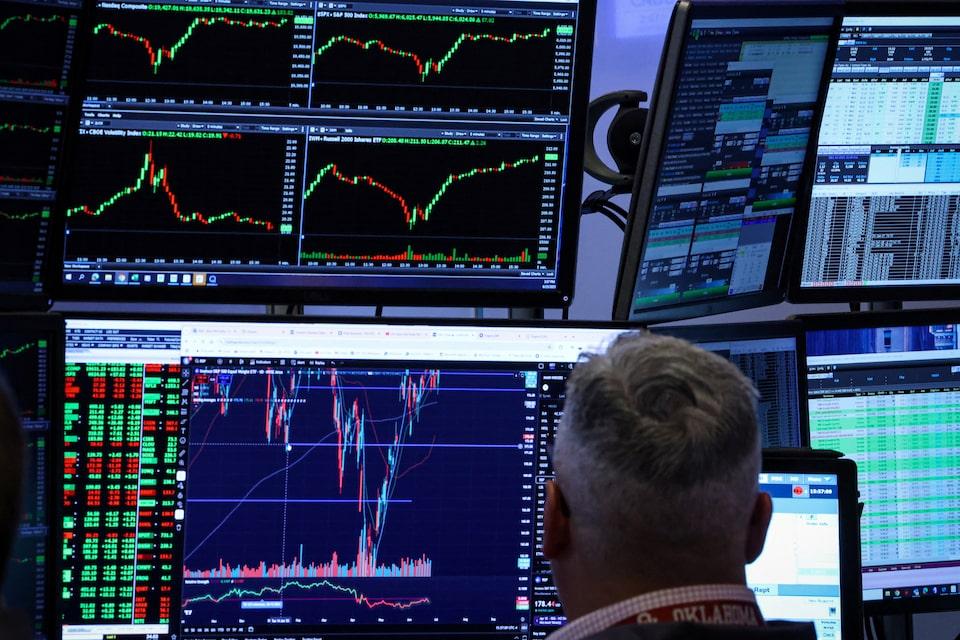
June 23 (Reuters) - U.S. stock futures rose on Monday after President Donald Trump said a ceasefire has been agreed to between Israel and Iran. S&P 500 emini futures rose 0.3% and Nasdaq futures added 0.5%, suggesting traders expect Wall Street to climb when it opens on Tuesday. Sign up here. https://www.reuters.com/business/wall-street-futures-edge-higher-investors-await-irans-retaliatory-move-2025-06-23/
2025-06-23 19:41
June 23 (Reuters) - Venezuela's second-largest refinery, the 310,000-barrel-per-day Cardon plant operated by state company PDVSA, remained halted on Monday after a power blackout, three sources with knowledge of its operations said. Venezuela's aging refining network has frequent outages after years on insufficient investment, mismanagement and U.S. sanctions preventing the import of spare parts. In recent months, Cardon has been key to processing feedstock from some of the Orinoco Belt's heavy crude projects. Sign up here. The blackout began early in the morning and did not affect Cardon's neighboring refinery, the 645,000-bpd Amuay plant, one of the sources said. In the afternoon, power service to the facility was restored and workers began preparations for restarting some units, but the facility remained suspended, according to another source. "We have power back in the refinery, but there is no steam or air yet," the person said, referring to the supply of industrial services to the facility, which is required to restart operational units. https://www.reuters.com/business/energy/venezuelas-second-largest-refinery-halted-due-power-blackout-sources-say-2025-06-23/

2025-06-23 19:40
June 23 (Reuters) - Agtech startup Halter has raised $100 million at a $1 billion valuation, making it one of New Zealand's rare unicorns as it ramps up U.S. expansion of its cattle management platform for dairy farmers. The Series D funding was led by tech investment firm Bond and was joined by venture capital firm NewView along with existing backers Bessemer Venture Partners, DCVC, Blackbird, Icehouse Ventures and Promus Ventures, Halter said on Monday. Sign up here. The dairy sector has emerged as a bright spot this year in an otherwise dour funding environment for agriculture tech startups as farmers rely more on automation to improve productivity. Auckland-based Halter is tapping into that demand with its system of smart collars, connectivity towers and a mobile app that lets ranchers virtually fence, move and monitor their cattle using sound and vibration cues - promising better grazing efficiency and lower environmental impact. Halter said it plans to use the new funds to expand in the U.S., where the company has been working with about 150 ranchers in 18 states. "Over half of US ranchers and farmers are over 55, and rural labor shortages are severe," CEO and founder Craig Piggott said. "Halter enables smaller teams to manage herds more efficiently, without constant physical presence." The U.S. farm industry has faced staffing crunches in recent months due to mass deportations ordered by the Trump administration, with industry groups warning about the impact on an industry that has long depended on immigrants. https://www.reuters.com/world/asia-pacific/cow-tech-startup-becomes-new-zealands-latest-unicorn-100-million-fundraise-2025-06-23/