2025-06-23 14:20
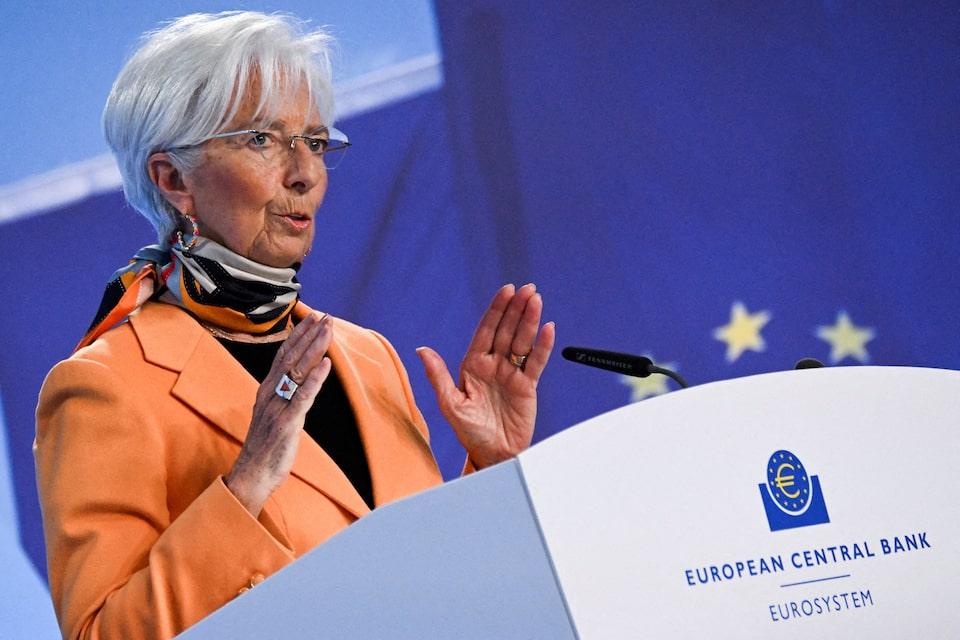
FRANKFURT, June 23 (Reuters) - European Central Bank President Christine Lagarde on Monday urged European lawmakers to speed up the introduction of legislation backing the launch of a digital euro. The ECB has been working for years on a digital version of the single currency, essentially an online wallet, but it needs the European Parliament to pass legislation -- a step that has proven elusive amid resistance from lawmakers. Sign up here. Lagarde renewed her plea in the European Parliament on Monday, describing the digital euro as key to Europe's financial autonomy and taking aim at competing, privately issued digital currencies known as stablecoins. "A legislative framework to pave the way for the potential introduction of a digital euro should be put in place rapidly, please," Lagarde told a committee of the European Parliament. The European Commission proposed digital euro legislation in June 2023, but not much has happened since. If the European Parliament passes the necessary law, the ECB's Governing Council hopes to vote on launching a digital euro in the autumn. Representatives from four of the eight political groupings that make up the European Parliament have said an outage in the ECB’s existing payment system earlier this year raised some questions about the central bank’s ability to deliver a digital euro project. In the ECB's design, digital euros would be available to all euro area residents, probably up to a threshold in the 3,000 euro ($3,440.40) region. They would be guaranteed by the central bank but made available by banks and wallet operators. European bankers have mostly been sceptical, fearing that it would empty their coffers as customers transfer some of their cash to the safety of an ECB-guaranteed wallet. A study by accounting firm PwC on behalf of some bank industry bodies estimated the digital euro may cost the banking sector between 18 billion euros and 30 billion euros in technical, commercial and operational expenses. The ECB has pitched the digital euro as a response to U.S. President Donald Trump's push to promote stablecoins, a type of cryptocurrency typically pegged to the U.S. dollar. Lagarde said stablecoins posed "risks for monetary policy and financial stability" because they could lure deposits away from banks and don't always maintain their fixed value. Stablecoin TerraUSD collapsed in May 2022 when it was unable to maintain its peg to the dollar. Its collapse and that of its sister token Luna caused a market crash that triggered a wave of bankruptcies in the crypto industry. Lagarde also noted there was no global regulation for this corner of the market and the issuer of the largest stablecoin, Tether, was based in El Salvador, "which lacks any prudential framework" for this product. "This fragmented approach prevents a global level playing field and can open the door to new risks and systemic vulnerabilities," Lagarde said. "We must therefore remain alert to developments in other jurisdictions and advocate for globally aligned regulations for stablecoins." ($1 = 0.8720 euros) https://www.reuters.com/sustainability/boards-policy-regulation/ecbs-lagarde-urges-eu-lawmakers-speed-up-digital-euro-law-2025-06-23/
2025-06-23 12:59
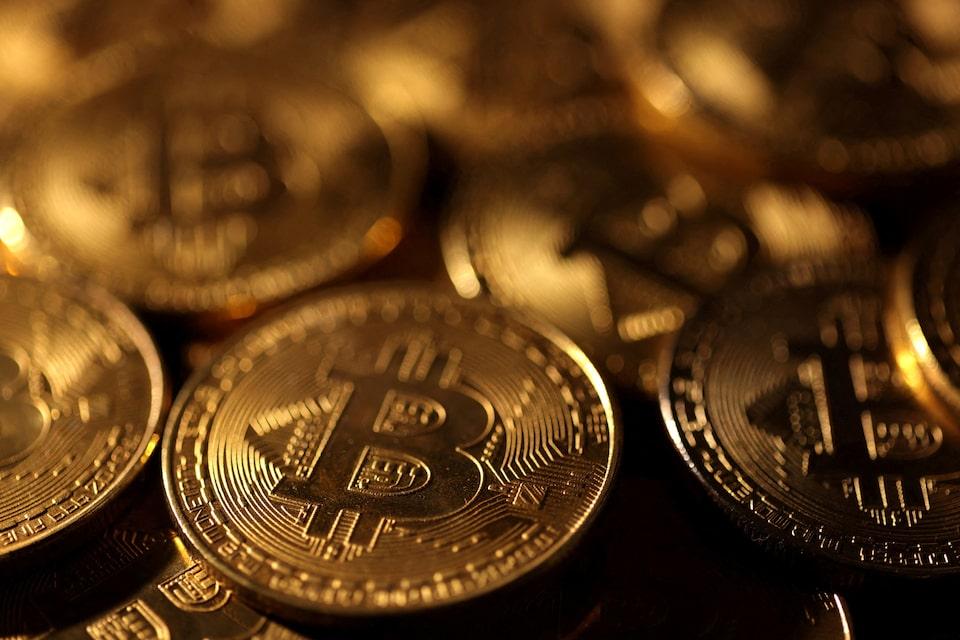
ProCap BTC raises $750 million in equity and convertible note ProCap Financial to use bitcoin for revenue via lending, derivatives Institutional investors commit capital, but Reuters can't verify investments BOSTON, June 23 (Reuters) - (This June 23 story has been corrected after ProCap BTC corrects that Citadel is not an investor in the new company in paragraph 7 and to fix the name of the company to 'MicroStrategy' not 'Strategy' in paragraph 4) U.S. investor and entrepreneur Anthony Pompliano announced on Monday the creation of a new bitcoin treasury company that would hold up to $1 billion of the world's largest cryptocurrency on its balance sheet. Sign up here. Pompliano said in a statement that his financial services firm ProCap BTC would merge with Columbus Circle Capital I, a special purpose acquisition company (CCCM.O) , opens new tab, to create ProCap Financial, a bitcoin treasury firm. Several public companies have employed bitcoin treasury strategies, which involve allocating a portion of their cash and reserves toward bitcoin, to replicate the success of software company MicroStrategy (MSTR.O) , opens new tab, which began accumulating bitcoin in 2020 and now holds more than $63 billion worth of the digital token. The trend comes as U.S. President Donald Trump has sought to overhaul cryptocurrency policy, including calls to establish a strategic bitcoin reserve, after courting cash from the industry on the campaign trail. Pompliano, one of the biggest investors in the crypto space over the last several years, said ProCap BTC has raised $500 million in equity and $250 million in a convertible note, in what he termed the largest initial fundraising in history for a bitcoin treasury company. Unlike traditional bitcoin treasury companies, Pompliano said ProCap Financial would use its bitcoin balance sheet to generate revenue and profit through a variety of strategies, including lending, derivatives, and other products and services. He also said leading institutional investors Susquehanna, Jane Street, and Magnetar have committed capital, as have crypto firms Off the Chain Capital, Pantera, Coinfund, Parafi, Blockchain.com , opens new tab, and FalconX. Reuters was unable to verify whether these companies were investing in ProCap Financial. "The legacy financial system is being disrupted by bitcoin right before our eyes," Pompliano said. "Our objective is to develop a platform that will not only acquire bitcoin for our balance sheet, but will also implement risk-mitigated solutions to generate sustainable revenue and profits from our bitcoin holdings." https://www.reuters.com/legal/transactional/us-investor-strikes-1-billion-merger-create-bitcoin-treasury-company-2025-06-23/
2025-06-23 12:44
ESMA says EU capitals support investment union Europe still divided on giving ESMA more power ESMA says it is not the SEC, direct supervision should be 'narrow' PARIS, June 23 (Reuters) - Efforts to grant the European Securities and Markets Authority greater supervisory powers face resistance from some EU members, its chair Verena Ross told Reuters, underscoring the challenges in unifying Europe’s fragmented capital markets. "It's clear that when it comes to supervision and also some of the other measures, there's not a unified view that is definitely the way to go," said ESMA's Ross. Sign up here. "It's quite hard to predict where we will come out," she said in an interview in Paris, while remaining confident about broad support for the EU's package of measures to harmonize financial markets. The European Commission's Savings and Investment Union (SIU) package is the latest iteration of plans to deepen capital markets across Europe, which have been discussed for a decade, but which have made little progress. Announced in March, the SIU seeks to use trillions of euros in private savings held in bank accounts to fund technological and industrial development. As part of this initiative, ESMA could gain powers to directly oversee large cross-border financial firms, including crypto companies. "I think we will have some debates around those areas. Rightly so. It's important, I think, to have that debate openly and constructively," Ross added. Currently, Paris-based ESMA directly oversees rating agencies and central counterparties, as well as trade and securities repositories. While EU leaders have voiced support for strengthening ESMA, progress has been slow due to key EU members' reluctance to give up control of their national financial rules. The head of France's financial regulator told Bloomberg , opens new tab in March that she would be willing to relinquish some national authority, while Luxembourg's prime minister wrote in the Financial Times , opens new tab "a decentralised European supervisory system leverages national authorities’ expertise and avoids unnecessary bureaucracy." CRYPTO SUPERVISION The rollout of the EU's landmark crypto regulation, MiCA, has raised concerns about inconsistent approaches among national regulators and whether they can effectively supervise complex cross-border financial firms. France's financial regulator last month warned that ESMA's lack of direct authority could lead to a "regulatory race to the bottom". Regulators across the bloc are divided over the speed and rigour of other countries' approvals. Ross acknowledged that individual countries were moving at different speeds on MiCA due to varying levels of pre-existing crypto regulation. But Ross added that "some have argued that rather than having 27 national supervisors responsible, let's just make ESMA responsible for it," a move that would make supervision more effective. ESMA has also been warning about excessive leverage , opens new tab in parts of fund management, some of which remains opaque. The regulator plans to collect information from market participants to address any lack of transparency. The regulator welcomed comparisons between ESMA and the U.S. Securities and Exchange Commission (SEC) but pointed out key differences. "I always find it very flattering if people talk about the European SEC. I personally have not used this term," Ross said. "We are not the U.S. - Europe is different, and we are talking here about natural steps to potentially move some of the direct supervision responsibility to the EU level, but in a very narrow and selected way." https://www.reuters.com/sustainability/boards-policy-regulation/esma-head-says-eu-lacks-unified-view-regulators-expanded-powers-2025-06-23/
2025-06-23 12:29
DAKAR, June 23 (Reuters) - Malian tax officials have reopened Barrick Mining's (ABX.TO) , opens new tab office in the capital Bamako under new interim administration after it was shut in mid-April over alleged non-payment of taxes amid a dispute over mining revenues, two people close to the matter said. Spokespeople for Barrick and for Mali's mines ministry did not immediately respond to requests for comment. Sign up here. https://www.reuters.com/world/africa/barrick-mining-office-malis-capital-bamako-reopens-under-new-provisional-2025-06-23/
2025-06-23 12:00
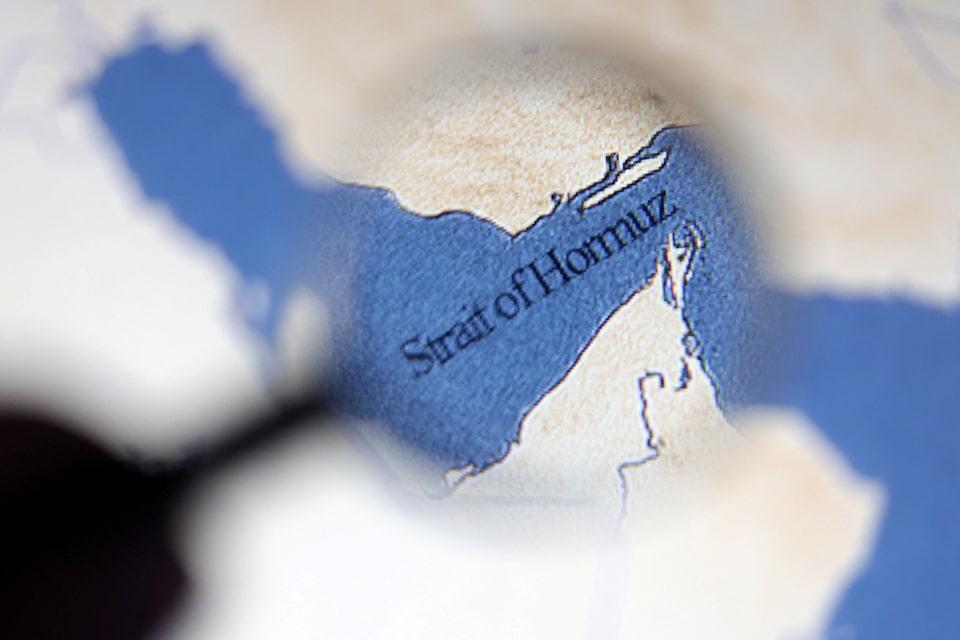
LAUNCESTON, Australia, June 23 (Reuters) - Thermal coal may end up as a major beneficiary of escalating hostilities in the Middle East, as the fuel used to generate electricity becomes cheaper than one of its main competitors liquefied natural gas (LNG). Much of the focus of the potential fallout from the conflict between Israel, and now the United States, and Iran is the threat to crude oil and refined fuels shipped through the Strait of Hormuz. Sign up here. But all of Qatar's LNG also goes through the narrow waterway separating the gulfs of Persia and Oman, and this amounts to almost 20% of the global seaborne supply of the super-chilled fuel. While there has yet to be any disruption of Qatar's LNG, the mere threat that Iran may attempt to block the strait or attack shipping has seen spot LNG prices rise in Asia, the biggest market. LNG for delivery to North Asia rose to $14 per million British thermal units (mmBtu) in the week to June 20, a four-month high and up from $12.6 the prior week. The weekly price assessment also came before the United States joined Israel's bombing campaign against Iran, with President Donald Trump claiming on June 21 that the strikes had "completely and totally obliterated" three nuclear facilities. The involvement of the United States makes it more likely that LNG prices will continue to rise to reflect the increased risk premium. But even at the current level, LNG is no longer competitive against thermal coal in the two major markets where fuel-switching can occur, Japan and South Korea. ADVANTAGE COAL The price of Australian thermal coal with an energy content of 6,000 kilocalories per kilogram at Newcastle Port rose to a four-month high of $109.41 a metric ton in the week to June 20, according to data from globalCOAL. This is the grade of thermal coal most used by Japan and South Korea, as well as Taiwan. Using LSEG data to convert the price of coal into million British thermal units shows that Australia's Newcastle benchmark is currently around $12.18 per mmBtu, or a 13% discount to the spot LNG price. The most recent low for spot LNG was in early May when the price dipped to $11 per mmBtu, at which point it was cheaper than Newcastle coal, which was $11.47. But spot LNG prices have rallied harder than those for coal in recent weeks, a trend that is likely to continue for as long as tensions remain high in the Middle East. Since it has only been 10 days since Israel started its bombing campaign against Iran it's still too early to see a sustained trend in the volumes of coal being purchased by Japan and South Korea. However, there are some signs that coal imports are starting to increase, with commodity analysts Kpler tracking Japan's arrivals at 6.57 million tons in June, up from 6.39 million in May. More interestingly, Kpler is already estimating that Japan's thermal coal imports will jump to 7.23 million tons, which would be the most since March. It's likely that the July number will be revised higher as more cargoes are assessed. There is also an element of seasonality to Japan's thermal coal imports, which tend to rise in both the winter and summer peak demand periods. This means it will be important to look at the year-on-year changes to see if Asia's third-biggest coal buyer is indeed buying more of the fuel. Japan imported 10.05 million tons of thermal coal in July last year, and given that the volume already assessed for this coming July is more than 70% of that total, it's likely that imports next month will show an increase from July 2024. It's also worth noting that Asia's two biggest coal importers, China and India, don't have much ability to swap LNG for coal given their limited use of natural gas for power generation. But on a longer-term note, both countries are likely to view the current unrest in the Middle East as another compelling reason to reduce dependency on imported crude oil and LNG as rapidly as possible. If that means using their vast domestic reserves of coal, supplemented by imports, to electrify transportation at a faster pace, it's likely that this is a path they will pursue irrespective of climate change concerns. Enjoying this column? Check out Reuters Open Interest (ROI), your essential new source for global financial commentary. ROI delivers thought-provoking, data-driven analysis of everything from swap rates to soybeans. Markets are moving faster than ever. ROI can help you keep up. Follow ROI on LinkedIn , opens new tab and X , opens new tab. The views expressed here are those of the author, a columnist for Reuters. https://www.reuters.com/markets/commodities/iran-tensions-make-thermal-coal-winner-against-pricier-lng-2025-06-23/
2025-06-23 11:39
Companies instructing vessels to limit time in strait Shiptracking data shows at least five tankers turning away The strait is on vital Gulf oil shipping route SINGAPORE/LONDON, June 23 (Reuters) - At least two supertankers made U-turns near the Strait of Hormuz following U.S. military strikes on Iran, shiptracking data shows, as more than a week of violence in the region prompts vessels to speed, pause, or alter their journeys. Washington's decision to join Israel's attacks on Iran has stoked fears that Iran could retaliate by closing the strait between Iran and Oman through which around 20% of global oil and gas demand flows. Sign up here. That has spurred forecasts of oil surging to $100 a barrel. Both Brent and West Texas Intermediate crude hit fresh five-month highs on Monday in choppy trade as investors weighed the potential risks to supply. Shipping rates for supertankers, which can carry 2 million barrels of oil, have also soared, more than doubling in a week to over $60,000 a day, freight data shows. The Coswisdom Lake, a very large crude carrier supertanker, reached the strait on Sunday before making a U-turn and heading south, Kpler and LSEG data showed. On Monday it turned back again, resuming its journey towards the port of Zirku in the United Arab Emirates. The South Loyalty, also a VLCC, made a similar U-turn and remained outside the strait on Monday, LSEG data showed. It was scheduled to load crude from Iraq's Basra terminal, according to Kpler data and two shipping sources. The Coswisdom Lake was scheduled to load crude at Zirku for delivery to China. It was chartered by Unipec, a trading arm of China's state-run Sinopec (600028.SS) , opens new tab, LSEG and Kpler data showed. Sinopec did not respond to a request for immediate comment. Singapore-based Sentosa Shipbrokers said that over the past week, empty tankers entering the Gulf are down 32% while loaded tanker departures are down 27% from early May levels. CHANGING COURSE, PAUSING There have also been changes to how tankers are navigating the area, with a cluster of them sailing closer to Oman, while mainly Iranian-flagged vessels use Iran's local waters, shiptracking data on the MarineTraffic platform showed on Monday. The chemical tanker Kohzan Maru was sailing towards the strait before changing course to remain in the Gulf of Oman. The oil tanker Red Ruby and chemical carrier Marie C were also sailing towards the strait before opting to drop anchor off the UAE port of Fujairah, the data showed. All three en route for loadings. Shipowners are trying to minimise time that vessels spend inside the Strait of Hormuz due to the conflict, KY Lin, spokesperson at Taiwan's Formosa Petrochemical Corp, said on Monday. "Vessels will only enter the region when it is nearer to their loading time," he said. Japanese shipping firms Nippon Yusen (9101.T) , opens new tab and Mitsui O.S.K. Lines (9104.T) , opens new tab said on Monday they continue to transit the strait but have instructed their vessels to minimise time spent in the Gulf. Several oil traders and analysts told Reuters that they had been warned to expect possible shipping delays as vessels wait for their turn outside the area. "Diversifying sources of supply and shipping routes and learning from past disruptions like the Red Sea are critical," said Leon Alexander, partner at global law firm Clyde & Co. Iran's parliament on Sunday approved a measure to close the strait, Iran's Press TV reported, but any such move would require approval from the Supreme National Security Council. Iran has threatened to close the strait in the past but has never done so. https://www.reuters.com/world/china/tankers-u-turn-zig-zag-pause-around-strait-hormuz-2025-06-23/