2025-06-22 23:37
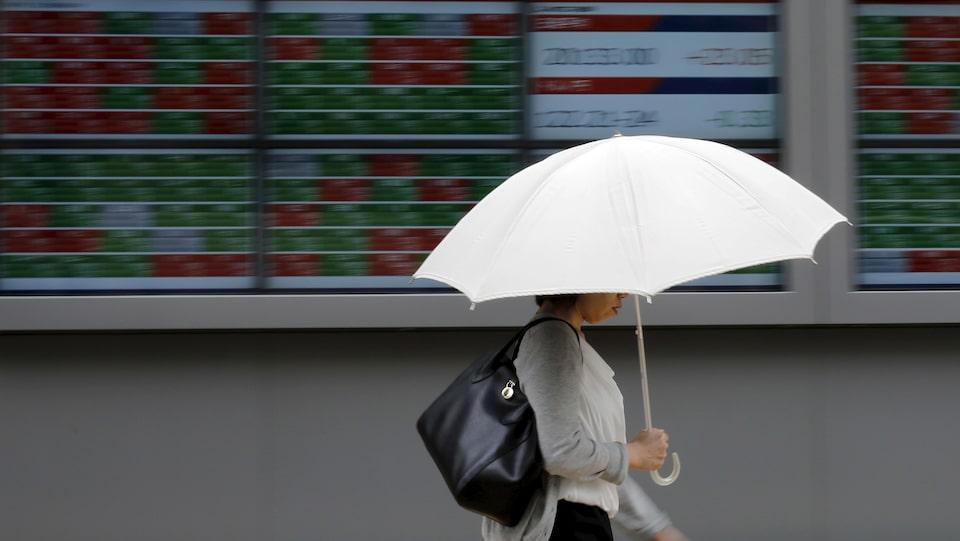
Crude prices settle lower, retreating from multi-month highs after Iran retaliates Wall Street stocks finish higher, European shares fall Dollar advances against yen, falls against franc; euro rebounds Safe-haven gold pares losses NEW YORK, June 23 (Reuters) - Global equity markets advanced on Monday while oil prices settled sharply lower after hitting multi-month highs, as markets shrugged off the effects of the escalating Middle East conflict, with Iran firing retaliatory airstrikes against U.S. bases in Qatar. Wall Street's main indexes finished higher, with 10 out of 11 of the benchmark S&P 500 subsectors advancing. Energy stocks (.SPNY) , opens new tab were the biggest losers on the session. Sign up here. Equities had pared gains following news on Monday that the Qatari government had closed its airspace as it braced for an Iranian air strike against U.S. forces stationed in the country. Iran's military said it carried out a missile attack on the Al Udeid U.S. airbase in Qatar. But U.S. officials said no U.S. personnel were killed or injured in the attack on the airbase, the largest U.S. military installation in the Middle East. Iran's attacks were in retaliation against U.S. air strikes against Persian nuclear sites in support of an Israeli military campaign. The Dow Jones Industrial Average (.DJI) , opens new tab rose 0.89% to 42,581.78, the S&P 500 (.SPX) , opens new tab rose 0.96% to 6,025.17 and the Nasdaq Composite (.IXIC) , opens new tab rose 0.94% to 19,630.98. European shares (.STOXX) , opens new tab finished down 0.28%. MSCI's broadest index of Asia-Pacific shares outside Japan(.MIAPJ0000PUS) , opens new tab fell 0.70% overnight. MSCI's gauge of stocks across the globe (.MIWD00000PUS) , opens new tab rose 0.49%. Israel bombed Evin prison in northern Tehran on Monday, a potent symbol of Iran's governing system, and Revolutionary Guard command centers responsible for internal security in the Tehran area. The Iranian parliament had approved the closure of the Strait of Hormuz, a major shipping lane in the global oil trade. "The market being higher signals a risk-on sentiment, which is somewhat surprising considering that we had a series of very volatile events over the weekend with U.S. participation in the (Iran) bombing efforts with Israel," said Andrew Wells, chief investment officer at SanJac Alpha in Houston. "The lesson we take from this is that these headline events are having less and less effect on the market since tariffs went on - the so-called Liberation Day - which was the big volatile event," Wells said. Brent Crude futures closed down 7.2% at $71.48 a barrel, while U.S. West Texas Intermediate crude eased 7.2% to $68.51. The Brent and WTI crude benchmarks touched five-month highs of $81.40 and $78.40, respectively. Iran's attacks are seen as an effort at de-escalation, as it informed the U.S. via diplomatic channels ahead of attacks on its Qatar base, a senior regional source told Reuters. It has also not taken action to disrupt shipping traffic going through the Strait of Hormuz - which is only about 33 km (21 miles) wide at its narrowest point with around a quarter of global oil trade and 20% of liquefied natural gas supplies passing through it. Federal Reserve Vice Chair for Supervision Michelle Bowman said on Monday the time to cut interest rates appeared imminent as she was increasingly worried about labor market risks and was less concerned that high import taxes would cause an ongoing inflation problem. The dollar strengthened 0.08% to 146.15 against the Japanese yen and weakened 0.68% to 0.81260 against the Swiss franc. The euro was up 0.49% at $1.157675, rebounding from earlier losses following Bowman's comments. The dollar index , which measures the greenback against a basket of currencies including the yen and the euro, fell 0.5% to 98.39. Gold prices pared early losses and settled higher. Spot gold rose 0.23% to $3,375.71. U.S. gold futures settled 0.3% higher at $3,395. https://www.reuters.com/world/china/global-markets-wrapup-1-2025-06-22/
2025-06-22 23:00
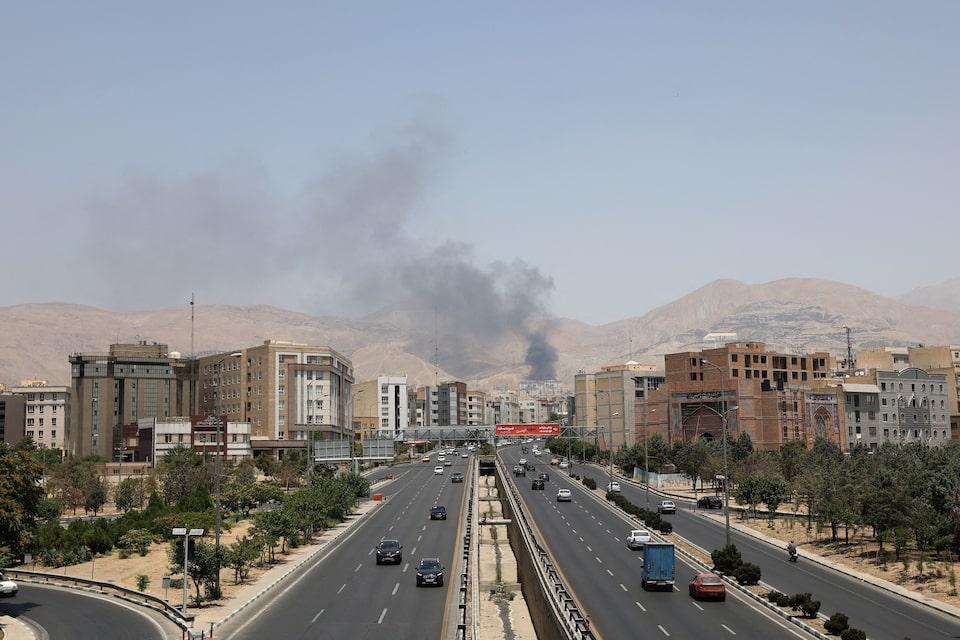
US strikes on Iran spur fear of disruption to Middle East oil exports Iran able to block the Strait of Hormuz, has tried in the past Disruptions likely to be met by swift response from US Navy LONDON, June 22 - U.S. strikes on several Iranian nuclear sites represent a meaningful escalation of the Middle East conflict that could lead Tehran to disrupt vital exports of oil and gas from the region, sparking a surge in energy prices. But history tells us that any disruption would likely be short-lived. Investors and energy markets have been on high alert since Israel launched a wave of surprise airstrikes across Iran on June 13, fearing disruption to oil and gas flows out of the Middle East, particularly through the Strait of Hormuz , opens new tab, a chokepoint between Iran and Oman through which around 20% of global oil and gas demand flows. Sign up here. Benchmark Brent crude prices have risen by 10% to over $77 a barrel since June 13. While Israel and Iran have targeted elements of each other's energy infrastructure, there has been no significant disruption to maritime activity in the region so far. But President Donald Trump's decision to join Israel by bombing three of Iran's main nuclear sites in the early hours of Sunday could alter Tehran's calculus. Iran, left with few cards to play, could retaliate by hitting U.S. targets across the region and disrupting oil flows. While such a move would almost certainly lead to a sharp spike in global energy prices, history and current market dynamics suggest any move would likely be less damaging than investors may fear. CAN THEY DO IT? The first question to ask is whether Iran is actually capable of seriously disrupting or blocking the Strait of Hormuz. The answer is probably yes. Iran could attempt to lay mines across the Strait, which is 34 km (21 miles) wide at its narrowest point. The country's army or the paramilitary Islamic Revolutionary Guard Corps (IRGC) could also try to strike or seize vessels in the Gulf, a method they have used on several occasions in recent years. Moreover, while Hormuz has never been fully blocked, it has been disrupted several times. During the 1980s Iran-Iraq war, the two sides engaged in the so-called "Tanker Wars" in the Gulf. Iraq targeted Iranian ships, and Iran attacked commercial ships, including Saudi and Kuwaiti oil tankers and even U.S. navy ships. Following appeals from Kuwait, then-U.S. President Ronald Reagan deployed the navy between 1987 and 1988 to protect convoys of oil tankers in what was known as Operation Earnest Will. It concluded shortly after a U.S. navy ship shot down Air Iran flight 655, killing all of its 290 passengers on board. Tensions in the strait flared up again at the end of 2007 in a series of skirmishes between the Iranian and U.S. navies. This included one incident where Iranian speedboats approached U.S. warships, though no shots were fired. In April 2023, Iranian troops seized the Advantage Sweet crude tanker, which was chartered by Chevron, in the Gulf of Oman. The vessel was released more than a year later. Iranian disruption of maritime traffic through the Gulf is therefore certainly not unprecedented, but any attempt would likely be met by a rapid, forceful response from the U.S. navy, limiting the likelihood of a persistent supply shock. HISTORY LESSON Indeed, history has shown that severe disruptions to global oil supplies have tended to be short-lived. Iraq's invasion of neighbouring Kuwait in August 1990 caused the price of Brent crude to double to $40 a barrel by mid-October. Prices returned to the pre-invasion level by January 1991 when a U.S.-led coalition started Operation Desert Storm, which led to the liberation of Kuwait the following month. The start of the second Gulf war between March and May 2003 was even less impactful. A 46% rally in the lead-up to the war between November 2002 and March 2003 was quickly reversed in the days preceding the start of the U.S.-led military campaign. Similarly, Russia's invasion of Ukraine in February 2022 sparked a sharp rally in oil prices to $130 a barrel, but prices returned to their pre-invasion levels of $95 by mid-August. These relatively quick reversals of oil price spikes were largely thanks to the ample spare production capacity available at the time and the fact that the rapid oil price increase curbed demand, says Tamas Varga, an analyst at oil brokerage PVM. Global oil markets were also rocked during the 1973 Arab oil embargo and after the 1979 revolution in Iran, when strikes on the country's oilfields severely disrupted production. But those did not involve the blocking of Hormuz and were not met with a direct U.S. military response. SPARE CAPACITY The current global oil market certainly has spare capacity. OPEC+, an alliance of producing nations, today holds around 5.7 million barrels per day in excess capacity, of which Saudi Arabia and the United Arab Emirates hold 4.2 million bpd. The concern today is that the vast majority of the oil from Saudi Arabia and the UAE is shipped via the Strait of Hormuz. The two Gulf powers could bypass the strait by oil pipelines, however. Saudi Arabia, the world's top oil exporter, producing around 9 million bpd, has a crude pipeline that runs from the Abqaiq oilfield on the Gulf coast in the east to the Red Sea port city of Yanbu in the west. The pipeline has capacity of 5 million bpd and was able to temporarily expand its capacity by another 2 million bpd in 2019. The UAE, which produced 3.3 million bpd of crude oil in April, has a 1.5 million bpd pipeline linking its onshore oilfields to the Fujairah oil terminal that is east of the Strait of Hormuz. But this western route could be exposed to attacks from the Iran-backed Houthis in Yemen, who have severely disrupted shipping through the Suez Canal in recent years. Additionally, Iraq, Kuwait and Qatar currently have no clear alternatives to the strait. It is possible that Iran will choose not to take the dramatic step of blocking the strait in part because doing so would disrupt its own oil exports. Tehran may also consider any further escalation fruitless in light of U.S. involvement and will instead try to downplay the importance of the U.S. strikes and come back to nuclear negotiations. In the meantime, spooked energy markets, fearing further escalation, are apt to respond to the U.S. strikes with a sharp jump in crude prices. But even in a doomsday scenario where the Strait of Hormuz is blocked, history suggests markets should not expect any supply shock to be persistent. Enjoying this column? Check out Reuters Open Interest (ROI), , opens new tab your essential new source for global financial commentary. ROI delivers thought-provoking, data-driven analysis. Markets are moving faster than ever. ROI , opens new tab can help you keep up. Follow ROI on LinkedIn , opens new tab and X. , opens new tab (This June 22 story has been corrected to clarify that the width of the Strait of Hormuz at its narrowest point is 34 km (21 miles), not 55 km (34 miles), in paragraph 8) https://www.reuters.com/markets/commodities/iran-oil-doomsday-hormuz-may-be-more-fear-than-reality-bousso-2025-06-22/
2025-06-22 21:34
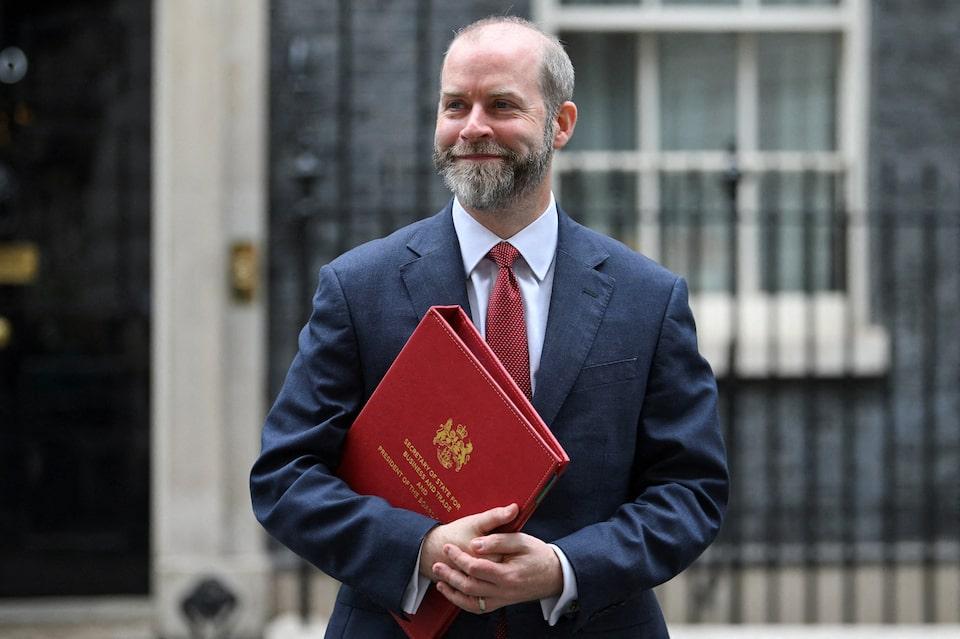
Britain to cut high energy costs for business Government announces first industrial strategy for eight years Manufacturing revival eyed but some services miss out LONDON, June 22 (Reuters) - Britain's industrial strategy made public on Monday will reduce green levies, lowering energy bills for thousands of companies to try to make steel companies and other manufacturers more competitive. Under the strategy for the decade 2025-2035, the government plans to cut the bills of electricity-intensive industry by up to 25% from 2027, which it said could benefit more than 7,000 businesses. Sign up here. The government has made boosting Britain's anaemic growth a priority. But lawmakers and business leaders had highlighted the high energy costs many companies face as an obstacle. As the United States, under President Donald Trump, has taken a lead in promoting domestic industry through protectionist tariffs and by tearing up potentially expensive environmental rules and charges, Britain and also the European Union have faced pressure to support their manufacturers. Industry body Make UK had said the government should scrap climate levies imposed on firms. In response, the government has given an exemption to the most energy-intensive companies. The Industrial Strategy still includes clean energy as one of eight previously identified sectors of strength for Britain. Others are advanced manufacturing, defence and the creative industries. "Tackling energy costs and fixing skills has been the single biggest ask of us from businesses and the greatest challenge they have faced - this government has listened," Business Secretary Jonathan Reynolds said in a statement. The government said the energy measures would be funded through reforms to the energy system, without raising household bills or taxes. The scope and eligibility for the scheme will be finalised after a consultation. BUSINESS AND WORKERS The industrial strategy is Britain's first in eight years, after the centre-left Labour Party said it would provide a more coherent approach to help industry with anything from skills to power to water and investment. Prime Minister Keir Starmer and other ministers said the British state had both stood back and interfered too much. They said workers had little support during deindustrialisation but had also faced what they say is overegulation. Engineering and business groups welcomed the strategy's focus on energy costs and skills, but pro-growth campaign group Britain Remade called for more to be done to ensure faster grid connections and to reform the planning system. Under the strategy, the government will expand the state-owned British Business Bank's capacity to channel investment into smaller companies, provide an extra 1.2 billion pounds ($1.61 billion) a year on skills by 2028-29, and cut regulatory burdens on businesses. Manufacturing accounts for less than 9% of the economy. As well as including Britain's creative sector, the industrial strategy covers financial and other professional services, but business groups from sectors such as hospitality criticised it for being too narrow in its focus. ($1 = 0.7435 pounds) https://www.reuters.com/sustainability/boards-policy-regulation/britain-cut-companies-energy-bills-new-industrial-strategy-2025-06-22/
2025-06-22 21:22
June 22 (Reuters) - Electric car maker Tesla (TSLA.O) , opens new tab started a trial of its long-awaited robotaxi service in Austin, Texas, on Sunday, the first step toward what could be a showdown with Alphabet's (GOOGL.O) , opens new tab Waymo, the only player currently offering fully autonomous paid rides in the United States. Tesla Chief Executive Elon Musk has started off with about 10 Model Ys and promised to focus on safety. He says Tesla could scale quickly, and he plans a separate robotaxi vehicle. Sign up here. Social media influencers were seen booking and taking rides in the robotaxis in several Austin locations on Sunday, according to videos reposted by Musk. Here is how Tesla's cybercab efforts compare with those of Waymo and Amazon.com-owned (AMZN.O) , opens new tab Zoox, which is preparing its own commercial launch: LOCATIONS VEHICLE DESIGN AND TECHNOLOGY https://www.reuters.com/business/autos-transportation/how-teslas-robotaxi-efforts-stack-up-against-waymo-zoox-2025-06-22/

2025-06-22 20:33
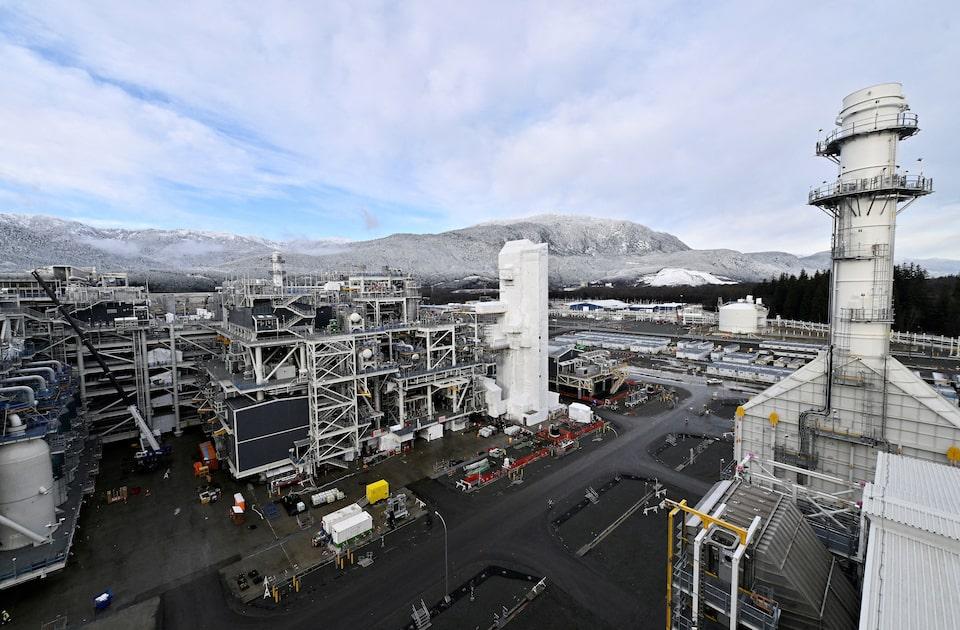
Shell-led LNG Canada facility begins production in Kitimat, British Columbia Facility aims to export 14 million metric tonnes per annum, doubling capacity next year Canadian gas exports to U.S. may decline as LNG Canada provides new outlet HOUSTON/CALGARY, June 22 (Reuters) - The Shell-led (SHEL.L) , opens new tab LNG Canada facility has produced its first liquefied natural gas for export in Kitimat, British Columbia, a spokesperson for the project confirmed on Sunday. The new production, which will go mainly to Asia, comes amid concerns over disruptions to the 20% of global gas supply coming from Qatar, due to the Israel-Iran conflict and the possibility of Tehran closing the Strait of Hormuz, a key shipping lane. Sign up here. The facility has not yet loaded its first LNG export cargo, although LNG Canada said it remains on track to do by the middle of this year. The facility is the first large-scale Canadian LNG project to begin production and also the first major LNG facility in North America with direct access to the Pacific Coast, significantly reducing sail time to Asian markets when compared with U.S. Gulf coast facilities. When fully operational it will have a capacity to export 14 million metric tonnes per annum (mtpa), according to company statements. Shell and its partners in the LNG Canada project are working toward reaching a final investment decision next year for doubling the project's 14 million metric tonnes per year (mtpa) capacity, Cederic Cremers, Shell's president of integrated gas, told Reuters. He added he expected the project's first phase to fully reach its 14 mtpa capacity next year, after starting up this month. LNG tanker Gaslog Glasgow is approaching LNG Canada's Kitimat port, according to LSEG ship tracking data. The vessel is expected to arrive on June 29 and will be loaded with LNG, the sources said. The LNG Canada project is a joint venture between Shell Plc (SHEL.L) , opens new tab, Petronas (PGAS.KL) , opens new tab, PetroChina (601857.SS) , opens new tab, Mitsubishi Corporation (8058.T) , opens new tab and Kogas (KVGG.LJ) , opens new tab. Once the facility enters service, Canadian gas exports to the U.S. will likely decline, traders said, as Canadian energy firms will have another outlet for their fuel. For now, the U.S. is the only outlet for Canadian gas. Canada has two other smaller LNG export facilities also under construction on the Pacific Coast. The facilities, Woodfibre LNG and Cedar LNG, are expected to be completed between 2027 and 2028. Canada exported about 8.6 billion cubic feet per day (bcfd) of gas via pipelines to the U.S. in 2024, up from 8.0 bcfd in 2023 and an average of 7.5 bcfd over the prior five years (2018-2022), according to data from the U.S. Energy Information Administration. That compares with a record 10.4 bcfd in 2002. https://www.reuters.com/business/energy/lng-canada-produces-first-liquefied-natural-gas-export-sources-say-2025-06-22/
2025-06-22 20:07
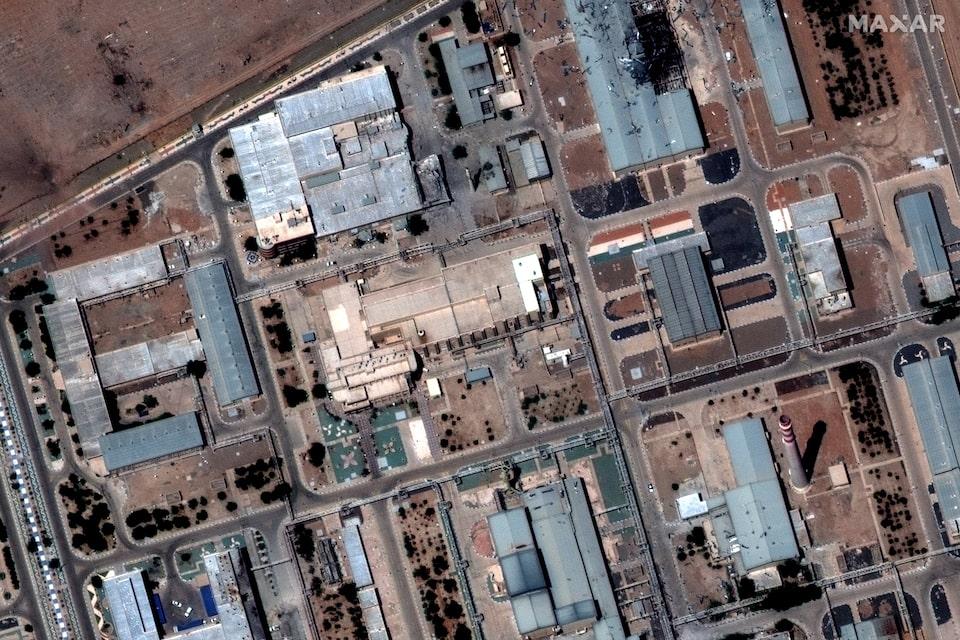
VIENNA, June 22 (Reuters) - Entrances to tunnels used to store part of Iran's enriched uranium stockpile at the sprawling Isfahan nuclear complex were hit in U.S. military strikes overnight, the U.N. nuclear watchdog said on Sunday. "We have established that entrances to underground tunnels at the site were impacted," the International Atomic Energy Agency said in a statement. Sign up here. Officials have previously said much of Iran's most highly enriched uranium was stored underground at Isfahan. In a statement to the U.N. Security Council soon after the IAEA statement was issued, the agency's chief Rafael Grossi appeared to confirm the tunnels hit were part of the area used for the storage of that stockpile. "Entrances to tunnels used for the storage of enriched material appear to have been hit," he said, referring to Isfahan. Iranian officials have said measures would be taken to protect the country's nuclear material without informing the IAEA. Grossi said Iran could do that in a way that respects its so-called safeguards obligations under the nuclear Non-Proliferation Treaty. "Any special measures by Iran to protect its nuclear materials and equipment can be done in accordance with Iran’s safeguards obligations and the agency. This is possible," Grossi told the Security Council. https://www.reuters.com/world/middle-east/iaea-says-entrances-tunnels-irans-isfahan-site-hit-by-us-strike-2025-06-22/