2025-06-22 12:42
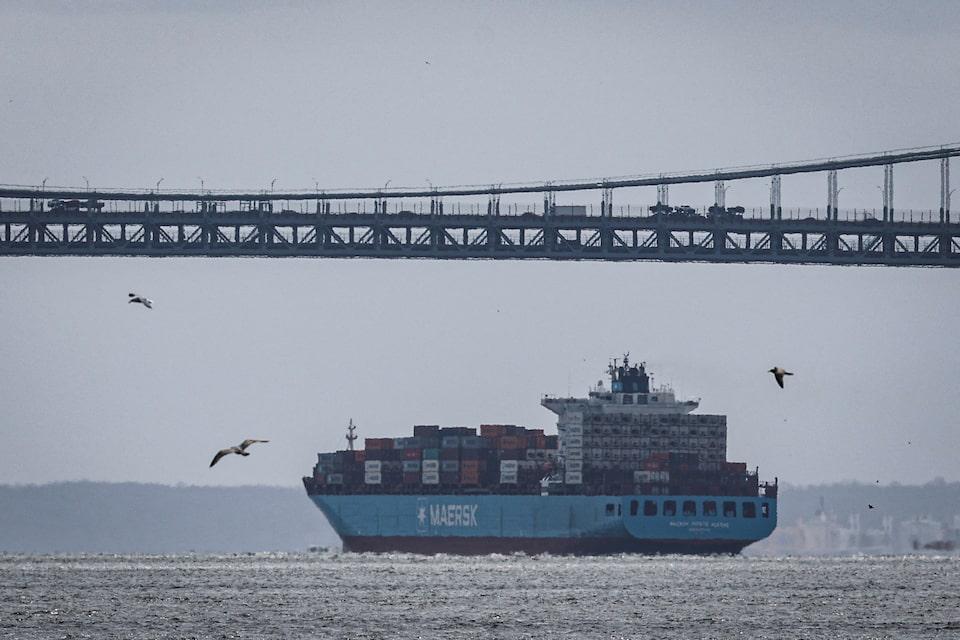
OSLO, June 22 (Reuters) - Maersk (MAERSKb.CO) , opens new tab vessels continue to sail through the Strait of Hormuz but the company was ready to re-evaluate this based on available information, the group said in a statement on Sunday, following U.S. strikes on Iranian nuclear facilities overnight. "We will continuously monitor the security risk to our specific vessels in the region and are ready to take operational actions as needed," the Danish container shipping company said. Sign up here. https://www.reuters.com/business/autos-transportation/maersk-continues-sail-through-strait-hormuz-company-says-2025-06-22/
2025-06-22 12:19
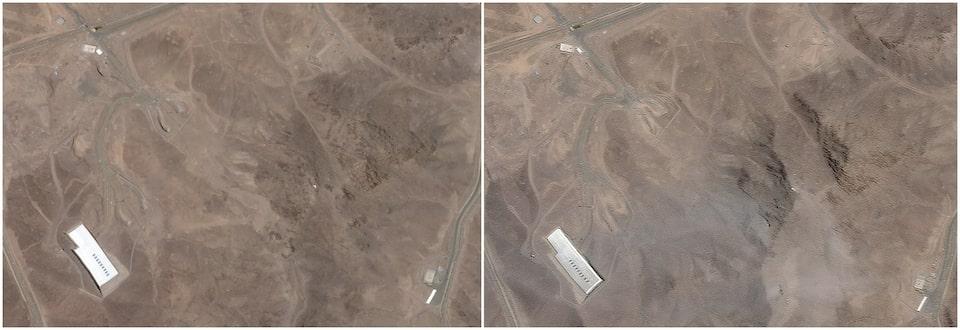
You can bomb away sites but not knowledge, experts warn Exact impact from latest strikes remains to be seen Status of Iran's enriched uranium stock is still unclear North Korea-style race for bomb is one possible scenario Many open questions on programme's present and future VIENNA/PARIS, June 22 (Reuters) - U.S. military strikes overnight in which President Donald Trump said Iran's main nuclear sites were "obliterated" will put to the test the widely held view that such attacks can delay a nuclear programme but not kill a determined push for atom bombs. As Iran's nuclear programme has expanded and become more sophisticated over the past two decades, many officials and nuclear experts have warned: You can destroy or disable a nuclear programme's physical infrastructure but it is very hard or impossible to eliminate the knowledge a country has acquired. Sign up here. Western powers including the United States have publicly suggested as much, complaining of the "irreversible knowledge gain" Iran has made by carrying out activities they object to. "Military strikes alone cannot destroy Iran's extensive nuclear knowledge," the Washington-based Arms Control Association said in a statement after the U.S. strikes with massive bunker-busting bombs on sites including Iran's two main underground enrichment plants at Natanz and Fordow. "The strikes will set Iran's programme back, but at the cost of strengthening Tehran's resolve to reconstitute its sensitive nuclear activities, possibly prompting it to consider withdrawing from the nuclear Non-Proliferation Treaty, and possibly proceeding to weaponisation." Israel has also said it has killed Iranian nuclear scientists but, while little is known about the personnel side of Iran's nuclear programme, officials have said they are sceptical about that having a serious impact on Iran's nuclear knowledge, even if it might slow progress in the near term. The West says there is no civilian justification for Iran's enrichment of uranium to near weapons-grade fissile purity. Iran says its nuclear objectives are solely peaceful and it has the right to enrich as much as it wants. Iran's nuclear programme has made rapid advances since Trump pulled the United States out of a 2015 nuclear deal between Tehran and major powers that placed strict limits on its atomic activities in exchange for sanctions relief. After the U.S. withdrawal in 2018 and the re-imposition of U.S. sanctions, Iran pushed past and then far beyond the limits imposed by the deal on items like the purity to which it can enrich uranium and how much it can stockpile. URANIUM STOCK At least until Israel's first strikes against its enrichment installations on June 13, Iran was refining uranium to up to 60% purity, a short step from the roughly 90% that is bomb-grade, and far higher than the 3.67% cap imposed by the 2015 deal, which Iran respected until the year after Trump pulled out. The last report on May 31 by the International Atomic Energy Agency, the U.N. nuclear watchdog that inspects Iran's nuclear facilities, showed Iran had enough uranium enriched to up to 60%, if enriched further, for nine nuclear weapons, according to an IAEA yardstick. It has more at lower levels like 20% and 5%. The exact impact of Israeli and U.S. strikes on Iran's nuclear facilities and materials has yet to be determined. In addition to the enrichment sites, the U.S. struck Isfahan, where officials have said much of Iran's most highly enriched uranium stock was stored underground. One important open question is how much highly enriched uranium Iran still has and whether it is all accounted for. A senior Iranian source told Reuters on Sunday most of the highly enriched uranium at Fordow, the site producing the bulk of Iran's uranium refined to up to 60%, had been moved to an undisclosed location before the U.S. attack there. Deputy Foreign Minister Kazem Gharibabadi told state TV last weekend Iran would take measures to protect nuclear materials and equipment that would not be reported to the IAEA, and it would no longer cooperate with the IAEA as before. NORTH KOREA LOOMS LARGE The IAEA has not been able to carry out inspections in Iran since the first Israeli strikes nine days ago, but has said it is in contact with the Iranian authorities. What Iran will do next in terms of its nuclear programme is also unclear. Its threat to pull out of the nuclear Non-Proliferation Treaty hints at a race for nuclear weapons, but Iran has maintained it has no intention of doing so. The only other country to announce its withdrawal from the NPT is North Korea in 2003. It expelled IAEA inspectors and went on to test nuclear weapons. "Our biggest concern is that we end up with a North Korea scenario whereby these strikes convince the Iranians that the only way to save the regime is to go for the bomb. Nobody is bombing North Korea now, are they?" a European official said. Even if inspections continue, because of Trump's withdrawal in 2018 Iran had already scrapped extra IAEA oversight provided for by the 2015 deal. That means the agency no longer knows how many centrifuges Iran has at undeclared locations. The IAEA says that while it cannot guarantee Iran's aims are entirely peaceful, it also has no credible indication of a coordinated nuclear weapons programme. The Israeli and now U.S. strikes have already raised fears among diplomats and other officials, however, that Iran will use those centrifuges to set up a secret enrichment site, since one could be built inside a relatively small and inconspicuous building like a warehouse. "It is quite possible that there are enrichment sites that we don't know about. Iran is a big country," a Western official said, while adding that Iran could also choose to bide its time. "In two years, if Iran were to start from scratch, they would only need a few months to reconstitute a new programme and to get back to where they were yesterday." https://www.reuters.com/world/middle-east/us-strikes-iran-nuclear-sites-are-real-life-test-hard-powers-limits-2025-06-22/
2025-06-22 12:12
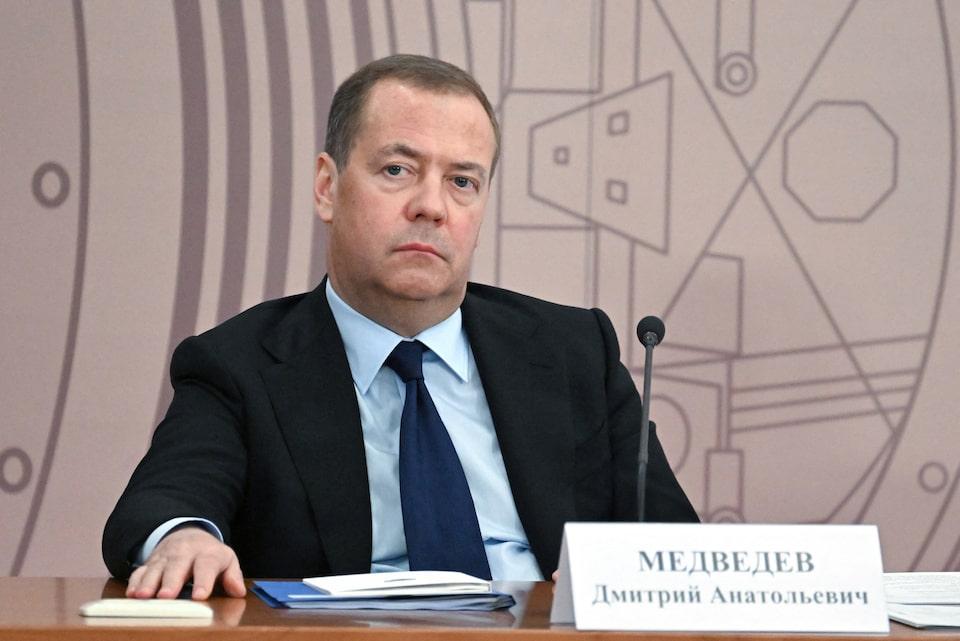
Medvedev: Trump has started a new war Medvedev: Iranian society will support supreme leader Russia condemns the U.S. strikes on Iran Hardliners say Russia must come to Tehran's aid MOSCOW, June 22 (Reuters) - A senior Russian official said on Sunday that U.S. President Donald Trump had started a new war by attacking Iran that would only strengthen Tehran's leaders by consolidating society around Supreme Leader Ali Khamenei. The Kremlin, which has a strategic partnership with Iran and also maintains close links to Israel, had repeatedly cautioned Washington that U.S. strikes on Iran would plunge the entire region into the "abyss". Sign up here. "Trump, who came in as a peacemaker president, has started a new war for the U.S.," said Dmitry Medvedev, the deputy chairman of Russia's Security Council, adding that "with this kind of success, Trump won't win the Nobel Peace Prize". "Iran's political regime has been preserved, and it is highly likely that it has become stronger," Medvedev said. "The people are consolidating around the spiritual leadership, even those who did not sympathise with it." Medvedev also said that Iran's nuclear infrastructure did not appear to be affected by the U.S. strikes, and that the U.S. was in danger of being drawn into a ground operation. President Vladimir Putin had repeatedly offered to mediate between the United States and Iran, though the Kremlin chief last week refused to discuss the possibility that Israel and the United States would kill Khamenei. Putin said that Israel had given Moscow assurances that Russian specialists helping to build two more reactors at the Bushehr nuclear power plant in Iran would not be hurt in air strikes. Russia's foreign ministry strongly condemned the U.S. attacks which it said had undermined the Treaty on the Non-Proliferation of Nuclear Weapons. The United Nations Security Council must respond, Moscow said. "It is already obvious that a dangerous escalation has begun, fraught with further undermining of regional and global security," it said. "The risk of the conflict spreading in the Middle East, which is already gripped by multiple crises, has increased significantly." While Moscow has bought weapons from Iran for its war in Ukraine and signed a 20-year strategic partnership deal with Tehran earlier this year, their relationship since the 16th century, when Muscovy officially established relations with the Persian Empire, has at times been troubled. Inside Russia, there were calls for Russia to come to the aid of its partner and to supply Iran with the same support which Washington had given to Ukraine - including air defence systems, missiles and satellite intelligence. "It's time for us to help Tehran," said Russian businessman Konstantin Malofeyev. "And at the same time, to offer the United States and Iran diplomatic assistance in peace negotiations by appointing a special envoy for this. Two can play at this game." Jailed Russian nationalist Igor Girkin said that unless Russia supported Iran, the Islamic Republic would be bombed into the Stone Age by the United States and Israel and then plunged into chaos. "If Iran does not receive the necessary support from its allies, Russia and China, and very serious and significant support, then, most likely, within a month, its enemies will achieve this," Girkin said on Telegram. https://www.reuters.com/world/middle-east/russias-medvedev-says-trump-started-new-war-us-after-attack-iran-2025-06-22/
2025-06-22 11:41
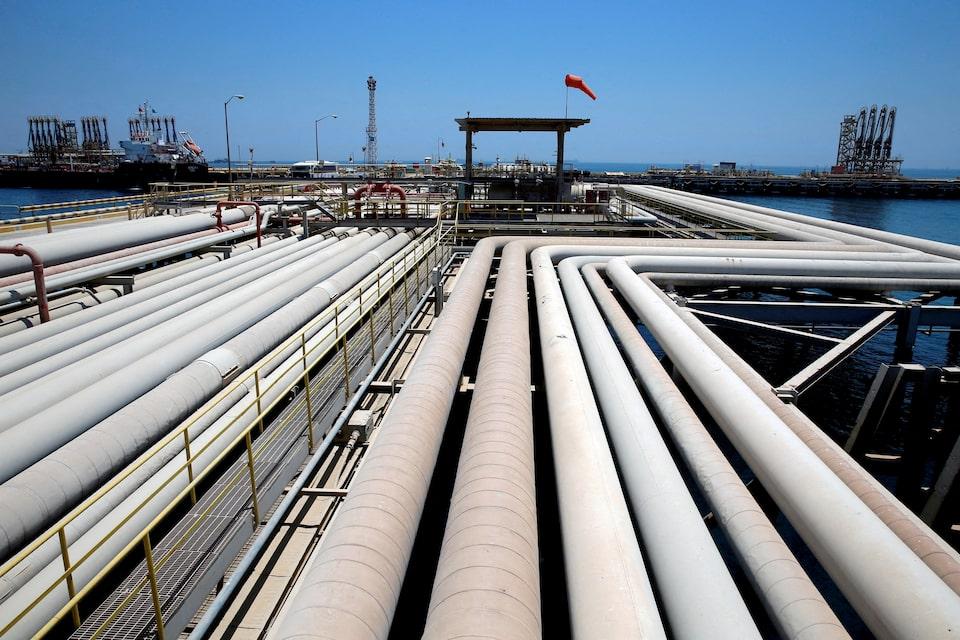
LONDON, June 22 (Reuters) - Oil is likely to rise by $3-5 per barrel when trading resumes on Sunday evening after the U.S. attacked Iran at the weekend, market analysts said, with gains expected to accelerate only if Iran retaliates hard and causes a major oil supply disruption. U.S. President Donald Trump said he had "obliterated" Iran's main nuclear sites in strikes overnight, joining an Israeli assault in an escalation of conflict in the Middle East as Tehran vowed to defend itself. Iran is OPEC's third-largest crude producer. Sign up here. "An oil price jump is expected," said Jorge Leon, head of geopolitical analysis at Rystad and a former OPEC official. "Even in the absence of immediate retaliation, markets are likely to price in a higher geopolitical risk premium." Global oil benchmark Brent crude could gain $3 to $5 per barrel when markets open, SEB analyst Ole Hvalbye said in a note. Brent settled at $77.01 a barrel on Friday and U.S. West Texas Intermediate at $73.84. Ole Hansen, analyst at Saxo Bank, said crude could open $4 to $5 dollars higher, with potential for some long positioning being unwound. Crude had settled down on Friday after the U.S. imposed fresh Iran-related sanctions, including on two entities based in Hong Kong, and counter-terrorism-related sanctions, according to a notice on the U.S. Treasury Department website. Brent has risen 11% while WTI has gained around 10% since the conflict began on June 13 with Israel targeting Iran's nuclear sites and Iranian missiles hitting buildings in Tel Aviv. Currently stable supply conditions and the availability of spare production capacity among other OPEC members have limited oil's gains. Risk premiums have typically faded when no supply disruptions occurred, said Giovanni Staunovo, analyst at UBS. "The direction of oil prices from here will depend on whether there are supply disruptions - which would likely result in higher prices - or if there is a de-escalation in the conflict, resulting in a fading risk premium," he said. A senior Iranian lawmaker said on June 19 that the country could shut the Strait of Hormuz as a way of hitting back against its enemies, though a second member of parliament said this would only happen if Tehran's vital interests were endangered. About a fifth of the world's total oil consumption passes through the strait. SEB said any closure of the strait or spillover into other regional producers would "significantly lift" oil prices, but they saw this scenario as a tail risk rather than a base case given China's reliance on Gulf crude. Ajay Parmar, oil and energy transition analytics director at consultancy ICIS, said it was unlikely Iran would be able to enforce a blockage of the strait for too long. "Most of Iran's oil exports to China pass through this strait and Trump is unlikely to tolerate the inevitable subsequent oil price spike for too long - the diplomatic pressure from the world's two largest economies would also be significant," he said. https://www.reuters.com/business/energy/oil-open-higher-us-strikes-iran-boost-supply-risk-premium-2025-06-22/
2025-06-22 07:59
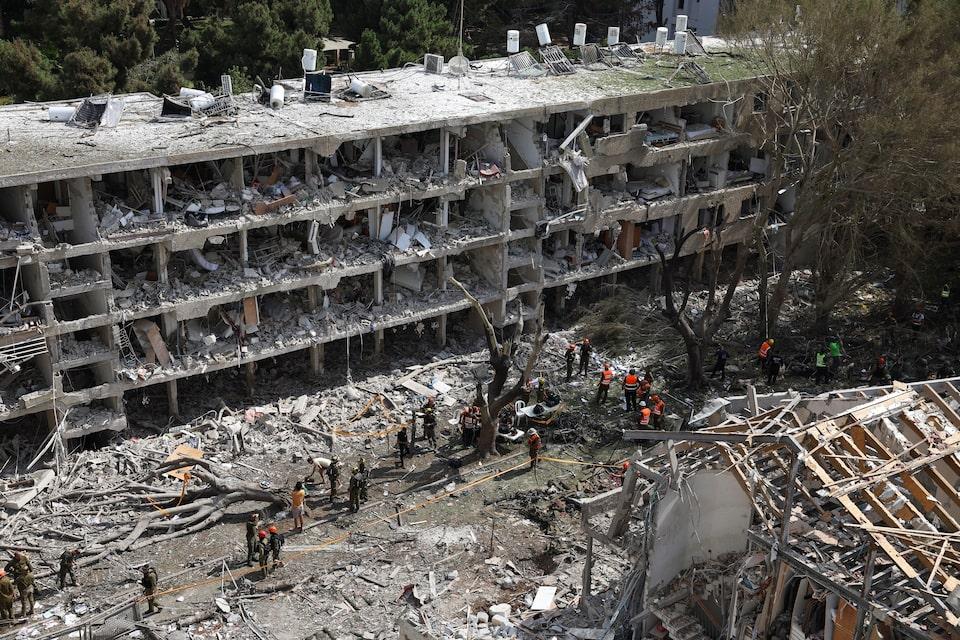
Iran vows retaliation, fires missiles at Israel US Department of Homeland Security warns of heightened threat Iran considers closing Strait of Hormuz, impacting global oil shipments Trump raises idea of regime change in Iran ISTANBUL/WASHINGTON/JERUSALEM, June 22 (Reuters) - The world braced on Sunday for Iran's response after the U.S. attacked key Iranian nuclear sites, joining Israel in the biggest Western military action against the Islamic Republic since its 1979 revolution. Iran vowed to defend itself a day after the U.S. dropped 30,000-pound bunker-buster bombs onto the mountain above Iran's Fordow nuclear site while American leaders urged Tehran to stand down and pockets of anti-war protesters emerged in U.S. cities. Sign up here. In a post to the Truth Social platform on Sunday, U.S. President Donald Trump raised the idea of regime change in Iran. "It’s not politically correct to use the term, 'Regime Change,' but if the current Iranian Regime is unable to MAKE IRAN GREAT AGAIN, why wouldn’t there be a Regime change??? MIGA!!!" he wrote. Iran and Israel continued to trade volleys of missile attacks. An Israeli military spokesperson said Israeli fighter jets had struck military targets in western Iran. Earlier, Iran fired missiles that wounded scores of people and flattened buildings in Tel Aviv. The U.S. Department of Homeland Security warned of a "heightened threat environment" in America, citing the possibility of cyber attacks or targeted violence. Law enforcement in major U.S. cities stepped up patrols with a focus on religious, cultural and diplomatic sites. The U.S. State Department issued a security alert for all U.S. citizens abroad that warned of the potential for demonstrations against Americans and travel disruptions due to closed airspace across the Middle East, calling on them to "exercise increased caution." Tehran has so far not followed through on its threats of retaliation against the United States - either by targeting U.S. bases or trying to choke off global oil supplies - but that may not hold. Speaking in Istanbul, Iranian Foreign Minister Abbas Araqchi said his country would consider all possible responses. There would be no return to diplomacy until it had retaliated, he said. "The U.S. showed they have no respect for international law. They only understand the language of threat and force," he said. Trump, in a televised address, called the strikes "a spectacular military success" and boasted that Iran's key nuclear enrichment facilities had been "completely and totally obliterated." Commercial satellite imagery indicated the U.S. attack on Iran’s subterranean Fordow nuclear plant severely damaged or destroyed the deeply-buried site and the uranium-enriching centrifuges it housed, but the status of the site remained unconfirmed, experts said. The U.N. nuclear watchdog, the International Atomic Energy Agency, said no increases in off-site radiation levels had been reported after the U.S. strikes. Rafael Grossi, the agency's director general, told CNN that it was not yet possible to assess the damage done underground. A senior Iranian source told Reuters that most of the highly enriched uranium at Fordow had been moved elsewhere before the attack. Reuters could not immediately corroborate the claim. Satellite imagery from the U.S. space technology company Maxar Technologies showed a long line of vehicles waiting outside an entrance of the facility on Thursday and Friday. Trump, who veered between offering to end the war with diplomacy or to join it before moving ahead with the biggest foreign policy gamble of his career, called on Iran to forgo any retaliation. He said the government "must now make peace" or "future attacks would be far greater and a lot easier." In a step towards what is widely seen as Iran's most effective threat to hurt the West, its parliament approved a move to close the Strait of Hormuz. Nearly a quarter of global oil shipments pass through the narrow waters that Iran shares with Oman and the United Arab Emirates. Iran's Press TV said closing the strait would require approval from the Supreme National Security Council, a body led by an appointee of Iran's Supreme Leader Ayatollah Ali Khamenei. Attempting to choke off Gulf oil by closing the strait could send global oil prices skyrocketing, derail the world economy and invite conflict with the U.S. Navy's massive Fifth Fleet, based in the Gulf and tasked with keeping the strait open. Brent crude and U.S. crude futures rose to the highest levels since January on Sunday, with Brent crude increasing $3.20 to $80.28 and U.S. crude $2.89 to $76.73. U.S. Secretary of State Marco Rubio told CBS's "Face the Nation" that there were no other planned military operations against Iran "unless they mess around." The U.N. Security Council met on Sunday to discuss the U.S. strikes as Russia, China and Pakistan proposed the 15-member body adopt a resolution calling for an immediate and unconditional ceasefire in the Middle East. U.N. Secretary-General Antonio Guterres told the Security Council the U.S. bombings in Iran marked a perilous turn in the region and urged a halt to fighting and return to negotiations over Iran's nuclear program. DIVERGING WAR AIMS Israeli officials, who began the hostilities with a surprise attack on Iran on June 13, have increasingly spoken of their ambition to topple the hardline Shi'ite Muslim clerical establishment that has ruled Iran since 1979. Israeli Prime Minister Benjamin Netanyahu told Israeli reporters that Israel was very close to meeting its goals of removing the threats of ballistic missiles and the nuclear program in Iran. U.S. officials, many of whom witnessed Republican President George W. Bush's popularity collapse following his disastrous intervention in Iraq in 2003, have stressed that they were not working to overthrow Iran's government. "This mission was not and has not been about regime change," Defense Secretary Pete Hegseth told reporters at the Pentagon, calling the mission "a precision operation" targeting Iran's nuclear programme. Anti-war activists organized demonstrations on Sunday in New York, Washington and other U.S. cities, with signs carrying messages such as "hands off Iran." Meanwhile, some Iranians said they feared the prospect of an enlarged conflict involving the U.S. "Our future is dark. We have nowhere to go - it's like living in a horror movie," Bita, 36, a teacher from the central city of Kashan, said before the phone line was cut. Much of Tehran, a capital city of 10 million people, has emptied out, with residents fleeing to the countryside to escape Israeli bombardment. Iranian authorities say more than 400 people have been killed since Israel's attacks began, mostly civilians. Israel's bombardment has decimated much of Iran's military leadership with strikes targeted at bases and residential buildings where senior figures slept. Iran has been launching missiles back at Israel, killing at least 24 people over the past nine days. Air raid sirens sounded across most of Israel on Sunday, sending millions of people to safe rooms. In Tel Aviv, Aviad Chernovsky, 40, emerged from a bomb shelter to find his house had been destroyed in a direct hit. "It's not easy to live now in Israel (right now), but we are very strong," he said. "We know that we will win." https://www.reuters.com/world/middle-east/israel-under-missile-attack-iran-says-all-options-open-after-us-strikes-2025-06-22/
2025-06-22 07:22
TEL AVIV, June 22 (Reuters) - Israeli stocks rose for a sixth session on Sunday to hit fresh all-time highs after U.S attacks on Iran's nuclear sites, which investors believe would likely prevent Tehran from developing nuclear weapons anytime soon. The broad Tel Aviv 125 index (.TA125) , opens new tab was 1.3% higher, while the blue-chip TA-35 (.TA35) , opens new tab was 1.2% higher in afternoon trading. Sign up here. On the heels of Israeli strikes in Iran, shares rose during all five sessions last week, gaining some 6%, as Israel hit Iranian nuclear and military targets prior to Saturday's surprise U.S. attacks. "The destruction of Iran's key nuclear facilities by the U.S. military is, of course, a positive development ... in terms of improving the regional security environment and reducing Iran’s military and nuclear capabilities," said Mizrahi Tefahot chief markets economist Ronen Menachem. "It's a game-changer." Israel began its punishing attacks on Iranian nuclear facilities, ballistic missile factories and military commanders on June 13, which have been met with retaliatory Iranian strikes against Israel. U.S. President Donald Trump said he had "obliterated" Iran's main nuclear sites in strikes overnight with massive bunker busting bombs, joining an Israeli assault in a significant new escalation of conflict in the Middle East. Tehran vowed to defend itself, and responded with a volley of missiles at Israel that wounded scores of people and destroyed buildings in Tel Aviv on Sunday. Still, for more than a week, local markets have cheered Israel's actions in Iran. In addition to gains in shares, government bond prices have risen, the shekel has appreciated and Israel's risk premium has edged lower. Bond prices were up as much as 0.2% on Sunday. The shekel does not trade on Sunday but it has rallied from 3.61 per dollar on June 11 to 3.48 on Friday and is up some 1% this month. "Looking at the medium- to long-term — which is relevant for many strategic investors — this could represent a genuine opportunity, possibly related to the prospect of closer ties between the Saudi and American axis," Menachem said. https://www.reuters.com/world/middle-east/tel-aviv-shares-jump-open-hit-record-highs-after-us-strikes-iran-nuclear-sites-2025-06-22/